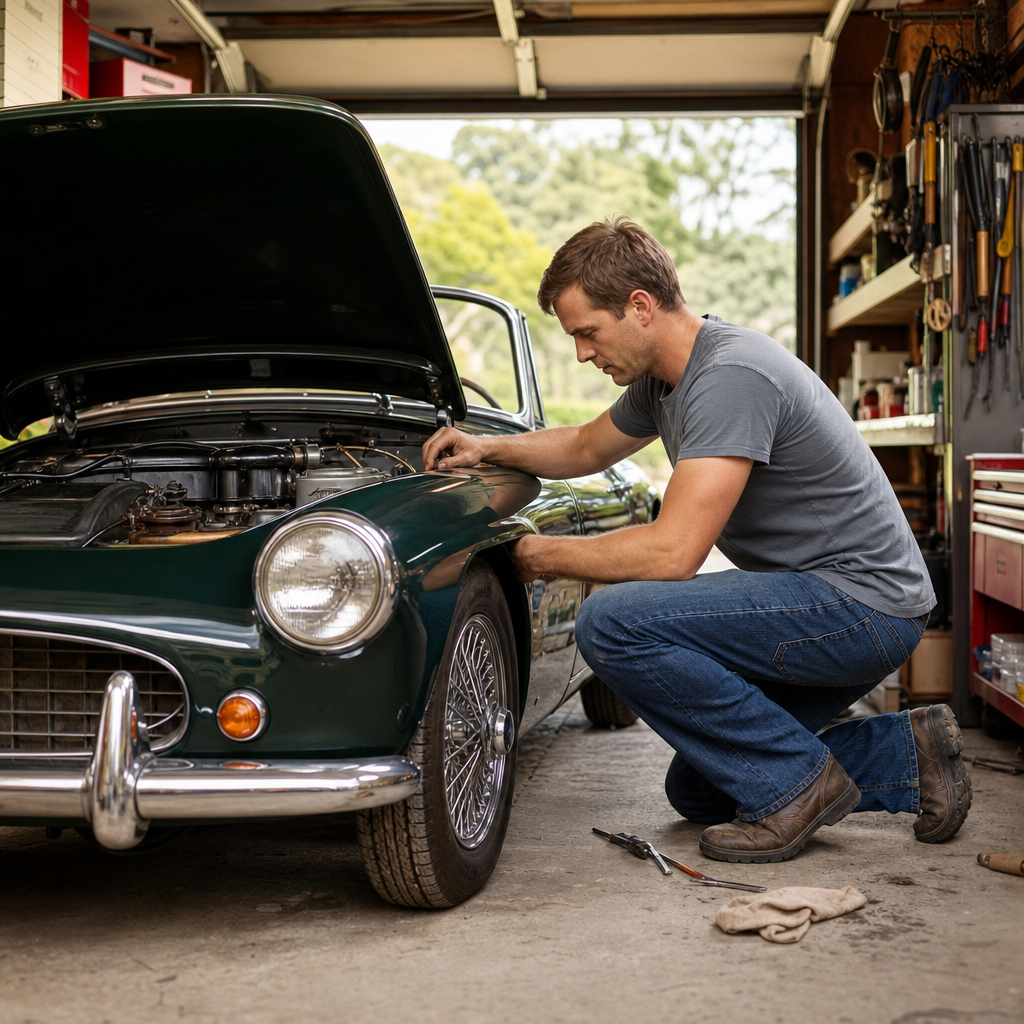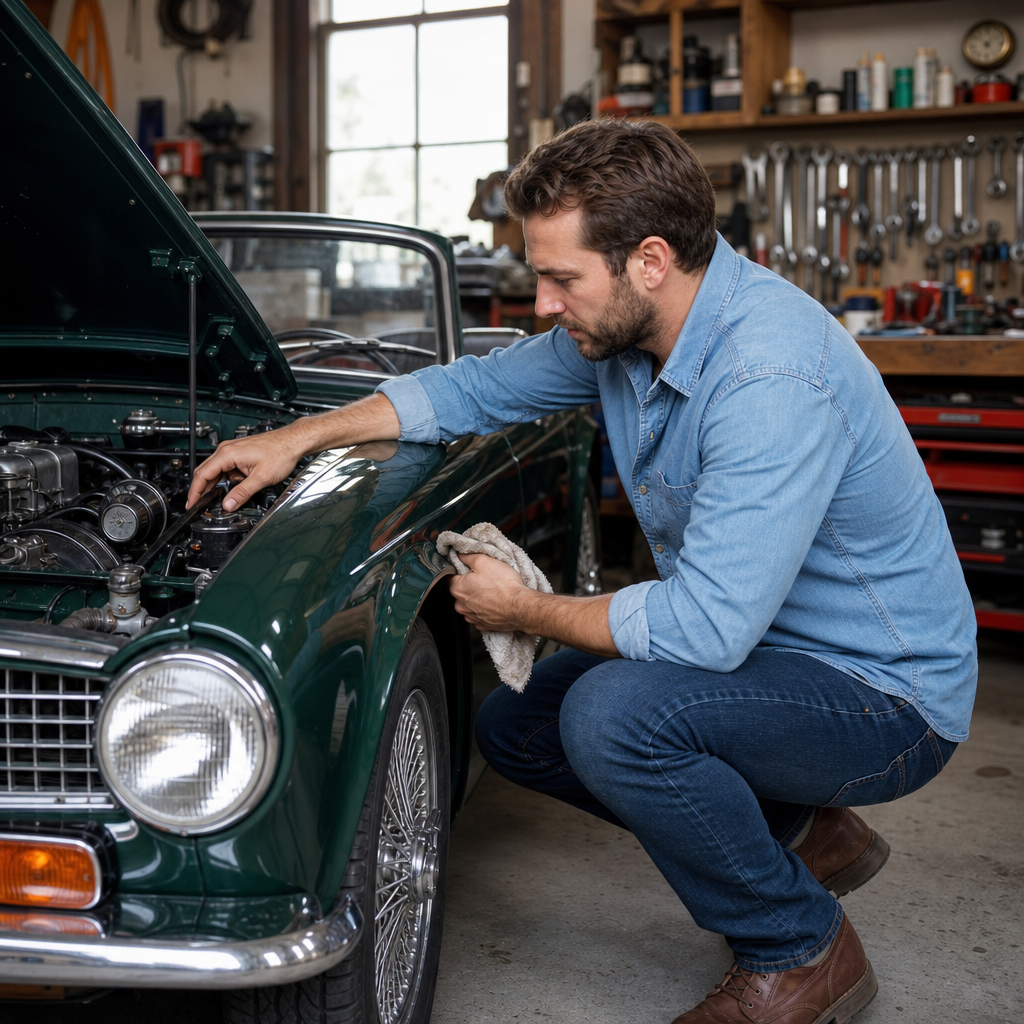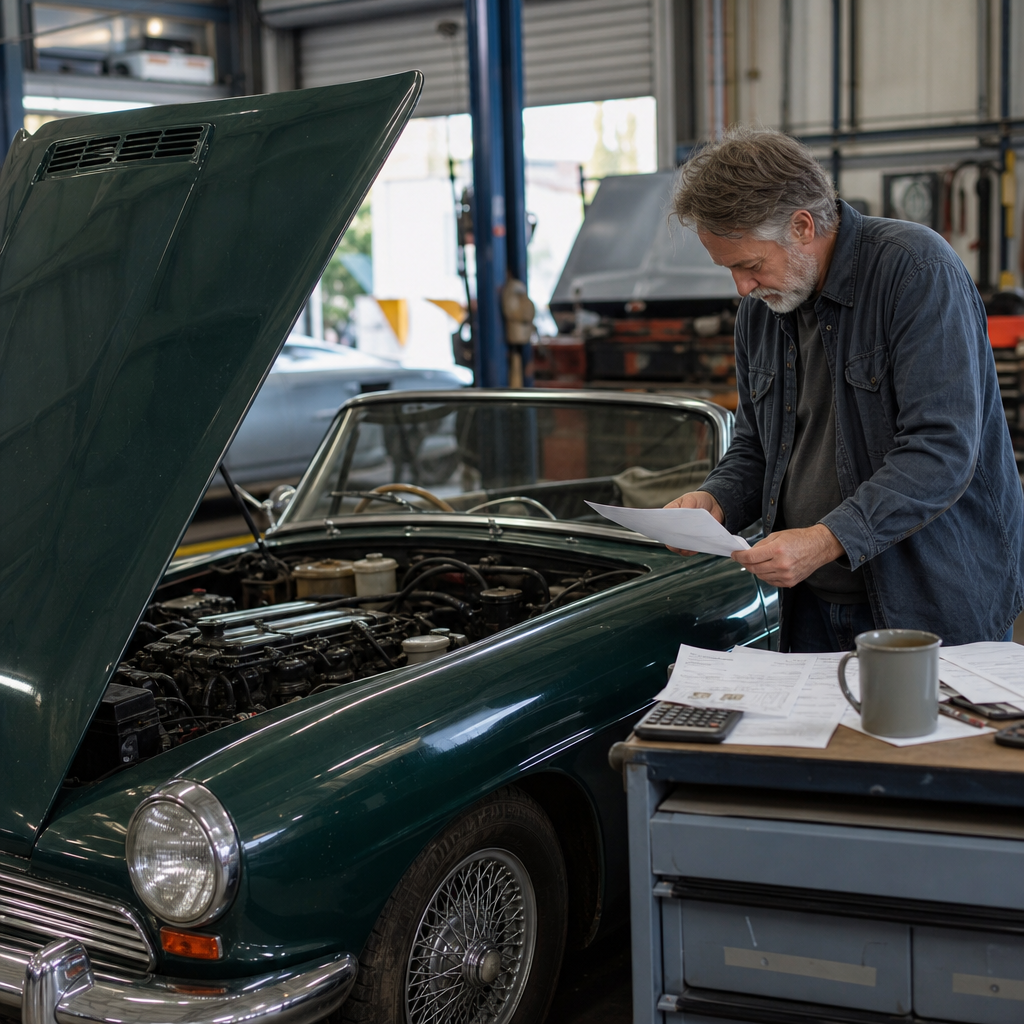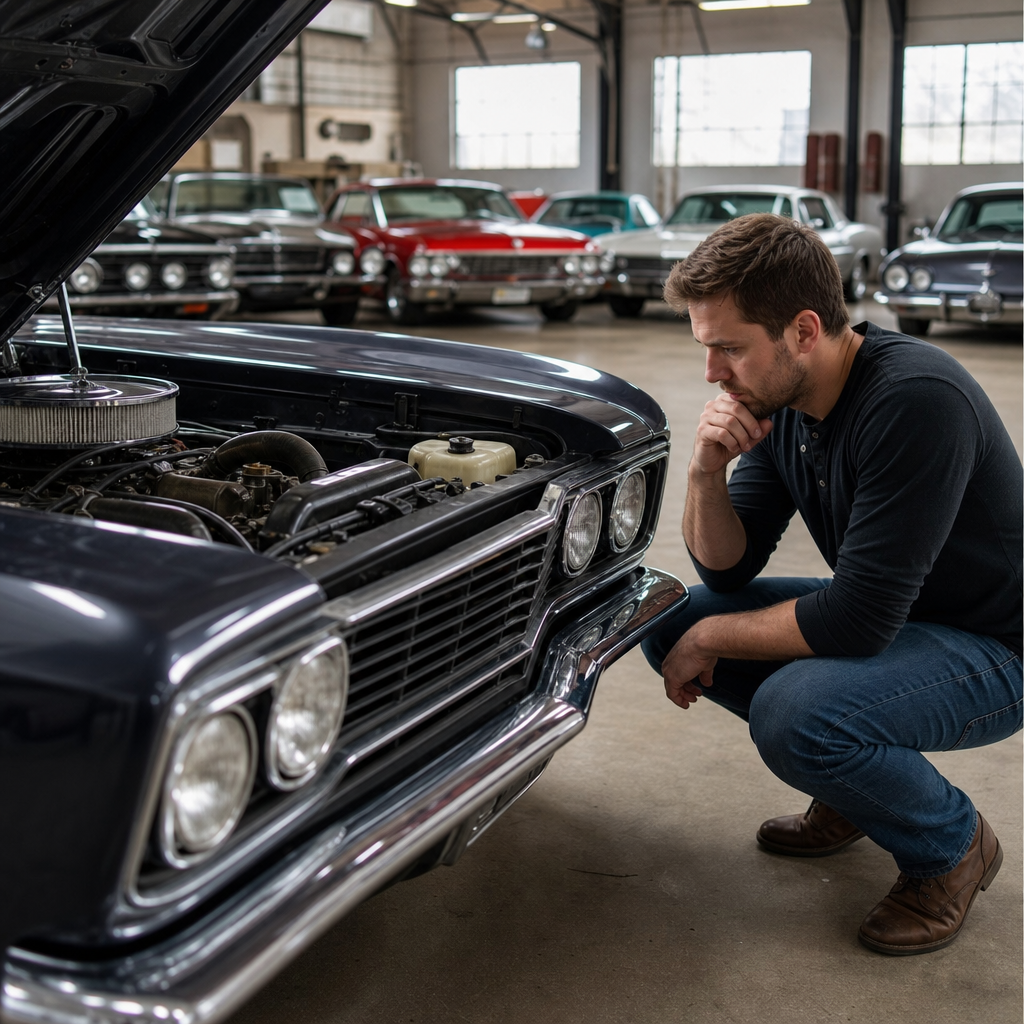
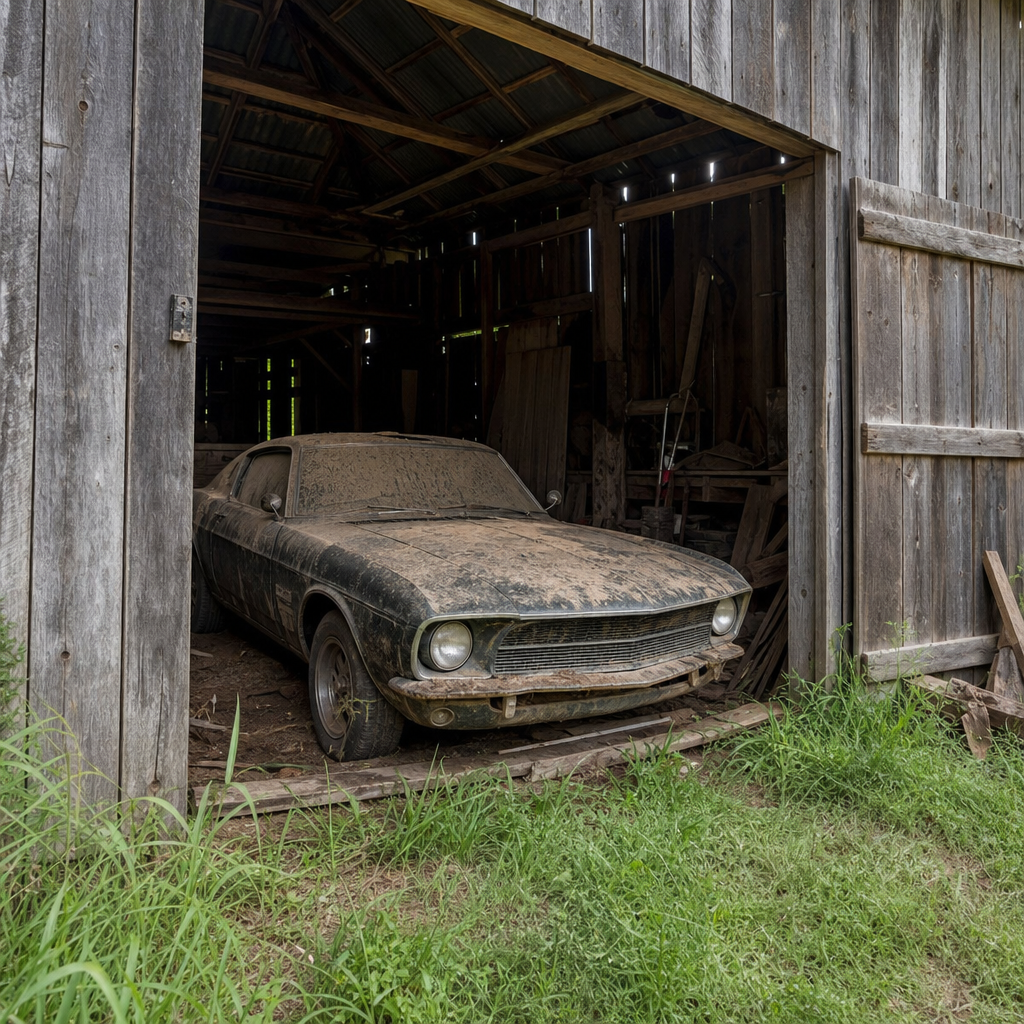
A barn find is a classic vehicle discovered after years, sometimes decades, of storage and neglect, usually in a barn, garage, shed, warehouse, or other out-of-the-way building. In classic car terminology, the phrase does not simply mean “old car.” It refers to a car, truck, or motorcycle that has been hidden from regular use, largely untouched, and then brought back into public view. Collectors, restorers, auction houses, and insurers use the term because it signals rarity, originality, mystery, and the possibility of significant historical value.
In practice, I have seen the label applied too loosely. A dusty car parked outside under a tarp for six months is not a barn find. A complete 1967 Jaguar E-Type stored in a family outbuilding since the early 1980s, with old registrations, original paint traces, and period accessories, absolutely is. The distinction matters because classic car terminology shapes buyer expectations. Words like survivor, project car, patina, matching numbers, and provenance are not interchangeable, and misunderstanding them leads to poor valuations, expensive restorations, and avoidable disputes.
This topic matters because barn finds sit at the intersection of history, condition, and market demand. They can uncover original specifications that restored cars have lost. They can also hide severe rust, seized engines, missing paperwork, rodent damage, and unsafe mechanical systems. For enthusiasts learning classic car basics, “barn find” is one of the most important terms to understand because it connects directly to restoration planning, title verification, authenticity checks, and resale potential. As a hub within classic car terminology, this guide explains what a barn find is, what it is not, how experts evaluate one, and which related terms every buyer should know before making an offer.
Defining a Barn Find in Classic Car Terminology
The simplest definition is this: a barn find is a long-stored vehicle, newly rediscovered, that has been off the road and out of public circulation for an extended period. The storage location does not have to be an actual barn. The industry still uses the phrase for finds in basements, carriage houses, shipping containers, estate garages, industrial buildings, and dealership back rooms. The key elements are prolonged storage, limited recent handling, and rediscovery.
Several features usually accompany a true barn find. First, the vehicle is often substantially complete, even if dirty or partially disassembled. Second, it typically shows age-consistent wear rather than modern cosmetic refurbishment. Third, there is usually a story: one-owner storage, estate settlement, unfinished restoration, dealership leftovers, or forgotten competition history. Auction descriptions from firms such as RM Sotheby’s, Gooding Christie’s, and Bonhams frequently emphasize these elements because they affect desirability.
A barn find does not guarantee high value. A rare, numbers-matching Porsche 356 found in dry storage may command major attention. A base-model 1970s sedan with heavy corrosion and no title may have only parts value. The term describes discovery and storage history, not automatic worth. That is why experienced buyers look beyond romance and inspect structure, originality, documentation, and market comps before assigning a price.
Barn Find vs. Related Terms Every Enthusiast Should Know
Understanding nearby terms prevents confusion. A survivor is a vehicle that remains substantially original in finishes, trim, and mechanical specification, often with minimal restoration. Many barn finds are survivors, but not all survivors are barn finds. A car can be a well-preserved survivor that stayed in regular use and careful ownership rather than hidden storage.
A project car is a vehicle requiring work to become roadworthy, presentable, or complete. Most barn finds are project cars, but the terms describe different things. “Project car” focuses on repair needs; “barn find” focuses on discovery context. Patina refers to visible aging such as worn paint, surface oxidation, faded brightwork, and use marks that enthusiasts may value as authentic character. Patina can enhance a barn find’s appeal when it reflects honest age rather than neglect severe enough to threaten the underlying metal.
Matching numbers is another important term. It generally means major components, especially engine and transmission, correspond to factory or period-correct identification records. On some marques, this can materially change value. Provenance means documented ownership and history. Barn finds with strong provenance, such as celebrity ownership, competition pedigree, or original invoices, often attract more interest than cleaner cars lacking documentation.
| Term | Meaning | Why It Matters |
|---|---|---|
| Barn find | Long-stored, newly rediscovered vehicle | Signals originality, history, and unknown condition |
| Survivor | Largely original vehicle with limited restoration | Original finishes and details can raise desirability |
| Project car | Vehicle needing repair or restoration | Determines budget, labor, and parts requirements |
| Patina | Visible age and wear retained for authenticity | Affects cosmetic strategy and market appeal |
| Matching numbers | Engine/transmission align with factory records | Can significantly influence value and originality |
| Provenance | Documented ownership and historical background | Supports authenticity and premium pricing |
Why Barn Finds Capture So Much Attention
Barn finds appeal to enthusiasts because they feel like time capsules. Original dealer decals, vintage inspection stickers, old fuel ration books, service records, and period luggage can survive untouched for decades. Those details help restorers and historians verify factory colors, trim combinations, option packages, and ownership patterns. I have used hidden evidence such as chalk marks behind door panels and untouched under-dash wiring to confirm whether a car had been altered, and those clues often survive best on long-stored cars.
The market also rewards authenticity. Over-restored classics sometimes lose factory spot-weld character, original fasteners, date-coded glass, or assembly-line finishes. A barn find can preserve those references. That is why marque specialists, concours judges, and restoration shops study unrestored examples so closely. Ferrari Classiche, Porsche Certificate of Authenticity processes, Jaguar Daimler Heritage Trust records, and similar archive resources become more useful when a car still retains core original features.
There is also an emotional factor. Discovery stories are compelling: a 1950s Alfa Romeo hidden behind farm equipment, a muscle car parked after an engine issue and forgotten, a prewar Rolls-Royce sealed inside a coach house. These narratives drive media coverage, but serious buyers still separate story from substance. A dramatic discovery can raise visibility; it cannot repair rusted frame rails or missing serial tags.
How Experts Evaluate a Barn Find
The first step is identity verification. Inspect the VIN, chassis number, body tags, engine stampings, and any manufacturer plates. Compare them against title documents, heritage certificates, factory registries, or marque-club databases. For American classics, locations vary by manufacturer and era. For European cars, chassis plates and stamped numbers may appear in engine bays, firewall areas, inner fenders, or frame members. If numbers look altered, ground down, or inconsistent with model-year conventions, pause immediately.
Next comes structural assessment. Surface rust is common and manageable; perforation in floors, rockers, frame sections, suspension pick-up points, or unibody rails is far more serious. Moisture retention under carpets, rodent nests in cowl areas, and trapped debris in quarter panels often create hidden corrosion. On convertibles and body-on-frame trucks, inspect mounting points and crossmembers carefully. A magnet, borescope, inspection mirror, and paint-depth gauge help, but nothing replaces experience and a lift.
Mechanical condition is usually unknown. Never assume an engine “just needs a battery.” Long storage can mean seized pistons, dry seals, varnished fuel systems, cracked coolant passages, contaminated brake hydraulics, brittle wiring, and unsafe tires. Before any start attempt, drain fluids, inspect cylinders, verify crankshaft movement by hand where possible, prime lubrication systems if appropriate, and rebuild brake and fuel systems. Preservation first, excitement second, is the correct order.
Originality, Documentation, and Value
Originality drives much of a barn find’s fascination, but originality is nuanced. Factory paint with thin spots may be more valuable than a fresh respray that hides old repairs. Original upholstery with careful conservation may tell a stronger story than a perfect replacement interior in the wrong grain or stitching pattern. However, originality only adds value when the underlying car is desirable and the condition remains interpretable. If deterioration has destroyed key reference points, the premium for originality falls.
Documentation can transform a discovery. Look for titles, old registrations, service books, dealer invoices, warranty cards, build sheets, ownership correspondence, restoration receipts, and period photographs. Even mundane paperwork can answer major valuation questions. A stack of tax discs or inspection certificates may establish mileage progression. An old engine rebuild invoice can explain why stampings do not align with production dates. A handwritten storage note can support the timeline that gives the car its barn find status.
Valuation should rely on comparable sales, rarity, drivetrain specification, body style, originality level, and restoration cost. Price guides from Hagerty, auction archives, and marque-specific forums help, but they must be interpreted. A complete, documented barn find may sell for more than a restored example when originality is prized, yet a common model with severe needs may be worth less than the sum of its future repair bills. Buying the story instead of the numbers is the fastest way to overpay.
Common Risks and Misconceptions
The biggest misconception is that every barn find is a bargain. In reality, many are expensive problems. Storage damage accumulates quietly. Rubber components harden, chrome pits, aluminum corrodes, upholstery mildews, and brake systems fail internally. Rodents chew harnesses and pack insulation into heater boxes. Water enters through failed seals and sits in floor pans for years. By the time the dust is brushed off, the vehicle may require a full metal restoration and complete mechanical rebuild.
Another mistake is assuming untouched means unmodified. Cars were often altered long before storage. Engines get swapped, carburetors changed, radios cut into dashboards, and colors updated decades earlier. A car can be dormant for forty years and still be far from factory specification. That is why production records, casting dates, trim codes, and knowledgeable model experts matter. The less common the vehicle, the more important specialist input becomes.
Legal issues also deserve attention. Some barn finds emerge from estates with missing titles, unpaid storage claims, or unclear ownership chains. State title procedures differ widely, and bonded titles are not available or practical in every situation. Imported vehicles add customs, chassis-verification, and emissions-age considerations. Before money changes hands, verify that the seller has the legal right to sell and that the identification numbers match the paperwork exactly.
What to Do When You Discover One
If you uncover a possible barn find, document everything before moving it. Photograph the car as found, including the storage environment, dust patterns, tags, plates, tools, paperwork, and loose parts. Those images preserve context and can support future provenance. Then inventory completeness: glass, trim, seats, bumpers, wheels, air cleaners, jack, spare, and hard-to-source model-specific items. Missing trim on a rare car can cost more than major engine work.
Resist the urge to wash it aggressively or start polishing. Dry cleaning, careful vacuuming, and gentle conservation are safer first steps. On valuable originals, preservation specialists may stabilize finishes rather than refinish them. Next, secure paperwork and verify identity numbers. Only after that should you create a plan: preserve as-found, recommission mechanically, or perform a full restoration. The right approach depends on rarity, condition, and intended use.
For newcomers building classic car knowledge, the best next step is to learn the connected terminology that informs every barn-find decision. Study survivor cars, understand matching numbers and date codes, learn how provenance affects value, and compare restoration versus preservation costs. That vocabulary makes you a sharper buyer and a more credible seller. A true barn find is not just an old car in a dusty building; it is a historical object whose condition, originality, and paper trail must be read correctly. Use that understanding as your foundation, and you will make better choices across every part of the classic car hobby.
Frequently Asked Questions
What exactly qualifies a vehicle as a barn find?
A barn find is a classic vehicle that has been stored away for many years and largely forgotten or left untouched before being rediscovered. Despite the name, it does not have to be found in an actual barn. Vehicles uncovered in garages, sheds, warehouses, lockups, old service buildings, and other out-of-the-way storage spaces can also fit the description. What matters most is the combination of prolonged storage, limited recent use, and the sense that the vehicle has been hidden from public view for a long time.
In collector and restoration circles, the term means much more than simply “an old car.” A genuine barn find usually carries a story of neglect, inactivity, and survival. It may still have dust, flat tires, outdated registration stickers, faded paint, original trim, or even paperwork left inside. The appeal comes from the possibility that the vehicle remains unusually original, with many of its factory-installed parts and finishes still intact. That originality, paired with the mystery of where it has been and why it disappeared from the road, is what gives a true barn find its special status.
Does a barn find have to be rare or valuable?
Not every barn find is automatically rare, expensive, or auction-worthy. A vehicle can be a barn find because of how it was stored and rediscovered, even if it is not a highly sought-after model. In other words, “barn find” describes the condition and discovery story more than the market value. A long-hidden pickup truck, family sedan, motorcycle, or base-model coupe can still be considered a barn find if it has been tucked away for decades and brought back into public view after years of inactivity.
That said, rarity and value often become part of the conversation because hidden vehicles sometimes turn out to be uncommon models, low-production variants, or well-preserved examples with significant originality. Collectors, auction houses, and insurers pay close attention to these discoveries because an unrestored, long-stored vehicle can reveal details that are often lost during repeated repairs or restorations. Even when the model itself is not especially rare, a barn find may still attract interest because its originality, documented history, and untouched condition make it a useful reference point and a compelling piece of automotive history.
Why are barn finds so appealing to collectors and restorers?
The biggest reason is originality. Many classic vehicles on the market have been modified, repainted, restored multiple times, or assembled from mixed parts over the years. A barn find may still retain its factory paint, interior materials, trim pieces, engine components, identification tags, and period-correct details. For collectors, that kind of authenticity can be more exciting than a fully restored vehicle because it offers a closer look at how the vehicle actually survived through time. It can also provide important evidence about production features, colors, equipment, and materials that restorers and historians value.
There is also a strong emotional and storytelling element. Barn finds capture the imagination because they feel like time capsules. The dust, storage marks, old accessories, and forgotten paperwork all contribute to a sense of mystery and discovery. Restorers may be drawn to the challenge of bringing a dormant vehicle back to life, while collectors may value the narrative just as much as the machine itself. In some cases, preserving the vehicle in carefully stabilized, unrestored condition can be more desirable than fully refinishing it, especially if its originality and history are unusually intact.
Is a barn find always worth restoring?
Not necessarily. A barn find can be historically interesting without being financially practical to restore. Before any major work begins, the vehicle should be assessed for structural condition, completeness, originality, and mechanical viability. Years or decades of storage can lead to rust, seized engines, damaged interiors, rodent contamination, deteriorated wiring, and compromised rubber components. Some vehicles need only careful recommissioning, while others require extensive metalwork, parts sourcing, and full mechanical rebuilding. The cost can easily exceed the finished value, especially with common models or severely deteriorated examples.
For that reason, many owners and specialists take a measured approach. Instead of rushing into a full restoration, they may document the vehicle, verify its identity numbers, inspect for corrosion and missing parts, and determine whether preservation makes more sense than rebuilding. In today’s market, originality often carries real weight, so an untouched vehicle should not be stripped down without careful thought. In some cases, a sympathetic preservation strategy that stabilizes the vehicle, cleans it carefully, and addresses only critical safety and mechanical issues may protect more value than a complete cosmetic restoration.
How do insurers, auction houses, and experts evaluate a barn find?
They typically look at several factors together rather than relying on the label alone. Provenance is a major consideration, including ownership history, registration records, storage history, and any documents that help explain where the vehicle has been and why it remained out of sight. Experts also examine originality, which means checking whether the engine, chassis, body panels, interior, and finishes appear to be correct and largely undisturbed. A barn find with matching numbers, original paint, factory equipment, and credible documentation will usually attract stronger attention than one with a dramatic discovery story but little supporting evidence.
Condition is equally important. A true barn find may look rough, but roughness alone does not create value. Specialists evaluate rust, completeness, accident damage, mechanical condition, and whether the vehicle has been altered before or during storage. Auction houses also consider market demand for the make and model, because some hidden vehicles generate intense collector interest while others appeal mainly as restoration projects. Insurers may require a professional appraisal or agreed-value policy support, especially when rarity, authenticity, and originality play a major role in the vehicle’s significance. In short, the term “barn find” can add intrigue, but the real assessment comes down to documentation, authenticity, condition, and collector demand.