
Timing Your Purchase for the Best Deal is not about guessing a lucky day; it is about understanding how negotiation strategies change with seasonality, seller motivation, market data, and the unique pace of the classic car market. In the years I have spent evaluating listings, calling owners, and helping buyers structure offers on vintage Mustangs, air-cooled Porsches, British roadsters, and postwar American coupes, one lesson has held up consistently: price is rarely fixed, but leverage is always tied to timing. Buyers who know when to engage, when to wait, and when to walk away usually secure better terms than buyers who focus only on haggling over a number.
In classic cars, timing means more than the calendar. It includes where a seller is in the listing cycle, whether an auction result just reset expectations, how long a car has sat unsold, and whether inspection findings have shifted bargaining power. Negotiation strategies are the practical methods you use inside those windows of opportunity: researching comparable sales, framing an offer around documented condition, using transportation costs as a bargaining point, and understanding when seller fatigue creates room for movement. This matters because classic cars are emotional purchases sold in imperfect markets. Unlike new vehicles with transparent invoice pricing, collector cars are valued through a blend of originality, provenance, condition, documentation, and current demand. That complexity creates opportunity for disciplined buyers.
This article serves as the hub for negotiation strategies within Buying & Selling Classic Cars. It explains how to time your purchase for the best deal, what signals indicate a seller is ready to negotiate, how auction seasons and weather influence pricing, and how to make an offer that is taken seriously. It also connects the broad strategy to practical realities such as pre-purchase inspections, title issues, restoration quality, and private-party psychology. If you want to buy well, preserve future resale value, and avoid overpaying in a fast-moving niche, timing and negotiation must work together rather than as separate steps.
Understand the Timing Cycles That Shape Classic Car Prices
The best time to buy a classic car is usually when fewer buyers are active, not when the most inventory is visible. In much of the United States, demand peaks in spring and early summer, when weather improves, shows and cruises begin, and aspirational buyers re-enter the market. Convertibles, vintage trucks, and weekend sports cars often command firmer prices then. By contrast, late fall and winter generally create better negotiating conditions, especially in colder regions where storage becomes a cost and casual shoppers disappear. I have routinely seen sellers who would not move in April become notably more flexible in November once another insurance payment, transport concern, or storage bill arrives.
Auction calendars also affect timing. High-profile sales in Scottsdale, Amelia Island, Monterey, and Kissimmee can lift seller expectations when similar cars perform well, but they can also soften private-party confidence when reserve prices fail or televised hammer prices look weaker than anticipated after fees. Smart buyers watch auction comps through Hagerty Price Guide, Bring a Trailer results, Mecum archives, and marque-specific forums. Those sources help answer a key negotiation question: is the asking price supported by recent public sales, or is the seller anchored to a peak market moment that has already passed?
Listing age is another timing signal. A fresh listing often attracts optimistic pricing and a seller who expects multiple inquiries. A car that has been relisted for sixty, ninety, or one hundred twenty days is a different negotiation environment. Long listing periods can indicate overpricing, hidden condition issues, weak documentation, or simply a seller testing the market. The important point is not to assume every stale listing is a bargain. Instead, use the passage of time to ask better questions: has the car been inspected, have prior buyers walked away, has the owner changed the description, and has the price been reduced in rational steps or erratic cuts? Those details reveal whether patience is creating leverage.
Read Seller Motivation Before You Make an Offer
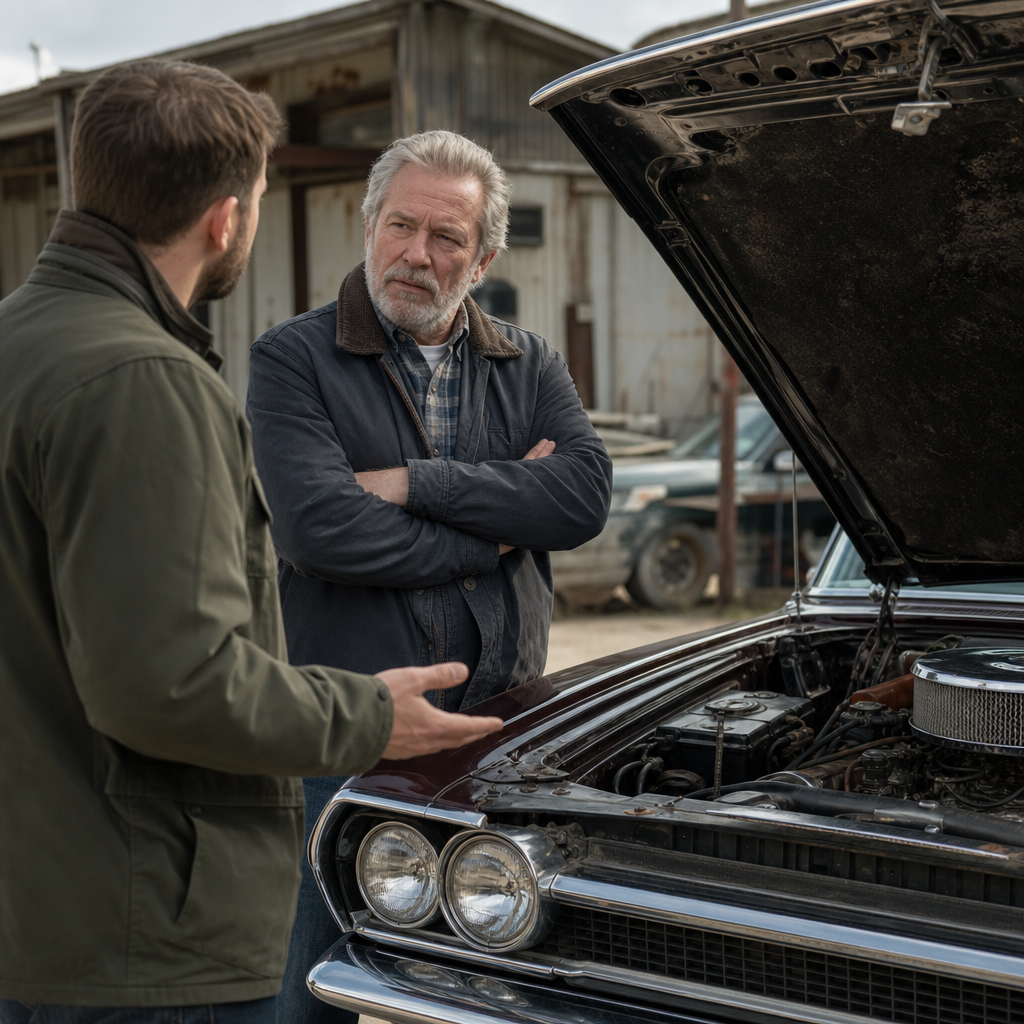
The strongest negotiation strategies start with understanding why the seller is selling now. In classic cars, motivation often matters more than advertised price. Estate sales, downsizing, divorce, a collection rotation, a stalled restoration, relocation, and tax planning each create distinct forms of urgency. A seller liquidating three cars to free garage space before a move is usually more negotiable than an owner listing a freshly detailed, numbers-matching coupe merely to test the market. Asking direct but respectful questions saves time: How long have you owned it? Why are you selling now? What interest has it had? Are there recent inspection reports? Is there a date by which you want it gone?
Language patterns reveal motivation. Phrases such as “need the space,” “too many projects,” “kids don’t want it,” or “moving out of state” often signal flexibility. So do listings that mention reduced prices, included spare parts, or willingness to assist with shipping. By contrast, statements like “I know what I have” or “not in a rush to sell” do not automatically mean the car is overpriced, but they usually indicate that aggressive discounting will fail. When I hear that tone, I shift away from price-first bargaining and focus instead on evidence-based questions around originality, paint meter readings, compression numbers, service records, rust repair photos, and VIN consistency. If price will not move much, terms sometimes will.
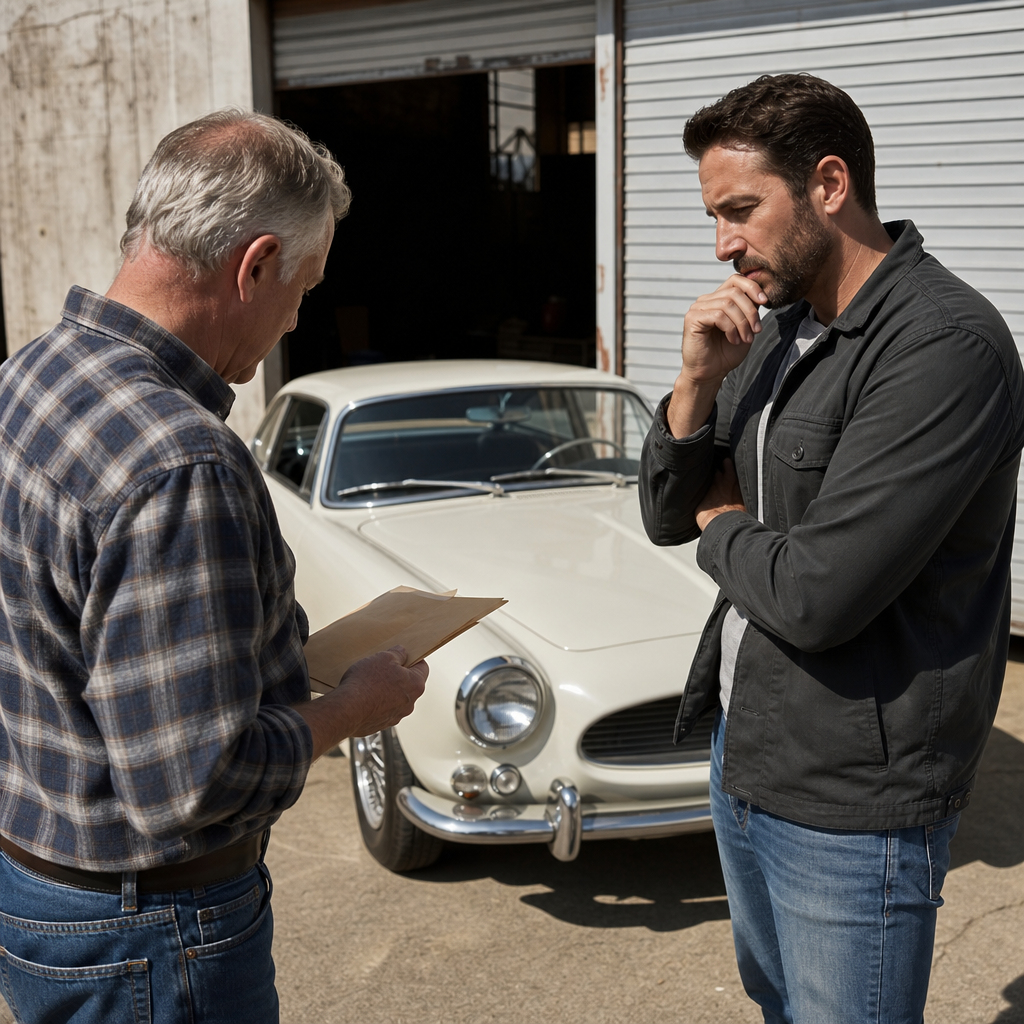
Motivation must be verified against behavior. A seller claiming urgency who takes days to answer, refuses simple documentation, or resists inspections may not be serious. A motivated and credible seller usually provides cold-start videos, underbody images, ownership history, and paperwork quickly. That responsiveness is useful in negotiation because it tells you whether a clean, prompt deal has value to them. Many sellers will accept a slightly lower offer from a buyer who appears prepared, respectful, and capable of closing without drama.
Build Your Offer on Evidence, Not Emotion
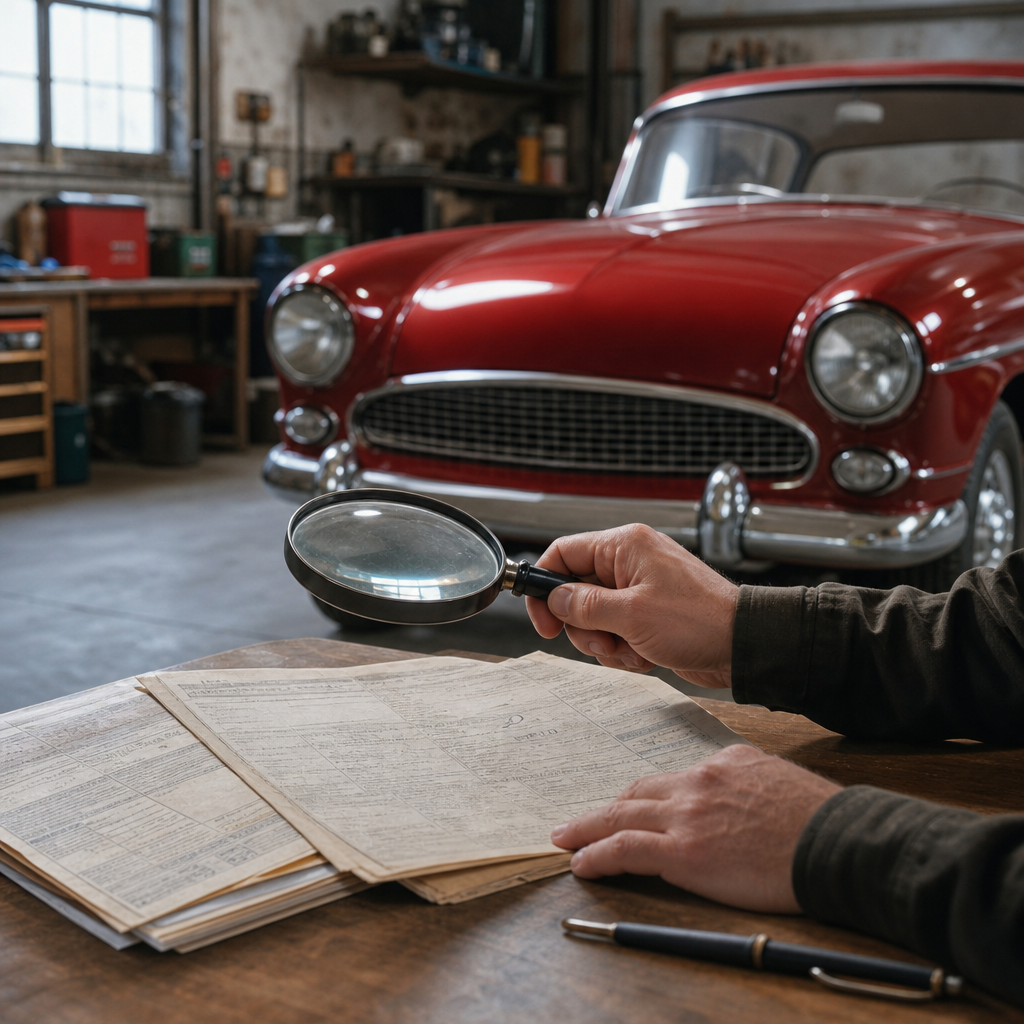
The most effective way to negotiate a classic car purchase is to make the seller feel your offer is reasoned, not opportunistic. That requires evidence. Start with comparable sales, but use true comparables rather than broad model averages. A 1967 Chevrolet Corvette coupe with a correct but non-original engine, older repaint, and partial documentation should not be priced from the same benchmark as a Bloomington Gold-level example with full provenance. Condition tiers matter. So do drivetrain originality, options, rust history, color combination, and quality of restoration workmanship.
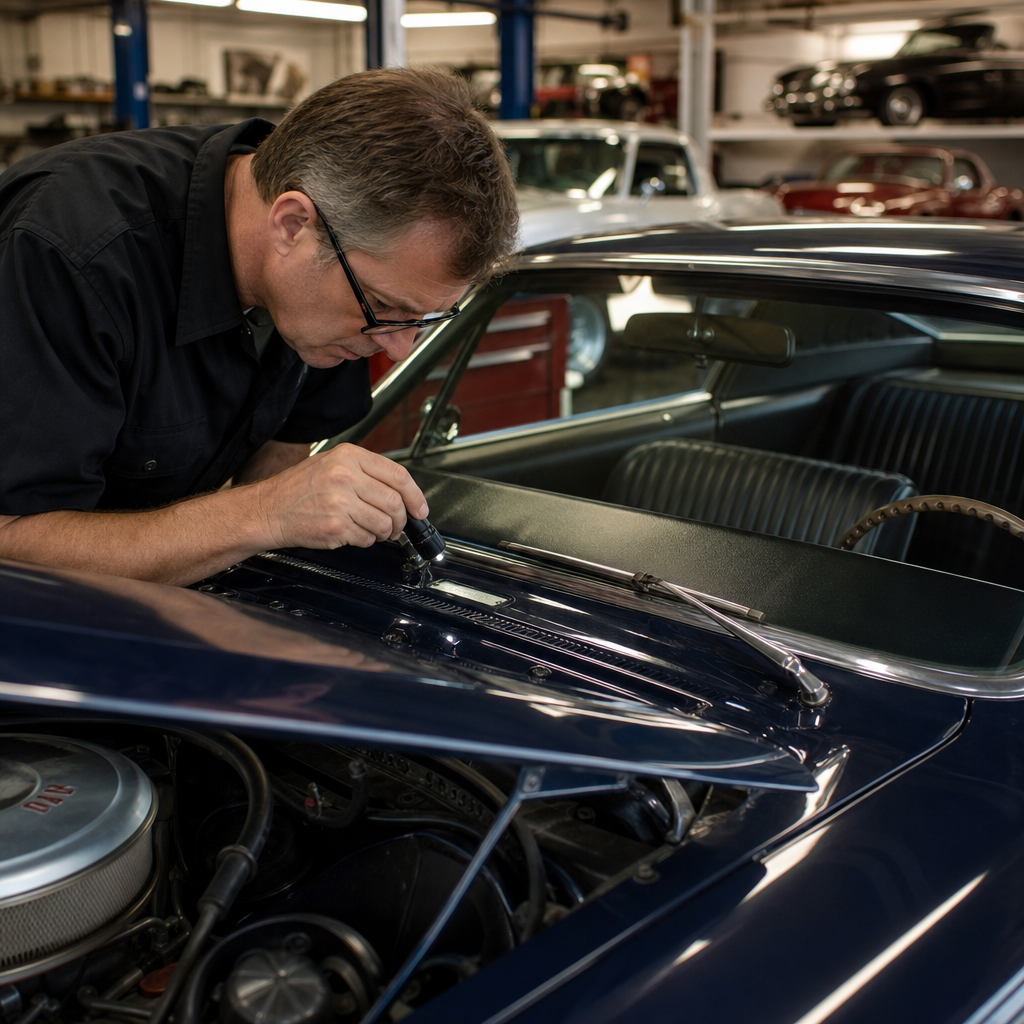
Pre-purchase inspections create the sharpest negotiating leverage because they turn vague concerns into itemized costs. A proper inspection may include compression and leak-down testing, paint-depth readings, borescope photos, undercarriage assessment, brake and suspension review, charging-system checks, and verification of chassis, engine, and transmission numbers where applicable. If the inspector documents seeping rear main seals, dried suspension bushings, amateur floor repairs, nonfunctional gauges, and old date-code tires, your offer can be tied to specific remediation expenses instead of a generic request for a discount.
| Negotiation factor | What to verify | How it affects price |
|---|---|---|
| Market comparables | Recent sales of same year, trim, drivetrain, condition | Prevents overpaying based on unrealistic asks |
| Mechanical condition | Compression, leaks, brakes, cooling, charging, drivability | Supports deductions for immediate repairs |
| Body and rust | Magnet test, paint meter, underside photos, repair receipts | Rust and poor metalwork justify major price reductions |
| Originality and documentation | Numbers matching, build sheets, ownership history, service file | Strong documentation supports value; gaps reduce confidence |
| Transaction friction | Shipping, title delays, spare parts, storage deadlines | Costs and inconvenience can be negotiated into terms |
Evidence-based negotiation also protects the relationship. Classic car deals are personal. Owners often have years of money and emotion invested. If you insult the car, you will lose access. If you calmly explain that your number reflects recent sales, inspection findings, transport cost, and the risk you are assuming, many sellers will engage even when they reject your first offer. That keeps the door open for a follow-up when timing shifts in your favor.
Use the Listing Cycle and Communication Pace to Your Advantage
Negotiation timing improves when you understand the life cycle of a listing. Early in the cycle, your goal is information gathering and positioning. Ask smart questions, request specific photos, and learn whether the car matches the description. If a listing is strong and the car is rare, waiting can cost you the opportunity. But on ordinary or condition-compromised examples, patience often improves terms. Sellers become more realistic after repeated low-quality inquiries, no-show buyers, and stalled conversations. This is especially true on Facebook Marketplace, Craigslist, and general classified sites, where sellers often deal with tire-kickers before they meet a serious buyer.
Communication pace is a leverage signal. If a seller replies immediately, answers in detail, and follows up proactively, there may be strong interest from both sides, which can justify moving quickly with an inspection and deposit. If replies slow down after you ask for underbody photos, title images, or engine numbers, treat that as information. Either the seller lacks documentation, is hiding something, or is not committed to a transparent sale. In those cases, your negotiating posture should harden, because uncertainty is risk and risk deserves a lower number.
One tactic that works well is the conditional offer with an expiration tied to due diligence. For example, you can state that you are prepared to buy at a certain figure subject to a satisfactory inspection within seventy-two hours. This creates structure without false pressure. It signals seriousness while preserving your ability to renegotiate if the inspector finds problems. Serious sellers respond well to clear process because it reduces wasted time and vague back-and-forth.
Negotiate Beyond Price: Terms Often Deliver the Better Deal
Many buyers focus too narrowly on the sale price and miss the broader economics of the transaction. In classic cars, the best deal may come from negotiating terms: included parts, documentation, enclosed shipping assistance, extra wheels, hardtops, manuals, shop books, or a post-sale parts inventory that would cost thousands to source later. I have seen buyers save more value by securing a correct intake manifold, original steering wheel, rare trim pieces, and a stack of restoration receipts than by pressing for another modest reduction in cash price.
Timing matters here too. Sellers nearing the end of a transaction are often more willing to include items they initially planned to separate. This is especially common with project cars and older restorations, where shelves of take-off parts accumulate. Ask specifically what comes with the car. Request photos of spares, date-coded components, and any removed original items. Those pieces can materially affect authenticity, restoration ease, and future resale.
Terms also include payment structure and logistics. A seller may resist lowering price but agree to hold the car while you arrange financing, split transport costs, or allow extra time for international wire clearance. On consignment deals, the dealer may have less room on headline price but more flexibility on fees, storage, or minor reconditioning. On auction-platform purchases, buyer’s premiums and transport can erase an apparent bargain, so your timing strategy must factor total landed cost, not just hammer price or ask.
Know When to Push, When to Pause, and When to Walk Away
The hardest negotiation skill is restraint. Buyers lose deals by moving too slowly on exceptional cars, but they lose more money by forcing purchases that do not pencil out. If a seller refuses an evidence-based offer today, that does not mean the conversation is over. Some of the best buys happen after a calm pause. A week or two later, if the car remains unsold, you can re-engage without emotion and restate your terms. This works because time changes leverage. Storage deadlines get closer. New listings distract buyers. Confidence softens.
That said, pausing only works when you have alternatives. Build a pipeline of comparable cars so you are never negotiating from scarcity mindset. Marque clubs, registry sites, model-specific forums, and specialist dealers provide a broader market view than public classifieds alone. When you know there are other sound cars available, you can walk away from missing paperwork, suspect restamps, hidden rust, poor panel alignment, overheating, or stories that do not add up. Walking away is often the move that protects both your budget and your long-term enjoyment.
There are clear conditions where walking is mandatory: inconsistent VIN or title data, refusal of inspection, evidence of serious structural rust, poor-quality restoration concealed by fresh paint, or a seller who keeps changing essential facts. No discount is large enough to compensate for provenance problems or major hidden body work on a collectible car. Good negotiation strategies are not about winning every deal. They are about buying the right car at the right time on terms that make sense.
Timing your purchase for the best deal comes down to disciplined negotiation, not luck. The strongest buyers study seasonal demand, track comparable sales, watch listing age, and identify genuine seller motivation before discussing price. They support offers with inspection findings, documentation gaps, transport realities, and real repair costs. They also understand that value is not limited to the headline number. Included parts, paperwork, shipping support, and clear title handling can materially improve the transaction.
As the hub for negotiation strategies in Buying & Selling Classic Cars, this guide establishes the core principle that should shape every related decision: leverage comes from preparation plus timing. Buy when competition is thinner, engage when the seller is credible and motivated, and negotiate from evidence rather than emotion. If the facts support the deal, move decisively. If they do not, wait or walk. That discipline is what consistently produces better purchases, fewer surprises, and stronger resale potential later.
Use this framework on your next classic car search. Review the market, ask sharper questions, order the right inspection, and structure an offer that reflects the real condition of the car and the real timing of the sale. Done well, negotiation stops feeling adversarial and starts functioning as what it should be: a method for arriving at a fair price with a clear-eyed understanding of risk, quality, and opportunity.
Frequently Asked Questions
When is the best time of year to buy a classic car for the strongest deal?
The best time to buy a classic car is usually when demand softens, not when enthusiasm peaks. In practical terms, that often means late fall through winter for many enthusiast vehicles, especially convertibles, weekend drivers, and cars that show best in warm weather. During spring, buyers are energized, auction headlines are everywhere, and sellers tend to price more confidently because they know more people are looking. By contrast, colder months can create better negotiating conditions because casual buyers step back, storage concerns become more immediate, and some owners would rather sell now than carry the car through another season of insurance, maintenance, and garage space costs.
That said, seasonality is only one part of the picture. The classic car market does not behave exactly like the modern used-car market. Rare, highly original, or especially desirable examples do not always follow predictable seasonal discounts because the right buyer may appear at any time. A documented air-cooled Porsche, an early fastback Mustang, or a well-sorted British roadster with strong provenance can still bring serious money in the middle of winter. What changes with the season is not just price, but leverage. In slower months, sellers may be more willing to discuss inspection findings, transport timing, included spare parts, or a realistic adjustment based on deferred maintenance.
The smartest approach is to combine timing with preparation. If you are shopping during a slower period, arrive with financing or funds ready, know the market for the exact model and condition level you want, and be prepared to act when a seller’s motivation aligns with your research. The best deal usually comes from catching a seller at the right moment with the right evidence, not simply waiting for a certain month on the calendar.
How do I know if a seller is truly motivated and likely to negotiate?
Seller motivation is one of the most valuable pieces of information in any classic car negotiation because it often matters more than the asking price itself. A motivated seller may still list high, but certain signals reveal flexibility. Long time on market is one of the clearest clues. If the same vintage Mustang, postwar coupe, or British roadster has been relisted multiple times, had price reductions, or has been circulating across platforms without selling, that usually suggests the market is resisting the number. Changes in the wording of an ad can also be revealing. Phrases like “need the space,” “moving,” “downsizing collection,” “too many projects,” or “must sell” often indicate urgency, though they should still be verified through conversation.
Phone calls are especially helpful because they reveal details listings leave out. A seller who readily discusses maintenance gaps, cosmetic flaws, title timing, or how long they have owned the car is often easier to work with than someone who insists the price is “firm” but cannot explain the car’s condition in depth. Motivation also shows up in responsiveness. Sellers who answer quickly, provide requested photos, share cold-start videos, or accommodate an inspection usually want a real transaction. On the other hand, a seller who is slow, vague, or evasive may be testing the market rather than genuinely prepared to sell.
Another strong indicator is mismatch between the car and the owner’s current situation. An aging restoration owner who no longer drives the car, a collector making room for a new acquisition, or an estate sale where heirs want a clean transaction can all create meaningful room to negotiate. The key is to listen carefully and respectfully. You are not trying to pressure someone; you are trying to understand their priorities. Once you know whether speed, convenience, certainty, or headline price matters most, you can structure an offer that feels attractive without overpaying.
Should I wait for prices to drop, or make an offer when I find the right car?
In the classic car world, waiting for the “perfect” market dip can be a costly mistake if you are shopping for a specific model, color combination, or originality level. Unlike modern vehicles, collector cars are not interchangeable inventory. One 1966 Mustang coupe is not necessarily equal to another, and two air-cooled 911s with the same year and trim can have radically different values based on rust history, documentation, mechanical condition, originality, and prior restoration quality. If you find a car that matches your goals and your research supports the number, it is often smarter to negotiate intelligently now than to wait indefinitely for a lower-priced example that may never appear in comparable condition.
That does not mean you should rush. The right move is to separate market timing from car quality. If the overall market is softening, use that information to support a disciplined offer, but do not assume every seller must eventually accept a bargain-basement price. Desirable cars with strong stories tend to resist broad market weakness better than mediocre cars with optimistic asking prices. A well-documented, rust-free, numbers-matching car can remain expensive even when average examples stall. In contrast, a tired restoration or incomplete project may drop further if demand fades.
The best strategy is to establish your ceiling before emotions take over. Review comparable sales, account for immediate needs such as tires, brakes, fuel-system work, paint correction, or interior repairs, and decide what the car is worth to you today. Then make a confident, evidence-based offer. If the seller says no and the car lingers, you can revisit later from a position of patience. If the car sells, you can move on knowing you avoided overpaying. In this market, discipline beats prediction almost every time.
What market data should I use to decide whether an asking price is fair?
A fair asking price should be judged against several layers of market data, not a single guide number. Start with recent comparable sales for the same model, body style, engine, transmission, and condition tier. Auction results can be useful, but they need context. A televised auction sale may reflect a different audience, higher emotion, and stronger presentation than a private-party listing. Likewise, online asking prices are only the starting point of negotiation, not proof of actual market value. What matters most is where similar cars have actually traded and what condition they were in when they sold.
Condition accuracy is where many buyers go wrong. Two cars that look similar in photos may be thousands apart in true value once you examine underbody rust, panel fit, paint depth, service records, and originality. A vintage British roadster with older repaint and cosmetic freshness may still be worth less than a scruffier but structurally excellent example. A postwar American coupe with shiny chrome and a tired drivetrain may require immediate spending that wipes out any apparent savings. Market data only becomes useful when you adjust it for the real condition of the car in front of you.
You should also study listing behavior. If several comparable cars have been advertised for weeks or months at similar prices without selling, that suggests seller expectations may be ahead of actual demand. Conversely, if the best examples disappear quickly, the market may be telling you that quality still commands a premium. Combine this with ownership history, documentation, restoration receipts, and pre-purchase inspection findings. In a strong negotiation, data is not used to “win” an argument; it is used to frame a reasonable offer grounded in what the market pays and what the car needs next.
How can I negotiate a better classic car deal without alienating the seller?
The most effective negotiations are calm, informed, and respectful. Classic cars are personal assets, and many sellers have emotional ties to them. If you lead with an aggressive lowball offer or criticize the car in a dismissive way, you may lose credibility immediately. A better approach is to show that you understand the car, appreciate what is good about it, and have done the homework necessary to discuss value seriously. When a seller sees that you recognize the strengths of their vintage Mustang, Porsche, or roadster, they are far more likely to engage constructively when you also point out the areas that affect price.
Structure your negotiation around facts. Mention comparable sales, explain how long similar cars have been sitting, and identify any immediate expenses supported by photos, records, or an inspection. For example, if the car needs tires due to age, has visible rust bubbles, lacks documentation on a claimed rebuild, or shows signs of deferred brake or fuel-system service, quantify those issues in practical terms. Sellers may disagree with your exact numbers, but they will usually respond better to a thoughtful breakdown than to a vague statement that the car is “not worth that much.”
It also helps to negotiate beyond just headline price. Sometimes the best deal comes from improved terms rather than a dramatic reduction. You might secure a lower final number by offering a quick closing, flexible pickup timing, or fewer contingencies after inspection. In other cases, the seller may hold firm on price but include spare parts, service records, transport assistance, or recently completed maintenance. Keep the tone collaborative. The goal is not to defeat the seller; it is to create a transaction both sides feel comfortable completing. In the classic car market, reputation, trust, and timing often close the gap more effectively than pressure.