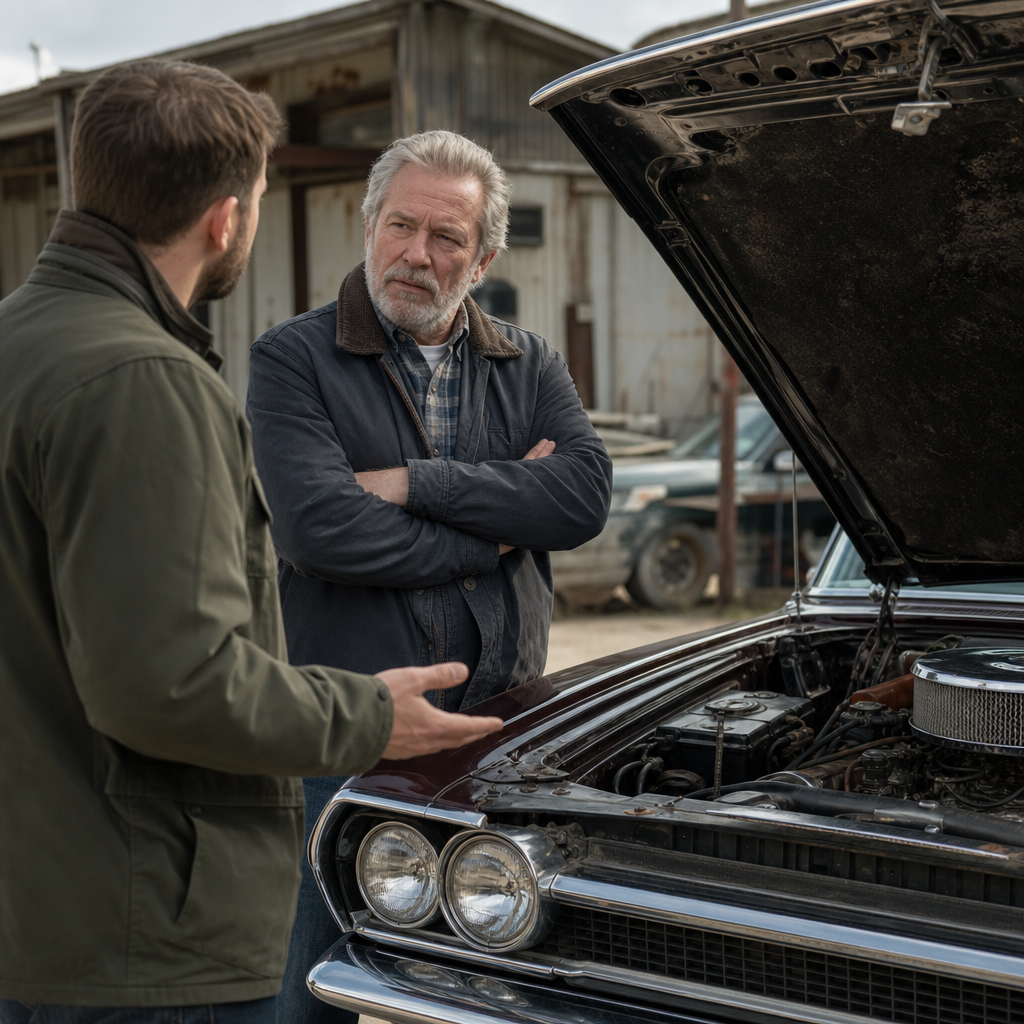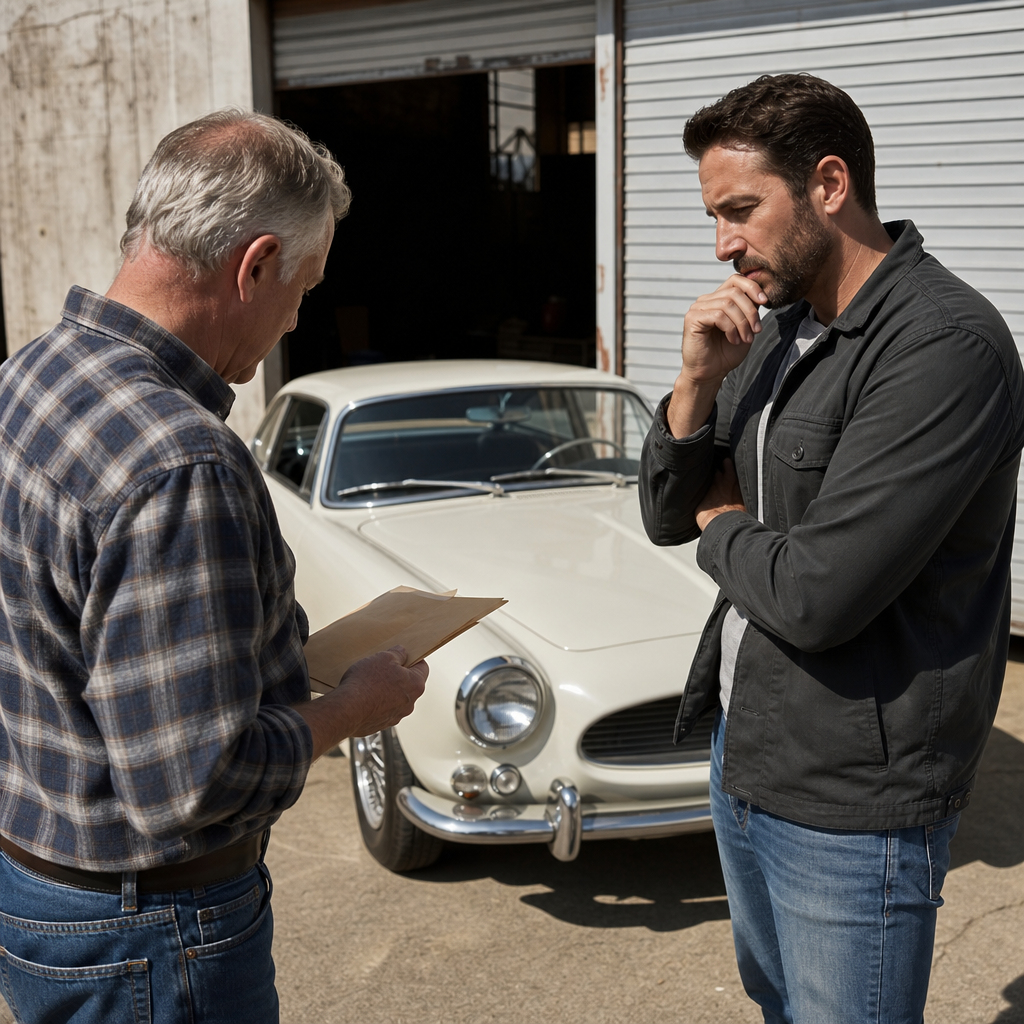

Negotiation strategies matter in every classic car deal because price is rarely fixed, motivation is rarely stated plainly, and the strongest outcomes usually go to the buyer who reads the seller better than the seller reads the buyer. In the classic car market, a seller’s weakness is not a character flaw or an invitation to play games. It is any pressure point that reduces the seller’s bargaining power: time pressure, poor documentation, unrealistic pricing, limited buyer interest, mechanical uncertainty, storage costs, title issues, or simple emotional fatigue. Spotting that weakness lets you negotiate from facts instead of guesswork, protect your budget, and avoid overpaying for rarity, nostalgia, or polished presentation.
I have negotiated for driver-quality muscle cars, unrestored European coupes, and fully restored trucks, and the same pattern repeats: the asking price tells you less than the seller’s constraints. A seller may sound firm while quietly paying monthly storage, facing an insurance renewal, funding another purchase, or realizing that a “numbers-matching” claim will not survive inspection. When you understand negotiation strategies in that practical way, you stop treating bargaining as a contest of personality and start treating it as a process of evidence gathering. That shift is especially important in classic cars, where condition, originality, provenance, and market timing can move value by thousands or tens of thousands of dollars.
This hub article explains how to spot a seller’s weakness in negotiation and use that information ethically. It also serves as a foundation for the broader Buying & Selling Classic Cars topic by covering the core negotiation strategies every buyer should know: how to read listing signals, what questions expose leverage, how inspection findings change the conversation, when silence works, when it backfires, and how to structure an offer that gets accepted without giving away unnecessary margin. If you are building your negotiation playbook, this is the page to start with before moving into vehicle inspection, valuation, title verification, transport planning, and bill-of-sale procedures.
Understand What “Seller Weakness” Really Means
The fastest way to improve negotiation results is to redefine the term clearly. A seller’s weakness is any verifiable factor that narrows their options. In a classic car transaction, that usually falls into five categories: urgency, credibility gaps, carrying costs, market mismatch, and asset risk. Urgency appears when the seller needs cash, needs space, is relocating, is liquidating an estate, or has already bought the next car. Credibility gaps appear when claims about originality, restoration quality, mileage, or ownership history are incomplete or inconsistent. Carrying costs include storage rent, finance charges, insurance, registration, and the time cost of showing the vehicle repeatedly. Market mismatch happens when the asking price reflects peak-auction optimism while the actual car is a local-market driver with flaws. Asset risk exists when the car has rust, deferred maintenance, title complications, or hard-to-source missing parts.
These weaknesses are not always visible at first glance, but they leave traces. A seller who says, “I know what I have” yet cannot produce restoration photos or casting numbers is revealing a documentation weakness. A car relisted three times with the same glamour photos but a lower price is revealing market resistance. A seller who insists on a quick sale before month-end may be managing a cash deadline. None of those facts mean the car is bad. They mean the seller’s position is softer than the headline price suggests, and that is where disciplined negotiation strategies begin.
Read the Listing Like an Appraiser, Not a Fan
Before you speak to the seller, mine the listing for leverage. Listing age is one of the strongest clues. In my experience, a desirable, correctly priced classic with strong photos, paperwork, and an honest description usually generates serious action quickly. When a car sits for weeks or months, the reason is almost always one of three things: price, presentation, or hidden concern. Watch for repeated edits, price drops, vague wording, and recycled text copied across platforms. A seller who keeps changing “excellent” to “very good” or deletes “fully restored” after questions has already started negotiating with the market.
Photos are equally revealing. Limited angles, no underbody shots, no close-ups of common rust points, and no cold-start video suggest the seller is protecting a weak area. For a 1967 Camaro, missing photos of the cowl, trunk drop-offs, quarter-panel lips, and front subframe mounts matter. For an air-cooled 911, a lack of photos around the battery box, torsion tube, and service records matters. For British roadsters, panel fit and floor repairs matter. Strong sellers volunteer proof because proof supports price. Weak sellers substitute adjectives for evidence.
Language also exposes posture. Phrases like “testing the waters,” “not desperate,” and “price will go up after I fix a few things” often signal the opposite of confidence. So does overemphasis on money already spent. New paint, rebuilt carbs, and fresh tires do not automatically raise market value dollar for dollar. In classic cars, buyers pay for correct work, documented work, and work they can verify. One of the most useful negotiation strategies is to separate cost from value. Sellers who cannot make that distinction often anchor on invoices that the market will not fully honor.
Ask Questions That Surface Pressure Without Creating Defensiveness
Good buyers do not interrogate; they sequence questions so the seller reveals constraints naturally. Start broad: How long have you owned it? Why are you selling now? How often do you drive it? What work has been done in the last two years? Then move into specifics: Do you have receipts, photos, and title in hand? Has it been listed elsewhere? What feedback have other buyers given? Are there any issues you would fix first if you kept it? Each answer can uncover leverage. “I’m selling because I bought another project” is different from “I inherited it and do not know much about it,” but both can soften price if handled respectfully.
The key is to listen for asymmetry between confidence and detail. Sellers with a strong position answer cleanly, produce records quickly, and remain consistent across calls, messages, and in-person discussion. Sellers with weaknesses drift into generalities, redirect questions, or rely on mechanic friends and previous-owner stories. That does not make them dishonest; many simply do not know enough. But in negotiation, lack of certainty reduces value because uncertainty transfers risk to the buyer. If the engine rebuild has no invoice, you should price it as unverified. If the title status is “should be fine,” you should treat that as a transaction obstacle, not a formality.
One tactic that works consistently is the pause after an incomplete answer. Ask, “Any rust repair?” If the seller says, “Nothing major,” stop talking. Silence encourages elaboration. You will often hear the useful part next: “Just a little in the trunk,” “the floors were patched years ago,” or “there’s bubbling behind the wheel arch.” Many effective negotiation strategies are less about clever lines than about creating space for the truth to emerge.
Use Market Data to Identify Overpricing and Weak Demand
A seller is weakest when the market does not support the ask and the seller knows it, even if they have not admitted it yet. That is why valuation work matters before you make contact. Compare the car against recent sales on Bring a Trailer, Cars & Bids, Hemmings, Mecum results, Hagerty Price Guide, and marque-specific forums. Then adjust for the details that actually move value: engine originality, transmission type, color, rust history, restoration age, documentation, options, and region. A factory big-block four-speed Chevelle with documented provenance sits in a different value band than a clone with a later engine and fresh paint.
Use comps carefully. Auction highs are not universal market value, and guide prices are not binding offers. Condition grading also gets abused. Many private sellers call a car “excellent” when it is really a solid driver with cosmetic needs. I use comps to build a range, not a single number, and I explain that range in plain language. For example, if similar driver-grade 1972 C10s are trading between $24,000 and $31,000, but the seller wants $38,000 with no photo documentation of the repaint and visible rust blistering, the weakness is not just overpricing. The weakness is isolation from the real market. A seller in that position has likely heard softer offers already. Your advantage comes from showing why those offers were rational.
| Signal | What It Often Means | How to Use It in Negotiation |
|---|---|---|
| Listing active over 45 days | Weak demand at current price | Reference comparable sales and make a measured offer |
| Multiple price reductions | Seller is testing lower market levels | Ask what changed and anchor below the latest reduction |
| Incomplete records | Higher buyer risk | Price the car as partially undocumented |
| Seller bought another car | Time or cash pressure | Offer a fast, clean transaction with defined terms |
| Mechanical issues disclosed vaguely | Fear of inspection findings | Insist on inspection and reserve room for adjustment |
Inspections Reveal the Weakness That Matters Most: Risk
Nothing changes a negotiation faster than an inspection report grounded in facts. In classic cars, pre-purchase inspections are not optional if the numbers are meaningful to you. Compression results, leak-down figures, paint meter readings, rust mapping, brake condition, suspension wear, VIN and body-tag verification, and evidence of previous collision repair all translate directly into negotiating power. Sellers may hold firm on aesthetics, but they struggle to dismiss measured deficiencies. If the inspector finds rust-through in structural areas, old fuel lines, cracked bushings, or a charging issue, you are no longer debating opinions. You are pricing repairs, downtime, and uncertainty.
Inspection leverage works best when tied to credible estimates. If the car needs floor pan repair, do not simply say “that’s expensive.” Cite likely costs from a shop familiar with the model, and distinguish between cosmetic correction and structural work. The same principle applies to missing trim, incorrect carburetion, or nonfunctional gauges. On many classics, sourcing period-correct parts can take months and cost more than general mechanical repairs. Sellers know this, especially if they have already postponed the work. That postponement is often a hidden weakness: they did not fix it because fixing it would not return enough money, or they lacked the appetite to manage the project.
There is a practical limit, though. Do not expect every flaw to produce a full-dollar discount. Markets price some imperfections in already. A driver-grade Triumph with minor oil seepage is normal; a freshly restored Jaguar with overheating on a short test drive is different. Strong negotiation strategies depend on separating acceptable quirks from true bargaining leverage.
Structure Your Offer to Exploit Friction, Not Emotion
Once you identify the seller’s weakness, the next step is to present an offer that removes friction. Price matters, but terms often matter nearly as much. A seller facing time pressure may accept less money for a fast payment, immediate pickup, and minimal back-and-forth. A seller worried about tire-kickers may respond to proof of funds, a clear inspection window, and a concise bill of sale. In my own deals, some of the best discounts came not from aggressive haggling but from making the transaction easy while staying firm on value.
Your offer should be specific. State the amount, explain the reasoning in two or three grounded points, and define the conditions. For example: “Based on the inspection showing rust repair in the rear floor, missing restoration receipts, and comparable sales in the high twenties, I can offer $27,500, subject to clear title and included spare parts. I can wire a deposit today and arrange enclosed transport by Friday.” That format tells the seller you are serious, informed, and not negotiating from impulse. It also prevents the conversation from drifting into abstract claims about rarity or sunk cost.
Avoid performative tactics. Extreme lowballs, fake walkaways, and invented competing cars can poison a deal and sometimes push a borderline seller back into stubbornness. Ethical pressure works better: patient silence, documentary evidence, calm repetition of your rationale, and readiness to leave if the numbers do not work. The strongest negotiation strategies are credible, not theatrical.
Know When Weakness Is Temporary and When to Walk Away
Not every seller weakness should be exploited, and not every weak seller is a good opportunity. Some weaknesses are transactional, such as relocation or storage expense; others signal a problematic car. If the seller is vague because they are busy, that may create a fair discount. If the seller is vague because the VIN does not align with the title, you may be looking at a legal and resale headache that no discount fixes. The discipline to walk away is part of negotiation, especially in classic cars where emotion can outrun evidence quickly.
Watch for compound weakness. A single issue can be manageable; several together usually mean deeper risk. A relisted car with no underside photos, a missing title, inconsistent engine claims, and a seller who refuses inspection is not just negotiable. It is dangerous. Conversely, an estate-sale car with dusty presentation, old tires, and a motivated family seller may be an excellent buy if the paperwork is clean and the structure is sound. Context is everything.
The main takeaway is simple: seller weakness becomes useful only when you can verify it, quantify it, and respond with disciplined terms. Study the listing, ask layered questions, validate value with real comps, and let inspections convert uncertainty into numbers. That process will help you buy better cars at better prices and avoid expensive mistakes that enthusiasm alone cannot fix. If you are building your classic car negotiation skills, use this page as your hub, then deepen your process with inspection checklists, valuation guides, title-transfer articles, and model-specific buying resources before you make your next offer.
Frequently Asked Questions
What does a seller’s “weakness” actually mean in a classic car negotiation?
In a classic car negotiation, a seller’s weakness is not about personality, emotion, or trying to take advantage of someone. It simply means any factor that lowers the seller’s leverage and makes them more likely to accept terms they might otherwise reject. In practical terms, that can include time pressure, inconsistent paperwork, a car that has been sitting unsold for too long, a price that is disconnected from market reality, mechanical issues that narrow the pool of willing buyers, or signs that the seller needs to close the deal quickly. A smart buyer looks for these factors because they reveal how flexible the seller may be on price, timing, repairs, transport, or included parts.
The key is to think in terms of bargaining power rather than “winning” or “losing.” A seller with complete service records, multiple interested buyers, a freshly sorted car, and a realistic asking price is negotiating from strength. A seller with missing history, vague ownership details, known drivability issues, and a listing that has been active for months is negotiating from a weaker position. That does not mean the car is a bad buy. In fact, many excellent deals come from situations where the seller has one or two pressure points that reduce confidence for the average buyer. Your job is to identify those pressure points calmly and objectively, then use them to structure a fair offer supported by evidence.
The most effective buyers avoid dramatic tactics and focus on facts. They ask direct questions, compare the car to recent sales, and note how the seller responds when concerns are raised. If the seller becomes unusually flexible when documentation, condition, or market demand is discussed, that is often a clue that you have identified a real weakness in their negotiating position. Done properly, this approach is not manipulative. It is simply disciplined buying.
What are the clearest signs that a classic car seller is under pressure and may be open to negotiation?
One of the clearest signs is urgency. If a seller mentions an upcoming move, loss of storage, a new purchase, estate settlement, divorce, health issue, or the need to free up cash, they may have less room to wait for a perfect buyer. You may also see pressure reflected in the listing itself. Phrases like “must sell,” “priced to move,” “need the space,” or repeated price drops usually indicate motivation. A car that has been listed across several platforms for an extended period with no visible movement can also suggest that the market is rejecting the current price or that buyers are finding issues during inspection.
Another strong indicator is weak presentation. Poor photos, a vague description, missing chassis or engine details, incomplete restoration information, and unclear ownership history all reduce buyer confidence. In the classic car world, uncertainty costs money. Even if the car is fundamentally solid, missing information shrinks the buyer pool because people assume the worst when details are absent. Sellers often do not realize how much this hurts them, but experienced buyers do. If you are willing to verify condition and fill in those gaps through inspection, you may be able to negotiate from a stronger position than less prepared buyers.
Pay close attention to how the seller handles questions. A confident, well-prepared seller usually answers clearly, provides documents quickly, and knows the car’s history. A pressured or weaker seller may dodge specific questions, over-explain minor details while avoiding major ones, or become unexpectedly flexible when asked about flaws. If they quickly offer to include spare parts, transport help, or a lower number before you have made a serious counteroffer, that often means they are more motivated than they first appeared. The goal is not to pounce on these signs, but to recognize that the seller’s ideal scenario may no longer be realistic.
How can documentation problems reveal a seller’s weak position?
Documentation is one of the biggest trust signals in the classic car market, so when paperwork is incomplete, inconsistent, or missing, the seller’s negotiating power usually drops. Buyers pay premiums for confidence. That confidence comes from clear title status, matching numbers where relevant, maintenance records, restoration receipts, ownership history, inspection reports, and evidence supporting originality or major upgrades. When those items are absent, the buyer has to price in risk. Risk can mean future repair surprises, difficulties registering the car, uncertainty about provenance, or the possibility that important claims about the vehicle cannot be verified.
For example, a seller may claim a car was fully restored, but if there are no invoices, photos, or specialist records to back that up, the market will not value the claim as highly. The same goes for engine rebuilds, transmission work, paint jobs, or interior refurbishment. In classic cars, verbal assurances are worth far less than documented proof. If a seller cannot establish what has been done, when it was done, and who did it, the burden shifts to you as the buyer. That creates a legitimate reason to negotiate more aggressively on price or request conditions such as a pre-purchase inspection, compression test, lift inspection, or extra time for document verification.
Documentation issues also matter because they reduce competition. Many buyers will simply walk away from a car with a questionable paper trail, especially if there are easier alternatives in the market. That smaller buyer pool weakens the seller’s hand. If you are still interested, use the missing records as a measurable factor, not a vague complaint. Explain specifically how lack of title clarity, missing restoration receipts, or unverified matching-numbers claims affect resale value and buyer confidence. Sellers respond better when they see that your offer is not arbitrary. It is based on the real market penalty that undocumented cars usually face.
How do mechanical issues and unrealistic pricing create leverage for the buyer?
Mechanical issues and unrealistic pricing are two of the most common negotiation openings in classic car deals because both directly affect demand. A classic car with drivability problems, leaks, overheating, electrical faults, brake issues, poor cold starts, smoke, transmission hesitation, or suspicious noises will scare off casual buyers immediately. Even experienced buyers become cautious because repair costs on older cars can escalate quickly. The seller may still love the car and believe the problems are minor, but the market sees uncertainty, inconvenience, and expense. That gap between owner perception and buyer reality is where leverage appears.
The same principle applies to unrealistic pricing. Sellers often anchor to emotional value, restoration spending, rarity claims, or optimistic online asking prices rather than actual sold-market data. But money invested in a car does not automatically translate into market value. A seller who is priced well above comparable sales is effectively weakening their own position, especially if the car remains unsold for weeks or months. Over time, stale listings create doubt. Buyers begin to assume there is a problem with the car, the price, or both. Once a listing goes stale, the seller’s credibility often softens along with their negotiating power.
To use this leverage effectively, stay evidence-based. If the car has mechanical needs, estimate repair costs conservatively and reference likely downtime, parts sourcing, and specialist labor. If the price is too high, bring recent comparable sales, not just other inflated listings. Then connect those facts to a specific offer. For example, instead of saying, “Your price is crazy,” say, “Comparable cars with verified records and fewer needs are trading in this range, and this one still needs sorting in these areas.” That approach is much harder to dismiss. It frames your position as informed and rational, which often moves the conversation from resistance to serious negotiation.
What is the best way to use a seller’s weakness without damaging the deal or creating conflict?
The best approach is respectful, precise, and unemotional. Start by asking thoughtful questions and listening carefully rather than trying to force concessions early. When you identify a pressure point, such as lack of documentation, extended time on market, or visible mechanical needs, use it to support a fair offer instead of turning it into an accusation. Sellers usually become defensive when they feel cornered, but they respond much better when the conversation stays centered on facts, risk, and market standards. Your tone matters as much as your numbers. Calm confidence is usually more effective than pressure.
It also helps to separate the seller from the car. You are not criticizing their judgment or trying to “beat” them. You are evaluating the vehicle as an asset with strengths, weaknesses, and a market value. Phrase things in a way that keeps the discussion professional: “The missing records make it harder for me to value the restoration,” or “Because the car has been listed a while, I want to be realistic about where the market is.” This makes it easier for the seller to engage without feeling personally attacked. In many cases, sellers already know where their weak spots are. They simply do not want them stated harshly.
Finally, be ready to act when the terms make sense. A seller’s weakness only creates an advantage if you are prepared, informed, and capable of closing. Have your financing or funds ready, know your transport plan, and be clear about your walk-away number. Motivated sellers often prefer certainty as much as price, so a clean, credible, hassle-free transaction can be just as persuasive as a slightly higher offer from a less organized buyer. The strongest negotiating position comes from combining empathy with discipline: understand the seller’s pressure, verify the car carefully, make a justified offer, and be willing to complete the deal quickly if the numbers align.</