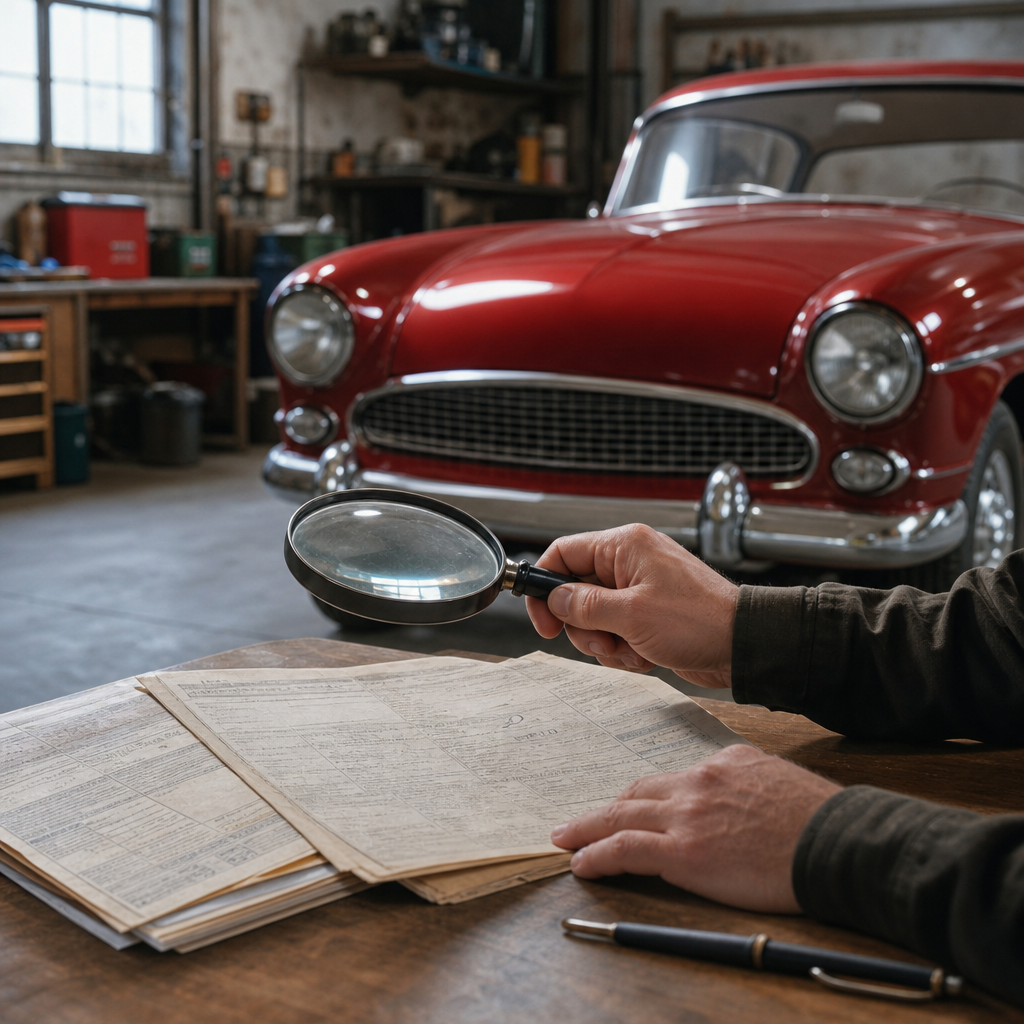
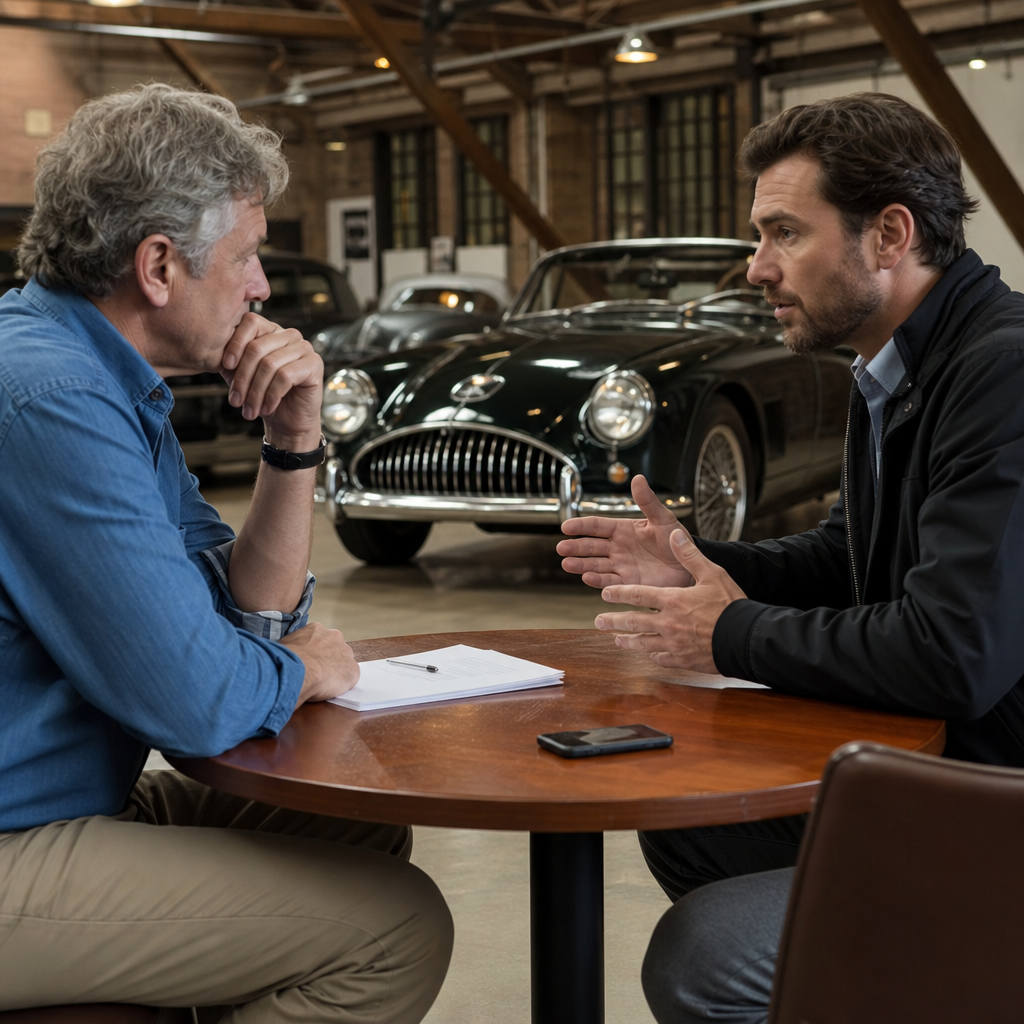
The psychology of negotiating classic car deals starts long before two people discuss price, because every transaction blends valuation, identity, nostalgia, risk, and status. In the classic car market, negotiation strategies are not just tactics for shaving a few thousand dollars off an asking price. They are structured ways to interpret emotion, test assumptions, uncover hidden constraints, and reach terms that both buyer and seller can live with after the trailer pulls away. I have negotiated enough collector-car purchases and sales to know that the visible conversation about money is only the surface layer. Underneath it are motives such as pride of ownership, fear of regret, attachment to originality, and the need to feel respected.
A classic car deal differs from an ordinary used-car transaction because the asset is part transportation, part historical object, part speculative purchase, and part personal story. A numbers-matching 1967 Corvette coupe, an early Porsche 911 with documented restoration, or a driver-grade Ford Bronco with tasteful upgrades all trigger different decision patterns. Buyers often anchor on auction headlines from Barrett-Jackson, Mecum, Bring a Trailer, or RM Sotheby’s, while sellers anchor on sunk restoration costs, magazine-feature fantasies, or sentimental memories. The result is a market where objective data matters, but perception often moves the final price more than spreadsheets do.
That is why understanding the psychology of negotiating classic car deals matters. Good negotiators know how to separate market value from emotional value, how to ask questions that reveal urgency, and how to frame offers so they are seen as credible rather than insulting. They also recognize the role of condition reports, ownership history, provenance, maintenance records, originality, and scarcity. Negotiation strategies in this space must account for inspection risk, title issues, transport logistics, and parts availability, not just headline sale prices. When handled well, negotiation protects capital, preserves relationships, and improves the odds that a purchase remains satisfying years later instead of becoming an expensive lesson.
This hub article explains the full negotiation process for buying and selling classic cars, from preparation through closing. It defines the core mental biases at work, shows how experienced buyers and sellers use information, and outlines practical methods for discussing price, concessions, contingencies, and walk-away points. If you want a complete guide to negotiation strategies within the broader buying and selling classic cars category, this is the place to start.
Why emotion drives classic car negotiation
Classic car negotiation is emotional because collector vehicles carry symbolic meaning. A split-window Corvette may represent childhood aspiration. A Mercedes-Benz Pagoda may signal taste and restraint. A first-generation Mustang may connect a seller to a parent or spouse. These meanings create what behavioral economists call an endowment effect: owners routinely value what they possess more highly than outside buyers do. In practice, this means a seller may sincerely believe a repaint, aftermarket wheels, or decades of storage adds value when the market may discount those same factors.
Buyers are not immune. They experience scarcity pressure and fear of missing out, especially when a desirable specification appears in a rare color, with a strong history file, at the start of auction season. I have watched disciplined buyers abandon their preset ceiling because they pictured the car in their garage before they reviewed compression numbers or rust photos. That is why the best negotiation strategies begin with emotional self-management. If you cannot regulate excitement, the seller will feel it and your leverage shrinks immediately.
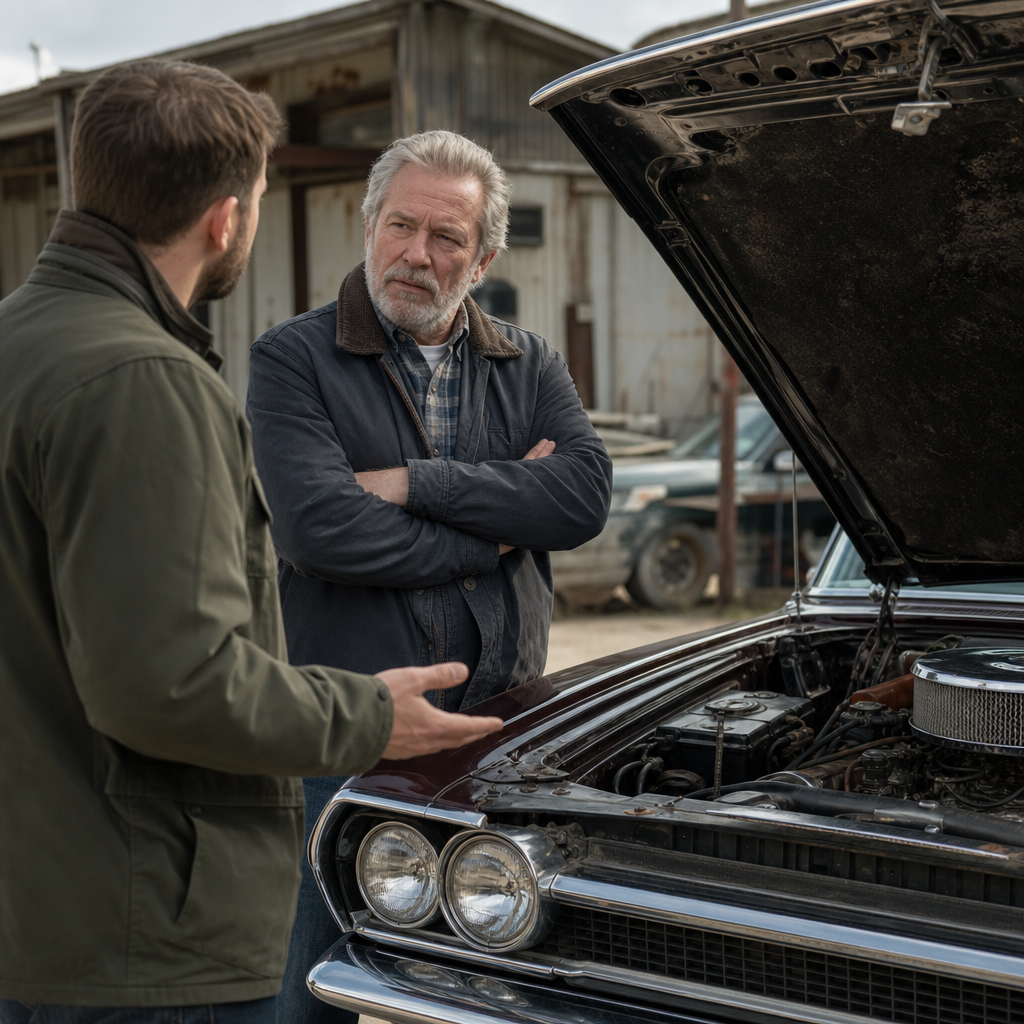
Respect also shapes outcomes. Many classic car sellers are not professional dealers; they are custodians of machines they have maintained for years. If a buyer opens with an aggressive lowball offer and no evidence, the seller often stops negotiating on principle. A smarter approach is to acknowledge what is genuinely strong about the car, then move carefully into market-backed concerns: non-original drivetrain, aging lacquer, incomplete service history, moisture in floor pans, or weak documentation for a claimed rare package. People defend against disrespect faster than they defend price.
Preparation and market intelligence before discussing price
The strongest negotiator usually has the best file, not the loudest voice. Preparation starts with defining the exact car, because “1969 Camaro” is not a valuation category. You need engine code, transmission type, trim level, restoration quality, body style, originality level, options, and documentation status. A Z/28 with cross-ram induction, protect-o-plate, and expert verification lives in a different pricing universe from a clone with fresh paint and limited paperwork. Negotiation strategies fail when the buyer compares unlike cars.
Reliable market intelligence should come from multiple sources. I typically review public auction results, private listing trends, marque forums, owners’ club classifieds, insurer valuation guides such as Hagerty, and historical sales archives where available. Auction data is useful, but it must be filtered. A televised prime-time sale with charity buzz, ideal weather, and two determined bidders can overstate the everyday private-market number. Conversely, a no-reserve online sale with poor photos, weak copy, and a holiday closing time can understate a good car’s value. Context is not optional.
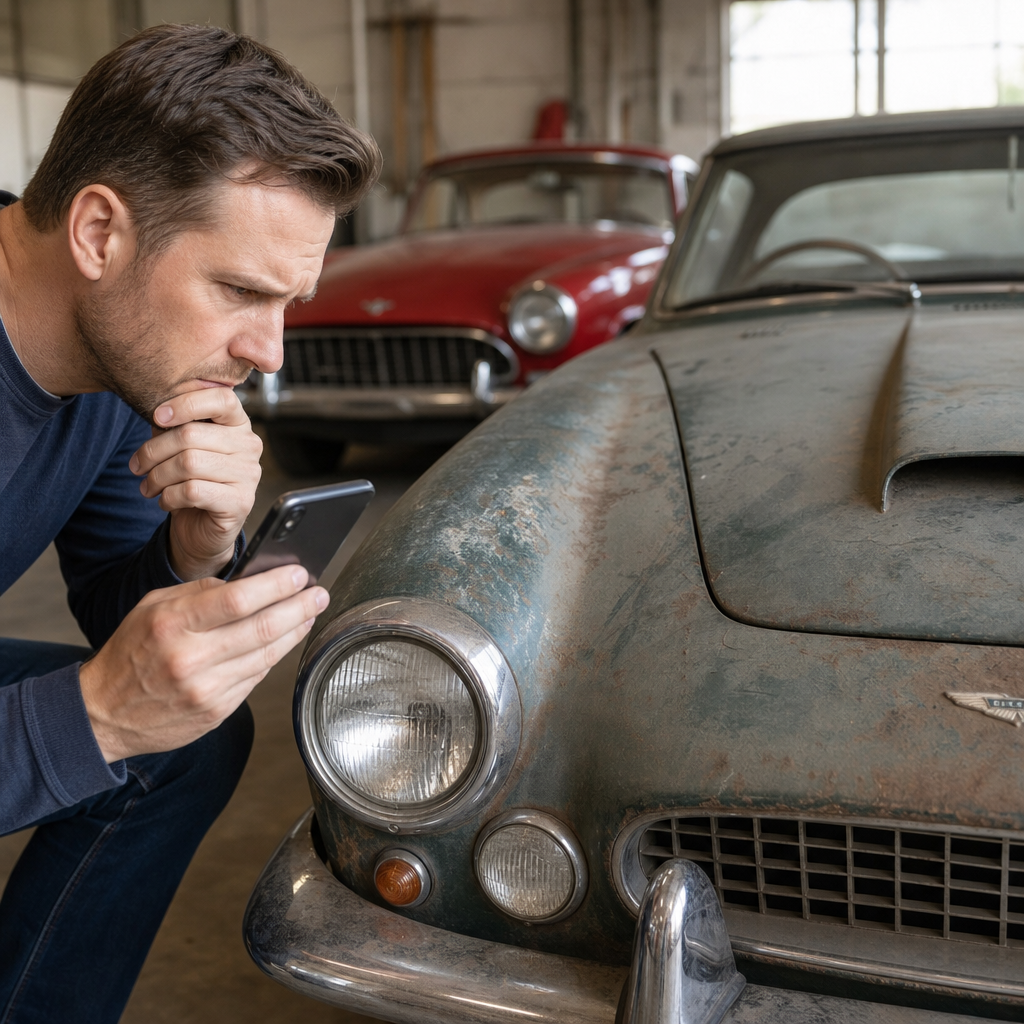
Inspection preparation matters just as much as price research. Before opening negotiations, identify the major risk categories for that model: rust in hidden structural areas, weak automatic transmissions, troublesome fuel injection systems, overheating tendencies, unavailable trim pieces, or unverifiable matching-numbers claims. Then estimate the cost of remedy. A buyer who can calmly say, “The car presents well, but the bubbling near the lower fender, the dated tires, and the missing trim tag rivets together change the economics by several thousand dollars,” sounds informed and reasonable.
| Negotiation factor | What to verify | Why it changes leverage |
|---|---|---|
| Originality | Matching engine, transmission, colors, factory options | Original cars command premiums and support stronger asking prices |
| Condition | Rust, paint quality, mechanical health, interior wear | Defects create measurable repair costs and justify concessions |
| Documentation | Service records, ownership chain, restoration receipts, certificates | Good records reduce uncertainty and increase buyer confidence |
| Provenance | Celebrity ownership, competition history, notable events | Documented history can raise value beyond standard market comps |
| Market timing | Seasonality, auction calendar, interest rates, buyer demand | Timing affects urgency and the number of competing bidders |
Preparation also means knowing your alternatives. If you have identified three comparable cars, one local and two within enclosed-transport range, you negotiate from choice instead of desperation. In negotiation terms, your leverage improves when you can walk away without losing your broader plan. Sellers have their own version: if they have multiple inquiries, fresh professional photos, and a recent inspection report, they can hold firmer. The side with the clearest options tends to make better decisions.
Anchoring, framing, and the first offer
Anchoring is one of the most powerful forces in classic car negotiation. The first serious number introduced into the conversation strongly influences the range that follows. Sellers know this when they choose list prices just above their true target. Buyers should know it too. If the asking price is unrealistic, do not argue abstractly. Re-anchor with evidence. Cite recent comparable sales, note meaningful differences, and explain your valuation range in plain terms. A market-backed counter is harder to dismiss than a naked discount request.
Whether buyers should make the first offer depends on information quality. If the car has been on the market for a while, the seller appears motivated, and you understand the model deeply, making the first offer can establish a favorable frame. If the market is thin and the seller may have stronger inbound interest than you can see, it can be better to ask questions first: “What kind of timeline are you working with?” “Have you had the car inspected recently?” “What matters most to you besides price?” Those answers reveal where movement may be possible.
Framing matters as much as the number itself. “I’ll give you $58,000” can sound adversarial. “Based on the inspection, current comps, and the mechanical work it still needs, I’m comfortable at $58,000 subject to clean title and the spare parts included” sounds disciplined. The second version shows logic, lowers perceived insult, and ties price to conditions rather than ego. In my experience, classic car sellers respond better when they can explain the concession to themselves as a rational adjustment.
Precision also helps. Specific offers often appear more researched than round numbers. An offer of $58,400 implies analysis in a way that $60,000 does not. This is a documented negotiation effect across markets, and it works especially well when paired with visible reasoning such as paint meter readings, brake service estimates, or current tire date codes. The goal is not manipulation. The goal is to show that your number comes from facts.
Reading motivation, urgency, and hidden constraints
The best negotiation strategies uncover why the other side is selling or buying now. Motivation determines flexibility. A seller downsizing a collection before a move, settling an estate, funding another purchase, or tired of a stalled restoration will negotiate differently from an owner testing the market with no pressure to sell. Buyers also reveal constraints: some need financing, some must fit within storage limits, some are shopping before a major auction, and some need a turnkey car because they lack restoration appetite.
You uncover these details by asking open questions and listening for specifics. “How long have you owned it?” “What work has been done in the last two years?” “What prompted the sale?” “What kind of interest have you seen so far?” The content matters, but so does the delivery. Hesitation around title history, evasiveness about rust repair, or vagueness about engine numbers often signals a problem worth verifying. Confident sellers usually answer directly and produce supporting documents without drama.
Silence is underrated. After making a well-supported offer, stop talking. Many negotiators weaken their own position by filling the silence with unnecessary concessions. In collector-car deals, the pause often prompts the other side to reveal useful information: a minimum they need, a recent appraisal, another bidder’s weakness, or a non-price concern such as storage timing. Information gained in silence is often more valuable than a quick verbal win.
Look for hidden non-price terms too. Included spare parts, hardtops, books, tools, transport timing, post-sale storage, inspection contingencies, and deposit structure can all affect value. I have closed deals where the price barely moved, but the buyer received original wheels, rare trim pieces, and thirty days of indoor storage, saving real money and stress. Negotiation strategies work best when price is treated as one variable among many.
Using inspections, documentation, and defects without killing the deal
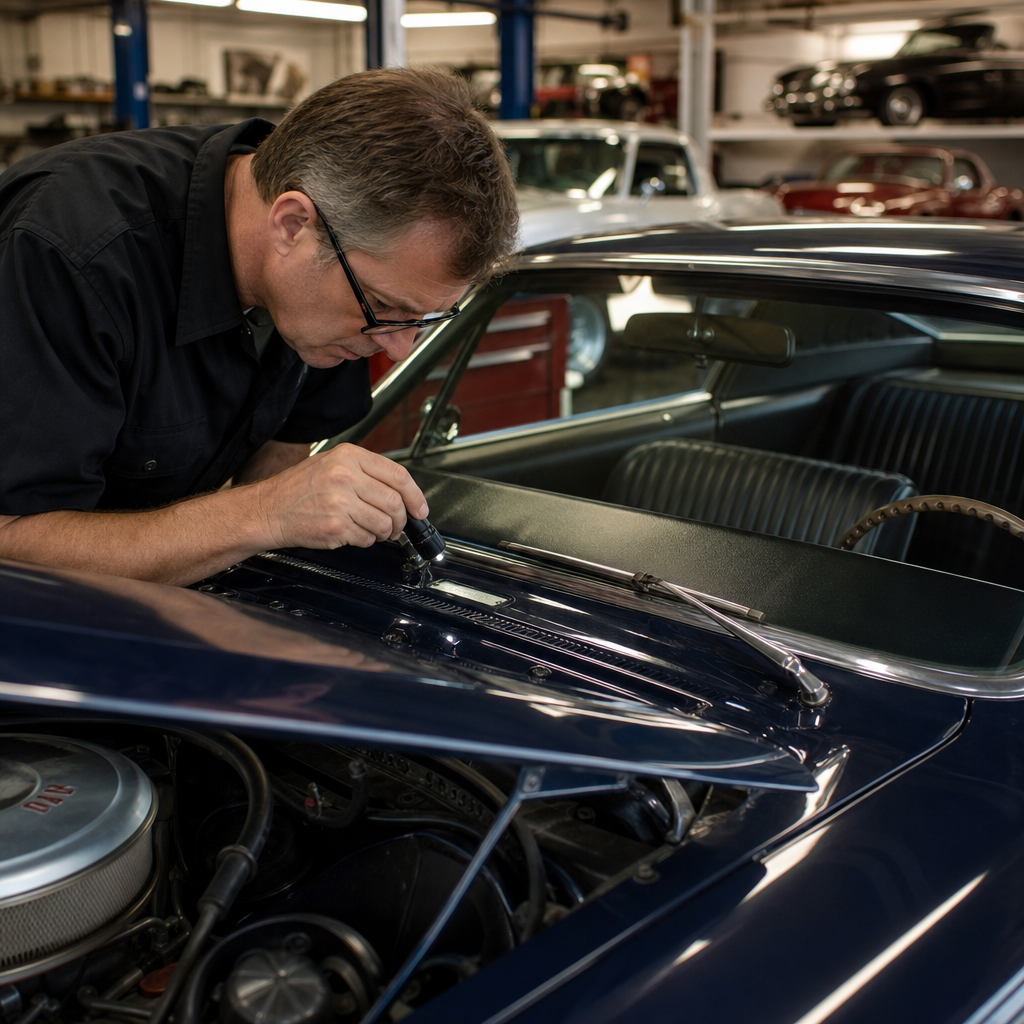
Vehicle inspections are both a valuation tool and a psychological reset. They move the conversation from opinion to evidence. For classic cars, a proper pre-purchase inspection should include body and chassis review, rust assessment, driveline verification, compression or leak-down testing where appropriate, electrical function checks, brake and suspension evaluation, and review of identification numbers and paperwork. On high-value cars, paint meter readings, borescope work, or marque-specialist authentication may be warranted.
The key is how you present findings. A defect list delivered like a courtroom indictment makes sellers defensive. A better method is selective, calm, and tied to economic impact. “The inspector found prior rust repair in the rocker area, the A/C is inoperative, and the gearbox synchros are weak. None of that makes it a bad car, but it does change what I can pay.” That language keeps the door open while asserting consequences. Good negotiation strategies reduce resistance by separating the car’s appeal from the cost to sort it.
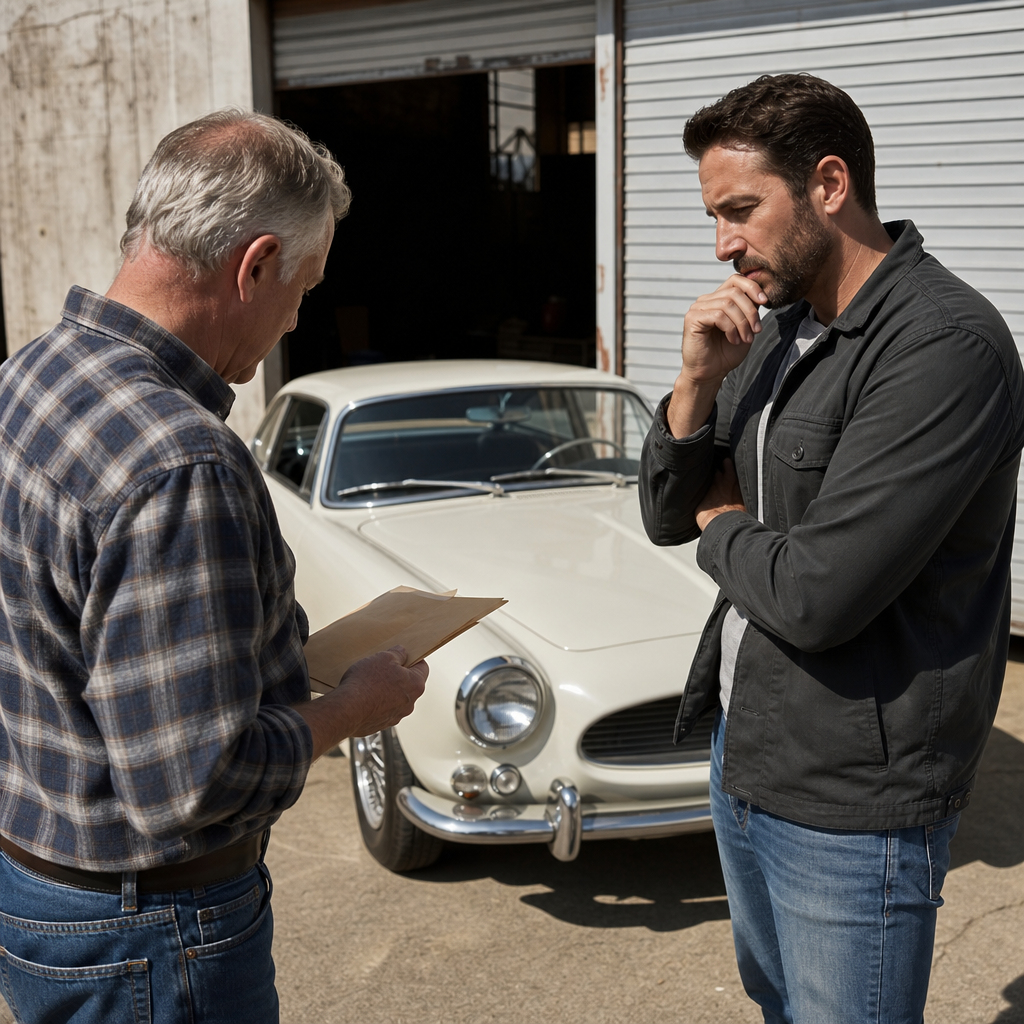
Documentation can strengthen either side. A seller with restoration photos, invoices from recognized specialists, ownership records, and model-specific certificates can justify firmer pricing because uncertainty drops. A buyer who notices gaps in mileage history, replacement stampings, or inconsistent trim details can use those gaps to request either a lower price or a contingency. In classic cars, uncertainty always has a price. If authenticity cannot be verified, the market discounts the car even when it looks excellent.
There is also a point where defects should end the conversation. Serious title issues, altered VINs, hidden structural corrosion, fraudulent provenance claims, and major undisclosed accident repairs are not routine negotiating chips. They are reasons to walk away. Experienced negotiators do not confuse persistence with discipline. Protecting yourself is part of the psychology of negotiating classic car deals, because sunk-cost thinking can trap buyers who have already invested time, travel, and emotion.
Closing the deal, preserving trust, and knowing when to walk away
Closing begins when both sides see a path to certainty. Summarize the terms clearly: price, deposit, payment method, included parts, title status, pickup date, storage period, contingency deadlines, and responsibility for transport. Put it in writing. Even in enthusiast-to-enthusiast transactions, a simple purchase agreement prevents memory drift and reduces post-deal friction. Wire instructions should be verified carefully, titles checked against seller identification, and liens confirmed released before funds move.
Trust is cumulative and fragile. Small behaviors matter: sending requested photos promptly, disclosing flaws before they are discovered, honoring deadlines, and not renegotiating at the last minute without new evidence. Reputation travels fast in marque communities. Dealers, brokers, restorers, and repeat private collectors remember who behaves professionally. Strong negotiation strategies aim for favorable terms, but they do not burn trust for a temporary win. In this market, relationships often produce future opportunities before listings ever go public.
Walking away is not failure. It is often the move that protects both capital and judgment. If the seller will not support claims with documentation, if inspection findings materially change the risk, or if the final number exceeds your prepared ceiling, leave politely. Another car will appear. The buyer who keeps discipline usually ends up with a better car or a better price. The seller who rejects a fair, evidence-based offer may return later when the market gives clearer feedback.
The central lesson is simple: successful negotiation strategies in classic car deals combine research, emotional control, respectful communication, and a firm grasp of risk. Price matters, but psychology often decides whether a transaction stalls, collapses, or closes cleanly. If you are buying or selling within the classic car market, use this hub as your foundation, then apply each principle deliberately on your next deal. Prepare thoroughly, ask better questions, document everything, and negotiate with enough discipline that you can enjoy the car long after the paperwork is done.
Frequently Asked Questions
Why is psychology so important when negotiating a classic car deal?
Psychology matters because a classic car is rarely just a machine with a market price. It is often tied to memory, identity, pride of ownership, and years of emotional investment. Sellers may see the car as proof of their taste, skill, or personal history, while buyers may project dreams of restoration, status, or nostalgia onto the purchase. That means the negotiation is not only about numbers. It is about how each side interprets value, fairness, risk, and respect.
In practical terms, understanding the psychology behind the deal helps you read what is really driving the conversation. A seller who appears rigid on price may actually be afraid the car will go to someone who does not appreciate it. A buyer who keeps asking for documentation may not be trying to nitpick every detail, but instead may be managing fear about hidden costs and future regret. If you recognize those emotional drivers, you can frame your offer more effectively, ask better questions, and avoid turning the discussion into a contest of ego.
This is especially important in the classic car market because valuation is often less precise than in newer vehicle sales. Condition, originality, provenance, rarity, restoration quality, and current collector trends all create room for interpretation. When objective data leaves gaps, emotion fills them. Strong negotiators know how to combine market evidence with emotional intelligence so the conversation stays productive. They do not just argue price; they reduce uncertainty, build trust, and make it easier for the other party to say yes without feeling defeated.
How can a buyer negotiate firmly without insulting a seller who is emotionally attached to the car?
The key is to separate the seller’s pride from the buyer’s evaluation. If a seller has owned a classic car for years, restored it personally, or associated it with major life experiences, they may hear a low or aggressive offer as criticism of their judgment rather than simply a business proposal. That is why the most effective buyers do not begin by attacking the asking price. They begin by acknowledging what is real and admirable about the car, the effort behind its upkeep, and the seller’s knowledge. Respect lowers defensiveness.
From there, a buyer should anchor the conversation in evidence instead of opinion. Rather than saying, “Your price is way too high,” it is better to say, “I like the car, but based on recent comparable sales, the paint correction needed, the uncertainty around matching numbers, and the lack of restoration receipts, I am more comfortable in this range.” That approach communicates seriousness and competence without sounding dismissive. It also gives the seller something concrete to respond to, which is much more productive than a vague disagreement over value.
Tone matters as much as content. A calm, measured, curious approach usually performs better than a confrontational one. Ask questions that invite the seller to explain the story, history, and mechanical details. Listen closely. Often, sellers reveal hidden motivations, such as needing a quick sale, wanting the car to stay local, or preferring a buyer who will preserve it rather than flip it. Those details can become negotiating advantages. A buyer can be firm on price while still being generous with respect, and in the classic car world, that combination often opens doors that hard bargaining alone will not.
What emotional biases most often affect buyers and sellers in classic car negotiations?
Several common biases shape these deals, and recognizing them can prevent expensive mistakes. One of the biggest is the endowment effect, where sellers value a car more highly simply because they own it. Years of maintenance, restoration costs, and personal memories can lead them to believe the car deserves more than the market will realistically pay. Closely related is sunk cost bias. A seller may think, “I spent $40,000 restoring this car, so I need to recover that money,” even though the market does not guarantee reimbursement for every dollar invested.
Buyers have their own vulnerabilities. Nostalgia bias can make a person overpay for the model they dreamed about as a teenager or one that reminds them of a parent, a movie, or a specific period in life. Scarcity bias is also powerful. If a buyer believes, rightly or wrongly, that “another one will never come along,” they may rush, skip due diligence, and agree to terms they would reject in a calmer setting. Confirmation bias can appear on both sides, with each party favoring information that supports what they already want to believe about the car’s condition, originality, or future appreciation.
Status and identity also influence behavior more than many people admit. Some buyers are motivated by the image the car projects, and some sellers want validation that they owned something special. This can make negotiations less rational and more performative. The antidote is structure: verified documentation, independent inspections, recent sales comparisons, and a clear understanding of your walk-away point. The more disciplined your process, the less likely you are to let emotion override judgment. In classic car deals, emotional awareness is not soft or secondary; it is a core part of financial discipline.
How do you tell whether a classic car seller is negotiating strategically or just emotionally?
You can usually tell by looking at consistency, specificity, and responsiveness. A strategic seller tends to have a coherent story about the car’s value. They can explain their asking price with reference to restoration work, originality, documentation, ownership history, and comparable sales. They may still be firm, but their firmness has structure. They respond to evidence, consider reasonable points, and often signal where they do or do not have flexibility. Even if they negotiate hard, you feel that there is a framework behind their position.
An emotional seller, by contrast, often moves between different justifications depending on what feels persuasive in the moment. One minute the car is “impossible to find,” the next minute it is “better than any auction example,” and then the conversation shifts to how much they spent on it or how many people have admired it. None of those factors are meaningless, but when they replace verifiable facts, they usually signal attachment rather than disciplined pricing. Emotional sellers may also react personally to inspection findings, documentation requests, or lower offers, interpreting them as disrespect instead of standard due diligence.
That does not mean an emotional seller is impossible to work with. It simply means the buyer needs to manage the conversation differently. Move slowly, avoid inflammatory language, and ask grounded questions that pull the discussion back toward facts. “Do you have receipts for the engine rebuild?” is more useful than “I don’t believe the rebuild happened.” “Would you be open to a prepurchase inspection?” is more productive than “There’s probably something wrong with it.” Strategic negotiators recognize emotional behavior without feeding it. The goal is not to win an argument; it is to uncover whether a real deal is possible on terms that make sense.
What are the best psychological strategies for reaching a fair price in a classic car deal?
The best strategies combine preparation, patience, and framing. Preparation means walking into the negotiation with more than enthusiasm. You should know the model’s market range, common problem areas, restoration cost realities, title and documentation concerns, and how originality affects value. When you are informed, you project confidence and reduce the chance of being manipulated by urgency or storytelling. Preparation also helps you create a realistic target price, an ideal outcome, and a firm walk-away point before emotions start influencing your decisions.
Patience is equally important. Many classic car negotiations are won not by making the cleverest argument, but by resisting the pressure to react too quickly. Silence can be useful. So can a deliberate pause after new information is introduced. If the other side senses desperation, they gain leverage. If they sense steadiness, they are more likely to make reasonable concessions. Timing also matters. A seller who has had the car listed for months, is making room for another purchase, or is dealing with storage limitations may have more flexibility than their initial posture suggests. Good negotiators uncover those constraints by asking calm, open-ended questions and listening carefully.
Framing is the final piece. A fair price is easier to reach when the deal is presented as a solution rather than a victory. Instead of focusing only on “getting a discount,” frame your position around certainty, convenience, and reduced friction. A serious buyer with proof of funds, realistic expectations, and a willingness to move promptly can sometimes secure better terms than a higher but more uncertain bidder. Likewise, sellers often respond well when they feel the car is going to someone informed and respectful. In the classic car world, the strongest outcomes often come from making the other party feel understood while still staying loyal to the facts. That is the real psychology of successful negotiation: reducing fear, preserving dignity, and aligning value with reality.