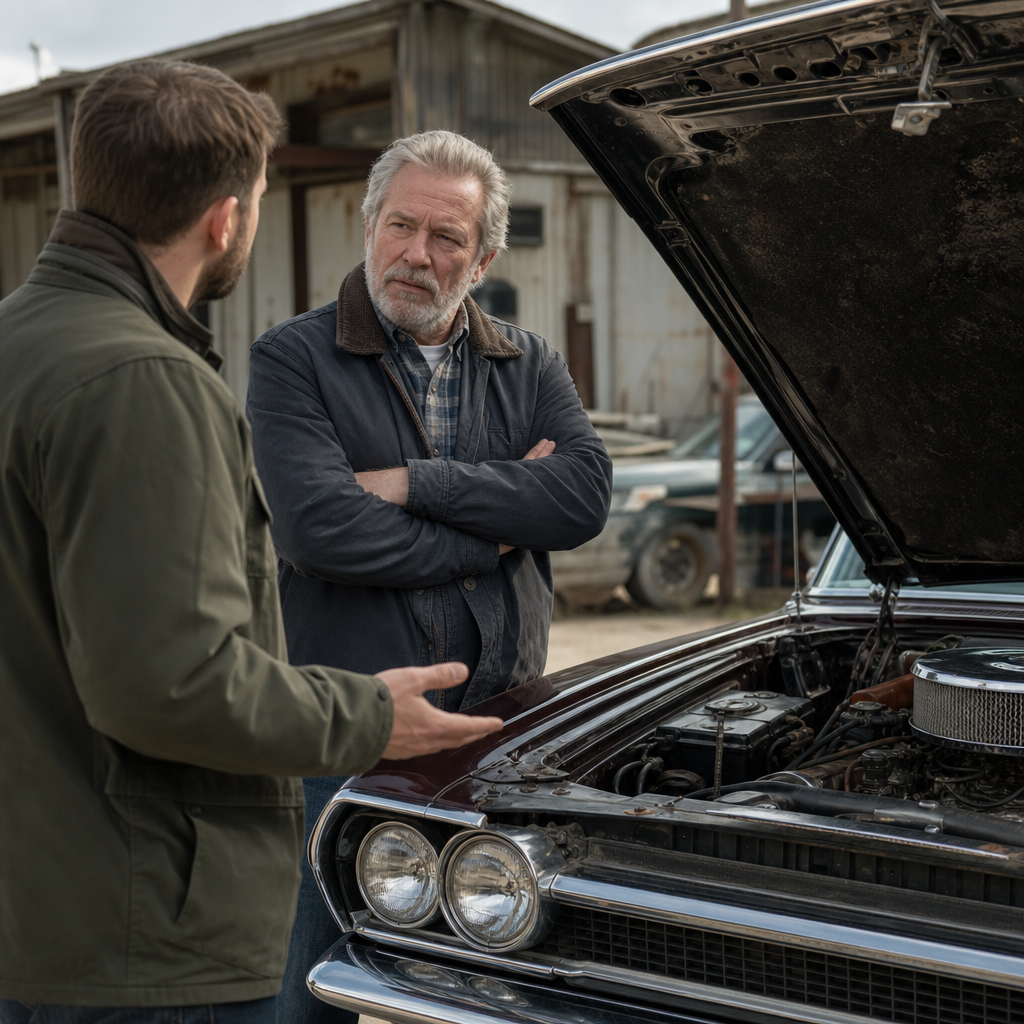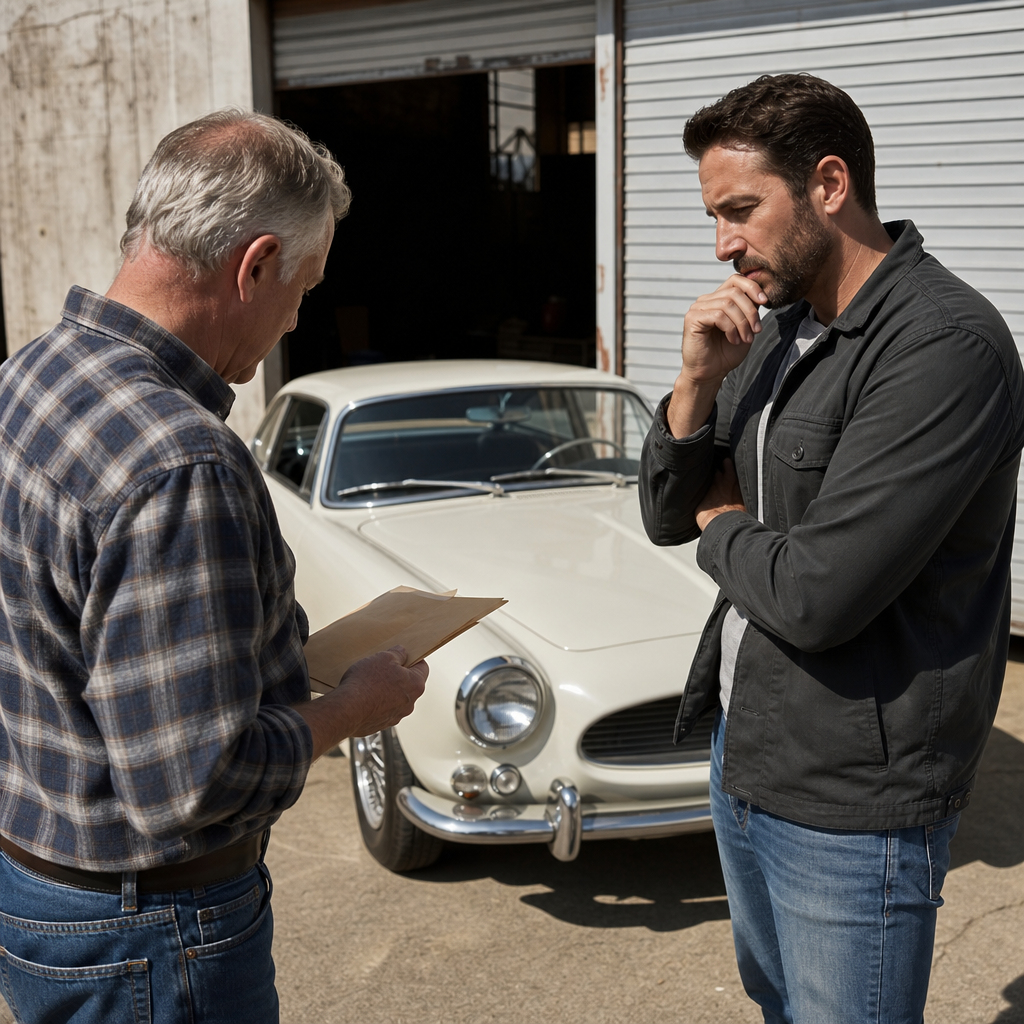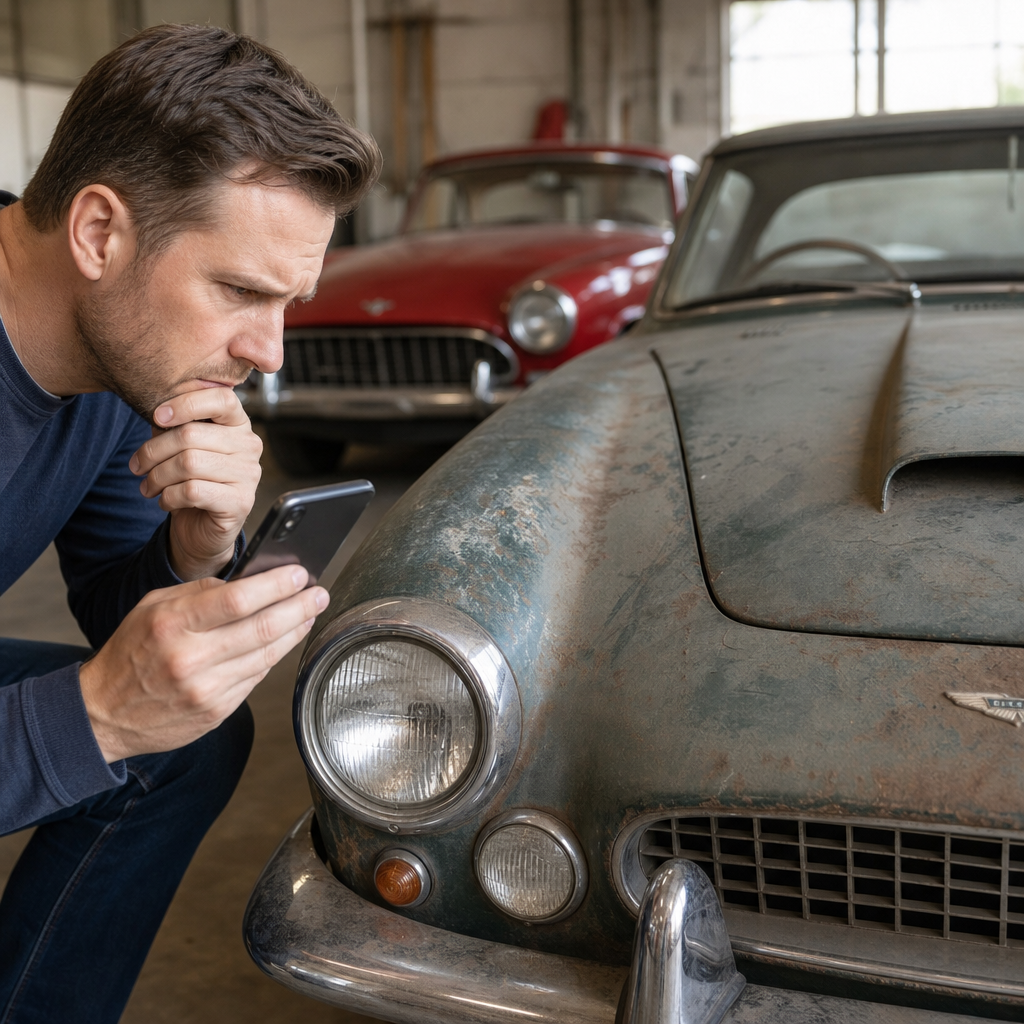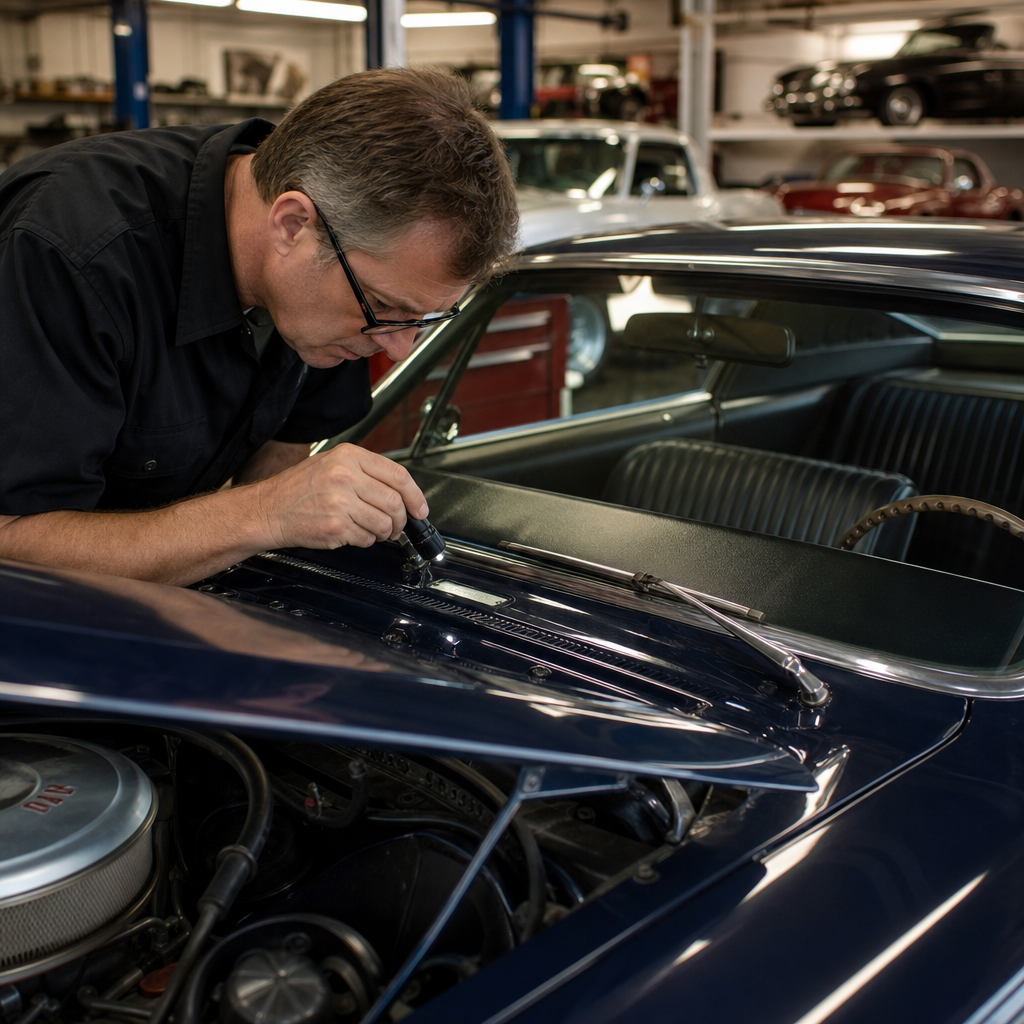

Lowball offers are a polarizing negotiation tactic in the classic car market because they can either open a productive conversation or kill a deal before it starts. In plain terms, a lowball offer is a bid materially below the seller’s asking price or below prevailing market value for a comparable vehicle. In classic car transactions, where condition, documentation, rarity, provenance, and emotion all influence price, defining “too low” is more complex than it is with ordinary used cars. I have negotiated purchases of driver-quality muscle cars, concours restorations, and unfinished project cars, and the pattern is consistent: lowball offers work when they are tied to facts the seller cannot ignore, and they fail when they signal disrespect, ignorance, or opportunism. For buyers and sellers alike, understanding when a low offer is strategic, when it is reckless, and how to respond can save thousands of dollars and prevent costly mistakes. This article serves as a hub for negotiation strategies in classic car buying and selling, covering valuation, timing, psychology, inspection leverage, seller motivation, and counteroffer structure so you can approach any asking price with discipline rather than guesswork.
What Counts as a Lowball Offer in Classic Car Negotiation
A lowball offer is not simply any offer below asking. In real transactions, it is an offer so far below the seller’s expected range that it changes the emotional tone of the negotiation. On a 1967 Ford Mustang fastback listed at $62,000, an opening offer of $58,000 may be ordinary negotiation. An offer of $40,000 is likely a lowball unless the car has undisclosed rust, title problems, or a nonmatching drivetrain. The spread depends on the quality tier of the vehicle. Highly documented, investment-grade cars with recent expert judging and known ownership history usually trade in tighter bands. Project cars, partially restored cars, and modified classics trade in wider bands because value is less certain and repair costs are harder to predict.
The strongest benchmark is not the seller’s asking price but the market-supported price range for that exact type of car in that exact condition. Buyers should compare recent auction results from Mecum, Barrett-Jackson, Bring a Trailer, and Cars & Bids where relevant, then adjust for originality, rust repair quality, trim completeness, color combination, drivetrain authenticity, and documentation. Price guides such as Hagerty Valuation Tools can help establish a baseline, but guides are starting points, not verdicts. In practice, a lowball offer becomes rational when your evidence shows the seller is anchored to a retail fantasy rather than to actual transaction data.
When Lowball Offers Work
Lowball offers work best when the car is overpriced, stale, flawed, or inconvenient for the seller to keep. Overpricing is common in the classic car market because owners often price from emotional investment rather than market reality. A seller may add the cost of a repaint, engine rebuild, and interior refresh and assume the market will reimburse every dollar. It usually will not. If comparable sales show similar cars closing at $32,000 to $36,000 and the seller lists at $47,000, a materially lower offer can reset expectations. It may not be accepted immediately, but it can become the reference point for serious negotiation.
Lowball offers also work when you identify objective defects with clear financial consequences. During inspections, I look for corrosion in torque boxes, frame rails, floor pans, rocker panels, cowl areas, and trunk drop-offs because rust repairs are expensive and often conceal previous shortcuts. Paint thickness readings can reveal filler-heavy panels or older accident work. Compression test results, cold-start behavior, fluid contamination, brake pull, steering play, and electrical faults all affect market value. If you can tie each defect to realistic repair costs, a low offer stops looking arbitrary. It becomes an evidence-based price reflecting the car’s true condition after risk is accounted for.
Timing matters too. Sellers facing storage pressure, estate liquidation, divorce, relocation, tax obligations, or the arrival of another purchase are often more flexible than the listing suggests. Seasonal patterns are real as well. Convertibles generally attract stronger demand in spring, while projects can soften in winter when casual buyers disappear. A seller who has relisted multiple times, reduced the price repeatedly, or moved from an enthusiast forum to a broad marketplace is often signaling fatigue. In these cases, a lower offer paired with proof of funds and immediate pickup can be more compelling than a higher but uncertain promise.
When Lowball Offers Fail
Lowball offers fail when they ignore market reality, insult the seller, or underestimate the seller’s alternatives. If a 1970 Chevrolet Chevelle SS 454 has matching numbers, strong documentation, high-quality restoration photos, and several interested bidders, an aggressive discount strategy is unlikely to work. Desirable specification, rarity, and credibility compress the room for negotiation. Sellers of top-tier cars usually know the market, know the recent sales, and know which details justify premium pricing. Offering far below that level tells them you either do not understand the car or are not worth engaging.
Execution matters as much as numbers. Messages like “cash today, what’s your bottom dollar?” routinely fail because they provide no rationale and suggest a buyer who will create friction later. So does criticizing the car in exaggerated terms to force a price cut. Experienced sellers have heard every tactic. When a buyer points to ordinary patina as if it were structural failure or calls a period-correct replacement carburetor a catastrophic originality issue, credibility evaporates. Once trust disappears, even a later reasonable offer may be ignored.
Lowballing also fails in competitive channels. On transparent auction platforms, public bidding creates social proof, and sellers can see demand materialize in real time. In enthusiast communities, reputation matters. If you become known for unserious offers, people stop responding. The classic car world is smaller than it looks, and many transactions happen through referrals, marque clubs, restoration shops, and repeat relationships. A failed lowball can cost not only the current deal but future access to better cars.
How to Build a Rational Offer Range
The most effective negotiators do not choose one number; they build a range before making contact. Start with the market value of a comparable car in honest condition, then subtract for every deviation that lowers desirability or increases risk. Missing documentation matters. Nonoriginal engines matter. Incorrect interior materials matter. Poor panel gaps, uneven paint texture, weak chrome, and incomplete trim matter. So do hidden costs such as transport, taxes, title correction, immediate safety work, and deferred maintenance. If the car needs tires because the date codes are a decade old, that is not a cosmetic issue. It is an immediate expense and a safety concern.
I use a simple framework: establish fair retail value, calculate unavoidable near-term costs, add a risk reserve for unknowns, and then define three numbers—ideal buy price, acceptable price, and walk-away price. This prevents emotional drift once the seller starts telling the story of the car. It is especially useful for classic cars because stories are part of the product. Provenance can add value, but sentimental narratives should not override objective defects.
| Offer Level | When to Use It | Example on a $35,000 Market Value Car |
|---|---|---|
| Ideal Buy Price | Car has visible needs, weak documentation, and moderate seller pressure | $28,500 after deducting $4,000 repairs and $2,500 risk reserve |
| Acceptable Price | Car is solid but not exceptional; negotiation likely | $31,500 with room for immediate maintenance |
| Walk-Away Price | Highest rational number before risk outweighs upside | $33,500 assuming no hidden issues emerge |
This structure keeps a low opening offer anchored to valuation logic rather than emotion. It also helps sellers understand that your number is not random. If they can rebut your assumptions with documentation or inspection records, the discussion can move constructively instead of collapsing into ego.
Buyer Tactics That Create Leverage Without Burning the Deal
The best low offer is often the one that does not feel like a lowball. Lead with evidence, not bravado. Ask for underside photos, VIN tags, stampings, restoration receipts, and cold-start videos before discussing price. Request documentation on engine rebuild mileage, transmission work, differential ratio, and any metal replacement. If the seller claims “no rust,” ask whether that means no perforation, no prior repair, or no visible rust today. Precision uncovers value gaps. Once facts are clear, present your offer in one coherent explanation: current comps, observed issues, likely repairs, and your ability to close quickly.
Terms can compensate for price. Immediate payment, flexible pickup timing, reduced contingencies after inspection, or willingness to handle shipping logistics all reduce friction for the seller. On several purchases, I have succeeded with offers below the seller’s target because I removed uncertainty. Sellers do not just compare dollars; they compare hassle, speed, and confidence of closing. A slightly lower number from a prepared buyer often beats a higher number from someone vague about transport, title transfer, or financing.
Another effective tactic is the conditional offer. Instead of saying, “I’ll give you $24,000,” say, “Based on the photos and the disclosed nonoriginal engine, I’m at $24,000 subject to frame rail inspection and matching the trim codes.” This keeps your price firm while making clear that accuracy and transparency can preserve the deal. It also protects you from the classic car market’s biggest risk: buying a story that inspection cannot support.
How Sellers Should Respond to Lowball Offers
Sellers should not treat every low offer as an insult. Some are lazy. Some are predatory. But some are simply the market speaking more honestly than friends have. The right response starts with classifying the offer. If the buyer gives no rationale, ask for one. If the rationale is weak, reject politely and restate your evidence: recent comparable sales, restoration documentation, judging sheets, originality details, and known maintenance. If the rationale exposes real weaknesses you have overlooked, revise your expectations before the car goes stale.
A practical seller response is a calibrated counter rather than outrage. Suppose your asking price is $48,000 and a buyer offers $37,000 with credible references to paint flaws, a replacement transmission, and incomplete ownership history. If your true minimum is $43,000, counter there and explain why. You preserve dignity, keep the conversation alive, and test whether the buyer is serious. If they move meaningfully, you likely have a deal path. If they do not, you have lost nothing.
Sellers can also reduce exposure to lowballing by improving the listing itself. Include extensive photos of common rust areas, stampings, trim tags, underbody, and known defects. State what is original, what is replaced, and what is undocumented. List recent work with dates and invoices. A transparent listing narrows the spread between asking price and perceived value because buyers spend less time pricing uncertainty. The less ambiguity in the ad, the less room there is for opportunistic discounting.
The Psychology Behind Low Offers
Negotiation in classic cars is not purely financial. Identity, nostalgia, pride of ownership, and fear of regret all shape pricing behavior. Buyers often anchor on the cheapest comparable they have seen, even if it was a distressed sale or an inferior car. Sellers anchor on peak auction headlines or on money spent during restoration, even though restoration cost and market value frequently diverge. Lowball offers can work when they break an unrealistic anchor, but they fail when they trigger a status threat. Once a seller feels mocked, objective discussion becomes harder.
The remedy is respect paired with firmness. A sentence like “I can see the car has had serious care, but the nonmatching 390 and older repaint put it in a different market bracket” acknowledges the seller’s effort while defending your valuation. This is not soft language for its own sake. It is a practical way to keep the seller’s brain in analytical mode instead of defensive mode. In my experience, respectful directness closes more deals than performative toughness.
Choosing the Right Negotiation Strategy for the Car
Not every classic car should be approached with a lowball strategy. For blue-chip cars with excellent documentation, strong originality, and broad demand, the better move is often a clean, fair offer backed by immediate execution. For unfinished projects, estate cars, poorly documented restorations, or listings that have clearly overshot the market, a lower opening offer can be effective if it is justified line by line. The rule is simple: be aggressive on uncertainty, measured on quality, and disciplined on your ceiling.
As a hub for negotiation strategies in classic car buying and selling, the core lesson is that price is only one part of leverage. Knowledge of comps, understanding of condition, timing, seller motivation, inspection skill, and credible closing terms matter just as much. Lowball offers work when they reveal truth. They do not work when they replace analysis with attitude. Before you send an offer or answer one, build your evidence, know your range, and negotiate like someone who expects the facts to decide the deal.
In the classic car market, the smartest negotiators are rarely the loudest. They are the buyers and sellers who know exactly what a car is, what it is not, and what that difference is worth in dollars. A lowball offer can be useful when a seller is anchored to an unrealistic number, when defects materially change value, or when timing creates legitimate urgency. It becomes destructive when it ignores strong market evidence, dismisses documentation, or turns the negotiation into a contest of ego. That is why disciplined negotiation strategies matter across every stage of buying and selling classic cars.
If you remember only three takeaways, make them these. First, define value from comparable sales and condition, not from hope or sunk costs. Second, connect every offer or counteroffer to specific facts such as rust, originality, provenance, mechanical needs, and transaction certainty. Third, protect relationships and credibility, because this market rewards serious participants and quickly filters out the unserious. Whether you are buying a driver-quality coupe, selling a restored convertible, or evaluating a risky project, the same principle holds: informed leverage beats aggressive posturing.
Use this article as your starting point for negotiation strategies, then apply the framework to the specific car in front of you. Build your range, document your reasoning, inspect carefully, and communicate clearly. If you do that, you will know when a lowball offer is your best tool, when it is likely to backfire, and how to reach a fair number without losing the deal. The next step is simple: review your target car against recent comps and prepare your first offer with evidence, not instinct.
Frequently Asked Questions
What counts as a lowball offer in the classic car market?
A lowball offer is generally any bid that lands materially below the seller’s asking price or below what comparable vehicles are actually trading for in the current market. In the classic car world, though, that definition is less clear-cut than it is with ordinary late-model used cars. Price is influenced by far more than year, make, and mileage. Condition, originality, restoration quality, rarity, ownership history, documentation, matching numbers, color combination, options, and even brand prestige can all move a car’s value significantly. That means an offer that looks aggressive on paper may be perfectly reasonable if the vehicle has hidden flaws, incomplete records, poor restoration work, or an unrealistic asking price.
In practical terms, a lowball offer is usually one that does not appear anchored to evidence. If a seller lists a car at $60,000 and similar examples are consistently selling between $55,000 and $62,000, an immediate $38,000 offer will often be viewed as a lowball because it ignores the market. By contrast, if the same car has rust issues, non-original drivetrain components, weak documentation, or cosmetic needs that the seller has not priced in, a much lower offer may be justified. The distinction is not just the number itself, but whether the buyer can support it with real comparables, inspection findings, and transaction logic. In classic car deals, sellers are usually far more receptive to a tough offer when it is framed as a valuation argument rather than a random discount attempt.
When can a lowball offer actually work?
Lowball offers can work when the seller is motivated, the car is overpriced, or the listing has been sitting long enough that reality has started to replace optimism. This happens more often than many buyers think. Some sellers anchor to auction headlines, emotional attachment, money spent on restoration, or an inflated sense of rarity. Others simply test the market with a high asking price to see if someone will bite. In those cases, a disciplined below-ask offer can open a productive negotiation, especially if it is accompanied by a respectful explanation and proof that the buyer is serious.
These offers also work better when the buyer has leverage beyond price. Being ready to inspect promptly, wire funds quickly, arrange transport, and close without drama can make a lower offer more attractive than a higher offer from an uncertain buyer. A seller may accept less to avoid delays, financing contingencies, repeated no-shows, or endless renegotiation. Lowball offers can also gain traction when new information changes the value picture, such as paint meter readings that suggest prior bodywork, compression results that point to engine issues, missing numbers-matching documentation, or signs of an older restoration that photographs hid well. In short, lowball offers tend to work when they reflect actual market conditions and solve a problem for the seller rather than simply trying to steal the car.
When does a lowball offer backfire and kill the deal?
A lowball offer usually backfires when it feels disrespectful, uninformed, or purely opportunistic. Classic cars are often emotional assets. Sellers may have owned the vehicle for years, invested heavily in maintenance or restoration, and attached part of their identity to the car. If your first move is an offer so far below reality that it suggests you have not done your homework, many sellers will stop engaging immediately. Even if they were willing to negotiate, a sharply low opening can create mistrust and make the conversation adversarial from the start.
It also tends to fail in situations where the market is strong, the car is accurately priced, and the seller has alternatives. Desirable models with strong documentation, known provenance, quality restorations, or rare specifications do not usually need to entertain bargain-hunting behavior. In these cases, a lowball offer signals that the buyer may be difficult throughout the process, which is often enough for a seller to move on. Another common problem is using a low offer without context. Saying “I’ll give you half” may feel efficient to the buyer, but it gives the seller no reason to respond seriously. In contrast, negotiation is much less likely to collapse if the buyer points to specific comparable sales, known condition issues, and a clean path to closing. The lesson is simple: if the number is low, the justification has to be strong, credible, and delivered professionally.
How should you make a lowball offer without offending the seller?
The best way to make a lowball offer is to make it evidence-based, respectful, and easy for the seller to evaluate. Start by showing that you understand the car and the market. Reference recent comparable sales, differences in condition, originality, and documentation, and any issues you have identified through photos, records, or an inspection. This changes the tone immediately. Instead of sounding like someone fishing for a discount, you sound like a buyer making a valuation case. Sellers do not have to agree with your conclusion, but they are much more likely to keep talking if they feel you are engaging honestly.
It also helps to present your offer in a calm, non-confrontational way. A phrase like, “Based on the recent comps I’ve seen and the paint and interior needs, I’d be comfortable at $42,000 and can move quickly if that works for you,” is far more effective than, “Your price is way too high.” The first keeps the seller’s dignity intact while making your position clear. You should also avoid exaggerated criticism designed only to justify a discount. Experienced sellers can usually tell when a buyer is nitpicking. Finally, pair the offer with credibility: proof of funds, willingness to place a deposit, readiness to schedule transport, and realistic timelines. A lower offer from a serious, organized buyer often gets more attention than a higher number from someone who seems uncertain or exhausting.
What should buyers and sellers keep in mind before using lowball tactics in a classic car negotiation?
Both sides should remember that classic car pricing is not perfectly objective. Unlike commodity products, these vehicles trade in a market shaped by passion, scarcity, presentation, and story as much as spreadsheets. Buyers should avoid assuming every high ask is irrational, because some cars truly deserve a premium due to provenance, originality, exceptional restoration quality, or unusual specifications. Sellers, on the other hand, should recognize that not every below-ask offer is insulting. Sometimes the market is speaking clearly, and a lower number reflects legitimate concerns about condition, documentation gaps, or shifting demand rather than bad faith.
The smartest approach is to treat lowballing as a strategic tool, not a default habit. For buyers, that means knowing when to use an aggressive opening and when it is better to lead with a fair but firm offer that keeps the seller engaged. For sellers, it means distinguishing between unserious bargain hunters and disciplined buyers making a rational valuation argument. In many successful transactions, the first offer is not the final price; it is the start of discovery. If both parties stay focused on facts, comparable sales, and practical closing terms, even a low initial offer can lead to a deal. If either side lets ego drive the process, the negotiation often stalls. In the classic car market, where every car has its own story and every seller has a different motivation, judgment matters more than tactics alone.