The 1990s were a turning point for Japanese classic cars, and many of the decade’s best machines are no longer just used performance bargains or quirky imports. They are established collectibles. When enthusiasts talk about 1990s Japanese classic cars becoming classics, they usually mean a specific shift: models once valued for speed, reliability, or pop culture appeal are now judged by rarity, originality, engineering significance, and long-term ownership experience. That change matters because buyers entering the market today face different questions than shoppers did ten years ago. Instead of asking which car is cheap and fast, they ask which Japanese classics deserve preservation, which models have the strongest parts support, and which examples are still attainable before values climb further.
In my experience working around collector-car buyers, auctions, and restoration decisions, Japanese cars from this era now occupy the same conversation once reserved for European sports coupes and American muscle. The reasons are concrete. Japan’s bubble-era engineering produced advanced powertrains, robust drivetrains, lightweight chassis, and distinctive styling. Automakers such as Nissan, Toyota, Honda, Mazda, Subaru, and Mitsubishi competed intensely in motorsport and on the street, and that rivalry created icons. Many of these vehicles also benefited from conservative maintenance culture in Japan and an export pipeline that later fed demand in the United States, the United Kingdom, Australia, and Europe. As import rules eased and nostalgia matured, a generation raised on Gran Turismo, Option videos, and touring car racing finally had buying power.
Defining a Japanese classic from the 1990s requires more than age. A true collectible typically has at least four qualities: technical distinction, cultural relevance, limited survival rates, and a strong enthusiast ecosystem. Technical distinction might mean Nissan’s ATTESA all-wheel-drive system in the Skyline GT-R, Honda’s VTEC in the NSX and Integra Type R, Toyota’s sequential twin-turbo 2JZ-GTE in the Supra, or Mazda’s lightweight rotary-powered formula in the RX-7 FD. Cultural relevance includes motorsport success, tuner influence, media exposure, and recognition outside niche circles. Survival rates matter because many of these cars were modified, raced, stolen, or neglected, making clean, stock examples much rarer than production numbers suggest. Enthusiast support matters because classics need specialists, reproduction parts, service knowledge, and active clubs to remain usable.
This hub covers the best 1990s Japanese classic cars through that broader lens. It is not only about halo coupes with six-figure auction histories. The category also includes homologation specials, sports compacts, rally-bred sedans, analog roadsters, luxury flagships, and overlooked GT cars that helped define the era. If you want a practical starting point for Japanese classics, the key is understanding where each model sits today: blue-chip collector piece, rising modern classic, or undervalued enthusiast car. Once you understand those tiers, buying decisions become much clearer.
What Makes a 1990s Japanese Car a True Classic
A 1990s Japanese car becomes a true classic when its historical importance outlasts fashion. That happens when engineering, design, motorsport credibility, and owner loyalty all remain relevant decades later. The strongest examples were never great in just one way. They offered a complete identity. The Acura NSX rewrote expectations for exotic reliability and ergonomics. The Nissan Skyline GT-R R32, R33, and R34 fused turbocharged power with dominant racing results. The Toyota Supra Mk4 paired bulletproof tuning potential with real grand-touring ability. These cars still command attention because later alternatives did not erase what made them special in the first place.
Condition and originality now heavily influence value. I have seen two identical-model cars trade at drastically different prices because one retained factory paint, correct wheels, original trim, and documented servicing, while the other wore period modifications and incomplete records. Unlike earlier years, the market increasingly rewards untouched examples, rare colors, low-mileage cars, and limited-production trims. Special editions such as the Mazda RX-7 Spirit R, Mitsubishi Lancer Evolution VI Tommi Makinen Edition, and Subaru Impreza 22B STi illustrate this pattern clearly. Their scarcity and direct ties to brand history push them beyond ordinary enthusiast demand into serious collector territory.
Another factor is usability. Japanese classics often compare favorably with older European collectibles because they start reliably, tolerate regular driving, and have broad specialist knowledge available. That does not mean ownership is easy. Twin-turbo systems age, rust attacks hidden seams, interior plastics become brittle, and crash repairs can be difficult to reverse correctly. Still, many 1990s Japanese classics remain more approachable than equivalent-era Italian or German exotics. For collectors who want to drive rather than simply display, that balance is a major reason this segment keeps gaining strength.
The Flagship Performance Icons That Defined the Era
The top tier of 1990s Japanese classics starts with the NSX, Supra, Skyline GT-R, and RX-7. Each represents a different philosophy. Honda built the NSX around low weight, aluminum construction, superb visibility, and naturally aspirated response. Ayrton Senna’s development input has become part of its legend, but the car’s real achievement is how modern it still feels. Early cars with the 3.0-liter C30A V6 and manual transmission are prized for purity, while later 3.2-liter six-speed versions offer stronger drivability. Values reflect both engineering importance and low survival of unmodified examples.
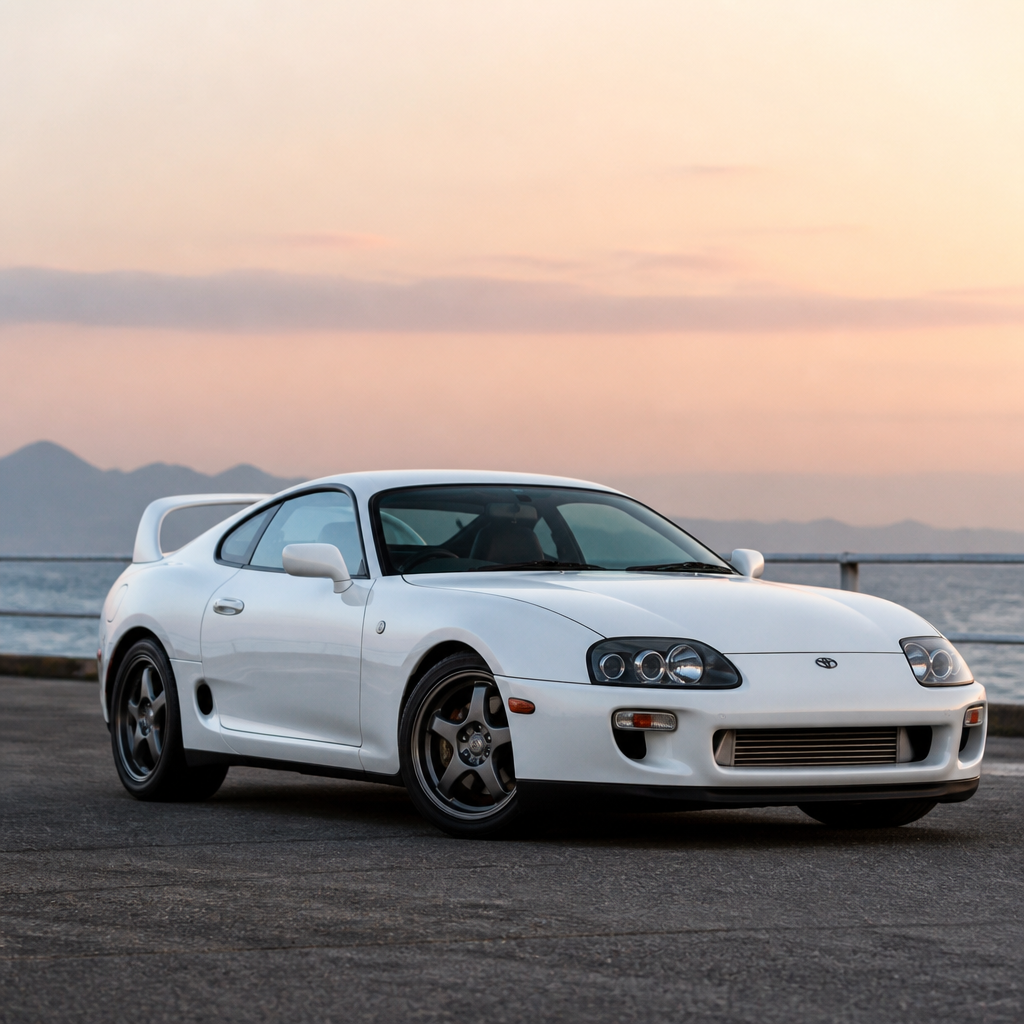
The Toyota Supra Turbo, especially the A80 generation from 1993 to 2002, became the poster car for the 2JZ-GTE engine. In standard form it was a refined, fast GT with stout internals, Getrag V160 six-speed availability, and long-distance comfort. In modified form it became a tuning legend capable of enormous power. That strength is also a market complication. Many Supras were altered far beyond factory specification, so buyers pay clear premiums for stock twin-turbo cars with verifiable history. Originality, matching VIN tags, and uncut interiors are increasingly important.
The Nissan Skyline GT-R family deserves its own branch within any Japanese classics hub. The R32 GT-R earned the “Godzilla” nickname after overwhelming Group A touring car competition. Its RB26DETT straight-six, all-wheel drive, and Super-HICAS rear steering delivered a uniquely technical driving experience. The R33 improved stability and refinement, though it long lived in the R32’s shadow. The R34, helped by styling, the multifunction display, and global media fame, has become the most visible collector target. Yet from a value-and-significance perspective, the R32 remains one of the most important Japanese performance cars ever built.
Mazda’s third-generation RX-7, the FD, represents the lightweight purist’s choice. Its sequentially turbocharged 13B-REW rotary engine, near-perfect proportions, and precise steering make it one of the most rewarding driver’s cars of the decade. It is also one of the most maintenance-sensitive. Heat management, vacuum lines, cooling systems, and engine rebuild quality are central to ownership. Buyers who understand rotary-specific care are often deeply loyal to the FD, and that specialist appeal has only reinforced its classic status.
| Model | Why it matters | Key buying watchpoints |
|---|---|---|
| Honda/Acura NSX | Aluminum exotic with daily usability and lasting engineering influence | Timing belt service, snap-ring transmission issue on some early cars, accident history |
| Toyota Supra A80 Turbo | 2JZ durability, six-speed prestige, huge cultural impact | Modification history, original twins versus single-turbo conversion, VIN and trim verification |
| Nissan Skyline GT-R R32/R33/R34 | Motorsport dominance, advanced AWD, RB26 legend | Rust, hard use, import paperwork, aftermarket tuning quality |
| Mazda RX-7 FD | Lightweight rotary sports car with exceptional balance | Compression results, cooling upgrades, vacuum system condition, quality of rebuilds |
Rally Homologation and Turbo Sedans With Growing Collector Appeal
Not every great 1990s Japanese classic is a coupe. Some of the most important are rally-derived sedans and hatchbacks that carried motorsport technology onto public roads. The Subaru Impreza WRX STi and Mitsubishi Lancer Evolution series are prime examples. Both lines evolved rapidly through the decade, and both now have a layered market where ordinary trims remain accessible while special versions have moved firmly into collector territory. For buyers who want historical substance with real driving utility, these cars are compelling choices.
The Subaru Impreza 22B STi is the headline car. Built in 1998 to mark Subaru’s World Rally Championship success, it used widened bodywork, a 2.2-liter turbo flat-four, and bespoke suspension. Production was extremely limited, and demand now far exceeds supply. More attainable, but still historically significant, are Version III through Version VI WRX STi models, especially clean Japanese-market cars with documented maintenance and minimal corrosion. Their appeal lies in directness: strong turbo thrust, mechanical grip, and unmistakable boxer character.
Mitsubishi’s Lancer Evolution I through VI, particularly the Evolution VI Tommi Makinen Edition, has followed a similar path. The Evo formula combined low weight, active center differential development, sharp steering, and immense point-to-point speed. Earlier cars feel especially raw and mechanical, while later versions offer broader ability without losing character. These cars were often modified for rally-style road use, so originality again matters. Rust around suspension pickups, underbody damage, and evidence of poor tuning should be examined carefully.
Nissan’s Pulsar GTI-R also deserves attention as an underrated homologation-era machine. Its turbocharged SR20DET, all-wheel drive, and compact hatchback packaging gave it giant-killing potential. It never achieved the broad fame of the Evo or Impreza, but scarcity and period authenticity make it increasingly collectible. For enthusiasts looking slightly away from the obvious icons, this is exactly the kind of Japanese classic that can move from cult favorite to recognized collectible.
Front-Drive Heroes, Lightweight Roadsters, and Everyday Icons
A strong Japanese classics collection should not ignore the more attainable end of the market. Some of the smartest long-term buys are cars that delivered exceptional engineering without supercar-level pricing when new. The Honda Integra Type R DC2 is one of the clearest examples. Its hand-finished B18C engine, helical limited-slip differential, seam welding, reduced sound deadening, and razor-sharp chassis turned front-wheel drive into a benchmark rather than a compromise. It remains one of the best-driving front-drive cars ever made, and original examples have become genuinely valuable.
The Honda Civic Type R EK9, sold primarily in Japan, has followed the Integra upward. Lightweight, eager, and mechanically simple in the best sense, it captures the essence of 1990s Japanese performance. Because many cars were modified for track days or street tuning, standard-condition EK9s with factory interiors and original driveline components command substantial premiums. The same is true for later-spec Honda Prelude Si VTEC and Accord SiR models, though those remain less expensive entry points.
Mazda’s MX-5 Miata, especially the NA and early NB generations, occupies a different role in the classics market. It is not rare in the way a 22B is rare, but it is historically important and universally admired. The Miata revived the affordable lightweight roadster formula with modern reliability and superb steering feel. Special editions, low-mileage examples, and clean rust-free cars are already separating from ordinary used examples. As cheaper survivors disappear, the best Miatas increasingly qualify as blue-chip analog sports cars in their own right.
Other everyday icons worth watching include the Toyota MR2 Turbo SW20, Nissan 300ZX Twin Turbo Z32, and Toyota Chaser/Mark II/Cresta Tourer V family. The MR2 Turbo offers mid-engine excitement and period wedge styling, but values depend heavily on maintenance and originality. The 300ZX Twin Turbo brought advanced electronics and a sophisticated VG30DETT powertrain, though engine-bay access makes servicing more involved. The rear-drive turbo Toyota sedans, especially Tourer V models with the 1JZ-GTE, have become increasingly desirable because they combine practicality, drift-era relevance, and robust mechanicals.
How to Buy, Preserve, and Use a 1990s Japanese Classic
Buying the right 1990s Japanese classic starts with documentation, not horsepower. Service records, import paperwork, chassis number verification, auction sheets where available, and specialist inspection reports are essential. Many cars from this era have complex histories involving repainting, odometer discrepancies, aftermarket tuning, or non-factory driveline swaps. A car that looks excellent online can hide corrosion in strut towers, rear arches, floor seams, spare-wheel wells, and under aero trim. Mechanical checks should include compression or leakdown testing where relevant, turbo condition, gearbox synchros, differential noise, and evidence of proper fluids and timing-belt replacement.
Preservation does not always mean never modifying a car, but current market behavior strongly favors reversible changes and factory-correct parts retention. If you add modern tires, brake pads, or discreet cooling improvements, keep the original components. Provenance matters. So does sympathetic use. Cars stored poorly deteriorate faster than cars driven carefully and serviced consistently. Fuel-system health, battery management, climate-controlled storage, and regular exercise are all part of responsible ownership. Japanese classics are durable, but neglect still extracts a price.
The best approach is to buy the most honest example you can afford, then maintain it through marque specialists who understand the model’s weak points. Join owners’ clubs, use factory workshop manuals, and learn the difference between period modifications and harmful shortcuts. As this Japanese classics hub shows, the 1990s produced more than nostalgia. It produced cars with lasting engineering merit, emotional pull, and growing historical significance. If you want one, study the market carefully, choose quality over hype, and buy before the next wave of collectors pushes the best cars even farther out of reach.
Frequently Asked Questions
What makes a 1990s Japanese car a true classic instead of just an old used car?
A 1990s Japanese car becomes a true classic when the conversation around it shifts from simple affordability or nostalgia to long-term significance. That usually happens when buyers and enthusiasts begin valuing the car for its engineering, originality, rarity, design influence, and place in automotive history rather than just its performance per dollar. In the 1990s, Japanese manufacturers produced some of the most advanced and characterful cars of the era, from twin-turbo grand tourers and rally-bred all-wheel-drive machines to lightweight rear-wheel-drive coupes and high-revving sports cars. As time passes, the best examples stand out not merely because they are old, but because they represent a particular moment when Japanese carmakers were pushing boundaries in technology, reliability, and motorsport-inspired development.
Another major factor is survivability. Many 1990s Japanese performance cars were heavily modified, raced, drifted, imported, or simply used hard. That means original, well-preserved examples are now much harder to find than they once were. Once supply tightens and buyer demand matures, the market begins to reward clean histories, factory-correct parts, documented maintenance, and unmolested condition. At that point, the car is no longer seen as disposable transportation or a budget tuner platform. It becomes a collectible.
Cultural impact matters too. Cars like the Toyota Supra, Nissan Skyline GT-R, Mazda RX-7, Acura NSX, Mitsubishi Lancer Evolution, and Honda Integra Type R developed loyal followings through motorsport, magazine tests, enthusiast communities, and later through film and video game culture. That kind of recognition helps preserve demand across generations. In short, a 1990s Japanese car earns classic status when it combines historical relevance, enthusiast respect, limited surviving supply, and a proven ability to remain desirable long after its original era has passed.
Which 1990s Japanese cars are most commonly viewed as modern classics today?
Several models are already firmly established as modern classics, and they tend to come from a few clear categories. First are the halo performance cars: the fourth-generation Toyota Supra, Nissan Skyline GT-R models such as the R32, R33, and R34, Mazda RX-7 FD, Honda NSX, and Mitsubishi 3000GT VR-4. These cars were technological flagships in their time and still carry strong collector appeal because they combine performance, unmistakable styling, and historical importance. The NSX, for example, is valued not just as a Japanese exotic but as a car that changed how the world viewed Japanese engineering. The RX-7 FD is admired for its lightweight balance and timeless design, while the Skyline GT-R range represents the peak of Japan’s all-wheel-drive turbo performance mythology.
Next are the lightweight driver-focused cars that have aged exceptionally well. Models like the Mazda MX-5 Miata NA, Honda S2000 at the edge of the decade’s influence, Integra Type R, Toyota MR2 Turbo, Nissan 300ZX Twin Turbo, and certain rear-wheel-drive coupes such as the Nissan Silvia and 240SX have become highly desirable because they deliver a tactile, analog driving experience that is increasingly rare. These cars often appeal to enthusiasts who value steering feel, chassis communication, and mechanical simplicity as much as outright speed.
Then there are the homologation specials and market-specific gems. The Subaru Impreza WRX STI, Mitsubishi Lancer Evolution series, Toyota Celica GT-Four, and various Japanese domestic market performance sedans and coupes have grown in prestige because of their rally or touring-car roots. In many cases, limited production numbers, special trims, and import restrictions in certain countries have only increased their status. Even some luxury and grand touring models from Lexus, Toyota, Nissan, and Mazda are now drawing attention as collectors recognize that the 1990s were not just about raw performance, but also about craftsmanship, durability, and design identity. The strongest modern classics are usually the ones that combine emotional appeal with documented importance and a shrinking pool of quality examples.
Why are originality and condition so important when buying a 1990s Japanese classic car?
Originality and condition matter because they directly affect both collector value and ownership experience. Many 1990s Japanese cars spent years in enthusiast hands, and that often means aftermarket wheels, suspension changes, engine tuning, body kits, repaints, stereo modifications, and even major driveline swaps. While those changes may have reflected period trends, today’s market tends to reward cars that remain close to factory specification. Buyers increasingly want to know what the manufacturer actually built, how the car was originally configured, and whether it still retains the qualities that made it special in the first place.
Condition is equally important because age alone can create expensive issues even on cars known for reliability. Paint fade, rust, interior wear, cracked trim, worn seals, electrical gremlins, and deferred maintenance can quickly turn a dream purchase into a costly restoration project. Some parts are now difficult to source, particularly model-specific trim pieces, interior plastics, electronics, and limited-production components. A cheap car with poor bodywork, missing original parts, and an unclear service history can easily cost more in the long run than a more expensive but well-preserved example. That is why serious buyers often place a premium on complete maintenance records, matching VIN tags, stock engine bays, clean underbodies, and documented ownership history.
There is also a broader market reason for this shift. As these cars become recognized classics, they are judged more like vintage European sports cars or American muscle than used imports. Collectors want authenticity. A car with factory paint, original wheels or correct period equipment, and an unmodified drivetrain tells a much more trustworthy story. Even when modifications are reversible, they can raise questions about how hard the car was driven or whether critical work was done properly. For anyone buying with one eye on future value, originality and condition are no longer optional details. They are central to determining whether a 1990s Japanese car is a usable enthusiast machine, a restoration candidate, or a genuinely collectible asset.
Are 1990s Japanese classic cars still good to own and drive, or are they becoming too valuable to use?
In most cases, they are still very good to own and drive, which is one of the reasons they remain so appealing. Unlike many older classics that require constant compromise, a well-kept 1990s Japanese car often combines engaging dynamics with reasonable reliability, usable ergonomics, and parts support that is better than many people expect. These cars came from an era when manufacturers had refined fuel injection, electronics, suspension engineering, and build quality to a high standard, but had not yet fully filtered the driving experience through modern weight, driver assists, and digital interfaces. As a result, many of them feel mechanical, responsive, and communicative in ways that modern cars often do not.
That said, ownership is changing as values rise. Cars that were once treated casually are now being insured as collectibles, stored more carefully, and maintained with greater attention to originality. Some owners drive them less because replacement panels, interior pieces, and rare mechanical parts have become more expensive. Turbocharged cars, rotary-powered cars, and homologation specials can also require knowledgeable maintenance, particularly if previous owners modified them or skipped key servicing. So while they are still enjoyable drivers, they demand more careful buying and more disciplined upkeep than they did when they were simply older enthusiast cars.
The best approach is to match the car to your ownership goals. If you want a 1990s Japanese classic to drive regularly, there are still excellent options, especially cars with strong parts availability and simpler mechanical layouts. If you are focused on investment-grade ownership, then mileage, originality, storage, and provenance become more important. Many enthusiasts try to strike a balance by buying the best example they can afford and then using it enough to preserve the experience that made the car special. That is often the real appeal of these vehicles: they are not museum pieces first and machines second. The strongest of them remain deeply satisfying to drive, and that usability is a big part of why they became classics in the first place.
How can buyers tell which 1990s Japanese cars are likely to appreciate the most in the future?
No market prediction is perfect, but the strongest indicators are usually consistent. Cars with genuine historical significance, limited production, enthusiast recognition, and a strong reputation for design or engineering tend to have the best long-term potential. Special editions, homologation models, high-performance trims, and low-production Japanese domestic market variants are often especially attractive because they have a built-in rarity story. Models linked to motorsport success, technological firsts, or a major shift in brand identity also tend to perform well because collectors can easily understand why they matter.
Buyers should also pay close attention to the quality gap developing within the market. As a model gains classic status, the best examples often rise fastest: low-mileage cars, unmodified survivors, rare factory colors, documented single- or two-owner cars, and vehicles with full service records. Meanwhile, heavily modified or poorly repaired examples may lag behind. That means future appreciation is not just about choosing the right model; it is also about choosing the right individual car. A desirable badge alone is not enough if the vehicle has rust, accident history, missing emissions equipment, non-original driveline