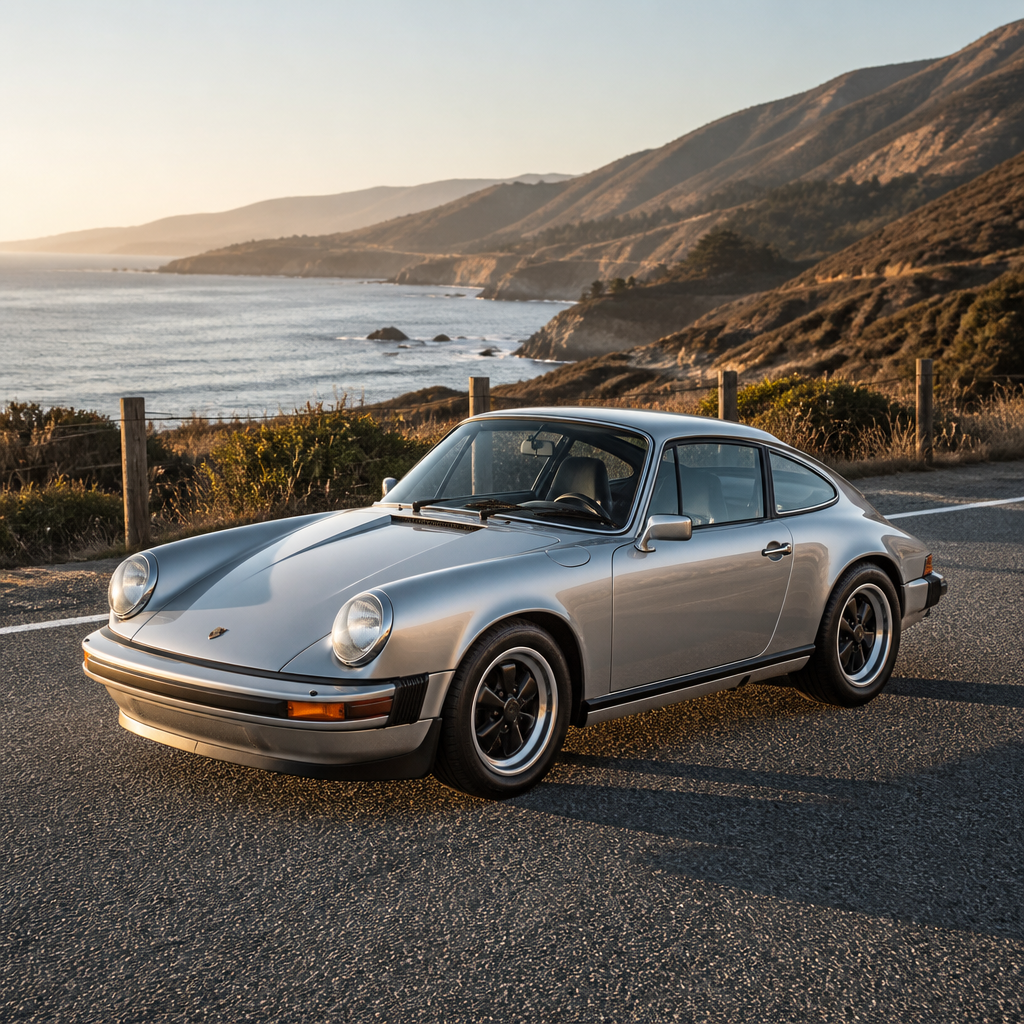
The Porsche 911 stands as one of the clearest examples of how a car can become both a machine and a cultural landmark. Since its public debut in 1963 and production launch for the 1964 model year, the 911 has defined the idea of an iconic European sports car through a shape that remains instantly recognizable, a rear-engine layout that few rivals dared to copy, and a development story built on constant engineering refinement rather than fashionable reinvention. Within any serious discussion of classic car models and brands, the Porsche 911 belongs at the center because it connects design history, motorsport success, collector demand, and everyday usability in a way almost no other model has matched.
When enthusiasts call the 911 a timeless European classic, they usually mean several things at once. They mean its silhouette, with round headlamps, compact cabin, sloping roofline, and pronounced rear haunches, has survived six decades without losing identity. They mean the car’s engineering philosophy, especially the flat-six engine mounted behind the rear axle, created a driving character that is distinctive, occasionally demanding, and deeply rewarding. They also mean the model line includes several of the most celebrated icon cars of the modern era, from the early short-wheelbase coupes to the Carrera RS 2.7, 930 Turbo, 964 Carrera, 993, 996 GT3, 997 Sport Classic, and modern GT cars that still trace a direct line back to the original concept.
As a hub article on iconic models, this guide explains what makes the Porsche 911 so important, which generations matter most, how the model evolved technically, why collectors value certain variants, and what buyers should understand before ownership. I have worked around classic European cars long enough to see how the 911 changes conversations at auctions, specialist workshops, concours fields, and track-day paddocks. People do not simply admire it for nostalgia. They respect it because it solved a difficult problem: how to preserve heritage while improving performance, safety, emissions, comfort, and reliability year after year. That achievement is why the Porsche 911 remains essential reading for anyone exploring classic car models and brands.
Origins of the Porsche 911 and the Formula That Endured
The 911 began as Porsche’s replacement for the 356, a lighter and smaller sports car that had established the company’s postwar identity. Designed under Ferdinand Alexander Porsche, the new model debuted as the 901 before Peugeot objected to the three-digit number with a zero in the middle, prompting the name change to 911. The architecture was unconventional even then: a rear-mounted air-cooled flat-six, 2+2 seating, torsion-bar suspension in early forms, and compact exterior dimensions that prioritized agility over brute size. Rather than chasing the front-engine formulas common among grand tourers, Porsche doubled down on packaging efficiency and traction advantages created by weight over the driven rear wheels.
That decision shaped every 911 that followed. Early cars required skill because rear-engine dynamics could punish abrupt throttle lifts in corners, yet they also delivered excellent traction out of bends and remarkable mechanical feel. Porsche steadily widened the car’s operating envelope through longer wheelbases, improved suspension geometry, stronger brakes, better tires, and progressive increases in power. The company’s genius was not that it ignored the platform’s weaknesses, but that it engineered around them. By doing so, Porsche turned an apparent liability into a brand-defining trait. The result is a sports car lineage where continuity matters as much as change, and where each generation can be understood as part of an unbroken technical conversation.
Defining Generations and Why Certain 911 Models Became Icons
Understanding the Porsche 911 means understanding its major generations. The early F-series and related long-hood cars from the 1960s through early 1970s established the visual language collectors prize today. These cars were light, narrow, mechanically direct, and elegant in proportion. The 1973 Carrera RS 2.7 became the benchmark among them, thanks to its homologation purpose, ducktail spoiler, reduced weight, and legendary balance. It is not merely valuable because it is rare; it is valuable because it marks the moment when Porsche fused racing necessity with road-car desirability in a single unforgettable package.
The G-series, built from 1974 into the late 1980s, introduced impact bumpers to meet safety regulations and broadened the 911’s audience. Within this era, the 930 Turbo became the poster car. Its flared arches, whale-tail spoiler, and explosive boost delivery gave the 911 a reputation for thrilling speed mixed with real intimidation. The naturally aspirated 3.2 Carrera, sold from 1984 to 1989, remains one of the smartest entry points for enthusiasts because it combines classic looks with stronger reliability, Bosch Motronic engine management, and robust parts support.
The 964, introduced for 1989, was a major engineering leap despite looking familiar. It added power steering, ABS, improved aerodynamics, coil springs replacing torsion bars, and optional all-wheel drive in the Carrera 4. This generation matters because it bridges old and new: still air-cooled and compact, yet modern enough for regular road use. The 993, launched in 1994, is widely regarded as the most refined air-cooled 911. Its multi-link rear suspension improved stability, its bodywork looked smoother and more muscular, and build quality reached an especially high point. Because it was the last air-cooled 911, demand has remained exceptionally strong.
| Generation | Approximate Years | Why It Matters | Notable Iconic Models |
|---|---|---|---|
| Early 911/F-series | 1964-1973 | Established the core shape, light weight, pure driving feel | 911S, Carrera RS 2.7 |
| G-series | 1974-1989 | Safety-era redesign, broader usability, turbocharged legend | 930 Turbo, 3.2 Carrera, SC |
| 964 | 1989-1994 | Modernized chassis and electronics while staying air-cooled | 964 Carrera RS, 964 Turbo |
| 993 | 1994-1998 | Final air-cooled generation, advanced rear suspension | 993 Carrera, Turbo, RS |
| 996 | 1998-2005 | First water-cooled 911, major platform expansion | 996 GT3, Turbo, GT2 |
| 997 and later | 2005-present | Revived classic cues, expanded performance spectrum | 997 GT3 RS, 991 R, 992 Touring |
The 996, launched in 1998, remains the most divisive generation because it introduced water cooling, shared some styling cues with the Boxster, and broke decisively from the air-cooled past. Yet from an engineering standpoint, it saved the 911 by allowing tighter emissions control, greater thermal stability, and higher development potential. The Mezger-engined Turbo and GT3 variants from this era are already recognized as modern classics. The 997 restored more traditional headlamp styling and is often seen as the point where old-school proportions and modern usability met most successfully. Later 991 and 992 generations grew larger and more capable, but their continued relevance proves the 911 formula still has room to evolve.
Engineering Character: Why the 911 Feels Different From Other Sports Cars
The defining technical feature of the Porsche 911 is its rear-engine layout with a horizontally opposed six-cylinder engine. In plain terms, most of the powertrain mass sits behind the rear axle rather than ahead of the driver or near the middle of the chassis. That affects everything. Under acceleration, the car can put power down exceptionally well because weight transfers onto the rear tires. Under braking and sudden mid-corner inputs, especially in older cars, the pendulum effect can challenge inexperienced drivers. Porsche spent decades refining suspension kinematics, tire sizing, anti-roll control, electronic stability systems, and aerodynamics to preserve the benefits while reducing the risks.
Steering feel is another reason the 911 became iconic. Because the front end carries relatively little weight, turn-in can feel light and precise. In classic models without heavy driver aids, the car communicates road texture, grip changes, and load transfer with unusual clarity. The air-cooled flat-six also contributes to the experience through throttle response, mechanical sound, and a compact installation that helps define the car’s silhouette. Later water-cooled cars brought smoother operation, greater power, lower emissions, and better thermal management, but the essential sensation of a rear-driven sports car rotating from the back remains intact.
Braking, too, became part of Porsche’s reputation. Even road-going 911s benefited from knowledge gained in endurance racing, where repeatable stopping power matters as much as outright speed. By the time models like the 964, 993, and 996 arrived, the 911 had become a complete performance package rather than a charismatic specialist machine. That is a crucial point for classic car readers: the 911 did not stay relevant on heritage alone. It stayed relevant because Porsche continuously made it better to drive fast, easier to live with, and more durable under real use.
Motorsport Success and the Rise of the 911 Mythology
No explanation of the Porsche 911 is complete without motorsport. Racing did not just market the car; it validated the engineering. Early 911s proved durable in rallying, endurance competition, and GT racing. The 911’s adaptability became one of its strongest assets. It could be tuned for Monte Carlo Rally conditions, transformed into RSR endurance racers, or developed into turbocharged monsters for circuits worldwide. That breadth matters because many sports cars succeed in one arena. The 911 succeeded in many.
The Carrera RS 2.7 and later RSR variants built the competition image in the 1970s. The turbocharged 934 and 935 elevated Porsche’s profile dramatically, with the 935 becoming one of the defining silhouettes of late-1970s endurance racing. In more modern eras, GT3 Cup cars, GT3 R racers, and numerous privateer builds kept the 911 visible and credible. When enthusiasts talk about motorsport DNA, this is one of the few model lines where the phrase is more than advertising. The lessons from cooling, braking, aerodynamics, gearbox durability, and chassis tuning repeatedly flowed back into road cars.
That race-bred credibility also explains why special road models command such respect. A 964 RS, 996 GT3, 997 GT3 RS, or 911 R is not valued solely for low production. Each reflects a clear performance philosophy: less weight, sharper response, more focused geometry, and a closer link to competition practice. For collectors and drivers alike, the 911 story gains power because it is grounded in measurable achievement, not just beautiful styling or romantic memory.
Collectibility, Ownership, and What Buyers Should Know
The Porsche 911 occupies a rare place in the collector market because interest spans nearly every budget tier. At the top, homologation cars, low-production RS models, early competition derivatives, and limited-run specials command extraordinary prices. Mid-market buyers often target usable classics such as the 3.2 Carrera, 964 Carrera 2, 993 Carrera, or selected 996 and 997 variants. Entry-level interest frequently begins with later water-cooled cars, especially when buyers want the 911 experience without the premium attached to air-cooled examples.
Condition and originality matter, but specification matters too. On air-cooled cars, matching numbers, factory colors, documented maintenance, rust history, and correct trim can significantly influence value. Rust is especially critical on earlier bodies despite Porsche’s generally strong engineering; suspension pan corrosion, kidney bowls on certain years, floor sections, and accident repair quality deserve careful inspection. Mechanical concerns vary by generation. A 3.2 Carrera may need attention to valve guides or aging fuel and oil lines. A 964 can involve dual-mass flywheel, distributor venting, or oil leak issues. A 996 may raise questions about IMS bearing risk on some models, rear main seal leaks, bore scoring on certain engines, or cooling system age. None of these topics automatically make a car bad, but each affects budget planning.
The strongest buying advice is simple: purchase on history, inspection quality, and intended use rather than internet mythology. A well-sorted 996 often delivers more enjoyable miles than a neglected 964 bought solely for air-cooled status. A documented 3.2 Carrera with recent suspension, tires, brake work, and gearbox attention can be a better long-term ownership proposition than a cosmetically shiny example hiding deferred maintenance. Specialist pre-purchase inspections are essential because a 911’s complexity increases sharply once rust repair, engine work, or originality disputes enter the picture.
Why the 911 Remains the Hub of Iconic Models
The Porsche 911 remains a timeless European classic because it solved a challenge most manufacturers never solve: how to evolve continuously without losing identity. Across six decades, it has stayed recognizable, technically distinctive, and culturally relevant. Few cars unite collectors, racers, designers, engineers, weekend drivers, and daily commuters so effectively. It matters as a classic because early versions set standards for compact sports-car purity, and it matters as an ongoing model because modern versions still honor the same core concept.
For readers exploring iconic models within classic car brands, the 911 is the natural hub. It links discussions about air-cooled engineering, homologation specials, turbocharged road cars, endurance-racing heritage, and modern performance benchmarks. It also teaches a wider lesson about automotive history: legends are rarely accidents. The 911 became iconic through disciplined design, relentless development, and a clear understanding of what owners value behind the wheel. If you are building knowledge of classic European cars, start with the key 911 generations, compare their strengths honestly, and follow the branches from there. Few model lines reward deeper study more richly.
Frequently Asked Questions
Why is the Porsche 911 considered a timeless European classic?
The Porsche 911 is considered a timeless European classic because it has achieved something very few cars ever manage: it has remained unmistakably itself while continuously evolving over decades. First shown publicly in 1963 and launched for the 1964 model year, the 911 established a design language that still defines the car today. Its sloping roofline, compact proportions, round headlamps, and rear-engine silhouette are immediately recognizable even to people who are not automotive enthusiasts. That kind of visual continuity gives the 911 a rare cultural permanence.
Its reputation goes far beyond styling. The 911 became an icon because Porsche refined the concept rather than repeatedly replacing it with something trend-driven. While other sports cars have often been redesigned around changing fashions or marketing cycles, the 911 followed a disciplined path of engineering development. Over the years it gained more power, better materials, improved aerodynamics, stronger safety systems, and more advanced electronics, yet it never abandoned the core formula that made it special. That balance between heritage and innovation is a major reason it is viewed as timeless.
The car also represents European performance values at a very high level. It combines speed, precision, usability, and craftsmanship in a way that feels distinctly continental. Unlike some exotic sports cars that are dramatic but difficult to live with, the 911 developed a reputation for being thrilling on a mountain road, capable on a racing circuit, and civilized enough for regular driving. That breadth of ability helped turn it from a niche performance model into a lasting benchmark.
Finally, the 911 is a classic because it became bigger than the machine itself. It is a symbol of continuity, engineering discipline, motorsport credibility, and design restraint. Enthusiasts admire it, collectors value it, and even competing manufacturers often measure themselves against it. Few cars have remained relevant for so long without losing their identity, and that is exactly why the Porsche 911 occupies such a unique place in automotive history.
What makes the rear-engine layout of the Porsche 911 so distinctive?
The rear-engine layout is one of the most defining and unusual characteristics of the Porsche 911. In the 911, the engine is positioned behind the rear axle, a configuration that has always separated it from the front-engine and mid-engine sports cars that dominate the market. From an engineering standpoint, this arrangement creates a unique weight distribution and a driving experience unlike almost anything else. It also shaped the car’s packaging, proportions, handling behavior, and even its visual identity.
Early on, the rear-engine design came with clear challenges. Concentrating so much weight at the back of the car could make handling tricky, especially at the limit. Rapid changes in throttle or steering input could upset the chassis if the driver was careless. For that reason, some critics historically viewed the configuration as outdated or flawed. But Porsche took the opposite approach: instead of abandoning the architecture, it spent decades refining it. Suspension geometry, tire technology, braking systems, chassis stiffness, aerodynamics, and electronic driver aids were all developed to harness the strengths of the layout while reducing its weaknesses.
Those strengths are significant. The rear-engine arrangement helps deliver strong traction, especially when accelerating out of corners, because the mass over the driven wheels improves grip. It also contributes to the 911’s distinctive steering feel and dynamic character. Drivers often describe the car as having a sense of agility and mechanical involvement that differs from more conventional sports cars. Rather than feeling generic, a 911 tends to feel like a product of a very specific philosophy.
What makes the layout truly distinctive is not just that it exists, but that Porsche successfully turned it into a long-term competitive advantage. Many manufacturers would have abandoned such an unconventional setup in favor of a simpler mainstream solution. Porsche instead made the rear-engine concept part of the 911’s identity and proved through relentless development that an unusual engineering idea could become a defining virtue. That commitment is central to why the 911 remains so respected.
How has the Porsche 911 changed over the years without losing its identity?
The Porsche 911 has changed enormously in technical terms, yet it has preserved its identity through careful and intelligent evolution. From the outside, each generation is clearly related to the one before it. The roofline, proportions, rear haunches, and overall silhouette have remained consistent enough that even decades-apart models still look like members of the same family. This visual continuity is one of the strongest reasons the car never feels disconnected from its origins.
Underneath that familiar shape, however, the 911 has gone through constant modernization. Engines became more powerful, more efficient, and more refined. Air-cooled motors eventually gave way to water-cooled designs, transmissions evolved from manual gearboxes to highly sophisticated dual-clutch systems, and chassis engineering advanced dramatically. Porsche introduced improvements in braking, suspension, all-wheel drive systems, stability management, aerodynamics, and cabin technology, allowing the car to meet changing expectations for safety, comfort, and performance.
What is remarkable is the way these updates were implemented. Porsche rarely treated the 911 as a blank sheet project meant to chase fashion. Instead, each generation typically addressed specific weaknesses while preserving core characteristics. The company improved handling without erasing driver engagement, enhanced comfort without turning the car into something soft and anonymous, and added technology without severing the connection to the original concept. That measured approach created a sense of lineage rather than interruption.
The result is a car that feels historically continuous. A modern 911 is far more advanced than one from the 1960s, 1970s, or even 1990s, but it still reflects the same basic idea: a compact, rear-engined sports car with everyday usability and a strong mechanical character. Many long-running nameplates survive only through branding, while their core nature changes completely. The 911 is different. Its development story is one of refinement, not reinvention, and that is why it has managed to move with the times without losing the identity that made it famous.
Why does the Porsche 911 hold such an important place in automotive culture?
The Porsche 911 holds an important place in automotive culture because it bridges multiple worlds at once. It is a serious driver’s car, a luxury object, a design icon, a motorsport legend, and a status symbol, yet it is not defined by any one of those roles alone. That layered identity gives it a cultural depth that many performance cars never achieve. It appeals to racers, collectors, engineers, designers, and everyday enthusiasts in different but equally meaningful ways.
Part of its cultural importance comes from consistency. The 911 has been present across generations, not as a nostalgic revival but as a living, evolving car. Parents, children, and even grandchildren can all recognize it and connect it to the same lineage. That continuity has made it one of the rare automobiles that functions almost like a piece of industrial heritage. It represents a long-running standard of excellence rather than a short-lived trend or an isolated moment of fame.
Its competition history also contributes greatly to its standing. The 911 earned credibility by performing in demanding conditions and proving that its engineering was not just impressive on paper. Success in motorsport gave the model authenticity and reinforced the idea that Porsche built cars with genuine technical substance. In car culture, that matters enormously. Enthusiasts tend to revere machines that can back up their image with real capability, and the 911 has done that for decades.
The 911 also occupies a rare middle ground between exclusivity and accessibility. It is clearly a premium car, but unlike some ultra-exotic vehicles, it has long been visible in real traffic, on real roads, and in everyday use. That familiarity makes it aspirational without making it feel completely remote. As a result, the 911 became one of the clearest symbols of the sports car ideal: fast, usable, beautifully engineered, and enduringly desirable. Its place in automotive culture is secure because it stands for much more than performance alone.
Is the Porsche 911 still relevant in the modern sports car world?
Yes, the Porsche 911 remains highly relevant in the modern sports car world, and arguably more so than ever. The current performance-car landscape is crowded with advanced technology, electrification, digital interfaces, and rapidly shifting consumer expectations. In that environment, the 911 continues to matter because it has successfully adapted to modern demands while preserving the qualities that enthusiasts value most. It is not simply surviving on heritage; it is still setting standards.
One reason for that relevance is breadth of capability. The 911 has long excelled at being more than a one-dimensional performance machine. It can deliver serious speed and precision while still functioning as a refined road car. That balance remains important today, especially as buyers increasingly expect sports cars to be both exciting and practical enough for regular use. The 911’s long-standing ability to combine everyday usability with genuine dynamic talent keeps it competitive against newer rivals with very different architectures and philosophies.
Another reason is Porsche’s continued commitment to engineering excellence. The modern 911 benefits from sophisticated chassis systems, powerful and efficient engines, advanced transmissions, and carefully integrated electronics, yet it still aims to provide a coherent driver experience rather than just a list of features. In a time when some high-performance cars can feel filtered or overly digital, the 911’s sense of precision and connection remains one of its strongest assets