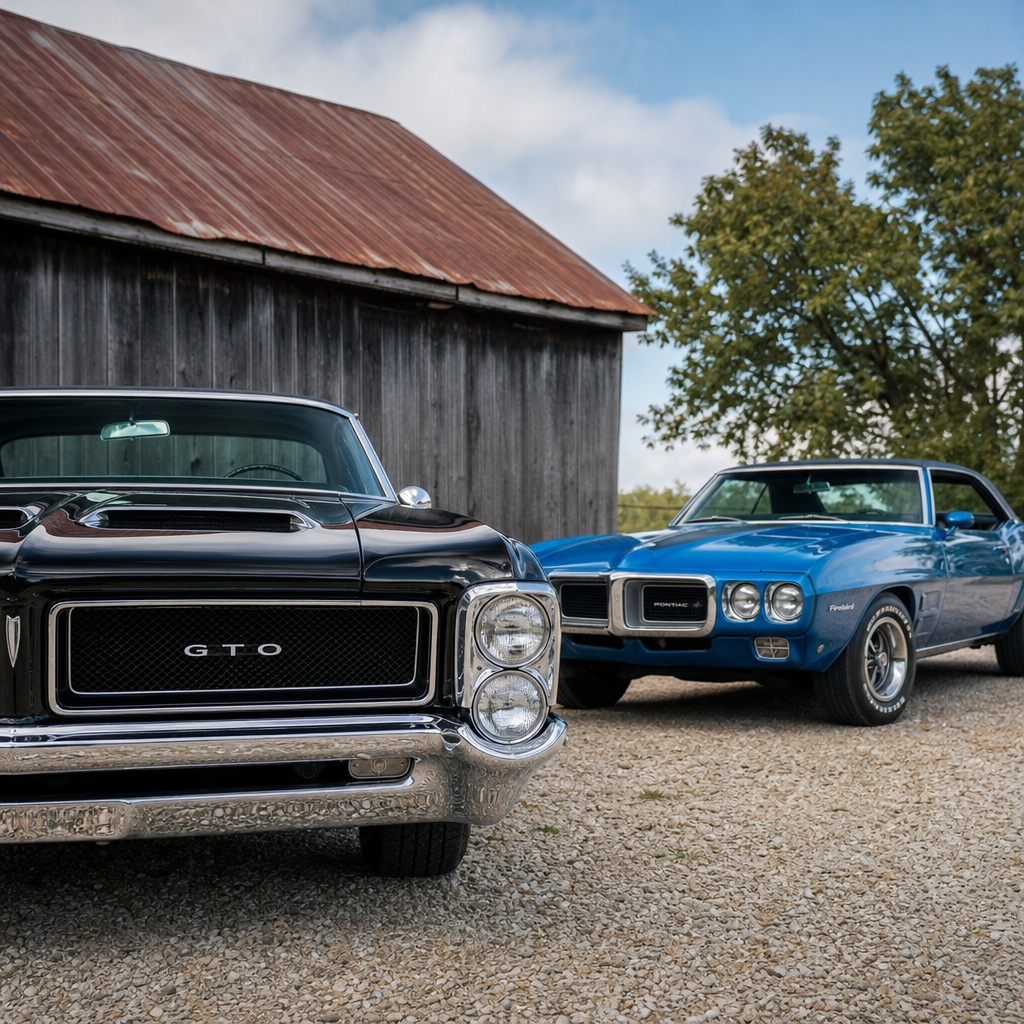
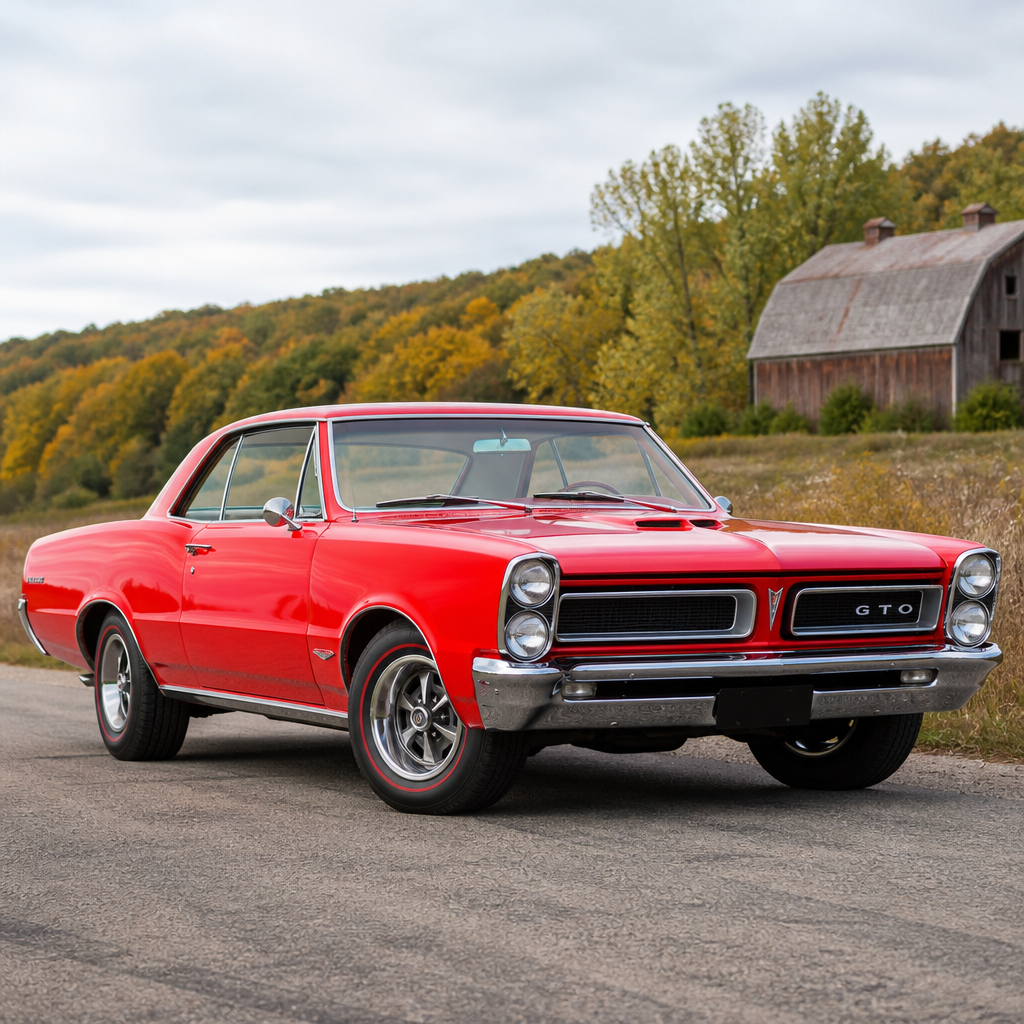
The Pontiac GTO changed the American performance car market by proving that a midsize coupe with a large V8 could be affordable, practical, and thrilling in equal measure. Within the broader world of classic car models and brands, the GTO stands as the central reference point for iconic models because it did more than sell well or win races: it established the formula that countless manufacturers copied. When enthusiasts call it the first true muscle car, they are recognizing a specific combination of engineering, pricing, timing, and cultural impact that arrived in 1964 and reshaped Detroit almost overnight.
An iconic model is more than a collectible old car. It is a vehicle that shifts consumer expectations, influences competitors, and remains recognizable decades after production ends. A muscle car, in the strict historical sense, is an intermediate-size American car fitted with a large-displacement engine and marketed for straight-line performance at a price a young buyer could realistically reach. By that definition, the early GTO fits perfectly. Pontiac inserted full-size power into the Tempest and LeMans platform, then backed it with aggressive marketing, multiple performance options, and a style that looked purposeful without being exotic or impractical.
This matters because the GTO sits at the crossroads of product planning, motorsports image, and youth culture in the 1960s. In my experience working with classic car buyers and restoration shops, the GTO is often the model that turns casual interest into serious study. People ask why it became so important, how each generation differs, what original equipment matters most, and whether the legend matches the hardware. This hub article answers those questions directly while giving context for deeper exploration of Pontiac performance, GM A-body cars, and the wider landscape of iconic American nameplates.
Why the 1964 Pontiac GTO changed everything
The 1964 GTO began as an option package for the Pontiac LeMans, not as a standalone model, and that detail is essential to understanding its breakthrough. General Motors had internal limits on engine displacement in midsize cars, so Pontiac executives and engineers used the option-sheet route to place a 389 cubic-inch V8 into the lighter A-body platform. Buyers could choose a four-barrel carburetor rated at 325 horsepower or the Tri-Power setup with three two-barrel carburetors rated at 348 horsepower. Available manual transmissions, a Hurst shifter, upgraded suspension tuning, and visual cues created a package that felt deliberate rather than improvised.
Just as important, the GTO delivered performance without requiring the compromises of a stripped drag special. It had room for passengers, acceptable ride quality, a real trunk, and a dealer network that understood how to sell excitement. Contemporary road tests regularly placed the car in the low-to-mid 6-second range from 0 to 60 mph when properly equipped, with quarter-mile times in the high 14s or better. Those numbers mattered in 1964 because they made the GTO quick enough to embarrass larger, more expensive cars while remaining usable every day. The formula was instantly legible to buyers, and competitors took notice.
The sales story confirms the impact. Pontiac expected modest demand, yet more than 32,000 GTOs sold for the 1964 model year, far exceeding internal projections. That volume demonstrated that performance was no longer a niche concern confined to hot rodders. It could be industrialized, branded, and sold to mainstream customers. Once the GTO proved the concept, rivals accelerated development of cars like the Chevrolet Chevelle SS 396, Oldsmobile 4-4-2, Buick Gran Sport, Plymouth Road Runner, and Dodge Super Bee. The market category did not become real when journalists coined a phrase; it became real when the GTO showed there was sustained demand.
The engineering formula behind the first true muscle car
The GTO’s hardware was straightforward, and that simplicity was part of its brilliance. Pontiac used a relatively light midsize chassis, then paired it with the division’s robust V8 family. The 389 engine had ample low-end torque, which is exactly what street performance needed in the pre-radial-tire era. Rather than chasing only peak horsepower, Pontiac built a car that launched hard from stoplights and responded strongly in the midrange. Buyers could also tailor the car through axle ratios, close-ratio gearboxes, heavy-duty cooling, and limited-slip differential options, creating combinations suited to boulevard cruising, drag racing, or dual-purpose use.
Suspension and braking reflected the period’s priorities. Early GTOs used coil-spring front suspension and a live rear axle, a conventional layout shared with other GM A-bodies, but Pontiac tuned spring rates, shocks, and anti-roll characteristics to support the added power. Drums were standard at first, and that is one area where modern drivers need perspective. Straight-line speed outpaced stopping capability by current standards. In restoration work, I often advise owners to preserve originality while understanding the car’s operating envelope: bias-ply tires, manual steering, and drum brakes create an authentic experience, but they demand planning and mechanical sympathy.
The packaging also deserves credit. Unlike sports cars that sacrificed comfort or exotic cars that required specialized knowledge, the GTO’s mechanical layout was familiar to dealership technicians and independent garages. Parts interchange within the GM ecosystem simplified service. That accessibility strengthened the model’s reputation because owners could live with the car, modify it, and race it without uncommon expertise. The best iconic models are not only fast or beautiful; they are usable enough to spread through real communities. The GTO became a street phenomenon because it was attainable, understandable, and visibly faster than the average car around it.
How the GTO evolved from 1964 to 1974
The first generation, covering 1964 through 1967, built the legend. By 1965, the GTO gained stacked headlights and more mature styling, while output rose to 335 horsepower for the four-barrel and 360 horsepower for Tri-Power. The 1966 model year was pivotal because the GTO became its own series rather than only an option package, and sales reached roughly 96,000 units, the high-water mark for the name. The 1967 cars added refinements such as available front disc brakes and the newly introduced 400 cubic-inch V8, a crucial evolution as the market demanded both more power and greater civility.
The second generation, 1968 through 1972, brought Coke-bottle styling, the Endura front bumper, hidden wipers, and a more sculpted body that many enthusiasts consider the design peak. Engines now centered on the 400, with notable variants including Ram Air, Ram Air II, Ram Air III, and the rare round-port Ram Air IV. The Judge package, introduced for 1969, sharpened the image with bold graphics, a rear spoiler, and standard Ram Air III power. However, this period also shows the changing realities of the era. Insurance surcharges, emissions rules, and rising fuel concerns gradually squeezed the market even before the official muscle car decline set in.
The third generation, 1973 and 1974, moved to the Colonnade A-body and reflected federal safety requirements and shifting buyer tastes. These later GTOs are historically important but stylistically and mechanically distant from the original formula. By then, net horsepower ratings, heavier bodies, and stricter emissions equipment reduced outright performance. Production ended after 1974, freezing the original GTO era as a distinctly 1960s creation with a brief afterglow. A later revival arrived for 2004 through 2006 on the Australian Holden Monaro platform, and while it delivered strong LS-powered performance, collectors generally treat it as a separate chapter rather than a continuation of the classic muscle car moment.
Key GTO generations and what makes each iconic
| Generation | Model Years | Defining Features | Why Collectors Care |
|---|---|---|---|
| First generation | 1964-1967 | 389 then 400 V8, Tri-Power, light A-body platform, option-package origins | Purest expression of the original muscle car formula |
| Second generation | 1968-1972 | Endura nose, Ram Air variants, The Judge, more refined interiors | Best blend of style, power, and market recognition |
| Third generation | 1973-1974 | Colonnade body, lower net ratings, safety-era design changes | Rarer and historically transitional, though less coveted |
| Modern revival | 2004-2006 | LS1 and LS2 V8 power, rear-wheel drive, Australian platform | Excellent driver’s car, separate from the original legend |
The GTO’s place among other iconic models
As a hub within iconic classic car models, the GTO is best understood alongside the rivals it inspired and the peers it competed against. The Chevrolet Chevelle SS offered broad-brand appeal and huge-block notoriety. The Oldsmobile 4-4-2 often delivered a more balanced chassis and a slightly more upscale image. Buick’s Gran Sport mixed torque with luxury cues. Mopar entries such as the Road Runner and Super Bee pushed the value-performance equation even harder. Ford’s Mustang and Mercury Cougar occupied a neighboring segment, usually classed as pony cars rather than true muscle cars because their formula centered on compact dimensions and broad engine ranges rather than the original intermediate-plus-big-V8 template.
What separates the GTO is chronology and clarity. It was the car that crystallized the idea before the field became crowded. Later competitors improved individual aspects: some had bigger engines, some better drag-strip numbers, some lower prices, and some stronger high-speed stability. Yet the GTO remains the benchmark because it connected the engineering recipe to a national sales success first. In collector conversations, that first-mover status carries real weight. A 1964 or 1965 GTO is not merely another attractive mid-1960s coupe; it is the source code for a category that transformed American product strategy during one of the industry’s most creative decades.
The model also connects naturally to broader exploration of Pontiac performance. Anyone studying the GTO typically branches into the Firebird Trans Am, Catalina 2+2, Grand Prix SJ, and special-engine programs such as Super Duty and Ram Air. That makes the GTO an ideal hub topic because it introduces recurring themes found across classic car brands: option-code literacy, matching-numbers scrutiny, factory documentation, regional dealer influence, and the tension between originality and drivability upgrades. Understanding the GTO equips readers to evaluate many other iconic models with sharper eyes and more historically grounded expectations.
Collectibility, restoration, and buying advice
Not every GTO carries the same market appeal, and details matter more here than casual buyers expect. Body style, engine specification, transmission, documentation, color, and authenticity all affect value. Hardtops are common, coupes and convertibles command stronger interest, and certain driveline combinations bring substantial premiums. A real factory Tri-Power car, a Ram Air example, or a documented Judge will always draw more attention than a standard four-barrel automatic. However, numbers alone never tell the whole story. Rust repair quality, originality of sheet metal, and correctness of trim can matter just as much as the headline engine option, especially on six-figure restorations.
The smartest buying process starts with paperwork. Pontiac Historical Services documentation is one of the best resources in the hobby for verifying how a car was built, and serious buyers use it early. On the car itself, inspect frame condition, quarter panels, trunk floors, lower fenders, cowl areas, and signs of accident repair. Confirm casting numbers, date codes, and transmission stamps, but do not assume every discrepancy indicates fraud; decades of engine swaps and period repairs were common. I have seen excellent driver-quality cars dismissed because of minor non-original components, and heavily restored cars overvalued despite weak structural work hidden under fresh paint.
Restoration strategy should match intended use. A concours-level first-generation GTO demands strict attention to finishes, fasteners, hose markings, wheel choices, and build-date consistency. A weekend cruiser may benefit more from subtle upgrades such as radial tires, improved cooling, front disc brakes where appropriate, and a modern fuel-compatible carburetor calibration. Purists sometimes resist such changes, but drivability upgrades can preserve the car by encouraging regular use. The key is reversibility. Keep original parts when possible, document every modification, and avoid cutting the car unnecessarily. The best classic ownership plans balance historical respect with safe, enjoyable operation on modern roads.
Why the Pontiac GTO still matters today
The Pontiac GTO still matters because it remains one of the clearest examples of how a single model can define a genre. It combined a large-displacement V8, midsize packaging, attainable pricing, and focused marketing into a template that competitors rushed to follow. That is why it is remembered not simply as a fast Pontiac, but as the first true muscle car. Its legacy reaches beyond quarter-mile times. The GTO shaped dealer showrooms, aftermarket tuning, youth-oriented advertising, and the collecting habits that still drive interest in classic American performance today.
For readers exploring iconic models under the wider classic car models and brands landscape, the GTO is the logical starting point because so many later stories flow from it. Study the 1964 launch, the 1966 sales peak, the Ram Air years, and the gradual early-1970s decline, and you gain a working map of the entire muscle car era. You also learn how engineering, branding, regulation, and culture interact in the life of a great automobile. Few classics teach that lesson as clearly as the GTO.
If you want to go deeper, use this hub as your launch point for comparing GTO generations, decoding Pontiac engine options, and evaluating rival iconic models from Chevrolet, Oldsmobile, Buick, Dodge, and Plymouth. Start with the first-generation cars, learn the option codes, and study documented examples before shopping or restoring. The more you understand the Pontiac GTO, the better you will understand the muscle car movement itself.
Frequently Asked Questions
Why is the Pontiac GTO often called the first true muscle car?
The Pontiac GTO is often called the first true muscle car because it crystallized a formula that became the blueprint for an entire segment of American performance cars. In 1964, Pontiac took a relatively affordable midsize platform and fitted it with a large-displacement V8, creating a car that delivered serious straight-line performance without the high price, specialized engineering, or limited practicality of dedicated sports cars. That combination was the breakthrough. The GTO was not simply a fast car; it was a fast car regular buyers could actually own, drive every day, and understand.
What makes that title especially important is that the GTO did more than appear at the right time. It proved there was massive demand for a car that blended usable size, aggressive styling, accessible pricing, and abundant horsepower. Earlier American cars had offered powerful engines, but the GTO packaged performance in a way that was direct, repeatable, and market-defining. It turned a performance experiment into a cultural and commercial formula. That is why enthusiasts and historians continue to point to the GTO as the central reference when discussing the birth of the muscle car era.
What made the original Pontiac GTO different from other performance cars of its time?
The original Pontiac GTO stood apart because it was not designed as an exotic machine or a stripped-down race special. Instead, it was built around the idea that ordinary buyers wanted extraordinary power in a familiar, versatile package. In the early 1960s, buyers generally had to choose between compact affordability, full-size comfort, or specialized performance. The GTO effectively merged those categories by placing a big V8 into a midsize coupe, giving drivers strong acceleration while preserving room, comfort, and day-to-day usability.
Its impact also came from how complete the package felt. The GTO offered bold styling, a youthful image, optional performance equipment, and enough practicality to function as real transportation. It was not just about raw numbers on paper. The car looked fast, sounded fast, and felt attainable. That balance helped it connect with a broad audience, especially younger buyers who wanted excitement without stepping into a more expensive or less practical class of vehicle. In that sense, the GTO created a new kind of performance identity—one rooted in accessible power rather than exclusivity.
How did the Pontiac GTO influence the American car industry?
The Pontiac GTO had a profound effect on the American car industry because it demonstrated that performance could be a mainstream sales strategy rather than a niche offering. Once the GTO showed that buyers would respond enthusiastically to a midsize car with a large V8, other manufacturers moved quickly to create their own versions of the formula. That led to a wave of competing models from across Detroit, each trying to capture the same mix of affordability, style, and horsepower that had made the GTO such a sensation.
Its influence went beyond simple imitation. The GTO helped reshape product planning, marketing, and brand identity throughout the industry. Automakers recognized that image mattered just as much as engineering, and the muscle car became as much a lifestyle statement as a transportation choice. Advertisements began emphasizing performance credentials, youth appeal, and street presence. As a result, the GTO did not just inspire rival cars; it helped define a new competitive arena where acceleration, engine size, and visual aggression became major selling points. In many ways, the muscle car wars of the 1960s can be traced directly back to the path the GTO opened.
Was the Pontiac GTO successful because of performance alone?
No, the Pontiac GTO was not successful because of performance alone, although its power was certainly central to its reputation. What made the car so successful was the way it combined several desirable qualities into one compelling package. Buyers were attracted to its strong V8 performance, but they also appreciated its affordability relative to more specialized performance cars, its practical midsize dimensions, and its distinctive styling. The GTO managed to feel aspirational without becoming unreachable, which gave it an unusually broad appeal.
Another major part of the GTO’s success was timing and presentation. It arrived at a moment when American car culture was increasingly focused on youth, individuality, and performance. Pontiac marketed the GTO in a way that made it feel exciting and rebellious, yet still realistic for everyday ownership. The result was a car that satisfied emotional and practical desires at the same time. Owners were not just buying horsepower; they were buying an identity, a sense of freedom, and a machine that made the daily drive feel special. That wider appeal is a big reason the GTO became a defining icon rather than simply another fast model.
Why does the Pontiac GTO remain such an important name in classic car history?
The Pontiac GTO remains important in classic car history because it represents a true turning point rather than just a popular model. Many classic cars are remembered for beauty, rarity, racing success, or engineering innovation. The GTO is remembered for changing the direction of the market itself. It established a performance formula that reshaped buyer expectations and gave rise to some of the most celebrated American cars ever built. When people discuss the origins of muscle cars, the GTO is almost always the starting point because its significance is foundational, not incidental.
It also endures because it captures the spirit of a particular era in American automotive culture. The GTO symbolizes a time when power, style, and accessibility came together in a way that felt fresh and transformative. For collectors and enthusiasts today, that legacy gives the car a status that goes beyond nostalgia. It is a benchmark, a historical reference, and a symbol of the moment when high-performance motoring became democratized for a larger audience. That is why the GTO still commands respect within discussions of classic car models and brands: it did not merely participate in automotive history—it helped write one of its most influential chapters.