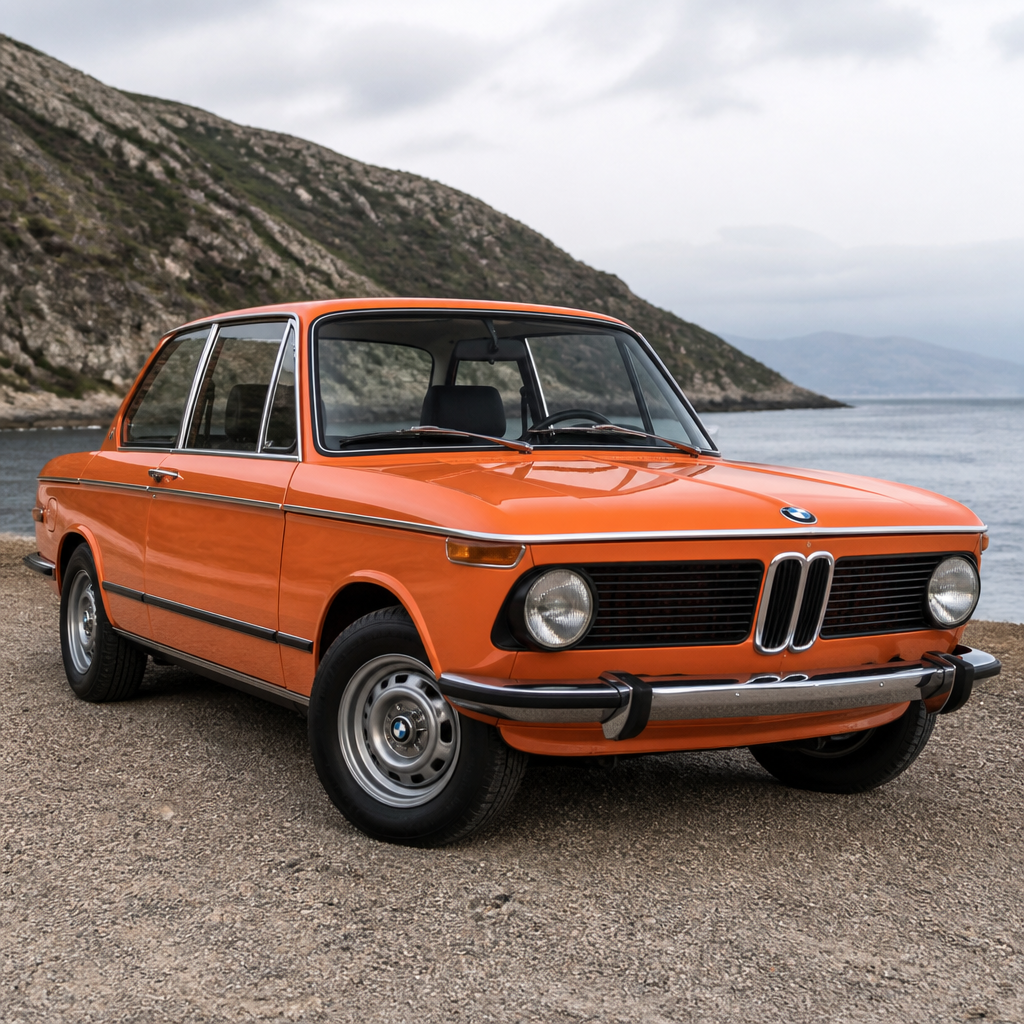
The BMW 2002 is the car that gave the sports sedan its modern shape: compact outside, practical inside, and genuinely eager on a winding road. When enthusiasts call it the “birth of the sports sedan,” they are not using marketing shorthand. They are describing a model that proved everyday usability and driver involvement could live in the same boxy, affordable package. Within BMW’s history, the 2002 sits at the center of the Neue Klasse story, the period in the 1960s and early 1970s when the company transformed itself from a niche manufacturer into a benchmark for engineering-led performance.
To understand why the BMW 2002 matters, it helps to define the category it popularized. A sports sedan is a practical passenger car, usually with four seats and a useful trunk, engineered to deliver sharp handling, strong acceleration, and clear steering feedback. Earlier sedans could be quick, and some coupes were practical enough, but the 2002 made the formula coherent and repeatable. It offered a lively overhead-cam four-cylinder engine, a relatively light body, balanced rear-wheel-drive dynamics, and visibility so good that a driver could confidently place it on a tight road. That recipe is now common, but in the late 1960s it felt revelatory.
This model also matters because it became the gateway to several ideas that still define BMW: compact dimensions, responsive naturally aspirated engines, disciplined chassis tuning, and a cockpit that serves the driver first. I have driven preserved and restored examples over the years, and what stands out is not nostalgia alone. The car feels mechanically honest. The controls are light but communicative, the body motions are readable, and the performance encourages momentum rather than brute force. For readers exploring iconic car models, the 2002 is a foundational reference point, as important to sport-oriented sedans as the Porsche 911 is to rear-engined sports cars or the Jaguar E-Type is to 1960s design.
As a hub within classic car models and brands, this article covers the 2002 comprehensively: where it came from, how the main variants differ, why the 2002tii and Turbo became legends, what to know before buying one, and how it shaped later BMW icons. If you are researching collectible European sedans, building a shortlist of landmark classic BMW models, or simply trying to understand why this unassuming two-door still commands respect, the 2002 is the right place to start.
Origins in the Neue Klasse and the Making of an Icon
The BMW 2002 emerged from the Neue Klasse, a family of sedans introduced in the early 1960s that rescued BMW financially and strategically. Before that reset, BMW’s range lacked a clear mass-market identity. The Neue Klasse changed that with modern unibody construction, independent suspension, and efficient overhead-cam engines. The smaller two-door 1600-2, launched in 1966, established the compact format. The 2002 followed in 1968 after BMW insiders recognized that the chassis could comfortably handle more displacement and torque.
The origin story has become part of BMW folklore. Both Alex von Falkenhausen, a BMW engine engineer, and Max Hoffman, the influential U.S. importer, were associated with the push toward a two-liter version of the compact two-door. The logic was straightforward: fit the M10 2.0-liter engine into the lighter, shorter-bodied car, and you create a machine with broad appeal, especially in the American market. That market mattered enormously. U.S. buyers responded to compact European cars that were usable every day but more engaging than domestic sedans of similar size.
BMW got the proportions right. The car’s upright greenhouse, slim pillars, short overhangs, and straightforward surfaces were not dramatic in the Italian sense, but they were exceptionally functional. Aerodynamics were not the central design brief in that era; visibility, packaging, and balance were. The result is a shape that remains attractive because nothing is forced. It looks like what it is: a lightweight, purposeful driver’s car with room for people and luggage.
Engineering discipline is what turned that attractive shape into an icon. The M10 engine was robust, tuneable, and advanced for its class, with a single overhead camshaft and durable architecture that later supported racing and turbocharged development. The chassis used MacPherson struts up front and semi-trailing arms in the rear, a common BMW layout of the period. Properly set up, it delivered a blend of agility and control that made the car entertaining without making it intimidating. In a segment that often forced buyers to choose between dull practicality and compromised sportiness, the 2002 made the tradeoff disappear.
What Made the BMW 2002 a True Sports Sedan
The core appeal of the BMW 2002 was balance, not headline horsepower. Early carbureted versions typically made around 100 horsepower, a modest figure by modern standards, but the car’s curb weight, generally near one metric ton depending on specification, gave those numbers real-world meaning. More important, the power delivery was linear, the gearing was sensible, and the chassis could use the engine effectively. On a narrow road, that matters more than spec-sheet bragging.
Steering feel is one reason the 2002 still earns loyalty from people who drive many classics. The steering is uncorrupted by excess weight and oversized tires, so the front end talks clearly. You sense grip building and fading. The brake pedal, especially on well-maintained cars, is progressive rather than abrupt. The car leans, but it leans honestly, and that communication builds confidence. That confidence is central to the sports sedan idea. A car does not need to be extreme to be rewarding; it needs to invite skilled, repeatable driving in normal conditions.
The interior reinforced that same philosophy. The thin roof pillars provided exceptional outward visibility, the seating position was upright and natural, and the controls were placed for use rather than theater. You could carry passengers, load a trunk for a weekend trip, commute through traffic, then enjoy a back road without feeling you had switched machines. Today that sounds ordinary because so many manufacturers followed the template. In the late 1960s, it was a breakthrough.
Its price position was equally important. The 2002 was aspirational but attainable. That made it influential in a way low-volume exotics rarely are. It entered the lives of young professionals, club racers, and practical enthusiasts. In period road tests, journalists praised its willingness, precision, and all-around usefulness. Those reviews mattered, but the stronger evidence was cultural: owners used these cars for everything. They were daily drivers, autocross cars, family transport, and status symbols for people who valued engineering over ornament.
Key Variants and Why They Matter
Not every BMW 2002 is the same, and understanding the lineup is essential for anyone studying iconic models or shopping today. The base 2002 used a single carburetor in many markets and delivered the classic formula in its simplest form. The 2002A introduced an automatic transmission option, widening appeal but diluting some of the crispness that made the manual cars special. The 2002tii, launched with Kugelfischer mechanical fuel injection, is the enthusiast sweet spot for many collectors because it sharpened response and increased output without sacrificing the model’s purity. Then came the 2002 Turbo, one of the earliest European series-production turbocharged cars, which turned the compact sedan into a serious performance statement.
| Variant | Key Feature | Why Collectors Care |
|---|---|---|
| 2002 | Carbureted 2.0-liter M10 engine | Purest expression of the original concept; simpler to maintain |
| 2002A | Automatic transmission | Rarer in some markets, but usually less sought after by drivers |
| 2002tii | Kugelfischer mechanical fuel injection | Best blend of usability, response, and performance |
| 2002 Turbo | Factory turbocharging and aggressive body package | Halo model; historically significant and highly valuable |
The 2002tii deserves special emphasis because it represents BMW’s engineering confidence at full maturity. Fuel injection improved throttle response, drivability, and power delivery. In period, the tii also signaled technical sophistication to buyers who wanted more than simple carbureted performance. It is not just faster than a standard 2002; it feels more immediate and more resolved. That difference is why the tii often anchors conversations about the best all-around version.
The Turbo occupies a different place. Introduced in 1973, it arrived during the oil crisis and at a moment when turbocharging still carried a wild, experimental reputation. Its boosted M10 engine made roughly 170 horsepower, an enormous figure for such a small sedan at the time. The Turbo was fast, demanding, and visually unmistakable with boxed arches and bold graphics. It was never the mainstream 2002 experience, but it established a line of thinking that later fed directly into BMW’s high-performance identity.
Design, Cabin, and Mechanical Character in Daily Use
One reason the BMW 2002 remains approachable as a classic is that its design is easy to live with. The cabin is airy, the controls are simple, and spare parts support for many service items remains decent thanks to a strong global enthusiast network. This is not a temperamental grand tourer that requires ritual to leave the driveway. A sorted 2002 starts, warms, and drives with straightforward manners.
The design details are easy to overlook because they are subtle. The Hofmeister kink at the C-pillar ties the car visually to larger BMWs. The dashboard is clean and legible. The switchgear is minimal but effective. Thin door frames and upright glass create a panoramic sense of space rare in modern cars. Owners often describe the 2002 as “light on its feet,” and that feeling begins before the wheels move. You can see out of it, judge corners, and maneuver easily in town.
Mechanically, the M10 engine is one of the car’s greatest assets. It has a reputation for strength when maintained correctly, and it responds well to careful tuning. Valve adjustments, ignition setup, carburetor synchronization on relevant models, and cooling-system health all matter. Neglect any classic long enough and trouble follows, but the 2002 is generally understandable to specialists and informed hobbyists. That mechanical transparency is part of why the model became a favorite in club racing and amateur motorsport.
Ride quality is firmer than a standard family sedan of its era, yet it is not punishing. Noise levels are higher than in modern cars, and highway cruising reveals the age of the platform, but those are accepted tradeoffs. What you gain is directness. Every input has a visible effect, and that gives the driver a stronger sense of participation. For many classic car buyers, that participation is the entire point.
Collectibility, Buying Advice, and Ownership Realities
If you are considering a BMW 2002 today, body condition matters more than nearly anything else. Rust is the decisive issue. Inspect shock towers, floorpans, rocker panels, front fenders, spare-wheel wells, trunk floors, and the areas around windows and suspension mounting points. Cosmetic bubbling can hide extensive structural corrosion, and metal repair quickly exceeds the cost of mechanical work. I would always choose a solid body with a tired engine over a shiny restoration built on poor metal.
Authenticity also affects value. Because the 2002 has long been modified, many cars wear non-original wheels, Weber carburetors, aftermarket seats, flared arches, or engine upgrades. Some modifications are period-correct and well executed; others reduce usability or historical integrity. A modified driver can be enjoyable, but collectors usually pay the strongest prices for properly documented, numbers-consistent examples, especially tii and Turbo models. Factory colors, original trim, and correct fuel-injection equipment matter.
Market values vary by variant, provenance, and restoration quality. Standard 2002s remain the most accessible entry point, while tii models command a significant premium and genuine Turbos sit in a much higher bracket due to rarity and significance. Buyers should request service records, verify chassis numbers, and understand regional-market differences. U.S.-spec and European-spec cars can differ in trim, emissions equipment, and lighting, all of which affect originality and desirability.
Ownership is rewarding, but expectations should be realistic. This is a fifty-year-old car. Rubber components age, bushings wear, fuel systems need attention, and electrical issues can emerge from old connections rather than catastrophic design flaws. The best ownership experiences come from buying the best-maintained example you can afford, using marque specialists, and addressing small issues before they become expensive restorations. For enthusiasts willing to do that, the 2002 offers one of the clearest windows into analog BMW engineering.
Legacy: How the 2002 Shaped BMW and the Iconic Models That Followed
The BMW 2002 did more than succeed on its own terms; it taught BMW what its customers valued. The formula of compact dimensions, responsive engines, rear-wheel drive, practical packaging, and precision handling evolved directly into the 3 Series, first seen as the E21 in 1975 and perfected for many enthusiasts by the E30. Without the 2002, the modern identity of BMW is difficult to imagine. It established the company’s claim to build cars for people who genuinely enjoy driving, not just arriving.
Its influence also extends beyond BMW. The sports sedan class expanded because the 2002 proved there was demand for a car that could satisfy commuters, families, and enthusiasts simultaneously. Alfa Romeo, Audi, Mercedes-Benz, Saab, and later Japanese brands all competed in some version of the space the 2002 helped define. Today, when buyers expect a compact premium sedan to have sharp steering, a strong engine, and usable rear seats, they are benefiting from a standard the 2002 normalized.
Within the broader landscape of iconic models, the 2002 is a hub car because it connects multiple stories: the survival of BMW, the rise of the premium compact segment, the adoption of fuel injection in performance road cars, and the early use of turbocharging in a practical sedan. It is historically important, mechanically satisfying, and culturally durable. Few classics manage all three.
The BMW 2002 remains the essential starting point for anyone studying iconic classic sedans because it distilled performance, practicality, and engineering integrity into one memorable package. It matters as a collectible, but its larger value is conceptual: it created expectations that still shape how great driver’s cars are built. If you are exploring classic car models and brands, use the 2002 as your reference point, then continue into related icons such as the BMW E21 and E30 3 Series, the BMW 3.0 CS, and rival European sports sedans that answered its challenge. The more closely you study it, the clearer its title becomes: this is where the sports sedan truly began.
Frequently Asked Questions
Why is the BMW 2002 often called the birth of the modern sports sedan?
The BMW 2002 is widely described as the birth of the modern sports sedan because it brought together qualities that had rarely been combined so successfully in one affordable car. It was compact and easy to use in daily life, but it also offered lively performance, sharp steering, balanced handling, and a level of driver engagement that made it genuinely fun on a back road. Before the 2002, buyers often had to choose between practical family transportation and a car with real sporting character. The 2002 showed that those two ideas could coexist in one clean, usable package.
What made the formula so influential was not just speed, but proportion and purpose. The car had a roomy cabin for its size, good visibility, a usable trunk, straightforward controls, and a chassis that encouraged enthusiastic driving without sacrificing everyday comfort. In that sense, the 2002 created a template that countless later performance sedans would follow: modest dimensions, four-seat practicality, and a willingness to reward the driver. When people call it the beginning of the sports sedan, they are recognizing that the 2002 defined a category rather than simply participating in one.
How did the BMW 2002 fit into the Neue Klasse era and BMW’s broader history?
The BMW 2002 sits at the heart of the Neue Klasse period, a crucial chapter that reshaped BMW in the 1960s and early 1970s. The Neue Klasse models helped transform the company from a manufacturer with an uncertain postwar identity into a brand strongly associated with compact, sporty, premium-minded sedans and coupes. These cars introduced many of the traits now seen as fundamental to BMW: crisp styling, responsive overhead-cam engines, well-sorted chassis tuning, and a strong emphasis on the driver’s experience behind the wheel.
Within that larger story, the 2002 became the breakout star. It took the engineering ideas developed in the Neue Klasse sedans and distilled them into a smaller, more agile, more approachable format. Its success gave BMW a clearer sense of what the market wanted from the brand and helped establish the company’s long-term direction. In many ways, the 2002 served as a bridge between BMW’s rebuilding years and the later era of globally admired sport sedans, including the 3 Series. If the Neue Klasse laid the foundation, the 2002 was the car that made the message unmistakable.
What made the BMW 2002 so enjoyable to drive compared with other small cars of its time?
The joy of the BMW 2002 comes from the way all of its major components work together. Its light weight, eager four-cylinder engine, precise steering, and balanced rear-wheel-drive layout created a driving experience that felt alert and communicative rather than heavy or isolated. The car was not just quick for its era; it was approachable, predictable, and satisfying at normal road speeds. Drivers could feel what the front tires were doing, sense the chassis settle into a corner, and use the engine’s willingness to rev as part of the experience. That level of interaction is a major reason the 2002 continues to be admired decades later.
Equally important, the 2002 delivered this involvement without becoming temperamental or impractical. It was civilized enough for commuting, errands, and road trips, yet playful enough to stand apart from ordinary economy cars. Many rivals of the period were either underpowered, softly sprung, or designed with little concern for enthusiastic driving. The 2002 felt different because it was engineered around responsiveness and driver confidence. It made everyday trips more interesting, which is exactly what a great sports sedan is supposed to do.
Which BMW 2002 variants are the most significant, and why do enthusiasts pay so much attention to them?
Several versions of the 2002 matter to enthusiasts, but a few stand out in particular. The standard 2002 helped define the model’s reputation by offering a sweet spot of usability and performance. The 2002 tii is especially prized because its mechanical fuel injection sharpened throttle response and boosted performance, making an already lively car feel even more urgent and refined. For many enthusiasts, the tii represents the purest expression of the 2002 idea: compact, mechanical, responsive, and focused without losing practicality.
Then there is the 2002 Turbo, the headline-grabbing performance version that arrived as one of the first turbocharged production cars from Europe. It is historically important because it pointed toward the future of high-performance road cars, even if it appeared during a difficult period shaped by fuel concerns and changing regulations. Enthusiasts also pay attention to early versus late production details, round-taillight and square-taillight distinctions, and market-specific equipment because the 2002 has become a car where originality and specification strongly affect appeal. Collectors value these variants not just for rarity, but for how each one expresses a different side of the 2002’s personality and legacy.
Why does the BMW 2002 still matter today, and what is its legacy in modern BMW models?
The BMW 2002 still matters because its central idea remains relevant: a car can be practical, compact, and comfortable while still feeling alive in the driver’s hands. That concept is now common, but the 2002 helped prove its value in a way that permanently influenced BMW and the wider industry. Its combination of clean design, honest engineering, and dynamic ability gives it a timeless quality. It is one of those rare cars that can be appreciated from several angles at once: as a historical turning point, as a design icon, and as a genuinely rewarding machine to drive.
Its legacy can be seen most clearly in the lineage that led to the BMW 3 Series and, more broadly, in the entire premium compact sports sedan segment. The emphasis on balanced proportions, communicative handling, strong four-cylinder performance, and everyday usability all trace back to principles the 2002 made famous. Even when modern BMWs have become larger, more powerful, and more technologically advanced, the brand’s best driver-focused cars still echo the 2002’s philosophy. That is why the model remains so celebrated: it was not simply a successful classic, but a blueprint for an entire way of building cars.