
Negotiation mistakes that cost buyers thousands are rarely dramatic; they are usually small errors made before the first offer, during inspection, or at the point where excitement overrides discipline. In the classic car market, negotiation strategies are not just about haggling over price. They include research, timing, inspection leverage, documentation review, transport planning, and understanding how sellers frame value. A buyer who treats negotiation as a single conversation about money almost always overpays. A buyer who sees it as a structured process usually protects margin, spots hidden risk, and leaves room in the budget for repairs, storage, insurance, and eventual resale.
I have watched this happen repeatedly with vintage Mustangs, air-cooled 911s, British roadsters, and postwar American coupes: two buyers pursue the same car, one focuses on the asking price alone, the other builds a case using comps, originality, condition grading, and paperwork gaps. The second buyer often pays less even when both start from the same listing. That gap can be thousands of dollars. In a market where values can swing sharply based on matching numbers, rust repair quality, trim originality, and provenance, the cost of weak negotiation is magnified. Understanding classic car negotiation strategies matters because every buying decision combines financial judgment with mechanical risk.
For classic car buyers, a useful definition of negotiation is this: the disciplined process of discovering true value and converting that knowledge into favorable terms. Those terms may include price, but they can also cover spare parts, inspection access, shipping allowances, title correction, escrow, and repair credits. This hub article explains the most expensive negotiation mistakes buyers make, why those errors happen, and what disciplined buyers do instead. It is designed to anchor a broader set of buying and selling classic cars resources, so each section addresses the core questions a serious buyer asks before making an offer and before wiring funds.
Failing to Research Market Value Before Making Contact
The most expensive negotiation mistake happens before the buyer says a word: entering a deal without a grounded market range. Many buyers rely on the seller’s asking price, a vague memory of auction headlines, or a single comparable listing. That approach fails because classic car values are highly conditional. A 1967 Chevrolet Camaro RS/SS with documented drivetrain originality, correct trim tag details, and recent photo evidence of underbody condition does not trade in the same range as a cosmetically similar car with replacement panels, unclear stampings, and no restoration file. Negotiation strategies begin with separating headline value from transaction value.
Use multiple sources. Hagerty Price Guide, Collector Car Market Review, Bring a Trailer results, Mecum archives, RM Sotheby’s sales, Hemmings listings, and marque-specific forums all reveal different slices of the market. Auction prices can run high for exceptional presentation and bidder emotion, while classified listings may sit unsold above market for months. I usually build a value band using sold results from the last twelve to eighteen months, then adjust for provenance, color combination, originality, rust history, mechanical freshness, and documentation. That process gives you a defendable number instead of a guess.
Buyers who skip this work often negotiate from the wrong anchor. If a seller lists a driver-quality Jaguar E-Type at concours money, an uninformed buyer may think a five percent discount is a win. In reality, the car may still be twenty percent overpriced. Research also helps you ask better questions. Instead of saying, “Would you take less?” you can say, “Recent sales for comparable Series 1 4.2 roadsters without restoration records have clustered below your ask, and this car appears to need cooling system work and interior correction.” Specificity changes the power dynamic immediately.
Letting Emotion Set the Price
Classic cars are emotional objects. Buyers remember posters, family cars, racing heroes, or a model they promised themselves they would own someday. Sellers know this, and experienced sellers can sense when nostalgia has weakened your discipline. Emotional leakage shows up in rushed replies, oversized deposits, repeated praise, and statements like “I’ve been looking forever.” Once the seller knows you are attached, your leverage shrinks. Good negotiation strategies control enthusiasm without pretending the car is uninteresting.
I have seen buyers overpay for color alone, for a rare wheel option they could source later, or for a car that appeared at exactly the wrong time after a long search. Scarcity is real in some models, but urgency is often manufactured. A seller may say the phone is ringing nonstop, that another buyer is wiring funds today, or that a dealer is flying in tomorrow. Sometimes that is true. Often it is pressure. The disciplined response is not confrontation; it is verification. Ask what documentation is ready, whether a pre-purchase inspection slot is available, and whether the seller will hold the car for a refundable deposit pending inspection terms in writing.
The plain rule is simple: if losing this particular car would feel unbearable, pause before negotiating. There are exceptions for truly rare specification cars, but even then, emotional control protects you. Set a ceiling number before the call. Include buyer’s premium if applicable, transport, tax, immediate service, tire replacement if aged out, and contingency for hidden defects. Then treat that ceiling as fixed. Buyers who negotiate from emotion do not just pay more; they rationalize weak paperwork, overlook rust bubbles, and accept soft answers to hard questions.
Ignoring Condition, Originality, and Documentation Gaps
Many buyers negotiate as if a classic car were a commodity. It is not. Condition, originality, and documentation can alter value dramatically. Paint meter readings, body panel alignment, date-coded glass, engine stampings, Kardex or build sheet records, service invoices, ownership chain, and restoration photos all affect price. Weak negotiation strategies focus on cosmetic impressions and mileage claims. Strong strategies identify where uncertainty lives and translate that uncertainty into economic terms.
Consider a 1973 Porsche 911T advertised as “fully restored.” That phrase means almost nothing without evidence. Was the restoration cosmetic or structural? Were rust-prone areas such as the front suspension pan, kidney bowls, parcel shelf, and floors repaired correctly? Was the engine rebuilt by a known specialist? Are there receipts? Is the gearbox original? Does the car retain its fuel injection or has it been converted? Each unanswered question is a negotiation lever because uncertainty transfers risk to the buyer.
Documentation gaps matter even when the car presents well. A beautifully detailed Mercedes-Benz 280SL Pagoda with no recent service records may still need injection system work, brake hydraulics, fuel tank cleaning, or soft-top restoration. Those items are not abstract concerns; they are foreseeable costs. The right move is to quantify them and use them calmly. “The presentation is strong, but there is no invoice history for the last five years, so I have to assume baseline recommissioning.” That is a credible negotiating position because it connects missing evidence to real expense.
| Issue Found | Why It Matters in Negotiation | Typical Buyer Response |
|---|---|---|
| No service records | Increases uncertainty about deferred maintenance | Request price reduction or service credit |
| Non-matching engine | Can materially reduce collector value on certain models | Re-anchor offer using non-original comps |
| Older restoration with no photos | Hidden filler, rust, or poor metalwork may be masked | Insist on inspection and adjust for structural risk |
| Title inconsistency | Creates registration and resale problems | Pause deal until paperwork is corrected |
| Aged tires or fuel system | Immediate safety and recommissioning cost | Deduct replacement cost from final offer |
Skipping the Pre-Purchase Inspection or Using the Wrong Inspector
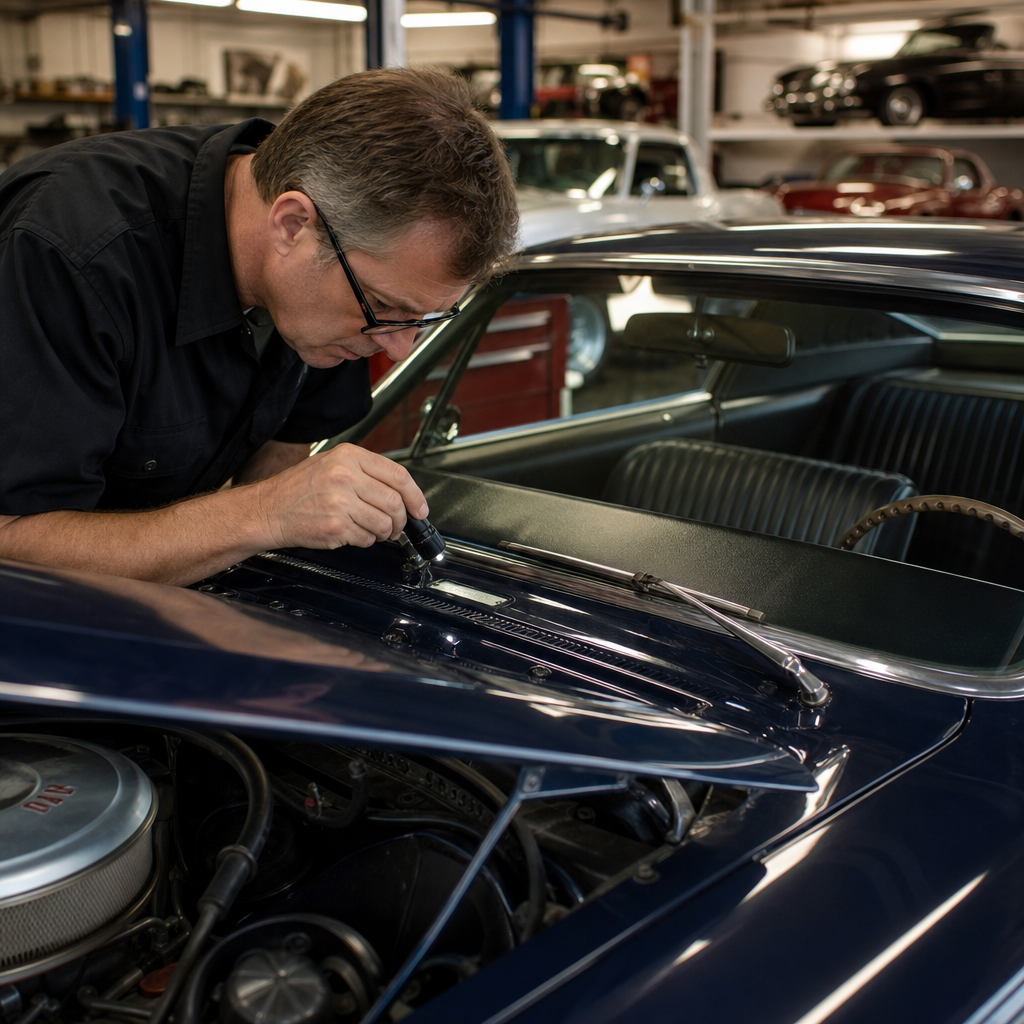
One of the costliest mistakes in classic car negotiation is waiving the pre-purchase inspection because the seller seems honest, the photos are beautiful, or the market feels fast. Trust is not a substitute for verification. A proper inspection gives you both protection and leverage. It identifies current defects, deferred maintenance, non-original components, accident repair, corrosion, fluid leaks, compression issues, and safety concerns. More importantly, it converts vague suspicion into documented findings that can support a revised offer.
The inspector matters as much as the inspection. Generalist shops miss marque-specific issues. A random local mechanic may not know where a W113 rusts, how to assess a C2 Corvette birdcage, or why an Alfa Romeo twin-cam’s smoke pattern should be interpreted carefully. I prefer specialists familiar with the exact model or at least the exact brand and era. Their reports are more actionable because they can distinguish common quirks from expensive warning signs. They also know which flaws are value-neutral and which are truly price-changing.
Buyers sometimes fear that asking for an inspection will offend the seller. Serious sellers expect it. If the seller resists basic inspection access, that is not an inconvenience; it is information. In negotiation terms, resistance is a signal of hidden risk, unrealistic expectations, or both. A clean inspection does not mean you should pay the full ask automatically, but it does narrow the discussion to market value and transaction terms. A weak or rushed inspection does the opposite: it leaves major unknowns unresolved and forces you to negotiate blind.
Using the Wrong Offer Structure and Timing
Not every negotiation mistake is about the final number. Many buyers mishandle the structure of the offer. They present a low offer without reasoning, negotiate by text only, reveal their maximum budget too early, or send money before terms are documented. Effective negotiation strategies use sequence and structure. First establish facts. Then present value logic. Then make a clean offer with conditions, timelines, and payment method defined. Sellers respond better to disciplined buyers because they reduce transaction friction.
Timing matters too. A car listed for three days and a car listed for ninety days require different tactics. Fresh listings often reward speed and clarity more than aggressiveness. Stale listings usually indicate an expectation gap, a hidden issue, weak presentation, or a seasonal mismatch. Convertibles in winter, large prewar cars during storage season, and project cars during tighter credit environments can create leverage if you are prepared to move. I have secured better terms simply by noticing when a seller had already relisted twice and was fatigued by unserious inquiries.
A strong offer is specific: purchase price, deposit amount, inspection contingency, included spares, title requirements, transport responsibility, and payment timing. If buying at auction, know the buyer’s premium, arbitration rules, reserve status, and post-sale dispute procedures before bidding. Many buyers “win” at auction and only then realize the fee structure and shipping costs erase any negotiating success. The best buyers know their all-in number before participating, and they stop exactly there.
Overlooking Total Cost Instead of Negotiated Price
Some buyers negotiate hard on sticker price and still lose money because they ignore the total acquisition cost. A classic car that is two thousand dollars cheaper but immediately needs tires, fuel system work, brake overhaul, shipping across the country, and title correction is not cheaper. Negotiation strategies must account for all near-term costs. That includes transport, sales tax, import duties if relevant, registration hurdles, storage, insurance, specialist labor rates, and parts availability.
This is especially important for cars with long dormancy periods. A “runs and drives” car that sat for eight years may need more than a battery and fresh fuel. Brake seals harden, hoses crack internally, tanks rust, carburetors varnish, tires age out, wheel bearings dry, and cooling systems corrode. On certain models, a recommissioning package can reach five figures quickly. If you fail to include those costs, you negotiate the wrong problem. The seller may hold firm on price while still agreeing to include rare spares, a hard-to-find soft top frame, extra trim, workshop manuals, or enclosed shipping. Those items have real economic value.
Resale also belongs in this calculation. Overpaying slightly for an unusually original, well-documented car can be smarter than buying a cheaper example with dubious repairs. In the classic market, quality often compounds. When you later sell, the next buyer will perform the same scrutiny you should perform now. Negotiation success is not merely buying low; it is buying right.
Missing the Seller’s Motivation and Communication Style
Every negotiation has a human side. Buyers who ignore seller motivation miss opportunities. Is the seller downsizing a collection, settling an estate, funding another purchase, moving homes, or simply testing the market? Motivation affects flexibility. A long-term owner with complete records may hold firm on price but include parts and grant generous inspection access. An estate seller may care more about a smooth, documented transaction than squeezing the last dollar. A dealer may move faster on a slow-stock unit than on a fresh acquisition with strong inquiry volume.
Communication style matters as well. Some sellers respond to concise, evidence-based offers. Others need a phone conversation to establish credibility. I generally avoid adversarial language because it makes sellers defend the asking price emotionally. It is more effective to separate the car’s virtues from the risk you are pricing. “It is a very appealing car, but the missing restoration file and the rust concern at the rear arch change my number.” That phrasing keeps the discussion objective.
Good buyers also know when to stop talking. Overexplaining your budget, travel plans, spouse approval, or emotional attachment only weakens your position. Ask direct questions, listen carefully, and note inconsistencies. Sellers often reveal leverage accidentally: “I need the garage space,” “the title is at my other house,” or “I never got around to fixing the gauges.” Those details shape both price and terms if you pay attention.
Building a Repeatable Negotiation Process That Saves Money
The buyers who consistently avoid expensive mistakes use a repeatable process. They research values, verify identity and originality, review documentation, arrange expert inspection, estimate immediate costs, and present a clean offer. They never confuse speed with haste. They know when to walk away. Most importantly, they negotiate from evidence rather than hope. That process works whether you are buying a Ford Bronco, a Ferrari 308, or a Triumph TR6 because the underlying principles are the same.
For a practical framework, create a deal sheet for every car. Include market comps, VIN and engine numbers, ownership history, inspection findings, known defects, estimated first-year costs, and your ceiling number. Prepare questions in advance and record answers. If the seller changes the story, you will catch it. If the inspection reveals new facts, you can revise your offer logically instead of emotionally. This single habit has saved buyers far more than any clever line delivered during a phone call.
Negotiation mistakes that cost buyers thousands are preventable because they follow predictable patterns: poor research, emotional bidding, weak inspection discipline, and incomplete cost analysis. The main benefit of better negotiation strategies is not simply paying less today; it is buying with confidence and protecting future resale value. In classic cars, the smartest deal is the one that still looks smart after transport, first service, and a year of ownership. Use this hub as your starting point, apply a structured process to every opportunity, and treat every unanswered question as a cost until proven otherwise. The market rewards prepared buyers. Be one of them.
Frequently Asked Questions
What are the most common negotiation mistakes that cost buyers thousands in the classic car market?
The biggest mistakes usually happen long before the buyer says a number out loud. One of the most expensive errors is negotiating without enough market research. Buyers often focus on asking price instead of actual transaction value, recent comparable sales, originality, restoration quality, documented ownership history, and model-specific demand. In the classic car world, two cars that look nearly identical in photos can differ in value by many thousands of dollars because of matching numbers, bodywork quality, rust repair history, or incomplete documentation.
Another costly mistake is letting emotion take control. Excitement, urgency, and fear of missing out push buyers into weak negotiating positions. Sellers can sense when a buyer has already mentally committed to the car, and once that happens, leverage usually disappears. Buyers also lose money when they negotiate too narrowly around price and ignore the full transaction. Inspection findings, missing records, transport costs, title issues, spare parts, delivery timing, and post-sale obligations all affect the true cost of ownership. A buyer may “win” a small price reduction but still overpay overall because they failed to negotiate based on the complete picture.
Many buyers also make the mistake of speaking too much and revealing their ceiling too early. If the seller learns how badly the buyer wants the car, how much cash is available, or how quickly the buyer needs to close, the seller gains an advantage. Strong negotiation is built on preparation, discipline, patience, and asking the right questions. Buyers save the most money when they approach negotiation as a process rather than a single discussion about price.
Why is pre-purchase research so important before making an offer?
Pre-purchase research gives a buyer the foundation to negotiate from facts instead of assumptions. In the classic car market, value is highly sensitive to details. The exact year, engine, trim level, production rarity, originality, restoration standard, color combination, ownership history, and provenance can all move the number significantly. Without research, buyers may mistake a polished driver for an investment-grade example or pay premium money for a car with hidden compromises that the market already discounts.
Good research should include more than a quick glance at online listings. Buyers should compare sold values when possible, study auction trends with caution, review enthusiast forums for common trouble spots, and learn what documentation matters for that specific model. They should also understand the difference between seller language and market reality. Terms like “rare,” “fully restored,” “numbers matching,” or “show quality” are often used loosely. A well-informed buyer knows how to verify those claims and challenge them politely when the evidence does not support the price.
Research also helps buyers identify timing and leverage. If a car has been listed for a long time, relisted repeatedly, or priced above comparable examples, the seller may be more flexible than the listing suggests. If the market for that segment is cooling, that matters too. A buyer who understands the car, the segment, and the seller’s position can make a precise, credible offer supported by logic. That kind of offer is harder to dismiss and much more likely to save real money.
How should inspection results be used as negotiation leverage?
An inspection should do more than confirm whether the car is worth buying; it should shape the structure and tone of the negotiation. One of the most expensive mistakes buyers make is paying for an inspection, learning about meaningful issues, and then failing to use that information effectively. Mechanical problems, rust, poor body repairs, leaking seals, weak compression, worn suspension, electrical faults, non-original components, and questionable restoration work all have financial consequences. Those consequences should be translated into actual repair costs, future risk, and reduced market desirability.
The best approach is to stay objective and specific. Instead of telling the seller the car is “not worth the money,” a buyer should point to documented findings and explain how they affect value. For example, if the inspection reveals rust in known problem areas, poor panel alignment, old tires, and incomplete service records, that is not a vague complaint. It is a concrete case for adjusting the purchase price or renegotiating terms. Sellers are more likely to respond to a calm, evidence-based discussion than to broad arguments or emotional reactions.
Inspection leverage can also be used beyond a simple price cut. In some cases, the smarter move is to negotiate for parts, documentation, service completion, transport assistance, or a shorter closing window. If the seller will not move much on price, they may still make concessions elsewhere that improve the economics of the deal. The key is to know the cost of every issue, prioritize the expensive ones, and negotiate from documented facts. That is how inspection findings become real leverage rather than just disappointing news.
How do documentation and title problems affect negotiation?
Documentation is one of the strongest value drivers in the classic car market, and weak paperwork should always influence negotiation. Buyers sometimes focus heavily on cosmetics and mechanical condition while overlooking records, title status, VIN consistency, ownership chain, restoration invoices, authenticity certificates, emissions exemptions, or import documents. That is a serious mistake because paperwork gaps create uncertainty, and uncertainty lowers value. Even a beautiful car becomes more expensive if the next buyer will have doubts about what it is, where it came from, or how easily it can be registered and insured.
When documentation is incomplete, the buyer should not assume the issue is minor. Missing maintenance records can make future servicing harder to predict. Missing restoration invoices can hide the quality or age of major work. A title problem can delay registration, increase administrative cost, or create legal complications. Mismatched numbers or unclear provenance can materially reduce collector appeal. These are not technicalities; they directly affect marketability and risk, which means they should directly affect price.
In negotiation, documentation problems should be addressed clearly and early. The buyer should ask for copies, verify details independently where possible, and identify exactly what is missing or inconsistent. Then the discussion should shift to risk allocation. If the seller cannot fully support the car’s history or legal status, the buyer should not pay as though everything is complete and verified. In many cases, the appropriate response is a lower offer, conditional terms, or walking away entirely. Discipline around documentation often protects buyers from the hidden costs that surface months after the purchase.
Can transport planning and deal timing really make a difference in how much a buyer pays?
Yes, and this is one of the most overlooked parts of negotiation. Many buyers treat transport and timing as afterthoughts, but both can affect the total deal by thousands. If a buyer commits to a car before understanding shipping cost, delivery delays, storage fees, route availability, or seasonal transport pricing, the final expense can rise sharply. The same applies to rushed timing. Buyers who need to close immediately often lose leverage because sellers know speed has value. Once urgency is obvious, the seller has less reason to compromise.
Transport planning matters because the true acquisition cost is never just the sale price. Enclosed shipping, international freight, insurance in transit, customs processing, local delivery, and temporary storage all add up. If the car is non-running or has low ground clearance, transport may be even more specialized and expensive. A disciplined buyer factors these costs in before making an offer and uses them in negotiation when appropriate. If the seller is far away, the buyer may ask for help with delivery, flexible pickup timing, or a concession that offsets logistics.
Timing can also work in the buyer’s favor. A seller nearing the end of a listing cycle, facing storage pressure, preparing for another purchase, or trying to close before a seasonal slowdown may be more open to realistic offers. Buyers who are patient and prepared can often negotiate better terms simply by not appearing rushed. In other words, timing and logistics are not separate from negotiation; they are part of it. Buyers who plan them carefully usually make better offers, hold firmer positions, and avoid the extra costs that turn a decent purchase into an expensive one.