Japanese classic cars have moved from affordable enthusiast buys to serious collector assets, and the most valuable Japanese classic cars today are no longer niche favorites known only to import fans. In auction rooms, private collections, and restored street builds, top Japanese classics now command six-figure prices, with a few models pushing well beyond that mark. For anyone building a collection, researching market trends, or simply trying to understand why these cars matter, the category deserves close attention because it combines historical significance, engineering innovation, and a rapidly maturing global market.
In practical terms, a Japanese classic car usually refers to a vehicle built during the postwar growth era through the 1990s that has lasting enthusiast, historical, or motorsport value. The highest-value examples tend to come from Nissan, Toyota, Honda, Mazda, and a smaller set of specialty makers such as Lexus, Subaru, and Mitsubishi. Value is shaped by rarity, provenance, homologation history, originality, export eligibility, and cultural influence. Condition still matters, but with Japanese classics, specification matters just as much. A low-production GT-R, limited-run Toyota 2000GT, or unmodified Acura NSX-R can outrank a shinier but less significant car every time.
I have watched this market change from the days when early Skylines, RX-7s, and Supras were discussed mainly in enthusiast forums to a period where Hagerty valuation data, major auction houses, and blue-chip collectors all track Japanese classics as a distinct segment. The shift happened for clear reasons. Buyers who grew up with Gran Turismo, Initial D, Best Motoring, and 1990s tuning culture now have spending power. At the same time, many European and American collector cars have become expensive enough that buyers seek alternatives with comparable engineering depth. Japanese classics fill that gap, but the best cars are no longer bargains.
What makes this segment especially important is that it spans more than nostalgia. Japanese manufacturers pioneered advanced ideas that aged exceptionally well: twin-cam high-revving engines, turbocharging for road and rally use, lightweight aluminum construction, four-wheel steering, active aerodynamics, and reliable electronic engine management. Many of the most valuable Japanese classic cars were landmarks when new. The Mazda Cosmo introduced production twin-rotor rotary power. The Toyota 2000GT established Japan as a builder of world-class grand tourers. The Nissan GT-R line translated racing success into road cars with an identity that still drives demand today. These were not imitations; they were category-defining machines.
Why Japanese classic cars have become so valuable
The simplest answer is constrained supply meeting expanding global demand. Many highly prized Japanese classics were built in low numbers, sold only in Japan, or heavily modified during their lower-value years. As a result, truly original cars are scarce. The market places a premium on factory paint, matching drivetrains, documented service records, period-correct trim, and untouched interiors. I have seen two cars of the same model sell at dramatically different levels because one retained its original airbox, wheels, stereo, and chassis stampings while the other had a long tuning history and incomplete paperwork.
Eligibility rules also matter. As cars age into legal import windows in the United States and other markets, demand often rises sharply. That pattern has affected Nissan Skyline GT-R generations, Mitsubishi Lancer Evolution variants, and limited Toyota and Honda models. Media exposure adds another layer. Auction firms such as RM Sotheby’s, Broad Arrow, Bonhams, and Bring a Trailer have helped normalize premium pricing by presenting Japanese classics alongside established European collectibles. Once collectors see a Hakosuka GT-R, a 2000GT, and an NSX-R discussed with the same seriousness as an early Porsche or Alfa Romeo, prices follow perception.
Motorsport history drives value too. Homologation specials and race-bred road cars have a built-in narrative that general collector markets understand instantly. The R32 GT-R’s dominance in Group A touring car competition is measurable, not mythical. Subaru Impreza 22B demand is tied directly to World Rally Championship legacy. Mazda RX-7 Spirit R values benefit from the FD platform’s endurance-racing reputation and the rotary engine’s cult appeal. When a car connects road use, racing success, and limited production, it checks nearly every box serious buyers want.
The blue-chip icons at the top of the market
At the highest end, the Toyota 2000GT remains the benchmark. Built from 1967 to 1970 in very limited numbers, with production generally cited around 351 units, it is the Japanese classic most accepted as a world-class collector car in any room. Its Yamaha-assisted engineering, elegant proportions, and cultural visibility from film appearances all support its value. Exceptional cars have sold for well over $1 million, and even driver-grade examples sit far above most other Japanese classics. The 2000GT matters because it proved Japan could build an exotic grand tourer with design and finish equal to contemporary European rivals.
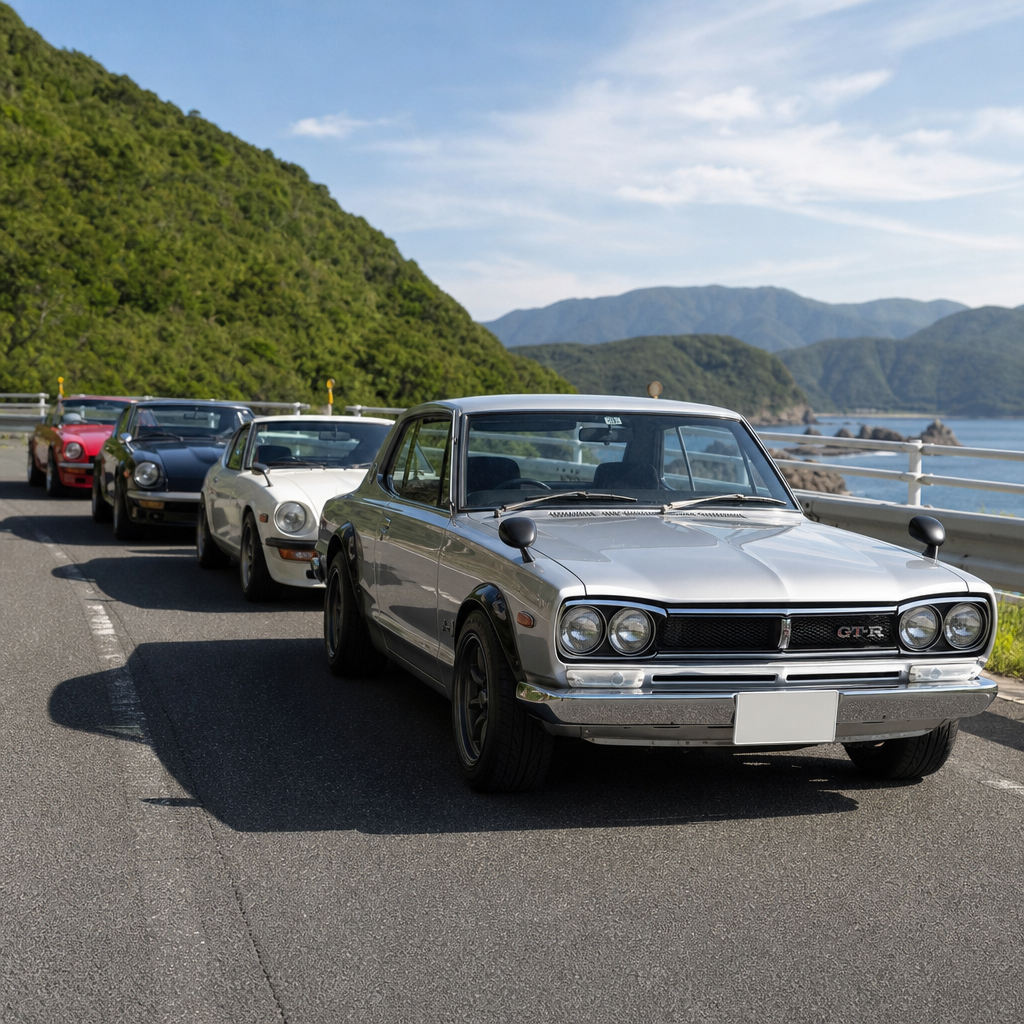
The first-generation Nissan Skyline GT-R, especially the KPGC10 coupe known as the Hakosuka, is another top-tier collectible. Its S20 dual-overhead-cam inline-six, derived from the Prince R380 racing program, gives it real technical prestige. Genuine GT-R examples are rare, highly scrutinized, and increasingly expensive. The later KPGC110 Kenmeri GT-R is rarer still because production ended quickly amid emissions and market pressures. While Kenmeri GT-R values can exceed Hakosuka levels due to scarcity, buyers inspect authenticity carefully because replicas and converted non-GT-R cars are common.
Other blue-chip names include the Mazda Cosmo Sport 110S, one of the earliest rotary halo cars, and the Lexus LFA, which is newer than many traditional classics but already firmly collectible. The LFA’s naturally aspirated 4.8-liter V10, 9,000-rpm character, carbon-fiber intensive construction, and just 500-unit production run make it an instant modern classic. Nürburgring Package cars trade at a substantial premium. These models show that value in Japanese classics is not tied to age alone. It follows engineering significance, rarity, and sustained global desire.
The performance heroes most collectors chase
For many enthusiasts, the center of the market is defined by performance cars from the 1980s and 1990s. The Acura NSX and Honda NSX changed expectations for exotic usability. With aluminum monocoque construction, input associated with Ayrton Senna during development, and Honda reliability, the NSX became a long-term collector favorite. Standard early manual cars are increasingly desirable, while rare Japanese-market Type R and later NSX-R versions sit in a separate value bracket entirely. Lightweight measures, sharper chassis tuning, and very limited production make NSX-R models among the most coveted Japanese cars ever built.
The Nissan Skyline GT-R lineage dominates the conversation here. R32, R33, and R34 GT-R values all climbed because each generation offers a distinct mix of technology and legend. The R32 introduced the ATTESA E-TS all-wheel-drive system and Super-HICAS four-wheel steering to a broad audience and earned the “Godzilla” nickname through competition success. The R34 GT-R, especially V-Spec, M-Spec Nür, and Z-Tune-associated cars, reached elite collectible status due to short production, stronger global recognition, and a dashboard interface that symbolized the era’s tech ambitions. Clean, unmodified R34s now command prices that would have seemed impossible fifteen years ago.
Toyota’s A80 Supra Turbo also deserves its place among the most valuable Japanese classic cars today. Much of the demand centers on the 2JZ-GTE engine’s tuning strength, but serious collectors pay for originality, rare colors, six-speed manuals, and documented low-mile examples. The market has matured beyond movie fame. Buyers now distinguish carefully between stock twin-turbo cars, heavily modified builds, and export-market differences. The best left-hand-drive Turbo manuals and pristine Japanese-market RZ variants both attract strong money because they appeal to slightly different collecting audiences.
Rarity, condition, and specification: what really moves prices
Not every desirable Japanese classic is automatically valuable. Price follows a hierarchy. Authenticity comes first, then rarity, then condition, then presentation. A rare trim level with original body panels and matching numbers will usually outperform a restored standard model. On Japanese classics, collectors also watch for rust repair quality, seam integrity, underbody originality, and evidence of crash damage because many cars were used hard, modified extensively, or imported after inconsistent storage.
| Model | Why collectors want it | Main value driver |
|---|---|---|
| Toyota 2000GT | Halo grand tourer with global prestige | Extreme rarity and historic importance |
| Nissan Hakosuka GT-R | Early GT-R identity and racing pedigree | Authenticity and limited production |
| Honda NSX-R | Lightweight, focused evolution of the NSX | Specification and scarcity |
| Nissan R34 GT-R | Peak recognition among modern Japanese icons | Originality, trim level, low production variants |
| Mazda RX-7 Spirit R | Final and best-known FD special edition | Condition, originality, and limited numbers |
Documentation often separates investment-grade cars from enthusiast-grade cars. Service books, deregistration papers, auction sheets from Japan, factory brochures, and specialist inspections all help establish confidence. In my experience, buyers will forgive careful maintenance work and age-related refurbishment, but they heavily discount uncertain histories. A car with the right VIN tags, option codes, and a clear ownership chain can sell quickly even in a cautious market. The same model with patchy paperwork can sit unsold for months.
Specification details are critical because Japanese manufacturers produced many trims that look similar to casual buyers. An R32 GT-R Nismo, an Evo VI Tommi Mäkinen Edition, or an FD RX-7 Type R Bathurst carries a different market position from a standard version. Limited colors, lightweight components, factory aero, and market-specific equipment can change values materially. Serious buyers verify these details with marque experts, factory records where available, and trusted registries.
Undervalued segments and the next wave of Japanese classics
While the top names get headlines, several segments still offer room for growth. First-generation Mazda RX-7s, especially clean SA22C and FB cars, remain historically important and comparatively accessible. Early Datsun Z models continue to rise, but rare Fairlady Z variants, Z432s, and Japan-specific trims have more upside than ordinary cars. The same principle applies to Celicas, Starions, Silvias, and early Imprezas: the market rewards the rarest, most correct versions first, then lifts the broader category later.
Mitsubishi’s collector standing is also improving. Lancer Evolution VI, VII, and IX models, along with Galant VR-4s and Pajero Evolutions, have moved from used performance status into recognized modern classic territory. Subaru 22B values proved that rally heritage can create blue-chip demand, but rarer STI Type RA and S-series cars may follow the same path as buyers search below the headline model. Even luxury Japanese cars are gaining ground. The first-generation Toyota Century, Nissan President, and high-spec Celsior are attracting interest because they represent a distinct, understated form of engineering excellence.
The main limitation is that not every enthusiast favorite will become highly valuable. Large production numbers, poor parts support, heavy modification rates, and weak international recognition can cap appreciation. Still, as the market deepens, more collectors are looking past obvious stars toward historically meaningful second-tier cars. That is usually how a collector category matures.
How to buy wisely in this market
If you want one of the most valuable Japanese classic cars today, buy the best authentic example you can afford rather than the cheapest entry point. Prioritize originality, complete records, specialist inspections, and proven model knowledge. Use auction results as references, but compare like with like because mileage, trim, restoration quality, and market of origin can produce huge pricing gaps. Join owner clubs, study chassis codes, and learn which parts are impossible to replace. The winners in this market are usually buyers who do their homework early, not buyers who chase hype late.
Japanese classics now stand confidently beside established collector categories because they offer real engineering substance, compelling stories, and global cultural reach. The cars leading the market—the Toyota 2000GT, early Skyline GT-Rs, NSX-Rs, Supras, RX-7s, and select rally homologation specials—earned their status through rarity and significance, not fashion alone. For collectors, the benefit of understanding this segment is simple: you can identify quality faster, avoid expensive mistakes, and focus on models with durable long-term appeal. If you are building out research on classic car models and brands, use Japanese classics as a serious pillar category, then narrow into marque- and model-specific guides before you buy.
Frequently Asked Questions
Why have Japanese classic cars become so valuable in today’s collector market?
Japanese classic cars have appreciated for a mix of cultural, historical, and market-driven reasons. For years, many of these models were overlooked by traditional collectors who focused on American muscle, European sports cars, or pre-war classics. That created a long period when important Japanese performance and luxury cars remained relatively affordable, even as their reputations grew among enthusiasts. Once the broader collector world caught up, values rose quickly. Buyers began to recognize that many Japanese classics offered genuine engineering significance, motorsport pedigree, limited production numbers, and a major role in shaping global car culture.
Another major factor is generational demand. Enthusiasts who grew up in the 1980s, 1990s, and early 2000s are now in their prime earning years, and many want to buy the cars they admired in magazines, video games, films, and tuner culture. That nostalgia has translated into real money, especially for halo models from Nissan, Toyota, Mazda, Honda, and Subaru. At the same time, supply has tightened. Many desirable cars were modified heavily, raced, exported, neglected, or rusted away, which means truly original, low-mileage, well-documented examples are increasingly rare.
The international market has also played a big role. As import restrictions changed in countries such as the United States, more collectors gained access to Japanese-market icons that had previously been unavailable or difficult to register. That widened the buyer pool dramatically. Auction houses, collectors, and specialty dealers then gave these cars greater visibility, helping establish price benchmarks. In short, Japanese classics are no longer valued simply as fun enthusiast cars; they are now treated as historically important collector assets with worldwide demand.
Which Japanese classic cars are considered the most valuable right now?
The top of the market is usually led by the rarest, most historically significant, and most original examples. Cars such as the Toyota 2000GT sit firmly at the top tier, often viewed as one of the most important Japanese collector cars ever built. Its limited production, elegant design, and status as an early symbol of Japan’s ability to build a world-class grand touring car make it exceptionally desirable. Similarly, the Nissan Skyline GT-R line, especially early “Hakosuka” and “Kenmeri” GT-R models, has become highly collectible because of its racing history, scarcity, and iconic place in Japanese performance culture.
The first-generation Honda NSX, particularly low-mileage and special-edition examples, is another standout. It has gone from modern performance bargain to recognized classic thanks to its aluminum construction, everyday usability, and connection to Ayrton Senna’s development input. High-end air-cooled Porsche values also helped some buyers rethink the NSX as a serious engineering icon rather than merely an alternative exotic. Mazda’s rotary legends, especially the Cosmo and select first-generation RX-7 variants in exceptional condition, also continue to attract collectors looking for technically unique Japanese cars.
Other highly valuable names include the Toyota Supra Mk4 Turbo, Mazda RX-7 FD, Nissan Skyline GT-R R32, R33, and R34, and select Subaru Impreza WRX STI and Mitsubishi Lancer Evolution models, though values vary sharply depending on market, originality, mileage, and legal import status. Limited-production homologation cars, rare factory performance trims, and models with documented competition history can bring especially strong prices. While not every Japanese classic is a six-figure car, the highest-tier examples now compete directly with established European and American collectibles in both prestige and price.
What makes one Japanese classic car worth far more than another of the same model?
Condition and originality are usually the biggest value drivers. Two cars with the same badge can be worlds apart in price if one has its factory paint, matching drivetrain, original interior, service records, and low verified mileage while the other has rust repair, aftermarket parts, accident history, or missing documentation. In today’s collector market, originality matters tremendously because so many Japanese classics were modified during their enthusiast years. A stock, unmolested example of a sought-after model is often much harder to find than a modified one, and buyers are willing to pay a premium for that rarity.
Production details matter as well. Special editions, limited-run variants, early production cars, rare colors, factory lightweight trims, and export-restricted Japanese domestic market versions can all command a significant premium. Provenance can elevate a car even further. If a vehicle has celebrity ownership, motorsport history, magazine-feature documentation, or a well-known restoration by a respected specialist, collectors may value it above a standard example. Even region-specific details can influence price, especially if a car retains market-correct equipment and paperwork.
Restoration quality is another critical piece of the puzzle. A proper, documented restoration performed with correct parts can support strong value, while poor cosmetic refurbishment may hurt confidence. Buyers increasingly inspect body integrity, undercarriage condition, paint depth, trim correctness, and mechanical authenticity. For turbocharged and high-performance Japanese classics, compression numbers, drivetrain health, and signs of abuse are especially important. Ultimately, the highest prices go to cars that combine rarity, authenticity, excellent preservation or restoration, and a story that serious collectors can trust.
Are modified Japanese classics still valuable, or do collectors prefer stock examples?
In most cases, top-tier collectors prefer original or correctly restored stock examples, especially when discussing the most valuable Japanese classic cars today. That preference exists because originality is scarce. During the peak tuner years, many Supras, Skylines, RX-7s, Integra Type Rs, and other icons were upgraded with wheels, body kits, suspension, exhaust systems, engine swaps, and electronics. Those modifications were often done for performance or style rather than long-term preservation. As a result, untouched cars now represent the hardest version to find, and rarity tends to drive premium prices.
That said, modified cars are not automatically undesirable. A period-correct build using respected components from famous Japanese tuning houses can still be very appealing, especially if the work reflects authentic era culture and is thoroughly documented. Cars associated with brands such as NISMO, Mine’s, HKS, TOM’S, Mugen, or RE Amemiya may attract strong interest if the modifications are tasteful, reversible, and historically appropriate. There is also a difference between collector value and enthusiast value. A modified car may sell for less than a pristine stock equivalent, but still bring substantial money if the build quality is high and the model itself is in strong demand.
The key is context. Random aftermarket changes, poor tuning, non-original bodywork, missing factory parts, or undocumented engine work usually reduce value because they create uncertainty. By contrast, a professionally built, era-correct car with complete records can occupy a respected niche of its own. For buyers focused purely on investment-grade appreciation, stock usually wins. For buyers who want to own a meaningful piece of Japanese performance culture, some modified examples remain very desirable and can still be quite valuable.
How can buyers evaluate whether a Japanese classic is a smart purchase at current prices?
Buyers should start by separating hype from fundamentals. A smart purchase is not just about buying a famous model; it is about buying the right example of that model at the right quality level. Research recent auction results, private-sale trends, and specialist dealer pricing, but do not rely on headline numbers alone. The strongest prices are usually for exceptional cars, not average ones. Learn which trims, chassis codes, years, and factory options matter most, because those details can have an outsized effect on long-term value. It is also important to understand regional market differences, since prices may vary depending on import eligibility, registration ease, and buyer demand in different countries.
Inspection is essential. Japanese classics can hide rust, accident repair, odometer issues, and mechanical wear, especially if they have changed hands multiple times or spent years in storage. A pre-purchase inspection by a marque specialist is one of the best investments a buyer can make. For performance cars, pay close attention to turbo systems, cooling, engine compression, transmission function, and evidence of hard use. For older grand touring and luxury models, inspect trim availability, electrical systems, and parts support. Documentation should also be a major focus. Service history, import records, ownership chain, and restoration receipts help verify both condition and authenticity.
Finally, buyers should think about their objective. If the goal is pure collectibility, prioritize rarity, originality, and provenance over flashy modifications or short-term trends. If the goal is enjoyment with some value retention, a slightly less pristine example may make more sense. The best purchases tend to be cars with a strong historical case, broad enthusiast appeal, and limited surviving supply. Japanese classics have matured into a serious collector category, but as values rise, careful due diligence matters more than ever.