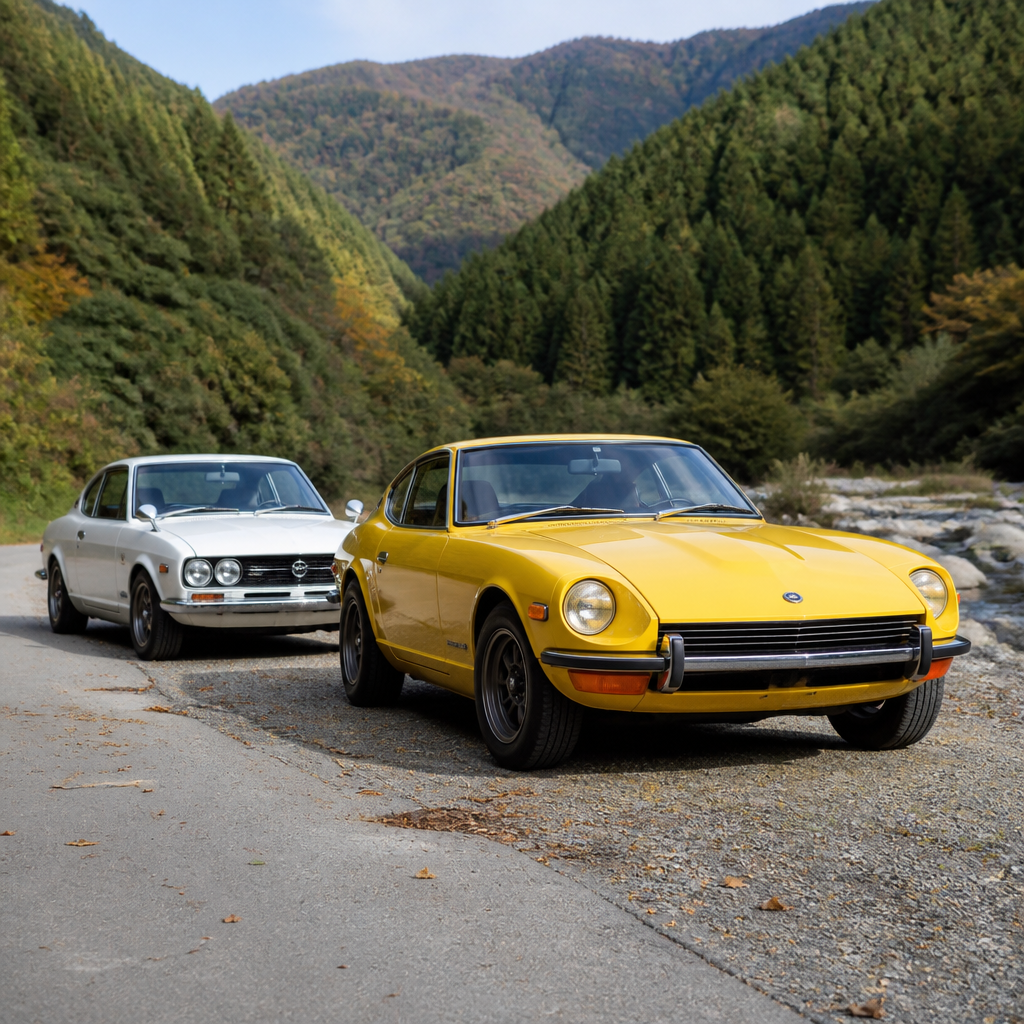
Affordable Japanese classics for beginners offer one of the smartest entry points into vintage car ownership because they combine mechanical simplicity, strong parts support, and cultural significance without demanding European restoration budgets. In this context, “Japanese classics” usually means cars from the 1960s through the 1990s that represent important milestones for brands such as Toyota, Datsun/Nissan, Honda, Mazda, Subaru, Mitsubishi, and Isuzu. “Affordable” does not mean cheap in every case; it means attainable to buy, maintain, insure, and store while still delivering a genuine classic-car experience. For beginners, that balance matters more than headline auction prices. I have found that first-time buyers often focus on badge prestige or internet hype, then discover that the real cost of ownership comes from rust repair, trim scarcity, and poorly documented modifications. Japanese classics often reduce those risks because many were built in high volumes, engineered for durability, and supported by active owner communities. They also matter historically. Japan’s rise from postwar rebuilding to global automotive leadership reshaped performance, reliability, and design standards worldwide. A beginner who understands these cars is not just shopping for nostalgia; they are learning how fuel crises, emissions rules, motorsport, and export markets influenced modern car culture. That makes this subject broad enough for a hub page and practical enough to guide a first purchase.
What makes a Japanese classic beginner-friendly
A beginner-friendly Japanese classic usually has four traits: durable mechanicals, accessible documentation, parts interchangeability, and manageable market values. Durable mechanicals matter because most newcomers are not equipped to rebuild rare multi-carb engines or diagnose obscure electrical faults from scratch. Cars like the Toyota Corolla AE86, Datsun 510, first-generation Mazda Miata, and Honda Civic from the 1980s earned loyal followings partly because owners could keep them running with normal tools and workshop manuals. Documentation matters just as much. Factory service manuals, Haynes-style guides, and model-specific forums shorten the learning curve dramatically. Parts interchangeability is a hidden advantage in many Japanese models. Nissan L-series engines, Toyota A-series engines, and Honda D-series components have broad aftermarket and used-parts support, which lowers repair costs. Finally, manageable market values help beginners recover from mistakes. If you buy a sound but imperfect 1970s Toyota Celica or 1980s Mazda RX-7, you are less exposed than if you stretch into a halo car like a Toyota 2000GT or first-generation Nissan Skyline GT-R. The best starter classic is not the rarest model. It is the one you can inspect intelligently, drive regularly, and improve without financial panic.
The most affordable Japanese classics worth starting with
The strongest entry-level choices tend to sit below the top tier of collector hype while still offering excellent ownership experiences. Early Toyota Celicas remain appealing because they deliver classic rear-wheel-drive proportions, straightforward engineering, and better affordability than many equivalent-era European coupes. Datsun 510 sedans and wagons are celebrated for handling and motorsport pedigree, but prices vary sharply based on rust and originality; patient buyers can still find usable examples that need cosmetic work rather than structural rescue. The first-generation Mazda RX-7 gives beginners a genuine sports-car feel, though the rotary engine requires education and disciplined maintenance. For many people, the safest place to start is actually the late 1980s through 1990s segment. Cars such as the NA Mazda Miata, Honda CRX, Toyota MR2 AW11, and Nissan 240SX S13 are modern enough to drive often yet old enough to qualify as classics in enthusiast circles. These cars introduced many owners to manual gearboxes, autocross, and home maintenance. I recommend focusing on complete, running cars over “project bargains.” A complete, documented example with minor paint flaws is almost always cheaper long term than a half-disassembled shell with missing trim, wiring issues, and an uncertain title.
| Model | Typical appeal for beginners | Main caution | Why it belongs in a hub list |
|---|---|---|---|
| Toyota Celica (1970s) | Simple rear-wheel-drive coupe, strong style, approachable mechanics | Rust in floors, arches, and lower body sections | Gateway to classic Toyota ownership without flagship prices |
| Datsun 510 | Sharp handling, huge enthusiast following, sedan practicality | Rising values and extensive modification history | Core reference point for vintage Japanese performance |
| Mazda RX-7 FB/FC | Lightweight sports-car balance and distinctive rotary character | Engine health depends on maintenance discipline | Essential for understanding Mazda’s engineering identity |
| Honda CRX | Efficient, nimble, easy to own, excellent parts support | Many cars have been modified or stolen in the past | Shows how 1980s Honda performance became collectible |
| Toyota MR2 AW11 | Mid-engine layout at attainable prices | Cooling-system neglect and hard-to-find trim pieces | Affordable route into unusual Japanese engineering |
| Mazda Miata NA | Outstanding support network, simple maintenance, daily usability | Rust in rocker panels and inflated prices for special editions | Benchmark starter classic for many buyers |
How to choose the right model for your budget and skills
The right beginner car depends on your total ownership budget, not just purchase price. Set three numbers before shopping: acquisition budget, immediate repair budget, and annual operating budget. I usually suggest reserving at least 20 to 30 percent of the purchase price for catch-up maintenance on any older Japanese car, even one that appears healthy. Timing belts, hoses, tires, brake hydraulics, and fuel system components age out regardless of mileage. Then match the car to your skill level. If you are new to classic ownership and want to learn basic maintenance, a carbureted Corolla, Celica, or older pickup can be an excellent teacher. If you prefer fuel injection and modern starting reliability, 1980s and 1990s Hondas, Toyotas, and Mazdas are often easier. Think honestly about your intended use. A weekend scenic-drive car can tolerate slower parts sourcing. A car you need for regular events should have readily available service parts and strong club support. Also factor in storage. Cars kept outdoors deteriorate faster, especially around seals, interiors, and lower body seams. Buyers regularly underestimate this. The best affordable Japanese classic is the one that fits your tools, time, climate, and patience as well as your taste.
Inspection basics: rust, originality, and mechanical condition
If you inspect only one thing on an affordable Japanese classic, inspect rust. Mechanical parts can often be sourced or rebuilt; structural corrosion can consume the entire value of the car. Common problem areas include rocker panels, strut towers, floor pans, spare-wheel wells, windshield surrounds, hatch openings, and battery trays. Bring a flashlight, magnet, inspection mirror, and clean cloth. Look for bubbling paint, uneven undercoating, fresh seam sealer, or mismatched inner panels that suggest hidden repair work. After rust, check originality and modification quality. Many Japanese classics were tuned, swapped, lowered, drifted, autocrossed, or cosmetically altered over the last thirty years. Some upgrades are beneficial, but unfinished wiring, cut springs, emission delete work, and unknown engine swaps create expensive troubleshooting later. Mechanical condition should be evaluated cold, not after a seller has warmed the car. Listen for timing chain noise, top-end tapping, exhaust leaks, and differential whine. On rotary Mazdas, pay attention to hot starts and compression evidence. On carbureted cars, check choke function, idle stability, and fuel smell. Ask for maintenance records, title status, and chassis identification tags. A pre-purchase inspection from a marque specialist is money well spent, especially if bodywork history is unclear.
Ownership costs beginners should expect
Affordable Japanese classics are usually less expensive to maintain than comparable European classics, but they are not cost-free hobbies. Expect spending in five categories: purchase, catch-up maintenance, consumables, insurance, and storage. Catch-up maintenance is where most beginners are surprised. Even robust engines need fresh fluids, ignition components, belts, coolant hoses, filters, and often suspension bushings after decades of use. Brake master cylinders, wheel cylinders, and calipers may fail simply from age. Tires are another overlooked cost. Many classic cars wear old tires with plenty of tread but unsafe date codes. Insurance can be reasonable through agreed-value classic policies from providers such as Hagerty, Grundy, or American Collectors, though mileage limits and storage requirements apply. Fuel economy varies more than many assume. A light Honda CRX or Corolla can be efficient even by modern standards, while a rotary RX-7 will consume more fuel and oil by design. Parts pricing also depends on whether you need service items or cosmetic pieces. A water pump may be easy to source; an intact dashboard, taillight lens, or original seat fabric may be far harder and more expensive. Budgeting for those realities keeps the hobby enjoyable instead of stressful.
Parts availability, community support, and restoration scope
One reason Japanese classics make sense for beginners is the strength of the surrounding ecosystem. Major models benefit from factory heritage programs, reproduction parts, enthusiast forums, social media groups, and specialist vendors. Nissan’s historical support for iconic models, Toyota’s extensive dealer and aftermarket network, and Mazda’s commitment to the Miata community all improve ownership. Still, support is uneven by model and region. Mechanical parts for an AE86 or Miata are far easier to source than trim for a low-volume Isuzu coupe or domestic-market-only kei model. Before buying, search for three categories of parts: routine service items, body and trim components, and weather seals. If any of those categories appears scarce, lower your offer or choose a different model. Community support matters because diagnostics on older cars often depend on shared experience, not just manuals. I have solved idle issues, trim fitment questions, and distributor problems by reading owner archives that captured decades of trial and error. Restoration scope should also be defined early. Cosmetic preservation, sympathetic recommissioning, and full concours restoration are very different paths. Beginners usually do best with a solid driver that needs incremental improvement. That approach teaches the car gradually and avoids the burnout that comes with complete teardown projects.
Which Japanese classics are rising, stable, or overhyped
Market behavior matters because beginners often buy their first classic with equal parts emotion and financial caution. Some Japanese classics are still rising because they sit at the intersection of nostalgia, motorsport history, and shrinking supply. Clean Datsun 510s, AE86 Corollas, and unmodified Honda CRXs have benefited from this trend for years. Others are relatively stable because production volumes were high and buyer demand is broad rather than speculative. The NA Miata is a good example: exceptional cars have become expensive, yet average drivers remain obtainable in many markets. A few models are overhyped relative to their beginner value. Turbocharged hero cars, homologation specials, and gray-market imports can generate huge online attention while masking high repair complexity and insurance challenges. That does not make them bad cars; it makes them poor first classics for most people. Beginners should also understand that originality now commands a premium. Period aftermarket parts from brands like HKS, Mugen, TRD, or RS Watanabe can add interest, but random modern modifications often reduce desirability. The safest buying strategy is to prioritize condition, documentation, and reversibility. If a car can be returned to near-stock form without heroic effort, it usually holds value better and creates fewer ownership surprises over time.
Affordable Japanese classics reward beginners when they are chosen with discipline rather than impulse. The strongest starter cars share clear traits: solid bodies, understandable engineering, active communities, and realistic parts support. Models like the Toyota Celica, Datsun 510, Honda CRX, Mazda RX-7, Toyota MR2, and Mazda Miata cover a wide range of experiences, from simple coupe ownership to mid-engine or rotary curiosity, without forcing a newcomer into exotic costs. The central lesson is straightforward. Buy the best-condition example you can afford, verify rust and paperwork before dreaming about upgrades, and keep money in reserve for the inevitable first round of maintenance. That approach protects your budget and improves your enjoyment immediately. As a hub within the broader world of classic car models and brands, Japanese classics deserve serious attention because they connect durability, innovation, and enthusiast culture in a uniquely accessible way. If you are ready to enter the hobby, start by narrowing your budget, researching one model deeply, and arranging a specialist inspection before you buy.
Frequently Asked Questions
What counts as an affordable Japanese classic for a beginner?
An affordable Japanese classic for a beginner is usually a car from the 1960s through the 1990s that has historic or enthusiast value, but can still be bought, maintained, and enjoyed without the cost profile of a high-end collector car. In practical terms, affordability is not just about the purchase price. It also includes parts availability, mechanical simplicity, insurance costs, fuel requirements, and how easily the car can be repaired by a local specialist or a hands-on owner. A car that costs a little more upfront but starts reliably, has strong aftermarket support, and does not need rare trim pieces every few months is often more affordable in real ownership terms than a cheaper car with major hidden needs.
For beginners, the best candidates are usually mainstream models rather than halo cars. That means looking at cars such as older Toyota Corollas and Celicas, Datsun/Nissan 510s or 280ZXs, Honda Civics and Preludes, Mazda RX-7s with caution, Subaru BRATs or GL models, Mitsubishi Starions depending on condition, and selected Isuzu models where support still exists. The sweet spot is often a model with a strong owner community, widely available service knowledge, and enough originality left that you are not inheriting someone else’s unfinished project. Affordability also varies by body style, transmission, and trim level, so a base coupe or sedan in solid condition can be a much smarter beginner buy than a more famous performance version.
Why are Japanese classics considered a good entry point into vintage car ownership?
Japanese classics are widely seen as an excellent starting point because they tend to blend durability, straightforward engineering, and broad parts support better than many similarly priced vintage alternatives. Many of these cars were designed to be dependable daily transportation first, which means their engines, transmissions, and electrical systems are often less intimidating than those found in more exotic or highly strung European classics. For a new enthusiast, that matters a great deal. Learning vintage ownership is much easier when the car gives you room to build confidence instead of demanding specialist tools, rare expertise, and a restoration-level budget from day one.
Another major advantage is the depth of enthusiast culture surrounding Japanese classics. There are active forums, clubs, model-specific guides, and social media communities dedicated to everything from original factory restoration to period-correct modifications. That support network can save a beginner significant time and money by helping identify common weak points, interchangeable parts, and realistic market values. On top of that, Japanese classics carry genuine cultural significance. They represent major shifts in automotive design, motorsport, reliability, and global manufacturing influence. So for many first-time buyers, these cars offer something rare: an engaging ownership experience that feels historically meaningful, mechanically approachable, and financially manageable all at once.
Which affordable Japanese classics are best for beginners right now?
The best beginner-friendly choices are usually models that strike a balance between popularity and practicality. Older Toyota Corollas are often high on the list because they are simple, durable, and supported by a large enthusiast base. Certain Toyota Celicas also make sense for buyers who want more style without moving into the cost bracket of flagship performance Toyotas. Datsun and Nissan options such as the 510, 610, 280Z, and especially the 280ZX can appeal to beginners, although prices vary sharply depending on originality and rust. Honda Civics, CRXs, and Preludes from the 1980s and 1990s are also attractive because they are lightweight, efficient, and generally easy to understand mechanically.
Beyond the obvious picks, there are smart alternatives that can offer better value. Some Mazda models, including naturally aspirated RX-7s, still attract buyers, but rotary ownership demands more research and discipline, so they are not always the first recommendation for true beginners. Subaru models from the 1970s through 1990s can be appealing for their uniqueness and loyal following, while older Mitsubishi and Isuzu offerings sometimes remain undervalued because they are less famous in the mainstream collector market. The key is to buy by condition, support, and intended use. A less glamorous car with complete records, minimal rust, and a strong owner community is usually a better first classic than a trend-driven icon priced at the top of the market.
What should a beginner inspect before buying a Japanese classic?
The first thing to inspect is rust, because rust repair can quickly turn an affordable classic into a financially draining project. Pay close attention to floor pans, rocker panels, wheel arches, shock towers, trunk floors, frame sections, battery trays, and any known model-specific rust zones. Cosmetic bubbling is one thing, but structural corrosion is far more serious. After rust, evaluate the mechanical fundamentals: cold start behavior, idle quality, smoke from the exhaust, transmission feel, clutch engagement, braking performance, cooling system stability, and suspension noise. A compression test, leak-down test, and a close review of fluid condition can reveal whether the engine is merely old or actually nearing a rebuild.
You should also inspect the electrical system, trim completeness, and evidence of past modifications. Many older Japanese cars have been altered over the years, and while some upgrades are harmless or even beneficial, poor wiring, cut dashboards, missing emissions equipment, or improvised fuel system work can create expensive headaches. Ask for maintenance records, verify the VIN and chassis tags, and look for signs of accident damage or inconsistent paintwork. If possible, bring a specialist familiar with the model. For beginners, the biggest buying mistake is underestimating how expensive “small issues” become when the car has missing interior pieces, worn weatherstripping, unavailable trim, or hidden corrosion. A complete, honest car is almost always worth more than a cheaper one with mystery problems.
Is it better to buy a restored Japanese classic or a project car as a first purchase?
For most beginners, a solid driver-quality car is the smartest first purchase. That means a car that is complete, structurally sound, mechanically healthy, and enjoyable immediately, even if it is not perfect cosmetically. A fully restored example can be excellent if the work was documented and done to a high standard, but restored cars often command a premium that may not be necessary for a first-time owner who mainly wants to learn and enjoy the experience. At the other end of the spectrum, project cars can look tempting because the purchase price appears low, but they frequently demand much more money, time, storage space, and emotional patience than expected. Beginners often underestimate the cost of bodywork, interior restoration, missing parts, and deferred maintenance stacked across multiple systems.
A good rule is to buy the best-condition car you can realistically afford, with an emphasis on completeness and rust-free structure. Mechanical work is usually more manageable than body and trim restoration, especially on older Japanese cars where some cosmetic pieces are now difficult to source. If you enjoy turning wrenches, a lightly needy car can be ideal because it lets you learn without being immobilized by a full teardown. If your goal is dependable weekend use, prioritize originality, service history, and evidence of careful ownership. In this market, the cheapest car is rarely the least expensive to own. A beginner will almost always have a better experience with a sorted, honest example than with a bargain project that requires years of work before it becomes truly enjoyable.