European classic cars sit at the peak of the collector market because they combine design history, engineering breakthroughs, racing pedigree, and genuine scarcity in ways few other assets can match. When enthusiasts ask which machines define the upper limits of value, they are really asking which cars changed motoring culture and still command extraordinary prices decades later. In practical terms, the most valuable European classic cars ever sold are the models that have crossed major auction blocks or private transactions at eight-figure levels, often backed by impeccable provenance, limited production, and competition success.
In the collector world, “classic” usually refers to older vehicles with lasting historical significance, while “valuable” means confirmed market prices rather than sentimental appeal. I have tracked auction catalogs, marque registries, and sale results for years, and the pattern is consistent: the biggest prices are concentrated among prewar Mercedes-Benz competition cars, postwar Ferrari racers, ultra-rare road-going homologation specials, and select icons from brands such as Aston Martin, Jaguar, Bugatti, and Porsche. Condition matters, but not in isolation. A car with a documented Le Mans history, original matching-numbers drivetrain, and period racing success will usually outrank a cosmetically restored example with no notable story.
This subject matters for more than headline-grabbing records. These sales shape insurance values, restoration priorities, museum acquisitions, and even which models receive the most scholarship from historians and archivists. They also reveal what the market truly rewards: authenticity over perfection, originality over over-restoration, and narrative over mere age. For readers exploring European classics as a category, this hub article maps the top value tiers, explains why certain models achieved landmark prices, and offers context that helps separate durable significance from short-term auction excitement. If you want a clear understanding of the European classic market’s most coveted names, this is the starting point.
What makes a European classic car reach record prices
A record-breaking sale rarely comes down to one factor. In my experience reviewing top auction results from RM Sotheby’s, Gooding Christie’s, Bonhams, and Broad Arrow, the highest prices come from a tight overlap of rarity, provenance, competition history, originality, and brand strength. Ferrari dominates many record lists because the company built small numbers, competed at the highest levels, and developed an unmatched collector mythology around its 1950s and 1960s sports racers. Mercedes-Benz occupies the prewar and early postwar summit for similar reasons, especially when a car connects to grand prix success or famed drivers.
Provenance is the decisive multiplier. A standard production run can be rare, but if a specific chassis was driven by Stirling Moss, Juan Manuel Fangio, Mike Hawthorn, or Sir Stirling’s contemporaries in a famous race, its value can leap dramatically. Documentation must support the story. Factory build sheets, period race entries, historian reports, and recognized registries such as Ferrari Classiche or Porsche Certificate of Authenticity all matter. Without them, a seller has a claim; with them, the car has market confidence.
Originality also carries more weight than many new collectors expect. The market prefers cars retaining their original chassis, engine, body, and key components, even if they show careful aging. Restoration is acceptable and often necessary, but the best restorations are conservative and well documented. A freshly over-finished car can lose credibility if judges or marque experts believe historic material was discarded. This is why terms like matching numbers, continuous ownership history, and period-correct specification are not auction jargon. They are value drivers with measurable financial impact.
Record-setting European classic cars and why they matter
The benchmark sale in this space is the 1955 Mercedes-Benz 300 SLR Uhlenhaut Coupé, sold in 2022 for about €135 million in a private sale arranged with RM Sotheby’s. That figure made it the most valuable car ever sold, not just among European classics. Its importance is obvious to anyone familiar with Mercedes competition history. Only two were built, both derived from the W196 racing program, and the model represents one of the boldest engineering statements of the 1950s. A sale at that level was not simply about rarity; it reflected museum-grade historical significance on a global scale.
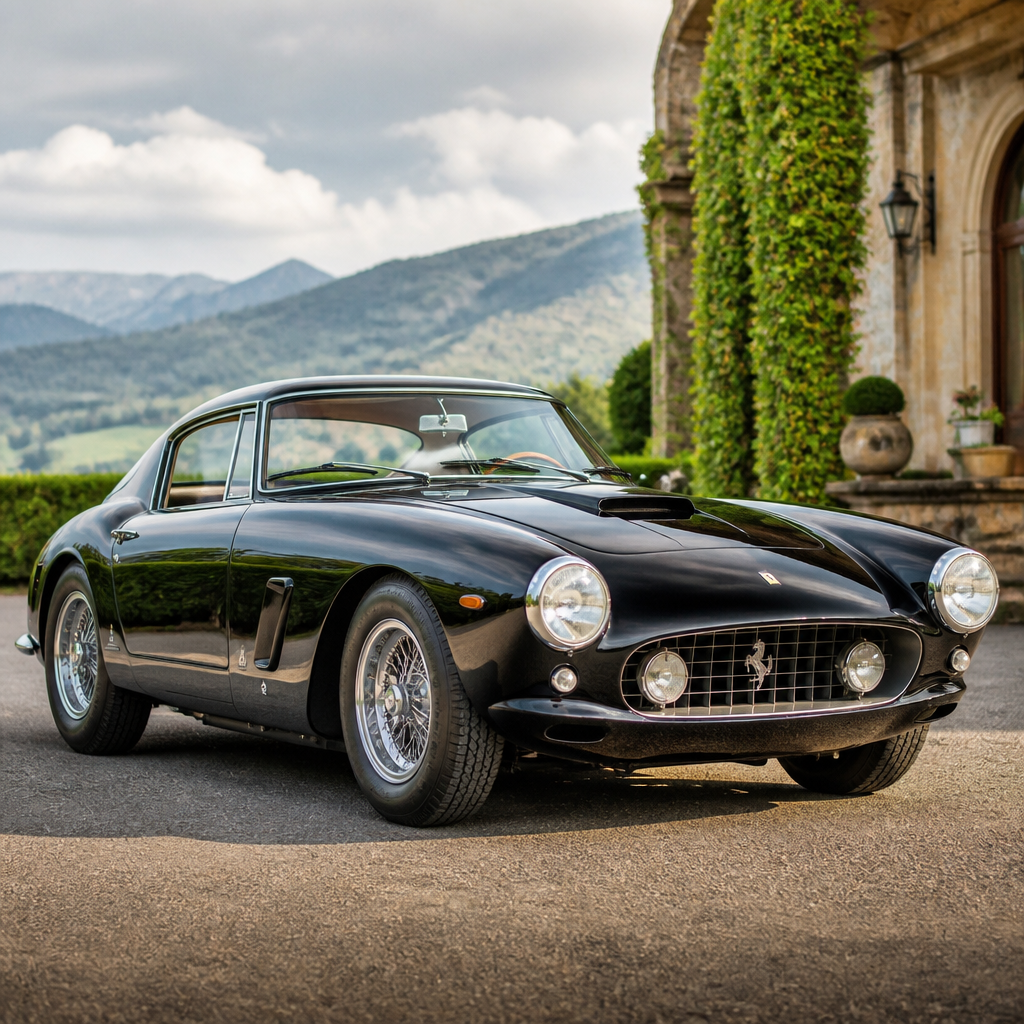
Ferrari supplies many of the next-tier landmarks. The 1962 Ferrari 250 GTO is the best-known example because it blends all the ideal attributes: tiny production, front-engine V12 character, competition eligibility, and a shape regarded as one of the most beautiful ever penned by Scaglietti. Several 250 GTOs have sold above $40 million, and private sales have reportedly moved still higher. These cars matter because they are the definitive blue-chip European classics: liquid by collector standards, endlessly researched, and desired by museums as much as private owners.
Other Ferrari greats include the 335 Sport Scaglietti, 290 MM, 410 Sport Spider, and 275 GTB/C Speciale. Each sits near the top because each was either a purpose-built sports racer or a competition-bred derivative produced in minute numbers. A 1957 Ferrari 335 Sport Scaglietti sold for more than €32 million at auction in Paris, while a 1956 Ferrari 290 MM by Scaglietti achieved over $28 million. Those numbers show that the market values race history and period factory intent at least as much as road-car usability.
| Model | Year | Notable sale | Why collectors value it |
|---|---|---|---|
| Mercedes-Benz 300 SLR Uhlenhaut Coupé | 1955 | About €135 million, 2022 | Near-unique status, direct link to W196 racing program, unmatched significance |
| Ferrari 250 GTO | 1962–1964 | Multiple sales above $40 million | Extremely limited production, racing pedigree, iconic design |
| Ferrari 335 Sport Scaglietti | 1957 | Over €32 million | Works sports-racing history, powerful V12, major event provenance |
| Ferrari 290 MM | 1956 | Over $28 million | Mille Miglia connection, few built, front-line competition role |
| Aston Martin DBR1 | 1956 | Over $22 million | Le Mans era significance, Aston’s greatest racing model |
| Jaguar D-Type | 1955–1956 | Above $20 million for top examples | Le Mans-winning lineage, aerodynamic innovation, low production |
Ferrari’s dominance in the European classic hierarchy
No brand appears more often in top-value discussions than Ferrari, and there are concrete reasons for that dominance. First, Ferrari built its reputation through racing before road cars became the company’s financial backbone. That means many of the most valuable Ferraris were designed with direct competition intent rather than later marketing narratives. Second, the marque benefits from deep archival support, a global specialist network, and a large buyer base that understands subtle distinctions between chassis histories. In practice, that creates stronger pricing confidence than many rival marques can sustain.
The 250 GTO remains the clearest case study. Only 36 were built, and nearly every chassis has been chronicled in detail. Buyers know where these cars raced, which drivers handled them, and how they evolved through period modifications. Because the research is so mature, uncertainty is low and demand stays high. The same principle supports values for the 250 LM, 275 GTB/C, 365 GTB/4 Daytona Competition, and competition Testa Rossa variants. The more a Ferrari is tied to sanctioned racing history and limited production, the stronger its long-term value tends to be.
That does not mean every old Ferrari is guaranteed appreciation. I have watched ordinary 308s, Mondials, and later production cars move far more modestly, especially when maintenance histories are patchy. The elite market distinguishes sharply between culturally important Ferraris and merely desirable ones. Engine configuration, coachbuilder, event eligibility, and class wins all matter. A pontoon-fender Testa Rossa or a works-entered sports racer occupies a completely different economic universe from a nice road-going V8 coupe, even when both wear the same badge.
Mercedes-Benz, Jaguar, Aston Martin, and Bugatti at the top end
Mercedes-Benz proves that Ferrari is not alone in producing transcendent classics. The 300 SLR Uhlenhaut Coupé is the headline record holder, but the broader Mercedes competition lineage is equally important. Cars connected to the Silver Arrows era, including prewar supercharged machines and W196-derived models, benefit from technological prestige and national historical significance. Mercedes built fewer halo competition cars than Ferrari, yet the best examples are often treated as rolling monuments. When one comes to market, buyers are not comparing it with ordinary classics; they are comparing it with institutional-grade art.
Jaguar’s strongest entries are the C-Type and D-Type. The D-Type, especially, commands top-tier prices because of its Le Mans-winning reputation and aerodynamic body developed under Malcolm Sayer. In market terms, a D-Type offers a rare combination of race eligibility, engineering significance, and usability in premier historic events such as the Le Mans Classic or Goodwood Revival. Jaguar values generally sit below equivalent Ferraris, but the best D-Types have still exceeded $20 million, proving that non-Italian European classics can command elite money when the story is compelling enough.
Aston Martin’s DBR1 occupies a similarly rarefied space. As Aston’s most important racing model, and a symbol of the company’s 1959 Le Mans triumph, it has every ingredient collectors want: beauty, low production, event history, and British motorsport prestige. When a DBR1 sold for more than $22 million, the result confirmed that top Aston Martins trade on historical importance rather than brand nostalgia alone. Bugatti, particularly prewar Grand Prix and coachbuilt models such as the Type 57SC Atlantic, belongs in the same conversation, although truly comparable public transactions are exceptionally scarce.
How provenance, originality, and auction context shape final prices
The same model can sell for dramatically different amounts based on details that casual observers miss. Chassis identity is the first checkpoint. On a top-value European classic, experts will verify frame stampings, engine number, gearbox, body history, and whether the car retains its original configuration or period-correct modifications. Matching-numbers status still matters, but on race cars the standard is more nuanced. Mechanical consumables were often replaced during active competition, so accepted continuity must be judged against period practice rather than modern showroom expectations.
Auction context also influences outcomes. Monterey Car Week, Paris Retromobile, Amelia Island, and Villa d’Este draw buyers who already understand the upper market. If two determined bidders need the same car for collection completeness, prices can move far beyond estimates. Currency conditions, interest rates, and tax treatment can matter too, especially in cross-border sales. I have seen strong cars underperform when offered with weak catalog research or poor presentation, while fully documented examples with fresh certification and eligibility for top concours events command substantial premiums.
Private sales can exceed auction records because they reduce public noise and allow discreet negotiation among highly informed buyers. However, they are harder to verify, which is why confirmed auction results remain the clearest benchmarks for most readers. For anyone studying this segment as a hub topic, the core lesson is simple: value in European classic cars is evidence-based. The market pays the most for machines that are rare, historically documented, technically important, and culturally resonant. Follow those principles, and the logic behind the most valuable European classic cars ever sold becomes clear. Start with model history, then trace the individual chassis, and every major price begins to make sense.
The biggest European classic car sales are not random flashes of wealth. They are the market’s verdict on which automobiles best represent the continent’s engineering, design, and competition heritage. Mercedes-Benz set the all-time peak with the 300 SLR Uhlenhaut Coupé, while Ferrari continues to define the blue-chip core through the 250 GTO, 335 Sport, 290 MM, and other factory racers. Jaguar D-Types, Aston Martin DBR1s, and elite Bugattis prove that the top tier is broader than a single badge, but the formula stays consistent across marques.
If you remember only a few principles, make them these: rarity alone is never enough, provenance multiplies value, originality builds trust, and race history often separates a merely expensive classic from a record-setting one. Auction houses can create momentum, yet documentation and expert scrutiny decide whether that momentum lasts. For readers using this page as a hub within European classics, these models provide the reference points for every deeper discussion about brands, eras, coachbuilders, and competition programs.
The benefit of understanding these sales is perspective. Instead of seeing prices as irrational, you can read them as signals about history, authenticity, and enduring demand. Use this article as your foundation, then explore individual marques and models with a sharper eye for what truly drives value.
Frequently Asked Questions
What makes certain European classic cars become the most valuable ever sold?
The most valuable European classic cars ever sold typically sit at the intersection of rarity, provenance, design significance, engineering innovation, and competition history. Value at the very top of the market is rarely about age alone. Collectors pay extraordinary prices for cars that represent a turning point in automotive history, pioneered new performance standards, or became icons of a particular manufacturer’s identity. When a vehicle also has documented ownership by a notable racing team, factory driver, celebrity, or historically important collector, its desirability often rises even further.
Another major factor is scarcity in the purest sense. Many of the highest-selling European classics were built in extremely limited numbers, and even fewer survive in original or correctly restored condition. Cars from Ferrari, Mercedes-Benz, Aston Martin, Jaguar, Bugatti, Alfa Romeo, and Porsche often dominate the upper end because these marques built machines that were not only beautiful and fast, but also deeply influential. If a model competed at Le Mans, Mille Miglia, Targa Florio, or Formula racing events, that motorsport pedigree can elevate it from merely collectible to truly historic.
Condition and originality also matter enormously. A car with matching numbers, known factory specifications, period-correct components, and a well-documented restoration or preservation history will generally command a premium over an example with uncertain records or extensive deviations from original specification. In the elite auction market, buyers are not simply purchasing transportation or even a luxury object. They are acquiring a piece of European design culture and mechanical history that may never be available again in comparable form.
Which European brands and models appear most often among record-breaking classic car sales?
Ferrari is usually the first name mentioned in any discussion about the most valuable European classic cars ever sold, and for good reason. The marque’s competition-bred road cars and sports racers, especially from the 1950s and 1960s, have repeatedly set benchmark auction prices. Models such as the Ferrari 250 GTO, 250 Testa Rossa, and other low-production V12 cars are widely regarded as blue-chip collector assets because they combine racing success, unforgettable styling, and exceptional rarity. A 250 GTO in particular is often treated as the gold standard of classic-car value.
Mercedes-Benz also occupies a special place in this conversation. Historically important models such as the 300 SLR Uhlenhaut Coupe and the 540K have shown that German engineering prestige can rival Italian glamour at the highest level. When a Mercedes combines technical innovation, period racing dominance, and near-mythic scarcity, it can command a result that reshapes the entire collector market. These are not simply expensive old cars; they are landmark artifacts from one of Europe’s most respected automotive legacies.
Other European brands regularly represented near the top include Aston Martin, Jaguar, Bugatti, Alfa Romeo, and Porsche. Aston Martin DBR1 competition cars are especially prized because of their Le Mans and World Sportscar Championship associations. Jaguar D-Type models attract collectors for their aerodynamic significance and racing victories. Bugatti’s pre-war Grand Prix and road cars remain among the most admired expressions of art and engineering combined. Porsche, particularly with rare early competition machines and homologation-era legends, continues to gain strength as collectors increasingly value historically important sports cars from Stuttgart. Together, these marques define much of the upper tier of the European collector world.
Why does racing pedigree have such a strong influence on the sale price of European classics?
Racing pedigree matters because it gives a car a documented role in automotive history rather than just a place in production records. A European classic that competed in major events such as Le Mans, the Mille Miglia, Spa, the Targa Florio, or international GT championships carries a narrative that collectors can verify and appreciate. It becomes more than an object of design or engineering; it becomes evidence of achievement. The difference in value between a standard road-going collector car and a proven competition car can be enormous, especially if that chassis delivered podiums, victories, or participation in a defining era of motorsport.
This is particularly important with European classics because so many of the continent’s greatest marques built their reputations through racing. Ferrari, Jaguar, Mercedes-Benz, Aston Martin, Porsche, Maserati, and Alfa Romeo all used motorsport to prove technical superiority and shape brand mythology. A chassis raced by a factory team, piloted by a famous driver, or entered in a historically important event has a level of authenticity and cultural resonance that modern replicas or non-racing examples simply cannot match. Collectors often view these cars as mechanical equivalents of museum-grade works of art with documented exhibition histories.
There is also an emotional element. Racing cars embody speed, risk, innovation, and national identity in a way few other collectibles can. Buyers at the top of the market are often competing for cars that represent defining moments in postwar European motoring culture. When a specific chassis can be tied to a famous race, a legendary driver, or a technological breakthrough, the price reflects both tangible rarity and intangible meaning. In elite sales, stories backed by documentation can be just as powerful as horsepower.
How do auctions determine the value of the most expensive European classic cars?
High-end auctions assess value through a combination of market comparables, expert research, condition reporting, provenance verification, and bidder demand. Auction houses begin by examining recent private and public sales of similar models, but that is only the starting point. At the top end of the collector market, every individual car is effectively unique because differences in ownership history, competition results, restoration quality, originality, and documented factory specification can dramatically alter value. Two examples of the same model may have very different outcomes depending on their histories.
Provenance is especially important. Auction specialists and independent historians work to confirm whether a car retains its original chassis, engine, gearbox, body configuration, and factory identity. They also evaluate period race entries, concours appearances, restoration records, certifications, and ownership lineage. If a car has known gaps in its history, replacement mechanical components, or disputed authenticity, that uncertainty can restrain bidding. By contrast, a thoroughly documented car with known history from new can inspire confidence and attract global interest from serious collectors.
Ultimately, the final price is decided by the market in the room, on the phones, and online. Exceptional European classic cars often attract a very small pool of highly informed buyers who understand that another comparable opportunity may not appear for years. When several of those bidders compete at once, estimates can be exceeded dramatically. That is why headline sales often become major news events: they are not just transactions, but market signals that reflect shifting tastes, economic confidence, and the ongoing prestige of historically important European automobiles.
Are the most valuable European classic cars good investments, or are buyers motivated by more than money?
Many top-tier European classic cars have performed strongly over long periods, but buyers at the highest end are usually motivated by more than financial return. These cars can act as stores of wealth, and the best examples from the strongest marques have shown impressive resilience because supply is fixed and global demand remains deep. However, the market is not uniform. Values can move with economic cycles, generational tastes, changes in collecting trends, and the increasing importance of originality and documentation. As a result, even legendary cars should not be viewed as guaranteed short-term investments.
What often separates this market from traditional investing is the cultural and emotional value attached to ownership. A buyer paying a record price for a Ferrari 250 GTO, Mercedes-Benz competition special, or Aston Martin endurance racer is usually purchasing access to history, prestige, events, and community as much as the machine itself. These cars may appear at concours gatherings, private collections, museum displays, and historic racing festivals. Ownership can offer experiences and status that do not exist with conventional financial assets.
That said, the strongest long-term candidates usually share the same characteristics: rarity, unquestioned authenticity, important provenance, iconic design, and relevance to a major chapter in European motoring history. Cars that check all of those boxes tend to remain desirable even as the market evolves. So while the most valuable European classic cars ever sold can absolutely be investment-grade assets, their enduring appeal comes from something deeper: they represent the peak of craftsmanship, innovation, and cultural significance in the automotive world.