The Mini Cooper earned its place in automotive history by proving that a compact car could deliver style, agility, efficiency, and cultural influence far beyond its size. Within the broader world of classic car models and brands, it stands as one of the clearest examples of an iconic model: a vehicle whose engineering, design language, motorsport record, and public image changed how people think about cars. As a hub topic, “iconic models” means more than listing famous nameplates. It means identifying the cars that shifted an industry, inspired generations of enthusiasts, and remain reference points for collectors, restorers, and modern designers. The Mini Cooper belongs at the center of that discussion.
When enthusiasts say Mini, they often mean the original British Motor Corporation Mini launched in 1959, while Cooper refers to the higher-performance variants developed with racing constructor John Cooper. That distinction matters. The standard Mini revolutionized packaging with its transverse engine, front-wheel-drive layout, and tiny footprint. The Mini Cooper transformed that practical city car into a performance legend. In my experience working around restored British classics and speaking with owners at club events, the conversation almost always turns to the same question: why does this little car still command such affection? The answer is simple. It solved real transportation problems, then became thrilling, fashionable, and unexpectedly dominant in competition.
The Mini’s significance reaches across several audiences at once. Collectors value originality, especially early Mk I and Mk II cars with period-correct trim and mechanicals. Drivers admire direct steering, low curb weight, and the famous go-kart feel. Historians point to Alec Issigonis’s space-efficient engineering as a turning point in small-car design. Pop culture fans recognize the car from films, rally footage, and London street scenes from the 1960s onward. For anyone exploring iconic classic models, the Mini Cooper is not a side note. It is a case study in how a smart design can become a global symbol.
Its importance also lies in accessibility. Many classic icons are large, expensive, or mechanically intimidating. The Mini entered the market as practical mass transportation, and even today it remains one of the more approachable gateways into classic car ownership, though prices for prime examples have climbed. Parts support is strong, specialist knowledge is widespread, and an active club network helps owners maintain authenticity while keeping cars usable. That broad ecosystem gives the Mini unusual staying power. It is a museum piece, a weekend toy, a motorsport machine, and a social object all at once. Few classics operate successfully in all those roles.
How the Mini Cooper Became an Iconic Model
The Mini was born from necessity. After the 1956 Suez Crisis, fuel economy became a pressing concern in Britain and beyond. Leonard Lord at BMC wanted a small, efficient car that could carry four adults while using minimal fuel and road space. Engineer Alec Issigonis answered with an uncompromising concept: tiny 10-inch wheels pushed to the corners, a transverse engine mounted sideways, front-wheel drive, and a gearbox in the sump beneath the engine. Roughly 80 percent of the car’s footprint could be used for passengers and luggage, an extraordinary packaging achievement for the era.
That layout reshaped small-car engineering. Before the Mini, many tiny European cars relied on rear engines or less efficient cabin packaging. The Mini demonstrated that front-wheel drive and transverse mounting could maximize interior room in a very short body. This formula later influenced countless hatchbacks and superminis, from the Fiat 127 and Volkswagen Polo to the Honda Civic’s compact packaging logic. In practical terms, the Mini gave buyers urban maneuverability without forcing the severe compromises seen in many microcars of the 1950s.
John Cooper recognized almost immediately that the Mini’s low weight and responsive chassis could support far more performance than BMC initially intended. The first Mini Cooper arrived in 1961 with a larger engine, front disc brakes, and suspension revisions. It was not merely a trim package. It was a carefully developed homologation-minded performance version that turned modest horsepower into genuine speed through low mass and exceptional cornering balance. The later Cooper S expanded this formula and became the model most closely associated with competition success.
The result was a rare automotive transformation. The Mini started as rational transport, then became aspirational without losing its original utility. That dual identity is exactly what separates truly iconic models from cars that were simply fashionable for a decade. The Mini could be economical transportation for a student, an urban runabout for a family, or a giant-killer on a rally stage. That breadth of purpose gave it a cultural range most sports cars never achieve.
Engineering That Changed Small Cars Forever
The original Mini Cooper’s engineering deserves close attention because its influence extends far beyond the model itself. The transverse A-series engine, coupled with front-wheel drive, created a compact mechanical package that left room for occupants. Rubber cone suspension, designed by Alex Moulton, kept the car low and agile, though ride quality was firm by modern standards. Rack-and-pinion steering delivered precision uncommon in inexpensive cars of the period. Small wheels reduced intrusion into the cabin while contributing to a planted stance.
On paper, early power figures look modest. Depending on version, early Cooper and Cooper S models produced outputs that would seem ordinary today. On the road, they felt quick because the car was light, direct, and eager to change direction. That is an important lesson in classic car evaluation: raw horsepower rarely tells the full story. The Mini’s performance came from the interaction of weight, gearing, wheel placement, and steering response. Anyone who has driven a sorted classic Mini on a tight back road understands why larger, more powerful cars often struggled to keep up in real conditions.
There were tradeoffs. The gearbox-in-sump arrangement shared oil with the engine, which increased maintenance sensitivity. Rust protection on early British cars was never a strength, making corrosion one of the biggest concerns for modern buyers. The compact bay also meant some repair jobs were fiddly despite the car’s mechanical simplicity. Yet those weaknesses are part of an honest assessment. The Mini Cooper was brilliant, not perfect, and its brilliance matters more because it emerged from practical constraints rather than unlimited budgets.
For collectors and restorers, engineering originality matters. Correct subframes, period carburetion such as SU setups, proper wheel sizes, and authentic interior trim can significantly affect value. Modified cars are common and often enjoyable, but the market generally rewards well-documented, correctly restored examples. That is especially true for early Coopers and Cooper S cars, where provenance, body-shell integrity, and matching mechanical specification separate exceptional cars from merely attractive ones.
Motorsport Success Made the Mini Cooper Famous
The Mini Cooper became globally famous because it won where logic said it should lose. Its defining motorsport arena was rallying, especially the Monte Carlo Rally in the 1960s. Compact dimensions, traction from front-wheel drive, and extraordinary agility made the car devastating on twisty, low-grip stages. Paddy Hopkirk won Monte Carlo in 1964 in a Mini Cooper S, a result that electrified public perception. More victories followed, including wins for Timo Mäkinen in 1965 and Rauno Aaltonen in 1967.
The 1966 Monte Carlo Rally remains one of the most discussed controversies in classic motorsport. Minis finished in top positions on the road but were disqualified over headlamp irregularities under French interpretation of the rules. Among historians and enthusiasts, the episode only strengthened the Mini’s legend. The public saw a small British car outperforming larger rivals and then losing victory in the scrutineering bay rather than on the stage. That narrative reinforced the Mini’s underdog identity, and underdog stories endure.
Racing and rallying also improved the road cars. Brake upgrades, suspension tuning, wheel choices, and engine development flowed between competition and production. This is one reason the Cooper badge carries such weight. It was earned in motorsport, not invented by a marketing department decades later. Owners still recreate period rally specifications, complete with auxiliary lamps, wider wheels, and competition numbers, because the competition image is inseparable from the model’s appeal.
| Milestone | Why It Matters |
|---|---|
| 1959 original Mini launch | Introduced groundbreaking small-car packaging and front-wheel-drive efficiency |
| 1961 Mini Cooper debut | Added performance credibility with more power and front disc brakes |
| 1964 Monte Carlo win | Turned the Mini into an international motorsport icon |
| 1965 and 1967 Monte Carlo wins | Proved the first victory was not a fluke and cemented the model’s legend |
| Modern BMW-era relaunch | Reintroduced the spirit of the original to a global contemporary audience |
From a classic model perspective, this competition record matters because iconic status is rarely based on design alone. The most enduring models usually combine technical novelty, public visibility, and credible success under pressure. The Mini Cooper checks all three boxes. It was innovative, instantly recognizable, and repeatedly validated in one of the toughest forms of motorsport.
Design, Culture, and the Mini’s Lasting Public Image
The Mini Cooper’s shape is one of the most recognizable in automotive history. Its upright glasshouse, short overhangs, contrasting roof, and cheerful stance created a personality that many larger, more prestigious cars never achieved. Unlike luxury classics that depend on chrome or scale, the Mini relied on proportion. It looked efficient, friendly, and slightly mischievous. That visual identity made it adaptable across decades and social groups.
In 1960s Britain, the Mini became part of the cultural fabric. It was driven by celebrities, featured in fashion photography, and associated with urban modernity. It crossed class lines in a way few cars manage. Working drivers bought Minis because they were practical and affordable. Style leaders adopted them because they signaled modern taste. That blend of function and image is difficult to manufacture, which is why it is so valuable in a classic brand story.
Film amplified the image. The original 1969 version of The Italian Job permanently linked the Mini with daring, humor, and agility. Even people who know little about classic motoring recognize the image of Minis darting through tight spaces where larger cars cannot go. That cinematic role reflected real attributes rather than exaggerating them, which made the association feel authentic. The best automotive film appearances work this way: they magnify an existing truth.
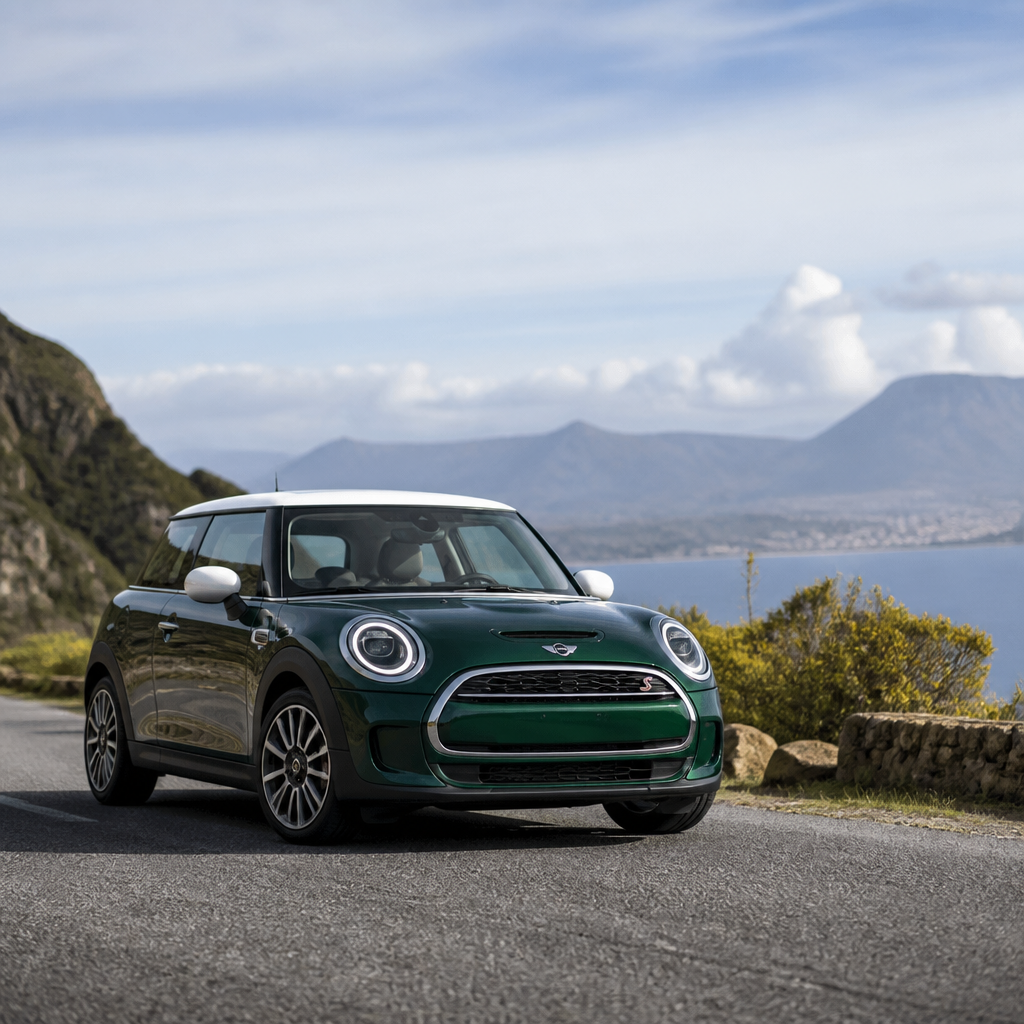
The modern MINI, developed under BMW ownership beginning in 2001, further extended the original car’s visibility. Purists correctly note that the new car is much larger and structurally different, yet its success proved the original idea still resonated. Contrasting roofs, compact proportions relative to the market, playful interiors, and lively handling were all deliberate echoes of the classic. As a hub for iconic models, the Mini Cooper is useful because it shows how a strong original design can survive reinterpretation without losing identity.
Key Variants, Buying Considerations, and Why the Mini Still Matters
Not every Mini is the same, and understanding variants is essential for buyers and readers exploring iconic models. Early Austin and Morris-badged Minis, Mk I Cooper and Cooper S cars, later Mk II and Mk III updates, performance derivatives from tuning firms, and special editions all occupy different positions in the market. The most coveted cars typically include early Cooper S examples, especially those with strong documentation, original body numbers, and historically correct specification. However, a well-sorted standard Mini or later performance build can offer a more accessible route into ownership.
Rust inspection comes first. Check floorpans, sills, subframes, door bottoms, scuttle areas, battery box sections, and rear valance structure. Poor repairs are common because these cars were inexpensive for many years. Mechanical parts are generally available, but body-shell quality determines whether a project is financially sensible. Buyers should also assess gear selection, engine oil condition, cooling health, suspension wear, and evidence of thoughtful restoration rather than cosmetic quick fixes. A file of receipts from established specialists often matters almost as much as shiny paint.
Driving one today explains its continued relevance. The cabin is small, the controls are mechanical, and the road comes through the seat and steering wheel in ways modern cars intentionally filter out. Yet that immediacy is exactly why the Mini remains such a benchmark. It reminds drivers that engagement is not created by excess power, giant wheels, or digital drive modes. It comes from clear inputs, low weight, and honest feedback. Modern performance brands still chase this feeling, often with far more complexity.
As a sub-pillar hub within classic car models and brands, the Mini Cooper helps organize the wider “iconic models” category. It connects naturally to articles on rally legends, British classics, front-wheel-drive pioneers, city cars that changed automotive design, and collectible performance variants. If a reader wants one model that links engineering history, motorsport credibility, cultural visibility, and attainable collecting, the Mini Cooper is an ideal starting point.
The Mini Cooper’s big impact comes down to a rare combination of intelligent design, competitive success, and enduring personality. It solved a practical problem in postwar motoring, then transcended its purpose to become one of the world’s best-known classic cars. Very few iconic models can claim to have influenced vehicle packaging, won major rallies, appeared in landmark films, and remained relevant through a successful modern revival. The Mini can.
For collectors, it offers a deep field of variants, restoration challenges, and rewarding ownership communities. For historians, it marks a turning point in compact-car engineering and performance thinking. For drivers, it delivers a uniquely direct experience that still feels fresh decades after launch. Most importantly, it proves that impact is not measured in size. A small car can reshape an industry, define an era, and stay meaningful long after many supposedly greater machines are forgotten.
If you are building knowledge around classic car models and brands, put the Mini Cooper near the top of your list. Explore its major variants, compare restoration standards, and follow the threads that connect it to rally history, British design, and modern small-car engineering. The deeper you go, the clearer its significance becomes. Small in footprint, immense in influence, the Mini Cooper remains one of the essential iconic models to know.
Frequently Asked Questions
Why is the Mini Cooper considered such an iconic car?
The Mini Cooper is considered iconic because it changed expectations of what a small car could be. When the original Mini arrived, it introduced a space-efficient front-wheel-drive layout that placed the engine sideways and pushed the wheels toward the corners. That engineering decision helped create remarkable interior room in a very compact footprint, and it also gave the car nimble, responsive handling. In practical terms, the Mini was affordable, efficient, easy to maneuver in crowded cities, and surprisingly fun to drive, which made it stand out immediately.
Its influence goes far beyond mechanical innovation. The Mini became a symbol of modern design, youthful energy, and smart urban motoring. It crossed social boundaries in a way few cars ever have, appealing to everyday drivers, celebrities, racers, and enthusiasts alike. Over time, it built a public image that mixed charm, performance, and personality. That combination is exactly what makes an iconic model: not just a successful car, but a vehicle that reshapes cultural attitudes, leaves a lasting visual identity, and continues to be recognized generations later.
What made the Mini Cooper different from other small cars of its era?
What set the Mini Cooper apart was that it did not behave like a compromise. Many small cars of its time were designed primarily to be inexpensive and economical, often with limited comfort, modest driving dynamics, and little emotional appeal. The Mini, by contrast, was cleverly engineered and full of character. Its compact dimensions made it efficient and practical, but its chassis balance and direct steering gave it a lively, entertaining feel that many larger and more expensive cars could not match.
The performance-focused Cooper versions added another layer to the formula. Developed with tuning expertise and motorsport in mind, these models showed that small displacement and small size did not prevent a car from being exciting. The Mini Cooper proved that a compact vehicle could offer real driver involvement while still delivering the everyday advantages of easy parking, low fuel consumption, and efficient use of space. That balance between utility and enjoyment is a major reason the car stood apart from its competitors and earned enduring respect within classic car history.
How did the Mini Cooper make such a big impact in motorsport?
The Mini Cooper’s motorsport success is one of the clearest reasons it achieved legendary status. On paper, it looked like an underdog: a tiny car competing against larger, more powerful rivals. In reality, its light weight, excellent traction, responsive handling, and ability to carry speed through corners made it extraordinarily effective, especially on demanding rally stages. Rather than overpowering the competition, the Mini Cooper often outmaneuvered it, which gave the car a reputation for winning through intelligence, balance, and driver confidence.
Its victories in rallying, especially in major international events, helped transform public perception. People saw that this was not merely a cute city car; it was a genuine competition machine capable of defeating established performance cars under difficult conditions. Those wins gave the Mini Cooper credibility that reached far beyond the enthusiast community. Motorsport validated its engineering and amplified its image, making the car a symbol of giant-killing performance. For an iconic model, that matters enormously, because racing success often cements a car’s legend by proving that its design strengths work in the harshest real-world tests.
How did the Mini Cooper influence car design and the broader automotive industry?
The Mini Cooper’s influence on automotive design was profound because it demonstrated how intelligently packaging a car could change the ownership experience. Its front-wheel-drive configuration and transverse engine layout helped maximize cabin space while minimizing overall size, an approach that would later become standard across much of the industry. In that sense, the Mini was not just a successful model; it was a blueprint. It showed manufacturers that small cars could be practical without feeling crude, and efficient without sacrificing personality.
Beyond engineering, the Mini also influenced the idea that design identity matters just as much as specifications. Its shape was simple, recognizable, and instantly memorable. That visual character helped prove that compact cars could be desirable objects, not merely transportation appliances. Later generations of small cars borrowed from that lesson, combining distinctive styling with urban-friendly dimensions and more engaging road manners. The Mini Cooper’s legacy can be seen in how the market eventually embraced the premium small car segment, where buyers expect efficiency, style, heritage, and fun in one package.
Why does the Mini Cooper still matter to collectors and enthusiasts today?
The Mini Cooper still matters because it represents a rare combination of historical importance, engineering ingenuity, and emotional appeal. For collectors, it is a car with a story that touches multiple parts of automotive culture: innovation, motorsport, design, and popular image. Owning one is not just about preserving an old vehicle; it is about owning a piece of a larger narrative in which a compact car altered the direction of the industry and captured the imagination of the public. That historical weight gives the Mini lasting credibility in any discussion of classic models and iconic brands.
For enthusiasts, the attraction is just as strong on a driving level. The Mini Cooper remains admired for its immediacy, agility, and sense of connection between driver and machine. It delivers a kind of mechanical honesty that many people find deeply rewarding. At the same time, its unmistakable style and broad recognition mean it carries social and cultural value as well. In the world of classic cars, the Mini Cooper endures because it offers more than nostalgia. It still feels relevant as an example of how bold thinking, efficient design, and spirited performance can create a car with influence far bigger than its dimensions.