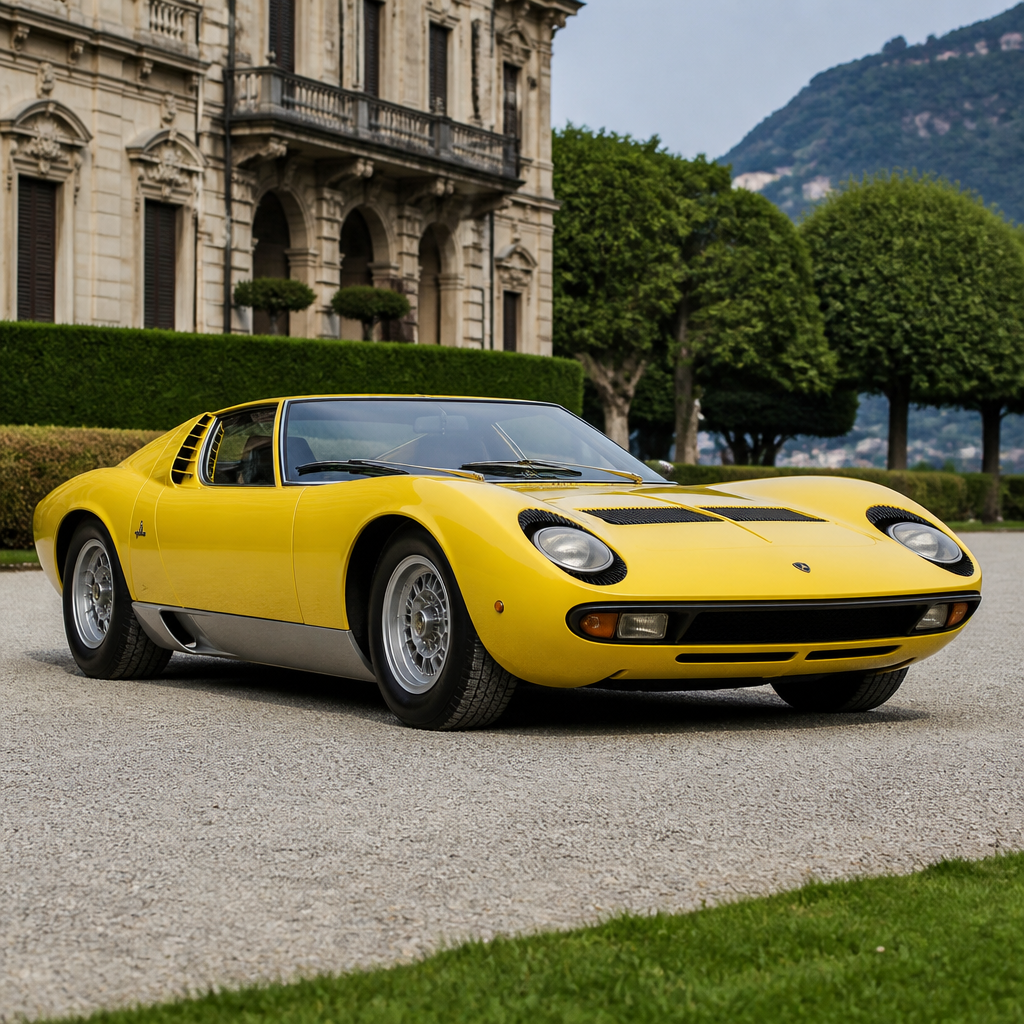
The Lamborghini Miura is widely regarded as the first true supercar, a machine that transformed exotic performance from a fast grand tourer into a dramatic mid-engined icon. Within the broader world of classic car models and brands, the Miura stands at the center of any serious discussion about iconic models because it changed styling, engineering, marketing, and the expectations attached to high-end sports cars. When enthusiasts call a car an icon, they usually mean more than rarity or speed. They mean a model that reset the category. The Miura did exactly that in the 1960s, and its influence still shapes modern performance cars.
To understand why the Lamborghini Miura matters, it helps to define the terms often attached to it. A classic car is typically a historically significant vehicle valued for age, design, engineering, and collector interest. An iconic model is a vehicle that represents a turning point for its manufacturer or for the industry at large. A supercar is a high-performance exotic automobile that combines exceptional speed with advanced engineering, emotional design, and exclusivity. Before the Miura, fast road cars certainly existed, including Ferraris, Maseratis, and Jaguars. Yet the Miura fused race-inspired layout, sensational looks, and cultural magnetism into a new template for what the supercar would become.
I have found that readers exploring classic car brands often know the name Miura but not the full reason it deserves hub-page status among iconic models. This article addresses that gap. It covers the Miura’s development, styling, technical layout, major variants, market position, driving character, restoration concerns, and long-term legacy. It also places the car in context with rivals and with other landmark classics that enthusiasts often research next. For anyone building a deeper understanding of collectible automobiles, the Miura is not just another Lamborghini. It is the model that turned the company from an ambitious challenger into a permanent force in automotive history.
Why the Miura Changed the Supercar Formula
The Miura debuted in the mid-1960s at a moment when sports cars were evolving rapidly, but the road-car market had not yet fully adopted the architecture seen in serious racing machines. Lamborghini’s engineering team placed a transversely mounted V12 behind the seats, creating a mid-engine layout that concentrated mass near the center of the car. That decision delivered more than technical novelty. It changed how a road-going exotic looked, sounded, and felt. The low nose, cab-forward stance, and short tail became visual shorthand for extreme performance.
Ferruccio Lamborghini had founded his company to challenge Ferrari, but he initially favored refined grand touring cars over uncompromising racers. The Miura bridged those worlds. It offered the theater and performance expected from a competition-influenced design while remaining a road car intended for wealthy private buyers. In practical terms, it showed that customers would embrace a more radical package if the experience felt special enough. Nearly every major exotic brand followed that path later, from Ferrari and Maserati to McLaren decades afterward.
The Miura also mattered because it made engineering layout part of the marketing story. Buyers were not just purchasing horsepower. They were buying the idea of cutting-edge design. That concept remains central to the supercar segment today, where technical architecture often matters as much as acceleration figures. In hub terms, the Miura is essential because so many later iconic models can be traced back to its formula.
Origins: From Skunkworks Project to Production Star
The Miura was not born as a conventional top-down corporate program. Key Lamborghini engineers, including Gian Paolo Dallara, Paolo Stanzani, and Bob Wallace, developed the concept with a degree of unofficial enthusiasm, believing the company needed something more daring than its existing grand tourers. Their chassis prototype, known as the P400, was shown in 1965. Even without a complete body, it generated intense attention because insiders immediately recognized the importance of the layout.
Stylist Marcello Gandini, working at Bertone, gave the chassis its unforgettable shape. His design combined delicate curves with aggressive proportions, and details such as the eyelash-like trim around the headlights helped create a face unlike anything else on the road. The result was striking without looking purely functional, which is one reason the Miura became a cultural object as well as a performance machine. It appeared glamorous, modern, and faintly dangerous, which was exactly the point.
Production began in 1966, and demand validated the gamble. Lamborghini was still a young company, yet the Miura gave it international credibility. In my experience reviewing classic model histories, very few cars arrive so early in a brand’s life and so completely define that brand’s public image. The Miura did not merely expand Lamborghini’s lineup. It established the emotional identity that later Countach, Diablo, Murciélago, and Aventador models would amplify.
Design and Engineering Details That Made It Iconic
The Miura’s 3.9-liter V12 was derived from Lamborghini’s earlier front-engine cars, but its placement and packaging were revolutionary for a production road model. The engine and gearbox shared a common casting in early versions, a compact solution that helped keep the wheelbase short. Suspension was independent all around, and the steel chassis kept the structure light enough for strong performance by late-1960s standards. Depending on version, output ranged from roughly 350 horsepower in the P400 to about 385 horsepower in the SV.
Performance figures only tell part of the story. Contemporary road tests reported top speeds around 170 miles per hour for later cars, placing the Miura among the fastest production automobiles in the world. More importantly, the car delivered speed with sensory intensity. The seating position was low, visibility forward felt dramatic because of the shallow hood, and the V12 soundtrack sat immediately behind the occupants. That immersion is a major reason collectors still chase the model despite the compromises expected of a 1960s exotic.
The bodywork deserves equal credit. Gandini’s surfacing gave the Miura movement even when parked. The clamshell rear section, broad haunches, and compact greenhouse created a silhouette that remains instantly recognizable. Many classic icons are historically important but visually dated. The Miura is different. It still looks modern in proportion, which helps explain why it appears regularly in museums, design books, concours events, and discussions of the most beautiful cars ever built.
| Variant | Years | Power | Notable Features |
|---|---|---|---|
| P400 | 1966-1969 | About 350 hp | Original production version, pure early design, lighter feel |
| P400 S | 1968-1971 | About 370 hp | Improved trim, electric windows, revised cams, better road manners |
| P400 SV | 1971-1973 | About 385 hp | Wider rear track, revised carburetion, strongest development of the line |
Miura Variants and What Collectors Need to Know
The standard P400 is the purest expression of the original concept and is prized for its delicacy and early-production character. The P400 S added refinements that made the car more usable and more luxurious, including interior upgrades and mechanical revisions. For many buyers, the S strikes a compelling balance between early styling and improved ownership experience. The P400 SV is generally considered the ultimate factory evolution because it sharpened performance and addressed some earlier weaknesses. The SV also dropped the signature headlight eyelashes, a detail that divides purists but helps identify the model quickly.
Collectors also encounter special stories around one-off examples, factory updates, and later restorations. Because values rose dramatically over the past few decades, some Miuras have been repaired, modified, or reconfigured in ways that complicate authenticity. Matching numbers, factory-correct finishes, and documented provenance matter enormously. Polo Storico, Lamborghini’s heritage department, plays a significant role in authenticating and restoring cars to original specification. Serious buyers should also verify chassis history through marque experts and period records, not just auction descriptions.
This is one reason the Miura belongs in an iconic models hub rather than a narrow single-model review. It teaches a broader lesson about the classic car market: significance alone does not guarantee equal value across examples. Condition, originality, ownership history, and variant specification determine whether a collector is buying a blue-chip car or an expensive problem.
How the Miura Compares With Other Iconic Classics
In period, the Miura competed indirectly with cars such as the Ferrari 275 GTB/4, Ferrari Daytona, Maserati Ghibli, and Ford GT40-inspired fantasies that captured public imagination. Yet most rivals were front-engined road cars or race-derived machines with different priorities. The Miura’s closest conceptual impact came from proving that a mid-engine road car could be both desirable and commercially viable. Ferrari’s later Berlinetta Boxer, for example, arrived into a market the Miura helped create.
Compared with the Jaguar E-Type, the Miura was rarer, more extreme, and more technologically provocative. Compared with the Mercedes-Benz 300 SL, it was less about engineering purity for its own sake and more about combining performance with spectacle. Compared with the Porsche 911, it was far less practical but far more theatrical. These comparisons matter because readers exploring iconic models often want a hierarchy of influence, not just specification lists. The Miura sits near the top because it changed direction for the entire exotic segment, not simply because it was excellent within an existing format.
For internal navigation within a classic car content hub, the Miura connects naturally to articles on Ferrari road cars, Bertone design, V12 engine history, Lamborghini’s Countach, and the rise of the mid-engine supercar. It acts as a gateway model because understanding it makes later icons easier to place in context.
Driving Experience, Ownership Reality, and Restoration Challenges
The Miura is often romanticized, but ownership is more complex than posters and auction headlines suggest. On the road, a well-sorted example feels alive, fast, and surprisingly compact, yet it is still a hand-built 1960s Italian exotic. Cabin heat can be substantial, pedal offset may feel awkward to modern drivers, and maintenance access is not generous. Early lubrication and gearbox integration issues in some cars are well known, and setup quality varies depending on restoration standard. A neglected Miura can be frustrating. A correctly restored one can be magical.
Restoration requires specialist knowledge. The chassis, body alignment, carburetion, electrical systems, and trim details all demand marque expertise. Parts supply has improved through specialists and factory heritage support, but costs remain high. Paint color correctness, seat pattern accuracy, wheel specification, and even small switchgear details can influence concours judging and resale value. Buyers should commission a pre-purchase inspection from a recognized Lamborghini expert, including engine number verification, evidence of corrosion repair, and review of historical invoices.
Insurance, storage, and regular exercise also matter. Cars that sit too long develop issues with seals, fuel systems, and electrical contacts. In practice, the best Miura ownership stories come from caretakers who use the car carefully, maintain it proactively, and document every intervention. That stewardship is part of what keeps an iconic model credible across generations.
Lasting Legacy in Automotive Culture
The Miura’s legacy extends far beyond Lamborghini. It changed the visual language of performance cars, legitimized the mid-engine exotic as a road-going aspiration, and helped define the modern idea of the halo car. Designers still study its proportions. Collectors still benchmark beauty against it. Journalists still reference it when a new manufacturer claims to have built a revolutionary supercar, because the Miura remains the historical standard for category-defining impact.
Its cultural reach is equally important. The car appeared in films, magazine covers, and elite social settings, reinforcing the bond between high performance and lifestyle aspiration. That visibility helped move supercars from engineering curiosities into mainstream symbols of status and fantasy. Few classics have influenced both the industry and popular culture so completely. Even people with limited automotive knowledge often recognize the Miura as something special, which is a hallmark of a truly iconic model.
For readers exploring classic car models and brands, the central takeaway is clear: the Lamborghini Miura is not merely an early Lamborghini or a beautiful 1960s coupe. It is the foundational supercar icon, the hub model that connects design innovation, collectible value, motorsport influence, and brand mythology in one package. Study the Miura and you understand why certain cars transcend transport to become cultural landmarks. If you are building your knowledge of iconic models, start here, then follow the trail to the cars it inspired across Ferrari, Porsche, Maserati, and Lamborghini’s own later legends.
Frequently Asked Questions
Why is the Lamborghini Miura often called the first true supercar?
The Lamborghini Miura is often described as the first true supercar because it redefined what an exotic high-performance car could be. Before the Miura arrived in the mid-1960s, most fast and expensive European cars were still rooted in the grand touring tradition: front-engined, elegant, and designed as much for long-distance comfort as outright visual drama. The Miura changed that formula completely. Its transverse mid-mounted V12 layout, radical proportions, and stunning bodywork created a new template for performance cars that prioritized spectacle, innovation, and extreme desirability in equal measure.
What made the Miura so influential was not just speed, although it was undeniably fast for its time. It was the way the entire package came together. The low nose, sweeping lines, cabin-forward stance, and engine mounted behind the seats gave it a theatrical presence that few road cars had ever achieved. It looked like a machine from the future, and that visual impact became central to the idea of the supercar. In other words, the Miura was not merely a powerful sports car; it was an object of aspiration, excess, and engineering boldness.
Its reputation also comes from timing. The Miura appeared at a moment when car culture was becoming more image-conscious, more international, and more fascinated by speed as a lifestyle statement. Lamborghini used the Miura to present itself as a daring alternative to more established rivals, especially Ferrari. That combination of design shock, mid-engine architecture, elite performance, and cultural magnetism is why the Miura is so widely credited as the car that established the modern supercar formula.
What made the Miura’s design so revolutionary compared with other performance cars of its era?
The Miura’s design was revolutionary because it broke sharply from the visual and engineering conventions that dominated high-end performance cars in the 1950s and early 1960s. Designed by Marcello Gandini at Bertone, the Miura had an unmistakably low, wide, and flowing shape that looked dramatically different from the more upright, long-hood grand tourers of the period. It appeared more like a racing prototype adapted for the road than a traditional road-going sports car, and that was exactly what made it so arresting.
One of the key innovations was its mid-engine layout. While this configuration had already proven effective in motorsport, it was still highly unusual in a production road car intended for wealthy clients rather than racing teams. By placing the V12 behind the passengers, Lamborghini created a compact and visually balanced profile that gave the Miura its iconic silhouette. The short nose and tightly packaged rear section made the entire car look purposeful, modern, and almost impossibly exotic for its day.
Beyond the layout, the Miura’s styling details helped cement its legend. Features such as the headlight “eyelashes,” the louvered rear deck, and the sensuous body surfacing gave it a distinctive personality that was both elegant and aggressive. It did not simply look fast; it looked seductive and dangerous, which was a major part of its appeal. The Miura showed that supercar design could be as emotionally provocative as it was functional, and that lesson shaped generations of Lamborghinis and many other exotic cars that followed.
How important was the Miura to Lamborghini’s brand identity and long-term legacy?
The Miura was absolutely central to Lamborghini’s brand identity and remains one of the most important cars in the company’s history. When Ferruccio Lamborghini founded the brand, his aim was to build refined, powerful road cars that could challenge Ferrari. Early models established credibility, but the Miura gave Lamborghini something even more valuable: a legend. It transformed the company from an ambitious newcomer into a brand associated with audacity, visual drama, and unconventional engineering.
In many ways, the Miura created the emotional DNA that people still associate with Lamborghini today. The company became known not just for horsepower, but for making cars that felt rebellious, flamboyant, and unforgettable. That identity can be traced directly to the Miura. It proved that Lamborghini was willing to take risks, embrace dramatic styling, and deliver a machine that captured imaginations worldwide. Later icons such as the Countach, Diablo, Murcielago, and Aventador all inherited part of that same philosophy.
The Miura also mattered because it elevated Lamborghini in the broader conversation about collectible and historic automobiles. It is one of those rare cars that carries significance beyond its own production run. Historians, collectors, and enthusiasts view it as a turning point in automotive design and performance culture. For Lamborghini, that means the Miura is not just an early success story; it is a cornerstone of the brand’s mythology and one of the clearest reasons the marque commands such fascination to this day.
How did the Miura influence later supercars and the wider exotic car market?
The Miura’s influence on later supercars is profound. It established several of the characteristics that became essential to the category: a mid-engine layout, highly emotional styling, exceptional top-end performance, and a sense of exclusivity that went beyond technical specifications. After the Miura, supercars were no longer expected to be simply fast luxury machines. They were expected to be headline-making, visually extreme, and engineered in ways that set them apart from conventional sports cars.
Perhaps the most important legacy was the normalization of the mid-engine layout for top-tier exotic road cars. Once the Miura demonstrated how compelling that architecture could be in a production vehicle, it helped move the segment away from front-engined tradition. Over time, many of the world’s most celebrated performance cars adopted the same basic concept because it offered both dynamic advantages and unmistakable exotic appeal. Even when later manufacturers developed their own interpretations, the Miura’s role as a pioneer remained clear.
Its impact was also cultural and commercial. The Miura taught the market that desirability was created by storytelling as much as by numbers. Buyers wanted a car that felt rare, dramatic, and iconic before they ever sat behind the wheel. This idea shaped how supercars were marketed in the decades that followed. Manufacturers increasingly sold fantasy, image, and emotion along with engineering. In that sense, the Miura did more than inspire future designs; it helped define the very business model and public mythology of the exotic car world.
What should enthusiasts and collectors understand about the Miura’s place among classic car icons?
Enthusiasts and collectors should understand that the Miura occupies a very special position because it combines beauty, historical importance, engineering innovation, and cultural influence in a way that very few classic cars can match. Many collectible cars are admired for one or two standout traits. The Miura brings together nearly all of them. It is visually stunning, mechanically significant, and deeply symbolic of a moment when the performance car world changed direction. That breadth of significance is what elevates it from a desirable classic to a true icon.
It is also important to recognize that the Miura’s greatness does not depend solely on objective measures such as horsepower, production numbers, or lap times. By modern standards, many cars are faster, easier to drive, and more technically sophisticated. But icon status is about influence and meaning, not just measurable performance. The Miura altered expectations. It helped create the idea that a top-level exotic car should be dramatic to look at, thrilling to discuss, and larger than life in reputation. Few cars can claim to have shifted public imagination so completely.
For collectors, that means the Miura represents more than a valuable asset or a beautiful vintage Lamborghini. It is a foundational piece of automotive history, especially within any serious discussion of classic car models and brands. It stands at the intersection of design, engineering, and cultural change. That is why it continues to command such respect in concours circles, collector markets, museums, and enthusiast communities. The Miura is not simply remembered as a great Lamborghini; it is remembered as one of the cars that permanently changed what the world thought a dream car could be.