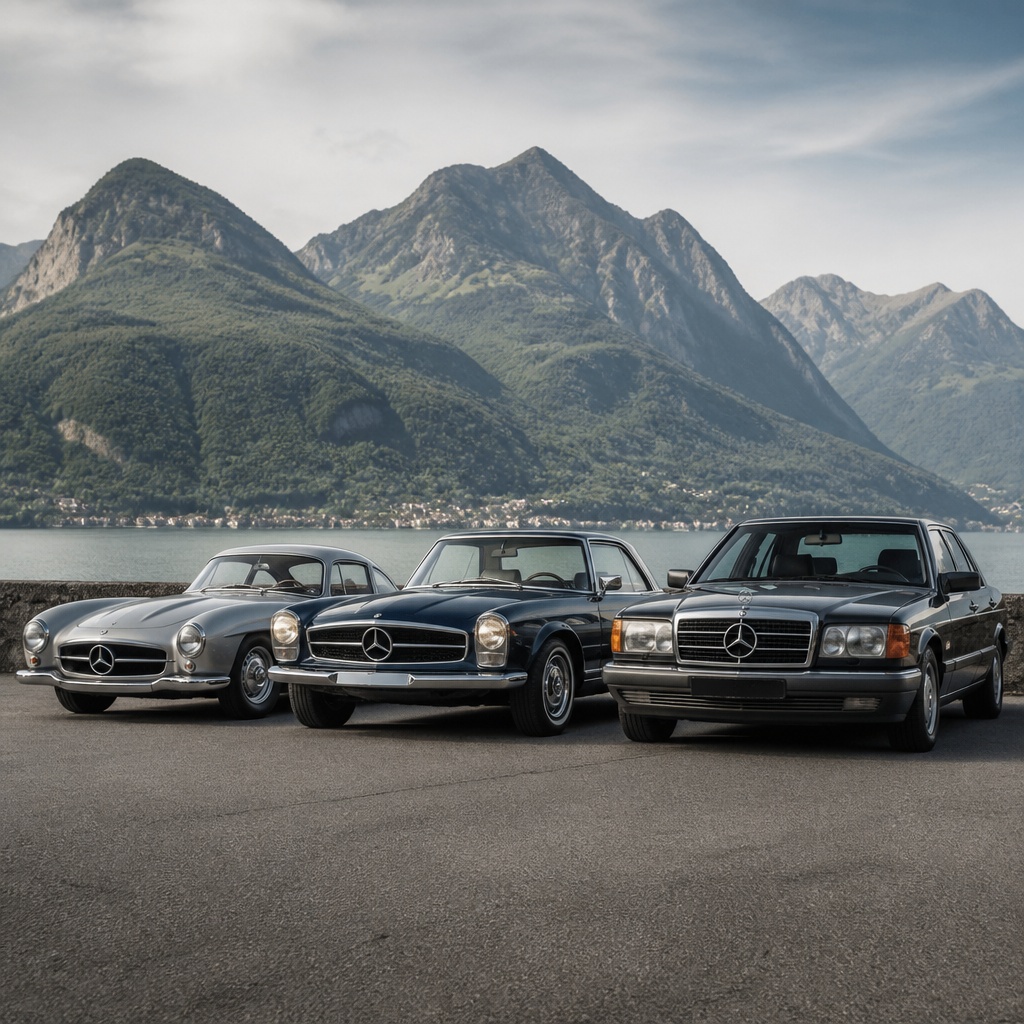
Mercedes-Benz classics occupy a unique place in automotive history because they combine technical rigor, luxury craftsmanship, and cultural influence in a way few marques can match. In the context of classic car models and brands, the term “Mercedes-Benz classics” usually refers to historic vehicles from the prewar era through the late twentieth century that remain collectible for their engineering, design integrity, and driving character. For readers exploring European classics, this marque is a central reference point: many standards now associated with premium motoring, from crumple-zone safety concepts to fuel injection in production touring cars, were either pioneered or refined by Mercedes-Benz. That matters because understanding this brand helps explain how European automotive excellence developed across decades.
A classic Mercedes is not simply an old luxury car. In collector terminology, it is typically a vehicle with historical significance, durable mechanical architecture, and enough surviving documentation, parts support, and enthusiast knowledge to remain usable today. I have spent years around restored W113 SLs, W108 sedans, diesel W123s, and the imposing 600 limousine, and one lesson becomes obvious quickly: these cars were engineered with long service life in mind. Doors shut with bank-vault weight because body structures were overbuilt. Switchgear lasts because materials and tolerances were carefully chosen. Even when a model has weaknesses such as vacuum system leaks, rust, or costly hydraulic repairs, the underlying design logic is usually sound and repairable.
Mercedes-Benz also serves as an ideal hub for discussing European classics more broadly because it intersects with nearly every major theme in the category. Prewar innovation links it to Bugatti, Alfa Romeo, and Bentley. Postwar luxury sedans place it alongside Jaguar, BMW, Rover, and Citroën. Grand touring roadsters invite comparison with Porsche, Volvo, and Maserati. Durable diesel saloons speak to everyday European engineering rather than only concours glamour. As a result, a guide to Mercedes-Benz classics naturally helps readers navigate the wider European field, whether the goal is buying a first classic, understanding restoration economics, or tracing the evolution of automotive safety, performance, and design.
The brand’s story begins before the modern company name itself. Karl Benz and Gottlieb Daimler were foundational figures in automobile development, and their firms merged in 1926 to create Daimler-Benz. From that point onward, Mercedes-Benz built vehicles that reflected a distinct philosophy: engineering first, styling in service of function, and prestige earned through capability rather than decoration alone. That philosophy created icons in multiple segments, from supercharged prewar tourers to understated postwar sedans and elegant convertibles. For a hub page on European classics, this breadth is exactly why Mercedes-Benz deserves close attention. It is not one kind of classic car, but a framework for understanding several generations of European motoring excellence.
Why Mercedes-Benz Defines the European Classic Standard
Mercedes-Benz became a benchmark by delivering consistency across categories. Some marques built beautiful sports cars. Others mastered utility or luxury. Mercedes often delivered all three, while adding a measurable engineering advantage. Consider the company’s long-standing emphasis on safety. Béla Barényi’s work on controlled deformation and passenger-cell protection influenced the modern unibody safety concept. By 1959, the W111 “Fintail” introduced one of the first production crumple-zone structures. For classic buyers today, that legacy matters because it explains why even large Mercedes sedans from the 1960s feel coherent and confidence inspiring on modern roads.
Another defining trait is mechanical durability. Models such as the W123, W124, and diesel-powered W115 earned global reputations for crossing enormous mileages in taxi and fleet service. While not every example is glamorous, they prove a crucial point about European classics: greatness is not limited to rare exotics. A 240D with hundreds of thousands of miles can be as important to the brand’s identity as a 300SL Gullwing. When readers explore related European classics, that distinction helps frame comparisons with Peugeot diesels, Volvo red-block cars, and BMW’s executive sedans. Mercedes set the template for the durable prestige saloon.
Mercedes also cultivated visual restraint. Unlike flamboyant Italian contemporaries, many classic Mercedes designs communicate authority through proportion, chrome balance, and exceptional fit rather than theatrical lines. This has made aging especially kind to the marque. A W108 sedan, R107 SL, or W126 S-Class rarely looks dated in the way trend-driven cars can. For collectors, restrained design often translates into broader long-term appeal and a more stable restoration market, because the cars remain usable, elegant, and socially acceptable in settings from concours lawns to business districts.
Prewar Legends and the Foundations of Prestige
Any serious survey of Mercedes-Benz classics starts before World War II. The S, SS, SSK, and 540K models established the company as a maker of technically advanced, immensely desirable automobiles. These were not merely luxury toys for the wealthy; they were sophisticated machines featuring supercharged engines, strong chassis engineering, and competition credibility. The SSK, in particular, became one of the era’s defining high-performance cars. Shortened for agility and powered by a supercharged straight-six, it earned victories in demanding events and created an association between Mercedes and high-speed competence that lasted for generations.
Prewar Mercedes models are also central to the wider European classics story because they reveal how engineering prestige was built before mass production normalized automotive design. Coachbuilt bodies, long wheelbases, and advanced mechanical systems placed these cars in direct conversation with Hispano-Suiza, Rolls-Royce, and Delage. Yet Mercedes differed in tone. Even the grandest examples projected disciplined performance rather than aristocratic softness. The 540K, for example, remains prized not only for its dramatic styling but for the way its supercharger system and robust construction embodied German technical confidence.
For today’s collectors, prewar Mercedes ownership sits at the highest end of the market. Authenticity is everything. Matching chassis, period-correct bodywork, documented provenance, and specialist restoration standards can alter value dramatically. These cars also demand expert stewardship. Brake adjustment, lubrication schedules, coachwork preservation, and carburetion tuning are not entry-level tasks. Still, their significance is enormous. When European classics enthusiasts discuss the roots of continental luxury and performance, prewar Mercedes is a required chapter, not a side note.
Postwar Icons: 300SL, Ponton, Fintail, and Pagoda
The postwar period transformed Mercedes-Benz from a prestigious manufacturer into a global symbol of engineering excellence. No model illustrates this better than the 300SL Gullwing, introduced in 1954. Derived in spirit from the W194 racing car, it used lightweight construction, distinctive upward-opening doors dictated by its tubular spaceframe, and mechanical direct fuel injection. That injection system helped the 3.0-liter straight-six produce around 215 horsepower, making the 300SL one of the fastest production cars of its day. It was not just beautiful; it was demonstrably advanced.
The 190SL followed with a more relaxed character and a wider customer base, while the Ponton sedans brought modern unitized construction and practical elegance to postwar family and executive transport. Then came the W111 and W112 Fintails, which made safety engineering part of the brand’s identity. Their structure, steering design, and interior considerations reflected a systematic approach that separated Mercedes from rivals still relying on older assumptions. In plain terms, these cars feel like they were engineered by teams thinking ten years ahead.
The W113 SL “Pagoda,” built from 1963 to 1971, is one of the most balanced classic Mercedes cars to own and drive. Its nickname comes from the slightly concave hardtop roof. More importantly, it blends usability, quality, and style. Power steering, disc brakes, robust six-cylinder engines, and excellent parts support make it less intimidating than more exotic classics. In the broader European classics market, the Pagoda often attracts buyers considering Jaguar E-Types, Alfa Romeo spiders, or early Porsche 911s but wanting superior build quality and touring comfort. It is not the rawest option, yet it may be the most complete.
The Sedan Dynasty and Grand Touring Era
If sports cars created dream status, sedans built the brand’s enduring authority. Mercedes perfected the idea that a luxury sedan should tolerate hard use without losing dignity. The W108 and W109 series of the 1960s embody that principle, especially in six-cylinder form and in the formidable 300SEL 6.3. That model inserted the 6.3-liter V8 from the 600 limousine into a relatively discreet sedan, creating one of the first true high-performance luxury four-doors. Long before modern super sedans became common, Mercedes proved that speed and executive practicality belonged together.
The R107 SL and C107 SLC defined the grand touring side of the 1970s and 1980s. Produced from 1971 to 1989, the R107 enjoyed one of the longest production runs in Mercedes history. Its longevity reflected smart engineering, broad market appeal, and adaptability. These cars were not razor-edged sports machines, but refined cruisers with solid V8s, excellent ergonomics, and a sense of permanence. Buyers cross-shopping European classics in this space often compare them with the Porsche 928, Jaguar XJ-S, or BMW E24. The Mercedes typically wins on perceived build solidity and relaxed usability.
| Model | Years | Why It Matters | Ownership Note |
|---|---|---|---|
| 300SL Gullwing | 1954–1957 | Fuel injection, spaceframe, global icon | High values demand expert inspection |
| W113 Pagoda SL | 1963–1971 | Usable roadster with timeless design | Check rust, injection setup, trim costs |
| 300SEL 6.3 | 1968–1972 | Early super sedan benchmark | Air suspension repairs can be expensive |
| R107 SL | 1971–1989 | Durable grand tourer with wide support | Buy on condition, not engine size alone |
| W123 | 1976–1985 | Durability legend of everyday Europe | Rust and deferred maintenance matter most |
| W126 S-Class | 1979–1991 | Elegant flagship with advanced safety focus | Electrical and climate systems need scrutiny |
The W116 and W126 S-Class models expanded the sedan dynasty by establishing standards still recognizable today. The W116 was the first official S-Class and introduced technologies such as anti-lock braking on certain variants. The later W126 refined aerodynamics, occupant protection, and high-speed stability into a remarkably cohesive package. Well-kept examples still feel modern in the ways that matter most: seating comfort, visibility, road manners, and engineering logic. As a hub for European classics, these sedans demonstrate that Mercedes excellence was not confined to halo models. It was embedded throughout the lineup.
Diesel Durability, Engineering Details, and What Buyers Should Know
One reason Mercedes-Benz classics remain central to the European market is that many were built in meaningful numbers and survive with strong parts networks. Models like the W114/W115 and W123 diesels became fixtures across Europe, Africa, and the Middle East because they were dependable, efficient for their time, and straightforward to service. The OM616 and OM617 diesel engines are famous for endurance, often exceeding 300,000 miles with proper maintenance. That kind of longevity is not folklore. It came from conservative tuning, robust bottom-end design, and maintenance schedules owners could realistically follow.
Still, buying a classic Mercedes requires discipline. Rust is the first filter on most models, especially around jack points, floors, arches, bulkheads, and window channels. Mechanical issues are usually solvable; structural corrosion can consume restoration budgets quickly. Vacuum-operated door locks, climate-control systems, hydropneumatic or air suspension components, Bosch mechanical fuel injection, and old wiring each require model-specific knowledge. I always tell buyers to inspect service records, panel fit, underbody condition, and the quality of previous repairs before getting distracted by paint or upholstery. A shiny car with hidden corrosion is rarely a bargain.
Parts availability remains one of the brand’s major advantages. Mercedes-Benz Classic, specialist dismantlers, enthusiast clubs, and independent suppliers support many models better than comparable rivals. Workshop literature is also relatively strong, and communities around the W113, R107, W123, and W126 are especially active. This makes Mercedes a practical entry point into European classics, provided expectations are realistic. Cheap purchase prices do not guarantee affordable ownership. Rubber, injection components, wood trim, leather restoration, and suspension rebuilding can add up quickly. The smart strategy is to buy the best documented car available, then maintain it preventively rather than reactively.
Mercedes-Benz in the Wider European Classics Landscape
As the hub for European classics, Mercedes-Benz should be understood both on its own terms and in comparison with peer brands. Against Jaguar, classic Mercedes typically offers superior assembly quality and long-term durability, though often with less romantic styling and lighter steering feel. Against BMW, older Mercedes models usually emphasize comfort, overengineering, and stately presence over overt driver engagement. Against Citroën, Mercedes looks conservative, yet many buyers prefer that conservatism because it simplifies ownership. Compared with Porsche, Mercedes generally trades outright sporting sharpness for broader usability and passenger comfort.
This comparative position explains why Mercedes often becomes the anchor brand for collectors building a European portfolio. A garage might include an Alfa Romeo for emotion, a Porsche 911 for sporting precision, and a Mercedes sedan or SL for touring, reliability, and elegance. The brand also spans value tiers unusually well. At one end sit museum-grade prewar cars and 300SLs. At the other are honest W123 diesels and early W124s that still introduce newcomers to classic ownership without requiring seven-figure budgets. Few European marques cover that range with equal credibility.
The strongest reason Mercedes-Benz classics endure, however, is that they continue to fulfill their original purpose. They are not static artifacts. A Pagoda can still cross countries comfortably. A W126 can still serve as a dignified long-distance saloon. A well-sorted 230E or 280CE can still teach modern drivers what coherent engineering feels like. That living usability is the brand’s greatest achievement and the clearest lesson for anyone exploring European classics. Start by identifying the era, body style, and ownership experience you want, then follow the Mercedes lineage through the related models in this category. It is one of the most rewarding routes into classic motoring.
Frequently Asked Questions
What makes Mercedes-Benz classics so important in automotive history?
Mercedes-Benz classics are important because they represent a rare combination of engineering discipline, luxury craftsmanship, and long-term cultural relevance. Across the prewar era, postwar rebuilding years, and the later twentieth century, Mercedes-Benz consistently developed cars that were not only elegant and desirable, but also technically advanced for their time. Many historic models introduced or refined ideas around safety, durability, chassis design, fuel delivery, suspension tuning, and high-speed touring that influenced the broader automotive industry. This gives Mercedes-Benz classics a significance that goes beyond styling or badge prestige alone.
Another key reason for their importance is consistency of character. Whether someone is looking at a stately 300 series sedan, a refined W111 coupe, a robust W123, a luxurious SL roadster, or a halo model like the 300SL, there is usually a recognizable Mercedes-Benz philosophy behind the vehicle: strong build quality, deliberate engineering, restrained design, and usability over time. These cars were often built to a standard rather than merely to a price point, and that commitment is part of why so many survive and remain drivable decades later.
Collectors and enthusiasts also value Mercedes-Benz classics because they occupy a bridge between pure mechanical heritage and modern road usability. Many classic Mercedes models offer vintage charm without the fragility sometimes associated with older collector cars. That makes them especially appealing to buyers who want an authentic historic vehicle they can understand, maintain, and enjoy on real roads. In that sense, Mercedes-Benz classics are not just museum pieces; they are rolling examples of how engineering excellence can endure through generations.
Which eras and models are typically considered Mercedes-Benz classics?
When people refer to Mercedes-Benz classics, they usually mean collectible models spanning from the prewar period through the late twentieth century. Prewar Mercedes vehicles are admired for their mechanical sophistication, formal styling, and historical significance, though they tend to be a more specialized corner of the market due to rarity and cost. Postwar classics opened the brand to a broader collector audience, particularly as Mercedes-Benz rebuilt its reputation with durable sedans, graceful coupes and cabriolets, and technically ambitious grand tourers.
Among the most widely recognized classics are the 300SL Gullwing and Roadster, which are often viewed as icons of performance and engineering innovation. Models such as the W111 and W112 coupes and cabriolets are celebrated for their elegance and craftsmanship, while the Pagoda SL series has become one of the most beloved classic roadster lines in the world thanks to its balanced proportions, quality construction, and approachable driving manners. Full-size luxury sedans like the 600 and the 300 series also hold an important place because they demonstrate Mercedes-Benz at its most ambitious and stately.
Later classics from the 1970s, 1980s, and 1990s are increasingly significant as well. The W107 SL, W114 and W115 sedans, W116 and W126 S-Class models, W123, and even selected early modern performance variants have become staples of the classic Mercedes conversation. These cars may not always carry the dramatic visual impact of earlier halo models, but they are deeply respected for longevity, engineering integrity, and period driving character. For many enthusiasts, these later cars represent the sweet spot between collectibility, parts support, comfort, and regular usability.
Why are Mercedes-Benz classics considered so collectible compared with other European classics?
Mercedes-Benz classics stand out in the collector market because they appeal to several kinds of buyers at once. Design enthusiasts appreciate their restrained elegance, engineering-minded owners admire the mechanical depth and logical construction, and collectors value the brand’s global recognition and stable historic reputation. Many classic Mercedes models are not trendy in a short-term sense; instead, they have a durable appeal rooted in quality, usability, and heritage. That often helps them retain interest across changing collector tastes.
Build quality plays a major role in collectibility. Mercedes-Benz spent decades establishing a reputation for overengineering, with many vehicles designed for long service lives and demanding use. Doors close with a bank-vault feel, interiors were often made with high-grade materials, and drivetrains were engineered to deliver reliability as well as refinement. In the classic market, this matters because a car that was built well in period is more likely to remain structurally sound, mechanically serviceable, and satisfying to own many years later.
There is also a broad spectrum within the marque that supports collectibility. Some buyers seek rare, concours-level cars with historic importance, while others are drawn to driver-quality models they can use on tours and weekend trips. Mercedes-Benz offers both. A top-tier 300SL sits at one end of the spectrum, while a well-kept W123 or R107 can provide entry into classic ownership at a more accessible level. That range gives the brand unusual depth in the collector world and helps sustain long-term enthusiasm across different budgets and experience levels.
Are classic Mercedes-Benz cars good to drive and own today?
In many cases, yes. One of the strongest advantages of classic Mercedes-Benz ownership is that these cars were often designed with real-world durability and road manners in mind. Compared with some classics that feel delicate, cramped, or overly compromised by age, many Mercedes models still feel substantial and confidence-inspiring today. Their controls are often mechanical but logical, visibility can be excellent, and ride quality tends to reflect the brand’s long-standing focus on comfort and composure. For owners who want a classic car experience without giving up every measure of practicality, Mercedes-Benz is often a smart place to start.
That said, ownership quality depends heavily on the specific model, maintenance history, and current condition. A well-preserved or properly restored car can feel solid, refined, and genuinely enjoyable on modern roads. A neglected example, even from a famously durable series, can quickly become expensive and frustrating. Age affects everything from rubber components and fuel systems to suspension bushings, climate control, electrical equipment, and corrosion-prone areas. The reputation for engineering excellence is deserved, but it should not be confused with immunity from time, deferred maintenance, or poor repairs.
For the right buyer, the experience can be especially rewarding because these cars tend to offer a strong sense of occasion without always being temperamental. Many models cruise comfortably, have excellent seat design, and deliver a dignified driving character that is distinct from sportier European classics. They may not all be fast by modern standards, but they often feel deeply satisfying, precise, and honest. Owners who value craftsmanship, solidity, and heritage often find that a classic Mercedes-Benz delivers a uniquely mature and rewarding form of classic motoring.
What should buyers look for when choosing a classic Mercedes-Benz?
The first priority should always be condition and documentation rather than simply model name or visual appeal. A less glamorous Mercedes-Benz in outstanding, well-documented condition is usually a better purchase than a more prestigious model with rust, missing records, or questionable restoration work. Buyers should look for service history, ownership records, factory data when available, and evidence of specialist care. Consistent maintenance is particularly important with classic Mercedes-Benz cars because their engineering quality rewards proper upkeep but can become costly when neglected.
Rust inspection is critical on many classic Mercedes models. Even cars known for durability can suffer serious corrosion in floors, wheel arches, rocker panels, jacking points, trunk areas, bulkheads, subframe mounts, and hidden seams. Cosmetic tidiness should never be taken as proof of structural health. Mechanical inspection matters just as much: engines, transmissions, fuel injection systems, suspension components, hydraulics on certain luxury models, braking systems, and electrical accessories should all be evaluated carefully. A pre-purchase inspection by a marque specialist is one of the smartest investments a buyer can make.
It is also wise to match the car to the intended ownership experience. Some buyers want a showpiece, others want a weekend tourer, and others want a usable classic they can drive regularly. A Pagoda SL, W123, or W126 may suit someone seeking comfort and road use, while a rarer flagship or early halo model may require a larger budget and more specialized support. Parts availability, specialist knowledge, restoration costs, and originality all affect the ownership equation. The best classic Mercedes-Benz is usually not just the most famous one, but the example that combines sound condition, clear history, and the right fit for the owner’s goals.