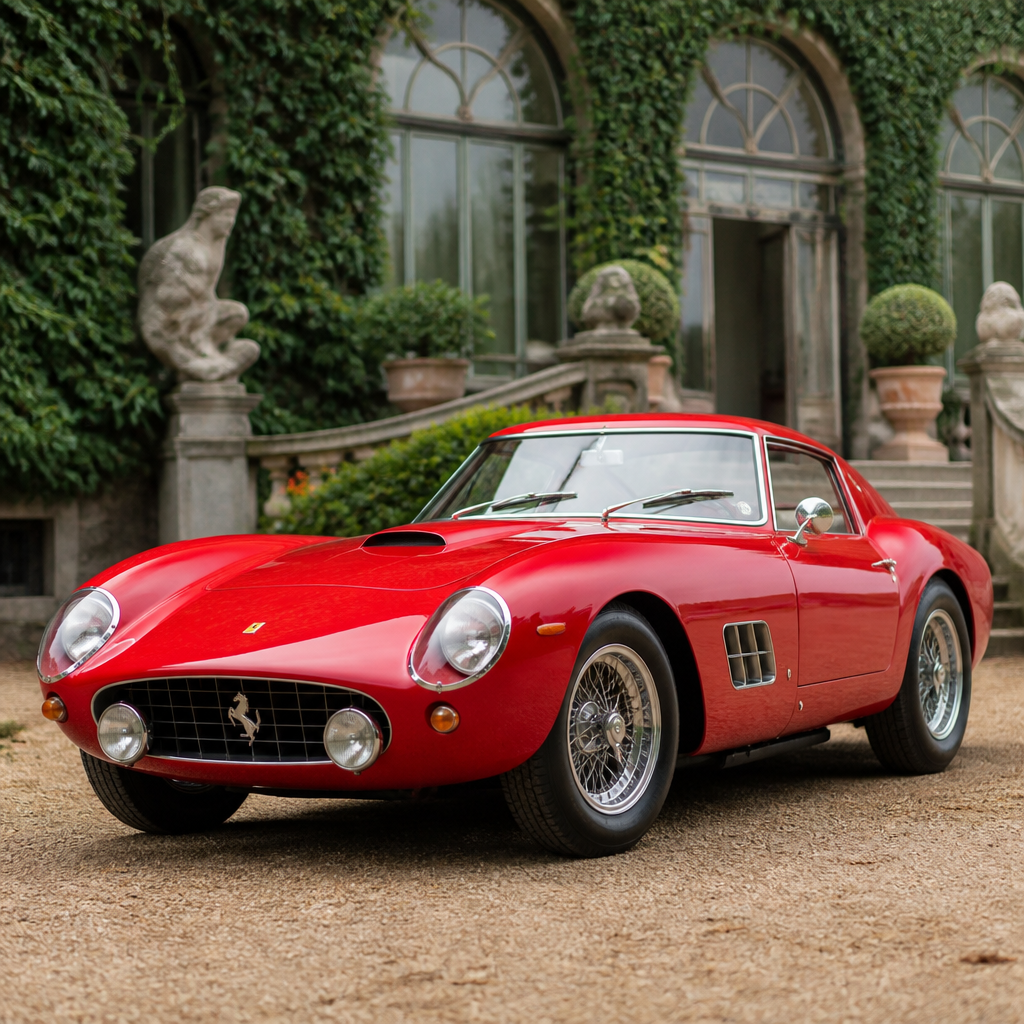
Ferrari classic cars represent the peak of European automotive desire because they combine racing pedigree, hand-built craftsmanship, limited production, and cultural symbolism in a way few marques can match. For collectors, the appeal is not only speed or styling. It is provenance, mechanical character, design lineage, and the sense of owning a machine tied directly to motorsport history. Within the wider world of classic car models and brands, Ferrari sits at the center of the European classics conversation, linking Italian coachbuilding, postwar engineering, Formula One success, concours culture, and the modern investment market. That is why a hub on European classics must treat Ferrari as both a destination and a reference point.
A classic Ferrari generally refers to a model with historical significance, limited numbers, analog engineering, and lasting collector demand, most often built from the late 1940s through the 1980s, though some 1990s models now qualify. Terms matter here. Matching numbers means the car retains its original engine, gearbox, and chassis relationship. Provenance describes documented ownership, race entries, restoration records, and certification. Coachbuilt indicates bodywork created by specialist firms such as Scaglietti, Pininfarina, Vignale, or Touring. These details affect value as much as paint color or horsepower. In my experience reviewing auction catalogs and inspecting collector cars, the buyers who stay disciplined focus on documentation first and cosmetics second.
Ferrari matters within European classics because it connects multiple collector interests at once. A Jaguar E-Type may attract design lovers, a Porsche 911 may draw engineering purists, and an Aston Martin DB series car may appeal to grand touring enthusiasts. Ferrari often captures all three groups while adding an unmatched competition story. The company’s road cars were historically shaped by racing needs, and that narrative still defines demand today. Even entry points such as the 308 GTB, Mondial, or 348 carry the badge of a brand built around Enzo Ferrari’s relentless focus on competition. For anyone building knowledge of European classics, understanding Ferrari provides a framework for assessing authenticity, rarity, restoration quality, and long-term collectibility across the category.
This hub article explains what makes Ferrari classic cars so important, which eras and models matter most, how values are created, what ownership really involves, and how Ferrari compares with other major European classics. It is designed to answer the practical questions collectors ask: Which Ferrari models are truly blue chip? What documents should a buyer demand? Are restored cars less desirable than preserved examples? How expensive is maintenance? Where does Ferrari fit among Porsche, Mercedes-Benz, Alfa Romeo, Maserati, Jaguar, Aston Martin, and Lamborghini? By the end, you will have a clear map of the Ferrari landscape and a strong starting point for exploring the broader European classics market.
Why Ferrari Defines the European Classics Landscape
Ferrari defines European classics because the brand sits at the intersection of art, engineering, and competition. Founded in 1947, Ferrari emerged in postwar Italy when small-volume manufacturers relied on specialist suppliers and coachbuilders to create high-performance cars with individual character. Early Ferraris used Colombo and Lampredi engines, often V12s, that delivered sophistication beyond many contemporaries. At the same time, bodies from Touring, Vignale, Ghia, and especially Pininfarina gave the cars visual identity that still shapes automotive design language. In practical collector terms, this means a classic Ferrari is rarely valued only as transportation. It is treated as a historical object, often cataloged by chassis number, body style, race history, and coachbuilder attribution.
The brand’s competition results elevate everything. Victories in the Mille Miglia, Le Mans, Targa Florio, and Formula One established Ferrari as more than a luxury manufacturer. Cars such as the 250 Testa Rossa, 250 GTO, 275 GTB/C, and Daytona Competizione gained value because they proved themselves under pressure. Even road-focused models benefit from this halo. When collectors pursue a 246 Dino or a 365 GTB/4 Daytona, they are buying into a wider story of engineering developed in a racing environment. This matters across the European classics hub because many collector decisions are narrative decisions. The strongest collector cars tell a story that judges, buyers, insurers, and historians can verify.
Ferrari also influences market standards. Expectations around Classiche certification, tool rolls, Marcel Massini reports, factory build sheets, and restoration photography have helped shape how serious buyers approach other European classics. I have seen cautious buyers walk away from attractive cars because invoice trails were incomplete or non-original components could not be explained. That level of scrutiny now affects top-tier Porsche, Mercedes-Benz, and Aston Martin transactions as well. Ferrari did not invent collector due diligence, but it pushed it into the mainstream. As a result, anyone using this European classics hub should think of Ferrari not only as a brand profile, but as a benchmark for how historic cars are researched, authenticated, and valued.
Key Ferrari Eras and the Models Collectors Chase
Collectors usually divide Ferrari classics into clear eras because each period reflects different engineering priorities and market behavior. The earliest road and competition cars from the late 1940s through the 1950s are the rarest and most museum-grade. Models such as the 166 Inter, 212, 225, 250 Europa, and 250 series established Ferrari’s formula: powerful engines, lightweight construction, and bespoke or semi-bespoke bodywork. Within this group, short-wheelbase Berlinettas, California Spyders, and competition derivatives command the highest attention because they combine rarity with direct motorsport relevance. These cars trade privately, through major auction houses like RM Sotheby’s and Gooding Christie’s, and through specialist brokers rather than ordinary classifieds.
The 1960s are often considered Ferrari’s golden road-car decade. The 250 GT Lusso, 275 GTB, 275 GTS, 330 GTC, and 365 California represent the maturity of front-engine grand touring Ferrari design. The 250 GTO remains the ultimate icon, but most collectors will encounter the broader lesson of the era instead: specification matters enormously. Covered-headlight versus open-headlight cars, six-carburetor setups, long-nose versus short-nose bodies, alloy versus steel panels, and torque-tube or transaxle configurations all influence desirability. Mid-engine development also changed the collector landscape with the Dino 206 GT and 246 GT, cars prized for balanced handling and cleaner entry pricing relative to V12 Ferraris.
The 1970s and 1980s created the most accessible classic Ferrari market. The 365 GTB/4 Daytona bridged old-school front-engine drama and modern collector awareness. The 308 GTB and GTS brought Ferrari ownership into popular culture through sharp Pininfarina styling and a lighter, more usable footprint. The 512 BB and Testarossa introduced flat-twelve exotic appeal, while the 328 refined the 308 formula with better drivability and stronger build quality. Later, the F40 became a landmark as Ferrari’s final road car approved during Enzo Ferrari’s lifetime. These models matter for hub readers because they often serve as the practical entry point into European classics ownership: still prestigious, still analog, but supported by broader parts and service networks.
| Era | Representative Models | Collector Appeal | Typical Buyer Focus |
|---|---|---|---|
| 1947–1959 | 166 Inter, 212, 250 GT, 250 California | Extreme rarity, coachbuilt bodies, early racing heritage | Provenance, originality, event eligibility |
| 1960–1969 | 250 GT Lusso, 275 GTB, 330 GTC, Dino 246 | Design peak, strong drivability, iconic V12 and Dino lines | Specification, restoration quality, certification |
| 1970–1989 | Daytona, 308 GTB/GTS, 512 BB, 328, Testarossa, F40 | Broader access, cultural recognition, analog performance | Service history, maintenance cost, usability |
| 1990–1999 | 512 TR, 550 Maranello, F355 | Emerging modern classics with analog character | Deferred maintenance, electronics, long-term upside |
What Makes a Ferrari Valuable: Originality, Provenance, and Condition
The biggest misconception in the collector market is that rarity alone makes a Ferrari valuable. In reality, value comes from a layered mix of originality, provenance, condition, specification, and market timing. Originality means more than numbers matching. It includes correct finishes, date-coded components, factory body configuration, period-correct carburetors, and interior materials consistent with the build record. Ferrari Classiche certification can support this, but serious buyers still compare the paperwork with independent research, inspection reports, and model-specific expertise. A restored car with exacting detail can outperform a tired original example, yet over-restoration or inaccurate parts can reduce confidence fast.
Provenance often creates the largest spread between similar cars. A standard 275 GTB is desirable, but one delivered new in a notable color, retained by prominent owners, photographed at major events, and documented by complete invoices will draw stronger bidding. Competition history magnifies the effect. A car that ran the Tour de France Automobile or was driven by a known privateer carries significance that no cosmetic restoration can replicate. This principle applies across European classics. The same logic informs values for Porsche Carrera RS models, Aston Martin DB4 GTs, Mercedes-Benz 300 SLs, and Alfa Romeo competition cars. In every case, the more verifiable the story, the stronger the market trust.
Condition must be judged carefully because Ferrari ownership punishes superficial buying. Fresh paint can hide corrosion, poor panel fit, or accident repair. Re-trimmed interiors may look rich yet depart from factory grain, stitching, or hardware. Mechanical condition is even more important. Compression figures, leak-down tests, gearbox synchro performance, suspension wear, and cooling system health tell the truth. On belt-driven models such as the 308 and 328, service intervals are central. On flat-twelve cars, engine-out maintenance history can make or break a deal. I always advise buyers to budget for recommissioning even after a positive inspection, because long-stored Ferraris develop fuel, brake, and electrical issues that no static viewing reveals.
Ownership Reality: Maintenance, Storage, and Buying Strategy
Owning a classic Ferrari is rewarding, but it is not casual. Maintenance costs are high because many parts are specialized, labor times are significant, and correct work requires technicians familiar with model-specific procedures. Carbureted V12s need tuning by someone who understands jetting, linkage balance, ignition timing, and heat management. Transaxle cars can suffer expensive driveline wear if abused. Rubber fuel lines, cooling hoses, and brake hydraulics age even when mileage stays low. For later classics, electrical gremlins, sticky interior coatings, and aging ECUs can add complexity. The least expensive Ferrari to buy is rarely the least expensive Ferrari to own.
Storage standards directly affect preservation. Cars should be kept in a dry, temperature-stable environment with battery management, clean fuel strategy, and regular exercise. Long periods of inactivity damage seals, flatten tires, varnish fuel systems, and invite moisture-related corrosion. I have seen more trouble caused by museum-style neglect than by steady, sensible use. A monthly drive to operating temperature, combined with annual fluid service and inspection, usually protects these cars better than static display. Documentation should continue during ownership as well. Save every invoice, photograph major work, and record mileage and event participation. Future buyers pay for continuity and confidence.
Buying strategy starts with the right specialist support. Use a pre-purchase inspection from an independent Ferrari expert, not only the selling dealer. Verify chassis, engine, and gearbox numbers, then compare them with factory records and known registries where possible. Study auction archives to understand pricing bands for condition levels and specification differences. Ask whether the car is eligible for events such as the Mille Miglia Storica, Tour Auto, or Ferrari Club concours programs, because eligibility can materially affect value. Finally, buy the best example you can afford. In European classics, correcting a mediocre Ferrari often costs more than stretching for a superior car from the beginning.
Ferrari Within the Wider European Classics Hub
Ferrari is the star of many collections, but it makes the most sense when viewed alongside the broader European classics field. Porsche offers unmatched durability and a deep enthusiast network, especially around air-cooled 911s. Mercedes-Benz brings engineering rigor and landmark models such as the 300 SL Gullwing and Pagoda SL. Jaguar contributes dramatic value with the E-Type and XK series, while Aston Martin’s DB cars combine British elegance with limited-production appeal. Alfa Romeo delivers race-bred lightness in cars like the Giulietta Sprint Speciale and GTA. Maserati, Lamborghini, BMW, and Lancia each add distinctive chapters to the continent’s collector story.
Comparing Ferrari with these marques clarifies buying priorities. If a collector values mechanical usability and frequent driving, a Porsche 911 or Mercedes SL may be more forgiving. If event prestige, concours visibility, and auction liquidity matter most, Ferrari often leads. If design purity per dollar is the objective, Alfa Romeo, Jaguar, and Maserati can offer compelling alternatives. This is why Ferrari works so well as a sub-pillar hub within European classics. It naturally links to adjacent research topics: Italian coachbuilders, V12 grand tourers, homologation specials, racing provenance, restoration standards, and classic car insurance. Readers exploring Ferrari often continue into Dino, Lamborghini Miura, Maserati Ghibli, Porsche 356, Aston Martin DB5, and Mercedes 300 SL territory.
The best collectors use Ferrari as both passion and benchmark. A Ferrari teaches discipline about records, authenticity, and specialist care, then those lessons transfer across the whole European market. That is especially useful for new entrants who may start by admiring a 250 series legend but eventually buy a 308, a 911 SC, a BMW E9, or an Alfa Spider. Knowledge compounds quickly once you understand how European classics are evaluated. Ferrari classic cars remain the ultimate collector’s dream because they deliver the richest blend of heritage, beauty, and emotional return. Use this hub as your launch point, then explore individual model guides, buying checklists, and marque comparisons before making your next move.
Frequently Asked Questions
Why are Ferrari classic cars considered the ultimate collector’s dream?
Ferrari classic cars occupy a unique place in the collector world because they bring together several qualities that rarely exist at the same level in one marque. First, there is the racing pedigree. Ferrari’s road cars have always lived in the shadow of the brand’s competition success, which gives even production models a direct emotional connection to motorsport history. That matters to collectors because ownership feels like participation in a larger story rather than simply possession of a valuable machine.
Second, classic Ferraris are admired for their hand-built character. Many of the most desirable models were produced in limited numbers, with craftsmanship and engineering details that reflect an era when automobiles were still deeply mechanical and individual. Collectors appreciate that these cars are not anonymous industrial products. They have personality in the steering, sound, bodywork, and engine response.
Third, Ferrari’s design lineage is exceptionally strong. Whether the car was shaped by Pininfarina, Scaglietti, or another celebrated coachbuilder, the visual identity is unmistakable. A great classic Ferrari can be elegant, aggressive, and timeless all at once. Finally, Ferrari carries cultural symbolism that extends far beyond the automotive world. It represents speed, prestige, Italian excellence, and a certain romantic ideal of driving. When all of those factors are combined with rarity and provenance, it becomes easy to see why classic Ferraris are often viewed as the pinnacle of European collector cars.
What makes provenance so important when buying a classic Ferrari?
Provenance is crucial because with a classic Ferrari, history is a major part of the car’s value and desirability. Two visually similar cars can have dramatically different market appeal depending on their documentation, ownership history, originality, and competition record. A Ferrari with matching numbers, factory records, known custodians, period photographs, and documented maintenance will almost always attract stronger interest than one with gaps in its story.
Collectors place such weight on provenance because Ferrari’s most important models often have lives that extend well beyond ordinary transportation. Some were raced, some were shown, some were owned by notable enthusiasts, and others retain rare factory specifications that make them especially significant. These details shape both the financial value of the car and the confidence a buyer can have in its authenticity.
Good provenance also helps answer critical questions: Is the engine original to the chassis? Has the body been altered? Was the car delivered in its current colors? Has it been restored accurately, and by whom? In the Ferrari market, originality and documented continuity matter enormously. A well-provenanced car is easier to insure, easier to sell, and generally more respected within collector circles. For many buyers, provenance is not a bonus feature. It is one of the main reasons to pursue a particular car at all.
Which characteristics do collectors look for in the most desirable classic Ferrari models?
Collectors usually look for a combination of rarity, originality, historical importance, mechanical specification, and aesthetic appeal. Limited-production models naturally attract attention, but scarcity alone is not enough. The most desirable classic Ferraris typically have a strong place within the brand’s evolution, whether that means introducing an important engine, representing a famous body style, or reflecting a direct link to Ferrari’s racing DNA.
Originality is often one of the first considerations. Cars that retain their original engine, gearbox, chassis, interior details, and factory-correct finishes are especially prized. Even small items such as proper instruments, trim, and documented options can matter. Collectors also pay close attention to how faithfully a car has been restored, since over-restoration or incorrect replacement parts can weaken authenticity.
Mechanical character is another major factor. Many enthusiasts are drawn to the feel of a classic Ferrari V12 or the engaging nature of a lightweight sports model with direct steering and analog feedback. Design matters just as much. Cars with beautiful proportions, iconic coachwork, and unmistakable period presence tend to hold lasting appeal. Finally, market desirability often increases when a model has known competition links, low production numbers, and a respected reputation among historians, marque specialists, and long-time Ferrari collectors.
Are classic Ferraris good investments, or should they be bought mainly for passion?
The most sensible answer is that classic Ferraris should be bought first for passion and second for investment potential. They can be strong long-term collector assets, especially when the model is rare, historically important, and backed by excellent provenance. However, the market for high-end classics is never purely about price appreciation. Condition, originality, auction trends, restoration quality, and broader economic conditions can all influence value.
Ferraris have traditionally enjoyed strong global demand because the brand sits at the top of the collector hierarchy. That said, not every old Ferrari rises in value at the same pace, and some cars can be expensive to buy, maintain, restore, and store properly. A purchaser focused only on profit can quickly discover that the ownership experience includes insurance, specialist servicing, parts sourcing, and occasional mechanical work that is neither cheap nor simple.
For serious collectors, the best approach is to buy the right car rather than simply chase the cheapest example or the hottest trend. The right car usually means desirable specification, solid documentation, strong originality, and expert inspection before purchase. If that car also happens to appreciate over time, that is an advantage. But the deeper reward of owning a classic Ferrari lies in the experience itself: the sound, the engineering, the heritage, and the connection to one of the most celebrated names in automotive history.
What should a first-time buyer know before purchasing a classic Ferrari?
A first-time buyer should understand that entering the classic Ferrari market requires patience, research, and access to the right specialists. These cars are highly rewarding to own, but they are also nuanced machines with substantial differences in value depending on originality, condition, model history, and documentation. The first step is to decide what kind of Ferrari experience is most important: concours-level collecting, touring and driving, event eligibility, or long-term preservation.
Once that goal is clear, the buyer should focus on expert due diligence. That means reviewing chassis and engine numbers, service records, restoration invoices, ownership history, and any factory documentation available. It also means commissioning a pre-purchase inspection from a recognized Ferrari specialist who understands the specific model. Mechanical health matters, but so does authenticity. A beautiful car with incorrect components or unresolved historical questions can become far more expensive in the long run than a properly documented example purchased at a higher initial price.
New buyers should also be realistic about running costs. Vintage Ferraris often require specialized maintenance, careful storage, and knowledgeable handling. Parts availability varies by model, and restoration work can be both time-consuming and costly. On the other hand, buying well can transform ownership into a deeply satisfying experience. A thoughtfully chosen classic Ferrari offers far more than status. It offers a tangible connection to Italian craftsmanship, motorsport tradition, and the golden age of European performance motoring.