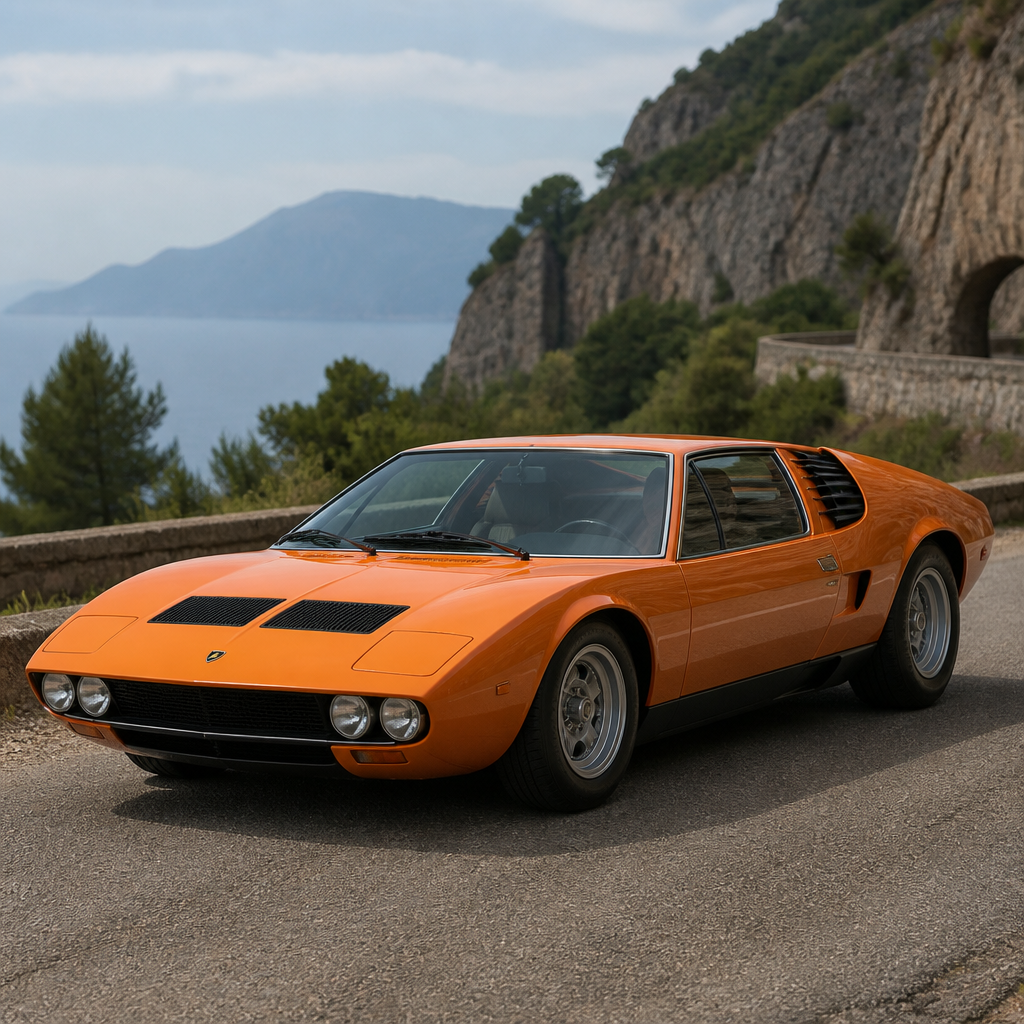
Lamborghini classics occupy a unique place in automotive history because the company arrived late, moved fast, and rewrote what a supercar could be. In the world of European classics, few brands changed expectations as dramatically as Automobili Lamborghini, founded in 1963 by Ferruccio Lamborghini after his well-known dissatisfaction with contemporary grand touring cars. A classic Lamborghini is not simply an old exotic vehicle; it is an early expression of bold engineering, radical styling, and uncompromising performance that influenced every major supercar maker that followed. For collectors, historians, and enthusiasts exploring classic car models and brands, these early Lamborghinis form an essential hub within the broader story of European classics.
When people ask which Lamborghini classics matter most, the answer usually begins with the 350 GT, Miura, Espada, Islero, Jarama, and Countach. Each model solved a different problem. The 350 GT established credibility. The Miura created the modern mid-engine supercar formula. The Espada proved high performance could coexist with genuine four-seat practicality. The Islero and Jarama refined the grand touring brief. The Countach transformed automotive design language for decades. Together, these cars did more than sell in limited numbers; they shifted engineering priorities across Europe, from chassis layout to aerodynamics to driver expectations.
This matters because early Lamborghini models sit at the intersection of art, mechanical innovation, and market disruption. In the 1960s and 1970s, European classics were evolving quickly. Ferrari dominated prestige performance, Maserati pursued elegant speed, Aston Martin balanced luxury with power, and Porsche developed highly disciplined engineering solutions. Lamborghini entered that landscape with a distinct philosophy: less tradition, fewer inherited constraints, and more willingness to challenge accepted packaging rules. Having spent years studying these cars through restoration records, auction catalogs, homologation details, and period road tests, I have seen the same pattern repeatedly. The most important Lamborghinis were not incremental improvements. They changed the conversation.
Understanding Lamborghini classics also helps readers understand the broader European classics category. These cars connect to Italian coachbuilding, postwar manufacturing ambition, V12 engine development, and the rise of international collector culture. They are central reference points for anyone comparing classic Italian performance cars, evaluating investment-grade exotics, or tracing how the supercar became a cultural symbol. If your interest extends to Ferrari V12 grand tourers, Maserati Bora history, De Tomaso design, Bertone styling, or the evolution of European classics generally, early Lamborghini models provide one of the clearest routes into that larger story.
The 350 GT: The Credible Beginning of Lamborghini Classics
The 350 GT was the first production Lamborghini and the car that proved the company was more than a personal feud turned business venture. Introduced in 1964, it evolved from the 350 GTV concept and became a refined grand tourer with aluminum bodywork by Carrozzeria Touring and a 3.5-liter V12 designed by Giotto Bizzarrini, then adapted for road use by Gian Paolo Dallara and Paolo Stanzani. Output is commonly cited around 270 horsepower in production form, delivered through a five-speed manual transmission. That specification mattered because it put Lamborghini immediately into serious competition with established European classics from Ferrari and Maserati.
What made the 350 GT significant was balance. Ferruccio Lamborghini wanted a road car that was fast, civil, and usable, not a thinly disguised racing machine. The 350 GT had independent suspension, four-wheel disc brakes, and a cabin designed for long-distance travel. In period testing, reviewers praised its stability, smooth high-revving V12, and overall refinement. That is the overlooked foundation of Lamborghini classics. Before the brand became famous for theatrical shapes and poster-car drama, it earned respect through engineering credibility and drivability. Without the 350 GT, later icons would have lacked legitimacy.
Miura: The Car That Defined the Modern Supercar Layout
If one early Lamborghini changed supercars most directly, it was the Miura. Introduced in 1966 as the P400, the Miura placed a transversely mounted V12 behind the seats in a road-going exotic coupe with stunning Bertone styling by Marcello Gandini. Mid-engine race cars already existed, but the Miura brought that layout into a glamorous production road car in a way competitors could not ignore. It effectively established the template for the modern supercar: low roofline, dramatic proportions, intimate cabin, high-revving engine mounted behind the driver, and styling that announced speed even when parked.
The Miura’s impact came from more than appearance. Early versions produced about 350 horsepower, while later Miura S and SV models increased output and improved chassis behavior. The car’s steel platform chassis and integrated drivetrain arrangement were technically ambitious, though not without compromises. Heat management, cabin ergonomics, and high-speed front-end lift were real concerns in early cars. Yet those limitations do not diminish its importance. They clarify why the Miura mattered. It prioritized a new type of driving experience over conventional packaging, forcing the industry to confront a future where exotic road cars would borrow the architecture of competition machines.
In practical collector terms, the Miura sits at the center of any European classics discussion because it changed values across the market. Cars that once would have been judged primarily as grand tourers were now measured against the emotional intensity of a mid-engine design. Lamborghini did not just make a beautiful classic; it recalibrated ambition for Ferrari, Maserati, and later brands including McLaren and even high-end Porsche programs. When enthusiasts call the Miura one of the first true supercars, that is historically justified.
Key Early Lamborghini Models and Why They Matter
Several early models contributed differently to Lamborghini’s rise. Looking at them side by side makes it easier to understand how the brand influenced the wider field of European classics rather than relying on a single icon.
| Model | Launch Year | Core Format | Why It Changed Supercars |
|---|---|---|---|
| 350 GT | 1964 | Front-engine V12 grand tourer | Established Lamborghini as a credible engineering rival to Ferrari |
| 400 GT | 1966 | Refined front-engine V12 2+2 | Expanded usability and proved performance could include comfort |
| Miura | 1966 | Mid-engine V12 coupe | Defined the exotic mid-engine road car formula |
| Espada | 1968 | Front-engine V12 four-seat GT | Showed radical styling and true practicality could coexist |
| Islero | 1968 | Understated V12 GT | Preserved traditional grand touring values within the brand |
| Jarama | 1970 | Compact front-engine V12 GT | Adapted Lamborghini for changing regulations and buyer needs |
| Countach | 1974 | Mid-engine V12 wedge supercar | Redefined supercar styling, packaging, and aspiration globally |
Espada, Islero, and Jarama: The Overlooked Grand Touring Thread
The Miura and Countach tend to dominate popular memory, but Lamborghini classics cannot be understood properly without the front-engine V12 cars that ran alongside them. The Espada, launched in 1968, was especially important. Styled by Bertone with an elongated glass-rich profile, it offered genuine seating for four adults and strong luggage capacity while retaining Lamborghini pace. Its 3.9-liter V12 produced roughly 325 horsepower in early form and more in later series. The Espada demonstrated that radical design did not have to exclude family-scale touring. In period Europe, where owners often drove across countries rather than trailering cars to events, that capability mattered.
The Islero, also introduced in 1968, was more conservative visually but valuable as a bridge between the 400 GT and later GT models. It appealed to buyers who wanted Lamborghini engineering without the visual provocation of the Miura or Espada. That mattered for the brand’s reputation. Not every significant European classic is a design revolution; some preserve mechanical excellence in an understated package. The Jarama, launched in 1970, continued that thread with a shorter wheelbase GT layout shaped partly by packaging and regulatory concerns, including changing expectations around safety and visibility.
These models changed supercars indirectly by broadening the Lamborghini identity. They showed the company was not a one-car sensation dependent on shock value. It could build a range of V12 machines with different missions, from family-capable GT to intimate high-speed coupe. For readers exploring European classics as a category hub, these cars also link Lamborghini to broader themes seen across contemporaries such as the Ferrari 365 GT 2+2, Maserati Mexico, and Aston Martin DBS. The difference was that Lamborghini applied a more disruptive design language and a more uncompromising engine character.
Countach: The Blueprint for Supercar Theater
By the time the Countach arrived, Lamborghini had already altered the engineering direction of high-performance cars. The Countach changed their visual and cultural meaning. First shown as a prototype in 1971 and entering production in 1974, the Countach used a longitudinal mid-mounted V12 and a sharply angular wedge form again shaped by Marcello Gandini. Scissor doors, an exceptionally low roof, dramatic air intakes, and extreme width turned the car into an event before the engine even started. Supercars after the Countach were expected to be spectacular, not merely fast.
Its significance extends beyond posters and bedroom walls. The Countach introduced packaging ideas that influenced later exotics, including longitudinal engine placement ahead of the transaxle for weight distribution goals and service considerations. It also normalized the idea that impracticality could be part of the appeal. Heavy controls, limited rear visibility, and a difficult driving position did not prevent demand because buyers understood they were purchasing a machine that represented the outer edge of road-car imagination. In market terms, that shifted the definition of luxury performance. Emotion, rarity, and design daring became core product attributes, not side benefits.
Why Early Lamborghini Models Still Matter in European Classics Today
Early Lamborghini models remain important because they continue to shape restoration standards, auction values, and enthusiast expectations across European classics. The best examples reveal how craftsmanship, engineering, and provenance intersect. Originality matters enormously. Matching-numbers drivetrains, documented factory colors, proper Weber carburetor setups, correct Campagnolo or Borrani wheels where applicable, and verified chassis histories can create six- or seven-figure differences at sale. Organizations such as Lamborghini Polo Storico now play a major role in confirming authenticity and guiding restoration, much as Ferrari Classiche does for its own heritage fleet.
These cars also teach a useful lesson about collecting. The most famous model is not always the most usable or the smartest entry point. A Miura may be the emotional centerpiece, but an Espada or 400 GT can offer deeper touring enjoyment for an owner who actually drives. Parts support, cooling upgrades, ignition modernization, and specialist knowledge all affect ownership satisfaction. In my experience following European classics markets, buyers who study model purpose as closely as market value make better long-term decisions.
For anyone building knowledge around classic car models and brands, Lamborghini’s early lineup serves as a central reference point. It connects Italian design houses, V12 development, coachbuilt traditions, and the birth of the supercar as a distinct category. Explore these models closely, compare them with their European contemporaries, and use them as anchors for deeper research into the wider European classics landscape. The reward is not just better collecting insight. It is a clearer understanding of how a young company with bold ideas permanently changed performance cars.
Frequently Asked Questions
What makes early Lamborghini models so important in supercar history?
Early Lamborghini models matter because they did far more than add another exotic badge to the European performance market; they changed the definition of what a supercar could be. When Automobili Lamborghini was founded in 1963, the company entered a field dominated by brands that emphasized tradition, racing pedigree, and refined grand touring manners. Ferruccio Lamborghini took a different path. He wanted road cars that were not only fast, but also technologically ambitious, visually dramatic, and unapologetically modern. That mindset quickly separated Lamborghini from many of its contemporaries.
The company’s earliest cars introduced a new level of theatrical design and engineering confidence. Instead of simply refining existing formulas, Lamborghini embraced innovation in chassis layout, engine development, and styling. The move toward mid-engine high-performance road cars, especially with the Miura, became one of the most influential shifts in automotive history. It helped establish the visual and mechanical template that countless later supercars would follow: low roofline, wide stance, exotic proportions, and a focus on performance as a complete sensory experience.
Just as importantly, early Lamborghini models proved that a young manufacturer could challenge established names through bold ideas rather than heritage alone. Cars like the 350 GT, 400 GT, Miura, and Espada each contributed in different ways, whether by demonstrating technical sophistication, redefining design expectations, or showing that high performance could coexist with luxury and usability. That combination of disruption, style, and engineering is why Lamborghini classics remain central to any serious discussion of supercar evolution.
Which early Lamborghini models had the biggest impact on the development of supercars?
Several early Lamborghini models were highly influential, but a few stand out as true milestones. The 350 GT was the company’s first production car and established Lamborghini as a serious automaker rather than a novelty challenger. It introduced the marque’s commitment to advanced engineering, including a refined V12 engine that would become a core part of Lamborghini identity. While the 350 GT was more grand tourer than supercar in the modern sense, it laid the foundation for everything that followed.
The 400 GT built on that success by offering greater displacement, improved practicality, and a more mature expression of Lamborghini’s road-car philosophy. It showed that the brand could evolve quickly and produce vehicles that were not only exotic, but also credible and desirable for real-world use. For collectors and historians, the 400 GT represents the stage where Lamborghini moved from promising newcomer to established force.
The Miura is often regarded as the early Lamborghini with the greatest long-term impact. Its transverse mid-mounted V12 and stunning low-slung body fundamentally altered expectations for high-performance road cars. Before the Miura, the idea of a road-going car with race-inspired packaging at this level was still unusual. After the Miura, the mid-engine layout became the aspirational standard for exotic supercars. It was not just a beautiful machine; it was a conceptual leap that influenced generations of manufacturers.
The Espada also deserves recognition, even though it is sometimes overshadowed by the Miura. It proved Lamborghini could apply radical styling and V12 performance to a four-seat grand touring format without losing its identity. In a different way, it expanded the meaning of what an exotic performance car could be. Together, these early models show that Lamborghini’s influence was not limited to one icon, but was built through a sequence of daring and highly original cars.
Why is the Lamborghini Miura often called the first true supercar?
The Lamborghini Miura is frequently called the first true supercar because it brought together performance, layout, styling, and emotional impact in a way the automotive world had never quite seen before in a production road car. Introduced in the mid-1960s, the Miura featured a mid-mounted V12 engine in a road-going package that looked astonishingly futuristic. That mechanical arrangement gave the car exceptional visual drama and a strong connection to competition-inspired engineering, even though Lamborghini itself was not building the brand around racing.
What truly set the Miura apart was how completely it captured the modern supercar formula. It was extremely low, wide, and exotic in proportion. Its bodywork, designed by Marcello Gandini at Bertone, looked like a concept car made real. The Miura was not merely fast for its era; it felt revolutionary. It turned automotive performance into spectacle, combining advanced engineering with styling that demanded attention from every angle.
The car also changed buyer expectations. Before the Miura, many high-end performance cars were still largely understood as fast grand tourers. The Miura introduced the idea that an elite road car could be more uncompromising, more visually radical, and more mechanically adventurous. In that sense, it did not just become a famous Lamborghini; it shifted the market’s imagination. Later icons from many other brands owe a conceptual debt to the Miura because it showed that a road car could be both engineering statement and cultural event.
While historians may debate the wording of “first true supercar,” the Miura unquestionably became one of the earliest cars to embody the category as enthusiasts understand it today. Its influence is visible not only in later Lamborghinis, but across the entire lineage of exotic mid-engine performance cars that followed.
How did Ferruccio Lamborghini’s vision shape the brand’s earliest classic cars?
Ferruccio Lamborghini’s vision shaped the company from the beginning by insisting that high-performance road cars should deliver both excitement and sophistication. His well-known dissatisfaction with contemporary grand touring cars was not just a personal complaint; it became the philosophical spark behind Automobili Lamborghini. He believed there was room for a car maker that could combine mechanical excellence, refinement, and bold character without being bound by old habits or traditional assumptions.
That philosophy can be seen clearly in the earliest classics. Lamborghini did not set out to imitate competitors. Instead, the company emphasized powerful engines, advanced technical solutions, and interiors designed for comfort as well as speed. The first production models were engineered to be impressive road cars first and foremost. Even when the styling became increasingly dramatic, there was still a core belief that these cars should offer a complete ownership experience, not just raw performance figures.
Ferruccio also fostered a culture of ambition. Because the brand was new, it had less institutional baggage than older manufacturers. That allowed Lamborghini’s engineers and designers to move quickly, experiment boldly, and challenge accepted norms. The result was a series of early cars that felt unusually fresh for their time. The 350 GT demonstrated credibility, the 400 GT showed rapid development, and the Miura revealed a willingness to embrace ideas others had not fully realized in production form.
In broader historical terms, Ferruccio Lamborghini’s vision helped create a brand identity centered on innovation, defiance, and emotional presence. That is why early Lamborghinis still resonate so strongly today. They reflect not only technical achievement, but also the personality of a founder who believed that performance cars could be more daring, more elegant, and more exciting than the market had accepted up to that point.
Are early Lamborghini classics still relevant to collectors and enthusiasts today?
Yes, early Lamborghini classics remain deeply relevant to collectors and enthusiasts, and their importance has only grown with time. Part of the appeal is historical: these cars represent the period when Lamborghini established its identity and disrupted the high-performance car world. Owning or studying one of these models means engaging directly with the formative years of a brand that helped define the exotic car era. For many collectors, that historical significance is just as valuable as the car’s design or performance.
They also remain relevant because their influence is still visible in modern supercars. The dramatic silhouettes, emphasis on naturally aspirated multi-cylinder engines, and celebration of visual theater can all be traced back to Lamborghini’s earliest classics. Enthusiasts appreciate these cars not only as artifacts, but as living reference points in the evolution of automotive design and engineering. A Miura, 350 GT, or Espada still tells an important story about how radical ideas become industry standards.
From a collector’s perspective, early Lamborghinis offer rarity, brand prestige, and strong emotional appeal. Many were produced in limited numbers, and the best examples combine design significance with mechanical pedigree. However, relevance today also depends on informed ownership. These are specialist vehicles that require careful maintenance, expert restoration knowledge, and a clear understanding of originality, provenance, and model-specific details. Serious buyers pay close attention to matching numbers, documented history, and period-correct features.
For enthusiasts who may never own one, these cars still matter because they remain benchmarks of imagination and boldness. They remind the automotive world that true innovation often comes from companies willing to take risks early. That enduring spirit is what keeps Lamborghini classics not only collectible, but culturally and historically essential.