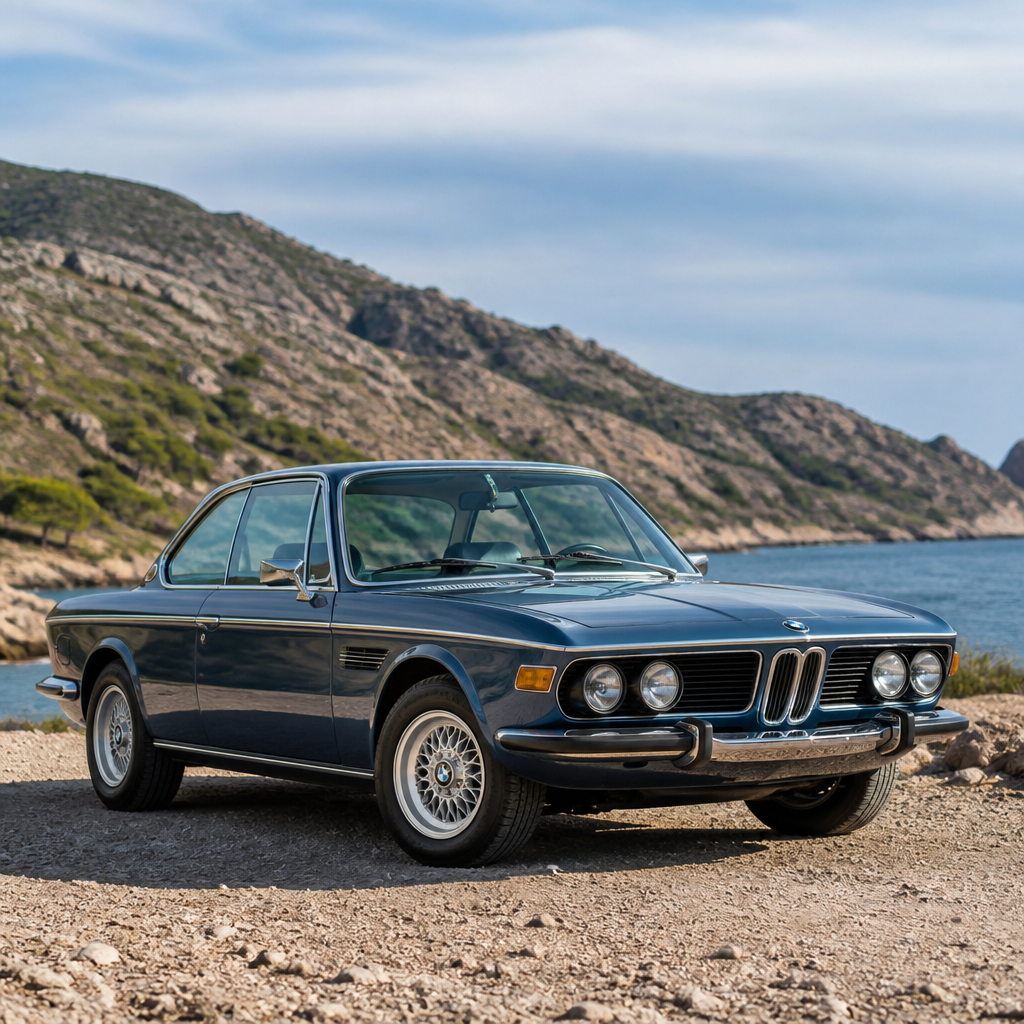
BMW classic cars occupy a special place within European classics because they combine motorsport engineering, everyday usability, and design restraint in a way few brands have matched. In this hub for European classics, BMW serves as an ideal lens for understanding how postwar European manufacturers balanced performance and precision while building cars that still feel relevant decades later. A classic BMW is not simply an old coupe or sedan with a famous roundel; it is usually a car defined by balanced chassis tuning, communicative steering, durable mechanicals, and an engineering culture shaped by competition and autobahn expectations. When enthusiasts discuss BMW classic cars, they usually mean vehicles from the 1960s through the 1990s, especially the Neue Klasse sedans, E9 coupes, 2002 variants, first-generation 3 Series, landmark 5 Series models, and early M cars. These machines matter because they created the template for the modern sport sedan and helped establish Germany’s reputation for precision road cars.
From years spent around restorations, auctions, and workshop inspections, I have seen that the appeal goes beyond nostalgia. A well-sorted classic BMW delivers clear driver feedback, clean ergonomics, and mechanical honesty. You can trace the clutch take-up point, hear the induction note build, and feel how the suspension settles mid-corner. That directness is a hallmark of European classics at their best. It also explains why buyers who initially shop broadly across Alfa Romeo, Mercedes-Benz, Porsche, Jaguar, Saab, Volvo, and Peugeot often end up focusing on BMW. The cars tend to reward use, not just display. For a hub article covering European classics, BMW is central because its history intersects with nearly every major theme in the category: postwar recovery, racing influence, fuel-injection development, body corrosion challenges, preservation versus modification, and the rising importance of provenance. Understanding BMW classic cars gives readers a framework for evaluating the wider European field with more confidence and sharper standards today.
Why BMW Defines the European Classic Performance Formula
BMW’s classic identity was forged by a simple but difficult formula: compact dimensions, relatively light weight, rev-happy engines, rear-wheel drive, and disciplined chassis tuning. The company’s rise was not guaranteed. In the late 1950s, BMW faced severe financial strain, and the Neue Klasse sedans launched in 1962 changed the firm’s trajectory. Cars such as the 1500, 1800, and 2000 introduced a coherent engineering philosophy that blended family-car practicality with genuine sporting ability. Their overhead-cam M10 four-cylinder engine became one of the most influential powerplants in European automotive history, underpinning road cars and later racing successes. That engine family eventually evolved into turbocharged competition applications, including the basis for BMW’s Formula 1 program decades later.
The reason this matters for buyers and historians is that BMW did not stumble into performance by accident. The company engineered precision into the fundamentals. Weight distribution, pedal placement, visibility, and high-speed stability were treated as core attributes, not luxury add-ons. Compare that with many period rivals that excelled in one area but compromised another. British sports cars often offered charm with questionable durability. Italian coupes could be brilliant but temperamental. Large Mercedes models delivered quality and prestige but not always the same agile character. BMW’s best classic cars sat in the sweet spot. They felt engineered for sustained real-world driving, whether on mountain roads, wet secondary routes, or unrestricted autobahn stretches. That broad competence is why these cars remain reference points within European classics.
Key BMW Classic Eras and the Models That Matter Most
If you are building knowledge of BMW classic cars, start with five cornerstone groups. First is the Neue Klasse, the sedans that saved the company and established the sport sedan blueprint. Second is the BMW 2002 family, especially the 2002 tii and Turbo, which translated that formula into a smaller, more playful package. Third is the E9 coupe line, including the 2800 CS, 3.0 CS, and fuel-injected 3.0 CSi, admired for elegant Karmann-built styling and grand-touring character. Fourth is the E21 and E30 generations of the 3 Series, which expanded BMW’s global reach and defined compact executive performance. Fifth is the early M era, led by the M1, E28 M5, E30 M3, and later the E24 M6, where motorsport priorities became road-going products with very little dilution.
Each group serves a different type of enthusiast. The 2002 is the gateway classic because parts support is strong, the car is mechanically straightforward, and the driving experience is vivid even at legal speeds. The E9 coupe attracts collectors who value design and long-distance touring, but it demands serious rust diligence. The E30 range offers breadth, from humble four-cylinder saloons to six-cylinder 325i cars and homologation-grade M3 models. The E28 M5 and E34 M5 appeal to buyers who want discreet performance with room for adults and luggage. Across Europe, values reflect this hierarchy. Blue-chip examples with original drivetrains, documented histories, and factory colors command strong premiums, while modified cars vary widely based on quality and reversibility.
| Model | Era | Why It Matters | Main Watch-Out |
|---|---|---|---|
| Neue Klasse 1800/2000 | 1960s | Established BMW sport sedan identity | Rust in structural areas |
| 2002 tii | 1970s | Mechanical injection, light weight, sharp dynamics | Injection system condition and body corrosion |
| E9 3.0 CSi | 1970s | Elegant coupe with strong touring character | Karmann-body rust and costly trim |
| E30 325i | 1980s | Accessible, balanced, widely supported | Cooling system neglect and accident repairs |
| E30 M3 | 1980s | Homologation icon with racing pedigree | Authenticity, parts cost, overvaluation |
| E28 M5 | 1980s | Super-sedan benchmark with M88/S38 engine | Maintenance history and corrosion |
Engineering Traits That Create the BMW Driving Experience
The phrase performance and precision is justified by hardware, not marketing. Classic BMWs are known for front-engine, rear-wheel-drive layouts, well-calibrated manual gearboxes, and engines that prefer clean revs over lazy low-end torque. The M10 four-cylinder, M20 inline-six, M30 big six, and S14 and S38 performance engines all illustrate this pattern differently. Even standard road cars were usually tuned for throttle response and drivability rather than isolation. Suspension layouts varied by era, but BMW consistently aimed for predictable balance. Semi-trailing rear arms on many models can produce dynamic camber changes that skilled drivers enjoy, though worn bushings make the cars feel nervous. When properly refreshed, the chassis communicates clearly and allows subtle adjustments on corner entry and exit.
Steering is another differentiator. Many classics from the 1960s through 1980s used recirculating-ball or lower-precision systems, but BMW earned a reputation for direct, transparent steering feel, especially in manual-rack or well-tuned power-assisted applications. Brake pedal modulation is usually strong, cabin layouts are logically arranged around the driver, and visibility tends to be better than in many modern cars. These details matter more than brochure horsepower. A 130-horsepower 2002 tii or a 168-horsepower E30 325i can feel alive because gearing, weight, sightlines, and chassis communication work together. That is also why restored examples should be evaluated as complete systems. New paint and polished wheels mean little if the steering box, control arm bushings, subframe mounts, and cooling components are tired.
Buying, Restoring, and Preserving BMW Classic Cars Wisely
The first rule when buying a classic BMW is simple: prioritize body integrity and documentation over cosmetics. Rust repair on monocoque European classics is expensive, slow, and often poorly done. On 2002s, inspect shock towers, floors, rocker panels, spare-wheel wells, firewall seams, and front fender mounting areas. On E9 coupes, check nearly everything: sills, wheel arches, A-pillars, rear window surrounds, front strut towers, and hidden structural sections. On E30s and E28s, corrosion is usually less severe than on earlier cars, but battery trays, jacking points, sunroof drains, valances, and lower fenders still deserve careful inspection. A paint meter, lift access, and specialist pre-purchase inspection are essential. I have watched buyers spend six figures correcting a cheap rust-hidden coupe that looked excellent in photographs.
Mechanical evaluation should focus on known systems. Cooling systems on six-cylinder cars are critical because overheats can warp cylinder heads. Mechanical fuel injection on tii models must be set up correctly and is best assessed by a marque specialist. Timing chains, valve adjustments, differential noise, gearbox synchros, and driveline mounts all affect cost and drivability. Matching-numbers status matters most on rare models like the E30 M3, M1, and low-production M cars, but even mainstream cars benefit from drivetrain originality. Restoration philosophy also matters. Some owners pursue factory-correct finishes, period hardware, and original radio units, while others choose discreet upgrades such as improved bushings, stainless exhausts, electronic ignition, or Bilstein dampers. In most cases, sympathetic upgrades that improve reliability without cutting original metal support long-term enjoyment better than radical modification.
BMW in the Wider European Classics Landscape
As a hub for European classics, this page should help readers place BMW among its peers. Against Mercedes-Benz, classic BMWs are usually more overtly driver-focused, lighter on their feet, and less formal in character. Against Alfa Romeo, they tend to offer stronger durability and parts consistency, though Alfas can feel more exotic and sonorous. Against Porsche, BMW often delivers more cabin space and lower entry costs, even if it lacks the rear-engine distinctiveness and motorsport aura of a 911. Compared with Jaguar sedans and coupes, BMW generally offers better ergonomics and more predictable reliability. Volvo and Saab brought Scandinavian ingenuity and practicality, while Peugeot and Citroën contributed chassis sophistication and design originality. BMW’s niche within European classics is disciplined sporting engineering with broad usability.
This context matters because buyers increasingly shop by use case rather than badge. Someone wanting weekend mountain-road involvement may compare a 2002 tii with an Alfa GTV, Porsche 914, or Lancia Fulvia. A family buyer considering a classic for touring may cross-shop an E28 535i, Mercedes W123 coupe, or Volvo 240 GLT. A collector interested in homologation history might weigh an E30 M3 against a Mercedes 190E 2.3-16 or Ford Sierra RS Cosworth. In each case, BMW’s advantage is coherence. The controls, chassis, and powertrain usually work together in a very German, very deliberate way. That is why BMW remains one of the strongest entry points into European classics and one of the most rewarding marques to understand in depth.
BMW classic cars show why European classics still matter: they unite engineering rigor, lasting design, and driver involvement in cars that can still be used as intended. From the Neue Klasse and 2002 to the E9, E30, and early M models, the brand established benchmarks for the sport sedan, compact coupe, and practical performance car. The essentials are consistent across the decades: balanced rear-wheel-drive handling, communicative steering, rev-friendly engines, and cabins designed around the driver. Those qualities explain both collector demand and the loyalty of owners who maintain these cars for years rather than treating them as static investments. When the fundamentals are right, a classic BMW feels precise in a way that remains rare even now.
For anyone exploring the broader world of European classics, BMW is the ideal subtopic hub because it connects so many of the category’s biggest themes: postwar innovation, racing influence, preservation standards, rust realities, and the tradeoffs between originality and usability. Start with condition, provenance, and specialist support. Learn the differences between key eras and engines. Drive the best example you can find before making assumptions from photos or auction headlines. If you want a European classic that rewards careful ownership with real performance and precision, BMW deserves to be near the top of your list. Use this hub as your starting point, then continue into model-specific guides, buying checklists, and restoration resources for the European classics that fit your goals.
Frequently Asked Questions
What makes BMW classic cars different from other European classics?
BMW classic cars stand apart because they were engineered to deliver genuine driver involvement without sacrificing daily usability. Many European classics are admired primarily for their styling, luxury, or rarity, but classic BMW models often succeed by balancing several qualities at once: responsive engines, precise steering, disciplined chassis tuning, practical interiors, and understated design. That combination gave BMW a distinct identity in the postwar market, especially as the brand developed sporty sedans and coupes that felt advanced yet approachable.
Another defining trait is the brand’s consistency of philosophy. Across landmark models from the 1960s through the 1980s, BMW emphasized balanced proportions, rear-wheel-drive dynamics, strong visibility, and an ergonomically focused driving position. Cars such as the Neue Klasse sedans, the 2002, the E9 coupes, and later the E24, E28, and E30 generations all reflect this formula in different ways. Rather than chasing excess ornamentation, BMW refined the relationship between engine, chassis, and driver. That is why a classic BMW often feels coherent as a machine, not just attractive as an object.
This is also why BMW occupies such an important place in conversations about European classics. The company helped define the idea that a car could be sporting, precise, and civilized at the same time. Decades later, enthusiasts still value these models because they communicate clearly on the road, remain usable in modern traffic, and represent a key chapter in the evolution of performance-oriented everyday cars.
Which BMW classic models are considered the most important or collectible?
Several classic BMW models are especially significant because they shaped the brand’s reputation and continue to influence collector demand. The BMW 2002 is often at the top of the list. It is widely regarded as one of the clearest expressions of BMW’s sporty compact formula, combining light weight, communicative handling, and simple but effective engineering. The 2002tii, in particular, is highly respected for its fuel-injected performance and its role in establishing BMW as a serious builder of driver’s cars.
The Neue Klasse sedans are equally important from a historical perspective because they helped rescue and redefine BMW in the 1960s. These cars laid the groundwork for the company’s future by introducing the sporting sedan concept that would later become central to BMW’s identity. The elegant E9 coupes, especially the 3.0 CS and 3.0 CSi, are also highly prized. They combine graceful styling with grand touring capability and motorsport heritage, particularly through the legendary CSL variants that achieved major racing success.
Other key classics include the first-generation 6 Series (E24), the E21 3 Series, the E28 5 Series, and the E30 3 Series. Early M cars have become especially collectible, including the E28 M5 and E30 M3, though values for these often place them in a more rarefied segment of the market. Ultimately, the most important classic BMWs are not only the rarest ones but the models that best demonstrate the brand’s defining strengths: balanced performance, engineering clarity, and timeless usability.
Why are performance and precision so central to the appeal of classic BMWs?
Performance and precision are central to classic BMW appeal because the brand did not treat speed as an isolated number. Instead, BMW focused on how a car responded to driver inputs in real-world conditions. A classic BMW often feels alive through the steering wheel, pedals, gearshift, and chassis. Even modestly powered models can be rewarding because their engineering emphasizes balance, predictability, and mechanical honesty. That makes the driving experience feel more engaging than raw output figures alone might suggest.
Precision also shows up in the way these cars were packaged and tuned. BMW’s rear-wheel-drive layout, near-ideal weight distribution in many models, well-calibrated suspension geometry, and strong engine characteristics all contribute to a sense of control. Inline-four and inline-six engines, in particular, became part of the brand’s identity because they delivered smooth, eager power in a way that matched the chassis. Whether on a winding road or in normal commuting, the cars were designed to feel composed and responsive rather than vague or overly soft.
This matters historically as well. BMW’s reputation was built during a period when European manufacturers were defining different interpretations of sportiness. BMW’s answer was not flamboyance for its own sake but disciplined engineering that served the driver. That is why enthusiasts still describe classic BMWs as precise. The term reflects more than steering feel or handling balance; it captures an entire design and engineering philosophy centered on intentionality, feedback, and confidence behind the wheel.
Are classic BMWs practical to own and drive today?
In many cases, yes. One of the enduring strengths of classic BMWs is that they were designed as real cars for regular use, not purely as weekend ornaments. Many classic sedans and coupes offer comfortable seating, good outward visibility, sensible controls, and road manners that still feel surprisingly modern. Their relatively restrained dimensions can also make them easier to place on the road than some larger classics, while the straightforward cabin layouts contribute to a pleasant driving experience even in contemporary traffic.
Ownership practicality depends heavily on the specific model, condition, and how original or modified the car is. Mechanically, many classic BMWs are robust when maintained properly, and enthusiast support for popular models is often strong. Parts availability can be good for some generations, especially for high-production cars like the 2002 and E30, though trim pieces, rust repair panels, and model-specific components may be more difficult or expensive to source. Rust is one of the biggest factors to evaluate, as corrosion can turn an appealing purchase into a very costly restoration project.
For buyers who want to use a classic BMW regularly, the best approach is to prioritize condition, maintenance history, and parts support over badge prestige alone. A well-sorted, mechanically healthy example of a less glamorous model will usually provide a more enjoyable ownership experience than a rare but neglected car. When chosen carefully, a classic BMW can still function as a highly satisfying road car, which is one reason these vehicles remain so relevant among European classics.
What should buyers look for when choosing a classic BMW?
Buyers should start by identifying which aspect of the classic BMW experience matters most to them: lightweight simplicity, grand touring comfort, motorsport pedigree, long-term collectibility, or regular drivability. Once that is clear, the next step is to study the differences between generations and trims. Two cars that look similar on the surface can offer very different ownership realities in terms of maintenance complexity, market value, and parts availability. Researching common problem areas for specific chassis and engine families is essential before shopping seriously.
Condition is usually more important than rarity. A thorough inspection should focus on rust-prone areas, evidence of accident damage, engine health, transmission behavior, suspension wear, cooling system condition, and electrical functionality. Documentation also matters. Service records, restoration invoices, original manuals, and ownership history can reveal whether a car has been consistently cared for or merely cosmetically improved for sale. Buyers should also pay attention to originality, especially on more collectible models, since correct engines, trim, wheels, and interior materials can affect both value and historical integrity.
It is also wise to evaluate the car through the lens of intended use. A collector seeking a landmark model may accept higher acquisition and preservation costs, while an enthusiast who wants a classic BMW to drive regularly may be better served by a model with strong mechanical parts support and a larger owner community. In either case, the best purchase is typically the car that most clearly preserves BMW’s core virtues: responsive performance, disciplined engineering, and the sense of precision that made the brand’s classics enduring in the first place.