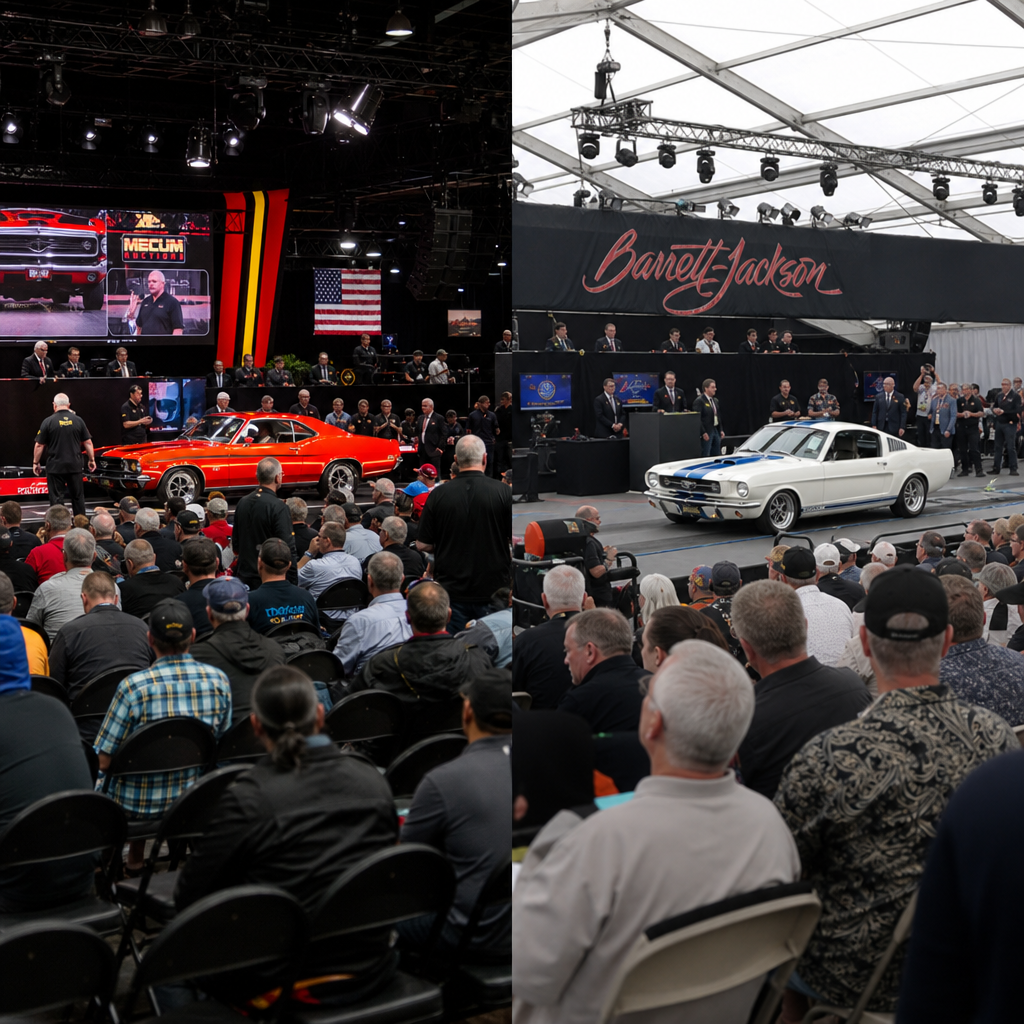
Mecum and Barrett-Jackson dominate the televised collector-car auction market, but they serve different buyers, different sellers, and often different definitions of value. If you are deciding where to buy classic cars, understanding how these two auction companies operate is more useful than memorizing headline sale prices. In practice, the better auction depends on your budget, your tolerance for risk, the kind of vehicle you want, and whether you prioritize selection, presentation, or buyer protections. I have spent years tracking auction listings, reading condition reports, comparing hammer prices with private-party comps, and talking with bidders who learned expensive lessons under the lights. The result is simple: Mecum usually offers broader inventory and more price diversity, while Barrett-Jackson typically offers a more curated, spectacle-driven environment with a stronger emphasis on no-reserve selling. Both can be excellent places to buy a classic car, but they are not interchangeable.
For buyers entering the collector-car market, this distinction matters because auctions shape both price discovery and buyer behavior. A classic car auction is not just a marketplace; it is a compressed decision environment where inspection time is limited, emotions run high, fees add up quickly, and provenance can influence bids as much as mechanical condition. “Where to buy classic cars” therefore means more than choosing a website or venue. It means choosing a market structure. Mecum and Barrett-Jackson sit at the center of that structure, and comparing them gives buyers a practical framework for evaluating inventory, reserve policies, transport logistics, financing, and post-sale confidence. This article serves as the hub for that decision, helping you assess which auction fits your goals and how to approach each one with a disciplined strategy.
How Mecum and Barrett-Jackson Differ at a Market Level
The biggest difference between Mecum and Barrett-Jackson is scale versus curation. Mecum is known for massive auction runs, especially at events such as Kissimmee and Indianapolis, where thousands of vehicles can cross the block over several days. That scale creates variety. At a single Mecum sale, you might see muscle cars, pickup trucks, European sports cars, resto-mods, entry-level classics, and six-figure blue-chip collectibles. For buyers asking where to buy classic cars with the broadest possible selection, Mecum often feels like a live inventory database. The advantage is obvious: more chances to find your niche car. The downside is that buyers must filter more aggressively, because quality and documentation can vary significantly from lot to lot.
Barrett-Jackson, by contrast, is generally more curated and entertainment-oriented. Its flagship Scottsdale event has the energy of a major automotive festival, with polished staging, strong media coverage, manufacturer participation, and a bidder base that includes both seasoned collectors and affluent lifestyle buyers. Barrett-Jackson is especially associated with no-reserve selling, a format that removes reserve uncertainty but does not automatically make cars cheap. In a high-attendance room with strong televised visibility, desirable cars can bring aggressive money. Still, no-reserve auctions produce a cleaner transaction structure because every registered bidder knows the car will sell when the hammer falls. That transparency can make Barrett-Jackson appealing to buyers who dislike reserve games or post-block ambiguity.
Audience composition also matters. Mecum often attracts a broader cross-section of bidders, from serious collectors to hobbyists looking for approachable cars. Barrett-Jackson tends to attract a stronger concentration of event-driven buyers, corporate hospitality guests, and bidders who value premium presentation. Neither audience is better in absolute terms, but each affects pricing psychology. At Mecum, hidden-value cars can slip through in a long docket. At Barrett-Jackson, presentation and stage momentum can lift prices beyond strict comp-based logic. Buyers who remain disciplined can do well at either auction, but the path to value is not the same.
Inventory, Vehicle Types, and Selection Quality
If your main question is where to buy classic cars with the widest range of body styles, eras, and budgets, Mecum usually wins on raw inventory depth. Its large sales frequently include prewar cars, American muscle, square-body trucks, Fox-body Mustangs, Corvettes from nearly every generation, customs, exotics, and unfinished or partially restored projects. That breadth is useful for buyers who want to compare many examples of the same model in one place. I have seen buyers walk into Mecum focused on a 1970 Chevelle SS and leave having bought a C10 pickup because the condition-to-price ratio was stronger across the truck rows. That kind of flexibility is easier when supply is abundant.
Barrett-Jackson inventory often skews toward highly presentable vehicles that fit a premium live-auction environment: restored muscle cars, desirable modern collectibles, celebrity-linked consignments, charity cars, and tastefully built customs. There are exceptions, but the average visual standard tends to be higher. For first-time bidders, that can reduce search friction. You may spend less time sorting through rough or inconsistently documented examples. However, presentation quality can mask underlying issues if buyers rely too heavily on appearance. Fresh paint, detailed engine bays, and polished undercarriages do not replace compression numbers, cold-start behavior, panel consistency, or evidence of correct driveline components.
The smartest approach is to match the auction to your target car category. If you are hunting a mainstream American collector car and want many comps on-site, Mecum is often the better hunting ground. If you want a high-visibility, turnkey car in a polished event setting, Barrett-Jackson may feel more efficient. Buyers shopping at either venue should remember that availability is cyclical. Tax season timing, interest-rate pressure, estate liquidations, and generational shifts all influence what appears on the block. A buyer searching for air-cooled Porsches, first-generation Broncos, or 1980s Japanese performance cars may need to track multiple sales across the year rather than relying on a single flagship event.
Fees, Reserves, and the Real Cost of Buying
The hammer price is not the purchase price. That is one of the first realities serious buyers learn, and it is critical when comparing Mecum vs Barrett-Jackson. Buyer’s premiums, bidder registration fees, taxes where applicable, transportation, insurance, and immediate service work can add materially to total acquisition cost. A car that hammers at $50,000 can become a $56,000 to $60,000 decision quickly depending on the auction terms and your shipping distance. Buyers should read the event-specific fee schedule before bidding and build a hard ceiling based on total landed cost, not emotion in the arena.
Reserve policy is another major differentiator. Mecum commonly offers both reserve and no-reserve lots. That creates opportunity but also complexity. A reserve can protect sellers from weak bidding, yet it can also make transactions less efficient if a car stalls below the seller’s minimum. Barrett-Jackson is widely identified with no-reserve sales, which can improve confidence that every serious bid has a path to ownership. For buyers, no-reserve does not mean low price; it means certainty of sale. If two determined bidders want the same car, the absence of a reserve is irrelevant because competition, not the reserve, sets the number.
| Factor | Mecum | Barrett-Jackson | Why It Matters |
|---|---|---|---|
| Inventory volume | Usually larger | Usually more selective | More volume improves choice; more curation reduces search time |
| Reserve structure | Mix of reserve and no-reserve | Known primarily for no-reserve | Determines bidding certainty and negotiation dynamics |
| Buyer experience | Broad, fast-moving, deal-hunting friendly | Premium, polished, event-driven | Influences bidder psychology and comfort level |
| Best fit | Buyers wanting variety and price range | Buyers wanting a high-visibility curated sale | Helps align venue with your purchase strategy |
My rule is straightforward: decide your all-in limit before the car crosses the block, then reduce that number by a safety margin for immediate repairs. Even well-presented classics often need tires, hoses, battery work, fluids, brake service, or carburetor tuning after transport. If the car is rare or highly restored, parts lead times and specialist labor can be significant. The best buyer at either auction is not the boldest bidder; it is the bidder who still has budget left after the truck arrives.
Inspection, Documentation, and Buyer Risk
Every buyer should assume that auction cars are sold in a time-compressed environment where your due diligence must be proactive. Whether you attend Mecum or Barrett-Jackson, do not confuse staging quality with verification. You need to inspect VINs, trim tags where applicable, engine stampings, transmission codes, title status, restoration receipts, ownership history, and any judging sheets or marque-expert documentation. For Mopars, Chevrolet muscle, Shelby products, and high-value Corvettes, authenticity details can move market value by tens or hundreds of thousands of dollars. A date-code mismatch or non-original block may be acceptable if disclosed and priced correctly, but it is not a small detail.
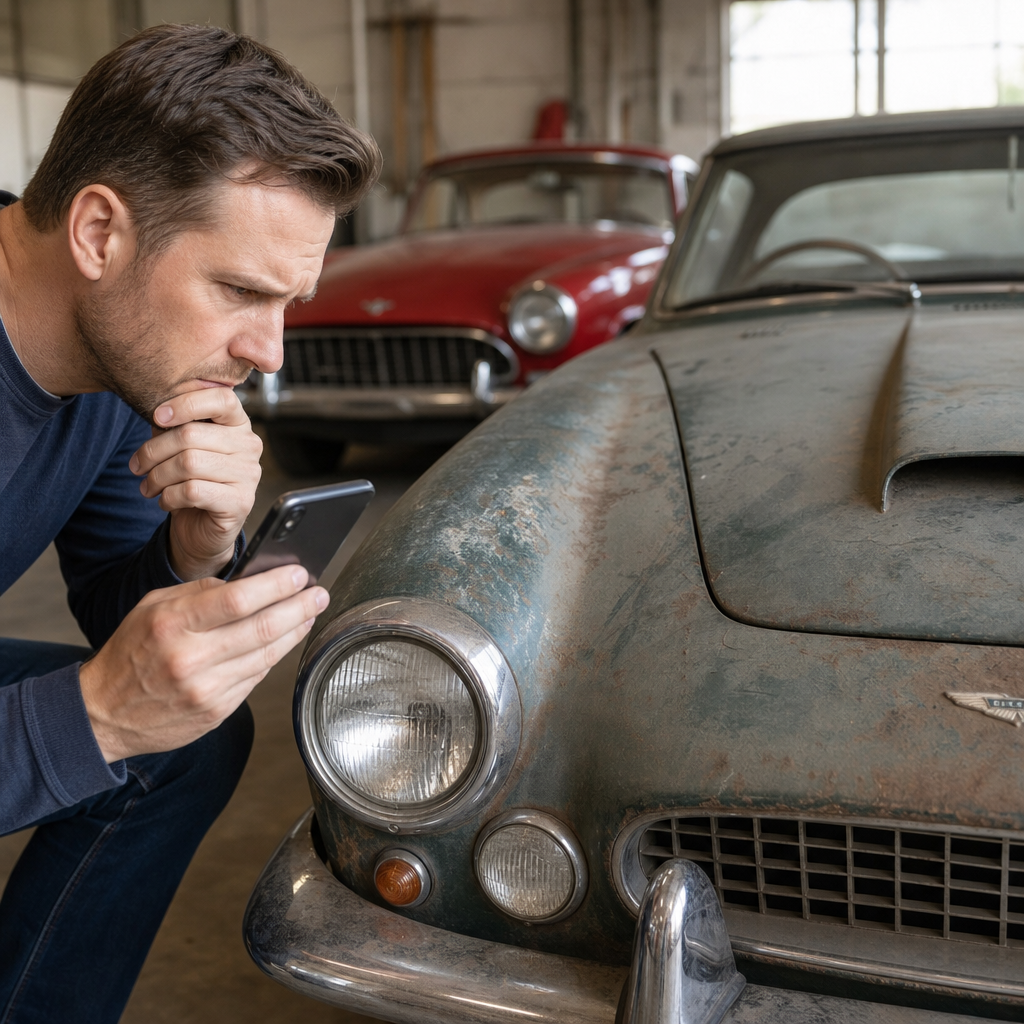
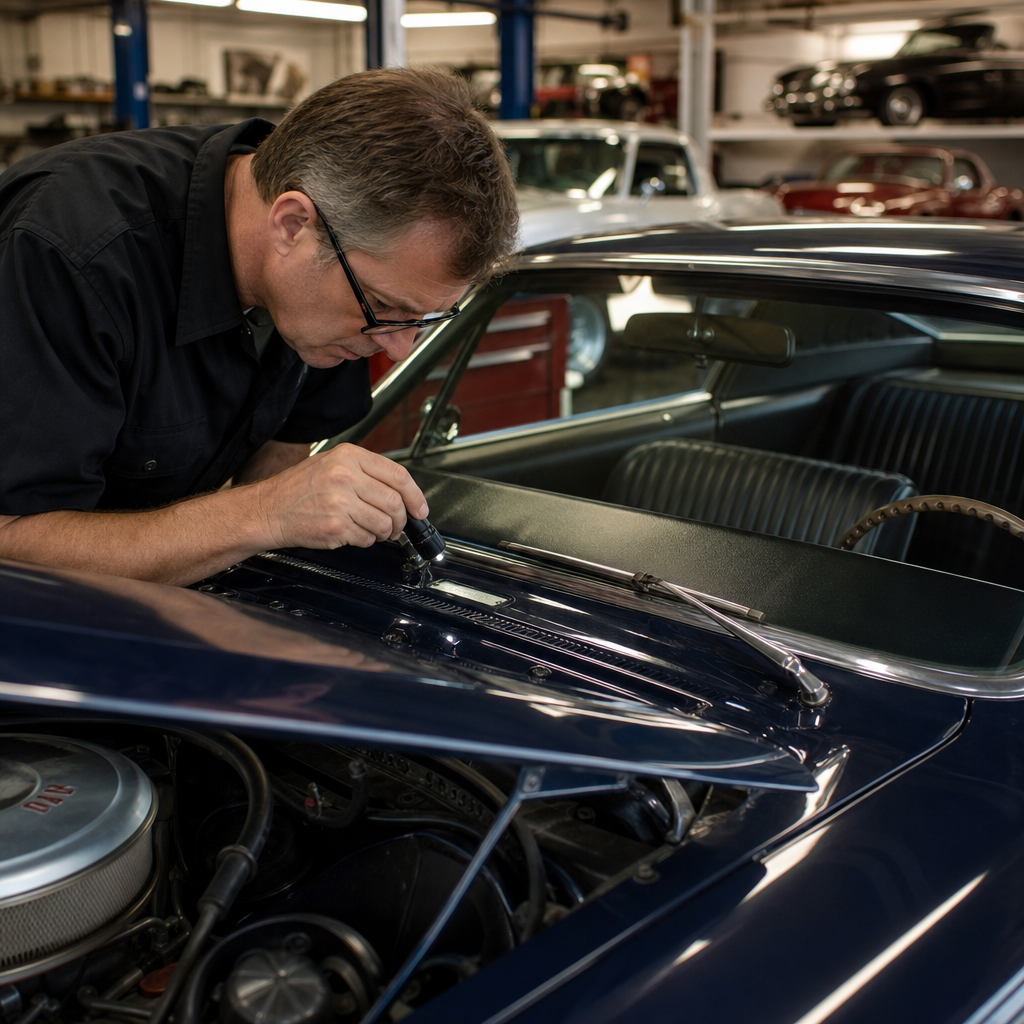
In my experience, Mecum rewards buyers who are willing to do legwork across a larger field of cars. Because inventory is broad, hidden quality exists, but so do inconsistencies in documentation depth. Barrett-Jackson often presents vehicles in a way that makes first impressions easier to process, yet the same rule applies: inspect the car, not the stage. Bring a flashlight, paint meter if allowed, magnet where appropriate, and a checklist tailored to your target model. On older restorations, look for bubbling near lower quarters, trunk drops, cowl edges, and windshield channels. On modern classics, scan for electronic faults, non-OEM wiring, and deferred cooling-system maintenance.
If you cannot inspect the car personally, hire a marque specialist or knowledgeable third-party inspector. That cost is minor compared with correcting rust, driveline swaps, or fraudulent provenance after purchase. Buyers asking where to buy classic cars safely should understand that “safe” rarely means risk-free. It means choosing markets where information can be gathered, compared, and verified before bidding. Auctions are best for informed buyers who can act decisively once the evidence supports the price.
Who Should Buy at Mecum and Who Should Buy at Barrett-Jackson
Mecum is usually better for buyers who want options, who understand valuation ranges, and who are comfortable sorting through different quality levels to find a strong buy. It is especially good for shoppers pursuing American classics with active comp histories, because repeated model appearances help establish market context quickly. If you are willing to walk a lot, compare cars carefully, and pass on weak examples, Mecum can be one of the best places to buy classic cars at many budget levels.
Barrett-Jackson is often better for buyers who want a premium event experience, prefer a straightforward no-reserve environment, and are targeting highly presentable vehicles with broad appeal. It suits buyers who value confidence in sale completion and enjoy bidding in a highly organized, visible setting. That said, discipline matters more there than many first-time attendees expect. The atmosphere is exciting, and excitement can become overpayment if you treat the event like entertainment instead of acquisition.
Neither auction replaces private-party purchases, marque-specific dealers, online platforms, or enthusiast forums. In fact, the smartest collector-car buyers use all of them. Auction houses are only one channel in the broader “where to buy classic cars” landscape. Use this page as your hub: compare auction sales with dealer asking prices, study model-specific guides, review title and VIN resources, and learn transport and inspection basics before you bid. When you know how Mecum and Barrett-Jackson really differ, you stop shopping by brand name and start buying by fit. Track upcoming sales, define your target car clearly, and enter the auction with a plan strong enough to survive the adrenaline.
Frequently Asked Questions
1. What is the main difference between Mecum and Barrett-Jackson?
The biggest difference is that Mecum and Barrett-Jackson tend to appeal to different kinds of bidders, consignors, and collecting strategies. Mecum is often known for offering a very large volume of vehicles across a broad range of price points, eras, and conditions. That makes it attractive to buyers who want selection and are willing to sort through a wide inventory to find the right car. You will often see everything from entry-level classics and muscle cars to trucks, motorcycles, and high-dollar collector vehicles in the same sale. For many enthusiasts, Mecum feels more like a massive marketplace where variety is one of the main advantages.
Barrett-Jackson, by contrast, is typically associated with a more curated, presentation-driven auction experience. The company has built a strong brand around staging, televised excitement, and high-visibility consignments. While there is still variety, many buyers view Barrett-Jackson as a place where the overall event experience, the quality of presentation, and the consistency of the offering matter just as much as raw inventory size. That can attract bidders who value a polished environment and sellers who want maximum exposure for especially desirable or attention-grabbing vehicles.
In practical terms, neither auction is universally “better.” Mecum often appeals to buyers who prioritize inventory depth and broad market access, while Barrett-Jackson often appeals to buyers and sellers who value spectacle, branding, and a more tightly packaged event. If your goal is to compare them intelligently, focus less on which auction produces the flashiest headlines and more on which format better matches the kind of vehicle you want, the budget you have, and the buying experience you prefer.
2. Which auction is better for buyers looking for the best value?
If by “best value” you mean the widest opportunity to compare many cars across many price levels, Mecum often has an edge simply because of volume and range. A larger, more diverse docket can create more chances to find a car that fits your budget, your taste, and your willingness to take on cosmetic or mechanical sorting after purchase. Buyers who do their homework, inspect carefully, and stay disciplined on bidding can sometimes find strong opportunities in a bigger field because there are more alternatives and less pressure to chase a single highly publicized lot.
That said, value is not the same thing as low price. Barrett-Jackson can still offer excellent value for buyers who place a premium on presentation, confidence, and event quality. Some buyers are willing to pay more in a setting where vehicles are heavily marketed, the auction atmosphere is energetic, and the experience feels more controlled and transparent from a branding standpoint. For these bidders, value comes from trust in the platform, ease of participation, and access to cars that may have stronger visual appeal or broader market desirability.
The smartest way to think about value is to separate the hammer price from the total ownership equation. Buyer’s premiums, transport, taxes, title considerations, originality, restoration quality, and post-sale repairs all matter. A cheaper car bought impulsively can become far more expensive than a well-presented car bought at a premium. So if you are value-focused, Mecum may offer more hunting ground, but Barrett-Jackson may offer a buying environment some bidders feel more comfortable navigating. The better value depends on how well you can inspect, evaluate, and bid within your limits.
3. Is Mecum or Barrett-Jackson better for sellers?
For sellers, the answer depends heavily on what you are selling and what kind of audience you want to reach. Mecum can be a strong choice for consignors who want access to a huge pool of bidders across a wide range of categories. If your vehicle fits into a popular enthusiast segment such as American muscle, vintage trucks, entry-level classics, or driver-quality collector cars, Mecum’s broad inventory and active bidder base may put your car in front of exactly the kind of buyer who is ready to act. The scale of the event can be especially helpful if your main priority is exposure to lots of motivated hobbyists rather than a boutique-style presentation.
Barrett-Jackson may be especially attractive for sellers who believe their car benefits from stronger staging, national visibility, and a premium event atmosphere. If your vehicle photographs well, has a compelling story, carries broad appeal, or is the kind of car that gains momentum from crowd energy and television attention, Barrett-Jackson can be a powerful platform. Sellers often choose it when they want more than just a transaction and instead want a branded showcase that may elevate interest in the car.
Reserve strategy, fees, timing, and vehicle type all matter here. A seller with a highly desirable, turn-key collector car might thrive in Barrett-Jackson’s spotlight, while a seller with a solid enthusiast car in a crowded but active category might do just as well or better at Mecum. The best auction for sellers is usually the one whose audience already wants what you are bringing. Before consigning, compare recent results for similar vehicles, ask about fees and marketing support, and consider whether your car stands out more in a broad field or a more curated presentation-heavy environment.
4. Which auction is better for first-time bidders?
First-time bidders should choose the auction that best matches their comfort level, not just the one with the most famous broadcast moments. Mecum can be very appealing to newcomers because the range of vehicles and price points gives beginners more room to watch the market, compare cars, and avoid overcommitting to a single lot. If you are still learning how condition, documentation, originality, and restoration quality affect price, a larger and more diverse auction can be educational. It also helps first-time buyers understand that collector-car pricing is rarely as simple as a guidebook number.
Barrett-Jackson may be more comfortable for new bidders who appreciate a highly organized, highly visible event structure. Some first-time participants prefer an environment where the pace, presentation, and bidder experience feel polished and spectator-friendly. That can reduce some of the intimidation factor, especially if you are entering the collector-car world through televised auctions and want a more event-oriented introduction. For certain buyers, confidence in the process is worth paying for.
Regardless of which auction you choose, first-time bidders should prepare the same way. Register early, understand all fees, review lot descriptions carefully, inspect the vehicle in person if possible, and set a firm all-in budget before bidding starts. Never assume televised excitement equals verified condition. Bring an expert if you can, or at minimum research common problem areas for the make and model you want. For beginners, the better auction is usually the one where you can remain calm, informed, and financially disciplined. That matters more than brand loyalty.
5. Should I choose Mecum or Barrett-Jackson based on the type of car I want to buy?
Yes, absolutely. The type of vehicle you want should be one of the biggest factors in your decision. Mecum is often especially attractive for buyers looking for broad selection in segments like American muscle, classic trucks, Corvettes, Mopars, driver-quality classics, and enthusiast vehicles across many levels of finish and originality. If your plan is to compare multiple examples of a similar model and buy the one that offers the best mix of price, condition, and potential, Mecum’s depth can be a major advantage. More selection often means better odds of finding a car that fits your exact goals, whether that is collecting, weekend driving, or light restoration.
Barrett-Jackson can be a strong fit if you are drawn to highly presentable vehicles, restored cars with visual impact, or collector cars that benefit from premium staging and broad audience appeal. Some cars sell best when the event itself amplifies excitement, and Barrett-Jackson has built much of its reputation around that kind of energy. If you are the kind of buyer who values presentation, provenance storytelling, and the overall prestige of the buying environment, you may find Barrett-Jackson aligns more naturally with your expectations.
That said, there is overlap, and both auctions sell important, desirable, and sometimes exceptional collector vehicles. The key is to understand your own priorities before the bidding starts. Are you chasing rarity, originality, show-quality restoration, investment potential, or simply a fun classic to enjoy? Do you want the biggest possible selection, or do you prefer a more curated experience? Once you answer those questions, the choice becomes clearer. In most cases, the right auction is the one whose inventory mix and buyer culture best match the type of car you actually want to own.