Selling a collector vehicle quickly starts with one decision that shapes every inquiry, showing, and negotiation: price. In the classic car market, pricing is not just a number pulled from an online listing. It is a position based on condition, originality, documentation, rarity, buyer demand, and timing. A seller who understands how to price your classic car for a quick sale can shorten days on market, avoid lowball offers, and still protect real value. I have worked through enough private-party sales, estate consignments, and enthusiast-to-enthusiast deals to know that most slow sales trace back to one issue: the car was priced for hope instead of the market.
A classic car usually refers to an older vehicle with collector appeal, but the market is broader than many first-time sellers expect. It includes prewar models, postwar cruisers, muscle cars, sports cars, analog luxury sedans, Japanese performance icons, trucks, and young classics from the 1980s through early 2000s. Quick sale pricing means setting an asking price that reflects current demand and the car’s true market position closely enough to attract qualified buyers within weeks, not months. That does not mean giving the car away. It means understanding fair market value, then choosing a strategy that leaves just enough negotiating room without pushing serious buyers away.
This matters because the classic car market is less liquid than the market for late-model daily drivers. Comparable sales are fewer, vehicle condition varies dramatically, and originality can move value more than mileage. Two cars with the same year, make, and model can differ by tens of thousands of dollars if one has matching numbers, factory colors, documented ownership history, and correct trim while the other has a replacement engine, rust repair, and missing records. Buyers know this, and experienced buyers compare listings aggressively. If your price does not match the evidence, they move on.
As the hub for selling a classic car, this guide covers the process from valuation to negotiation. The core idea is simple: use market data, grade the car honestly, factor in sale method and urgency, and present the car in a way that supports the number. Done correctly, pricing becomes a sales tool rather than a barrier.
Start With Market Value, Not Sentimental Value
The fastest way to misprice a classic car is to anchor on restoration cost, family history, or what a neighbor claims a similar car brought at auction. Buyers pay for the car in front of them and the current market, not the seller’s emotional investment. A proper valuation starts with recent comparable sales. In practice, that means checking sold results on Bring a Trailer, Mecum, Barrett-Jackson, Cars & Bids for newer enthusiast vehicles, Hemmings, and marque-specific forums. Asking prices on classified sites matter, but sold prices matter more because they show where buyers actually committed.
Look for comparable vehicles within the last six to twelve months. Match year, body style, engine, transmission, trim level, originality, restoration quality, mileage, and options. If you are pricing a 1967 Chevrolet Camaro RS/SS, a base coupe with a small-block and driver-quality paint is not comparable to a numbers-matching big-block car restored to concours standards. If you are selling a 1994 Toyota Supra Turbo, left-hand-drive U.S. cars, modifications, title status, and documented maintenance will change value materially. The tighter the comparable set, the more defensible your number becomes.
Published price guides can help establish a range, but they should never be the only source. Hagerty Price Guide and Old Cars Report Price Guide provide useful condition-based benchmarks, especially for common collector models. NADA classic valuations may also be referenced by lenders and insurers. Still, live market results often move faster than guide updates, particularly in segments driven by online enthusiasm. During the pandemic-era run-up, many guides lagged behind actual transaction prices. In cooling markets, they can lag on the way down as well.
When I price for a quick sale, I usually build a low, middle, and high value band. The low end reflects wholesale-like reality for an easy transaction, the middle reflects fair market value for a properly advertised car, and the high end reflects an exceptional example with no excuses. Most quick sale targets should land slightly below the middle of the current private-party range, assuming the presentation supports it.
Grade the Car Honestly and Document What Buyers Will Inspect
Condition is the biggest pricing variable, and sellers routinely overestimate it. The collector market generally thinks in tiers: project, driver, good restored, excellent restored, and concours-level. A project needs significant mechanical or cosmetic work. A driver runs, presents well enough for local events, and may have older paint, minor leaks, or imperfect trim. An excellent car is sorted, attractive, and ready for tours or shows. A concours car is judged against factory-correct standards and usually sells in a different universe.
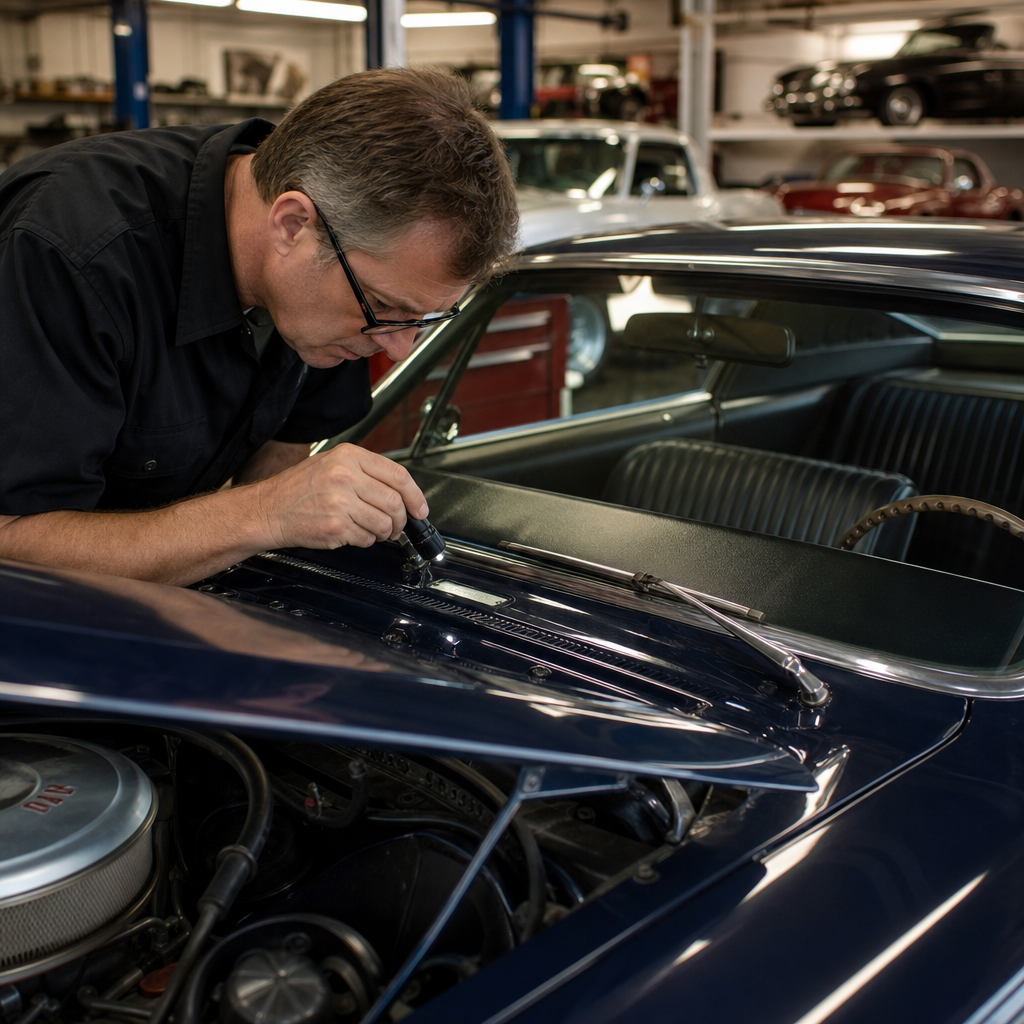
To price accurately, inspect the car like a buyer would. Check paint depth and panel fit. Look for rust in known problem areas such as floors, frame rails, quarter panels, cowl sections, and trunk pans. Verify driveline numbers where relevant. Test electrical items, gauges, lights, HVAC, windows, and radio. Review tire age, suspension wear, brake function, fluid leaks, and cold-start behavior. On fuel-injected newer classics, buyers expect scan data, service records, and evidence that deferred maintenance has been addressed.
Documentation adds measurable value. A binder with restoration receipts, ownership history, original manuals, warranty cards, build sheets, window stickers, judging sheets, and photo evidence of work can move a hesitant buyer into action. For high-value cars, a Marti Report, Porsche Certificate of Authenticity, BMW Classic documentation, NCRS records, or Ferrari Classiche paperwork can directly affect pricing confidence. A pre-sale inspection from a reputable specialist can also justify your ask, especially if the report confirms compression, chassis integrity, and correctness.
| Factor | Raises Price | Lowers Price |
|---|---|---|
| Originality | Matching numbers, factory colors, correct trim | Engine swaps, non-original interior, missing components |
| Body and paint | Rust-free structure, quality repaint, straight panels | Visible filler, bubbling rust, poor gaps, overspray |
| Mechanical condition | Recent major service, strong compression, sorted drivability | Leaks, overheating, hard starts, brake or transmission issues |
| Documentation | Receipts, ownership history, build records, inspection reports | No records, vague restoration claims, missing title details |
| Market appeal | Desirable colors, options, manual transmission, low production | Unpopular specs, heavy modifications, weak enthusiast demand |
Price for the Sale Channel You Will Actually Use
A quick sale price depends on where the car will be sold. Private-party classifieds, enthusiast forums, online auctions, live auctions, dealer buyouts, and consignment each attract different buyers and fee structures. Sellers often fail by using a dealer-retail number in a private-party listing or expecting auction excitement in a static classified ad.
Private-party sales usually net the most when the car is desirable and well documented, but they require time, communication, and careful screening. On sites like Hemmings, Facebook Marketplace, Craigslist, marque clubs, and specialty forums, buyers expect some negotiation. Pricing about 5 to 10 percent above your true bottom line can work, but more than that often reduces inquiry volume sharply. Serious buyers set alerts and compare every listing. They know when a car is aspirationally priced.
Online auctions can produce fast exposure and strong results for standout cars with excellent photos, videos, and transparent disclosures. Bring a Trailer rewards documentation, active seller engagement, and cars with national enthusiast appeal. Cars & Bids performs especially well with modern classics and enthusiast vehicles from the 1980s forward. The tradeoff is uncertainty. If reserve expectations exceed market reality, the car may not sell, and a stale auction result can make later pricing harder.
Consignment dealers and instant-buy outlets offer speed and convenience, but they take margin. That margin can be worthwhile if storage, logistics, or estate liquidation is the priority. In my experience, if you need the car sold in days rather than weeks, a realistic wholesale-leaning number may outperform months of retail chasing. Quick sale pricing must account for transaction friction, not just theoretical value.
Use Timing, Demand, and Buyer Psychology to Set the Ask
Classic car pricing is seasonal and emotional, but it is not random. Convertibles and sports cars gain attention in spring. Four-wheel-drive classics, trucks, and certain luxury tourers often improve heading into fall auction season. Major events such as Monterey Car Week, Scottsdale, Amelia, and model-specific anniversaries can temporarily increase search activity. Tax refund season can help lower-priced enthusiast cars. Interest rates and broader consumer confidence also matter because collector purchases are discretionary for most buyers.
Buyer psychology matters just as much. A well-priced car generates urgency because buyers fear missing a fair opportunity. An overpriced car creates suspicion. People assume there is a hidden issue, an unrealistic seller, or both. The first two weeks of a listing are critical because that is when fresh inventory gets the most attention from saved searches and repeat shoppers. If the car is accurately priced and presented, you should see meaningful engagement early. If not, the market is telling you something.
For a quick sale, round numbers often underperform precise numbers that suggest research. An asking price of $29,500 can feel more grounded than $30,000. Similarly, a small premium over the most recent comparable sale may be justified by records, color, or service history, but only if you explain that difference clearly in the listing. Price without explanation gets challenged; price supported by evidence gets respected.
Watch your response metrics. Low views may signal poor platform choice or weak photos. High views with no messages usually indicate price or credibility problems. Plenty of messages but no inspections often means the ad attracts dreamers rather than buyers. Strong inquiries followed by silence after additional photos are usually a condition issue. Pricing should be adjusted based on those signals quickly, not after ninety stagnant days.
Build a Listing That Defends the Price and Speeds the Transaction
Price and presentation work together. A competitive asking price can still fail if the listing leaves unanswered questions. Include a complete description: ownership duration, mileage status, VIN, engine and transmission details, modifications, title status, restoration date, recent services, known flaws, and what is included in the sale. Mention whether the car starts easily, tracks straight, runs cool in traffic, and whether all gauges and accessories work. Buyers pay faster when uncertainty is low.
Photos should cover every angle in consistent light: exterior, interior, engine bay, trunk, undercarriage, VIN tags, stampings, wheels, glass, and known blemishes. Add cold-start and walk-around videos. If the car has rust repairs or paintwork, disclose them. Hiding issues wastes time and collapses trust during inspection. I have repeatedly seen transparently described cars sell faster than shinier but vague listings because experienced buyers value honesty over polished language.
Have the paperwork ready before you list. Clear title, lien release, service records, spare parts inventory, emissions documents where required, and agreed payment terms reduce closing delays. Offer a reasonable inspection process and be prepared for bank wire verification or escrow through a reputable service. If the car is out of state, know how shipping will work. A quick sale often depends on administrative readiness as much as price.
Finally, decide your negotiation floor in advance. If your research says the car should trade at $42,000 and you need it sold quickly, listing at $43,900 may create room to close at $41,500 to $42,500. Listing at $49,900 usually invites months of friction, repeated price drops, and a worse final outcome.
The best way to price your classic car for a quick sale is to treat pricing as a disciplined market exercise, not a guess. Start with recent sold comparables, then adjust for condition, originality, records, and demand. Choose a sale channel that matches your timeline. Price slightly under the center of the current private-party range if speed matters, and support that number with strong photos, complete disclosures, and organized paperwork. That combination attracts serious buyers and reduces wasted conversations.
For anyone selling a classic car, this hub principle applies across every subtopic, from preparing the vehicle to writing the listing, screening buyers, negotiating, handling inspections, and closing safely. Accurate pricing is the foundation because every later step depends on it. A car that is priced correctly gets more attention, stronger offers, and cleaner negotiations. A car priced on emotion usually sits, and stale listings almost always lose leverage.
If you are ready to sell, gather your records, review recent comparable sales, inspect the car honestly, and set a number you can defend with facts. Then list it where your ideal buyer already shops. Price with discipline, present with transparency, and you will give your classic car the best chance to sell quickly and at a fair market value.
Frequently Asked Questions
How do I determine a fair asking price for my classic car if I want it to sell quickly?
Start by separating what you hope the car is worth from what the current market is actually paying. A quick-sale price should be based on recent comparable sales, not just active listings. Asking prices can be inflated, outdated, or simply unrealistic, so they are only one reference point. Look for vehicles with the same year, make, model, body style, drivetrain, restoration level, originality, and documentation. A numbers-matching car with strong provenance will command a very different price than a driver-quality example with replacement components, cosmetic flaws, or incomplete history.
Condition matters more than many sellers realize. In the classic car market, small differences in rust repair quality, paint age, trim completeness, interior originality, and mechanical readiness can move value significantly. Be honest about whether your car is concours-level, a strong weekend driver, a partially restored project, or something in between. If your goal is speed, price the car based on its real condition today, not on what it could be worth after future repairs or detailing.
To encourage faster buyer action, many sellers price slightly below the top of the comparable range rather than at the top of it. That does not mean giving the car away. It means positioning it as attractive and believable. Buyers move quickly when they see a classic that is well-presented, correctly priced, and supported by clear photos, records, and ownership details. If your price feels grounded in market evidence and your description answers obvious buyer questions up front, you are far more likely to generate serious interest early.
What factors have the biggest impact on classic car value when pricing for a fast sale?
The biggest value drivers are condition, originality, documentation, rarity, and real-world buyer demand. Condition is often the first filter because buyers shopping for a quick, confident purchase want to understand what they are getting without guessing. Structural rust, poor bodywork, non-working gauges, weak compression, old tires, fluid leaks, and unfinished restoration work can all reduce buyer confidence and force the price down. On the other hand, a car that starts easily, drives properly, presents cleanly, and needs little immediate work will usually attract stronger offers faster.
Originality is another major factor. Many buyers place a premium on original drivetrains, factory colors, correct trim, original panels, and period-correct equipment. Modifications are not always negative, but they narrow the buyer pool unless they are especially desirable and professionally done. If the car is numbers-matching, factory-optioned, or retains rare original features, that should be reflected in the price and clearly documented in the listing.
Documentation can make the difference between cautious interest and immediate action. Service records, restoration invoices, ownership history, factory paperwork, judging sheets, photos of restoration work, and authenticity certifications all support value. Rarity also matters, but rarity alone does not guarantee a high price. A rare model with limited buyer demand may sell slower than a more common model with a large, active enthusiast base. That is why the final pricing decision should balance scarcity with liquidity. The quickest sale usually comes from understanding not just what your car is, but how many qualified buyers are actively looking for it right now.
Should I leave room for negotiation, or price the car at my bottom line from the start?
In most cases, it is smart to leave a reasonable amount of room for negotiation, but not so much that the asking price scares away serious buyers. Classic car buyers generally expect some discussion, and a listing with no flexibility built in can make the seller seem unrealistic. At the same time, pricing too high in anticipation of heavy negotiation often backfires. The strongest buyers tend to ignore overpriced listings rather than submit offers, especially if they have several similar cars to choose from.
A practical approach is to decide on three numbers before the car goes live: your ideal sale price, your realistic market price, and your absolute minimum acceptable number. Then list the car close to the realistic market price, with enough margin for a normal negotiation. This keeps the car competitive while still giving buyers the feeling that they are earning a concession. That emotional element matters. Buyers are more likely to commit when they believe they have made a smart deal, even if the final price lands close to where the car should have been all along.
If speed is the priority, avoid the temptation to “test the market” at an inflated number. The first wave of interest is usually the most valuable because fresh listings attract the most attention. If the price is wrong during that window, you may lose your best chance to sell quickly. A well-priced car can create urgency, multiple inquiries, and cleaner negotiations. An overpriced one often leads to stale inventory, repeated price drops, and lower eventual offers.
How do I price my classic car if it has flaws, incomplete restoration work, or missing documentation?
The key is to price transparently and realistically. Buyers do not expect every classic car to be perfect, but they do expect the asking price to reflect the car’s shortcomings. If the car has paint issues, rust bubbles, a non-original engine, an unfinished interior, weak brakes, electrical problems, or long-term storage concerns, those details need to be accounted for. Serious buyers will discover them anyway, and if the list price does not reflect reality, they will either walk away or submit aggressive low offers.
When dealing with flaws or incomplete work, estimate what those issues are likely to cost the next owner in money, time, and effort. Buyers rarely subtract repair costs on a one-for-one basis. They often discount even more because of uncertainty, inconvenience, and risk. For example, missing records may not seem important to a seller who knows the car well, but to a buyer, missing documentation can create doubt about mileage, authenticity, restoration quality, or maintenance history. That uncertainty affects price and speed of sale.
The best strategy is to be upfront in both the listing and the pricing. If the car is a strong project, say so. If it is a driver with cosmetic needs but solid mechanicals, frame it that way. Transparent pricing attracts the right audience and reduces wasted conversations. Incomplete cars can still sell quickly when buyers feel the seller is honest, informed, and not pretending the car is something it is not. A realistic number combined with accurate disclosure often moves a flawed car faster than an ambitious price paired with vague language.
When should I reduce the price if my classic car is not getting serious interest?
If you are getting views but not inquiries, or inquiries but no serious follow-through, the market is usually telling you the price is too high, the presentation is too weak, or both. For a quick sale, do not wait too long to respond. In many cases, the first one to two weeks are the most revealing. If the car is well-photographed, clearly described, and listed in the right places, but buyers are not engaging, pricing is the first thing to re-evaluate.
Before reducing the price, make sure the listing itself is doing its job. Add better photos, include underside shots, show VIN and trim tags where appropriate, summarize records, and answer common buyer concerns about rust, drivability, originality, and title status. If the presentation is solid and the silence continues, a price adjustment is usually the right move. Small reductions can help, but they need to be meaningful enough to reset buyer attention. A minor cut may not change perception if the car still appears overpriced compared with competing listings.
As a rule, sellers who want momentum should make deliberate adjustments rather than repeated tiny drops. A clear, market-correcting reduction can bring the car back into buyer searches, trigger saved alerts, and create renewed urgency. The goal is not to chase the market downward indefinitely. The goal is to get ahead of buyer resistance before the listing becomes stale. In the classic car world, stale listings invite skepticism. Buyers begin to assume something is wrong, and that can hurt both speed and final price. Pricing correctly early is ideal, but if the market response is weak, a prompt, strategic adjustment is often the fastest path to a clean sale.