Buying a classic car online safely requires more than enthusiasm and a quick deposit; it demands research, verification, disciplined communication, and a clear process that protects you from misrepresentation, title issues, and expensive surprises. A classic car is generally defined as an older vehicle valued for historical interest, design, rarity, or collector demand, though the exact age threshold varies by insurer, registry, and state motor vehicle rules. In practice, buyers usually mean vehicles from the 1980s and earlier, plus certain modern collectibles with strong enthusiast followings. I have worked through online purchases involving auction sites, dealer inventory pages, enthusiast forums, and private-party listings, and the safest transactions always followed the same pattern: verify the seller, verify the car, verify the paperwork, then verify the money trail.
That method matters because online classic car buying removes many of the cues available during an in-person deal. A polished listing can hide rust, filler, weak compression, or a salvage history. A seller may unintentionally overstate originality because they inherited the car or rely on old paperwork. In worse cases, photos are borrowed, VIN tags are altered, and deposits disappear. Unlike buying a late-model commuter car, a vintage vehicle can carry hidden costs tied to obsolete parts, nonstandard repairs, undocumented modifications, and transportation complexities. The upside is that the internet gives buyers access to a much broader market, better price discovery, and niche models impossible to find locally. The goal is not to avoid online buying; it is to approach it with the same rigor used by experienced collectors, appraisers, and restoration shops.
This guide serves as a hub for anyone asking how to buy a classic car, especially when shopping remotely. It covers where to search, how to evaluate listings, how to check a vehicle history report, how to decode condition claims, how to use a pre-purchase inspection, how to handle escrow and shipping, and how to close the deal legally. If you are researching first-time purchases, project cars, or investment-grade examples, the core principle stays the same: buy the best-documented car you can afford, not the most exciting description you can find. A safe purchase begins before you contact the seller and ends only when the title, keys, bill of sale, and transporter delivery all match what was promised.
Start with a buying plan, budget, and realistic ownership goal
The safest online purchase starts with a written buying plan. Decide whether you want a concours-level collectible, a weekend driver, a lightly modified restomod, or a project car. Each category changes the price, inspection standard, insurance options, and acceptable level of risk. A buyer hunting a numbers-matching muscle car needs documentation depth that matters far less on a driver-grade British roadster. I advise setting three numbers before browsing: purchase budget, immediate repair budget, and annual operating budget. Many first-time buyers spend everything on the sale price, then discover they still need tires, hoses, brake hydraulics, transport, registration, and storage upgrades.
Market research should be model-specific. Use completed sales from Bring a Trailer, Hagerty Price Guide, Classic.com, Mecum, and marque forums to learn what real buyers recently paid. Ask what drives value for that exact car: matching engine and transmission, original colors, factory options, desirable body style, rust-free provenance, or celebrity ownership. Also ask what hurts value: nonoriginal drivetrains, poor panel fit, aftermarket sunroofs, state-assigned VINs, or missing trim unique to one model year. If you know what the market rewards and punishes, it becomes much harder for a seller to steer you with vague language like “rare” or “fully restored.” Safe buying is mostly disciplined comparison.
Choose reputable marketplaces and identify the seller before judging the car
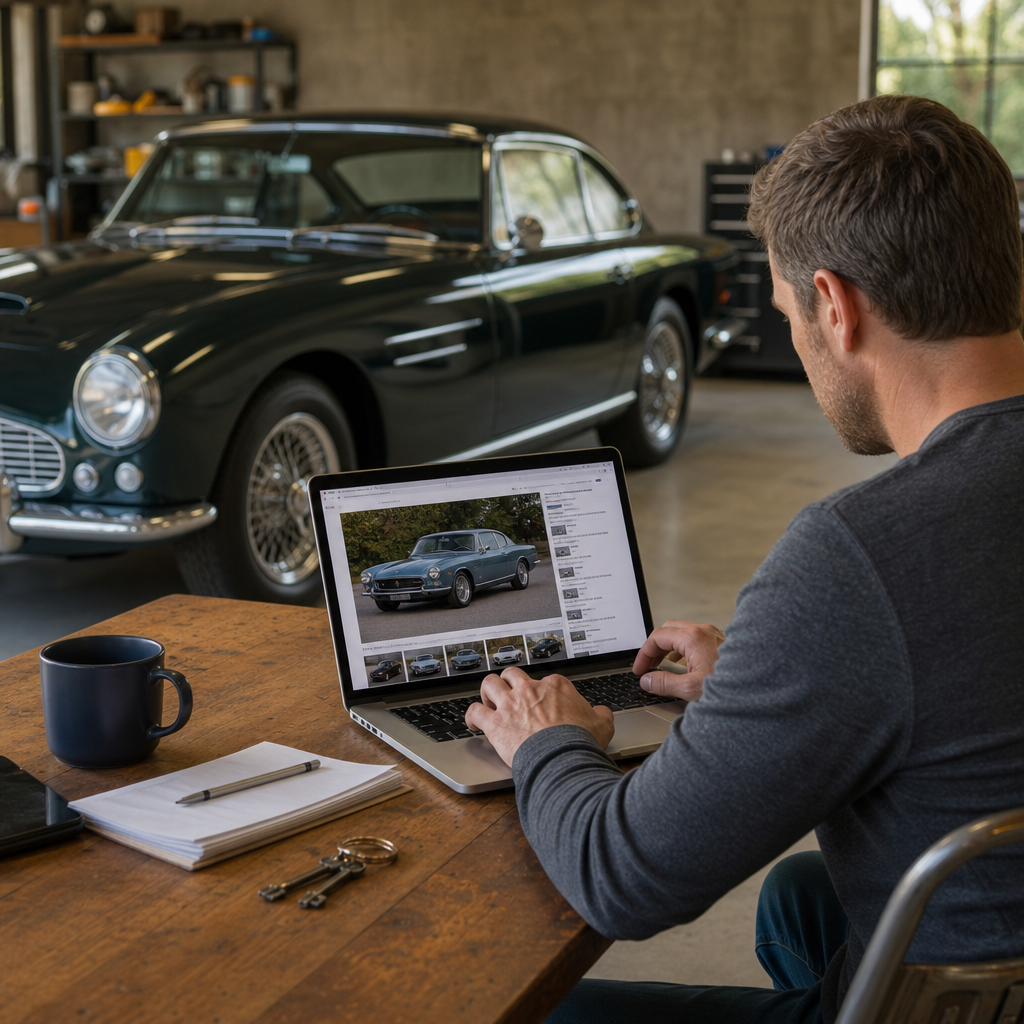
Where you shop affects risk. Well-known platforms such as Bring a Trailer, Hemmings, Cars & Bids for newer collectibles, marque club classifieds, established dealer websites, and major auction houses usually create better documentation and communication trails than anonymous social posts. That does not mean every listing on a big platform is perfect; it means there is a public record, bidder scrutiny, archived photos, and often a reputation system. Private Facebook groups and general classified sites can still produce excellent deals, but they require far more verification because seller identities and listing histories are easier to obscure.
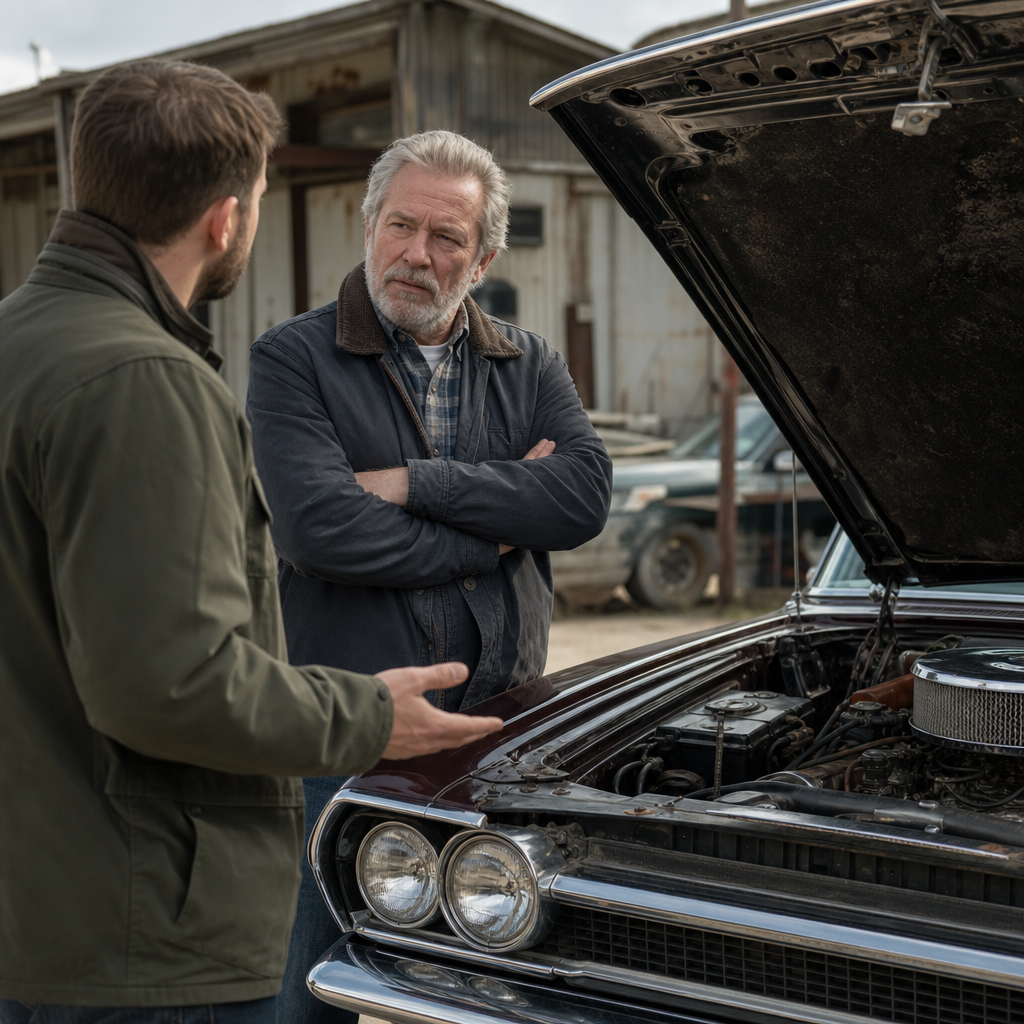
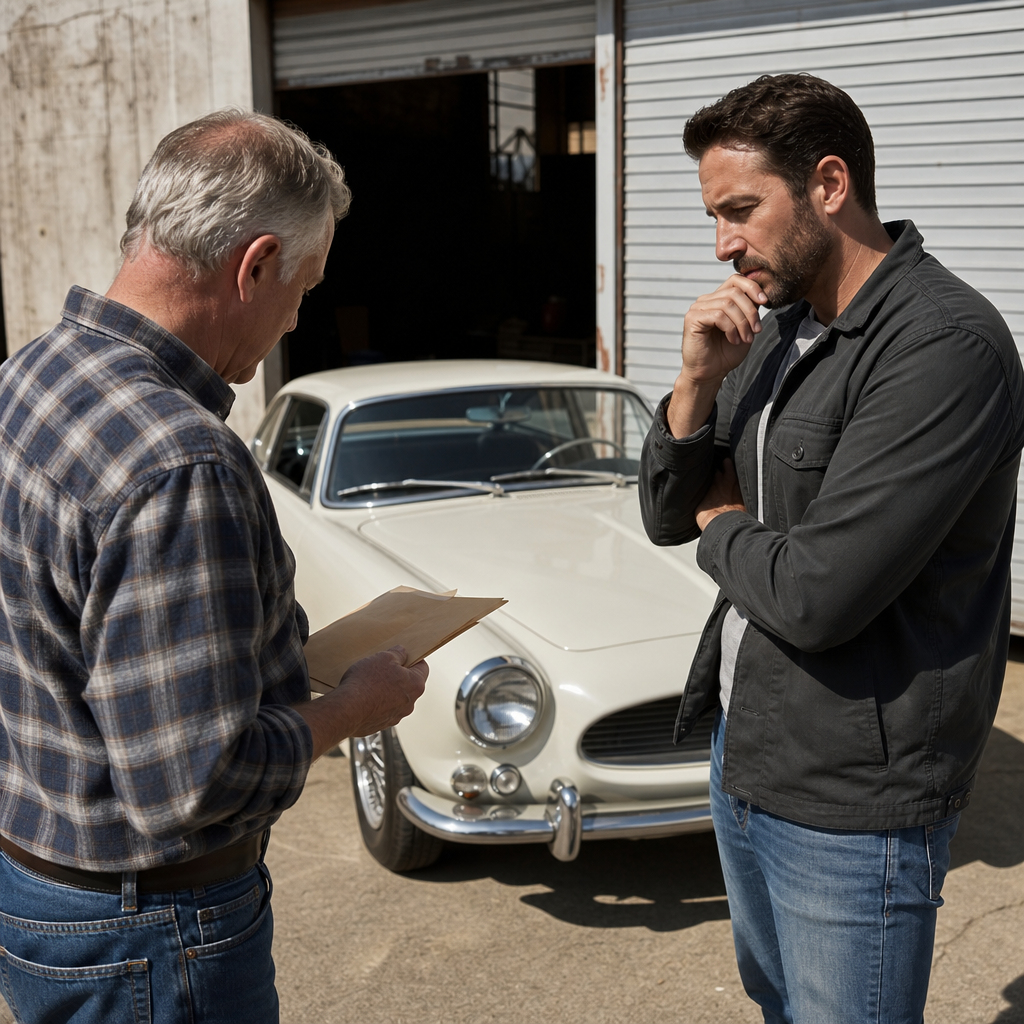
Before discussing price, confirm who is actually selling the vehicle. Ask whether the seller is the titled owner, a dealer, a broker, a consignor, or a relative handling an estate sale. Request a photo of the title in the seller’s name with sensitive information partially redacted, plus a photo of the VIN plate and any cowl, chassis, or engine stampings relevant to the model. Search the seller’s phone number, email address, business name, and image set. Reverse-image search can expose copied photos from old auction listings. For dealers, verify the business registration, dealer license where applicable, Google review pattern, and whether the inventory photos are consistent across listings. If the seller avoids basic identity confirmation, walk away early.
Read the listing like an appraiser and verify what the words really mean
Experienced buyers never treat listing language as a factual condition report. Terms such as “restored,” “rebuilt,” “show quality,” and “all original” are used loosely. A repaint and new seat covers are not a restoration. “Numbers matching” should mean the drivetrain components correspond correctly to the car’s production data, not merely that the engine is period-correct. “Rust free” often means no visible perforation, while corrosion may still exist in floor pans, rocker panels, trunk drops, frame rails, windshield channels, or suspension pickup points. Ask the seller to define every major claim in plain terms and support it with documents, date-stamped photos, and cold-start video.
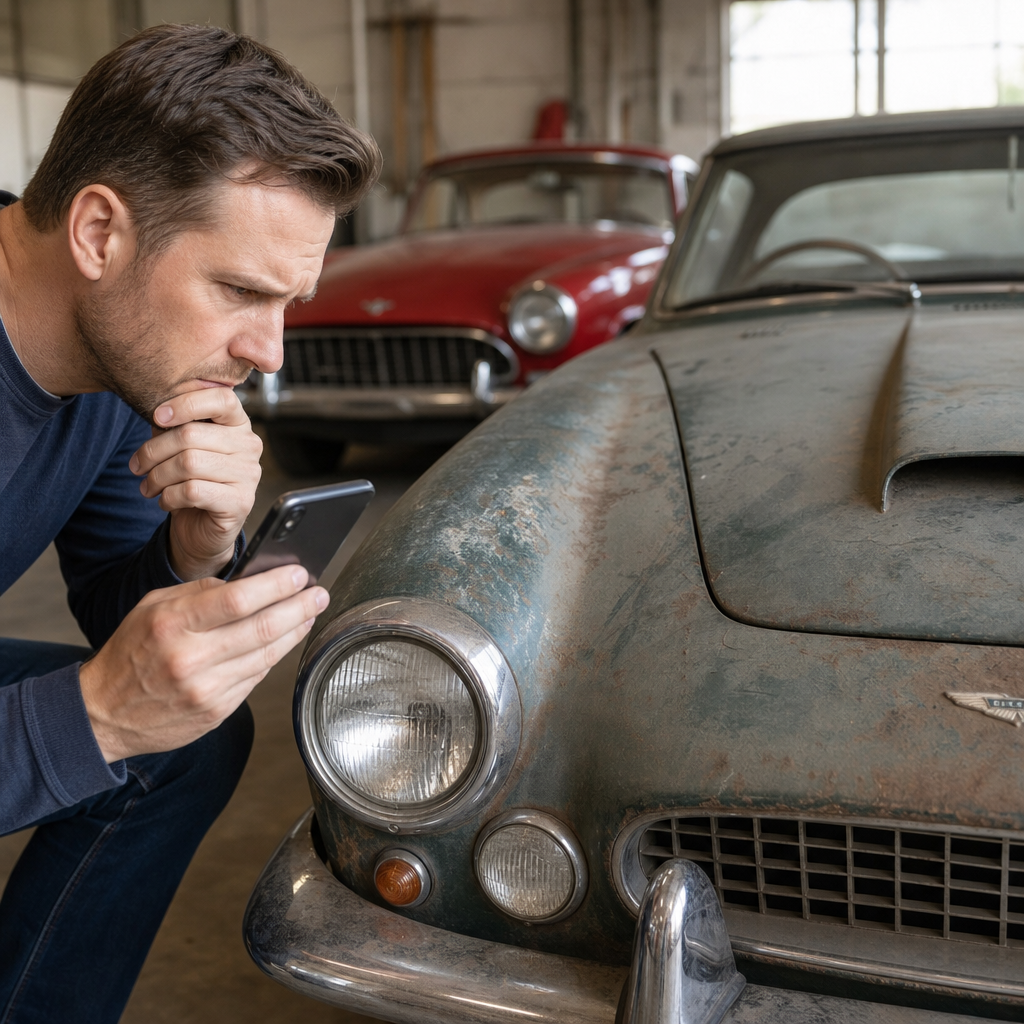
Photos should tell a complete story. You want wide exterior angles, close-ups of known rust areas, undercarriage images, suspension, brake components, trunk floor, engine bay, VIN tags, body-number tags, glass markings, wheel wells, and interior details including wear points. Video matters because it reveals smoke, idle quality, gauge function, transmission engagement, and road behavior. Ask for a cold-start clip with a hand on the exhaust manifold at the beginning so you know the engine was not pre-warmed. For convertibles, request top operation. For older fuel-injected cars, ask how long they sit before restarting hot. Specific requests separate serious sellers from storytellers.
| Claim in Listing | What It Should Mean | What to Request | Common Risk |
|---|---|---|---|
| Numbers matching | Engine, transmission, and sometimes rear axle align with factory records | Stamping photos, build sheets, registry data, marque expert confirmation | Period-correct parts passed off as original components |
| Rust free | No structural or cosmetic corrosion in known problem areas | Undercarriage photos, magnet test, inspection on lift | Fresh undercoating hiding repairs or perforation |
| Restored | Documented refurbishment with mechanical and cosmetic scope defined | Receipts, restoration photos, shop names, dates | Cosmetic refresh described as full restoration |
| Original miles | Odometer reading supported by records and wear consistency | Service records, inspection stickers, title history | Five-digit rollover or replacement cluster |
Confirm provenance, title status, and vehicle history before money changes hands
A classic car title problem can turn a good-looking purchase into a legal and financial mess. Ask for a clear image of the title, confirm the VIN matches the car exactly, and verify whether the title is clean, salvage, rebuilt, bonded, or subject to a lien. Older cars may be sold with registrations instead of titles in some states, but that does not remove your responsibility to confirm what your state motor vehicle agency requires for transfer. Imported classics need customs and import documentation, including EPA and DOT exemptions where relevant. Gray-market cars deserve extra care because federalization history and parts support vary widely.
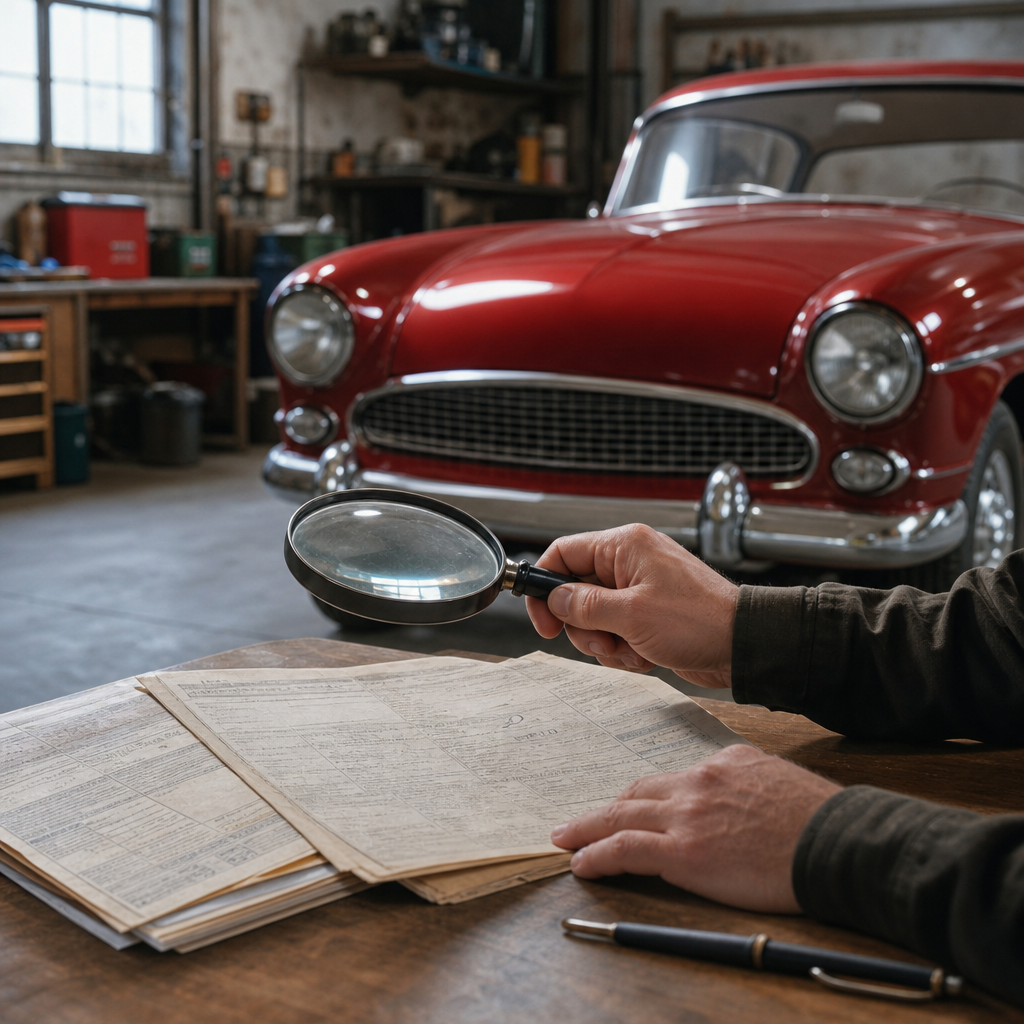
Use a vehicle history report, but understand its limits. Carfax and AutoCheck are useful for title events, auction records, emissions entries, and some odometer data, especially on later classics, yet many older vehicles have sparse histories. Absence of negative data is not proof of originality. Cross-check the VIN through NICB where applicable, state databases if available, and marque registries that track serial-number ranges, color combinations, and known survivors. For high-value cars, a recognized marque expert can often identify inconsistencies in trim, stampings, welds, and option codes that a generic history report will never catch. Provenance is strongest when ownership history, service records, photos, and physical identifiers all support the same narrative.
Never skip a pre-purchase inspection, and choose the inspector carefully
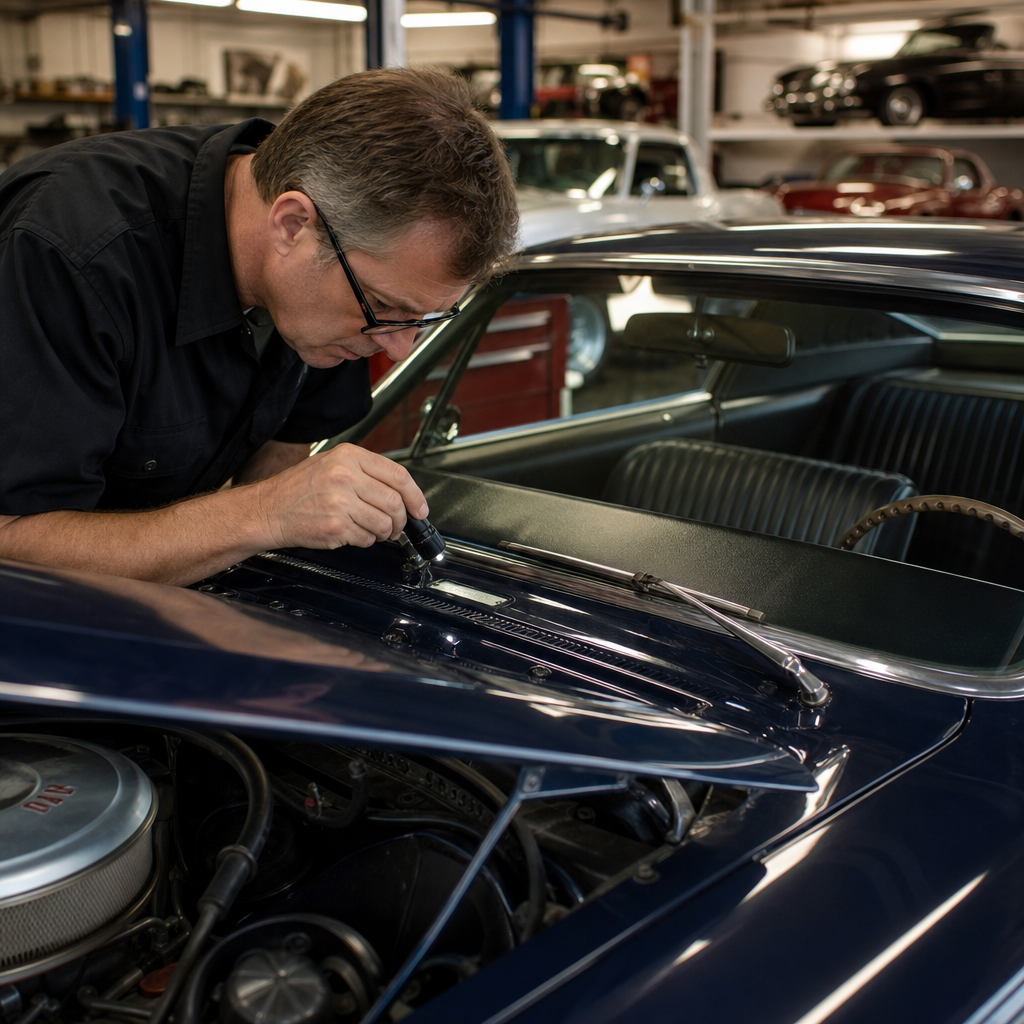
If you remember only one rule from this guide, let it be this: always order an independent pre-purchase inspection before committing meaningful money. A proper inspection is not a courtesy test drive by the seller’s friend. It should be done by a qualified mechanic, restoration specialist, or marque expert with no financial connection to the seller. Companies such as Lemon Squad and local inspection services can provide baseline reports, but for valuable or unusual classics, the best choice is often a respected shop that regularly restores or services that exact model family. A Porsche 356, Jaguar E-Type, and C10 pickup each have different failure points, parts costs, and originality markers.
A useful inspection includes compression or leak-down results when appropriate, evidence of fluid leaks, brake condition, steering play, suspension wear, rust assessment on a lift, charging-system performance, cooling-system behavior, tire age, and signs of crash repair. For body-on-frame cars, inspectors should check frame straightness and body mount areas. For unibody cars, they should inspect torque boxes, seams, and structural rails. Ask for at least fifty photos and a phone call summary, not just a checkbox form. I have seen inspections save buyers from hidden filler over rusted rockers, VIN tag tampering, and “fresh rebuilds” with poor oil pressure. The inspection fee is small compared with one surprise gearbox rebuild or paint correction.
Handle payment, shipping, and final paperwork with controls that reduce risk
Safe payment methods matter as much as safe inspection. Avoid unsecured payment apps, gift cards, cryptocurrency transfers, or large deposits sent before identity and title verification. For private-party sales, use a written purchase agreement covering VIN, sale price, included parts, deposit terms, title status, and conditions such as satisfactory inspection. Escrow services can protect both sides when properly chosen, but verify the service independently instead of clicking a link sent by the seller. A bank wire is common for the final payment, yet it should be sent only after all documents are reviewed and the transfer process is clear. If a lien exists, confirm directly with the lender how payoff and title release will work.
Shipping is another place where buyers lose money or leverage. Use insured, licensed transporters with verifiable USDOT and MC numbers, and read the cargo coverage limits. Enclosed transport is usually worth the extra cost for higher-value cars, fresh paint, or fragile trim. Before pickup, require a bill of lading and current photo set showing all existing flaws. At delivery, inspect the car before signing the transporter’s paperwork, confirm included spare parts and documents, and test basic functions immediately. Keep copies of the title, bill of sale, wire confirmation, inspection report, shipping contract, and all listing screenshots. Those records help with registration, insurance agreed-value policies, and any dispute that follows.
Know the common online classic car scams and the red flags that end a deal
Most online classic car scams follow familiar patterns. The seller pushes urgency, refuses a live video walkaround, claims to be selling for a deployed relative, requests a deposit before sharing the VIN, or insists on an unfamiliar escrow site. Sometimes the car is real but the story is false; brokers may advertise vehicles they do not control, hoping to lock in a buyer before securing the car. Another common issue is title washing, where a vehicle with branded history moves through states or paperwork channels that obscure prior damage. Watch for mismatched names, area codes that do not fit the location, poor knowledge of the model, or excuses for why an inspector cannot access the car.
Trust your process over your excitement. If the price is far below market, assume there is a reason until proven otherwise. If the seller cannot produce straightforward answers about ownership, restoration dates, service records, or known flaws, move on. Good classic cars appear regularly, and disciplined buyers do better than fast buyers. The safest way to buy a classic car online is simple: define your target, research the market, verify the seller, inspect the car independently, confirm title and provenance, and use controlled payment and shipping procedures. Follow that sequence every time, and you dramatically reduce risk while increasing the odds of ending up with a classic you can enjoy, insure, and eventually resell with confidence. Start your search with a checklist, not a deposit.
Frequently Asked Questions
What should I verify first before buying a classic car online?
The first priority is to verify that both the car and the seller are real, legitimate, and accurately represented. Start by confirming the seller’s full name, phone number, physical address, and connection to the vehicle. If the seller claims to be the owner, ask whether the title is in their name and request a clear photo of the title, front and back if applicable, with sensitive personal information redacted. Make sure the vehicle identification number (VIN) on the title matches the VIN shown on the car, the listing, and any maintenance or restoration records. A mismatch is a major warning sign and should stop the process until it is explained.
Next, review the listing closely for consistency. Compare the written description to the photos, mileage claims, trim level, engine details, and restoration statements. If the listing says “numbers-matching,” “fully restored,” or “rust-free,” ask for documentation and photo evidence to support those claims. For classic cars, details matter. A car may look beautiful in glossy photos but still have hidden corrosion, poor body filler work, incorrect parts, or an engine swap that affects value. Ask for high-resolution photos of known problem areas, including the undercarriage, trunk floor, rocker panels, wheel arches, frame rails, suspension points, door bottoms, and engine bay.
It is also wise to run the VIN through available title history and vehicle history services, keeping in mind that records for older vehicles can be incomplete. Even so, these reports can still reveal title brands, odometer issues, theft records, or registration inconsistencies. Finally, look at the seller’s communication style. Honest sellers are usually willing to answer specific questions, provide additional photos and videos, and discuss the car’s flaws as well as its strengths. Evasive responses, pressure to wire money quickly, or refusal to share basic ownership documents are strong indicators that you should walk away.
How can I tell whether an online classic car listing is legitimate or potentially a scam?
A legitimate listing usually holds up under scrutiny, while a scam begins to unravel as soon as you ask for proof. Start by looking at the price. If a rare or highly desirable classic is listed well below market value, be cautious. Scammers often use bargain pricing to create urgency and encourage buyers to skip normal due diligence. Compare the asking price with recent sales of similar vehicles in similar condition, not just asking prices on marketplace sites. A dramatic price gap without a believable explanation is a red flag.
Then evaluate the listing content itself. Watch for vague descriptions, missing VIN information, generic wording, or photos that appear copied from other websites. You can reverse-search listing images to see whether they were taken from old auction pages, enthusiast forums, or dealer sites. Ask the seller to provide a current walkaround video that includes the day’s date, the VIN plate, cold start, idle, exhaust, gauge cluster, and close-ups of flaws. A scammer often cannot produce fresh, specific content because they do not actually have the car.
Communication is another major clue. Be wary if the seller insists on moving the conversation off-platform immediately, avoids phone or video calls, claims to be unavailable due to military deployment or overseas work, or wants payment through irreversible methods such as gift cards, crypto transfers, or rushed wire instructions to a third party. A legitimate seller should have no problem discussing the vehicle in detail and allowing a structured process that includes inspection, documentation, and secure payment. If anything feels inconsistent, rushed, or strangely secretive, trust that instinct. In the classic car market, patience is far less expensive than recovering from fraud.
Do I really need a pre-purchase inspection for a classic car bought online?
Yes, in almost every case, a pre-purchase inspection is one of the smartest and safest steps you can take. Classic cars are not like late-model daily drivers where condition is easier to estimate from mileage and service records alone. Age, storage conditions, restoration quality, rust repair, originality, and mechanical wear all have a huge effect on value and reliability. A car that looks excellent in photos may have hidden rust, poor panel alignment, weak compression, brake system issues, leaking seals, unsafe wiring, or old repairs covered with fresh paint. An independent inspection can uncover these problems before you commit money.
The key is to use an inspector who understands older vehicles, not just modern car appraisals. Ideally, hire a marque specialist, a respected local restoration shop, or a professional inspector with documented experience in classic and collector vehicles. Ask for a written report with photos, notes on body condition, paint quality, rust points, drivetrain health, suspension, brakes, electrical system, tires, glass, trim, and signs of accident damage or poor restoration work. If originality matters to you, ask whether major components appear date-correct or numbers-matching and whether any modifications affect value.
An inspection also gives you leverage and clarity. If the report confirms the seller’s claims, you can proceed with more confidence. If it reveals issues, you may renegotiate the price, ask the seller to correct specific problems, or walk away entirely. The inspection fee is minor compared with the cost of buying the wrong classic car. In the online market, where you cannot casually inspect the vehicle in person before every purchase, skipping this step is one of the most common and most expensive mistakes buyers make.
What is the safest way to handle payment, title transfer, and shipping?
The safest approach is to treat the transaction as a formal process, not an informal handshake conducted by text message. Before sending any money, confirm exactly who owns the car, whether there is a lien, and what title document will be transferred. If the title is missing, branded, not in the seller’s name, or tied to an unresolved estate or lienholder, stop until the issue is resolved properly. For classic cars, title problems can become registration problems, and registration problems can turn a purchase into a legal and financial headache.
For payment, avoid sending a full amount upfront without documentation and safeguards. Depending on the deal, buyers often use a written purchase agreement, a traceable deposit, and either an escrow service or a coordinated bank-to-bank transfer once the title and vehicle release terms are clear. Any escrow provider should be independently verified by you, not just accepted from a link the seller sends. Never rely on screenshots alone as proof of shipment or title transfer. Make sure all terms are in writing, including purchase price, deposit amount, refund conditions, included parts, title status, VIN, odometer reading if stated, and when the car will be released to the transporter.
Shipping deserves the same level of care. Use a reputable, insured classic car transporter, preferably one experienced with low-clearance vehicles, non-running vehicles, and collector transport. Verify the carrier’s licensing and insurance, and ask whether the shipment is open or enclosed. Enclosed transport is often the better choice for valuable classics. Before pickup, request a bill of lading and detailed condition photos. At delivery, inspect the car before signing final paperwork. Good process protects both your money and the vehicle itself, and it reduces the chances of disputes after the sale is complete.
What records and proof should I ask for to avoid expensive surprises after the purchase?
You should ask for enough documentation to understand the car’s identity, ownership history, mechanical condition, and restoration story. At a minimum, request the title, VIN photos, current registration if applicable, service records, restoration receipts, parts invoices, and any appraisal or auction history the seller has. For a classic car, documentation can be nearly as important as the car itself because it helps prove what was done, when it was done, and whether the vehicle is represented honestly. A stack of receipts showing engine work, brake system refurbishment, cooling system service, and suspension repairs is far more reassuring than a seller simply saying the car “needs nothing.”
If the vehicle has been restored, ask for before-and-after photos and records showing who performed the work. This helps you judge whether the restoration was cosmetic, partial, or comprehensive. It also helps identify whether rust repair was handled properly or merely hidden. If originality affects value, request documentation supporting claims such as matching engine and transmission numbers, factory color, original trim, or special-edition status. For some makes, club records, factory certificates, heritage reports, and expert authentication can be extremely valuable.
You should also ask direct practical questions about how the car starts, drives, stops, idles, shifts, and handles heat. Find out what currently works and what does not, including gauges, lights, wipers, heater, air conditioning, windows, horn, radio, and fuel system. Ask when the car was last driven on the road, not just started in a garage. A seller who provides organized records, consistent answers, and clear evidence is making your decision easier and safer. The more complete the paper trail, the lower your risk of discovering hidden costs only after the car arrives in your driveway.