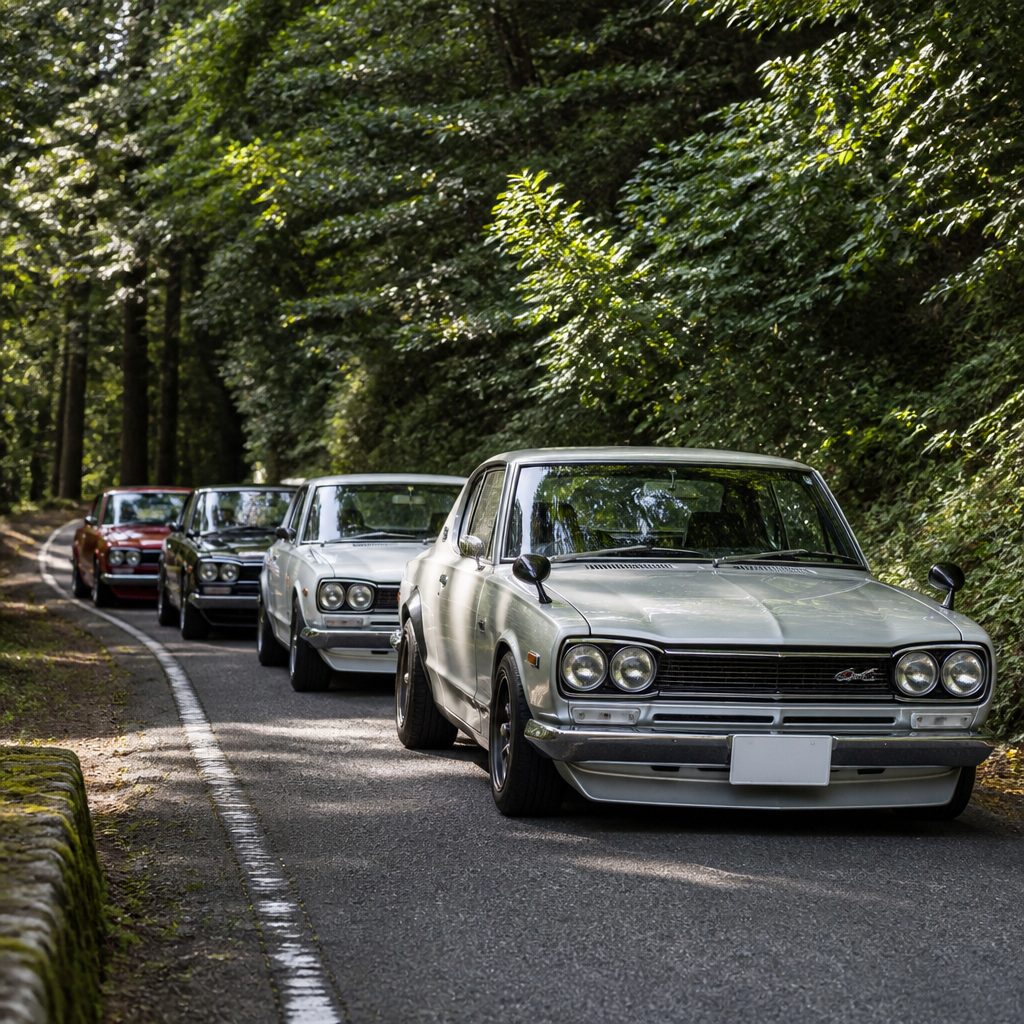
Hidden gem Japanese classic cars occupy a special place in the collector market because they combine engineering credibility, usable performance, and cultural depth without always carrying the prices attached to headline models like the Toyota 2000GT, Skyline GT-R, or first-generation NSX. In this context, hidden gem means a car with historical importance, distinctive design, or strong driving character that remains overlooked relative to its better-known peers. Japanese classic cars usually refers to vehicles from the 1960s through the 1990s, the period when Japan’s manufacturers moved from building competent domestic transportation to shaping global enthusiast culture. For buyers, restorers, and readers exploring underrated classics, this category matters because market attention keeps shifting. Once-ignored models can become the next smart purchase, while the best examples already reveal how broad and sophisticated Japan’s automotive history really is.
I have spent years watching auctions, cataloging parts availability, and talking with owners who bought these cars before values moved. The pattern is consistent: collectors often chase halo badges and miss the models that best represent day-to-day innovation. Hidden gem Japanese classic cars are not merely cheaper substitutes for famous icons. Many were technology leaders in their own right, from advanced twin-cam engines and lightweight coupes to luxury sedans that previewed later flagship design. Others matter because they tell the story of motorsport homologation, export strategy, or the rise of Japanese reliability in North America and Europe. If you want an entry point into underrated classics, this hub explains which models deserve attention, why they were overshadowed, and what to evaluate before buying.
Several terms help frame the discussion. A survivor is an unrestored or lightly preserved car retaining original finishes, trim, and mechanical specification. A homologation model exists because road cars were needed to support racing eligibility. JDM commonly refers to domestic-market Japanese cars, though enthusiasts sometimes misuse it for any Japanese vehicle. Period correctness means using components, colors, and accessories that match the car’s original era. Understanding those ideas is useful because Japanese classics are often modified, rebadged, or imported in ways that blur originality. The strongest hidden gems tend to reward careful research. They are the models where documentation, trim completeness, rust condition, and production context tell you much more than simple horsepower numbers or auction headlines.
What makes this segment compelling is the combination of accessibility and depth. European classics often demand large restoration budgets, while American muscle has a deeply mapped hierarchy of desirability. Japanese underrated classics still offer room for discovery. A clean Mazda Luce rotary sedan, an early Honda Prelude, or a Mitsubishi Galant GTO can attract knowledgeable enthusiasts without requiring seven-figure money. They also drive differently from the stereotypes. Some are nimble and eager, some are quietly luxurious, and some were engineered with remarkable restraint. As a hub for underrated classics, this article highlights the major categories, representative models, ownership realities, and the practical signals that separate a genuine hidden gem from a car that is merely obscure.
Why certain Japanese classics became underrated
Most overlooked Japanese classics were overshadowed by stronger marketing narratives, motorsport fame, or export success attached to other models from the same brands. Nissan’s Skyline GT-R became the symbol of Japanese performance, so elegant alternatives such as the Laurel Hardtop or Cedric coupe received little collector attention outside specialist circles. Toyota built an unmatched reputation around the Corolla, Celica, Supra, and Land Cruiser, leaving cars like the first-generation Soarer or Cressida underappreciated for years despite their quality. Honda’s story is often told through the S600, Civic, Integra Type R, and NSX, while technically interesting coupes such as the Prelude and Quint Integra are treated as footnotes. In practice, that imbalance creates opportunity.
Another reason is geography. Many interesting models were sold in limited numbers outside Japan, and some were never officially exported at all. Without period road tests in major English-language magazines, these cars lacked the mythology that fuels later demand. Parts books, trim codes, and factory literature can also be difficult to source, which discourages casual buyers. I have seen excellent cars ignored at auction simply because bidders could not quickly verify originality. Obscurity depresses prices until a few specialists publish better information, social media spreads ownership stories, and values start to normalize.
Condition bias matters too. Japanese cars from the 1970s and 1980s were often used as regular transportation, not preserved as collectibles. Rust, sun damage, and deferred maintenance erased many examples before the market took them seriously. As a result, truly complete cars are rarer than headline production numbers suggest. That scarcity can make certain hidden gems more significant than better-known cars with larger enthusiast support and better reproduction parts availability.
Key hidden gem Japanese classic cars worth knowing
The strongest hub for underrated classics needs representative models across segments. The Mazda Cosmo and RX-series get the headlines, yet the Mazda Luce Rotary Coupe deserves serious attention because it brought rotary sophistication into a larger grand touring format with Giorgetto Giugiaro-influenced styling. The Toyota Soarer Z10, introduced in 1981, delivered digital instrumentation, advanced electronics, and a refined six-cylinder experience that forecast Toyota’s later luxury ambitions. Early examples with the 1G-GEU twin-cam engine are especially significant because they capture Japan’s move toward high-technology premium coupes.
Nissan’s Silvia CSP311 is no secret among experts, but later forgotten Silvias and Gazelle variants still offer strong value. The first-generation Nissan Leopard is another sleeper, blending sharp formal styling with smooth straight-six power in a package now remembered mostly because of later F31 television fame. From Mitsubishi, the Galant GTO and Galant Lambda show how the company experimented with American-inspired design while maintaining compact Japanese proportions. Isuzu’s 117 Coupe remains one of the best-kept secrets in the entire market: hand-built early cars, elegant lines, and Giugiaro authorship make it historically important even before you discuss the twin-cam engine.
Honda contributes multiple overlooked entries. The first-generation Prelude was a packaging masterclass, low and airy with excellent visibility and the kind of quality switchgear that established Honda’s reputation. The second-generation Prelude sharpened the formula further and introduced four-wheel steering later in its run, a feature still impressive today when properly maintained. Subaru’s Alcyone XT deserves mention for its wedge design, aircraft-inspired cockpit, and technical individuality. It is not conventionally pretty, but hidden gem Japanese classic cars are not always defined by mainstream taste; sometimes the draw is audacity combined with survival rarity.
| Model | Era | Why it matters | Common challenge |
|---|---|---|---|
| Isuzu 117 Coupe | Late 1960s to 1970s | Giugiaro design, early DOHC prestige coupe | Trim and body parts scarcity |
| Toyota Soarer Z10 | 1981 to 1986 | Luxury technology showcase, strong six-cylinder options | Electronics and digital dash issues |
| Honda Prelude | Late 1970s to 1980s | Lightweight coupe with excellent ergonomics | Rust and interior preservation |
| Mazda Luce Rotary Coupe | Early 1970s | Distinctive rotary grand tourer | Rotor housing and specialist engine work |
| Subaru XT Alcyone | 1980s | Unique design and engineering identity | Model-specific electrical components |
What to inspect before buying an underrated Japanese classic
Rust remains the first question because it determines whether a project is viable. Check strut towers, rocker panels, wheel arches, lower fenders, windshield surrounds, trunk floors, battery trays, and suspension pickup points. Japanese steel of the era was not uniquely bad, but rust protection standards varied by market and use. Cars imported from coastal regions or snowy climates can hide major corrosion under fresh underseal. I always prefer an honest, faded shell to a heavily coated underside that conceals repairs.
Mechanical inspection depends on the model’s signature systems. Rotary Mazdas need compression testing by someone who understands rotor sealing behavior. Twin-cam engines from Isuzu, Toyota, and Nissan often suffer from neglected timing components, carburetion issues, or improvised vacuum routing after years of amateur repair. Early electronic dashboards, automatic climate control systems, and power accessories can be harder to sort than an engine rebuild because donor parts are limited. Documentation matters here: factory service manuals, parts fiches, and owner records reduce uncertainty dramatically.
Originality deserves a balanced view. A fully stock car with matching trim, wheels, and interior fabrics is usually more collectible, but sympathetic upgrades can improve usability. Electronic ignition conversions, modern tires in correct sizes, and discreet cooling improvements are often sensible. The mistake is buying a heavily modified car assuming it can easily return to original specification. Rare badges, seat fabrics, switchgear, and glass can take years to source.
Ownership realities: parts, restoration, and market behavior
Owning hidden gem Japanese classic cars is rewarding, but it requires a realistic plan. Mechanical parts are often easier than cosmetic parts because many manufacturers shared engines, gearboxes, bearings, and brake components across multiple lines. Trim, lenses, grilles, dashboards, and weatherstripping are the real bottlenecks. I have helped owners find rebuild kits quickly, then spend months locating a single taillight or correct mirror. Before purchase, identify specialist clubs, model registries, and suppliers in Japan, Australia, New Zealand, the United States, and the United Kingdom. Those communities often know interchange possibilities not listed in standard catalogs.
Restoration economics can surprise first-time buyers. A cheap, incomplete coupe may cost more to finish than a premium paid for a documented, rust-free survivor. Paint and bodywork consume budgets fast, especially where stainless trim or delicate brightwork must be restored piece by piece. Upholstery can be equally challenging if original patterned cloth is unavailable. For many underrated classics, preservation is smarter than total restoration. Clean and stabilize the car, rebuild major systems, and retain original finishes when possible. The market increasingly rewards authenticity over over-restored presentation.
Values are rising, but not evenly. Cars with recognizable design authorship, advanced engineering, or direct links to broader brand history tend to appreciate first. The Isuzu 117 Coupe, Toyota Soarer, and selected early Honda coupes have gained serious respect because collectors can place them within a larger narrative. By contrast, obscure sedans with limited enthusiast networks may remain affordable longer even when genuinely good. That does not make them poor choices. It simply means buyers should collect what they understand and enjoy, not what they assume will spike next year.
How this hub connects the underrated classics subtopic
As a sub-pillar within classic car models and brands, hidden gem Japanese classic cars should guide readers toward deeper research by segment, marque, and ownership goal. One branch focuses on forgotten Japanese sports coupes, where cars like the Nissan Silvia, Isuzu 117 Coupe, and Mazda rotary grand tourers deserve model-by-model treatment. Another branch examines overlooked luxury and personal coupes such as the Toyota Soarer, Nissan Leopard, and Mazda Cosmo derivatives. A third branch covers underrated everyday classics including early Preludes, Accords, Bluebirds, and Cressidas, the cars that defined how Japanese manufacturers earned trust globally.
The hub also serves different buyer intents. New collectors need a shortlist of approachable models, expected costs, and parts realities. Longtime enthusiasts want production context, chassis codes, market signals, and restoration standards. Sellers and content readers often ask the same direct questions: Which Japanese classic is still undervalued? What models have the best parts support? Which cars can be driven regularly? The answer is that the best hidden gems combine complete trim, strong community knowledge, and an ownership experience that still works in modern traffic. That usually points toward well-supported Hondas and Toyotas first, then toward rarer specialist cars for owners willing to chase parts and documentation.
Hidden gems are worth finding because they broaden the definition of what a collectible Japanese car can be. They are not just budget alternatives to famous halo machines. They are design statements, technology testbeds, and cultural artifacts that show how Japan built one of the world’s most respected automotive industries. Start with condition, buy the most complete example you can afford, and study the stories behind the badges. If you are building your knowledge of underrated classics, use this hub as the starting point, then move deeper into individual model guides, buyer checklists, and restoration resources before making your next purchase.
Frequently Asked Questions
What makes a Japanese classic car a “hidden gem” instead of just an old collectible?
A hidden gem Japanese classic car is more than simply an aging vehicle that has survived long enough to attract attention. In collector terms, it is usually a model that offers genuine historical relevance, distinctive styling, meaningful engineering, or an especially rewarding driving experience, yet still sits in the shadow of more famous Japanese icons. While household names like the Toyota 2000GT, Skyline GT-R, Mazda Cosmo, and first-generation Acura NSX tend to dominate conversations and auction headlines, many lesser-publicized models quietly deliver similar charm, craftsmanship, and enthusiast appeal at a more approachable level.
What often defines a hidden gem is the gap between intrinsic merit and market recognition. These are cars that may have introduced important technologies, represented a turning point for a manufacturer, showcased uniquely Japanese design thinking, or built a reputation in period motorsport or enthusiast culture, but never achieved mainstream global fame. Some were overshadowed by flashier halo cars from the same brand. Others were sold in limited numbers outside Japan, making them less familiar to Western buyers even though they are highly respected among dedicated enthusiasts.
Another key factor is usability. Many hidden gem Japanese classics are admired because they combine vintage character with robust engineering and relatively straightforward ownership. Japanese manufacturers built their reputations on durability, precision, and thoughtful design, so a lesser-known classic from Toyota, Nissan, Honda, Mazda, Isuzu, Mitsubishi, or Subaru may still feel more approachable to own and drive than similarly priced classics from elsewhere. In short, a hidden gem is a car whose historical significance, personality, and long-term appeal outweigh its current level of fame.
Which hidden gem Japanese classic cars are especially worth considering today?
Several models stand out as strong candidates, especially for enthusiasts who want substance beyond the usual headline cars. The Toyota Celica Liftback and early Celica coupes deserve attention for blending period Japanese styling with dependable mechanicals and a direct connection to the era when Japan was refining its sporty car identity. The Datsun 510 is another standout, celebrated for its balanced chassis, simple rear-wheel-drive layout, and huge influence on grassroots motorsport and tuner culture. It is no secret among serious enthusiasts, but compared with larger-profile performance legends, it still qualifies as underrated in the broader collector world.
The Mazda RX-3 remains especially compelling because it combines compact proportions, distinctive styling, and rotary-engine character in a package that feels raw, energetic, and historically important. Buyers willing to understand rotary ownership often find that the RX-3 delivers a driving experience unlike almost anything else from its era. The first-generation Honda Prelude also deserves far more respect than it usually receives. It helped define Honda’s emerging identity as a maker of sophisticated, driver-focused coupes and now offers period design charm, lightweight feel, and a very usable ownership experience.
Other notable hidden gems include the Isuzu 117 Coupe for its hand-built origins and elegant Giugiaro-influenced styling, the Mitsubishi Galant GTO for its fastback looks and period performance credentials, the Subaru XT for its unmistakably futuristic design, and the Nissan Laurel hardtop models for buyers who appreciate understated luxury with rear-wheel-drive dynamics. Even vehicles like the Toyota Corona Mark II, Nissan Bluebird SSS, and Mazda Luce can be excellent hidden-gem choices because they reflect important chapters in Japanese automotive development while remaining less saturated in the collector spotlight. The best option depends on whether your priorities are design, rarity, motorsport lineage, mechanical simplicity, or day-to-day drivability.
Why are overlooked Japanese classics becoming more attractive to collectors and enthusiasts?
One major reason is value migration. As the most famous Japanese classics have become dramatically more expensive, collectors have started looking deeper into each brand’s history. When top-tier models become financially out of reach, enthusiasts naturally explore the surrounding lineup and begin recognizing the strengths of cars that had long been ignored. This process often reveals that many so-called second-tier Japanese classics are not lesser cars in any meaningful emotional or historical sense; they were simply marketed differently, produced in different numbers, or overshadowed by racing legends and flagship halo models.
Another reason is that the collector market has matured. Earlier waves of Japanese car appreciation often focused on turbocharged performance heroes of the 1980s and 1990s, but the conversation has broadened considerably. Buyers now care more about design history, analog driving feel, preservation quality, factory originality, and period authenticity. That shift benefits hidden gem models, especially those from the 1960s, 1970s, and early 1980s that capture a transitional moment when Japanese automakers were developing their own distinct identities while also proving their engineering credibility to the world.
Cultural nostalgia also plays a role. Japanese classics are increasingly appreciated not just as transportation or investments, but as artifacts of a wider cultural era involving motorsport, design, export growth, cinema, magazines, and tuning heritage. Enthusiasts who grew up seeing these cars in old road tests, import scenes, racing footage, or family driveways are now entering the market with a more nuanced understanding of what matters. As a result, obscure but meaningful models are being reevaluated on their own merits. Hidden gem Japanese classics are attractive because they offer authenticity, individuality, and a sense of discovery that can feel more rewarding than chasing the same famous models everyone already knows.
What should buyers inspect before purchasing a hidden gem Japanese classic car?
Condition and completeness matter more than badge prestige, so buyers should start with the body shell. Rust is often the single most important issue on older Japanese cars, especially around rocker panels, wheel arches, floors, strut towers, trunk wells, windshield surrounds, frame rails, and suspension mounting points. A rare model with serious corrosion can quickly become a restoration burden, particularly if replacement metal, trim, or model-specific body parts are difficult to source. A car that looks inexpensive up front can become far more costly than a cleaner, more original example.
Mechanical inspection should focus on model-specific vulnerabilities as well as general wear. Carbureted engines may need tuning, fuel system cleaning, or hard-to-find emissions components depending on the market version. Rotary-powered Mazdas require compression testing and evidence of specialist care. Older overhead-cam engines may suffer from neglected timing components, oil leaks, or cooling system issues. Transmissions, differentials, steering boxes or racks, and brake systems should all be evaluated carefully, especially because a car that has sat for years can need extensive recommissioning even if it appears complete.
Buyers should also pay close attention to originality and parts availability. Hidden gem models can be wonderful to own, but some trim pieces, interior fabrics, glass, badges, and market-specific equipment are much harder to replace than basic service items. Documentation helps enormously. Service history, import paperwork, chassis verification, matching numbers where relevant, and records of past restoration work all contribute to confidence and long-term value. It is wise to buy the best example you can afford, ideally one inspected by a specialist familiar with Japanese classics. With overlooked cars especially, authenticity and completeness often matter just as much as mechanical health because replacement parts may not be sitting on a shelf waiting for you.
Are hidden gem Japanese classic cars good investments, or should they be bought mainly for enjoyment?
The smartest approach is to buy them first for enjoyment, with investment potential treated as a secondary benefit. Hidden gem Japanese classics can absolutely appreciate, particularly when they are rare, historically important, exceptionally original, or strongly tied to a specific trend in collector demand. However, the market for overlooked models is not always as deep or predictable as the market for established icons. A lesser-known coupe or sedan may rise steadily as enthusiasts rediscover it, but values can also remain uneven because recognition develops gradually and often varies by region.
That said, there are sound reasons these cars can perform well over time. As awareness grows, collectors tend to seek out vehicles with compelling stories that still feel attainable. Cars with clean design, documented provenance, strong enthusiast support, and limited survival rates often benefit most. The strongest candidates are usually the ones that represent a notable chapter in Japanese automotive history, whether that means early sporting ambition, advanced engineering, boutique production, or a meaningful role in motorsport and tuner culture. Originality, rust-free condition, and factory-correct details are especially important because serious buyers increasingly reward authenticity.
Even so, ownership costs, restoration expense, storage, insurance, and parts hunting should all be part of the equation. A hidden gem only becomes a wise financial play if you buy carefully and avoid overrestoration relative to the car’s market ceiling. For most enthusiasts, the real return comes from the combination of driving character, rarity, conversation value, and the satisfaction of owning something more individual than the obvious collector choices. If the car also appreciates, that is a bonus. In this category, passion usually leads to the best decisions, and it often puts buyers ahead of the market before broader recognition arrives.