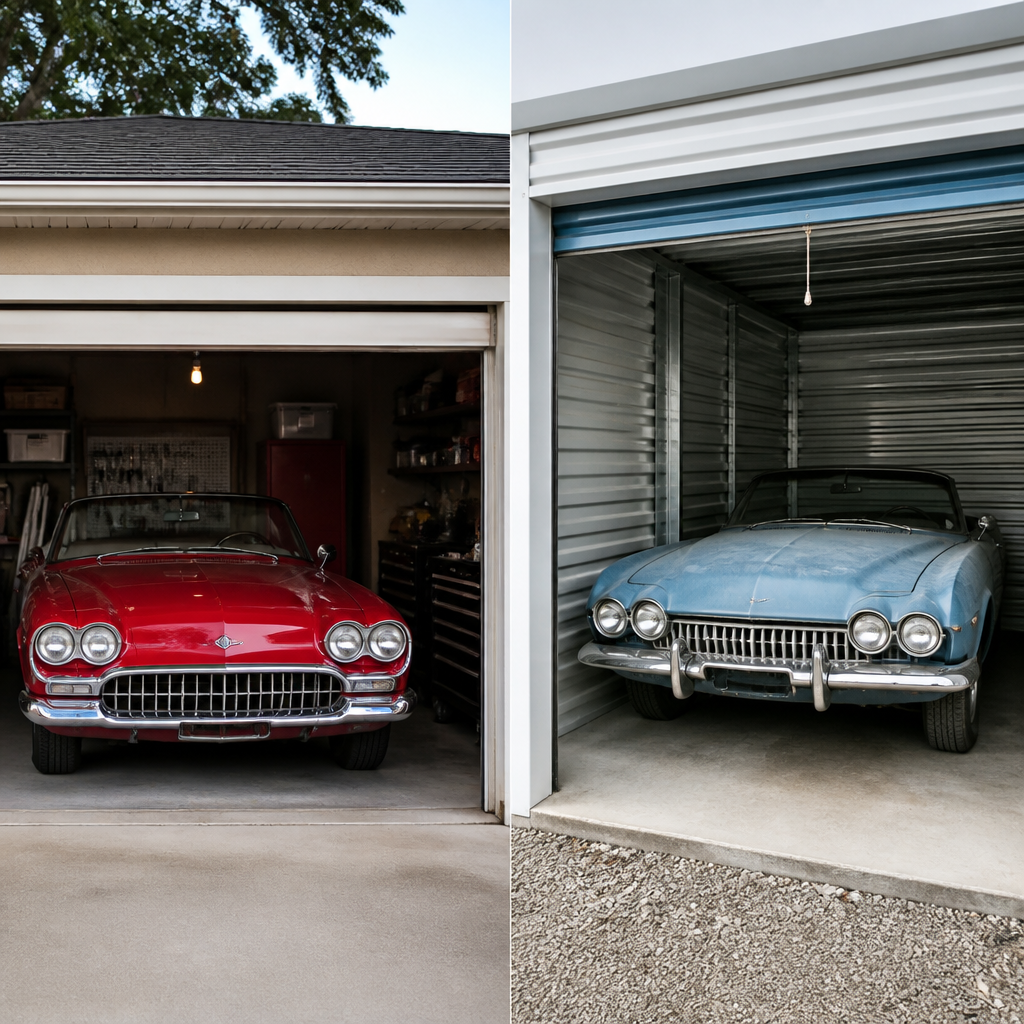
Choosing between a garage and a storage unit for a classic car comes down to one question: which space will protect the vehicle’s condition, value, and usability with the fewest compromises? In classic car ownership, “storage” means more than parking under a roof. Proper storage and preservation include climate stability, physical security, battery care, tire protection, fuel management, rodent prevention, insurance compliance, and regular inspection. I have helped owners store everything from weekend-driven Triumphs to six-figure air-cooled Porsches, and the pattern is always the same: the wrong environment quietly causes expensive damage, while the right setup preserves originality and lowers future restoration costs.
A home garage is the default option because it is convenient, familiar, and often inexpensive once the space is available. A storage unit, especially one designed for vehicle storage, can offer stronger security, better environmental control, and more separation from household activity. Neither choice is automatically better. The right answer depends on the car’s value, how often you drive it, your local climate, the quality of your garage, the terms of the storage facility, and how disciplined you are about preventive maintenance. A damp attached garage in a freeze-thaw region may be far worse than a clean, climate-controlled storage facility. On the other hand, a secure, insulated home garage with power, dehumidification, and routine monitoring can outperform many generic rental units.
This article is the hub for classic car storage and preservation because the decision affects every downstream maintenance task. Paint longevity, chrome corrosion, leather condition, mold risk, flat-spotted tires, stale fuel, and battery life all connect back to where the car sits when it is not being driven. Owners also have practical questions that need direct answers. Is climate control worth paying for? Can you work on the car in a rented unit? Will insurance cover off-site storage? How often should the car be started or driven? What preparations matter most for winter or long-term layup? By comparing garages and storage units across cost, access, preservation, safety, and legal considerations, you can choose a storage strategy that protects both the machine and the investment.
What a Classic Car Actually Needs in Storage
Classic cars store best in environments that are dry, stable, clean, and secure. The ideal target is moderate temperature with low humidity swings, because rapid changes in moisture and temperature drive condensation on metal surfaces. Condensation is what turns a seemingly harmless parking space into a corrosion chamber. Brake rotors flash-rust, electrical contacts oxidize, brightwork pits, and hidden cavities such as rocker panels and trunk seams begin to deteriorate from the inside out. Rubber seals and interior materials also dislike extremes. Very high heat dries leather, shrinks vinyl, and accelerates evaporation of fuel volatiles. Deep cold by itself is less destructive than humidity, but repeated freeze-thaw cycling combined with damp air is hard on finishes and underbodies.
Security matters just as much as climate. A classic car attracts attention, and theft risk extends beyond the whole vehicle. Trim pieces, emblems, carburetors, steering wheels, radios, and period accessories are all targets because they are easy to remove and hard to replace. Good storage therefore includes controlled access, quality locks, lighting, cameras, and limited visibility from public areas. Cleanliness is another nonnegotiable factor. Dust is not merely cosmetic; it holds moisture and can scratch paint during cover use or cleaning. Rodents cause some of the most expensive hidden damage I see in stored classics, chewing wiring, insulation, seat padding, and air ducts. A suitable space makes pest control practical and routine rather than reactive.
Finally, a storage location must support preservation tasks. You need enough room to check fluids, connect a battery maintainer, verify tire pressures, inspect for leaks, and occasionally move or drive the car. If the space prevents simple maintenance, owners tend to postpone it, and neglect compounds quickly. The best storage plan is not the most theoretical one; it is the one you will actually maintain month after month.
When a Home Garage Is the Better Choice
A home garage is usually best for owners who drive their classic regularly and can control the space properly. Convenience has preservation value. When the car is ten feet away rather than across town, you are more likely to inspect it after a rainstorm, top off the battery, rotate the tires slightly, or take it for a proper operating-temperature drive. Frequent visual contact catches trouble early: a coolant drip, a soft tire, a musty smell, or rodent droppings on the floor. For cars that are exercised every few weeks, that accessibility can outweigh the theoretical advantages of remote storage.
The strongest case for a garage exists when the building is enclosed, insulated, and reasonably airtight, with dedicated electrical circuits and room to move around the car. Add a compressor-based dehumidifier or a desiccant unit, a quality battery maintainer from brands such as CTEK or NOCO, LED lighting, and shelving that keeps chemicals away from the bodywork, and you have a serious preservation environment. In practice, many owners can upgrade a garage more cheaply over several years than they can pay indefinite monthly rent for premium off-site storage. Epoxy floors, weatherstripping, insulated doors, and a smart temperature and humidity monitor can materially improve outcomes.
There are also operational advantages. At home you can wash the car gently, let it dry fully, lubricate hinges, clean the interior, and cover it only when the paint is completely cool and dry. You can also manage fuel stabilizer, trickle charging, and periodic start-up or drive cycles on your schedule. That said, the home garage only wins if it is used for the car, not as a workshop full of angle grinders, lawn equipment, fertilizer, and household clutter. Shared garage air with paints, solvents, pool chemicals, and moisture-heavy appliances creates avoidable preservation problems.
When a Storage Unit Is the Better Choice
A storage unit is often the smarter option when the home garage is insecure, crowded, uninsulated, or exposed to major temperature and humidity swings. It is also the better answer for owners in dense urban areas, apartment dwellers, people with HOA restrictions, or collectors who need more than one dedicated space. Vehicle-specific storage facilities can provide gated entry, surveillance, alarm systems, on-site staff, and climate control that many private garages cannot match. For high-value classics or rare originality-sensitive cars, those controls can justify the recurring cost.
Storage units also reduce certain day-to-day risks. A classic parked at home may face accidental door dings from family vehicles, impact from bicycles or tools, and higher visibility to opportunistic thieves. A professional facility usually separates stored vehicles from normal household traffic. Some premium operators offer enclosed private bays, humidity management, tender hookups, tire cradles, and documented check programs. In regions with coastal humidity, hurricane exposure, or severe winter road salt, purpose-built off-site storage can dramatically reduce environmental stress if the building envelope and management are competent.
The limitation is that not every storage unit is suitable for cars. Many standard self-storage facilities prohibit mechanical work, disconnect power when units are unattended, or lack proper ventilation and fire protection for vehicles. Some climate-controlled spaces regulate temperature but not humidity tightly enough for long-term preservation. Before signing, verify access hours, power availability, insurance requirements, fluid leak policies, battery charging rules, and whether the facility allows occasional starting or movement. A cheap unit with poor access and no environmental control can become an expensive mistake.
Garage vs Storage Unit: Side-by-Side Comparison
| Factor | Home Garage | Storage Unit |
|---|---|---|
| Access | Immediate, ideal for frequent drives and inspections | Depends on facility hours and travel time |
| Climate control | Varies widely; owner must upgrade and monitor | Can be excellent in premium facilities, poor in basic units |
| Security | Good if alarmed and private, weaker if visible or shared | Often stronger with gates, cameras, and staff |
| Cost | Lower ongoing cost if space already exists | Monthly expense, higher for climate-controlled private bays |
| Maintenance convenience | Best for charging, cleaning, and routine checks | Restricted by facility rules and power access |
| Risk of household damage | Higher from tools, kids, bikes, and daily traffic | Lower if the unit is dedicated to the car |
| Suitability for long-term preservation | Excellent if insulated, dry, and monitored | Excellent if climate-controlled and professionally managed |
The table highlights the central truth: the label matters less than the conditions. A great garage beats a mediocre storage unit, and a premium storage unit beats a damp, unsecured garage. Owners should evaluate the actual environment, not the category alone.
Climate, Humidity, and Preservation Risks
If you remember one technical principle, make it this: humidity swings are more damaging than cool stable temperatures. Relative humidity above roughly 60 percent increases corrosion risk, mold growth, and musty interiors, while very dry heated spaces can shrink natural materials if the heat is excessive. For most classics, a stable environment around 45 to 55 percent relative humidity is a practical target. Museums and professional collections often use tighter environmental management, but for private ownership, consistency is the real goal.
Garages fail most often because they are treated as weather buffers rather than controlled spaces. Concrete floors wick moisture. Unsealed slab edges invite damp air. Metal doors sweat during seasonal transitions. In storage facilities, the failure point is often marketing language. “Climate controlled” may simply mean the hallway is conditioned, not that each unit is actively dehumidified. Ask for actual temperature and humidity ranges, not adjectives. Data loggers from Govee, SensorPush, or Inkbird are inexpensive and reveal whether your assumptions match reality.
Preservation also depends on how the car is prepared. Change contaminated oil before storage, because used oil holds acids and combustion byproducts. Fill the fuel tank if recommended for the vehicle and local fuel blend, add stabilizer, and drive long enough to circulate it. Inflate tires to the upper safe range listed by the manufacturer or storage plan, but do not overinflate casually. Clean and dry the underbody if the car has seen wet roads. Leather should be cleaned and conditioned lightly, not saturated. Breathable covers are safer than plastic, which traps moisture.
Security, Insurance, and Cost Reality
Owners often underestimate the relationship between storage choice and insurance. Agreed-value classic car policies from providers such as Hagerty, Grundy, or American Collectors frequently ask where the car is stored and may require fully enclosed, locked storage. Some carriers price differently for private garages versus commercial facilities, and some want the exact address of off-site storage. If you move the car to a unit without updating the policy, you may create coverage issues at claim time. Always confirm theft, vandalism, flood, and transport coverage, along with any requirements for alarms, immobilizers, or photographs.
Security should be layered. At home, that means a solid-core service door, reinforced jambs, motion lighting, cameras, Wi-Fi leak and entry sensors, and ideally an alarm tied to the house system. In a storage unit, look for keypad or app-controlled access logs, perimeter fencing, camera coverage that actually captures unit rows, and management presence. Add your own steering wheel lock, battery cutoff, hidden tracker, and wheel chocks if appropriate. These are not excessive on desirable classics. Older cars are easier to tow and easier to hot-wire than many modern vehicles.
Cost is not just rent versus free space. A “free” garage may need insulation, electrical work, a dehumidifier, shelving, a quality cover, and pest exclusion. A storage unit adds rent, insurance updates, travel time, and sometimes mandatory administration fees. In many markets, climate-controlled vehicle storage ranges from moderate monthly pricing for shared indoor spaces to premium rates for private enclosed units. The correct comparison is total annual preservation cost against the potential cost of damage. One season of rust, mold, or rodent damage can exceed years of proper storage expense.
How to Choose the Right Option for Your Car
Choose a home garage if you have secure enclosed space, can manage humidity, need frequent access, and will actively maintain the environment. Choose a storage unit if your home setup is exposed, crowded, restricted, or located in a harsh climate, especially if the car is valuable and driven infrequently. For many owners, the deciding factors are not romantic but practical: Can you keep humidity stable? Can you protect the car from people, pests, and accidents? Can you inspect it easily enough to stay ahead of problems?
Match the space to the car’s role. A driver-quality classic used every few weekends usually benefits from home storage because readiness matters. A concours restoration, low-mile survivor, or rare car awaiting seasonal use often benefits from a premium storage facility with tight environmental control and high security. If budget is limited, improve the environment before buying cosmetic accessories. Dehumidification, sealing gaps, rodent control, battery maintenance, and proper washing before layup matter more than decorative covers or novelty gadgets.
This storage and preservation hub connects every part of responsible classic car ownership. Your next steps should include auditing your current space, checking insurance language, measuring humidity for a full month, and making a seasonal preparation checklist specific to your car. Choose the option that keeps conditions stable and maintenance simple. Protect the car where it spends most of its life, and the miles you do drive will be better, safer, and far less expensive in the long run.
Frequently Asked Questions
Is a home garage or a storage unit better for protecting a classic car long term?
The better choice depends on the actual conditions of the space, not just the label. A well-sealed, dry, secure garage with stable temperatures can absolutely be the right place to keep a classic car. It offers convenience, easy access for regular inspections, and often lower monthly cost. But many residential garages fall short in the areas that matter most to preservation. They may have wide temperature swings, higher humidity, dust, poor door seals, rodent entry points, or exposure to lawn chemicals, paint fumes, and household clutter. Those issues can gradually damage chrome, trim, upholstery, rubber seals, wiring, and even the fuel system.
A storage unit can be the better option if it offers true climate control, strong physical security, clean indoor conditions, and enough room to access the vehicle safely. For long-term preservation, climate stability is one of the biggest advantages a quality storage facility can provide. It helps reduce condensation, mold risk, corrosion, leather drying, and cracking in older plastics and rubber. That said, not every storage unit is suitable. Some “climate-controlled” spaces still fluctuate more than owners expect, and some facilities limit how often you can start or service the car.
In practice, the best storage space is the one that protects the car’s condition, supports routine maintenance, and reduces risk without making the vehicle inaccessible. If your garage is insulated, dry, pest-controlled, and secure, it may outperform a basic storage unit. If your garage is damp or exposed to major temperature changes, a high-quality indoor storage unit may be the safer choice for preserving both value and drivability.
What conditions matter most when storing a classic car?
The most important factors are climate stability, moisture control, security, cleanliness, and the ability to maintain the car while it sits. Classic cars do not respond well to neglect or unstable environments. Humidity is especially important because moisture drives rust, corrosion, mildew, and electrical problems. A space that feels “fine” to a person may still be hard on a car if it gets damp overnight or forms condensation during seasonal shifts. Stable temperature matters too, not because a classic car needs to be warm, but because repeated swings can create moisture, accelerate aging in interior materials, and affect seals and gaskets.
Physical security is another major issue. A classic car can attract theft not only of the vehicle itself, but of trim pieces, wheels, badges, tools, documents, and spare parts. Good locks, surveillance, controlled access, and limited visibility all reduce risk. Cleanliness also matters more than many owners realize. Dust, pests, and stored household items can all create problems. Rodents can nest in insulation, chew wiring, and damage upholstery surprisingly quickly. Even cardboard boxes, pet food, and fabric stored nearby can make a space less suitable for vehicle preservation.
You should also think about storage support systems. Can you use a battery maintainer safely? Is there enough space to check tire pressure, place the car on flat surfaces, inspect for leaks, and cover the vehicle properly? Can you visit easily enough to start a regular inspection routine? The best storage setup combines environmental protection with practical access, because a classic car that sits unseen for months is more likely to develop preventable issues.
Does a classic car need climate-controlled storage, or is that optional?
Climate-controlled storage is not mandatory in every case, but it is often the safest option if you want to minimize deterioration over time. The main benefit is not luxury; it is consistency. Classic cars age faster when exposed to repeated heat, cold, and humidity changes. Those fluctuations can encourage rust in hidden metal areas, degrade paint and chrome, dry out leather and vinyl, stiffen rubber weatherstripping, and contribute to fuel system and electrical issues. A stable environment lowers those risks and is especially valuable for cars with original interiors, older finishes, delicate trim, wood accents, or high collector value.
If the car will be stored for months at a time, climate control becomes even more worthwhile. Long idle periods magnify the effect of poor storage conditions. Moisture that lingers on undercarriage components, inside exhaust systems, or around door seals can create gradual damage that may not be obvious until it is expensive to correct. For owners in humid, coastal, rainy, or highly seasonal climates, climate control is often the difference between simple storage and true preservation.
That said, a non-climate-controlled garage can still work well if it is dry, insulated, ventilated properly, and protected from moisture intrusion. The key is not just temperature, but the combination of temperature stability and low humidity. If you cannot provide climate control, then focus on making the space as dry and sealed as possible, and pair that with good preparation: a clean car, fresh fluids where appropriate, correct tire pressure, a battery maintainer, rodent prevention, and regular inspections. Climate control is ideal, but disciplined storage practices can still go a long way.
How should I prepare a classic car before putting it in a garage or storage unit?
Preparation matters almost as much as the storage location itself. Start by washing and drying the car thoroughly, including the wheel wells and underbody if conditions allow. Dirt and road residue can trap moisture against paint and metal. The interior should be cleaned as well, because crumbs, paper, fabric, and organic debris can attract pests and hold moisture. If the car will sit for an extended period, address the fuel system properly. Depending on the storage timeline and the vehicle, that may mean filling the tank with quality fuel and adding a stabilizer, then running the engine briefly so treated fuel circulates. In some situations, especially with older fuel systems and very long storage periods, an owner may choose a different strategy, but stale fuel should never be ignored.
The battery should be maintained, not simply abandoned. A proper battery maintainer helps prevent discharge and can extend battery life, provided the storage location safely allows electrical use. Tires should be inflated to the correct pressure, and for very long storage, owners sometimes use cradles or move the car periodically to reduce flat-spotting. Fluids should be checked, and any active leaks should be addressed before storage rather than “watched later.” Moisture absorbers or dehumidification measures may be appropriate depending on the environment, but they are supplements, not replacements, for a good storage space.
Use a breathable car cover only if the vehicle is clean and the storage area is clean. Trapping grime under a cover can do more harm than good. Close pest entry points where possible, avoid storing food or cardboard nearby, and consider rodent deterrents as part of a broader prevention plan. Finally, document the car’s condition, confirm insurance coverage, and create a simple inspection schedule. Even in excellent storage, a classic car benefits from periodic checks for leaks, tire pressure, battery health, and any signs of humidity or pest activity.
Are there insurance, access, or practicality issues to consider before choosing between a garage and a storage unit?
Yes, and these issues are often what make one option clearly better than the other. Insurance is a big one. Some classic car policies have expectations about where and how the vehicle is stored. They may require enclosed storage, limit coverage if the car is kept in certain unsecured environments, or ask whether the vehicle is stored at your residence versus off-site. Before deciding, confirm that your insurer is comfortable with the exact setup. A storage choice that looks good on paper can create problems if it conflicts with policy terms or affects agreed-value coverage.
Access is just as important. A classic car should not disappear into storage so completely that you stop monitoring it. If a storage unit has limited hours, no power access, tight hallways, restrictive move-in rules, or policies against on-site mechanical attention, those limitations can become frustrating fast. By contrast, a home garage allows convenient checks, easier battery maintenance, and more frequent starts or inspections when appropriate. Convenience often translates into better care because owners are more likely to notice small issues before they become major repairs.
Practicality also includes cost, transportation logistics, and how you actually use the vehicle. If you drive the car regularly, a home garage usually makes ownership easier and more enjoyable. If the car is a seasonal collector vehicle and your home garage cannot provide stable, secure conditions, a premium storage unit may justify the extra cost by better protecting the car’s finish, interior, and long-term value. The smartest choice is the one that balances preservation with real-world usability. A classic car should be stored in a space that protects it properly, aligns with insurance requirements, and still allows you to care for it consistently.