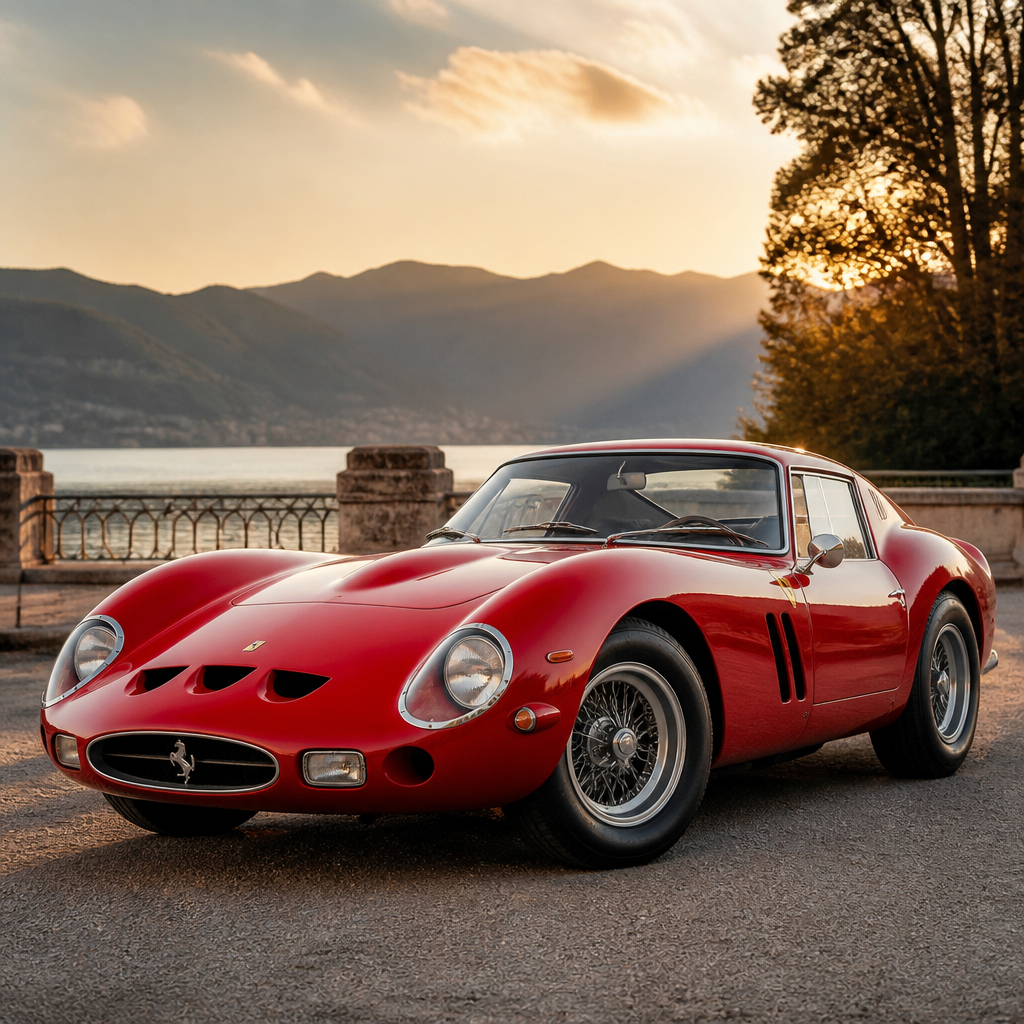
The Ferrari 250 GTO stands at the top of the classic car world because it combines motorsport success, exquisite design, extreme rarity, and unmatched collector demand in one machine. When people ask what makes a car truly valuable, they usually mean more than price alone. In the case of the Ferrari 250 GTO, value includes racing pedigree, historical importance, engineering quality, cultural mystique, and a market record that has placed it above every other collector car. Within the broader topic of classic car models and brands, the 250 GTO is the central reference point for iconic models because it sets the benchmark by which rarity, provenance, originality, and competition history are judged.
Built by Ferrari from 1962 to 1964, the 250 GTO was a homologation special created for Grand Touring racing. Homologation means a manufacturer produced a road-legal series of cars so a competition version could qualify under racing rules. The GTO name is widely understood to mean Gran Turismo Omologato. Only 36 examples were produced, a figure that immediately explains part of its scarcity, but scarcity alone does not create greatness. I have worked around collector-car valuations and auction reporting long enough to see many rare cars fail to reach this level because they lack one or more of the 250 GTO’s essential strengths. This Ferrari has all of them at once.
It matters because the 250 GTO is more than an expensive object. It is a hub model for understanding how iconic cars earn long-term status. If you want to understand why some classic cars appreciate consistently while others stagnate, the 250 GTO provides the clearest case study. It connects engineering, race results, coachwork, celebrity ownership, restoration standards, and market psychology. It also links directly to related subjects within iconic models: front-engined V12 Ferraris, homologation legends, endurance racing cars, coachbuilt design, and blue-chip collector assets. For readers exploring classic car models and brands, the Ferrari 250 GTO is the place where every major valuation principle becomes visible and measurable.
What Makes the Ferrari 250 GTO So Important
The Ferrari 250 GTO is important because it was designed to win at the highest level of GT racing while remaining eligible under period regulations. Ferrari developed it from the 250 GT SWB and equipped it with a 3.0-liter Colombo V12, typically producing around 300 horsepower. That output may sound modest by modern standards, but in a lightweight chassis weighing roughly 880 kilograms dry, it delivered exceptional performance. Contemporary road tests recorded top speeds around 174 miles per hour, making it one of the fastest road-legal cars of its era.
The engineering package was unusually coherent. The Tipo 168/62 V12, dry-sump lubrication, close-ratio gearbox, and carefully tuned suspension gave the car reliability as well as speed. The bodywork, shaped for reduced drag and improved stability, reflected lessons learned through track testing. Giotto Bizzarrini played a major role in the development of the concept, while Mauro Forghieri and Sergio Scaglietti were instrumental in refining the final form after internal changes at Ferrari. That blend of competition urgency and artisanal construction is one reason the 250 GTO remains a touchstone among iconic models.
The car proved itself where it mattered. The 250 GTO won the FIA International Championship for GT Manufacturers for Ferrari in 1962, 1963, and 1964. Individual cars also earned class wins and strong overall finishes in events such as the 12 Hours of Sebring, the Targa Florio, and the Tour de France Automobile. In the collector market, documented competition success matters far more than romantic storytelling. The 250 GTO has both legend and paperwork.
Design, Performance, and Driving Character
The Ferrari 250 GTO’s design is often described as beautiful, but beauty alone understates its purpose. Every major surface on the car reflects function. The long nose helped package the V12 and smooth airflow. The low roofline and abrupt Kamm-style tail reduced drag while keeping the car planted at speed. Air intakes, vents, and wheel-arch forms were not decorative flourishes added after the fact. They existed because the car had to cool, breathe, and remain stable during endurance racing.
Inside, the 250 GTO is austere compared with luxury grand tourers. Thin seats, exposed metal, simple instruments, and minimal sound insulation remind the driver that this is a race car adapted for the road rather than a road car modified for the track. That distinction matters. Many celebrated classics look sporting but prioritize comfort. The 250 GTO prioritizes lap times, mechanical access, and endurance reliability.
On the move, the car is mechanical in the best sense: unassisted steering, a physical gate-shift gearbox, immediate throttle response, and a rising V12 soundtrack that builds from metallic sharpness to a full racing tenor. Owners and testers regularly note that the 250 GTO rewards commitment. It is not a casual Sunday cruiser in the modern sense. It wants revs, precision, and confidence. That driving character adds significantly to its standing as an iconic model because the experience matches the mythology. Some famous collector cars disappoint when driven. The 250 GTO does not.
Why the Ferrari 250 GTO Became the Most Valuable Car in History
The Ferrari 250 GTO became the most valuable car in history because four market drivers converged: tiny production numbers, elite competition record, Ferrari brand power, and provenance-sensitive demand from global collectors. Any one of those can raise prices. Together, they create a market almost without substitutes. If a buyer wants the pinnacle front-engined competition Ferrari from the early 1960s, there are only a few realistic candidates, and the 250 GTO sits above the rest.
Private sales have established the strongest headlines. In 2018, reports widely indicated that chassis 4153 GT sold for about $70 million, a figure that reset expectations for the entire collector-car market. Auction results have also been extraordinary. In 2018, RM Sotheby’s sold 3413 GT for $48.4 million, then a public auction record for a car. These numbers are not random spikes. They reflect a long pattern of appreciation. Cars once traded for millions, then tens of millions, and now occupy a category where only a handful of buyers worldwide can realistically compete.
| Factor | Why It Raises Value | 250 GTO Example |
|---|---|---|
| Rarity | Limited supply prevents market saturation | Only 36 built |
| Racing pedigree | Competition success creates historical significance | Championship-winning GT platform |
| Provenance | Known owners and race history increase confidence | Documented period entries and chassis records |
| Originality | Matching components and correct specifications preserve authenticity | Factory-correct engine, body, and configuration |
| Brand strength | Ferrari attracts global collectors across generations | Top-tier demand at private sale and auction |
Value also rises because ownership turnover is low. The best examples are often held for decades. When supply appears only occasionally, bidders act aggressively. I have seen this pattern across blue-chip classics, but the 250 GTO amplifies it. Buyers know another opportunity may not appear for years, and the next car may have weaker race history or less desirable originality. That scarcity of opportunity is as important as scarcity of production.
Provenance, Originality, and the Chassis Number Effect
Not every Ferrari 250 GTO is valued equally. Chassis number matters because each car has an individual biography. Collectors and specialists examine race entries, finishing results, period owners, body evolution, major restorations, and whether the car retains its original engine, gearbox, rear axle, and body configuration. This is where the market becomes sophisticated. Two cars may both be authentic 250 GTOs, yet one can command a substantial premium due to a better-documented and more prestigious history.
Originality is often misunderstood. It does not mean untouched. Competition cars were repaired, updated, and sometimes rebodied in period. What matters is whether those changes occurred within the car’s active historical life and can be documented. A factory-sanctioned period modification can enhance significance, while a later alteration done for convenience may reduce it. Ferrari Classiche certification, period photographs, build sheets, and recognized historians all contribute to establishing confidence, but serious buyers still conduct independent due diligence.
This chassis-specific approach is one reason the 250 GTO functions as a hub model for iconic classics. It teaches the same rules used to assess other top-tier cars such as the Jaguar D-Type, Mercedes-Benz 300 SLR, Aston Martin DB4 GT Zagato, Shelby Cobra competition variants, and Porsche 911 Carrera RS derivatives. In every case, provenance turns a rare vehicle into a singular artifact.
The 250 GTO in the Context of Other Iconic Models
Calling the Ferrari 250 GTO the most valuable car in history does not mean other icons are unimportant. It means the 250 GTO sits at the intersection of qualities that few rivals combine. The Jaguar E-Type is more accessible and hugely influential in design, but it was produced in far larger numbers. The Mercedes-Benz 300 SL Gullwing has landmark engineering and lasting cachet, yet its competition pedigree is less concentrated in each individual example. The Porsche 356 Speedster and early 911 RS models have loyal followings and excellent usability, but they serve different segments of the market.
Even among Ferraris, the 250 GTO occupies a special tier. The 250 Testa Rossa is arguably as significant in pure racing terms and often discussed alongside it. The 250 GT SWB is a brilliant and charismatic predecessor. The 275 GTB/4, Daytona, F40, and Enzo are all landmark road cars. Yet the 250 GTO unites road eligibility, championship-winning GT credentials, handmade construction, and extreme rarity better than any of them. That is why it anchors discussions about iconic classic car models so effectively.
For readers building knowledge across this subtopic, the useful comparison is not simply price. It is category leadership. Every great marque has a model that defines its mythology: Porsche has the 911, Jaguar the E-Type, Mercedes-Benz the 300 SL, Lamborghini the Miura, and Ferrari several contenders. When the conversation narrows to the single most coveted collector car, the 250 GTO remains the reference standard.
Ownership, Restoration, and Market Realities
Owning a Ferrari 250 GTO is not only about purchase price. Insurance, transportation, specialist storage, mechanical servicing, and event preparation require expert support. The Colombo V12 needs technicians who understand period Ferrari tolerances, carburetor setup, ignition characteristics, and cooling behavior. Replacement parts are not handled like those for ordinary classics. Even when components can be fabricated or sourced through respected specialists, the standard for correctness is extremely high.
Restoration is equally nuanced. Over-restoration can damage value if finishes become too modern or details drift from period practice. The best restorers know when to preserve patina, when to repair, and when a component must be rebuilt for safety. Leading events such as the Pebble Beach Concours d’Elegance, the Goodwood Revival, and the Tour Auto reward historical accuracy, and the market watches those standards closely. Buyers want cars that can perform credibly in concours, touring, and historic competition settings without compromising authenticity.
There are also limits to treating the 250 GTO purely as an investment. Values can fluctuate with global liquidity, tax policy, and generational buying patterns. The buyer pool is tiny. Transactions are private. Authenticity disputes, if they arise, are serious. Still, the long-term resilience of the 250 GTO market comes from fundamentals rather than speculation. It is a museum-grade object that can still be driven, shown, and raced in elite historic events. Very few assets offer that combination.
The Ferrari 250 GTO remains the most valuable car in history because it satisfies every criterion that matters in the world of iconic classic models. It is rare without being obscure, beautiful without being superficial, fast without being fragile, and famous without being overrated. Its V12 engineering, GT championship record, handcrafted construction, and documented provenance create a level of desirability that no ordinary collector car can match. That is why prices have reached record territory and why the model continues to define the upper limit of automotive value.
As a hub within classic car models and brands, the 250 GTO also helps explain the wider landscape of iconic cars. It shows how homologation rules shaped road-going legends, why provenance can outweigh cosmetics, how racing success influences long-term demand, and why originality is never a trivial detail. Understanding this Ferrari makes it easier to evaluate other landmark models, from period Jaguars and Mercedes-Benz coupes to later Porsche, Lamborghini, and Aston Martin icons. The same principles repeat, but rarely with the same intensity.
If you are exploring iconic models seriously, start with the Ferrari 250 GTO and use it as the benchmark for every car that follows. Study its history, compare its market behavior, and pay attention to the standards collectors apply to each chassis. Once you understand why this Ferrari sits alone at the top, the rest of the classic car world becomes far easier to read.
Frequently Asked Questions
Why is the Ferrari 250 GTO considered the most valuable car in history?
The Ferrari 250 GTO is widely considered the most valuable car in history because it brings together every factor that serious collectors prize, and it does so at an almost unmatched level. It is not simply an old Ferrari with a high auction result. The 250 GTO combines elite racing success, exceptional design, extreme rarity, historical importance, and a level of collector demand that has remained strong for decades. Only a very small number were built, and nearly every example has its own documented story, which adds to the model’s mystique and desirability.
Its competition pedigree is one of the biggest reasons for its status. The 250 GTO was developed to win, and it succeeded in international GT racing during the early 1960s. That racing record gives the car a legitimacy that goes far beyond luxury or styling. On top of that, the bodywork is often seen as one of the most beautiful expressions of front-engine Ferrari design, blending function and elegance in a way few cars have ever matched. When a car is both historically successful and visually iconic, it tends to rise above its peers.
What truly separates the 250 GTO from other collectible cars is how all of these qualities exist in one machine at the same time. Many classic cars are rare. Some are beautiful. Others have racing history. Very few combine all three with Ferrari’s brand power and the model’s documented market performance. That is why the 250 GTO is often treated as the benchmark for automotive value, not just in terms of money, but in terms of significance.
How many Ferrari 250 GTOs were made, and why does that rarity matter so much?
The Ferrari 250 GTO is famously rare, with only 36 examples of the standard series generally recognized as having been built, along with a very small number of later related cars often discussed alongside them. In the collector world, rarity matters most when it is paired with quality, provenance, and demand. A car can be rare and still not be especially valuable if it lacks importance. The 250 GTO is the opposite case: it is scarce, highly respected, and globally desired by some of the wealthiest and most knowledgeable collectors in the world.
This low production number matters because it creates a market where supply is permanently limited. There will never be more authentic 250 GTOs, and nearly all are already known, documented, and held in prominent collections. When one becomes available, it is a major event because opportunities to buy one are exceptionally uncommon. That scarcity helps explain why values have climbed so dramatically over time. Buyers are not simply competing for a classic Ferrari; they are competing for one of the few universally recognized crown jewels of automotive history.
Rarity also amplifies the importance of each individual chassis. Each 250 GTO tends to have a deeply researched identity, including race entries, ownership records, restoration history, and factory details. That means collectors often value one example differently from another based on provenance and originality. In other words, rarity is not just about the number produced. It is about how each surviving car becomes a distinct historical artifact, with its own place in Ferrari lore and the wider collector market.
What role did racing success play in making the Ferrari 250 GTO so important?
Racing success is central to the Ferrari 250 GTO’s importance. The car was not created as a styling exercise or a road-going luxury model first and foremost. It was engineered as a high-performance grand touring competition car, designed to excel in FIA GT racing. In the early 1960s, Ferrari used the 250 GTO to build on its already formidable motorsport reputation, and the model helped the company secure major results that strengthened its legacy in endurance and GT competition.
The GTO’s performance came from a sophisticated combination of elements: a proven V12 engine, lightweight construction, refined aerodynamics, and chassis development rooted in Ferrari’s racing experience. It was fast, durable, and capable of competing successfully over long distances, which is a critical quality in historic motorsport evaluation. Collectors place enormous value on cars that were winners or serious contenders in period competition, especially when those cars remain highly original and well documented.
That competition credibility matters because it makes the 250 GTO more than a beautiful collectible. It gives the car purpose and authenticity. Enthusiasts and historians view it as a machine that earned its reputation on track, against real rivals, in a golden age of motorsport. In the classic car world, a strong racing record often transforms a desirable car into a legend. In the case of the Ferrari 250 GTO, racing success is one of the pillars that supports its extraordinary value and enduring prestige.
Are all Ferrari 250 GTOs worth the same amount?
No, not all Ferrari 250 GTOs are worth the same amount, even though every genuine example sits at the very top of the collector car market. Values can vary significantly depending on a number of factors, including provenance, originality, racing history, condition, restoration quality, ownership pedigree, and specific chassis significance. In the uppermost tier of collectible automobiles, these details matter enormously, and they can influence value by many millions of dollars.
For example, a 250 GTO with notable race entries, famous drivers, strong period results, and highly original components may command a premium over another example with a less distinguished history. Similarly, cars that retain a close connection to their factory configuration are often especially prized. Documentation also matters. A thoroughly researched and well-documented car tends to inspire more confidence, which can affect both desirability and price. Because the market for a 250 GTO is so exclusive, buyers are usually extremely sophisticated and focused on subtle distinctions.
It is also important to understand that many top-level sales happen privately rather than publicly at auction. That means headline numbers do not always tell the full story of the market. Some cars may trade for extraordinary sums because of unique circumstances, while others may be held for generations and never sold at all. So while every authentic Ferrari 250 GTO is immensely valuable, each one has its own market identity, shaped by history, originality, and collector perception.
Is the Ferrari 250 GTO valuable only because of wealthy collectors, or does it have broader historical significance?
The Ferrari 250 GTO is not valuable only because wealthy collectors want it. Collector demand certainly plays a major role in its record-setting market status, but that demand exists for deeper reasons. The 250 GTO has broad historical significance as a defining example of early 1960s performance engineering, Ferrari competition development, and coachbuilt automotive artistry. It represents a period when road-legal race cars could still embody both mechanical purity and sculptural beauty in a very direct way.
Its significance extends into automotive culture as a symbol of ultimate desirability. Even people who are not active collectors often recognize the 250 GTO as one of the most revered cars ever made. It appears repeatedly in conversations about design, motorsport history, and the evolution of the collector car market. That cultural recognition reinforces its status, but it was earned through substance: real racing success, real craftsmanship, and a real place in Ferrari’s historical timeline.
In that sense, the 250 GTO’s value reflects more than wealth concentration at the top of the market. It reflects consensus among historians, enthusiasts, restorers, auction specialists, and collectors that this is one of the most important automobiles ever produced. Price is the visible result, but the foundation is much broader. The Ferrari 250 GTO matters because it stands at the intersection of engineering excellence, motorsport achievement, rarity, beauty, and historical legacy, which is why it continues to define what true automotive value looks like.