The Jaguar E-Type remains the benchmark against which every beautiful sports car is judged, and calling it the most beautiful car ever made is less a cliché than a serious design argument. Launched in 1961, the E-Type combined sculpture, speed, and relative affordability in a way the market had never seen. As a hub within iconic classic car models, it also opens the door to broader questions: what makes a model iconic, how do engineering and styling reinforce each other, and why do some cars outgrow their era to become permanent cultural reference points? Few vehicles answer those questions as completely as Jaguar’s long-nosed, short-deck masterpiece.
When enthusiasts describe the E-Type as iconic, they mean more than high auction prices or a famous badge. An iconic model is a car that changes public taste, influences competitors, and remains instantly recognizable decades after production ends. By that definition, the E-Type belongs in the first rank alongside the Porsche 911, Mercedes-Benz 300SL, Chevrolet Corvette, Ferrari 250 series, and original Mini. It is a cornerstone model for anyone researching classic car brands because it connects design history, motorsport engineering, British manufacturing, and the rise of the global enthusiast market.
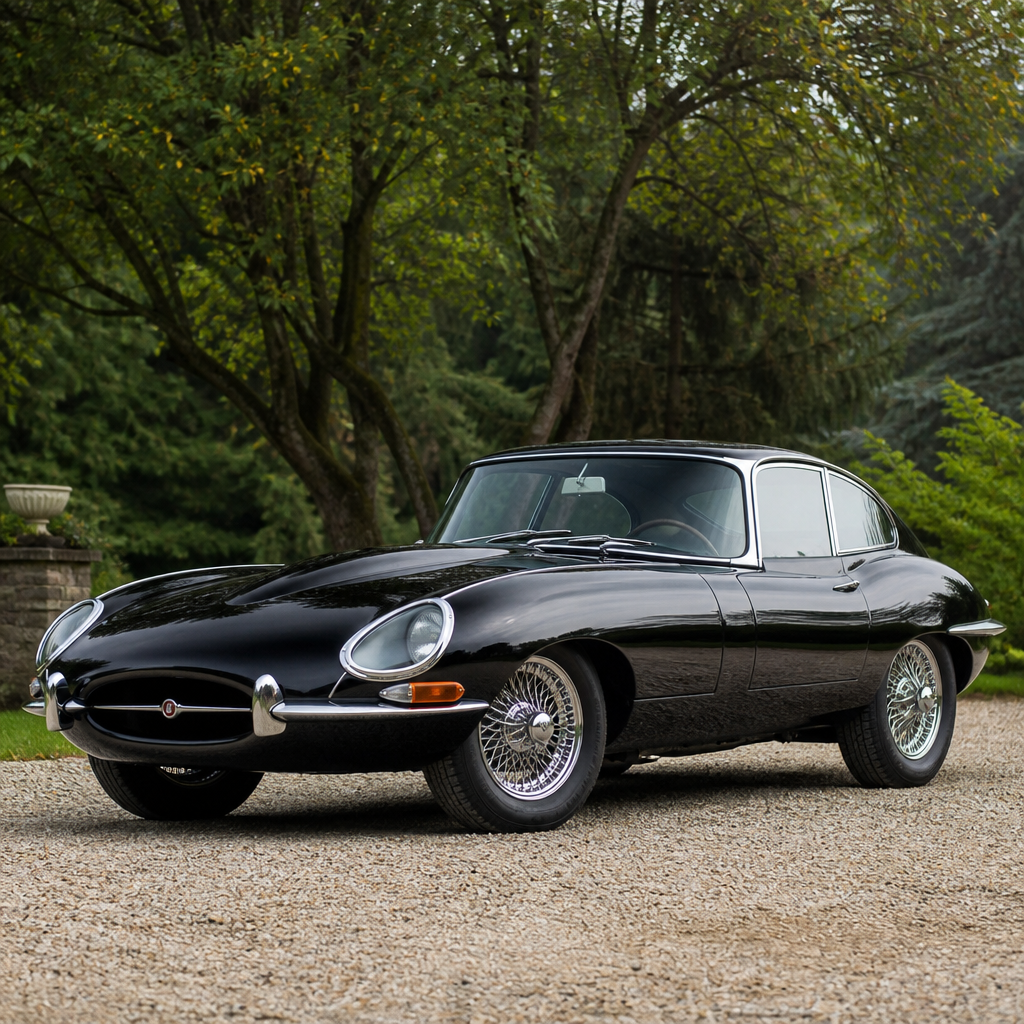
The basics matter. The E-Type, sold in some markets as the XK-E, was built from 1961 to 1974 in three main production series. Early Series 1 cars are prized for their covered headlamps, slim bumpers, toggle-switch interiors, and purer mechanical character. Series 2 cars introduced federally influenced updates, including open headlamps and revised cooling and lighting. Series 3 models brought the 5.3-liter V12, longer wheelbase roadsters, and greater grand touring refinement. Across those evolutions, the E-Type kept the essential silhouette that made crowds stop in 1961 and still fills concours lawns today.
Why does it matter now? Because the E-Type sits at the center of how collectors, restorers, and first-time classic buyers think about icon status. It is not merely a beautiful object; it is a case study in how aesthetics, engineering credibility, and market storytelling create lasting value. I have seen people who are unmoved by most classics stop mid-conversation when an opalescent silver blue roadster glides by. That reaction is the article’s starting point. To understand whether the Jaguar E-Type is the most beautiful car ever made, you have to examine design, performance, variants, ownership realities, and legacy together.
Why the Jaguar E-Type Looked Revolutionary in 1961
The E-Type looked new because it was shaped by function before fashion diluted it. Jaguar drew heavily from the D-Type racing program, particularly the aerodynamic thinking championed by Malcolm Sayer, an aircraft-trained designer who used mathematical curves rather than decorative intuition alone. The result was a bonnet that seemed impossibly long, a cabin set low and rearward, and a tail that tapered with unusual lightness. Even people who cannot name the car usually recognize the proportions immediately. That level of visual clarity is rare and is one reason the model dominates conversations about the most beautiful classic cars.
Beauty here is not just surface styling. The front hinged bonnet, enclosed on early cars around a wide oval grille, creates one uninterrupted volume from nose to windscreen. The covered headlamps on Series 1 examples are especially important because they preserve that clean front graphic. Chrome is used sparingly compared with many contemporaries, which allows the shape itself to do the work. The waistline is subtle, the fenders are muscular without being exaggerated, and the wire wheels complete the stance without visual clutter. In person, the E-Type looks lower, narrower, and more delicate than photographs suggest.
Context makes the achievement clearer. In 1961, many fast cars were still upright, ornate, or visibly compromised by packaging. The Mercedes-Benz 300SL was dramatic but older in concept. Ferraris were exotic and expensive. The Corvette was muscular but not delicate. Jaguar offered a car that looked as advanced as a race machine and sold it at a price that undercut many rivals. Enzo Ferrari is widely associated with the remark that it was the most beautiful car ever made; whether repeated exactly or not, the persistence of that attribution reflects how thoroughly the E-Type impressed even its fiercest peers.
Engineering That Supported the Shape
The E-Type would not hold its reputation if the mechanical package failed to justify the styling. Early cars used Jaguar’s proven XK inline-six, initially 3.8 liters and later 4.2 liters, with triple SU carburetors on many versions. Period tests famously recorded a top speed around 150 mph, a figure Jaguar highlighted at launch because it placed the car in genuine supercar territory for its day. Just as important, the E-Type used four-wheel disc brakes and independent rear suspension mounted in a self-contained subframe assembly, giving it technical sophistication beyond many direct rivals.
The construction was advanced for a road car. A steel monocoque passenger tub was paired with a tubular front subframe carrying the engine and front suspension. That layout helped create the low bonnet line while maintaining strength. Steering was rack and pinion, which contributed to the direct feel drivers still praise. On a good road, a sorted six-cylinder E-Type feels alive rather than heavy, with a balance between ride compliance and control that many 1960s GT cars never mastered. That dynamic credibility is essential to the car’s icon status because beauty alone rarely sustains long-term reverence.
There were compromises, of course. Cabin heat can be intrusive. The footwell is tight for taller drivers. Early cooling systems and electrical components demand careful maintenance. Braking on an unrestored car may not match modern expectations, and synchromesh on early gearboxes can feel deliberate rather than slick. Yet those realities do not disqualify the E-Type. They place it where many truly significant classics live: rewarding, charismatic, and demanding enough to remind you that engineering progress never arrives without tradeoffs.
Series 1, Series 2, and Series 3: Which E-Type Is Most Desirable?
Collectors often ask which Jaguar E-Type to buy, and the answer depends on whether the priority is purity, usability, or value. Series 1 cars, especially early 3.8-liter examples and the 4.2-liter fixed head coupe, are generally the most coveted because they retain the covered headlamps and the original visual intent. The 4.2 introduced a more user-friendly all-synchromesh gearbox and better torque, making it a favorite among drivers who want early looks with slightly improved practicality. Flat-floor early cars and outside bonnet latch examples sit at the very top of the rarity ladder.
Series 2 models, built as regulations tightened, are less visually delicate but often make sensible entry points. Better cooling, improved brakes, and revised electrics can support regular use, even if the open headlamps and larger lighting elements soften the original front-end purity. Series 3 cars divide opinion because the V12, wider grille, and flared arches changed the car’s visual balance. Yet the V12 brings turbine-smooth power and mature grand touring ability. A Series 3 roadster on modern radial tires is more usable over distance than many purists admit.
| Series | Years | Key Features | Best For |
|---|---|---|---|
| Series 1 | 1961–1968 | Covered headlamps, slim bumpers, 3.8 or 4.2 XK six | Collectors seeking the purest design |
| Series 2 | 1968–1971 | Open headlamps, improved cooling, federal updates | Buyers wanting value and easier use |
| Series 3 | 1971–1974 | 5.3-liter V12, longer wheelbase roadster, grand touring character | Drivers prioritizing smoothness and touring comfort |
Body style matters as much as series. The roadster delivers the purest open-air drama, but the fixed head coupe may be the design connoisseur’s choice because its roofline completes the car’s flow from bonnet to tail. The 2+2, introduced for added practicality, is historically important but usually less prized aesthetically and financially. For most buyers, the best E-Type is the one aligned with intended use. Concours collectors chase originality. Weekend drivers value mechanical sorting. Touring owners prioritize cooling, seat comfort, and a gearbox they trust in traffic.
How the E-Type Compares With Other Iconic Classic Cars
To judge whether the E-Type is the most beautiful car ever made, it helps to compare it with other recognized icons. The Mercedes-Benz 300SL Gullwing offers unmatched theatricality and engineering significance, especially with fuel injection and those famous doors, but its proportions are more upright and technical. The Ferrari 250 GT SWB and 250 GTO are visually exquisite, yet they were built in tiny numbers and occupied a different price universe. The Porsche 911 achieved a design continuity no rival can match, though its beauty is evolutionary rather than shocking at first sight.
The Chevrolet Corvette, particularly the 1963 split-window coupe, represents American design confidence and remains a landmark in fiberglass sports-car history. The Aston Martin DB5 is cinematic and elegant, but more formal. The Alfa Romeo 33 Stradale may be even more exotic, though its rarity removes it from ordinary cultural life. The E-Type’s special strength is accessibility within aspiration. It looked like a Le Mans refugee, performed like an elite GT, and was visible enough in period to enter mainstream imagination. That combination is why it appears so often in books, museum collections, and beginner guides to iconic car models.
In practical terms, the E-Type also bridges enthusiast categories. It interests design historians, race fans, restorers, collectors, and first-time classic buyers. A 250 GTO is almost abstract as a market object. An E-Type is still a car many people can realistically inspect, buy, maintain, and drive. That real-world presence deepens its cultural hold. Icon status strengthens when a machine exists not only in mythology but also in garages, on rallies, and at specialist workshops where owners debate carburetor tuning, bonnet fit, and paint codes with equal seriousness.
Ownership, Restoration, and Market Reality
Anyone searching Jaguar E-Type buying guide, Jaguar E-Type restoration, or Jaguar E-Type value should start with structure and provenance. Rust is the defining risk. Check floors, sills, door gaps, bonnet frames, boot floor, rear suspension mounting points, and the complex areas where panels meet around the nose. Because the bonnet is both large and expensive to repair correctly, poor accident restoration can become a major cost center. Matching numbers matter, especially on Series 1 cars, but quality of restoration often matters more for owners who intend to drive the car regularly.
Mechanical parts support is generally good thanks to Jaguar specialists and a mature restoration network. Companies such as SNG Barratt, Martin Robey, and numerous independent marque experts supply components or expertise. Rebuilt XK engines can be robust when assembled properly, but cooling system health, carburetor setup, and ignition quality are critical. I always advise buyers to budget for sorting even after a professional pre-purchase inspection. Classics of this significance are rarely flawless, and deferred maintenance on brakes, suspension bushes, wheel bearings, or wiring can quickly reshape the true ownership cost.
Market values vary by series, originality, and body style. Early Series 1 roadsters and coupes remain the benchmark and can command substantial premiums, especially with documented history and correct finishes. Series 2 cars usually offer a lower entry point, while Series 3 examples can represent strong value for people who want the badge, shape, and experience without paying the highest collector tax. The smartest approach is to buy the best car you can afford from a known specialist or informed private owner, then drive it enough to keep systems healthy and your judgment honest.
Why the Jaguar E-Type Still Matters Today
The E-Type still matters because it defines what an iconic model page should explain: lasting influence, not just period success. Modern Jaguar design has referenced its proportions repeatedly, most directly through the F-Type’s long bonnet and haunched rear stance. Beyond Jaguar, the E-Type shaped expectations for what a sports car should communicate before the engine even starts. It taught generations that beauty could be aerodynamic, that performance could be elegant, and that a production car could carry race-bred ideas into public life without looking compromised or industrial.
It also remains an educational car. Museums use it to discuss postwar British industry and design. Auction houses use it to benchmark desirability within 1960s GTs. Restoration shops use it to demonstrate the difference between cosmetic refurbishment and structural correctness. For new enthusiasts exploring classic car brands and iconic models, the E-Type is often the gateway car that leads outward to the Aston Martin DB series, Ferrari front-engine grand tourers, Shelby Cobra, Lotus Elan, and Porsche 356. As a hub topic, it naturally connects to every major conversation in classic motoring.
The simplest answer to the title question is yes, the Jaguar E-Type has the strongest claim to being the most beautiful car ever made because no rival blends purity, proportion, engineering legitimacy, and public impact so completely. Not everyone will prefer it to a 300SL, DB5, or 250 SWB, and taste always leaves room for dissent. But if you want one classic that explains why certain models become immortal, start here. Study the series, compare the body styles, inspect real cars, and follow that curiosity deeper into the world of iconic classic car models.
Frequently Asked Questions
Why is the Jaguar E-Type so often called the most beautiful car ever made?
The Jaguar E-Type earns that title because its shape feels both dramatic and inevitable, as if every line belongs exactly where it is. Introduced in 1961, it arrived with a long, tapering bonnet, a low roofline, delicate glasshouse proportions, sensuous rear haunches, and an overall stance that looked fast even when parked. What makes the design especially persuasive is that it never appears overworked. There is very little visual clutter, and the car’s surfaces flow with a kind of sculptural confidence that many later sports cars, despite being technically superior, have struggled to match.
Part of the E-Type’s enduring appeal is the way it balances elegance and aggression. It is undeniably beautiful, but not fragile or ornamental. It looks athletic, mechanical, and purposeful. That matters, because automotive beauty tends to age best when it grows out of function rather than decoration. The E-Type’s proportions were deeply tied to performance thinking, including aerodynamic concerns and packaging around a powerful straight-six engine. As a result, the car does not merely look stylish in a period way; it still looks convincing by modern standards.
Its reputation has also been reinforced by decades of cultural validation. Designers, historians, collectors, and enthusiasts have repeatedly pointed to the E-Type as a high point of automotive form. Yet the reason the label persists is not simply nostalgia. Even today, when placed next to many celebrated sports cars, the E-Type still has the ability to stop people in their tracks. That is usually the strongest argument of all: true design icons do not need explanation to make an impression, though they reward close study when you give them one.
What made the Jaguar E-Type such a revolutionary car when it launched in 1961?
The E-Type was revolutionary because it combined exotic looks, serious speed, and comparatively accessible pricing in a package that felt almost too good to be real. In the early 1960s, cars that looked this advanced and performed this convincingly were usually reserved for far more expensive marques. Jaguar disrupted that expectation. Here was a machine capable of around 150 mph in period tune, with race-bred engineering influences and a body that seemed closer to rolling art than ordinary road transport, yet it was offered at a price that made established competitors look vulnerable.
Its engineering was a major part of the shock. The E-Type used a monocoque center section with a front subframe, independent rear suspension, disc brakes, and an advanced chassis layout derived in spirit from Jaguar’s competition experience, especially the D-Type. This gave the car a sophistication that stood out sharply in its era. It was not merely a beautiful object wrapped around conventional hardware. The technology and the aesthetics were pulling in the same direction, which is one reason the E-Type made such a deep impression on launch.
It also arrived at exactly the right cultural moment. The 1960s were increasingly fascinated by speed, modernity, and industrial elegance, and the E-Type captured all three. It symbolized a more glamorous and optimistic vision of motoring, where performance did not have to come at the expense of style. That combination helped establish the model not just as a successful sports car, but as a benchmark. Even now, when people discuss iconic classic car models, the E-Type often serves as a reference point for what happens when engineering ambition, pricing strategy, and design brilliance align almost perfectly.
How did the Jaguar E-Type’s engineering contribute to its beauty?
One of the strongest arguments in the E-Type’s favor is that its beauty was not superficial. The car looks the way it does largely because its engineering demanded and enabled those proportions. The long bonnet was not simply a stylistic flourish; it accommodated the engine and reflected Jaguar’s performance priorities. The low nose, clean flanks, and tucked cabin helped create a shape that appeared streamlined and efficient. In other words, the E-Type’s elegance came from mechanical honesty as much as artistic intuition.
This relationship between engineering and styling is what separates many truly iconic cars from merely attractive ones. When the technical package supports the visual idea, the result tends to feel coherent. On the E-Type, that coherence is everywhere. The narrow body, long wheelbase proportions, and compact passenger compartment all reinforce the impression of speed and balance. The covered headlamps on early cars, the subtle oval grille opening, and the smooth body surfacing all contribute to an aerodynamic and unified appearance rather than a collection of decorative cues.
The rear suspension is another example of how engineering depth elevated the car’s status. Jaguar’s independent rear suspension helped improve ride and road holding, but it also allowed the E-Type to maintain a lower, more sophisticated stance than many contemporaries. The overall design therefore communicated technical advancement without needing to advertise it loudly. That is often the hallmark of great industrial design: the object looks right because the underlying thinking is right. The E-Type remains such a compelling subject because its mechanical intelligence and visual beauty are inseparable.
What makes the Jaguar E-Type an iconic classic car model rather than just a pretty one?
An iconic classic car is more than attractive styling. It needs historical significance, emotional impact, recognizability, and lasting influence. The Jaguar E-Type checks all of those boxes. It changed expectations at launch, became instantly recognizable around the world, and has remained central to conversations about sports car design for more than six decades. Plenty of cars are admired in hindsight, but relatively few continue to shape the standards by which later designs are judged. The E-Type does exactly that.
Its icon status also comes from breadth of appeal. Hardcore enthusiasts respect its engineering pedigree and its links to Jaguar’s competition-era thinking. Designers study its proportions and restraint. Collectors value its place in automotive history. Even people with little knowledge of classic cars often respond to it instinctively because the silhouette is so memorable. That wide recognition matters. An icon transcends its niche and becomes part of the broader cultural imagination, which is precisely what happened with the E-Type.
Just as important is the fact that the E-Type represents an idea, not just a model line. It stands for the moment when performance, beauty, and relative attainability came together in unusually pure form. That is why it often acts as a gateway within the wider world of iconic classic car models. Once people start asking why the E-Type matters, they inevitably end up asking larger questions about what creates automotive greatness in the first place. Cars become iconic when they define a standard and continue to provoke admiration, debate, and aspiration long after their original era has passed. The E-Type remains one of the clearest examples.
Does the Jaguar E-Type still deserve its legendary reputation today?
Yes, though with an important distinction: the E-Type deserves its reputation as a design and historical landmark even if modern drivers may find aspects of its ergonomics, heat management, maintenance needs, or dynamic behavior distinctly vintage. Legendary cars do not have to outperform contemporary machines to remain great. The E-Type’s significance lies in how completely it captured a moment in automotive history and how little its visual and conceptual power have faded since. Seen in that light, its reputation is not inflated by nostalgia so much as sustained by continued relevance.
Modern evaluation actually strengthens the case in some ways. We now have decades of additional sports car history to compare against, and the E-Type still emerges as unusually complete in design terms. Many famous performance cars excel mechanically but are visually compromised. Others are beautiful but technically ordinary. The E-Type remains rare because it was both advanced and gorgeous, and it delivered those qualities to a broader audience than many of its rivals. That combination helps explain why it is still routinely cited in discussions of the greatest-looking cars ever built.
Its legend also survives because it invites ongoing debate rather than shutting it down. The phrase “the most beautiful car ever made” is subjective by nature, and there will always be alternatives proposed, from pre-war coachbuilt masterpieces to mid-century Italian exotics. But the E-Type’s power is that it belongs in that top-tier conversation without strain. Whether one considers it the single most beautiful car ever made or simply one of the strongest candidates, its place in the argument is secure. Very few automobiles can claim that kind of lasting authority, and that is exactly why the E-Type continues to matter.