Classic cars have always done more than fill a frame; in film and television, they shape character, signal status, define eras, and sometimes become as memorable as the actors driving them. When people talk about classic cars in film and TV, they usually mean vehicles built roughly between the 1910s and the late 1980s that retain historical, stylistic, or cultural significance, then appear on screen as storytelling tools rather than simple transportation. In production meetings, these cars are rarely chosen at random. They are selected because their lines, sounds, materials, and brand associations communicate meaning instantly, often before a single line of dialogue is spoken.
That matters because screen media has influenced classic car culture for generations. I have seen demand for certain models spike after a film release, especially when the car is tied to a strong hero image, a chase sequence, or a nostalgic setting. A well-placed car can elevate a period drama, authenticate a police procedural, or anchor a coming-of-age story. It can also reshape the real collector market. Cars such as the Ford Mustang fastback from Bullitt, the DeLorean DMC-12 from Back to the Future, and the 1977 Pontiac Trans Am from Smokey and the Bandit all gained long afterlives through media exposure. For enthusiasts, restorers, prop masters, and casual viewers alike, this intersection of machines and storytelling sits at the center of classic car culture and lifestyle.
As a hub topic, movies and media includes more than famous chase scenes. It covers vehicle casting, historical research, transportation logistics, continuity, camera rigs, stunt preparation, licensing, replica builds, preservation concerns, and the aftereffects on auctions, clubs, tourism, and memorabilia. It also includes television, where recurring cars often become part of a show’s identity over many seasons. Think of the 1969 Dodge Charger in The Dukes of Hazzard, the 1982 Pontiac Firebird Trans Am in Knight Rider, or the 1975 Ford Gran Torino in Starsky & Hutch. These are not background props. They are recurring visual signatures that help audiences remember a series.
This article maps the full landscape behind the scenes. It explains how productions choose classic cars, how they prepare them for filming, why certain models become iconic, what practical compromises crews make, and how screen appearances influence collector values and public memory. If you want a single starting point for understanding classic cars in movies and television, this guide covers the essential questions clearly and completely.
Why Classic Cars Work So Well on Screen
Classic cars work in visual media because they communicate information fast. A 1959 Cadillac suggests excess and postwar optimism. A battered 1970s sedan can imply economic strain, municipal decline, or blue-collar realism. A polished 1961 Jaguar E-Type points to taste, money, and European sophistication. Production designers rely on those associations because audiences read cars almost subconsciously. Shape language matters: tailfins, chrome bumpers, hidden headlights, hood scoops, and vinyl roofs all locate a story in time and class.
They also photograph well. Older cars often have stronger silhouettes than modern vehicles, with clearer proportions and more reflective trim. Cinematographers use those surfaces to catch practical light, street neon, or sunrise highlights. On sound stages and night shoots, chrome and curved glass can produce dramatic reflections that help a vehicle feel alive. Sound plays a role too. Carbureted V8s, mechanical fuel pumps, and older door latches create tactile audio cues that modern cars often lack. In editing, those cues reinforce authenticity.
There is another advantage: classic cars support worldbuilding without exposition. In Mad Men, period cars do heavy lifting because they reinforce the social codes of 1960s America. In Once Upon a Time in Hollywood, rows of correct background cars turn Los Angeles into a believable 1969 streetscape. In television crime dramas set in earlier decades, the right fleet vehicles, taxis, and family sedans make the setting credible before the plot fully unfolds.
How Productions Choose the Right Vehicle
Vehicle selection usually begins with script breakdown. The transportation coordinator, picture car coordinator, production designer, director, and sometimes the stunt coordinator review each scene to determine what the car must do. Does it need to establish period accuracy, support a character arc, survive repeated takes, perform a slide, carry a camera rig, or simply park convincingly in the background? Those answers narrow the list quickly. A pristine concours example may be visually ideal yet impractical if the script requires hard driving or body damage.
Character logic guides the final choice. A disciplined detective may drive something solid and understated, such as a late-1960s Ford Galaxie or Chevrolet Biscayne. A flamboyant antihero might get a bright muscle car with aftermarket wheels. Family income, geography, and year specificity all matter. A show set in 1974 cannot casually use a 1977 grille design without risking credibility. Good productions check trim levels, paint codes, hubcaps, badges, and regional registration details because viewers notice.
Sources for picture cars include specialist rental houses, marque clubs, private collectors, museums, dealers, and studio fleets. In my experience, private owners are often invaluable because they know the quirks of their vehicles and can supply period-correct accessories. However, owner-supplied cars require clear contracts covering insurance, transport, downtime, potential damage, and whether modifications such as hidden kill switches, tow points, or camera mounts are permitted.
What Happens Before the Cameras Roll
Once a classic car is booked, preparation begins. Mechanical reliability comes first. A vehicle may look perfect but still need cooling system work, ignition tuning, fresh belts, brake inspection, and fuel system cleaning before a long shooting day. Ethanol-blended fuel can create issues for older hoses and carburetor components, so experienced teams inspect for leaks and vapor lock risk. Tires are another concern. Show-quality bias-ply tires may suit a static shot but not a stunt lane change.
Next comes continuity planning. Productions document every visible detail: paint condition, wheel type, license plates, dashboard layout, trunk contents, and even dirt patterns. If a scene is filmed over several days, those details must match from shot to shot. Hero cars used for close-ups are often paired with duplicates. One may be cosmetically perfect, another modified for stunt work, and a third prepared for interior camera mounting. That is standard practice on larger productions because a single irreplaceable car creates scheduling risk.
Safety modifications are common but usually hidden. Crews may install battery cutoffs, upgraded seat belts, fire extinguishers, brake improvements, transmission coolers, or remote shutoff systems. For precision stunt driving, some cars receive reinforced suspension components or welded differentials, depending on the maneuver. When a car is too rare to endanger, productions build replicas or use fiberglass body shells over modern chassis. Purists sometimes dislike this, but it keeps historic vehicles from being destroyed.
Iconic Screen Cars and Why They Endure
Some screen cars achieve lasting fame because they combine visual distinction with narrative purpose. The Highland Green 1968 Ford Mustang GT fastback in Bullitt remains influential because the car’s restrained styling matched Steve McQueen’s controlled persona, while the San Francisco chase emphasized weight transfer, sound, and geography instead of visual gimmicks. The DeLorean in Back to the Future became iconic for a different reason: its stainless steel body and gullwing doors already looked futuristic, making it an ideal time machine even before the flux capacitor was introduced.
Television creates a different kind of durability because repetition builds attachment. KITT from Knight Rider blended 1980s technology fantasy with a familiar production car shape, making it aspirational yet attainable in posters and toy form. The General Lee became inseparable from jump-heavy action, Southern iconography, and weekly episodic storytelling. Magnum P.I.’s Ferrari 308 GTS projected glamour and place, tying the car to Hawaii’s roads and sunlight. In each case, the vehicle did more than appear; it expressed the show’s tone.
| Vehicle | Production | Why it mattered |
|---|---|---|
| 1968 Ford Mustang GT fastback | Bullitt | Defined the modern car chase with realistic sound, geography, and restrained hero styling |
| DeLorean DMC-12 | Back to the Future | Turned an unusual car into a permanent pop culture symbol through concept-driven design |
| 1969 Dodge Charger | The Dukes of Hazzard | Became a television icon through repeated stunts and a highly recognizable visual identity |
| Pontiac Firebird Trans Am | Knight Rider | Linked emerging tech fantasy with a production sports coupe audiences knew |
| Ferrari 308 GTS | Magnum P.I. | Signaled lifestyle, location, and charisma in a weekly series format |
Stunts, Camera Work, and Practical Tradeoffs
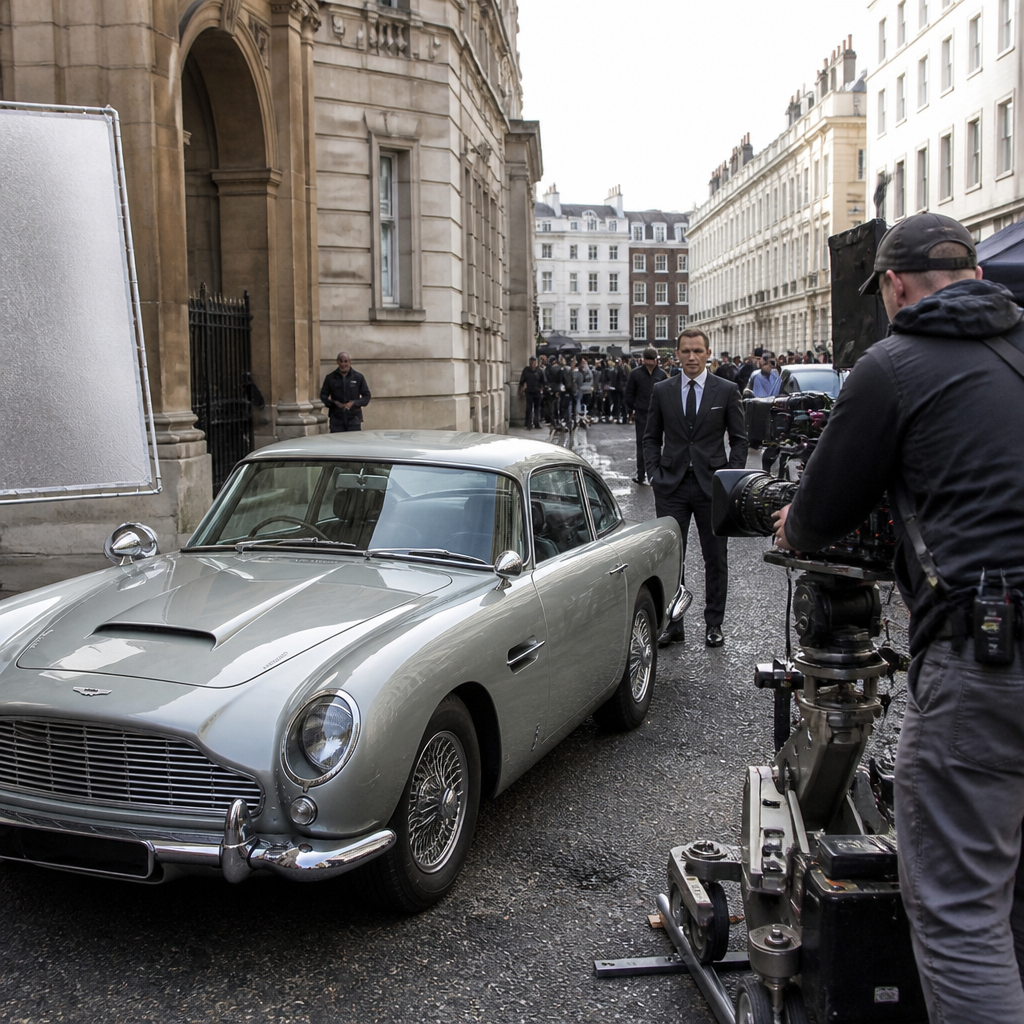
Filming classic cars involves constant compromise between authenticity and practicality. Directors want the real car on screen, but stunt teams need predictability, repeatability, and safety. That usually means preparing multiple versions of one vehicle. A hero car handles close shots. A stunt car may have a roll cage, racing seats, cutoff switches, and altered steering angle. Insert cars capture pedal work or dashboard shots. Tow rigs and process trailers allow dialogue scenes without requiring actors to drive while delivering lines.
Camera placement changes how a classic car behaves. Hood mounts affect paint protection and vibration. Suction rigs work only on suitable surfaces and demand careful load limits. Russian arms and tracking vehicles reduce risk during moving shots but require road control and time. For interior scenes, older cabins are tighter than they appear, especially with period steering wheels and bench seats. Crews sometimes remove windshields, doors, or even roof sections on duplicate shells to get the angle they need.
Weather and heat are major factors. Many classics overheat in stop-start production traffic, especially under high ambient temperatures and repeated idling. Electrical systems may struggle with added radio gear or lighting. Spare parts support is therefore essential. Good transportation departments carry belts, hoses, ignition parts, fluids, fuses, wheel cylinders, and often a backup starter or alternator. On period productions, one failed background car can disrupt the illusion of an entire street.
Historical Accuracy, Replicas, and Common Mistakes
Authenticity depends on more than finding an old car. The wrong wheel covers, side mirrors, dealer stickers, or head restraints can place a vehicle several years off. Productions set in one exact month must consider model-year release timing, not just decade aesthetics. I have watched viewers forgive dramatic compression in timelines but immediately spot a later bumper design. That is why top productions hire automotive researchers and use reference archives, factory brochures, registration records, and marque experts.
Replicas serve an important purpose. If a production needs crashes, jumps, or heavy weather exposure, originals may be too valuable or too scarce. The challenge is building a replica that reads correctly on camera. Proportions, ride height, wheel offset, and interior touchpoints matter more than many people expect. Audiences may not identify the exact technical flaw, but they sense when something looks wrong. Digital effects can help remove safety equipment or multiply period traffic, yet practical cars still provide the best lighting interaction and tire contact realism.
Common mistakes include over-restoring every vehicle, using paint that is too glossy for an ordinary family car, fitting radial tires where period bias-ply behavior would look different, or selecting colors based on modern taste rather than period sales patterns. Real streets contain workaday cars, faded finishes, and mixed condition levels. Productions that remember this usually feel more truthful.
The Real-World Impact on Classic Car Culture
Screen exposure changes markets and communities. After a breakout appearance, parts demand often increases, tribute builds multiply, and clubs gain new members. Auction houses such as Barrett-Jackson, Mecum, and RM Sotheby’s frequently reference screen history because provenance adds value, especially when documentation is strong. A confirmed hero car, screen-matched stunt car, or studio-backed replica can command substantial premiums over comparable examples without media ties.
The effect reaches beyond prices. Film tourism sends enthusiasts to chase roads, museums, studio exhibits, and filming locations. Restoration shops receive commissions to recreate famous liveries, wheels, push bars, light bars, or interior details. Publishers and video channels produce deep dives on continuity errors, build histories, and surviving examples. At the same time, popularity can create distortion. Buyers sometimes chase image over mechanical condition, paying too much for mediocre cars that merely resemble a famous screen vehicle.
For collectors and fans, the smartest approach is to appreciate both the fantasy and the engineering. The best movie and TV cars endure because they connect design, performance, and narrative in one memorable object. Explore the related guides within this classic car culture and lifestyle hub, compare your favorite screen cars, and use that curiosity to learn more about the history behind the machines you remember most.
Frequently Asked Questions
Why are classic cars so important in film and television storytelling?
Classic cars matter on screen because they communicate information instantly and visually. A well-chosen vehicle can tell the audience what era they are in, what kind of person a character is, and how that character wants to be seen. A pristine luxury sedan can suggest wealth, power, or old-money restraint, while a worn pickup or a dented coupe can hint at struggle, practicality, rebellion, or nostalgia. In many productions, the car is treated almost like a costume extension for the character, except it also moves through space, shapes blocking, influences camera angles, and contributes to sound design.
They also help establish authenticity. In period productions, a believable world depends on more than wardrobe and architecture. Streets filled with the wrong vehicles can break the illusion immediately, so classic cars become essential world-building tools. Even in contemporary stories, an older car can signal emotional attachment, family history, mechanical passion, or a refusal to let go of the past. That is why certain vehicles become inseparable from the roles they appear in. Viewers do not just remember the scene; they remember the silhouette, the engine note, the interior details, and the way the car supported the story’s mood.
In the best cases, classic cars are not background decoration. They become part of the narrative language. They can introduce a character before a single line is spoken, reinforce themes like freedom or decline, and sometimes become symbols in their own right. That lasting impact is a major reason classic cars in film and TV remain such a powerful part of screen culture.
How do filmmakers choose the right classic car for a movie or TV show?
Choosing the right classic car is usually a careful creative and logistical decision, not a random styling choice. Directors, production designers, picture car coordinators, prop departments, and sometimes writers all have a say in selecting vehicles that fit the world of the story. The first question is usually narrative: what does this car need to say? If the character is ambitious, polished, and image-conscious, the production may look for a vehicle with elegant lines and strong status associations. If the character is rugged, eccentric, practical, or emotionally attached to the past, the car selection will reflect that instead.
Time period is another major factor. Productions set in specific decades need vehicles that match not only the year, but also the social and regional context of the story. A car that technically existed in a given year may still feel wrong if it would have been too expensive, too rare, or too geographically unlikely for that character. Filmmakers also consider condition. A showroom-perfect classic sends a very different message than the same model with faded paint, repaired trim, or a cracked steering wheel. Those details can be intentionally adjusted to fit a character’s life and history.
Then there are practical production concerns. The car has to work on camera, fit actors comfortably, allow for rigging and filming, and survive repeated takes. Some productions need multiple versions of the same car, including hero cars for close-ups, stunt cars for action, and modified cars for camera mounts or safety needs. Availability, insurance, transport, maintenance, and replacement parts all matter. In other words, selecting a classic car is where storytelling, historical research, and production reality all meet.
What happens behind the scenes to prepare classic cars for filming?
Behind the scenes, classic cars used in film and television often go through extensive preparation before they ever appear on camera. Picture car teams inspect mechanical systems, test reliability, and make sure each vehicle can perform exactly as the scene requires. Depending on the production, that may mean restoring a car to period-correct condition, subtly aging it to look lived-in, or modifying it so it can handle low-speed tracking shots, repeated stops and starts, night shoots, and long filming days. Reliability is critical, because even the most visually perfect car becomes a problem if it cannot start on cue or idle properly during dialogue scenes.
Cosmetic preparation is just as important. The exterior finish, chrome, tires, badges, license plates, upholstery, and dashboard details all need to support the story and hold up under close camera scrutiny. Sometimes a production wants a museum-level appearance. Other times, they want dust, road grime, sun fading, or interior wear that feels natural to the character’s lifestyle. These touches are often carefully designed rather than accidental. What looks casual on screen is frequently the result of deliberate art direction.
Safety and filming requirements also shape preparation. Hidden kill switches, reinforced components, tow setups, precision driving adjustments, and camera rig accommodations may be added without changing the visible look of the car. If a sequence involves stunts, multiple duplicate vehicles may be sourced so the hero car can be preserved for beauty shots while another version handles risky action. For productions that feature rare classics, specialist mechanics and handlers are often on set. The result is a balancing act between preservation, performance, and storytelling, with every detail managed to make the car look effortless on screen.
Do classic cars ever become characters in their own right?
Yes, and that is one of the most fascinating reasons audiences stay so attached to them. Some classic cars do much more than support a scene; they develop identity, meaning, and emotional presence. A car can become a character when the production gives it recurring screen time, memorable entrances, distinctive sound, and a clear relationship to the people around it. Once that happens, the audience starts recognizing the vehicle not as a prop, but as a story element with personality. It may symbolize independence, danger, sophistication, memory, or transformation.
This often happens when the car reflects a protagonist’s inner life. A lovingly maintained classic can represent discipline, pride, heritage, or obsession. A damaged or unstable vehicle can mirror chaos or decline. In road stories, crime dramas, comedies, and action series, the car often becomes the physical space where important conversations happen, tensions rise, secrets are revealed, and relationships evolve. That repeated dramatic function gives the vehicle a presence that feels character-like, even though it never speaks.
Visual identity plays a major role too. Certain body shapes, paint colors, grilles, rooflines, and engine notes are so distinctive that they become unforgettable. Once audiences associate those features with a particular story, the car starts carrying emotional weight every time it appears. That is why some screen-used classics become cultural icons long after the film or show ends. Their significance comes from more than design alone; it comes from how successfully the production used them to create memory, mood, and meaning.
What challenges do productions face when using classic cars in film and TV?
Using classic cars on screen can be incredibly rewarding, but it also comes with serious challenges. The most obvious issue is availability. Some period-appropriate vehicles are rare, expensive, privately owned, or difficult to source in the quantities a production needs. If a script requires multiple matching cars for action scenes, continuity, or backup purposes, the search becomes even harder. Insurance costs can also be significant, especially when the vehicle has high collector value or irreplaceable historical importance.
Mechanical reliability is another major concern. Many classic cars require specialized knowledge, hard-to-find parts, and careful maintenance. Even when they are beautifully restored, they were not built to modern production expectations. Long idle periods, hot lights, repeated takes, precision maneuvers, and stop-start traffic control can put stress on older systems. That means productions often rely on expert mechanics and transport specialists to keep the cars functional and safe. Scheduling can also be affected if a rare vehicle needs repairs or cannot perform in bad weather.
There is also the challenge of balancing historical accuracy with cinematic needs. A fully authentic classic may not be ideal for interior filming, camera placement, stunt work, or actor comfort. Productions sometimes need discreet modifications to make the car workable on set, but those changes have to remain invisible to the audience. Continuity presents another layer of difficulty, since every scratch, accessory, fuel level, and weathering mark needs to match from shot to shot. In short, featuring classic cars successfully requires planning, technical expertise, and respect for both storytelling and automotive history. When it is done well, the effort pays off in atmosphere, authenticity, and unforgettable screen presence.