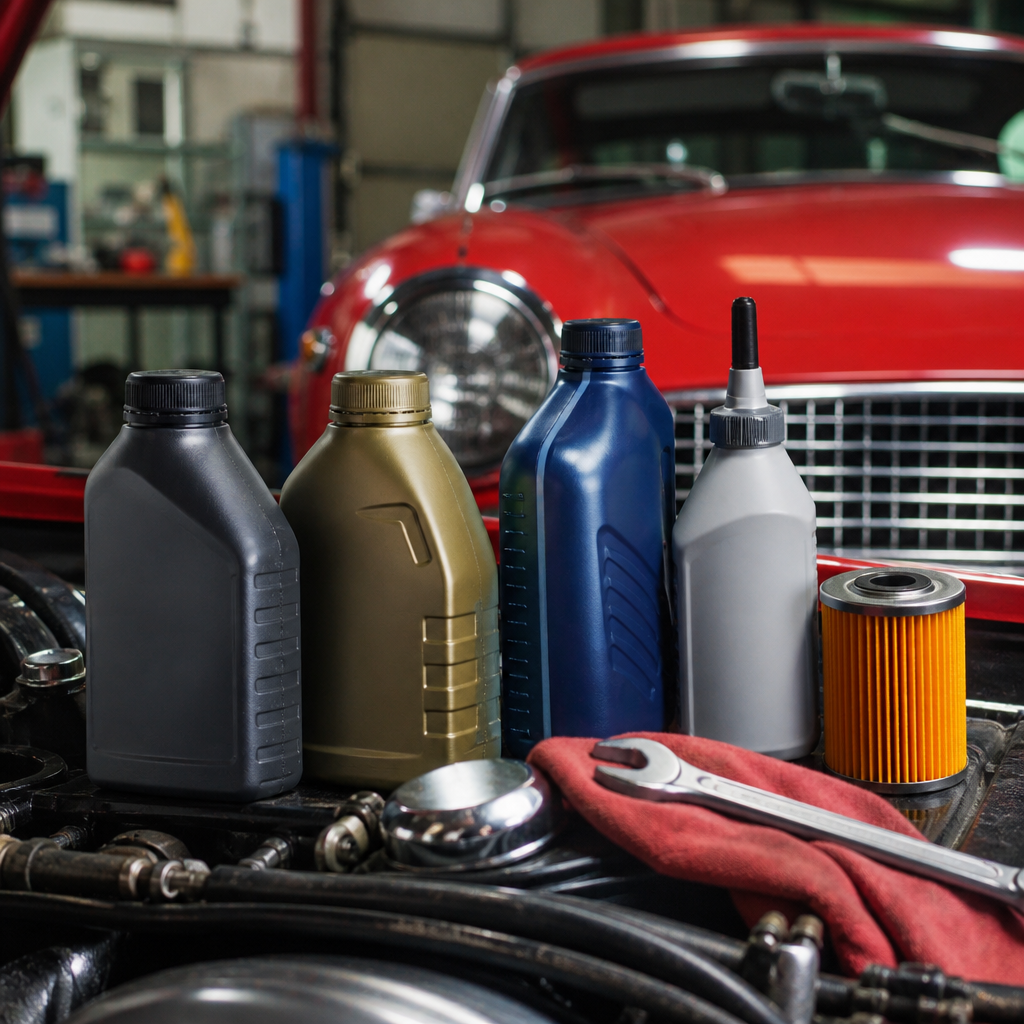
Choosing the best oil and fluids for classic cars is one of the most important maintenance decisions any owner can make, because older engines, gearboxes, brakes, and cooling systems were designed around chemistries that differ sharply from many modern products. In the workshop, I have seen beautifully restored cars suffer noisy valve trains, weak synchros, leaking seals, and clogged radiators simply because a well-meaning owner used whatever fluid was on sale at a parts store. Classic car maintenance starts with understanding what each fluid does, how period materials react to it, and why the correct specification matters just as much as the brand on the bottle.
For classic cars, “best” does not mean newest or most expensive. It means a lubricant or service fluid that matches the engine design, metallurgy, gasket materials, operating temperatures, and driving pattern of the vehicle. A flat-tappet camshaft V8 from the 1960s has different anti-wear needs than a roller-cam modern engine. A British sports car with yellow-metal gearbox components may need a very different gear oil from a rear axle hypoid differential. Even coolant choice can affect soldered brass radiators, cast-iron blocks, and water pump life. Brake fluid selection is equally critical, especially in cars that sit for long periods or still use original-style rubber components.
This maintenance tips hub explains the best oil and fluids for classic cars in plain language, with practical guidance you can apply whether you own an air-cooled Porsche, a chrome-bumper MG, a carbureted American muscle car, or a postwar saloon. It covers engine oil, transmission and differential fluids, coolant, brake fluid, power steering fluid, grease, and fuel-system additives, while also outlining inspection intervals and common mistakes. If you are building a broader restoration and maintenance plan, this article should sit at the center, because fluid choice influences wear, starting behavior, corrosion control, and long-term reliability more than almost any other routine service decision.
Engine Oil: Matching Viscosity and Additives to Older Designs
The best engine oil for classic cars usually depends on bearing clearances, oil pump design, ambient temperature, and valve train type. Many classics were engineered around mineral oils in viscosities such as 10W-30, 15W-40, or 20W-50, and they often tolerate or even prefer these grades over ultra-thin modern oils. In practice, I recommend starting with the manufacturer’s viscosity guidance, then adjusting for climate and wear condition. A tight rebuilt engine in a moderate climate may run happily on 10W-30, while a high-mileage big-block driven in summer often benefits from 20W-50 to maintain hot oil pressure and reduce consumption.
Additive chemistry matters as much as viscosity. Many classic engines use flat-tappet camshafts that rely on strong anti-wear protection, particularly zinc and phosphorus in the form of ZDDP. Modern passenger-car oils formulated for catalytic converter longevity may contain lower levels than older designs originally saw. That does not mean every classic needs a high-zinc racing oil, but it does mean owners should read data sheets rather than marketing claims. Oils marketed for classic cars, heavy-duty diesel applications, or hot rods often provide anti-wear packages better suited to vintage valvetrains. Valvoline VR1, Mobil 1 FS in appropriate grades, PennGrade 1, and Shell Rotella products are frequently discussed, but the right choice always comes back to the engine’s design and use.
Oil change intervals should be based on usage pattern, not just mileage. A collector car that covers only 1,000 miles per year can still contaminate its oil through condensation, fuel dilution, and combustion acids, especially if it runs on short trips. For most classic cars, an annual oil and filter change is a sound minimum standard, even with low mileage. Cars driven hard, run hot, or used for touring may justify changes every 3,000 miles. Always cut open the old filter if you suspect trouble; metallic debris can provide early warning of bearing or cam wear before a failure becomes expensive.
Gearbox and Differential Fluids: Why Specifications Matter
Transmission and axle oils are often confused, yet they perform different jobs under different loads. Manual gearboxes in classic cars may share little with modern units. Some use engine oil, some need GL-4 gear oil, and some are damaged by the wrong extreme-pressure package. This is especially important where brass or bronze synchronizer rings are present. In many older British and European transmissions, GL-4 is preferred because it provides suitable protection without the more aggressive additive chemistry associated with some GL-5 formulations. By contrast, a hypoid rear axle usually does need GL-5 because the sliding tooth contact creates very high pressures.
Automatic transmissions require similar care. A classic Ford, GM, or Chrysler automatic may call for Type F, Dexron-II style fluid, or another period specification with friction properties different from today’s universal fluids. Shift quality is strongly tied to that friction package. I have seen cars develop lazy shifts after being filled with a generic fluid that technically “covers” many specs but does not behave like the original. If your transmission has just been rebuilt, confirm the rebuilder’s preferred fluid because clutch materials and sealing components may influence the best choice.
| Component | Typical Fluid Need | Why It Matters |
|---|---|---|
| Flat-tappet classic engine | 10W-30, 15W-40, or 20W-50 with suitable anti-wear package | Protects cam lobes and lifters, supports hot oil pressure |
| Manual gearbox with yellow metals | GL-4 gear oil or specified engine oil | Helps protect synchronizers and shift quality |
| Hypoid differential | GL-5 gear oil, correct viscosity | Handles heavy sliding loads between ring and pinion gears |
| Drum or disc brake hydraulic system | Usually DOT 3 or DOT 4 if specified | Maintains boiling resistance and seal compatibility |
| Copper-brass radiator cooling system | Low-silicate or compatible classic coolant mix | Reduces corrosion in cast iron, solder, and older metals |
Rear axle service intervals are frequently neglected because differentials often stay quiet until wear is advanced. For a classic car in regular road use, changing differential oil every 20,000 to 30,000 miles or every five years is sensible preventive maintenance. Limited-slip units may need a friction modifier to prevent chatter in turns. Always check for metal on the drain plug, inspect axle seals for leaks, and verify the breather is open. A blocked breather can force oil past seals and make owners blame the wrong component.
Coolant, Brake Fluid, and Power Steering Fluid
Cooling system chemistry can either preserve an original engine or quietly attack it. Most classic cars use cast-iron blocks, iron heads or early aluminum castings, soldered heater cores, and copper-brass radiators, all of which respond best to coolants chosen for mixed-metal older systems. A 50/50 coolant mix is common, but the exact product matters. Many restorers prefer low-silicate ethylene glycol coolant or formulations marketed specifically for classic vehicles because they balance freeze protection, boil protection, and corrosion inhibition without overwhelming older seals or water pumps. Distilled water should be used for mixing, because hard tap water introduces minerals that form scale and reduce heat transfer.
Brake fluid is not interchangeable by default. Most classic cars were designed for glycol-based DOT 3 or DOT 4 fluid, and these are compatible in many systems when the manufacturer allows it. DOT 4 offers a higher dry and wet boiling point, which is valuable in mountain driving or repeated hard braking. However, all glycol-based brake fluids absorb moisture over time, lowering boiling resistance and promoting corrosion inside wheel cylinders, calipers, and steel lines. That is why a complete brake fluid flush every two years is one of the smartest maintenance tips for any classic car, even one that appears to stop perfectly.
Silicone DOT 5 brake fluid remains controversial in the classic world. Its advantages include not absorbing water and being kinder to paint if spilled. Its drawbacks include possible aeration, a different pedal feel in some systems, and the need for complete conversion rather than topping off a glycol-filled system. For regularly driven classics, I generally favor high-quality DOT 3 or DOT 4 with routine flushing unless there is a very specific reason to convert. Power steering systems bring another trap: some require automatic transmission fluid, others a dedicated power steering fluid. Always verify the specification, because seal swell characteristics and additive packages differ enough to create leaks or steering noise.
Grease, Fuel Stabilizers, and Practical Maintenance Tips
Classic car fluid maintenance goes beyond what pours from a bottle into a sump. Chassis grease is vital on vehicles with serviceable suspension joints, steering linkages, driveshaft U-joints, and wheel bearings. A quality lithium-complex NLGI #2 grease works well in many applications, but disc-brake wheel bearings may benefit from a grease rated for higher temperature operation. The critical point is not simply choosing a grease but applying it correctly: clean the fitting first, pump until fresh grease appears where appropriate, and avoid bursting old rubber boots by overfilling sealed spaces. Regular greasing can transform steering feel and dramatically extend component life.
Fuel system care also matters because modern pump gasoline ages quickly and often contains ethanol, which attracts moisture and can attack older hoses, floats, cork gaskets, and tank coatings. If a classic sits for more than a month, a stabilizer from a reputable brand such as Sta-Bil or Star Tron can reduce oxidation and varnish formation. For seasonal storage, fill the tank nearly full to limit condensation, add the stabilizer at the recommended dose, and run the engine long enough to pull treated fuel into the carburetor or injection system. On cars not yet converted to ethanol-resistant fuel lines, replacement with modern barrier hose is wise preventive maintenance.
The best maintenance tips are simple and consistent. Check engine oil before every longer drive. Inspect coolant level only when the engine is cold. Look at brake fluid color and reservoir level monthly. Scan underneath for wetness around the rear main seal, pinion seal, wheel cylinders, and coolant drain taps. Keep a log of fluid brands, viscosities, dates, and mileage so future diagnosis has a baseline. Most importantly, remember that leaks, odors, smoke, and level changes are data. Classic cars communicate through fluids, and owners who pay attention catch small problems before they become major restoration work.
Building a Fluid Strategy for Long-Term Reliability
The most reliable classic cars are rarely the ones with the fanciest parts; they are the ones maintained with a consistent, documented fluid strategy. Start by collecting the factory workshop manual, then compare original specifications against current product data sheets from major lubricant makers. Where the original fluid no longer exists in the same form, choose the closest modern equivalent based on viscosity, additive chemistry, and material compatibility. This approach avoids the two biggest mistakes I see: blindly following modern habits and blindly following outdated folklore. Facts matter more than forum myths.
It also helps to match fluids to how the car is actually used. A concours car driven onto trailers has different needs from a summer tourer crossing state lines in high heat. An engine with a fresh rebuild may need a dedicated break-in oil for initial camshaft and ring seating, then a change to a normal service oil after the first running period. Cars that sit need more attention to brake fluid moisture, fuel stability, and internal condensation. Cars driven hard need closer monitoring of oil temperature, gearbox shear stability, and differential condition. Maintenance tips only work when they reflect real conditions, not ideal ones.
The best oil and fluids for classic cars protect originality by protecting function. Correct engine oil reduces wear and preserves oil pressure. Proper gearbox and differential lubricants support smoother shifting and quieter operation. The right coolant prevents corrosion and overheating. Fresh brake fluid protects your most important safety system. Good grease and stable fuel keep the smaller systems dependable. Use this article as the hub for your restoration and maintenance planning, then build a service schedule around your specific vehicle. Review your manuals, inspect your fluids, and choose products by specification, not guesswork. Your classic will start easier, run cooler, last longer, and reward every mile with greater confidence.
Frequently Asked Questions
What type of engine oil is best for a classic car?
The best engine oil for a classic car depends on the engine’s design, condition, and how the car is used, but in most cases, older engines benefit from oils formulated specifically for classics or high-zinc applications. Many classic engines were built with flat-tappet camshafts, wider bearing clearances, and gasket materials that were never intended for today’s low-viscosity, emissions-focused oils. That means a modern resource-conserving oil that works perfectly in a late-model daily driver may not provide the anti-wear protection an older engine needs. For many classic cars, a conventional or semi-synthetic oil in a viscosity such as 10W-30, 15W-40, or 20W-50 is often more appropriate than a very thin modern oil, especially in warmer climates or engines with some wear.
One of the biggest factors is zinc and phosphorus content, commonly discussed as ZDDP. This anti-wear additive is especially important in flat-tappet valvetrains because it helps protect cam lobes and lifters from scuffing. Many modern passenger-car oils have reduced ZDDP levels to protect catalytic converters, so they are not always ideal for older engines unless the oil is specifically marketed for classic, racing, or off-road use. That does not mean every old car automatically needs the thickest oil available or a random bottle of additive poured in. The right choice is usually an oil that already has the correct additive package blended into it by the manufacturer.
The smartest approach is to start with the factory viscosity recommendation, then adjust for climate, engine wear, and oil pressure behavior. If the engine is freshly rebuilt to tight tolerances, it may perform best on a lighter grade than a tired, high-mileage engine with larger clearances. If you are unsure, consult the owner’s manual, workshop manual, or an engine builder familiar with classic applications. In short, the best oil for a classic car is not simply “old-fashioned oil,” but an oil whose viscosity and additive chemistry match the needs of older engine architecture.
Do classic cars need high-zinc oil, and why is ZDDP important?
In many cases, yes, classic cars do need higher-zinc oil, particularly if they use flat-tappet camshafts rather than roller valvetrains. ZDDP, which stands for zinc dialkyldithiophosphate, is an anti-wear additive that forms a protective film on metal surfaces under high pressure. In older engines, especially those with aggressive camshaft profiles or stiff valve springs, the contact loads between cam lobes and lifters can be severe. Without enough anti-wear protection, those parts can suffer rapid wear, noisy valve operation, and in serious cases, camshaft failure.
This issue became more common as mainstream engine oils evolved. Modern oils were reformulated for newer vehicles with roller cams, tighter tolerances, and emissions systems that can be harmed by excessive phosphorus over very long periods. As a result, many shelf oils that meet current passenger-car standards are not blended with classic flat-tappet engines in mind. That is why owners often hear warnings about low-zinc oil. The concern is real, but it is also often oversimplified. Not every classic engine has identical needs, and more zinc is not automatically better in every circumstance.
The key is to use an oil designed for the engine’s valvetrain and usage. A dedicated classic-car oil or properly selected high-zinc oil is usually the safest route. During break-in of a new camshaft and lifters, correct ZDDP levels become even more critical. However, randomly adding aftermarket zinc supplements to a finished oil can upset the balance of detergents, dispersants, and other additives if done carelessly. If your classic has a flat-tappet valvetrain, the answer is generally yes: choose an oil with an appropriate ZDDP package already built into it, rather than guessing.
What fluids should I use in a classic car’s transmission, differential, brakes, and cooling system?
This is where many expensive mistakes happen, because classic cars often require fluids that look familiar on the shelf but differ greatly in friction characteristics, seal compatibility, and corrosion protection. For manual transmissions, the correct fluid may be engine oil, gear oil, or a specific transmission lubricant depending on the make and model. Many older manual gearboxes, particularly those with brass or bronze synchronizer components, can react poorly to the wrong EP gear oil chemistry. Using a modern GL-5 gear oil where a GL-4 fluid is required can sometimes lead to shift quality problems or synchronizer wear, depending on the formulation. Always verify the exact specification before filling a gearbox.
Differentials usually require a hypoid gear oil of the proper viscosity and API category, but again, the details matter. Limited-slip differentials may need a friction modifier, while open differentials may not. For automatic transmissions, the correct ATF type is critical because shift feel, clutch application, and seal behavior all depend on fluid friction properties. A vintage automatic designed around Type F, Dexron, or another period fluid may not behave correctly on a universal substitute unless the product specifically states compatibility.
Brake fluid deserves extra caution. Many classics use DOT 3 or DOT 4 glycol-based fluid, while some owners choose DOT 5 silicone fluid for cars that sit for long periods because it does not absorb moisture in the same way. However, DOT 5 is not a simple upgrade for every system. It is not compatible with all setups or all previous fluid residues, and a proper conversion requires complete system attention. For cooling systems, choose a coolant that protects cast iron, copper, brass, solder, and older gasket materials. Some modern long-life coolants use chemistries optimized for aluminum-heavy modern engines and may not be the best fit unless specifically approved for classic systems. In every case, the best fluid is the one that matches the original engineering requirements and material compatibility of the car, not merely the newest product on the shelf.
Are synthetic oils and modern fluids safe for classic cars?
They can be, but “synthetic” is not a guarantee of either success or trouble. The real issue is whether the fluid’s viscosity, additive package, and compatibility suit the car’s original design. Synthetic engine oils often offer excellent oxidation resistance, cold-start flow, and thermal stability, which can be genuine advantages in a classic car that sees hot weather driving or long intervals between use. However, if the oil lacks the anti-wear chemistry needed for a flat-tappet valvetrain, or if it is too thin for an older engine’s clearances, its synthetic base stock will not save it from being the wrong choice.
There is also a persistent belief that synthetic oil automatically causes leaks in classic cars. The truth is more nuanced. Synthetic oil does not create bad seals, but it can reveal existing weaknesses more readily because it may flow differently and because an older engine full of sludge may have deposits masking hardened or shrunken seals. When owners switch a neglected engine to a detergent-rich modern oil, whether synthetic or not, they may uncover seepage that was already waiting to happen. In a healthy, properly sealed engine, a suitable synthetic oil can work very well.
The same logic applies to other fluids. A modern coolant, brake fluid, or gear oil is only safe if it matches the metallurgy, seals, and friction requirements of the original components. Some synthetics are excellent in manual transmissions and differentials; others can create poor synchro feel or seepage if the application is wrong. So yes, modern fluids can be safe and beneficial for classic cars, but only when chosen by specification and compatibility rather than by marketing claims. For classics, suitability matters far more than whether the label says conventional, synthetic, or full synthetic.
How often should fluids be changed in a classic car that is driven only occasionally?
Low mileage does not mean low maintenance. In fact, classic cars that sit for long periods often need more careful fluid management than cars driven regularly. Engine oil accumulates acids, fuel dilution, moisture, and combustion byproducts over time, even if the car covers very few miles. That is why a time-based service interval is often more important than a mileage-based one for collector vehicles. As a general rule, changing engine oil and filter once a year is a sensible baseline for most classic cars, even if they have only been driven a few hundred miles. If the engine is newly rebuilt, runs rich, or sees short trips that never fully warm the oil, more frequent changes are wise.
Brake fluid is another major concern because glycol-based fluids absorb moisture from the atmosphere. That moisture lowers boiling point and promotes internal corrosion in wheel cylinders, calipers, master cylinders, and steel lines. For that reason, brake fluid should usually be flushed every two years, sometimes sooner in humid environments. Coolant also degrades with age, losing corrosion inhibitors that protect the radiator, heater core, water pump, freeze plugs, and block passages. Even if the coolant still looks bright, it may no longer be protecting the system properly, so periodic replacement according to the coolant type is essential.
Transmission and differential oils generally last longer than engine oil, but they should not be ignored just because the car sits. Condensation can form inside housings, and old lubricants can lose protective qualities over time. It is