Classic car engine types determine how a vehicle sounds, feels, accelerates, and survives decades of use, so understanding them is essential for anyone working in restoration and maintenance. In practical terms, an engine type usually refers to the cylinder arrangement, valve layout, fuel delivery system, and cooling design that define how a powerplant is built and serviced. When owners ask which classic engine is best, the honest answer is that the right choice depends on the car’s era, intended driving style, parts availability, and the level of originality a restoration requires. I have learned this repeatedly while planning engine and mechanical work on older cars: the same shop procedures that suit a pushrod American V8 can be completely wrong for an overhead-cam European four-cylinder or an air-cooled flat-six.
For a restoration and maintenance hub, engine knowledge matters because the engine influences every related system. Compression ratio affects fuel requirements. Carburetor design changes tuning strategy. Main bearing count influences bottom-end durability. Cooling layout determines common failure points. Even basic jobs such as ignition timing, gasket replacement, or selecting motor oil depend on understanding the underlying engine architecture. Many buying mistakes happen when enthusiasts focus on appearance and overlook whether an engine family has chronic oiling issues, weak cylinder heads, scarce pistons, or expensive timing components. Conversely, some engines earn strong reputations not because they are perfect, but because they are simple, well-supported, and forgiving during rebuilds.
This guide explains the major classic car engine types, how they work, where they were commonly used, and what restorers should inspect before spending money. It also serves as a gateway to the broader engine and mechanical work involved in classic ownership, including compression testing, carburetor tuning, ignition service, cooling system repair, gasket sealing, machine shop work, and complete engine rebuild planning. Whether you are evaluating a small British roadster, a Detroit muscle car, a German grand tourer, or a postwar sedan, the fundamentals below will help you identify the engine, understand its strengths and weaknesses, and make better restoration decisions.
Inline engines: the practical backbone of classic motoring
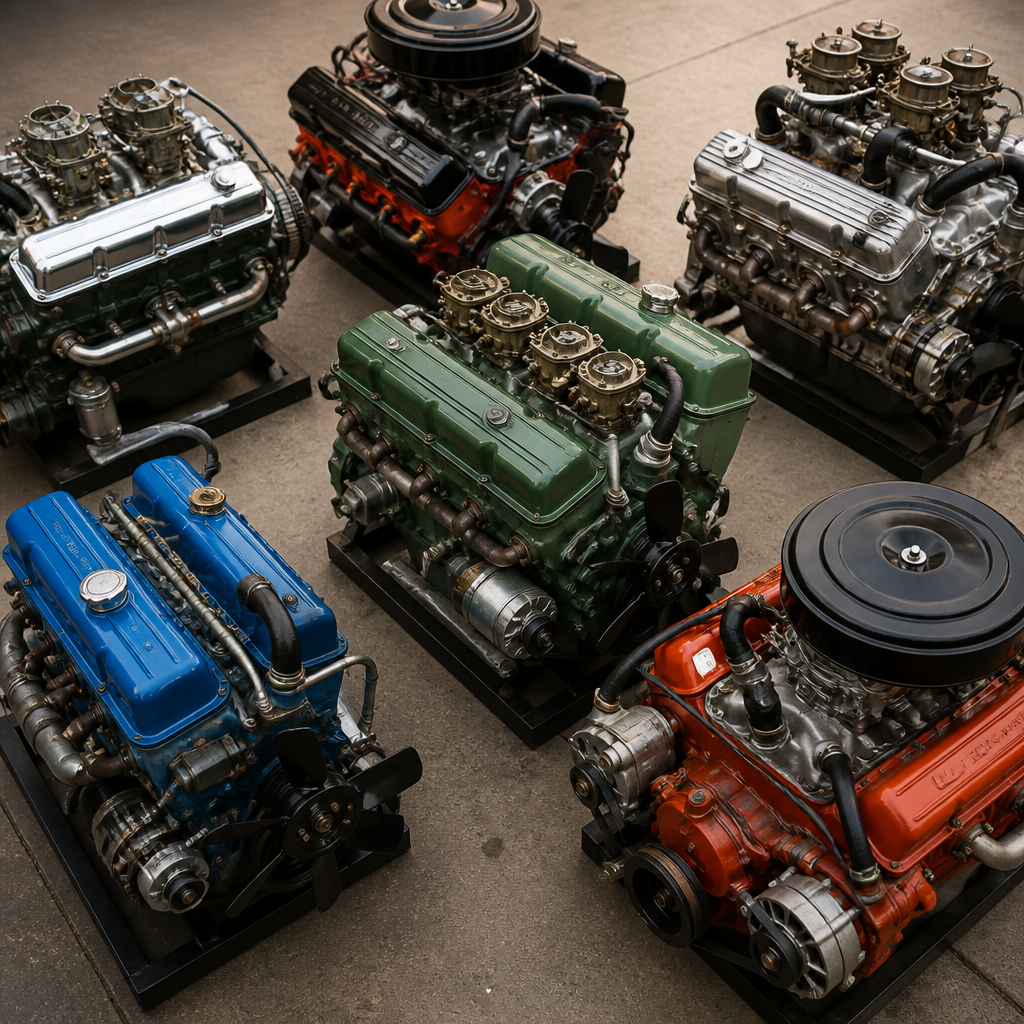
Inline engines, also called straight engines, place all cylinders in a single row along the crankshaft. In classic cars, inline-four and inline-six layouts were especially common because they were relatively easy to manufacture, package, and service. For owners and mechanics, the biggest advantage is accessibility: one cylinder head, one exhaust side, one intake side, and a straightforward valvetrain layout. That simplicity reduces labor during head gasket replacement, valve adjustment, and manifold work. British cars such as the MGB used durable inline-fours, while Mercedes-Benz, Jaguar, and Chevrolet built many respected straight-sixes known for smooth torque delivery.
An inline-four is typically lighter and more compact than a six-cylinder engine, making it popular in smaller sports cars and family saloons. However, most classic inline-fours produce more vibration than a straight-six because the firing characteristics are less naturally balanced. That is not necessarily a problem in a light roadster, but it affects refinement. The straight-six, by contrast, is one of the smoothest engine designs ever made. Engines like Chevrolet’s 235 and Jaguar’s XK six earned lasting reputations because they combined tractable low-end torque with mechanical elegance. Their length, though, can complicate packaging, especially in cars with short front ends or limited radiator clearance.
From a restoration perspective, inspect inline engines for cylinder head warping, timing chain wear, valve guide wear, and oil leaks at side covers, rocker covers, and rear main seals. Long cast-iron blocks can tolerate abuse, but overheating still causes trouble. On overhead-valve examples, pay attention to lifter noise and cam wear. On overhead-cam examples, verify chain tensioner condition and proper oil supply to the top end. If you are building an engine and mechanical work checklist, an inline engine is usually the best starting point because its layout makes compression tests, leak-down testing, spark plug reading, and carburetor synchronization easier to understand.
V engines: compact power and the heart of many performance classics
V engines arrange cylinders in two banks around a common crankshaft, creating a shorter package than an equivalent inline design. In classic cars, the most familiar versions are the V6, V8, and V12, though the V8 dominates enthusiast discussion for good reason. American manufacturers used V8s extensively in full-size cars, pickups, and muscle cars because they produced strong torque, accepted displacement increases easily, and fit a wide range of engine bays. Chevrolet small-blocks, Ford Windsor engines, and Chrysler LA-series V8s remain central to restoration and maintenance because parts, machine shop knowledge, and tuning support are still abundant.
The practical appeal of a classic V8 is not only power but serviceability. A cam-in-block pushrod V8 has fewer moving parts in the cylinder head than a dual overhead-cam engine, and that reduces complexity during teardown. I have found that many first-time restorers gain confidence faster on these engines because procedures such as setting valve lash, replacing intake gaskets, rebuilding carburetors, and swapping distributors are comparatively approachable. That said, V engines introduce their own issues. Exhaust heat can bake wiring and starter motors. Inner fasteners may be awkward to reach. Cooling passages in V blocks can trap rust scale if maintenance was neglected for decades.
V6 engines appear in some later classics and transitional models, but many enthusiasts seek V8s for sound and period character. V12s, found in cars such as the Jaguar E-Type Series 3 and various Ferraris, offer exceptional smoothness and prestige, yet they demand deeper budgets and tighter maintenance discipline. Twelve cylinders mean more carburetors or fuel injection hardware, more ignition components, more camshafts in many designs, and higher parts costs across the board.
| Engine layout | Typical strengths | Common restoration concerns | Representative classics |
|---|---|---|---|
| Inline-four | Simple, compact, economical to rebuild | Vibration, head gasket issues, carb wear | MGB, Triumph TR4, Volvo 140 |
| Inline-six | Smoothness, strong torque, durable bottom ends | Timing chain wear, oil leaks, cooling neglect | Jaguar XK models, Chevrolet Bel Air, Mercedes W111 |
| V8 | High torque, broad parts support, tuning flexibility | Cooling scale, cam wear, manifold sealing | Ford Mustang, Chevrolet Chevelle, Pontiac GTO |
| Flat engines | Low center of gravity, good balance | Oil leaks, cooling shroud issues, head sealing | Volkswagen Beetle, Porsche 911, Chevrolet Corvair |
When evaluating a V engine, check oil pressure hot at idle, listen for bottom-end knock, inspect exhaust color under load, and verify whether the engine still retains matching-number components if originality matters. For a numbers-correct restoration, casting dates and suffix codes can affect value as much as mechanical condition. For a driver-quality build, durability and available replacement parts matter more.
Flat engines and air-cooled designs: character, balance, and unique service needs
Flat engines, often called boxer engines when opposing pistons move in mirrored pairs, place the cylinders horizontally on either side of the crankshaft. Their chief advantage is a low center of gravity, which improves handling and stability. In classic cars, the layout is closely associated with air-cooled Volkswagens, Porsche 356 and 911 models, and the Chevrolet Corvair. These engines often feel mechanically distinct from inline and V designs because they combine balance, short height, and in many cases unusual cooling and lubrication practices.
Air-cooled engines deserve special attention within engine and mechanical work because they eliminate the radiator, water pump, and coolant passages that dominate maintenance on liquid-cooled cars. Instead, they rely on cooling fins, sheet-metal shrouding, engine-driven fans, ignition calibration, and correct fuel mixture to control temperature. When those systems are intact, an air-cooled engine can be reliable. When they are incomplete, overheating happens quickly. I regularly tell buyers to inspect every piece of tinware on an air-cooled Volkswagen or Porsche. Missing deflectors, cracked heater boxes, or blocked oil coolers can do more damage than a novice realizes.
Oil leaks are common on classic flat engines, but not all leaks mean catastrophe. The key is identifying whether seepage is external nuisance or evidence of worn crankcase halves, loose head studs, or degraded pushrod tube seals. Valve adjustments are routine maintenance on many older flat engines, and owners who ignore them risk burnt valves or poor running. On Corvair and early Porsche applications, proper fan belt condition and airflow management are fundamental. If you are restoring one of these cars, source the factory workshop manual and follow torque sequences exactly; sealing surfaces and magnesium or aluminum cases punish guesswork.
Valve layouts and fuel systems: why old engines behave so differently
Cylinder arrangement explains only part of a classic engine’s personality. Valve layout and fuel delivery often matter just as much. Many prewar and early postwar engines used side-valve, or flathead, construction, where valves sit in the block beside the cylinders. This keeps manufacturing simple and produces a compact cylinder head, but airflow is less efficient than in overhead-valve designs. That is why Ford flathead V8s are historically important yet respond differently to tuning than later overhead-valve small-blocks. They make excellent period-correct torque engines, but cooling around the exhaust paths and crack detection in old blocks require serious attention during rebuilds.
Overhead-valve pushrod engines became dominant because they improved breathing without excessive complexity. A camshaft in the block actuates valves through lifters, pushrods, and rocker arms. This design powered countless American and British classics and remains attractive because parts are available and the architecture is familiar to most machine shops. Overhead-cam engines, whether single or dual cam, move the camshaft into the cylinder head for more direct valve control. Alfa Romeo twin-cams, Jaguar XK engines, and many later European fours use this approach. They often rev more freely and breathe better, but timing chain or belt service becomes more critical.
Fuel systems shape drivability. Carburetors dominated the classic era, from simple single-barrel units to performance four-barrels and multi-carb setups like SU, Zenith-Stromberg, Weber, or Rochester systems. A properly tuned carbureted engine starts crisply, idles steadily, and transitions cleanly under throttle, but stale fuel, vacuum leaks, and incorrect float levels create endless frustration. Mechanical fuel injection appeared on some sophisticated classics, including Mercedes-Benz and Corvette applications, offering sharper metering but greater setup complexity. Understanding whether an engine uses a downdraft carburetor, sidedrafts, throttle-body injection, or port injection changes how you diagnose hesitation, rich running, or hot-start problems.
How to choose the right classic engine for restoration and maintenance
The best classic car engine type for your project is the one that matches your budget, skills, and goals. If you want the easiest path into hands-on engine and mechanical work, a common pushrod inline-four or V8 is usually the smart choice. These engines benefit from broad aftermarket support, affordable gasket sets, readily available ignition parts, and a large base of community knowledge. If you value originality above all else, you may accept the quirks of a rare flathead or a complex overhead-cam six because preserving factory specification supports the car’s historic value.
Before committing to any car, inspect four areas. First, assess rebuildability: are oversize pistons, bearings, valves, and timing components obtainable from reputable suppliers? Second, verify machine shop compatibility: not every local shop is comfortable with babbitt bearings, sleeved blocks, or magnesium cases. Third, estimate systems overlap: engine work often expands into cooling, fuel, transmission, clutch, differential, and braking repairs. Fourth, decide whether you need concours originality or dependable road use. Those paths can diverge sharply. A points ignition and original carb may be right for judging, while an electronic ignition conversion and improved radiator can make a driver far more enjoyable.
Documentation is part of the decision. Factory service manuals, parts books, and marque-specific forums save time and money because they identify correct clearances, torque values, and running changes by serial number. Compression test results, oil analysis, and borescope inspection tell you more than seller claims ever will. If the engine runs, measure oil pressure, confirm charging voltage, and test for blow-by at operating temperature. If it does not, assume a full teardown until proven otherwise.
Classic car engine types are not just technical categories; they are the foundation of every restoration strategy and every maintenance budget. Inline engines reward simplicity, V engines deliver compact torque, flat engines bring distinctive balance, and older valve and fuel system designs explain why classics demand a different approach than modern cars. When you understand the engine first, the rest of the mechanical plan becomes clearer, from ignition service and cooling repairs to carburetor tuning and complete rebuild sequencing.
For anyone building knowledge in restoration and maintenance, this hub should be the starting point for deeper engine and mechanical work. Use it to identify your engine family, map the likely problem areas, and prioritize inspections before parts buying begins. Then move methodically into diagnostics, disassembly, machining, reassembly, and break-in procedures with the correct manuals and measurements in hand. A well-chosen, well-understood classic engine is easier to restore, cheaper to maintain, and far more satisfying to drive. Start by identifying exactly what is in your car, then build your restoration plan around that reality.
Frequently Asked Questions
What are the main classic car engine types, and how do they differ?
When people talk about classic car engine types, they are usually referring to a combination of design choices rather than a single feature. The most recognizable distinction is cylinder arrangement. Inline engines, such as inline-four and inline-six layouts, place cylinders in a straight row and are known for mechanical simplicity, ease of maintenance, and, in the case of many straight-sixes, very smooth operation. V-type engines, including V6 and especially V8 designs, arrange cylinders in two banks and are often associated with higher displacement, stronger low-end torque, and the unmistakable sound many enthusiasts connect with American classics. Flat or horizontally opposed engines, found in some European and rear-engined models, place cylinders opposite each other and offer a lower center of gravity and a unique character.
Beyond cylinder arrangement, valve layout is another major separator. Older side-valve or flathead engines are simpler and historically important, but they generally breathe less efficiently than overhead-valve or overhead-cam designs. Overhead-valve engines became extremely common in classic cars because they offered a strong balance of durability, packaging, and performance. Fuel delivery also matters. Carbureted engines dominate the classic era, but not all carbureted setups are alike. A single-barrel carburetor on a small displacement engine will behave very differently from a multi-carburetor performance setup. Finally, cooling design plays a role. Most classic cars are water-cooled, but air-cooled engines are a category of their own, with different maintenance priorities and operating characteristics. Taken together, these features shape how an engine sounds, feels, performs, and ages over time.
Which classic car engine type is considered the best?
There is no single best classic car engine type, and that is the most useful answer for anyone shopping, restoring, or maintaining an older vehicle. The right engine depends on what you want from the car. If your priorities are simplicity, straightforward repairs, and broad parts availability, an inline engine or a common overhead-valve V8 can be an excellent choice. These engines are often easier to work on, better documented, and more forgiving for hobbyists learning restoration and maintenance skills. If you value smoothness and refined touring behavior, many classic inline-six engines have an excellent reputation for durability and drivability.
If you are chasing period-correct performance, the answer changes. Certain V8 engines became icons because they delivered strong torque, easy aftermarket tuning, and a character that defined muscle cars and grand tourers. On the other hand, some smaller displacement overhead-cam or multi-carburetor engines from European classics are prized not for brute power but for rev-happy response and engineering sophistication. Air-cooled engines appeal to owners who appreciate mechanical simplicity and a distinctive feel, but they come with their own service considerations. In other words, “best” should be judged by era, intended use, originality goals, repair budget, and your comfort level with maintenance. A reliable, well-supported engine that suits the car’s purpose is almost always better than a more exotic design that is expensive or difficult to keep healthy.
How do valve layouts and fuel systems affect maintenance on classic engines?
Valve layout and fuel system design have a direct effect on how often a classic engine needs attention and how complex that attention will be. Side-valve engines are mechanically straightforward and historically significant, but they tend to sacrifice efficiency and performance compared with overhead-valve or overhead-cam designs. Overhead-valve engines, which are common in many classic American and British vehicles, are often appreciated because they balance solid performance with manageable service procedures. Depending on the engine, valve lash adjustment may be simple and part of routine maintenance. Overhead-cam designs can offer better breathing and higher-rev capability, but timing components, camshaft access, and adjustment procedures may be more involved.
Fuel systems are just as important. Carburetors are central to the classic car experience, but they require tuning, cleaning, and occasional rebuilding. A single carburetor setup is generally easier to diagnose and maintain than dual, triple, or four-carburetor arrangements, which can be rewarding but demand synchronization and more frequent adjustment. Mechanical fuel pumps, choke systems, vacuum-operated controls, and ignition timing all interact with carbureted engines, which means drivability issues are often the result of several small factors rather than one obvious failure. By contrast, later classic vehicles with mechanical or early electronic fuel injection may offer better cold starts and more consistent fueling, but replacement parts and specialist knowledge can be more expensive or harder to find. For most owners, the maintenance burden of a classic engine is determined less by whether it is “old” and more by how complex its valve train and fuel delivery systems are.
What is the difference between air-cooled and water-cooled classic engines?
Air-cooled and water-cooled engines differ in the way they manage operating temperature, and that difference affects everything from maintenance routines to driving character. A water-cooled engine circulates coolant through passages in the block and cylinder head, then sends that heat to a radiator. This system allows for stable temperature control across a wide range of conditions, which is one reason water cooling became the industry standard. In a classic car, however, that also means more components to inspect and preserve: radiator, hoses, thermostat, water pump, heater core, freeze plugs, and coolant passages that can corrode or clog over time.
Air-cooled engines eliminate many of those components and instead rely on airflow, cooling fins, and often engine-driven fans to control heat. That simplicity can be appealing, and it removes certain failure points such as coolant leaks or radiator deterioration. However, air-cooled engines are especially sensitive to correct tuning, proper tinware or ducting, oil condition, and unobstructed airflow. Missing seals, poorly fitted engine panels, or incorrect ignition timing can lead to overheating more quickly than some owners expect. They also tend to have a distinct sound and feel that many enthusiasts love. From a restoration and maintenance perspective, neither system is automatically superior. Water-cooled engines require cooling system vigilance, while air-cooled engines demand attention to tuning and airflow integrity. The better choice depends on the vehicle’s original design, how the car will be driven, and how comfortable the owner is with its particular service needs.
What should I consider before buying or restoring a classic car based on its engine type?
Before buying or restoring a classic car, engine type should be evaluated as a practical ownership factor, not just a badge of prestige or performance. Start with parts availability. Some classic engines were produced in huge numbers and remain well supported with rebuild kits, gaskets, ignition parts, carburetor components, and even complete replacement internals. Others are rare, region-specific, or tied to low-production vehicles, which can make even routine repairs slow and expensive. Next, consider access and serviceability. An engine may be admired by collectors but still be frustrating in a cramped engine bay, especially if routine tasks like spark plug changes, valve adjustments, or carburetor servicing are awkward.
You should also match the engine to your intended use. For relaxed weekend driving, a torquey, understressed engine can make ownership more enjoyable than a highly tuned unit that needs frequent adjustment and premium parts. For originality-focused restoration, the correct engine family and period-correct configuration matter greatly to value and authenticity. For a driver-quality project, reliability, cooling efficiency, and ease of tuning may matter more than perfect factory specification. Finally, assess condition carefully. Compression numbers, oil pressure behavior, startup smoke, unusual noises, cooling system health, and evidence of past modifications all tell you whether an engine is a manageable project or a costly rebuild waiting to happen. In classic car ownership, engine type shapes the experience, but engine condition and support network often determine whether that experience is rewarding or exhausting.