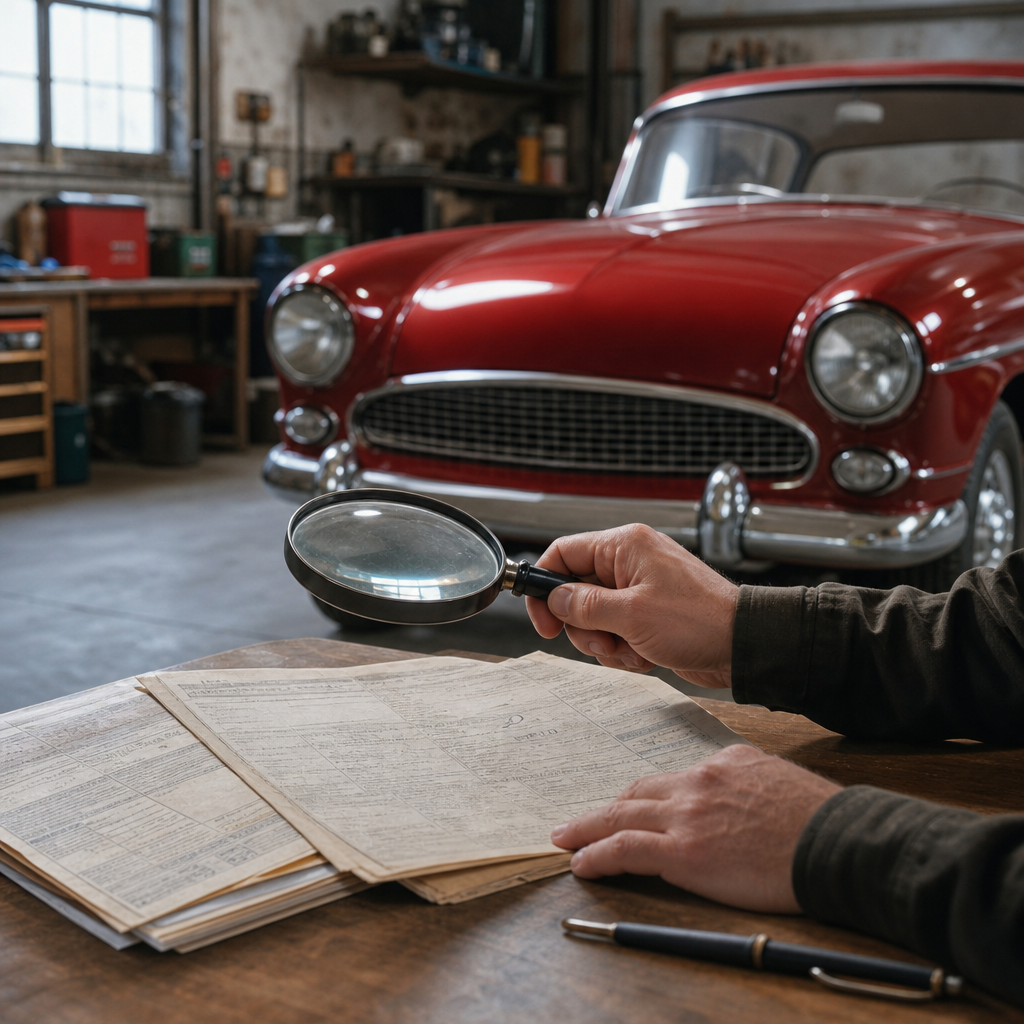

Vehicle history reports are one of the most practical tools for avoiding scams when buying or selling classic cars, yet many people use them too narrowly and too late. A vehicle history report is a compiled record tied to a vehicle identification number, or VIN, drawing from title agencies, insurers, police databases, auctions, emissions programs, service providers, and other reporting partners. In the classic-car market, where originality, provenance, and condition directly affect value, these reports matter even more because fraud often hides behind good paint, polished trim, and incomplete paperwork. I have used history reports while evaluating unrestored survivors, driver-quality coupes, and six-figure restorations, and the lesson is consistent: the report rarely tells the whole story, but it often reveals the exact place where a closer inspection should begin.
For buyers, the biggest benefit is risk reduction. A report can uncover title washing, odometer inconsistencies, salvage branding, theft records, damage events, failed emissions histories, registration gaps, and location changes that do not fit the seller’s story. For sellers, the same report can support an honest listing, answer predictable questions upfront, and reduce suspicion from serious buyers. This article serves as a hub for avoiding scams and pitfalls in the classic-car space by explaining what vehicle history reports show, what they miss, how scammers exploit those gaps, and how to combine a report with inspections, documents, and market knowledge to make smarter decisions. If you want to avoid expensive mistakes, start with the report, but never stop there.
What a vehicle history report actually shows and why it matters
A vehicle history report is best understood as a timeline assembled from independent data sources. Providers such as CARFAX, AutoCheck, and the National Motor Vehicle Title Information System ecosystem do not inspect the car themselves. They aggregate records. That distinction matters because people often assume a clean report means a clean car. It does not. It means no negative event was captured by the sources feeding that report. In practice, a useful report may list title brands, reported accidents, airbag deployment, odometer readings, service entries, registration renewals, auction announcements, lien or junk records, and sometimes import or export indicators. On a classic car, even a sparse report has value because gaps can be informative.
For example, if a seller claims continuous California ownership since the 1980s but the report shows a relocation to Florida followed by a new title brand, that discrepancy deserves an explanation. If the odometer reading jumps backward between inspections, the issue may be a clerical error, a replaced gauge cluster, or deliberate rollback. If the report lists salvage or total-loss history, the car is not automatically a bad purchase, but the price, insurability, and long-term resale profile change immediately. When I review reports, I mark every date, location, and mileage entry, then compare them against the seller’s invoices, title copies, restoration photos, and verbal claims. Scams become easier to spot when the story and the timeline fail to align.
Common classic-car scams that history reports can expose
The classic-car market has several recurring fraud patterns, and vehicle history reports help expose many of them. Title washing is one of the most serious. This happens when a damaged or branded vehicle is retitled in a jurisdiction with looser disclosure standards, allowing the branding to disappear or become harder to trace. A report may reveal state-to-state movement, prior salvage records, or insurance total-loss events that the current title no longer highlights. Another common scam involves odometer misrepresentation. Although mileage on older cars can be less decisive than on modern daily drivers, it still affects value dramatically, especially for low-mile survivor cars. A sequence of reported readings can expose impossible drops or suspicious stagnation.
History reports also help with identity fraud, including VIN swapping and cloning. In those schemes, a scammer may attach the identity of a legitimate car to a stolen or heavily altered vehicle. If the report shows the VIN belongs to a different body style, engine category, or geographic pattern than the car in front of you, stop immediately and verify the stamped VIN locations, body tags, and title. Auction flipping is another area where reports help. Some cars are bought after visible damage, cosmetically repaired, and relisted quickly with glamorous photos and vague wording. A report showing a recent auction event, damage notation, and fast resale can explain why the presentation looks better than the fundamentals.
How to read a report like an experienced buyer
Reading a vehicle history report properly means looking for patterns, not isolated flags. Start with the identity block. Confirm the year, make, model, body style, engine type if shown, and title status. Any mismatch between the report and the seller’s listing deserves immediate clarification. Next, study the chronology. Long periods without records are common on older classics, but a cluster of entries around an accident, title transfer, or auction sale often points to a major event. Look closely at title brands such as salvage, rebuilt, flood, junk, lemon, or not actual mileage. These labels affect financing, insurance, and future buyer confidence.
Then evaluate mileage logic. A 1967 muscle car might have an odometer that rolled over decades ago, so the key question is not simply whether the number is low but whether the record supports the seller’s mileage claim. Review location data too. Dry-climate ownership can support a rust-free narrative; sudden movement into coastal or flood-prone areas may prompt closer inspection of corrosion, musty interiors, or water damage. Service entries are also useful, though inconsistent. A report with repeated maintenance at the same shop can support stable ownership, while scattered records from multiple auctions and dealers may suggest frequent turnover. The most important habit is to cross-check every line item with physical evidence. Reports are strongest when treated as a roadmap for verification.
What history reports miss, especially on older collector vehicles
Vehicle history reports are powerful, but they have blind spots, and scammers know it. Many classic cars predate standardized digital reporting, so events from the 1960s, 1970s, and 1980s may never appear. Cosmetic damage repaired privately often goes unreported. Rust, poor metalwork, incorrect drivetrains, hidden filler, reproduction tags, and low-quality restorations usually will not show. Even major collision repairs can be invisible if no insurer, police agency, or reporting partner logged the event. That is why a clean report should never outweigh a bad inspection. I have seen cars with spotless reports and severe structural rust, non-matching stampings, and amateur quarter-panel repairs buried under fresh paint.
Reports also cannot reliably confirm originality. They may identify the model and sometimes basic engine data, but they do not authenticate matching numbers, trim codes, factory options, rare colors, or period-correct components. In the classic market, those details drive huge price swings. A report may show a 1970 coupe with no major issues, while an expert decoding the trim tag discovers it was originally a base model, not the high-spec variant advertised. Some imported classics add another challenge because overseas history can be fragmented or unavailable. The practical takeaway is simple: use the report to narrow risk, not to certify the car. Provenance, originality, and workmanship still require documents, specialist knowledge, and hands-on inspection.
How to combine the report with inspections, documents, and seller vetting
The safest buying process layers multiple checks in a fixed order. First, obtain the VIN and pull at least one reputable history report before discussing price in detail. Second, ask the seller for the title, registration, restoration receipts, service records, ownership history, and any judging sheets or marque certificates. Third, compare those documents against the report line by line. Fourth, order a pre-purchase inspection from a shop that knows the specific make or era. On classics, generalist inspections are not enough. You want someone who understands date codes, corrosion points, frame weaknesses, and model-specific problem areas.
| Checkpoint | What to verify | Why it prevents scams |
|---|---|---|
| VIN match | Dashboard, title, door tag, frame or chassis stamp | Helps detect cloning, VIN swaps, and paperwork fraud |
| Title status | Current brand, prior brands, lien status, issuing state | Exposes salvage history and title washing patterns |
| Mileage trail | Reported readings, inspection records, invoices | Flags rollback claims and unsupported low-mile stories |
| Damage history | Insurance events, auction announcements, repair bills | Shows whether cosmetic restoration hides prior loss |
| Ownership narrative | Seller timeline, locations, registration gaps | Reveals inconsistencies and invented provenance |
| Physical inspection | Rust, welds, stampings, paint depth, mechanical condition | Catches issues no database will ever record |
Seller vetting matters just as much. Ask direct questions in writing: How long have you owned it? Why are you selling? Has it ever had a branded title? What body panels have been replaced? Is the mileage actual, exempt, or unknown? Honest sellers usually answer specifically and provide photos. Evasive answers, pressure tactics, refusal to share the VIN, or claims that “the report isn’t necessary on classics” are warning signs. If the report and the inspection both support the seller’s claims, you can negotiate from a position of confidence instead of hope.
Choosing a report provider and understanding the differences
Not all report providers assemble data in the same way. CARFAX is widely used by dealers and consumers and often includes service history and registration events. AutoCheck is common in auction and wholesale environments and provides its own scoring model, which can help compare vehicles quickly, though the score should never replace actual review of the entries. NMVTIS-linked providers focus heavily on title, total-loss, and salvage data from participating states, insurers, and junk yards, making them useful for fraud screening. For a valuable classic, using more than one source is sensible because overlap is incomplete. One provider may show an auction announcement or service event that another misses.
The right approach depends on the transaction. For a modest driver-quality classic, one mainstream report plus a strong inspection may be enough. For a rare muscle car, early Porsche, air-cooled Mercedes, or any vehicle where authenticity swings value by tens of thousands, use multiple reports and supplement them with marque-specific verification. Also remember that some providers display disclaimers around older vehicles because data coverage weakens as you go back in time. That is not a reason to skip the report. It is a reason to interpret it correctly. Think of report providers as complementary databases, not as final authorities. The final authority is the total evidence assembled from records, inspection, and the car itself.
Best practices for buyers and sellers in the classic-car market
Buyers should request the VIN early, run the report before travel or deposit, and save a copy of the findings with the date generated. If you see a serious issue, pause and verify before spending more money. Never rely on screenshots provided by the seller when you can purchase your own report. If a car is advertised as matching numbers, concours restored, one-family owned, or ultra-low mileage, expect documentary support beyond the history report. On expensive cars, use escrow services, verify bank details by phone, and make sure the title is transferable in the seller’s legal name. Fraud prevention is not one step; it is a disciplined process.
Sellers can use history reports proactively to build trust. Pull your own current report, review it for errors, and be ready to explain odd entries such as mileage exemptions or title corrections. Include the VIN in serious listings when platform rules allow, organize invoices chronologically, and disclose known damage or branding before a buyer asks. Transparency shortens the sales cycle because qualified buyers can validate your claims quickly. As a hub for avoiding scams and pitfalls, the central lesson is clear: a vehicle history report is not a guarantee, but it is one of the fastest ways to test a story against an independent record. Use it early, read it critically, and pair it with expert inspection and complete documentation. That combination prevents the majority of costly surprises. Before you buy or sell your next classic, pull the report first and let the facts lead the conversation.
Frequently Asked Questions
What does a vehicle history report actually show, and why is it so important when trying to avoid scams?
A vehicle history report compiles records connected to a car’s VIN from a range of sources, such as title agencies, insurance carriers, police databases, auction houses, emissions programs, and service or repair reporting networks. In practical terms, that means it can reveal title branding, registration history, reported accidents, theft records, mileage entries, ownership changes, auction activity, and in some cases service events or damage disclosures. For buyers and sellers in the classic-car market, that information is especially valuable because a classic vehicle’s originality, documented past, and condition often drive a large part of its value.
From an anti-scam perspective, the report helps you verify whether the story being told about the vehicle matches the documented record. If a seller describes a car as a low-mile, rust-free, one-family original with a clean title, the report gives you a way to test those claims. A discrepancy does not always mean fraud, but it is a strong signal that you need more documentation before moving forward. For example, an odometer reading that drops backward, a sudden title transfer across multiple states, or a salvage or rebuilt brand attached to a supposedly pristine collector car should immediately trigger deeper questions.
Just as important, a vehicle history report should not be treated as a final verdict. It is one of the best screening tools available, but not every incident is reported, and older classics can have record gaps due to age, inconsistent reporting, or decades of private ownership. The smartest use of a history report is as part of a broader verification process that includes a VIN inspection, title review, photo review, maintenance records, restoration receipts, ownership paperwork, and ideally an independent pre-purchase inspection. Used early, it can save you from wasting time on a bad listing. Used correctly, it can help you spot title washing, mileage fraud, hidden damage, and misrepresented provenance before money changes hands.
When should you run a vehicle history report during a classic car transaction?
The best time to run a vehicle history report is as early as possible, before you become emotionally invested in the deal and certainly before you send a deposit, arrange shipping, or sign any paperwork. Many people wait until they are already committed to buying the car, which weakens the report’s value as a scam-prevention tool. At that stage, they may be more likely to rationalize red flags because they do not want to lose the car or restart the search. Running the report at the very beginning gives you a chance to screen out obvious problems before you spend money on inspections, travel, transport, or escrow fees.
For buyers, the ideal sequence is simple: get the VIN, confirm that it matches the title and the vehicle itself, run the history report, and then compare the findings against the seller’s description and supporting documents. If the listing claims the car has never been damaged, has always remained in one state, or has only had one owner, the report should support those representations or at least not contradict them. If the seller refuses to provide the VIN in advance, pressures you to skip documentation, or claims a report is unnecessary because the car “speaks for itself,” that behavior alone should raise concern.
Sellers can also benefit from running a report before listing a vehicle. Doing so allows them to identify issues a buyer is likely to discover anyway, such as an old title brand, a duplicate record, or a mileage inconsistency tied to a clerical error. Addressing those items in advance makes the listing more credible and reduces the chance that an honest sale gets derailed by confusion. In both buying and selling scenarios, the report works best not as a last-minute checkbox, but as an early, strategic filter that helps everyone establish facts before negotiating value.
What are the biggest red flags in a vehicle history report for a classic car?
Some of the most serious red flags include salvage, rebuilt, junk, flood, or total-loss title branding; odometer inconsistencies; theft records; repeated transfers in a short period; and signs that the vehicle moved through multiple states under unusual circumstances. In the classic-car world, a report may also reveal auction appearances or title events that directly conflict with a seller’s story about long-term ownership, originality, or condition. For example, if a seller describes a vehicle as an untouched survivor but the report shows it passed through a salvage event and then resurfaced with a rebuilt title, that contradiction matters enormously.
Mileage anomalies deserve close attention, even with older collector vehicles that may have exempt odometer classifications. If mileage readings suddenly decrease or appear inconsistent with the maintenance and ownership timeline, you need a clear explanation supported by documentation. In classics, inaccurate mileage can happen because of gauge replacement, restoration work, or exemption rules, but scammers also use those same gray areas to inflate value. A report that shows mileage bouncing around without explanation should prompt follow-up questions, service records, and a careful inspection of wear patterns, restoration receipts, and instrument authenticity.
Another red flag is a suspiciously thin or fragmented history when the seller is making very strong claims. Limited reporting does not automatically mean something is wrong, especially for older vehicles, but a sparse history should make you more cautious if the asking price depends on exceptional provenance or originality. Watch for any mismatch between the VIN on the report, the VIN plate on the car, the title, the door tag, and any stampings or hidden identifiers appropriate to that make and model. Scams involving cloned VINs, switched tags, and title washing can be difficult to spot without comparing every source of information. In short, the most concerning reports are not always the ones with obvious disaster entries, but the ones where documented facts do not line up with the story being sold.
Can a vehicle history report confirm originality and provenance for a classic car?
A vehicle history report can support originality and provenance, but it usually cannot prove them on its own. It may help establish a timeline of ownership, title transfers, mileage recordings, registration locations, and certain service or auction events. That information is useful because it can reinforce a documented ownership chain and reveal whether the car’s paper trail appears consistent over time. However, originality in a classic car often depends on details a standard history report does not fully capture, such as matching-numbers components, factory-correct finishes, date-coded parts, original trim, and authentic restoration practices.
That is why experienced buyers use the report as a foundation rather than the final authority. If a seller claims the car has a rare documented history, unusual options, or celebrity ownership, the report should be paired with title copies, old registrations, invoices, restoration photos, build sheets, window stickers, warranty booklets, judging sheets, marque-expert verification, and any available factory or club documentation. Provenance becomes more credible when multiple independent records point in the same direction. If the report shows ownership or registration patterns that contradict a claimed history, that does not automatically kill the deal, but it does mean the burden of proof shifts to the seller.
For originality, a pre-purchase inspection by a knowledgeable specialist is essential. A history report may tell you the car changed hands six times, was once listed at auction, or had an insurance event decades ago, but it will not reliably tell you whether the engine block is original to the chassis or whether the body tags have been tampered with. In other words, vehicle history reports are extremely helpful for building confidence and catching inconsistencies, but they are one piece of the provenance puzzle. The strongest protection comes from combining the report with expert inspection and period-correct documentation.
What should you do if the vehicle history report and the seller’s story do not match?
If the report conflicts with the seller’s claims, pause the transaction and ask specific, document-based questions. Do not accept vague reassurances or generic explanations such as “those reports are always wrong” or “it must be a clerical issue” without proof. Some discrepancies do have legitimate explanations. A mileage inconsistency might come from a replaced gauge cluster, a title brand could relate to an old insurance classification that was later repaired properly, and an ownership count issue might stem from dealer transfers or family re-titling. The key is whether the seller can produce records that explain the inconsistency clearly and credibly.
Ask for copies of prior titles, registration documents, service records, restoration invoices, insurance paperwork, auction listings, and any photos that establish the car’s condition over time. Compare those materials to the VIN on the vehicle, the title, and the report. If the seller becomes evasive, refuses to provide documents, pressures you to move quickly, or tries to shift the conversation away from the discrepancy, treat that as a serious warning sign. Honest sellers usually understand why a buyer wants clarity and are willing to help resolve legitimate questions.
If the explanation remains incomplete, bring in an independent appraiser, marque specialist, or pre-purchase inspector who understands that specific type of classic car. It is often far cheaper to pay for expert verification than to inherit a title problem, hidden damage, or a misrepresented car that is difficult to insure, register, or resell. And if the mismatch suggests possible fraud, such as a cloned VIN, title washing, undisclosed salvage history, or a stolen vehicle issue, the safest move is usually to walk away entirely. In the collector-car market, there will always be another opportunity. The cost of missing