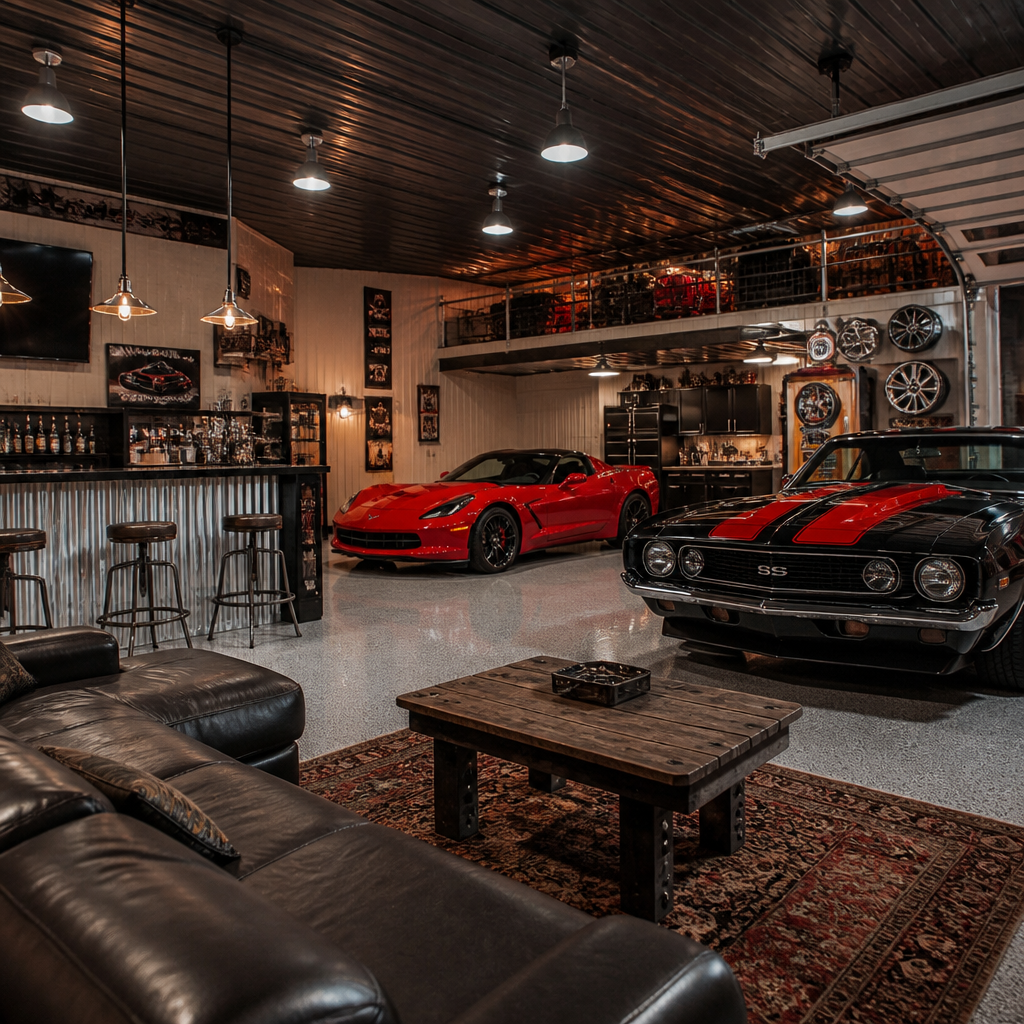
A car-themed man cave is a dedicated room, garage, basement, or outbuilding designed around automotive passion, combining display space, comfort, storage, and workshop function in one environment. In the classic car culture world, it is more than a decorated hangout. Done well, it becomes a place to protect memorabilia, showcase vehicles, host friends, watch races, plan restorations, and spend long evenings around the machines and stories that matter most. I have helped enthusiasts convert everything from single-bay suburban garages to detached barns into car-centric retreats, and the best results always start with one principle: the room must serve your actual habits, not just your inspiration board.
The phrase man cave can sound casual, but building one successfully requires the same planning discipline used in a quality garage renovation. You need to define the primary purpose, understand the limitations of the space, and make choices about layout, lighting, materials, climate control, safety, and budget. A garage and man cave ideas search often surfaces flashy checkerboard floors and neon signs, yet those details only work when the fundamentals are right. If the slab sweats, the lighting is weak, the seating blocks tool access, or the wall decor fades from humidity, the room quickly becomes frustrating instead of enjoyable.
For car enthusiasts, the stakes are higher because automotive spaces carry unique demands. Fuel odors, tire dust, battery maintenance, paint protection, lift clearance, compressor noise, and parts storage all affect design decisions. Classic car owners also tend to collect vulnerable items such as paper posters, porcelain signs, dealer brochures, and original parts boxes that can be damaged by temperature swings and moisture. Meanwhile, people who use the space socially want a television, minibar, sound system, and lounge area that still feel consistent with an authentic automotive theme. Balancing workshop practicality with clubroom atmosphere is what separates a functional car-themed man cave from a cluttered garage with a couch.
This hub article covers the full picture of garage and man cave ideas for classic car culture and lifestyle readers. It explains how to choose the right type of space, create a strong design concept, plan the layout, select finishes, install proper lighting and utilities, furnish the room, display vehicles and memorabilia, and avoid common mistakes. The goal is straightforward: help you build a car-themed man cave that looks sharp, works hard, and keeps your enthusiasm organized for years.
Start with the right concept and space plan
The first decision is not which sign to buy or which epoxy color to choose. It is what kind of room you are really building. In practice, car-themed man caves usually fall into four categories: lounge-first, workshop-first, showroom-first, or hybrid. A lounge-first room prioritizes comfort, media, and entertaining, with automotive decor setting the tone. A workshop-first room centers on maintenance and restoration, with seating and display woven around the working area. A showroom-first room treats the vehicle as the focal piece, almost like a private museum. A hybrid combines all three, but only works when square footage, storage, and circulation are carefully planned.
Measure everything before committing to a direction. Ceiling height matters if you want a lift, overhead storage, or tall wall displays. Door width and turning radius matter if a car will actually enter the space. Window placement affects TV glare, memorabilia fading, and security. I usually advise clients to map fixed elements first: garage doors, entry doors, electrical panel, water heater, floor drains, steps, and any posts. Then identify non-negotiables such as one parking bay, a workbench, a lounge zone, or locked parts cabinets. This prevents a common problem where a room looks great on paper but becomes unusable once a car is inside with its doors open.
If you are converting an existing garage, check slab condition, insulation, ventilation, and local code requirements early. Detached garages often need panel upgrades, better weather sealing, or mini-split climate control to become year-round spaces. Basements can make excellent automotive lounges, but bringing in large display items such as benches, gas pumps, or front clips may be harder than expected. Outbuildings offer freedom, though they often require the biggest investment in electrical service, moisture control, and security. The smartest garage and man cave ideas respect the building envelope before spending heavily on cosmetic upgrades.
Build the layout around movement, zones, and sightlines
A strong layout makes the room feel professional. In every successful car-themed man cave I have worked on, the floor plan follows clear zones: vehicle display or parking, work area, storage, social seating, and wall display. Even in a compact one-car garage, these zones can exist if they are intentional. The vehicle zone needs enough clearance for doors, a creeper, and detailing access. The work zone needs task lighting, power, and durable surfaces. The social zone should not sit where sparks, dust, or exhaust will drift. Wall display should fill dead space without narrowing circulation.
Sightlines matter because cars are sculptural objects. Place seating so the best angle of the vehicle is visible from the main chair or sofa. If the front end is the hero, orient the lounge toward the grille and headlights. If the car has side graphics, wire wheels, or a perfect body line, give yourself a diagonal viewing angle. In larger spaces, a slight platform, polished pad, or contrasting floor border can frame the vehicle without creating a true barrier. Museums use this principle because people enjoy objects more when their presentation is deliberate.
| Zone | Primary Function | Best Features | Common Mistake |
|---|---|---|---|
| Vehicle display | Showcase and protect the car | Wide clearance, strong lighting, easy battery access | Crowding with furniture or decor |
| Workshop | Maintenance, detailing, light repair | Workbench, tool storage, GFCI outlets, ventilation | Using decorative surfaces that stain or burn |
| Lounge | Relaxing, watching races, hosting guests | Comfortable seating, sound control, beverage station | Placing it too close to dust and fumes |
| Memorabilia wall | Tell the story of your automotive taste | Framed art, shelves, controlled light, labels | Random clutter with no theme or spacing |
Storage is the invisible engine of the room. If you do not allocate real space for jacks, chargers, detailing chemicals, spare wheels, coolers, and seasonal items, they will leak into every other zone. Use closed base cabinets for ugly necessities, open shelving for display-worthy parts, and slatwall or pegboard only where visual busyness fits the theme. Many collectors also benefit from a dedicated “project parking” area for incoming parts, because half-finished organization usually turns into permanent clutter.
Choose a car theme that feels specific, not generic
The most memorable car-themed man caves are built around a point of view. Instead of “cars in general,” narrow the theme to something recognizable: muscle car era, European racing, Route 66 road trip culture, vintage service station, 1950s dealership showroom, air-cooled garage, NASCAR wall, British roadster clubroom, or a brand-specific tribute such as Ford performance or classic Chevrolet. A specific theme helps you edit purchases, choose colors, and create continuity between furniture, finishes, and memorabilia. It also prevents the room from becoming a random accumulation of auction finds.
Color should follow the theme and the vehicle, not fight it. Black, gray, red, white, and brushed metal are common for modern performance rooms. Warm cream, faded red, and petrol blue suit vintage garage aesthetics. If you own a Signal Red Porsche, Marina Blue Corvette, or Highland Green Mustang, pull one accent color from the car and repeat it in stools, wall stripes, or signage. This creates cohesion without making the room feel like a dealership parts counter. I have found that two neutrals plus one strong accent usually age better than high-contrast palettes spread across every surface.
Authenticity matters. Original porcelain signs, dealership clocks, branded oil cans, period posters, and license plates carry more character than mass-produced decor bundles. Reproductions are fine when originals are expensive, but they should be chosen carefully and displayed with restraint. One illuminated Texaco sign over a cabinet can anchor a wall. Twelve signs competing on the same wall usually read as visual noise. The same rule applies to furniture. A real mechanic’s chest, old service desk, or restored station bench brings more credibility than novelty pieces shaped like cars.
Upgrade floors, walls, and ceilings for durability and style
Surface materials determine whether your man cave feels like a finished destination or a temporary setup. For floors, the top choices are professional epoxy or polyaspartic coating, interlocking garage tiles, polished concrete, or sealed stained concrete. Polyaspartic systems typically outperform basic big-box epoxy kits in adhesion, UV stability, and cure time, especially in active garages. Interlocking tiles are useful when the slab is imperfect or when you want a checkered motorsport look without permanent coating. Polished or sealed concrete works well in showroom-style spaces and is easy to clean, though it can feel harder and colder underfoot.
Walls should be selected for both impact resistance and display flexibility. Drywall is common and inexpensive, but in active garages I often prefer a lower section of PVC panel, FRP board, plywood behind finish layers, or metal wainscoting that resists scuffs from tool carts and tire rub. Painted OSB or plywood can suit an industrial workshop aesthetic, while finished drywall fits a polished lounge. If you plan to hang heavy signs, shelves, wheels, or framed parts, install blocking or a continuous plywood backer before final wall covering. This simple step makes future changes far easier.
Do not ignore the ceiling. An unfinished ceiling with exposed insulation can undermine every other upgrade. Drywalled and painted ceilings reflect light better, improve fire separation, and make the room feel intentional. In detached buildings, adding insulation above the ceiling line can dramatically improve comfort and lower mini-split load. If your theme leans industrial, exposed beams, painted black trusses, or visible conduit can look excellent, but they should appear chosen rather than neglected. Good garage and man cave ideas make every plane of the room part of the design.
Get lighting, power, climate, and ventilation right
Lighting is one area where enthusiasts almost always underbuild. Car spaces need layered lighting: bright ambient light for the room, focused task light for the bench, accent light for memorabilia, and display light for the vehicle. High-CRI LED fixtures reveal paint condition accurately and make colors pop. In workshops, aim for uniform coverage that reduces shadows under the hood and around the rocker panels. Hexagonal fixtures are popular online, but linear LED shop lights, track heads, and recessed cans often provide better performance per dollar and suit more styles.
Electrical planning should match how you actually use the room. Add more outlets than you think you need, including ceiling outlets for retractable cord reels, wall outlets near seating for device charging, and dedicated circuits for compressors, fridges, welders, heaters, or lifts. If the space holds a battery maintainer, detailing tools, and a TV, convenience and circuit management matter. Use GFCI protection where required, and if the room may evolve into a heavier-duty workshop, consider a subpanel now rather than reopening walls later.
Climate control protects both people and collections. Mini-split heat pumps are often the best solution for detached garages because they provide heating, cooling, and dehumidification without ductwork. In humid regions, a dedicated dehumidifier can save signs, paper goods, and seat upholstery from mildew and warping. Ventilation is equally important if cars are started indoors, solvents are stored, or detailing chemicals are used. Exhaust fans, fresh air intake, and strict no-idling habits reduce odor buildup and carbon monoxide risk. A polished room that smells like stale fuel is not a comfortable retreat.
Furnish the room like a club space, not a waiting room
Furniture should support how the room is used after the tools are put away. For seating, choose pieces that can handle dust, temperature swings, and occasional contact with work clothes. Commercial-grade vinyl, top-grain leather, and powder-coated stools usually hold up better than delicate fabric upholstery. Modular seating works well in larger hybrids because it can be rearranged for race day, card night, or project planning. A solid coffee table made from reclaimed wood, a repurposed engine block base, or a vintage trunk can add personality without becoming gimmicky.
Media and hospitality features belong in many car-themed man caves, but they should be integrated cleanly. Mount the television where it is visible from the main seating area without stealing focus from the vehicle. A compact beverage fridge, sink, or coffee station can transform how often the room gets used, especially during weekend work sessions. Acoustic treatment is worth considering if the room has hard surfaces throughout. Even a few well-placed panels, rugs in the lounge zone, or insulated walls can reduce echo and make conversations easier.
Finally, add story. The best spaces are not assembled from catalog items alone. Frame photos of your car’s restoration, first road trip, original bill of sale, judging sheet, or family garage history. Label unusual parts. Display trophies sparingly and contextually. A car-themed man cave should feel like your automotive life has been curated into a room, not that a generic car store exploded inside a garage.
Building a car-themed man cave successfully comes down to discipline, not excess. Start with the purpose of the room, study the limits of the space, and organize it into practical zones before buying a single decorative item. Choose a specific automotive theme, invest in durable floors and walls, and treat lighting, power, climate control, and ventilation as core infrastructure rather than afterthoughts. When those fundamentals are right, furniture, signage, memorabilia, and vehicle presentation feel cohesive instead of cluttered.
The biggest benefit of a well-designed car-themed man cave is that it strengthens how you enjoy the hobby. It gives your vehicle a fitting backdrop, keeps tools and collectibles organized, and creates a place where maintenance, conversation, and memory all happen naturally. That matters in classic car culture, because ownership is never just about transportation. It is about stewardship, identity, and community. A thoughtful garage retreat supports all three.
If you are planning your own space, begin with a measured floor plan and a list of non-negotiables. Then build outward from function to style. That approach will save money, prevent regret, and help you create a car-themed man cave you will actually use.
Frequently Asked Questions
What are the first things to plan when building a car-themed man cave?
The best car-themed man caves start with a clear plan for how the space will actually be used. Before you buy signs, stools, cabinets, or lighting, decide whether the room is primarily a display area, a working garage, a social hangout, or a mix of all three. That decision affects everything from flooring and electrical needs to storage layout and seating. A space built around real automotive use needs durable finishes, strong task lighting, ventilation, and enough clearance to move around a vehicle comfortably. A space focused more on entertaining can prioritize media, bar seating, memorabilia displays, and conversation areas without sacrificing the automotive character.
Next, assess the size and condition of the room, garage, basement, or outbuilding you are converting. Measure wall space, ceiling height, door width, and traffic flow. Think about where vehicles, toolboxes, cabinets, a television, a mini fridge, and display cases will go before anything is installed. It is also important to evaluate temperature control, moisture, insulation, and electrical capacity early in the process. In classic car culture, many collections include metal signs, original literature, neon pieces, vintage tools, license plates, and rare parts that can be damaged by humidity or poor climate conditions. If the space is in a garage or detached building, plan for security and weather protection right from the beginning.
Finally, define a theme that ties the whole room together. That does not mean everything has to match perfectly, but there should be a strong point of view. You might build around a specific brand like Ford, Chevrolet, Porsche, or Mopar, a racing era, a service station look, a route-themed road trip vibe, or a restoration workshop aesthetic. Once you know the function and theme, your decisions become easier and the room feels intentional instead of cluttered. The most successful car-themed man caves combine practical utility with personality, so every square foot supports both your automotive passion and the way you want to spend time there.
How do I design the layout so the space is both functional and comfortable?
A well-designed layout separates the room into clear zones without making it feel chopped up. In most car-themed man caves, the smartest approach is to create at least three core areas: a vehicle or centerpiece display zone, a workshop or storage zone, and a relaxation or entertainment zone. If you have a full-size car in the space, treat it like the visual anchor and leave enough room around it for doors to open and for people to walk comfortably. If you do not have a vehicle indoors, the anchor could be a front clip display, a workbench wall, a large vintage sign, or a race-day media setup.
Comfort matters just as much as utility. Too many enthusiasts focus entirely on automotive decor and forget that the space should invite people to stay awhile. Use durable but comfortable seating, such as leather chairs, shop stools with backs, a small sofa, or bench seating made from repurposed automotive parts if it is still practical to use. Position seating so guests can talk without blocking access to tools, cabinets, or display areas. If you plan to watch races or host friends, mount the television where glare is minimal and where it can be seen from both the seating area and the work zone. A small table, counter, or bar ledge also makes the room more usable for meals, drinks, project planning, and bench racing conversations.
Storage should be integrated into the layout rather than added as an afterthought. Wall cabinets, slatwall systems, shelving, rolling tool chests, and labeled bins keep the room sharp and prevent it from drifting into chaos. Memorabilia deserves proper display rather than random stacking, so consider framed wall grids, glass-front cabinets, and dedicated shelving for model cars, helmets, and trophies. Good layout design is really about balance: enough open space to move around safely, enough utility to support real work, and enough comfort to make the room feel like a destination rather than just a decorated garage.
What are the best materials, lighting, and finishes for a car-themed man cave?
The best materials depend on whether your car-themed man cave functions as a working shop, a display room, or both. For floors, epoxy coatings, sealed concrete, and modular garage tiles are popular because they are durable, easy to clean, and visually appropriate for an automotive setting. Epoxy works especially well if you want a polished, professional look that handles oil, tire traffic, and foot traffic. If the space is more of a basement lounge or finished outbuilding, you can still use industrial-style flooring, but many owners soften the room with area rugs under seating zones while keeping the main surfaces tough and easy to maintain.
Walls and ceilings should support both style and longevity. Painted drywall is versatile, but metal wall panels, slatwall, reclaimed wood accents, checkerboard details, and vintage-inspired color palettes can strengthen the automotive atmosphere. If you are displaying collectibles, use finishes that make them stand out rather than compete with them. Neutral grays, blacks, whites, and muted industrial tones often work well, with color introduced through signage, branding, or the vehicles themselves. For garages and outbuildings, moisture-resistant finishes and proper insulation are worth the investment because they protect both the room and the collection inside it.
Lighting is where many projects either come alive or fall flat. A strong lighting plan includes layers: bright general lighting for the whole room, task lighting over benches and work areas, and accent lighting for signs, cars, shelves, and memorabilia. LED fixtures are usually the smartest choice because they are efficient, bright, and available in color temperatures that flatter paint, chrome, and polished surfaces. Under-cabinet lighting, spotlights, and sign illumination can highlight details without making the room harsh. If you want that true enthusiast feel, combine clean overhead lighting with a few statement pieces such as vintage service station lights or quality neon accents. The goal is to make the space feel dramatic and inviting while still bright enough to wrench, clean, inspect, and enjoy every detail properly.
How can I decorate a car-themed man cave without making it feel cluttered or gimmicky?
The key is to curate, not cram. Car enthusiasts often have decades of signs, parts, photos, badges, brochures, tools, and memorabilia, and the temptation is to put everything on display at once. That usually creates visual noise and makes valuable pieces disappear into the background. Instead, choose a central story for the room and let that story guide what gets shown. If the theme is muscle cars, vintage racing, a home garage restoration shop, or a particular marque, display the strongest pieces that support it and rotate others seasonally. This makes the room feel more like a considered collection and less like a storage dump with decorations.
Use larger statement items to establish identity, then layer in smaller details. A restored gas pump, a dealership sign, a tire rack converted into shelving, a framed set of original ads, or a feature wall of license plates can provide impact without requiring every wall to be covered. Group similar items together so the eye can read them clearly. For example, put all racing posters in one area, all hand tools or garage relics in another, and all model cars in a dedicated display case. Framing paper items, using proper shelves, and spacing items thoughtfully instantly improves the look and protects more delicate pieces from dust and damage.
It also helps to blend authentic automotive elements with good interior design principles. Leave some wall space open. Repeat materials and colors so the room feels cohesive. Keep storage concealed where possible, especially for supplies that are useful but not attractive. If you include novelty furniture made from car parts, make sure it still functions well and does not overpower the room. The strongest car-themed man caves feel personal and believable because they reflect a real enthusiast’s history, projects, and taste. They do not rely on cheap filler decor. Authenticity, restraint, and organization will always give you a better result than trying to pack every square inch with automotive imagery.
What practical upgrades add the most value to a car-themed man cave over time?
The upgrades that deliver the most long-term value are usually the ones that improve comfort, protection, efficiency, and usability. Climate control is near the top of the list, especially if the space holds classic cars, rare parts, original documents, or vintage signage. Heating, cooling, dehumidification, and insulation protect your investment and make the room enjoyable throughout the year. Electrical upgrades are another smart move. More outlets, dedicated circuits, better overhead lighting, and properly placed power for lifts, compressors, chargers, televisions, and refrigerators make the space safer and far more convenient.
Security and organization are also worth prioritizing. High-quality locks, cameras, alarm integration, and discreet storage for valuable memorabilia can make a major difference, especially in detached garages or outbuildings. For organization, custom cabinets, workbenches, wall systems, and tool storage prevent the room from becoming less functional as your collection grows. If you work on cars in the space, a compressed air setup, sink, parts-cleaning area, or upgraded ventilation can transform the room from a hobby hideout into a true workshop. If you entertain often, think about a quality sound system, a beverage station, and easy-to-clean surfaces that can handle regular use.
One of the most overlooked value-adding upgrades is flexibility. Build in