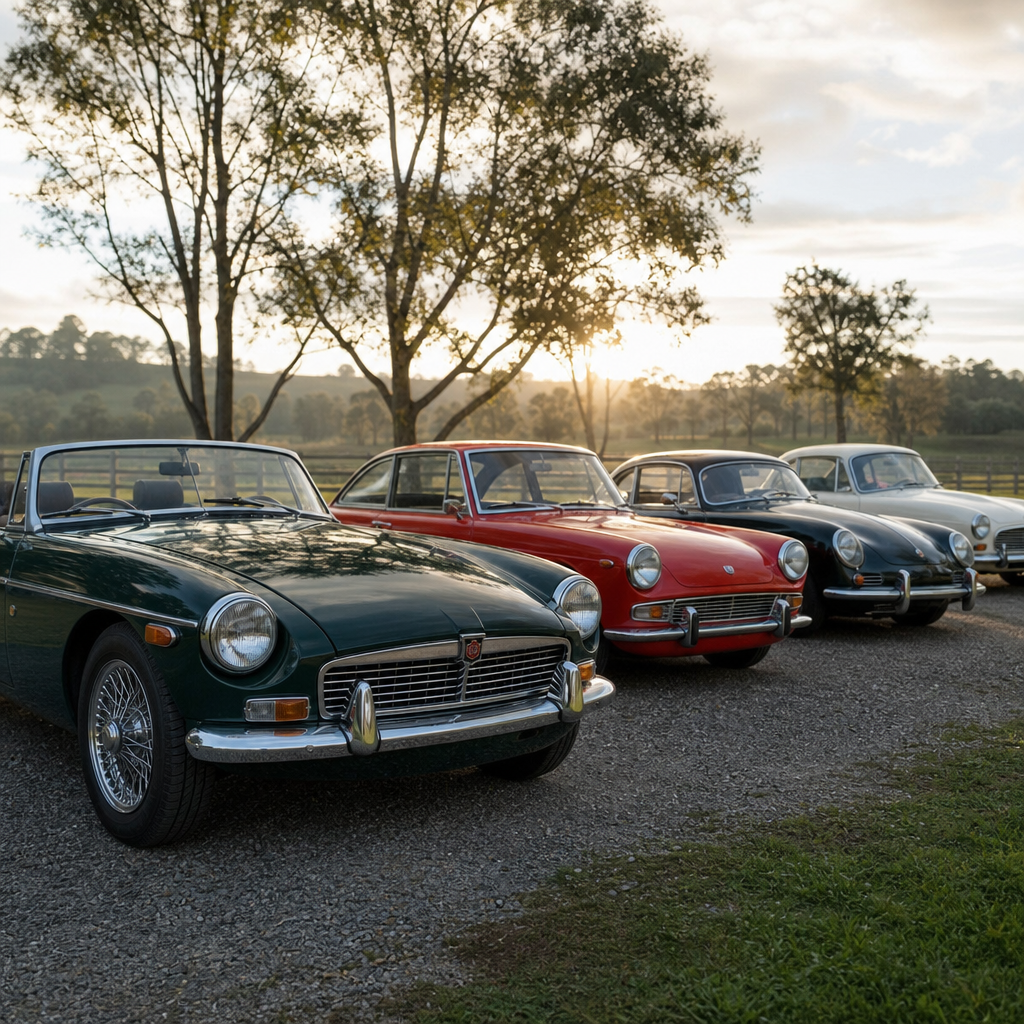
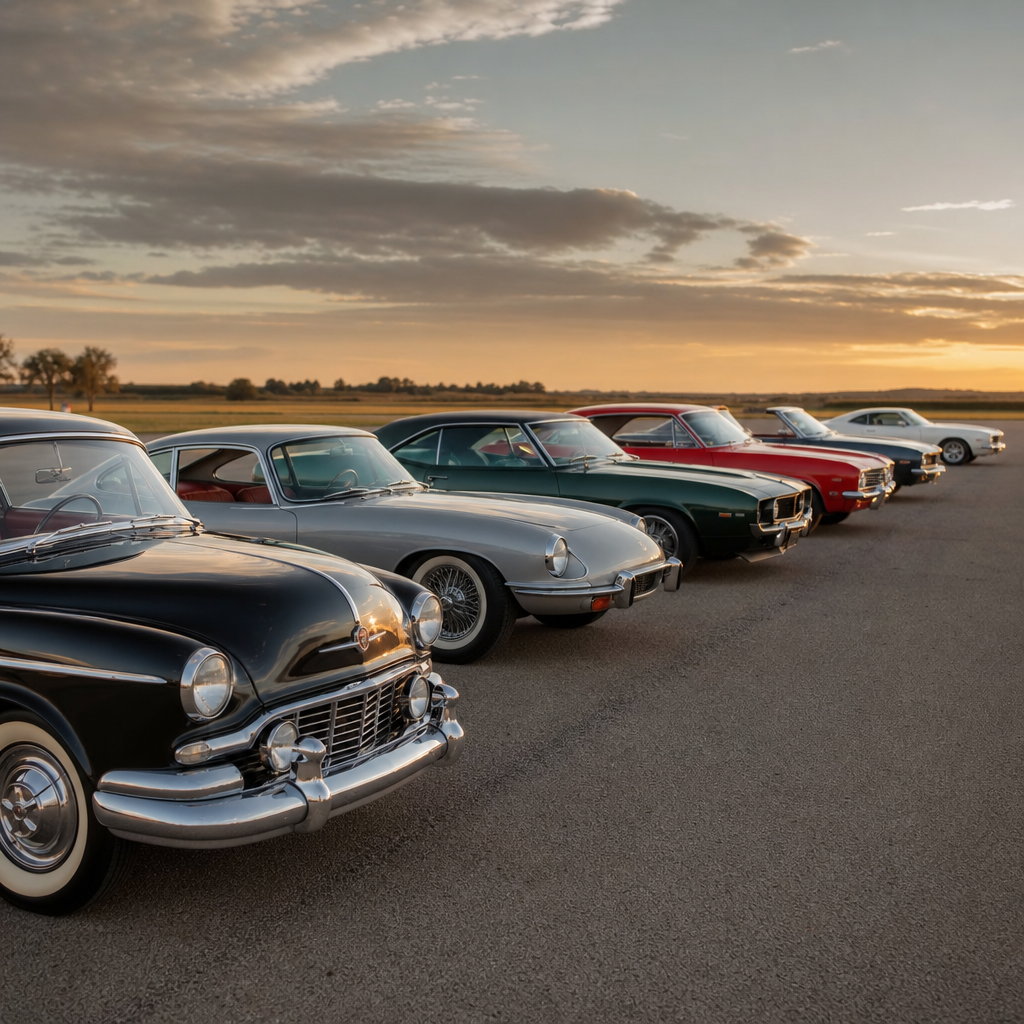
Classic car history is easiest to understand when you follow it as a timeline, because each era solved a different problem and expressed a different idea of mobility, status, performance, and design. In practical terms, “classic car eras” are broad periods marked by recognizable engineering changes, styling trends, manufacturing methods, and cultural forces rather than strict calendar lines. Collectors, restorers, insurers, and auction houses often use overlapping labels such as Brass Era, pre-war, post-war, muscle car, malaise era, and modern classic, and those labels matter because they shape values, parts availability, restoration standards, and buyer expectations. After years spent around restorations, auction catalogs, and owners’ clubs, I have found that newcomers make better decisions when they learn the eras first and the individual models second. A 1914 touring car, a 1957 hardtop, and a 1987 homologation special can all be “classic,” but they demand completely different knowledge.
This timeline of classic car evolution by era serves as a hub for popular classic car eras by explaining what defines each period, why those changes happened, and which vehicles best represent them. It also helps answer the questions people usually ask first: What counts as a classic car, which era is most collectible, and how do style and engineering evolve across decades? The answers are not only about nostalgia. They affect how a car drives, how safely it can be used, how easy it is to maintain, and whether it suits touring, concours judging, weekend shows, or investment-minded collecting. By the end, you should be able to place almost any vintage vehicle within a larger historical arc and understand why one era emphasized coachbuilt craftsmanship while another celebrated tailfins, big-block horsepower, or turbocharged efficiency. That context turns old cars from isolated objects into a connected story of industrial progress and cultural change.
The Brass Era and Veteran Foundations, 1890s to 1910s
The earliest automotive era is usually called the Veteran or Brass Era, and it established nearly every basic element of the car while keeping one foot in the carriage trade. Vehicles from roughly the 1890s through the mid-1910s often used exposed brass lamps, upright bodies, wooden wheels, tillers or early steering wheels, and engines mounted in experimental layouts. Brands such as Benz, Panhard et Levassor, Oldsmobile, Cadillac, Packard, and Ford were not merely selling transportation; they were proving that self-propelled road vehicles could replace horses. During this period, no single standard had yet won. Steam, electric, and gasoline power all competed. By the 1910s, gasoline engines gained the advantage because of energy density, range, and improving fuel infrastructure.
Two developments define the era. First, the adoption of the front-engine, rear-drive layout with a sliding-gear transmission gave the car a durable mechanical template. Second, mass production transformed automobiles from experimental luxuries into scalable products. Ford’s Model T, introduced in 1908, is the turning point. Its vanadium steel, simple controls, and eventually moving assembly line made ownership possible for ordinary families. Yet Brass Era cars remain challenging today. They require specialized lubrication knowledge, low-speed road confidence, and careful sourcing of handmade or obsolete parts. Their appeal lies in originality, engineering firsts, and the visible transition from carriage to automobile.
The Vintage and Pre-War Maturity Years, 1920s to 1930s
By the 1920s and 1930s, the automobile matured from novel machine into refined consumer product. Historians often separate the 1920s Vintage era from the broader pre-war period, but together they represent a leap in mechanical competence and design sophistication. Electric starters, better brakes, closed bodies, balloon tires, synchromesh gearboxes, and more powerful inline-six, straight-eight, V12, and V16 engines made cars faster, quieter, and easier to use. Carmakers also developed stronger brand identities. Cadillac symbolized prestige, Duesenberg delivered technical supremacy, Bugatti balanced art and speed, and Rolls-Royce refined silence and craftsmanship.
These years also normalized the idea that styling sells. Coachbuilders such as LeBaron, Murphy, Figoni et Falaschi, and Saoutchik created bespoke bodies for wealthy clients, while mainstream manufacturers offered more integrated factory designs. The 1934 Chrysler Airflow, although commercially difficult, introduced streamlining principles that influenced later body engineering. The 1936 Cord 810 brought front-wheel drive, hidden headlights, and dramatic coffin-nose styling into public view. At the same time, the Great Depression forced companies to justify price and efficiency, which sharpened engineering priorities. For collectors, pre-war classics are prized for craftsmanship, scale, and historical presence, but ownership usually means significant storage space, careful parts networks, and specialist mechanical support.
Post-War Recovery and the Birth of the Modern Classic, 1940s to 1950s
World War II halted civilian production, but the post-war years accelerated innovation and reshaped the global car market. When factories returned to consumer vehicles, pent-up demand was enormous. Early late-1940s models often carried updated pre-war bodies, yet by the 1950s the industry moved decisively toward lower, wider, and more integrated forms. Unitized construction became more common, overhead-valve V8 engines gained popularity, automatic transmissions spread, and features once considered premium, such as radios, heaters, and power accessories, became increasingly accessible. In the United States, Chevrolet, Ford, Buick, Cadillac, and Chrysler defined mass-market aspiration. In Europe, Jaguar, Mercedes-Benz, Porsche, Alfa Romeo, and Citroen offered everything from sports cars to technical flagships.
The 1950s matter because they created many of the cars people casually picture when they hear “classic car.” Chevrolet’s 1955 small-block V8 established a compact, tunable engine family with extraordinary longevity. The 1955-1957 Chevrolet Bel Air, 1955 Ford Thunderbird, and 1957 Cadillac Eldorado reflect the era’s optimism, chrome-heavy styling, and growing suburban culture. In Europe, the Jaguar XK120 and Mercedes-Benz 300SL showed how post-war engineering could produce genuine world-class performance. The 300SL’s fuel injection and gullwing doors remain landmark features. Safety was still secondary to style and power, but the seeds of modern automotive engineering were planted in suspension refinement, better electrical systems, and more reliable high-speed touring capability.
The 1960s Performance Boom and Global Style Explosion
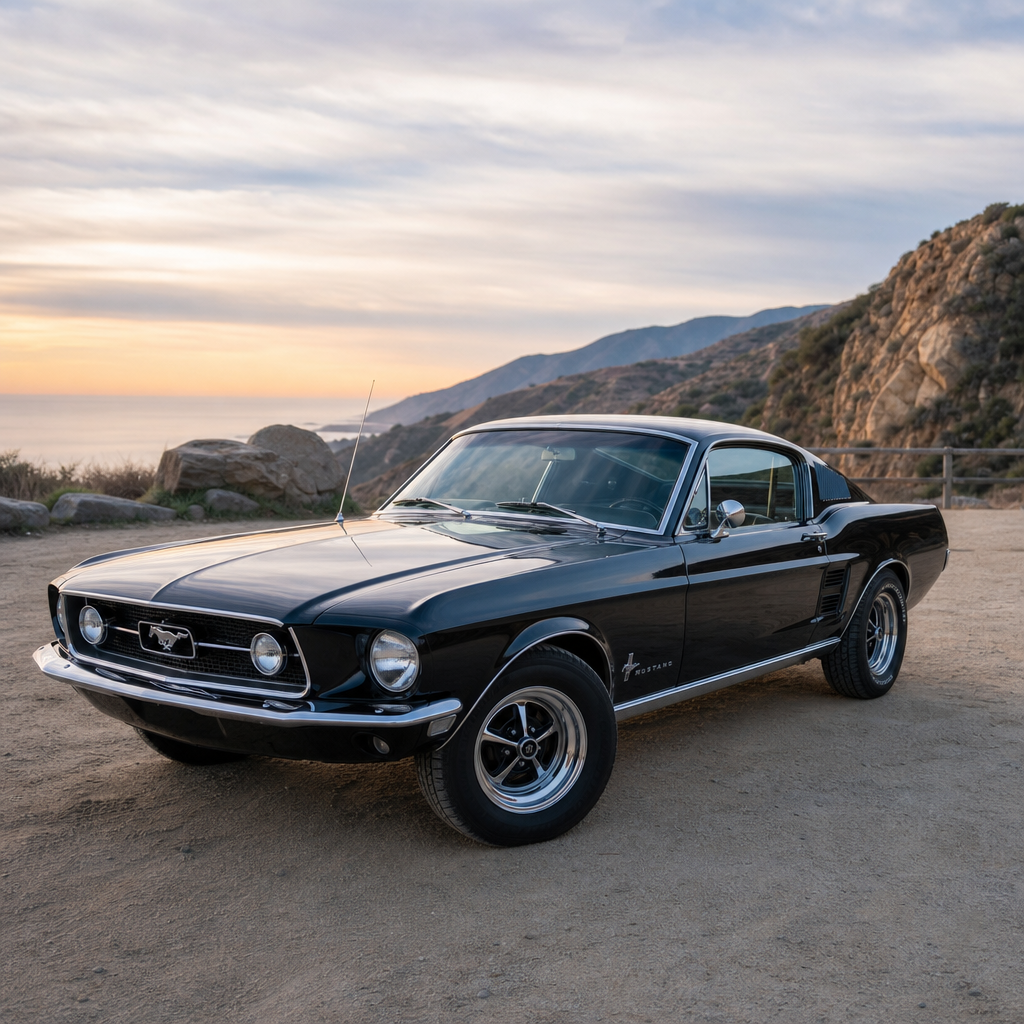
The 1960s expanded the definition of a classic car by combining youth culture, motorsport influence, and international design confidence. This decade produced the British roadster boom, the rise of the pony car, advances in grand touring, and some of the most enduring automotive shapes ever made. Cars became lifestyle statements as much as transportation devices. The 1964½ Ford Mustang proved that a stylish, relatively affordable performance-oriented coupe could create an entirely new market segment. Chevrolet answered with the Camaro, Pontiac with the Firebird, and Plymouth with the Barracuda. Across the Atlantic, the Jaguar E-Type, MGB, Austin-Healey 3000, Alfa Romeo Giulia Sprint, and Ferrari 275 GTB showcased distinctly different expressions of speed and beauty.
Under the skin, the decade saw major progress in independent suspension, disc brakes, higher-revving engines, and improved body engineering. It also built direct links between racing and road cars. Porsche’s 911, launched in 1964, evolved into one of the most durable sports car templates in history. The Chevrolet Corvette Sting Ray translated dramatic styling into American fiberglass performance. BMC’s Mini proved that small front-wheel-drive packaging could revolutionize urban mobility and competition alike, especially in rallying. For collectors, 1960s classics remain deeply appealing because they balance charisma with usability. Many can still be driven regularly, parts support is often strong, and the era offers a wide spread from modest enthusiast cars to blue-chip collectibles.
The Muscle Car Era and Its High-Water Mark, Late 1960s to Early 1970s
If one era dominates popular imagination in the United States, it is the muscle car period. Muscle cars were typically midsize or compact American cars fitted with large-displacement V8 engines for straight-line performance at accessible prices. The formula sounds simple because it was. Put a big engine into a relatively light platform, tune the image around youth and power, and sell excitement. Key examples include the Pontiac GTO, Chevrolet Chevelle SS 454, Plymouth Road Runner, Dodge Charger R/T, Dodge Challenger, Ford Torino Cobra, and Buick GSX. The 1969 Camaro Z/28 and Boss 302 Mustang also connected road cars to Trans-Am racing homologation and high-revving small-block development.
Although mythology often overshadows nuance, the era was not only about quarter-mile times. Manufacturers used rising compression ratios, multiple carburetors, functional hood scoops, heavy-duty suspensions, and vivid graphics to create distinct personalities. Insurance premiums, emissions regulations, and the 1973 oil crisis ended the period’s excess quickly, which is one reason authentic big-block and high-spec examples are so coveted now. Matching numbers, factory documentation, original colors, and build sheets can dramatically affect value. The market also rewards rare option combinations, but buyers must be cautious: clones and tribute builds are common, and factory-correct verification through VIN decoders, cowl tags, and marque experts is essential.
| Era | Defining Traits | Representative Models | Collector Notes |
|---|---|---|---|
| Brass Era | Brass trim, carriage roots, experimental engineering | Ford Model T, Cadillac Model Thirty | High historical value, specialist ownership |
| Pre-War | Coachbuilding, straight-eights, streamlining | Cord 810, Duesenberg Model J | Craftsmanship and rarity drive demand |
| Post-War 1950s | Chrome, V8 growth, automatic transmissions | Chevrolet Bel Air, Mercedes-Benz 300SL | Broad appeal and strong club support |
| 1960s Performance | Sports cars, pony cars, disc brakes | Ford Mustang, Jaguar E-Type | Usable classics with diverse price points |
| Muscle Car | Big-block power, graphics, dragstrip image | Pontiac GTO, Chevelle SS 454 | Documentation matters enormously |
| 1970s to 1980s | Emissions controls, downsizing, turbo resurgence | Porsche 930, BMW E30 M3 | Growing modern-classic interest |
The 1970s Transition: Regulation, Efficiency, and Redefined Performance
The 1970s are sometimes dismissed, but that is a mistake. This decade transformed the classic car landscape by forcing manufacturers to respond to emissions standards, safety requirements, fuel economy pressure, and changing buyer priorities. Compression ratios fell, horsepower ratings shifted from gross to net, bumpers grew, and many famous performance nameplates lost some of their edge. Yet the story is more complex than decline. Mercedes-Benz continued building bank-vault luxury sedans, BMW sharpened the sports sedan formula, Porsche refined the 911, and Ferrari, Lamborghini, and Maserati carried exotic prestige through a difficult economic climate. In the mainstream market, compact imports from Toyota, Datsun, and Honda permanently changed perceptions of reliability and efficiency.
American cars from this era often require context rather than mockery. A 1977 Pontiac Trans Am or 1970s Corvette may not match late-1960s output figures, but these cars became cultural icons through film, television, and bold styling. Decals, shaker scoops, T-top roofs, and color palettes gave them enormous personality. Meanwhile, safety engineering improved in meaningful ways, including stronger occupant protection and better braking systems. For today’s enthusiasts, the 1970s offer relatively accessible entry points into classic ownership. Values for the best examples have risen as buyers recognize originality, low production variants, and the historical importance of the decade’s regulatory pivot.
The 1980s and 1990s: The Rise of the Modern Classic
By the 1980s and 1990s, automotive technology had entered a phase that many collectors now call the modern classic era. Fuel injection replaced carburetors across much of the market, electronic engine management improved drivability, turbocharging returned with purpose, and aerodynamics shaped everything from economy cars to supercars. These vehicles feel dramatically more usable than earlier classics while still preserving analog steering, lighter curb weights, and distinct period character. Cars such as the Porsche 930, BMW E30 M3, Mercedes-Benz 190E 2.3-16 and 2.5-16, Buick Grand National GNX, Acura NSX, Mazda RX-7, Toyota Supra Turbo, and Nissan Skyline GT-R became touchstones because they linked road performance with motorsport credibility or technical innovation.
This era is increasingly important in classic car education because the ownership model changes. Diagnostics may involve Bosch Motronic, OBD systems, ABS sensors, and electronic climate controls, not just timing lights and carb jets. Plastics, wiring insulation, digital dashboards, and unobtainable modules can be as important as rust inspection. The best modern classics combine service documentation, unmodified condition, and strong enthusiast support. The 1990 Honda NSX, for example, proved that a supercar could deliver reliability, visibility, and ergonomic excellence without sacrificing speed. Likewise, the E30 M3 was built to homologate touring-car competition and now stands as a benchmark for high-revving four-cylinder precision and chassis balance.
How to Use Eras to Evaluate, Buy, and Enjoy a Classic Car
Understanding popular classic car eras is not just historical trivia; it is a practical tool for choosing the right vehicle. Start by matching the era to your intended use. Brass and pre-war cars suit collectors drawn to preservation, touring events, and mechanical history. Post-war American and European cars often fit show participation and relaxed weekend driving. 1960s sports cars and pony cars can balance road enjoyment with broad club support. Muscle cars appeal to buyers who value presence, sound, and documented originality. Modern classics often suit enthusiasts who want vintage character with better cold starts, highway manners, and parts interchangeability.
Then evaluate the realities each era brings. Earlier cars demand specialist workmanship, while later cars may require electronic troubleshooting and model-specific software knowledge. Parts sourcing varies widely: Model T components are surprisingly supported, tri-five Chevrolet parts are abundant, and some limited-production 1980s control units are scarce. Join marque clubs, read factory workshop manuals, consult valuation guides from Hagerty or similar insurers, and verify authenticity before purchase. The best classic era is the one that matches your budget, storage, skill level, and patience. Learn the timeline first, follow the links to deeper model-specific guides, and you will approach the classic market with sharper judgment and far fewer expensive surprises.
A timeline of classic car evolution by era reveals more than changing sheet metal. It shows how technology, regulation, culture, and consumer taste pushed the automobile from brass-trimmed experiment to coachbuilt luxury car, from chrome-rich post-war symbol to muscle-bound street machine, and from emissions-era compromise to electronically managed modern classic. Once you understand the major eras, individual models become easier to evaluate because you can judge them within their historical purpose rather than by today’s standards alone. That perspective is essential for anyone exploring classic car basics and education, whether the goal is casual learning, first-time buying, restoration planning, or building a focused collection.
The main benefit of learning popular classic car eras is clarity. You stop seeing old vehicles as one undifferentiated category and start recognizing the engineering logic, design language, and ownership realities that define each period. That helps you ask better questions about authenticity, parts support, driving experience, and long-term value. Use this hub as your starting point, then continue into deeper era guides, buyer checklists, and model histories to refine your knowledge. The classic car world rewards informed enthusiasm, and the best next step is simple: pick the era that most interests you and study it closely before you buy, restore, or bid.
Frequently Asked Questions
What are the main eras in classic car history, and how are they usually defined?
Classic car history is usually divided into broad eras that reflect major shifts in engineering, styling, manufacturing, and culture rather than strict start-and-stop dates. That is why you will often see some overlap in terminology depending on whether the source is a historian, collector, insurer, auction house, or enthusiast club. Common labels include the Brass Era, generally associated with the earliest practical automobiles and their carriage-like construction; the Vintage era, when cars became more standardized, more reliable, and more widely usable; the pre-war years, which saw major advances in body design, comfort, power, and luxury; the post-war period, when mass production, new consumer demand, and rapid technological development reshaped the industry; the 1950s and 1960s, often remembered for chrome, tailfins, V8 performance, and the rise of brand identity; the muscle car and pony car years of the 1960s and early 1970s; and the later classic period, when emissions rules, safety standards, fuel concerns, and changing tastes influenced how cars looked and performed.
These eras are best understood as stages in the evolution of mobility. Early cars solved the problem of basic transportation and mechanical reliability. Later eras focused on comfort, speed, style, affordability, safety, and status. For example, the earliest automobiles often resembled horseless carriages because the industry was still inventing itself. By contrast, streamlined pre-war and post-war cars showed how aerodynamics, integrated bodywork, and improved manufacturing changed expectations. In the 1950s and 1960s, cars became powerful symbols of aspiration and identity, while later decades reflected regulation, efficiency, and new global competition. So when people talk about “classic car eras,” they are really describing clusters of shared characteristics that help explain how the automobile developed over time.
Why don’t classic car eras follow exact calendar dates?
Classic car eras do not follow exact calendar dates because automotive change rarely happens all at once. New technologies, production methods, and design ideas emerge gradually, and different manufacturers adopt them at different speeds. One company might introduce all-steel bodies, hydraulic brakes, or overhead-valve engines years before another. Likewise, one market may move toward streamlining or compact packaging sooner than another based on local roads, fuel prices, regulations, or buyer preferences. As a result, historians and enthusiasts use eras as interpretive tools rather than rigid legal categories.
There is also a strong cultural reason for this overlap. Cars are shaped not just by engineering but by events such as wars, economic booms, depressions, fuel shortages, and changing social values. The pre-war period, for instance, blends luxury craftsmanship with increasing industrial sophistication, but its character was also shaped by the economic pressures of the 1930s. The post-war era begins with pent-up consumer demand and industrial expansion, yet not every manufacturer restarted in the same way or at the same pace. Similarly, the transition out of the muscle car age was influenced by insurance costs, emissions controls, and fuel economy concerns, but those pressures affected brands and models unevenly. That is why the boundaries between eras are often “fuzzy” by design: they reflect the real-world complexity of automotive evolution.
What changed most from one classic car era to the next: design, engineering, or manufacturing?
All three changed dramatically, but engineering and manufacturing usually drove the biggest long-term shifts, while design made those changes visible to the public. In the earliest periods, basic engineering questions dominated: how to build dependable engines, effective transmissions, stronger chassis, workable ignition systems, and practical brakes. As those fundamentals improved, manufacturers could build cars that were easier to drive, more durable, and more accessible to ordinary buyers. Manufacturing then transformed the industry by making cars cheaper and more consistent. Assembly-line production, interchangeable parts, standardized components, and improved metallurgy turned automobiles from handmade novelties into scalable consumer products.
Design became especially important once manufacturers had solved basic reliability and production problems. Styling moved from upright, carriage-inspired bodies to integrated fenders, enclosed cabins, streamlining, chrome-heavy ornamentation, tailfins, hardtops, and eventually cleaner, more restrained forms. But those visual changes often reflected underlying technical progress. Lower bodies, stronger frames, better suspension, more compact drivetrains, and improved body construction allowed stylists to create shapes that would have been impossible in earlier periods. In practical terms, each era is defined by the interaction of all three forces. Engineering determines what a car can do, manufacturing determines how many can be built and at what cost, and design determines how the era expresses itself visually and emotionally.
How do collectors and enthusiasts use era-based timelines when evaluating classic cars?
Collectors and enthusiasts use era-based timelines to place a car in its proper historical context, which helps them judge rarity, authenticity, desirability, and significance. A vehicle is not evaluated only on age; it is also judged on how well it represents the ideas and technology of its time. For example, an early Brass Era car may be valued for mechanical originality, coachbuilt details, and the sheer challenge of preserving primitive systems. A pre-war luxury car might be admired for craftsmanship, advanced engineering, and elegant bodywork. A 1950s American coupe may attract attention for period styling and cultural nostalgia, while a 1960s or early 1970s performance model may be prized for engine options, factory documentation, and motorsport associations.
This timeline approach is also useful in restoration and insurance. Restorers need to know what features are correct for a given period, such as paint types, trim materials, wheel designs, carburetion, instrumentation, or body construction methods. Insurers and auction houses use era and category labels to compare a car against similar vehicles in the market. Enthusiasts do the same when discussing originality, matching numbers, historical provenance, and whether modifications enhance or diminish value. In short, the era framework gives people a shared vocabulary. It helps answer key questions: What problem was this car trying to solve? What trends did it embody? Was it innovative for its time, typical of its class, or an outlier that pushed the industry forward?
Why is a timeline the best way to understand classic car evolution by era?
A timeline is the clearest way to understand classic car evolution because it shows cause and effect across generations. Instead of treating old cars as isolated style icons, a timeline reveals how one development led to another. Early automobiles focused on proving that self-propelled personal transport could work at all. Once reliability improved, manufacturers pursued affordability and scale. As roads improved and buyers demanded more comfort, enclosed bodies, better suspension, and more powerful engines became normal. As competition intensified, styling and brand identity grew more important. Then regulations, safety expectations, and economic pressures began reshaping performance, size, and efficiency. A timeline turns these shifts into a coherent story rather than a random collection of old models.
It also helps readers understand that every era expressed a different idea of what a car should be. In one period, a car was a mechanical breakthrough. In another, it was a symbol of luxury, modernity, freedom, status, or speed. Later, it became a statement about practicality, personal taste, or engineering sophistication. Viewing classic cars through a timeline highlights the changing priorities of both manufacturers and society. That perspective is especially useful for newcomers, because it explains why a brass-era runabout, a streamlined pre-war sedan, a chrome-laden 1950s convertible, and a big-engine 1960s muscle car feel so different from one another. They were built in response to different technologies, different markets, and different cultural ambitions, and the timeline makes those differences easy to see.