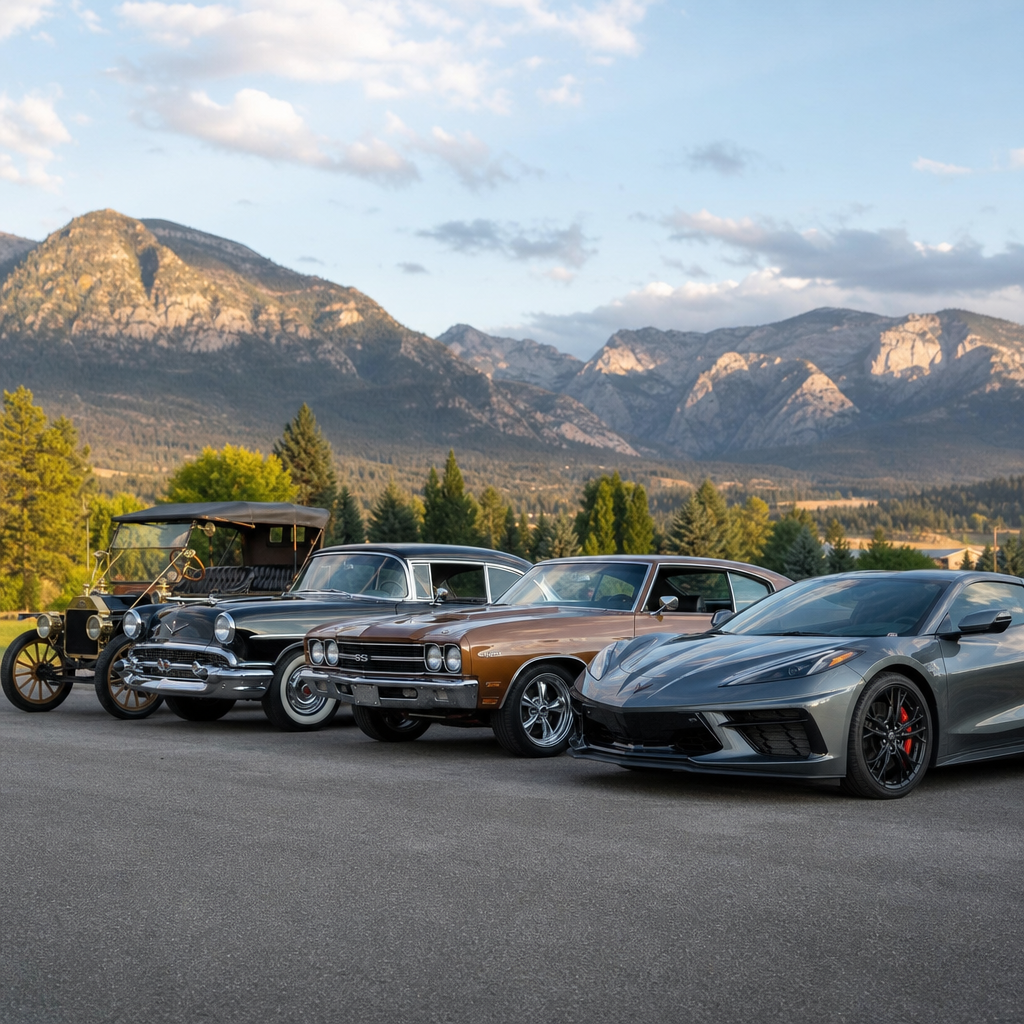
Automotive history is easiest to understand when you divide it into classic eras, because each period reflects the technology, styling, economics, and social values of its time. In the collector world, “classic car eras” usually refers to broad production periods such as Brass, Vintage, prewar, postwar, chrome, muscle, malaise, and modern classics, though exact dates vary between historians, clubs, insurers, and auction houses. I have learned through years of cataloging cars, judging restorations, and comparing factory literature that era labels matter because they shape values, restoration standards, parts availability, drivability expectations, and buyer demand. A 1912 touring car, a 1936 streamliner, a 1957 hardtop, and a 1987 homologation coupe can all be “classic,” yet they come from entirely different design philosophies and engineering constraints.
Understanding popular classic car eras helps enthusiasts answer practical questions fast. What makes a car feel old in one decade and advanced in the next? Why did giant fenders give way to integrated bodies, then tailfins, then sharp-edged muscle, then emissions-choked personal luxury coupes? Why do some eras dominate concours lawns while others are finally gaining respect at auctions and online marketplaces? The answers are rooted in trends: manufacturing methods, fuel quality, safety regulation, motorsport influence, consumer credit, suburban growth, wartime interruption, and the rise of global competition.
This hub article explains how automotive trends define each classic era in plain terms, while also giving enough depth to guide collecting and research. It covers the major periods most enthusiasts encounter, the design and mechanical traits that identify them, and the reasons these cars still matter. If you are building knowledge before buying, restoring, or simply appreciating old cars, knowing the eras is the foundation. Every deeper topic in classic car education, from body styles to valuation, starts here.
Brass Era and the Birth of the Automobile, roughly 1896 to 1915
The Brass Era is named for the bright brass lamps, radiators, and fittings used before standardized electric lighting and enclosed coachwork became common. Cars from this period were fundamentally experimental machines adapted from carriage practice. Manufacturers such as Ford, Packard, Oldsmobile, Cadillac, Renault, and Benz were still deciding basic architecture: tiller versus steering wheel, chain drive versus shaft drive, air cooling versus water cooling, and one-cylinder simplicity versus multicylinder smoothness.
In practical terms, Brass Era cars are defined by upright bodies, exposed mechanical components, narrow tires, high ground clearance, and controls that can intimidate modern drivers. Starting often required a hand crank. Braking was weak. Lubrication could be total-loss. Yet these cars established the template for the industry. The 1908 Ford Model T matters not because it was luxurious, but because moving assembly line production, standardized parts, and a durable planetary transmission made car ownership attainable for the middle class. That shift from novelty to transportation is the core trend of the era.
Collectors value Brass Era cars for historical significance and mechanical honesty, but ownership is specialized. Roads, fuels, and speeds have changed too much for them to function like later classics. As a result, preservation, museum stewardship, and organized tours such as veteran and horseless carriage events are central to this segment.
Vintage Era and the Move Toward Modern Motoring, roughly 1916 to 1929
The Vintage Era begins when the automobile stops looking like a motorized carriage and starts becoming a purpose-built machine. Electric starters, improved magnetos and ignition systems, closed steel bodies, balloon tires, hydraulic shock absorbers, and stronger frames made cars more comfortable and usable. Styling also matured. Hoods lengthened, bodies lowered, windshields became better integrated, and manufacturers offered coherent model ranges rather than one-size-fits-all runabouts.
This was also the decade when branding and market segmentation became powerful trends. General Motors refined the annual model hierarchy under Alfred P. Sloan, while Cadillac emphasized precision, Duesenberg chased engineering supremacy, and Rolls-Royce built reputations on refinement. The 1927 Ford Model A illustrates another defining trend: rapid generational improvement. Compared with the Model T, it had a more conventional transmission, improved brakes, and styling that looked unmistakably modern.
Vintage Era cars attract enthusiasts who enjoy robust prewar engineering without the fragility of the earliest machines. They can still be demanding, but they reward proper maintenance. In my experience at shows and club tours, owners often describe these cars as the first genuinely social classics because they can cover distance, carry passengers comfortably, and invite conversation from people who recognize familiar automotive forms.
Prewar Streamlining and Luxury, roughly 1930 to 1942
The 1930s transformed the automobile through aerodynamics, integrated styling, and improved ride quality. The Great Depression reduced overall sales, but it also sharpened product differentiation. Manufacturers needed stronger identities, so styling became strategic. Harley Earl at General Motors, Raymond Loewy’s consulting influence, and Chrysler’s engineering-led experimentation all pushed the car away from separate fenders and purely upright design.
Streamlining became the era’s defining language, even when the aerodynamic gains were modest in everyday driving. Cars such as the 1934 Chrysler Airflow, the 1936 Cord 810, and late-1930s Lincoln Zephyr demonstrated lower rooflines, integrated headlights, and cleaner body shapes. Independent front suspension, synchromesh gearboxes, stronger hydraulic brakes, and all-steel bodies improved the driving experience. At the luxury end, marques including Packard, Cadillac, Delahaye, and Mercedes-Benz paired advanced engineering with coachbuilt elegance.
Collectors often divide prewar cars into mass-market survivors and premium full classics. The distinction matters because rarity alone does not define desirability. A modest 1939 Ford Deluxe is valued for cultural familiarity and parts support, while a supercharged Mercedes-Benz 540K represents engineering prestige and extreme scarcity. The trend that defines this era is sophistication under pressure: even during economic hardship, automakers accelerated the transition toward the modern car.
Postwar Recovery and the Rise of American Optimism, roughly 1946 to 1954
World War II interrupted civilian car production, so the first postwar models were often warmed-over prewar designs. Even so, demand exploded. Returning soldiers, expanding suburbs, new highways, and rising incomes created a seller’s market. The most important trend was normalization of car ownership as a central part of family life. Buyers wanted reliability, comfort, and fresh styling after years of rationing and industrial redirection.
By the late 1940s and early 1950s, true postwar styling emerged. Ponton bodies, integrated fenders, one-piece windshields, and lower silhouettes became standard. Automatic transmissions such as GM’s Hydra-Matic spread convenience to mainstream buyers. Overhead-valve V8 development, better heating and ventilation, and improved electrical systems made daily driving easier. The 1949 Ford is often cited as a breakthrough because it looked clean and modern without relying on obvious prewar carryover themes.
For collectors, this era offers usable classics with manageable complexity. They are generally slower and softer than later performance cars, but they embody a major historical shift: the automobile became a domestic necessity, not a luxury for the few or a mechanical hobby for the brave.
The Chrome and Tailfin Years, roughly 1955 to 1964
If one era defines popular classic imagery, it is the chrome and tailfin period. Postwar prosperity, interstate travel, cheap fuel, and fierce model-year competition turned styling into spectacle. Designers borrowed inspiration from jets, rockets, and space-age optimism. Wraparound windshields, hardtop coupes, two-tone paint, and elaborate brightwork became showroom weapons. Harley Earl and later Bill Mitchell at General Motors set the visual pace, while Chrysler’s Virgil Exner pushed dramatic fins and a lower, longer stance.
Mechanically, this was not just a cosmetic decade. The overhead-valve V8 became dominant in the United States. Power steering, power brakes, factory air conditioning, and automatic transmissions moved from premium options toward broader availability. Performance also escalated. Chevrolet introduced the small-block V8 in 1955, a landmark engine because it combined compact dimensions, tunability, and durability. Fuel injection appeared on the 1957 Chevrolet and on select high-end models elsewhere, signaling that performance and modern technology could coexist.
These cars remain popular because they balance charm and usability. A 1957 Chevrolet Bel Air, 1955 Chrysler C-300, or 1961 Lincoln Continental is instantly recognizable, mechanically understandable, and deeply tied to midcentury culture. The trend that defines the era is expressive abundance: more power, more trim, more annual change, and more emotional selling.
Muscle, Pony Cars, and Factory Performance, roughly 1964 to 1972
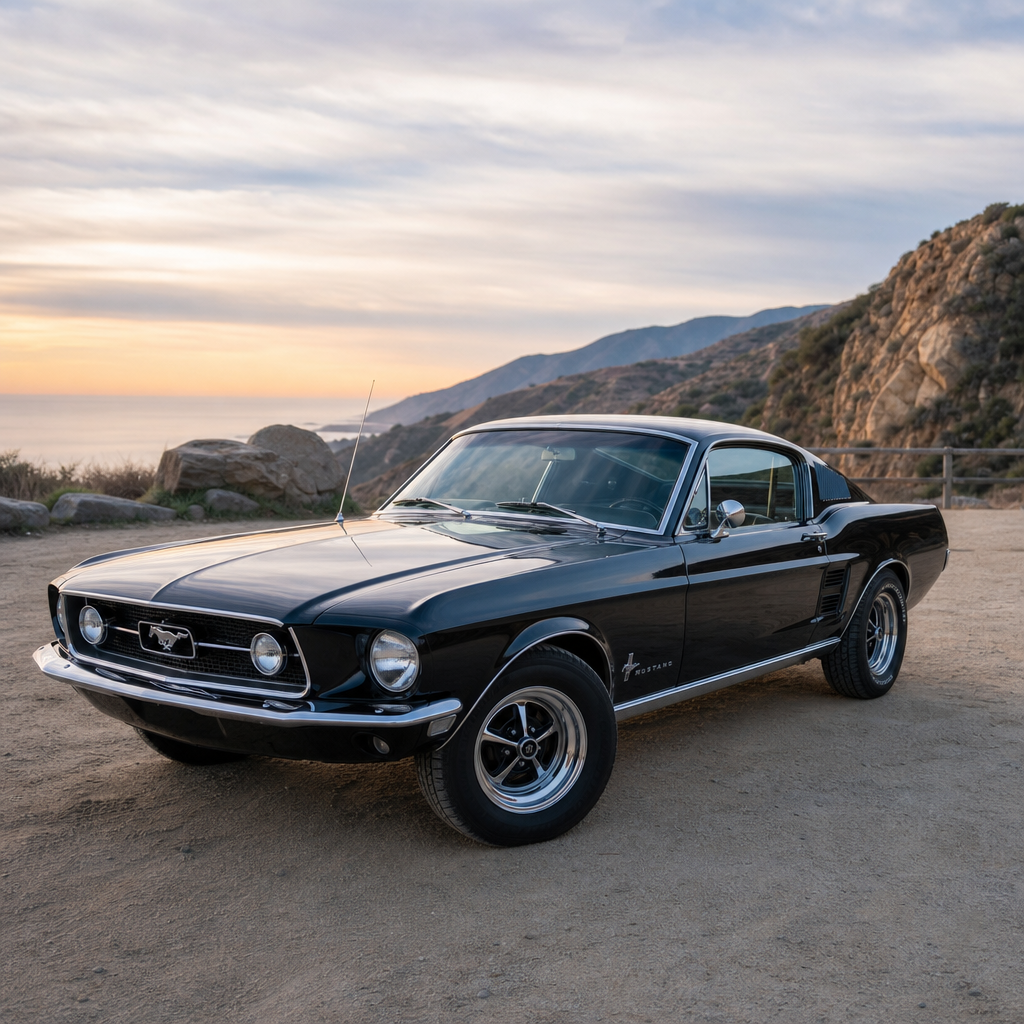
The muscle car era was shaped by youth demographics, affordable horsepower, and a motorsport mindset that reached the street. While historians debate the exact starting point, the 1964 Pontiac GTO is the standard reference because it packaged a large V8 into a midsize platform at a reachable price. Soon every major American brand offered high-output versions of coupes, sedans, and intermediates. Pony cars followed with the Ford Mustang in 1964½, then the Chevrolet Camaro, Pontiac Firebird, Dodge Challenger, and others.
What defines this era is not only straight-line speed, but the way manufacturers marketed performance as identity. Big-block engines, four-speed manuals, limited-slip differentials, stripe packages, cowl-induction hoods, and homologation specials all spoke directly to buyers who wanted street credibility. Insurance data eventually showed the downside: rising claims, theft, and accidents increased ownership costs. At the same time, tightening emissions rules, looming fuel concerns, and changing safety expectations began to challenge the formula.
| Era | Signature Trend | Typical Defining Features | Representative Example |
|---|---|---|---|
| Brass | Automobile as invention | Brass fittings, carriage roots, hand crank | Ford Model T |
| Vintage | Mass adoption and refinement | Electric starter, closed bodies, better brakes | Ford Model A |
| Prewar | Streamlining and engineering maturity | Integrated styling, hydraulic brakes, IFS | Cord 810 |
| Postwar | Family mobility and suburban growth | Ponton bodies, automatics, improved comfort | 1949 Ford |
| Chrome | Style-led prosperity | Tailfins, V8s, brightwork, hardtops | 1957 Chevrolet Bel Air |
| Muscle | Affordable factory performance | Big engines, stripes, four-speeds, coupes | Pontiac GTO |
| Malaise | Regulation and efficiency pressure | Lower compression, emissions gear, larger bumpers | 1977 Pontiac Trans Am |
| Modern Classic | Technology and specialization | Fuel injection, turbocharging, electronics | BMW E30 M3 |
Today, muscle cars are among the most researched and most replicated classics, which means documentation is critical. Original drivetrains, trim tags, build sheets, and known option codes can change value dramatically. The defining trend remains simple and powerful: manufacturers sold excitement straight from the factory.
Malaise Era, Regulation, and Reinvention, roughly 1973 to early 1980s
The so-called Malaise Era is often misunderstood. Yes, performance declined after the 1973 oil crisis, emissions regulations tightened, and federal bumper rules affected proportions. Compression ratios dropped as unleaded fuel and emissions compliance reshaped engine tuning. Net horsepower ratings replaced gross figures, making the fall in output feel even more dramatic to buyers comparing brochures across decades.
But this period also laid the groundwork for later reliability and efficiency gains. Electronic ignition became common, rustproofing slowly improved, radial tires spread, front disc brakes became more normal, and manufacturers learned to package comfort, luxury, and fuel economy in new combinations. Cars like the Mercedes-Benz W123, BMW 2002, Datsun 240Z, and later Volkswagen GTI proved that driver engagement did not disappear; it simply moved away from the traditional big-cube American formula.
American icons such as the Pontiac Firebird Trans Am and Chevrolet Corvette survived by adapting through graphics, handling packages, and image-driven marketing. In the collector market, the best Malaise Era cars are rising because nostalgia has caught up and because younger buyers appreciate period design, analog feel, and lower entry prices compared with 1960s equivalents.
Modern Classics, Imports, and the Performance Rebound, roughly 1980s to 1990s
By the 1980s and 1990s, the modern classic era emerged. These cars are old enough to be collectible but new enough to drive in modern traffic with confidence. The defining trends were electronics, fuel injection, turbocharging, global competition, and specialization. Anti-lock brakes, onboard diagnostics, multivalve engines, better corrosion protection, and more precise manufacturing transformed ownership expectations.
This is the era where imports and European brands gained major influence on enthusiast culture. The BMW E30 M3 turned touring car homologation into a street legend. The Porsche 911 evolved without losing identity. Japanese performance cars such as the Mazda RX-7, Toyota Supra, Nissan 300ZX, Acura NSX, and Nissan Skyline GT-R demonstrated that reliability, advanced engineering, and serious speed could coexist. In America, the Fox-body Mustang, Buick Grand National, and C4 Corvette represented a domestic performance rebound built on lighter platforms, forced induction, and improving engine management.
Collectors increasingly treat these cars as the bridge between analog and digital. They still offer tactile steering, visible mechanical character, and distinctive era styling, yet they benefit from modern materials and engineering discipline. If you want a classic that can be used regularly, this period often offers the best balance of cost, parts support, and real-world capability.
How to Use Era Knowledge When Buying, Restoring, or Studying Classics
Knowing the popular classic car eras is more than trivia. It tells you what ownership will feel like before you spend money. Brass and early Vintage cars demand mechanical patience and specialized communities. Prewar cars require careful sourcing and often wood, trim, or coachwork expertise. Postwar and chrome-era cars usually have broad club support and reproduction parts. Muscle cars require rigorous authenticity checks. Malaise and modern classics need attention to emissions hardware, electronics, plastics, and model-specific weak points.
Era knowledge also helps you evaluate value trends. Cars that symbolize an era usually outperform obscure alternatives unless rarity is paired with importance. It explains why a 1969 Camaro, 1957 Bel Air, or 1988 BMW M3 commands strong attention: each stands at the center of a recognizable movement. Start your research by identifying the era, then study the hallmark features, production changes, and known documentation standards for that period. That single step will make you a smarter enthusiast, buyer, and caretaker of automotive history.
Classic car eras give structure to a huge subject. They explain why vehicles changed, how technology spread, and what emotional themes each generation of buyers responded to. From brass lamps and hand cranks to fuel injection and turbo boost, every period reflects a clear set of trends that defined what a car should be. Learn the eras first, and every other classic car topic becomes easier to understand. Use this hub as your starting point, then explore the specific era guides that match the cars you love most.
Frequently Asked Questions
What does “classic car era” actually mean, and why do enthusiasts divide automotive history this way?
A classic car era is a broad historical period used to group vehicles that share similar engineering, styling, manufacturing methods, cultural influences, and ownership experiences. Instead of looking at every make and model individually, enthusiasts, restorers, insurers, auction houses, and historians often organize automotive history into recognizable eras such as Brass, Vintage, prewar, postwar, chrome, muscle, malaise, and modern classics. This approach makes the evolution of the automobile much easier to understand because cars do not change in isolation. They reflect the larger world around them, including available materials, fuel prices, road conditions, safety regulations, consumer expectations, and even national mood.
For example, an early Brass Era car tells you a great deal about experimentation, limited production, and the transition from horse-drawn transport to mechanized travel. A chrome-heavy 1950s American car reflects optimism, industrial confidence, and a consumer culture shaped by postwar prosperity. A 1970s performance car, by contrast, often shows the direct impact of emissions controls, insurance pressures, and fuel concerns. When you divide history into eras, those patterns become much clearer.
In the collector world, these eras also help set expectations. They influence how a car is judged, what restoration standards apply, how difficult parts sourcing may be, and what driving characteristics an owner should expect. A prewar luxury sedan is judged differently from a 1960s muscle coupe, and a 1980s modern classic is evaluated differently from a coachbuilt car of the 1930s. In short, “classic car eras” are useful because they connect the car itself to the broader technological and cultural story that created it.
Which factors most strongly define each classic automotive era?
The most important factors are technology, styling, economics, regulation, and social values. These five influences consistently shape what cars look like, how they perform, how they are built, and why buyers want them. When people talk about one era ending and another beginning, they are usually pointing to a shift in one or more of these categories.
Technology is often the clearest marker. Early eras were defined by rapid experimentation with engines, ignition systems, transmissions, and body construction. Later eras introduced major advancements such as hydraulic brakes, synchronized gearboxes, overhead-valve engines, automatic transmissions, power steering, air conditioning, electronic fuel injection, anti-lock brakes, and computer controls. As technology matured, cars became easier to drive, safer, more reliable, and more specialized in their purpose.
Styling is another major divider because design trends change dramatically over time. Brass Era cars often retained carriage-like forms. The 1930s brought more integrated bodies and streamlined influences. Postwar design emphasized freshness and modernity, while the 1950s and early 1960s embraced chrome, tailfins, wraparound windshields, and jet-age themes. The late 1960s and early 1970s celebrated aggressive performance styling, and later decades shifted toward angular forms, aerodynamic shapes, and eventually more refined, globally influenced design.
Economics matters just as much. Periods of prosperity usually produce larger, more powerful, more stylish cars with extra features. Leaner economic periods tend to encourage smaller vehicles, simpler trim, and a stronger emphasis on efficiency or value. The Great Depression, postwar industrial expansion, the 1970s fuel crises, and late 20th-century globalization all left unmistakable fingerprints on the vehicles of their time.
Regulation also plays a major role. Safety standards, emissions requirements, and insurance pressures can transform an era surprisingly quickly. Many enthusiasts point to federal emissions and safety changes in the 1970s as a turning point because they altered engine tuning, bumper design, compression ratios, and overall vehicle proportions. Regulations do not just limit design; they redirect it.
Finally, social values define an era in ways that are sometimes subtle but extremely important. Cars have been viewed at different times as luxury goods, family necessities, status symbols, patriotic products, youth-culture icons, or technological showcases. Those changing values shape what manufacturers build and what buyers celebrate. That is why understanding a classic era means studying more than the car itself. It means understanding the world that wanted that particular kind of car.
Why do the date ranges for classic car eras vary between historians, clubs, insurers, and auction houses?
Date ranges vary because classic car eras are interpretive categories, not universally fixed legal definitions. Different organizations use different boundaries depending on their purpose. A historian may define an era by technological change, a marque club may define it by body style or factory practice, an insurer may define it by age and risk profile, and an auction house may use labels that align with market expectations. All of them may be reasonable, even when their timelines do not match exactly.
Take the term “classic” itself. In casual conversation, many people use it to describe almost any older collectible car. In formal judging or insurance contexts, however, the word may be narrower. Some groups reserve “Full Classic” for specific high-end American and European cars of certain years, while others use broader era labels such as vintage, prewar, or postwar. Likewise, one source may place the end of the Vintage Era in the late 1920s, while another may push a styling or mechanical transition into the early 1930s. The difference usually comes down to what that source considers the most meaningful dividing line.
Another reason for variation is that automotive change is gradual. Eras do not switch overnight when the calendar changes. Manufacturers introduce new technologies at different times, and national markets do not move in lockstep. A design theme may begin in luxury cars before appearing in mass-market models. A safety standard may influence one body type immediately and another more slowly. Some cars are transitional by nature, blending characteristics of two eras at once.
Regional perspective matters too. American collector terminology does not always map neatly onto British or continental European classifications. A period that is central to U.S. enthusiasts, such as the chrome or muscle era, may be less useful as a universal category elsewhere. Meanwhile, postwar reconstruction, taxation, motorsport influence, and fuel costs shaped European eras differently from those in North America.
The practical takeaway is that differing date ranges are normal. They do not mean the categories are useless. They simply reflect different frameworks for understanding the same historical progression. For readers and collectors, the best approach is to focus on the characteristics that define an era rather than becoming overly rigid about exact start and end years.
How did major automotive trends shape well-known eras like Brass, prewar, postwar, chrome, muscle, and malaise?
Each of these eras was shaped by a distinct combination of innovation, design priorities, and public demand. The Brass Era, generally associated with the earliest decades of motoring, was defined by experimentation. Cars were still proving themselves as practical machines, and builders borrowed heavily from carriage construction while trying many different mechanical solutions. Reliability, control, and basic roadworthiness were bigger concerns than standardization. This period feels inventive because the industry itself was still deciding what a car should be.
The prewar years, especially from the late 1920s into the 1930s, brought far greater maturity. Engineering improved, bodies became more integrated, styling grew more sophisticated, and manufacturers developed stronger brand identities. Even during difficult economic conditions, there was remarkable progress in ride quality, braking, chassis refinement, and luxury equipment. Streamlining and art deco influences also became important, showing how industrial design and automotive design were beginning to align.
The postwar era reflects recovery, expansion, and pent-up consumer demand. After World War II, automakers initially resumed production with lightly updated prewar designs, but the market quickly pushed them toward more modern bodies, better comfort, and fresh styling. By the 1950s, the automobile had become central to suburban life, family mobility, and national identity in many places, especially in the United States. Cars grew more powerful and more feature-rich, and buyers increasingly expected convenience along with style.
The chrome era, often associated with the 1950s and early 1960s, was shaped by prosperity and visual drama. Jet-age themes, tailfins, bright trim, panoramic glass, and colorful interiors expressed confidence and optimism. This was an era when style was often as important as mechanical specification to mainstream buyers. Manufacturers competed intensely on showroom appeal, and annual styling changes reinforced the idea that the automobile was a symbol of progress and personal success.
The muscle era emerged from a different trend: accessible performance. Buyers, particularly younger enthusiasts, wanted speed, bold looks, and strong straight-line acceleration at attainable prices. Manufacturers responded by putting large-displacement engines into intermediate and compact platforms, creating cars with distinct identities and immense cultural impact. This era was driven not just by horsepower, but by marketing, motorsport influence, and a broader youth-oriented performance culture.
The malaise era, typically linked to much of the 1970s and early 1980s, was shaped by emissions controls, fuel economy concerns, insurance costs, and tightening safety standards. Performance declined from earlier highs, styling adapted to new bumper and packaging requirements, and manufacturers struggled to balance regulation with customer expectations. While the term can sound dismissive, this era