Iconic movie cars do more than move characters from one scene to the next; they carry plot, signal personality, and often outlive the films that introduced them. In classic car culture, few subjects bridge entertainment and automotive enthusiasm more effectively than the vehicles that became stars in their own right. A truly legendary screen car combines memorable design, narrative purpose, and real-world influence. It is recognized instantly, referenced across generations, and still discussed at shows, auctions, and restoration shops decades later.
When I have worked around collectors and film-car enthusiasts, the same names surface repeatedly because the best movie cars operate on two levels. On screen, they heighten emotion, define a hero or villain, and create visual identity. Off screen, they affect values, inspire replicas, and pull new people into classic car culture who may have first cared about cinema rather than carburetors. That crossover matters for a hub page focused on Movies and Media, because film and television are often the gateway that turns casual viewers into committed enthusiasts.
In practical terms, an iconic movie car usually has five qualities: distinctive styling, a clear role in the story, repeat exposure through sequels or syndication, strong merchandising or media afterlife, and preservation within collector circles. Some are genuine classics, such as the Aston Martin DB5 from the James Bond franchise. Others became classics because of the screen time they received, including the DeLorean DMC-12 from Back to the Future. A few were custom-built creations, like the Batmobile, which proves that cultural impact matters as much as production volume or factory pedigree.
This article serves as a hub for the Movies and Media side of classic car culture. It covers why certain cars became legends, highlights the benchmark examples every enthusiast should know, explains their market and cultural impact, and points toward related topics including television hero cars, replica builds, concours preservation, film prop authentication, and the role of auctions such as Barrett-Jackson, Mecum, and Bonhams in validating provenance. If you want a grounded overview of the movie cars that truly earned lasting status, this is the place to start.
What Makes a Movie Car Legendary
A movie car becomes legendary when design and storytelling reinforce each other so completely that the vehicle cannot be separated from the film. That sounds simple, but it is rare. Plenty of good movies contain attractive cars without making them central to audience memory. The difference is function. The car must do more than appear; it must contribute to character, stakes, or tone. The 1977 Pontiac Trans Am in Smokey and the Bandit works because the car is not decoration. Its speed, look, and rebellious image are inseparable from Bandit himself and from the movie’s rhythm.
Visual recognition is equally important. Strong silhouettes travel better than details. The roofline of a DB5, the gullwing doors of the DeLorean, the black-and-gold livery of the Trans Am, and the exaggerated stance of the 1966 Batmobile can all be identified in seconds. In branding terms, these are instantly legible forms. Studios may not have used that language at the time, but the principle applies. A legendary movie car reads clearly in posters, toys, magazine covers, and now thumbnails, social clips, and search results.
Exposure over time cements the legend. Rewatchability matters. Cars from heavily syndicated movies or major franchises stay alive because new audiences keep discovering them. Bond films illustrate this perfectly. Aston Martin’s long-running association with 007 gave the DB5 repeated relevance beyond Goldfinger. The same pattern helped the DeLorean, which benefited from trilogy status, television reruns, anniversary screenings, and universal nostalgia for 1980s pop culture. Continued visibility keeps a film car from becoming a one-decade curiosity.
Authenticity also matters in collector circles. Production cars, stunt cars, hero cars, and promotional replicas are not equal. A documented screen-used vehicle with studio paperwork, continuity photos, restoration records, and recognized expert verification commands a premium because provenance is everything. This is why film-car collecting overlaps with museum standards and auction-house due diligence. Enthusiasts admire replicas, but legends are anchored by traceable originals.
The Benchmark Legends Every Enthusiast Should Know
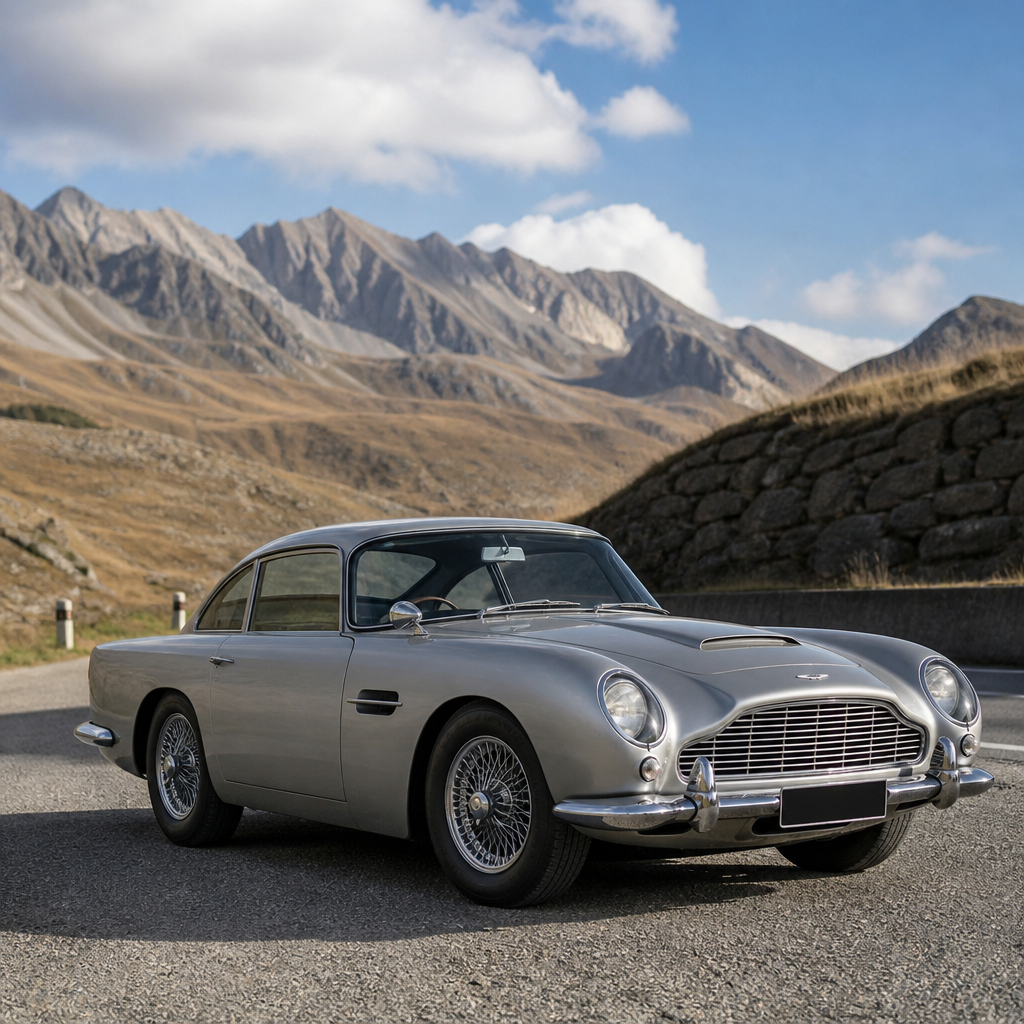
The Aston Martin DB5 remains the gold standard. Introduced to Bond audiences in Goldfinger in 1964, it fused British grand touring elegance with spy-fiction gadgetry. The car already had real automotive credibility thanks to its 4.0-liter straight-six and refined Touring Superleggera styling, but the film transformed it into a cultural symbol. Ejector-seat mythology aside, what made the DB5 endure was balance: it looked plausible, sophisticated, and dangerous at once. Aston Martin has benefited from that association for sixty years, a rare example of cinematic placement producing lasting brand elevation rather than a short promotional spike.
The DeLorean DMC-12 from Back to the Future is one of the clearest cases where a film redeemed a commercially troubled production car. In standard form, the DMC-12 was known for stainless steel body panels, gullwing doors, and a PRV V6 that delivered less performance than the shape promised. On screen, however, the design made perfect sense as a time machine because it already looked futuristic. The movie gave the car narrative purpose, and that purpose became stronger than its original market reputation. Today, many people know the DeLorean first as a movie icon and only second as a historical automaker.
Steve McQueen’s 1968 Ford Mustang GT fastback from Bullitt deserves its status for different reasons. Unlike gadget-laden fantasy cars, the Bullitt Mustang became legendary through realism. The San Francisco chase sequence set a new benchmark for editing, sound, and driving authenticity. Highland Green paint, subdued trim, and the car’s muscular but believable setup made it aspirational without feeling artificial. Bullitt also changed how filmmakers approached car chases, favoring physical presence and mechanical sound over gimmickry. That influence on filmmaking is part of the car’s legacy.
The 1970 Dodge Charger from The Fast and the Furious expanded the list for a newer generation while still drawing from traditional muscle-car values. Dominic Toretto’s supercharged Charger is exaggerated, but it is rooted in authentic enthusiast language: big engine, family history, and straight-line intimidation. The franchise introduced many younger viewers to American V8 culture, even when the films became increasingly stylized. For a hub article, that matters because movie cars do not stop with pre-1975 classics; media legends continue to shape demand for older vehicles.
How Movies Changed Collector Demand and Car Values
Screen exposure can affect car desirability, but the effect is uneven and often misunderstood. A famous movie does not automatically raise the value of every similar road car. What it usually does is sharpen attention, increase search activity, and widen the audience willing to learn about a model. Genuine screen-used examples see the most dramatic gains because they are singular artifacts. Regular production equivalents benefit more gradually through association, particularly when the film remains culturally active.
| Movie car | Film or franchise | Why it became iconic | Collector impact |
|---|---|---|---|
| Aston Martin DB5 | James Bond | Luxury, gadgets, recurring franchise exposure | Elevated brand prestige and premium provenance value |
| DeLorean DMC-12 | Back to the Future | Futuristic design matched time-travel story | Replica market, restoration demand, constant pop-culture relevance |
| Ford Mustang GT fastback | Bullitt | Authentic chase sequence and McQueen connection | Special-edition tributes and strong demand for similar cars |
| Pontiac Trans Am | Smokey and the Bandit | Charisma, humor, outlaw image | Strong nostalgia premium for correct-spec examples |
I have seen this pattern at auctions and private sales. Buyers often arrive because of a film memory, then become more sophisticated as they learn about drivetrains, trim codes, production years, and documentation. The movie opens the door, but the transaction still depends on condition, originality, rarity, and paperwork. A 1977 Trans Am associated with Smokey and the Bandit carries stronger emotional pull when it is properly optioned and restored, not simply because it is black with gold accents.
Studios and manufacturers also learned that cinema could create halo effects. Ford leaned into Bullitt heritage with modern tribute Mustangs. Aston Martin has repeatedly revisited Bond-linked imagery. Even when direct sales impact is hard to isolate, the branding value is undeniable. The strongest movie-car connections generate long-term identity, not just release-week attention.
Beyond the Big Screen: Television, Replicas, and Media Afterlife
A complete Movies and Media hub must look beyond theatrical films because television created its own legends. The General Lee from The Dukes of Hazzard, KITT from Knight Rider, the Ferrari 308 GTS from Magnum, P.I., and the 1976 Ford Gran Torino from Starsky & Hutch all proved that weekly exposure can make a vehicle inseparable from a character. Television often delivered more cumulative screen time than films, which is why these cars remain deeply recognizable.
Replicas are another major part of the landscape. Most enthusiasts will never own a documented hero car, but many can build or buy a faithful tribute. Replica culture keeps iconic movie cars alive through club events, charity appearances, and local shows. The key distinction is honesty. Reputable owners present replicas as tributes, not originals. In the best cases, the build quality is historically informed, using correct wheels, graphics, interior details, and period accessories sourced through marque specialists and enthusiast forums.
Media afterlife now extends through streaming platforms, video games, social media, and branded experiences. A younger fan may first encounter the DB5 in a game, the Charger through internet clips, or the DeLorean at a pop-up exhibition before ever watching the full film. That does not weaken the legend; it broadens the entry point. For publishers building topical authority under Classic Car Culture and Lifestyle, related coverage should include television hero cars, famous chase scenes, movie-car replicas, prop authentication guides, and interviews with restorers who maintain screen-used vehicles.
Preservation is the final layer. Some legendary movie cars are restored to factory-correct standards, while others are conserved as production artifacts, complete with modifications, wear, and non-roadgoing features. Museums, specialist workshops, and auction houses increasingly treat these vehicles as cultural objects as much as automobiles. That shift is important because it acknowledges what enthusiasts have long understood: movie cars are not side notes to automotive history. They are part of how the public learned to love cars in the first place.
Iconic movie cars became legends because they united design, story, and memory in a way ordinary product placement never can. The DB5 represented sophistication with menace, the DeLorean turned eccentric engineering into fantasy, the Bullitt Mustang made realism thrilling, and the Trans Am translated attitude into a rolling symbol. Television expanded that formula, replicas kept it accessible, and auctions, museums, and restorers gave it institutional weight. Together, these forces turned selected vehicles into permanent fixtures of classic car culture.
For readers exploring Movies and Media within a broader classic car lifestyle, the main takeaway is simple: screen cars matter not only as entertainment artifacts but also as gateways into collecting, restoration, and enthusiast communities. They influence values, shape brand identity, and introduce new generations to vintage machinery through emotion before technical knowledge. That is why this subject deserves hub-level coverage rather than a nostalgic listicle treatment.
If you want to go deeper, continue from this hub into focused guides on television hero cars, the best movie chase scenes, replica build standards, and how to verify provenance on screen-used vehicles. The legends are fun to admire, but understanding why they endured will make you a sharper enthusiast, collector, and storyteller.
Frequently Asked Questions
What makes a movie car truly iconic rather than just memorable?
A movie car becomes truly iconic when it does more than look good on screen. The most legendary examples serve the story in a meaningful way, reflect the personality of the characters who drive them, and leave a lasting impression that extends well beyond the film itself. A memorable car might stand out because of a single exciting scene or a distinctive design, but an iconic one becomes inseparable from the movie’s identity. People do not simply remember the vehicle; they associate it with a mood, a narrative arc, and a cultural moment.
Design plays a major role, of course. Vehicles such as the Aston Martin DB5, the DeLorean DMC-12, or the Batmobile are instantly recognizable because they combine unusual styling with cinematic presentation. However, visual appeal alone is not enough. What elevates these cars into legend is how filmmakers use them. They may symbolize freedom, rebellion, sophistication, danger, or technological wonder. In many cases, the car functions almost like a supporting character, with its own presence and purpose in the story.
Real-world influence is another defining factor. Truly iconic movie cars inspire replicas, collectibles, restoration projects, fan communities, and endless media references. They appear at car shows, museums, and auctions, and they remain relevant across generations. When a vehicle continues to shape automotive enthusiasm long after a film’s release, that is a strong sign it has crossed the line from memorable to legendary.
Why do certain movie cars become more famous than the actors or films they appeared in?
Some movie cars achieve a rare kind of immortality because they distill a film’s identity into a single visual object. Audiences may forget plot details, supporting characters, or even exact dialogue, but they remember the car. A powerful design, repeated screen time, and a strong role in key scenes can make a vehicle the most recognizable symbol of the entire production. In that sense, the car becomes a shortcut to the movie’s emotional impact.
Cars also have a unique ability to cross cultural and language barriers. Viewers from different generations and different countries may not share the same relationship to a particular actor, but they can instantly recognize a famous silhouette like Herbie, KITT, or the Ecto-1. These vehicles communicate visually and emotionally without requiring explanation. They are easy to reproduce in toys, posters, video games, and merchandising, which helps extend their fame far beyond the screen.
Another reason is that movie cars often represent a fantasy people can imagine owning, driving, or building. Audiences may admire a character, but they can dream about sitting behind the wheel of that car. That creates a more tangible connection. Over time, the vehicle can develop a life independent of the film, becoming a staple of car culture, pop culture, and nostalgia all at once. When that happens, its fame can rival or even exceed that of the cast.
Which qualities help a screen-used car leave a lasting mark on classic car culture?
The screen cars that endure in classic car culture usually combine authenticity, distinct styling, and emotional resonance. Authenticity matters because enthusiasts appreciate vehicles that feel grounded in real automotive history, even when they are heavily modified for cinematic effect. A car with a believable mechanical base or a strong connection to a production era often earns deeper respect from collectors and restorers. It becomes part of both film history and automotive history.
Distinct styling is equally important. Some cars were already interesting before they appeared in movies, but the right film transformed them into cultural icons. Others became famous because the production team altered them in unforgettable ways. Whether the appeal comes from factory lines or custom bodywork, the result must be visually strong enough to stand apart from ordinary traffic and instantly trigger recognition decades later.
Emotional resonance may be the most powerful quality of all. A legendary movie car usually appears in scenes tied to excitement, escape, transformation, mystery, or triumph. Those emotional associations become attached to the vehicle itself. Enthusiasts are not just admiring sheet metal, horsepower, or rarity; they are reconnecting with what the car represented on screen. That blend of engineering, storytelling, and nostalgia is exactly what gives certain movie vehicles a permanent place in classic car culture.
How have iconic movie cars influenced real-world automotive trends and collector demand?
Iconic movie cars have had a substantial effect on collector demand, customization trends, and brand perception. When a vehicle becomes central to a beloved film, public interest in that model often rises dramatically. In some cases, movies revived attention for cars that had been overlooked or underappreciated in their own time. Collectors began seeking original examples, fans commissioned replicas, and restoration specialists found new demand for parts and expertise tied to those vehicles.
The impact is not limited to factory-original cars. Screen vehicles have also influenced the custom scene by inspiring tribute builds, themed modifications, and entire restoration businesses dedicated to recreating famous cinematic examples. Fans want the gadgets, paint schemes, lighting setups, and body alterations that made these cars famous. This has created a unique niche where film appreciation overlaps with craftsmanship, fabrication, and historical preservation.
There is also a branding effect. A movie can permanently shape how the public sees a manufacturer or model line. A car associated with espionage may become linked with sophistication. One tied to time travel may gain a futuristic mystique. Another featured in street racing may become a symbol of performance culture. These associations can persist for decades and influence auction prices, collector conversations, and even younger buyers discovering classic cars for the first time through film rather than through traditional automotive channels.
Why do iconic movie cars continue to fascinate new generations of fans?
These vehicles continue to captivate new audiences because they sit at the intersection of storytelling, design, and aspiration. A great movie car is never just transportation. It is a symbol of adventure, identity, and possibility. Younger viewers may discover an older film long after its original release, but the car still feels immediate because a striking automotive image does not age in the same way as dialogue, fashion, or special effects. The visual power remains intact.
Another reason is accessibility through modern media. Iconic screen cars now circulate constantly through streaming platforms, social media clips, fan edits, automotive content, gaming, and memorabilia. That repeated exposure introduces them to people who may not even have seen the full film yet. Once interest takes hold, the vehicle often becomes a gateway into both cinema history and classic car enthusiasm.
Finally, legendary movie cars endure because they satisfy two kinds of imagination at once. Film fans love what the vehicle meant within the story, while car enthusiasts appreciate its design, engineering, rarity, or influence. That dual appeal gives these cars unusual staying power. They are artifacts of entertainment, but they are also objects of mechanical fascination and cultural memory. When a car can succeed on all of those levels, it does not simply remain famous; it becomes timeless.