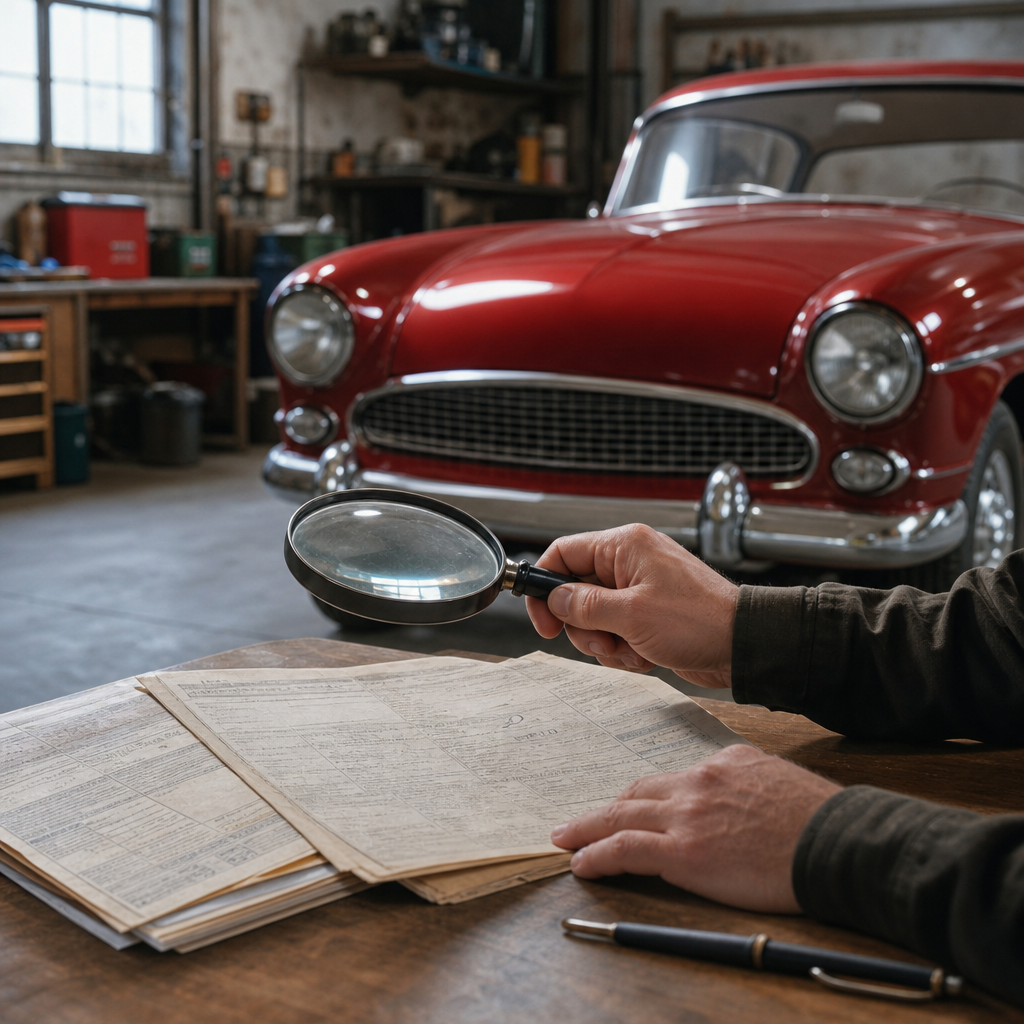

Using market data to strengthen your negotiation is one of the most reliable ways to buy or sell a classic car at a fair price without relying on instinct alone. In the classic car market, “market data” means recent sale prices, current asking prices, condition-adjusted value guides, auction results, ownership history, restoration quality, and model-specific trends that affect what a car is actually worth today. Negotiation strategies are the methods buyers and sellers use to turn that information into leverage, whether they are discussing an early Porsche 911, a C2 Corvette, a first-generation Mustang fastback, or a driver-grade Mercedes-Benz SL. I have used this approach in private-party deals, dealer purchases, and live auction settings, and the pattern is consistent: the side that arrives with better evidence usually controls the conversation. This matters because classic cars are emotional purchases, and emotion creates pricing gaps. A seller may anchor to restoration cost, while a buyer may focus on flaws; market data creates a common reference point that narrows that gap and produces a more credible, defensible offer.
For anyone navigating buying and selling classic cars, this page serves as the central guide to negotiation strategies. It explains how to research values, interpret comparable sales, adjust for condition and originality, identify timing advantages, and present your case without damaging the deal. It also connects the broader negotiation process to related issues such as inspections, documentation, auction dynamics, and total ownership cost. Strong negotiators do not simply quote a price guide and hope for the best. They build a valuation range, test assumptions, and use facts to answer the questions every counterparty asks: Why is this the right number, what evidence supports it, and what risks or advantages justify movement? When you understand how market data works in real transactions, you stop guessing and start negotiating from a position of informed confidence.
What market data matters most in classic car negotiations
The most useful market data in a classic car negotiation comes from sources that reflect actual behavior, not just optimistic expectations. Closed sales are more valuable than asking prices because they show what someone really paid. Public auction results from platforms such as Bring a Trailer, Mecum, and RM Sotheby’s are especially useful when they include detailed photos, condition notes, and bidder commentary. Price guides from Hagerty and other valuation services help establish baseline ranges, but they should be treated as frameworks rather than final answers. Dealer listings, marque forums, owners’ clubs, and collector insurance valuations provide additional context, especially for low-production or highly optioned cars where public comps are limited.
Not all data carries equal weight. A sold price for a numbers-matching, documented, recently serviced 1967 Jaguar E-Type coupe is not directly comparable to a project car with rust repairs and an engine swap, even if both are the same year and body style. The strongest negotiation strategies depend on condition-adjusted comparables. In practice, I usually rank evidence in this order: recent sold comps of near-identical cars, model-specific expert guidance, broad price guides, current listings, and finally anecdotal opinions. That hierarchy keeps the discussion grounded. When a seller says, “I saw one listed for twenty percent more,” the answer is simple: listings show ambition, sold comps show market acceptance.
A negotiation hub on buying and selling classic cars also needs to emphasize data freshness. A muscle car segment can cool while analog European sports cars rise, and a six-month-old comp may already be stale. Interest rates, seasonality, and headline auction performance can all change buyer behavior. During periods of softer demand, seller expectations often lag the market by several months. That lag creates opportunity for buyers who can show a pattern of declining hammer prices or longer listing durations. For sellers, up-to-date data helps justify a strong asking price when a niche model is gaining attention. Timing does not replace condition, provenance, and originality, but it changes how aggressively each side can negotiate.
How to build a defensible valuation range before you make an offer
The best negotiators do not walk into a discussion with one number. They build a valuation range with a target price, a walk-away price, and a short list of reasons that support both. Start by selecting three to six comparable cars sold within the last twelve months. Match body style, engine, transmission, originality, documented mileage, color desirability, and restoration level as closely as possible. Then adjust for meaningful differences. A documented factory air car, a rare performance package, a recent engine rebuild from a recognized specialist, or significant rust in known problem areas can swing value materially. On many classics, documentation alone can move confidence and price because buyers are paying for reduced uncertainty as much as sheet metal.
After building your comp set, assign the subject car to a condition tier. Most pricing frameworks use a scale that separates concours cars from excellent drivers, usable drivers, and projects. Be honest. Owners often classify a tidy driver as excellent because they are comparing it with rough examples, but the market compares it with the best available alternatives. I have found that using a simple midpoint method works well: estimate what the car would sell for if it were one condition level better and one level worse, then place it within that band based on documented strengths and defects. This approach makes your number easier to explain because it is tied to evidence rather than preference.
| Data point | Why it matters in negotiation | Typical impact on price |
|---|---|---|
| Recent sold comparables | Shows what buyers actually paid | Sets the core valuation range |
| Condition and originality | Separates restored, driver, and project examples | Can change value by tens of percent |
| Documentation and provenance | Reduces uncertainty and supports authenticity | Usually adds confidence and premium |
| Mechanical needs | Turns cosmetic appeal into real cost exposure | Supports discounts or repair credits |
| Market timing | Reflects demand shifts and selling environment | Affects negotiating leverage on both sides |
Once you have a range, decide how you will present it. Buyers should lead with a specific offer backed by two or three comps and a concise explanation of needed work. Sellers should frame the asking price around superior attributes that justify being above average comps, such as matching numbers, unusual options, a photo-documented restoration, or recent specialist service. A defensible range keeps the conversation productive because it gives both sides room to move without abandoning logic. It also helps you avoid the common mistake of negotiating against yourself. If your research says the car is worth between $58,000 and $64,000, you can reject emotional swings and negotiate inside a disciplined framework.
Using comparable sales, inspections, and documentation as leverage
Comparable sales establish the range, but inspections and documentation determine where the specific car belongs inside that range. This is where many negotiation strategies become practical. A pre-purchase inspection by a marque specialist can uncover compression issues, poor-quality body filler, accident repairs, cooling problems, incorrect stampings, or unsafe modifications. Each finding translates into either direct repair cost or increased ownership risk. In negotiation, risk has a price. If a Ferrari 308 needs a major belt service, or a vintage 911 shows evidence of head stud issues, the buyer should quantify the likely expense and use it to support a lower offer. Vague concern is weak leverage; itemized, specialist-backed cost is strong leverage.
Documentation works in both directions. Buyers use missing records, unknown engine provenance, gaps in title history, or unverifiable mileage to argue for a discount because uncertainty depresses value. Sellers use original manuals, window stickers, build sheets, ownership chronology, restoration invoices, and expert appraisals to reinforce confidence and reduce the need for a price concession. In real negotiations, complete records often matter more than owners expect. Two visually similar cars can attract very different numbers when one has a binder of evidence and the other has stories. The reason is straightforward: documentation lowers the probability of surprise, and buyers pay for predictability.
Negotiating from data does not mean presenting an adversarial dossier and trying to win every point. The most effective approach is calm, specific, and selective. Choose the issues that materially affect value and ignore minor imperfections that every old car will have. If the paint meter suggests prior repair, the inspection notes weak synchros, and comparable sales show stronger examples trading lower than the asking price, those are the points to emphasize. If the car has a few chips and an aged seat bolster, that is normal wear, not a negotiating breakthrough. Precision signals experience. It tells the other side you understand the difference between ordinary classic-car aging and defects that genuinely move the market.
Negotiation strategies for buyers, sellers, dealers, and auctions
Buyers should use market data to make clean, credible offers rather than lowball attempts that end the conversation. A strong opening offer references specific sold examples, known repair needs, and transaction readiness. “I can wire funds this week, and based on three recent sales between $72,000 and $78,000 for comparable four-speed cars, plus the brake and suspension work identified in inspection, I am at $70,500” is far more effective than saying the car just feels overpriced. Serious sellers respond to seriousness. If you can move quickly, waive unnecessary delay, and show your evidence, your number carries weight even when it is below asking.
Sellers should remember that negotiation is not only about defending price; it is also about controlling the frame. Present the car in a way that supports your number before objections arise. Organize records, summarize recent service, identify authentic components, and acknowledge known flaws before the buyer discovers them. Transparency builds trust and keeps the conversation focused on fair value rather than hidden problems. If the buyer cites a cheaper comparable, explain why it is not equivalent. Perhaps it had replacement drivetrain components, inferior restoration work, or lacked documentation. The goal is not to dismiss every lower comp, but to show why your car belongs in a different segment of the market.
Dealers and auction environments require adjusted tactics. Dealers price inventory with room for reconditioning, holding costs, marketing expense, and profit, so expecting a private-party bargain is unrealistic. However, dealer listings often sit if the initial pricing is aggressive, and days-on-market data can become leverage. An older listing suggests weaker demand or buyer resistance. Auctions are different again. The published result may include buyer’s premium, and the bidding atmosphere can distort rational valuation. Set a maximum bid based on your prebuilt range and include transport, taxes, and immediate service needs. At live auctions, I have seen buyers exceed their limits because they negotiated against adrenaline instead of evidence. The disciplined bidder treats the room as noise and the data as the rule.
Common mistakes, market limits, and how to close the deal well
The most common negotiation mistake is using the wrong comparables. Broadly similar cars are not enough. A small-block automatic and a big-block four-speed may occupy entirely different value bands. Coupe and convertible markets can diverge sharply, and originality often matters more than fresh paint. Another mistake is confusing restoration cost with market value. Owners frequently spend more than the market will return, especially on mid-tier classics. The fact that a seller has receipts for $90,000 does not mean the car is worth $90,000. The market rewards quality and authenticity, but it does not reimburse every decision equally.
There are also limits to what market data can do. Thinly traded models, coachbuilt cars, one-year specifications, or unusual provenance may not have enough direct comps for precise valuation. In those cases, the negotiation should widen from exact matching to reasoned approximation. Use adjacent models, consult marque experts, review long-term market direction, and apply larger confidence bands. A rare car does not make data irrelevant; it makes interpretation more important. Be honest about uncertainty. Overstating precision damages credibility, while acknowledging a range and explaining the logic behind it usually strengthens your position.
Closing the deal well is part of negotiation strategy. Once price is substantially agreed, confirm terms in writing: deposit amount, inspection contingency, included parts, title status, payment method, transport timing, and what happens if new issues emerge before handoff. For sellers, a clear bill of sale and transparent disclosure reduce post-sale disputes. For buyers, confirming VIN, engine numbers where applicable, and matching documentation before funds move is nonnegotiable. Good negotiators know the objective is not simply to “win” on price. It is to complete a transaction that stands up after delivery, because a bad car bought cheaply is still a bad deal, and a well-documented car sold fairly preserves reputation and future referrals.
Using market data to strengthen your negotiation gives you a durable advantage in every part of buying and selling classic cars. It helps buyers avoid overpaying for emotion, helps sellers defend real value, and gives both sides a common language when opinions differ. The core process is consistent: gather recent sold comps, adjust for condition and originality, verify the car with inspection and records, account for timing, and present a clear valuation range. When you do that, negotiation strategies stop being tricks and become disciplined decision-making.
This hub page should guide every negotiation conversation you have around classic cars, whether you are evaluating a driver-quality British roadster, a concours American muscle car, or a rare European GT. The specific numbers will change from model to model, but the method remains reliable. Facts outperform assumptions, documented risk justifies price movement, and preparation protects both money and confidence. Use this framework before your next offer or listing, and build your negotiation around evidence instead of hope. That is how stronger deals get done.
Frequently Asked Questions
What kind of market data matters most when negotiating the price of a classic car?
The most useful market data is the information that helps you understand what comparable cars are actually selling for in the current market, not just what sellers hope to get. That includes recent confirmed sale prices from auctions, dealer sales when available, private-party transaction ranges, and current asking prices for similar vehicles. In the classic car world, however, raw price figures are only the starting point. You also need condition-adjusted value data, because a concours-level restoration, a high-quality driver, and a project car can all belong to the same model line while being worth dramatically different amounts.
Beyond pricing, the strongest negotiations are built on supporting details that explain why one example should trade higher or lower than another. Ownership history, documentation, originality, matching-numbers status, restoration quality, paint and interior condition, mechanical health, factory options, color combination, and provenance all influence market value. Model-specific trends matter too. Some cars are rising because of collector demand, demographic shifts, rarity, motorsport connections, or increasing parts support, while others may look desirable but have softened because supply has outpaced demand. A buyer or seller who understands these factors can negotiate with more credibility because they are discussing the real market for that specific car, not just a generic book value.
The best approach is to combine multiple sources rather than relying on a single price guide. Auction results can be useful, but they may reflect exceptional presentation, competitive bidding, or venue-specific enthusiasm. Asking prices can show seller expectations, but many are aspirational and never represent the final selling number. Value guides help establish a range, but they cannot always account for unusual provenance or recent restoration shortcuts. When you layer all of these sources together, you can form a realistic pricing position and explain it clearly during negotiation.
How can buyers use market data to make a stronger offer without offending the seller?
Buyers can use market data effectively by framing their offer as evidence-based rather than argumentative. The goal is not to “win” by proving the seller wrong, but to show that your number is grounded in the current market and the car’s actual condition. A strong buyer begins by researching comparable sales for the same year, model, engine, trim level, and condition category. From there, the buyer adjusts for meaningful differences such as restoration age, originality, mileage, documentation, color desirability, options, rust history, and mechanical needs. That allows the offer to sound informed and reasonable instead of arbitrary.
Presentation matters. Rather than saying, “Your price is way too high,” a more effective approach is, “I reviewed several recent sales and current listings for cars in similar condition, and based on those numbers plus the work this car appears to need, I’d be comfortable at this figure.” That wording keeps the discussion professional and fact-based. If the car has visible flaws or unresolved questions, connect those directly to market realities. For example, deferred maintenance, non-original drivetrain components, poor panel fit, aging paint, or limited documentation can all justify a lower offer when compared with stronger examples that sold for more.
Buyers should also remember that data works best when paired with respect. Sellers are often emotionally attached to classic cars, especially if they have owned them for years or invested heavily in restoration. A fair, well-supported offer has a much better chance of being accepted if it acknowledges the car’s strengths before discussing value adjustments. It also helps to show readiness to close. If your financing, transportation, and inspection plans are already in place, market data becomes even more persuasive because the seller sees you as a serious buyer, not just someone quoting numbers online.
How should sellers use market data to defend their asking price and negotiate confidently?
Sellers should use market data to show why their car deserves to be priced where it is within the market range. That means gathering comparable listings and recent sales, but also being prepared to explain what sets the vehicle apart. If your classic car has a documented restoration, matching numbers, a desirable factory color, rare options, long-term ownership, service records, judging sheets, or notable provenance, those are value drivers that can support a premium. In other words, sellers should not simply point to the highest sale they can find. They should build a case that their specific example reasonably compares to stronger sales, and be honest about any differences.
Confidence also comes from understanding where the car fits in the current market. If similar cars are selling quickly and inventory is low, that can support a firmer negotiating stance. If the market is softer, or if buyer demand has become more selective, sellers need to know that too. An informed seller can distinguish between a serious buyer making a market-based offer and a lowball buyer hoping to exploit uncertainty. This prevents unnecessary concessions and helps keep the negotiation grounded in facts rather than pressure.
It is equally important for sellers to anticipate the buyer’s objections. If the car has imperfections, address them directly instead of waiting for them to become leverage against you. Explain what has been restored, what remains original, what issues are known, and what documentation supports your claims. A transparent seller who presents strong evidence often maintains better control of the negotiation because trust reduces perceived risk. In the classic car market, buyers often pay more when they feel the seller is knowledgeable, organized, and realistic. Good market data, presented clearly, helps create that confidence.
Why is condition adjustment so important when comparing classic car prices?
Condition adjustment is critical because no two classic cars are truly identical, even when they share the same make, model, and year. One example may be freshly restored to a high standard with excellent documentation, while another may look attractive in photos but have hidden rust, tired mechanicals, poor bodywork, or incorrect components. If you compare those two cars using only headline prices, your negotiation will be built on distorted information. Accurate pricing depends on understanding how condition changes value.
In practice, condition adjustment means evaluating the car in the same way experienced buyers, appraisers, and collectors do. Exterior paint quality, chrome, body alignment, glass, interior materials, undercarriage integrity, drivetrain originality, engine performance, transmission function, suspension feel, brake condition, and electrical reliability all matter. A vehicle with cosmetic shine but weak fundamentals should not be priced like a car with both cosmetic excellence and mechanical integrity. Likewise, originality can push value higher in some segments, while well-executed restorations may carry stronger premiums in others. The model’s collector culture often determines which attributes matter most.
This is where many negotiations succeed or fail. A seller may point to a top-tier auction result, but if that sale involved a concours-quality car with extensive records and this car is merely a presentable driver, the comparison is not valid. A buyer may also misuse condition adjustment by citing lower-priced project cars to justify an unrealistically low offer on a well-maintained example. The most effective negotiators use comparable sales and then explain the specific adjustments, up or down, that make those comparisons fair. That level of detail gives your position weight and makes it harder for the other side to dismiss your reasoning.
What mistakes should buyers and sellers avoid when using market data in a negotiation?
The biggest mistake is relying on incomplete or misleading data. One auction sale, one online listing, or one value-guide number rarely tells the whole story. Markets can vary by region, timing, venue, season, and vehicle quality. A highly publicized sale may reflect two determined bidders rather than a stable market level, while an unsold listing may represent an unrealistic asking price that never translated into a real transaction. Negotiators who cherry-pick only the numbers that support their position often weaken their credibility the moment the other side presents a broader view of the market.
Another common error is ignoring specification and condition differences. Comparing a fully documented, matching-numbers car to a modified example with uncertain history can lead to false conclusions. The same applies to restoration quality. A car restored to a high standard by a respected specialist is not equivalent to one that received cosmetic work with little mechanical sorting. Both buyers and sellers should be careful not to overvalue money spent on restoration, either. Restoration cost does not automatically equal market value. The market pays for the result, not simply the invoice total.
Emotional decision-making is also a major pitfall. Buyers may become attached and stretch beyond market reality, while sellers may anchor to sentimental value or past investment. Market data is most powerful when it keeps the conversation objective. Finally, avoid using data as a weapon. If you present information aggressively or dismissively, the negotiation can become defensive and less productive. The strongest results usually come when both parties use market evidence to narrow the gap between positions, identify legitimate value drivers, and arrive at a number that reflects the car’s true place in today’s classic car market.