Buying a classic car is equal parts emotion and due diligence, and the smartest purchase starts with a checklist rather than a daydream. In the collector market, a classic car usually means an older vehicle valued for historical interest, design, rarity, or driving character, while an antique, survivor, restored example, restomod, and numbers-matching car each describe different conditions and value drivers. Before money changes hands, buyers need to assess authenticity, mechanical condition, rust, paperwork, originality, market value, and intended use, because a beautiful car can still become a costly mistake. I have helped evaluate driver-quality coupes, concours restorations, and unfinished projects, and the same pattern repeats: buyers who inspect methodically save money, avoid fraud, and end up with cars they actually enjoy. This guide explains how to buy a classic car step by step, serving as a practical hub for the broader Buying & Selling Classic Cars topic. It covers budgeting, model research, inspection priorities, title verification, test drives, negotiation, transport, and post-purchase planning. If you want a classic that fits your garage, wallet, and expectations, use this checklist before you commit.
Start With Budget, Purpose, and Ownership Costs
The first question is not “Which classic car should I buy?” but “What do I want this car to do?” A weekend cruiser, local show car, vintage rally entrant, and long-distance tourer require different budgets and tolerances. A carbureted 1966 Ford Mustang coupe can be a simple entry point for weekend use, while an air-cooled Porsche 911 or Jaguar E-Type demands more specialized maintenance and significantly higher parts costs. Define your purpose early, because it determines acceptable condition, originality, comfort, and safety upgrades.
Your purchase budget should include the car price plus tax, transport, insurance, storage, immediate repairs, and a reserve for surprises. In practice, I advise buyers to hold back at least 15 to 20 percent of the purchase price for catch-up work. Even well-kept classics often need tires, hoses, belts, brake hydraulics, fluids, battery replacement, or fuel system cleaning after purchase. If the car has been sitting, expect more. A seemingly affordable project can quickly exceed the cost of buying a better example from the start.
Ownership costs extend beyond repairs. Some models have excellent parts support through specialists and reproduction catalogs; others require chasing used components, old-stock inventory, or expensive custom fabrication. Storage matters too. A dry, secure garage protects paint, chrome, seals, interior trim, and electrical contacts. If you cannot provide proper storage, adjust your target vehicle accordingly. A classic car buying checklist begins with honest self-assessment, because the wrong car for your budget or skill level almost always becomes a regret.
Research the Exact Model, Trim, and Market
Once your budget and purpose are clear, narrow the search to exact years, engines, trims, and body styles. This is where many buyers make preventable mistakes. A 1969 Chevrolet Camaro base car, an SS tribute, and a factory big-block SS can look similar in photos but sit in completely different value brackets. The same applies to Mercedes-Benz SL variants, Alfa Romeo Spiders, first-generation Broncos, and almost any muscle car with reproduction badges available online. Learn what the factory built, what options were period-correct, and what documentation proves authenticity.
Use multiple data sources to understand pricing. Compare dealer listings, private sales, marque forums, auction results, and valuation services such as Hagerty Price Guide. Auction numbers can distort expectations because premium fees, television exposure, and exceptional provenance can push sale prices beyond normal retail. A realistic market view comes from looking at several recent sales in comparable condition. Focus on sold prices, not optimistic asking prices that sit unsold for months.
As a hub page for how to buy a classic car, this section should shape every deeper research article you read later. Investigate known rust areas, engine weaknesses, trim scarcity, electrical faults, and transmission issues specific to your target model. For example, Triumph TR6 buyers should inspect frame condition and body alignment closely, while Mercedes W113 Pagoda buyers should scrutinize hidden corrosion and hardtop details. The better your model knowledge, the harder it is for a seller to hide flaws behind shiny paint.
Verify Identity, Documentation, and Provenance
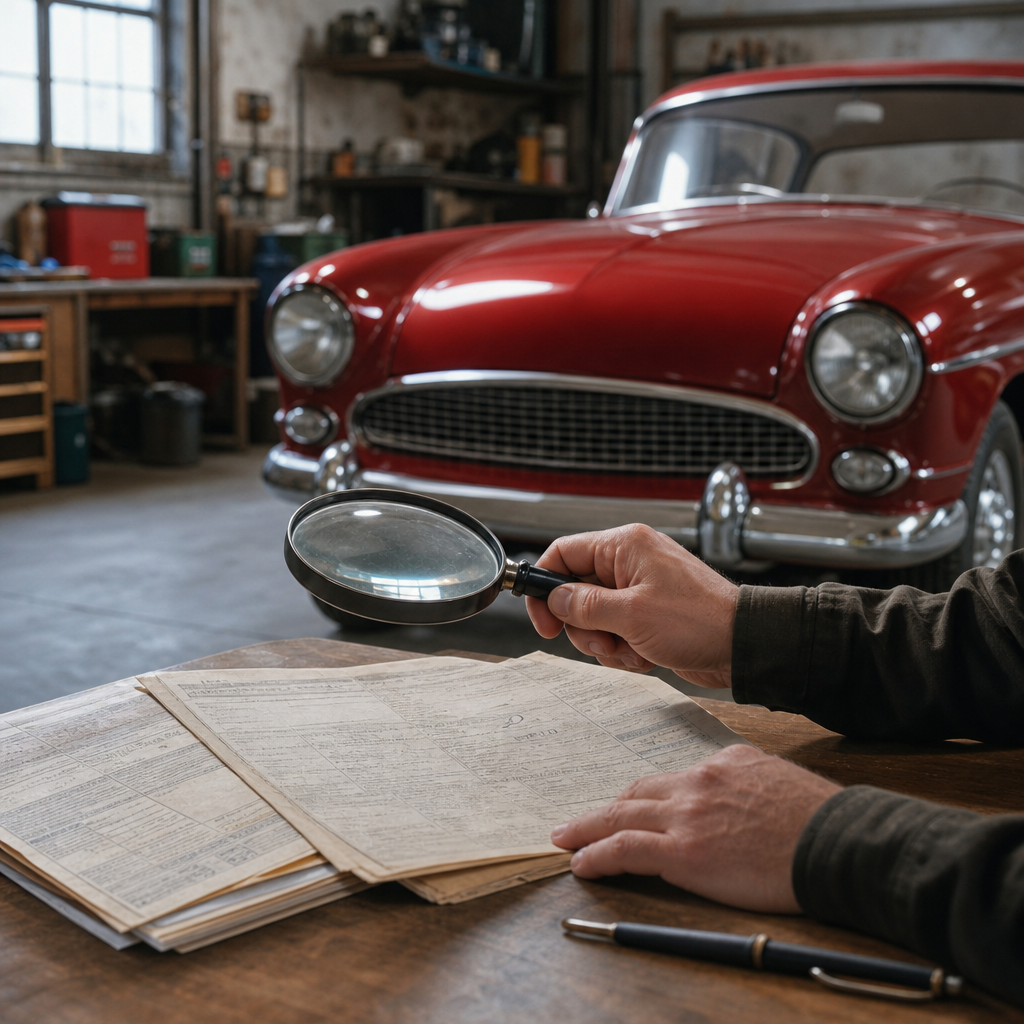
Paperwork is not glamorous, but it protects you from some of the most expensive classic car buying errors. Confirm that the title is clear, the seller’s name matches the registration, and the vehicle identification number on the car matches all documents. Depending on age and origin, you may also need to check chassis numbers, engine stamping, body tags, gearbox numbers, and factory data plates. For many collector cars, originality and matching numbers materially affect value.
A good documentation file includes service records, restoration receipts, ownership history, factory build sheets, original manuals, tool rolls, warranty books, and inspection reports. These records help verify mileage claims, maintenance habits, and restoration scope. I put more trust in a car with years of dated invoices than in a freshly detailed car with a vague story. Receipts can reveal whether the engine rebuild included machine work, whether rust repairs involved proper panel replacement, and whether the brake system was fully overhauled or simply bled.
Imported classics require extra attention. Check customs documents, bonded title issues, emissions exemptions, and state registration rules. In the United States, title procedures vary widely, and older cars may have historical gaps that need careful resolution before purchase. If provenance is central to value, consider obtaining a factory certificate or using a recognized marque expert. Documentation will not fix a bad car, but missing or inconsistent paperwork is often the first warning sign that more serious problems are hiding elsewhere.
Inspect Body, Rust, and Structural Integrity First
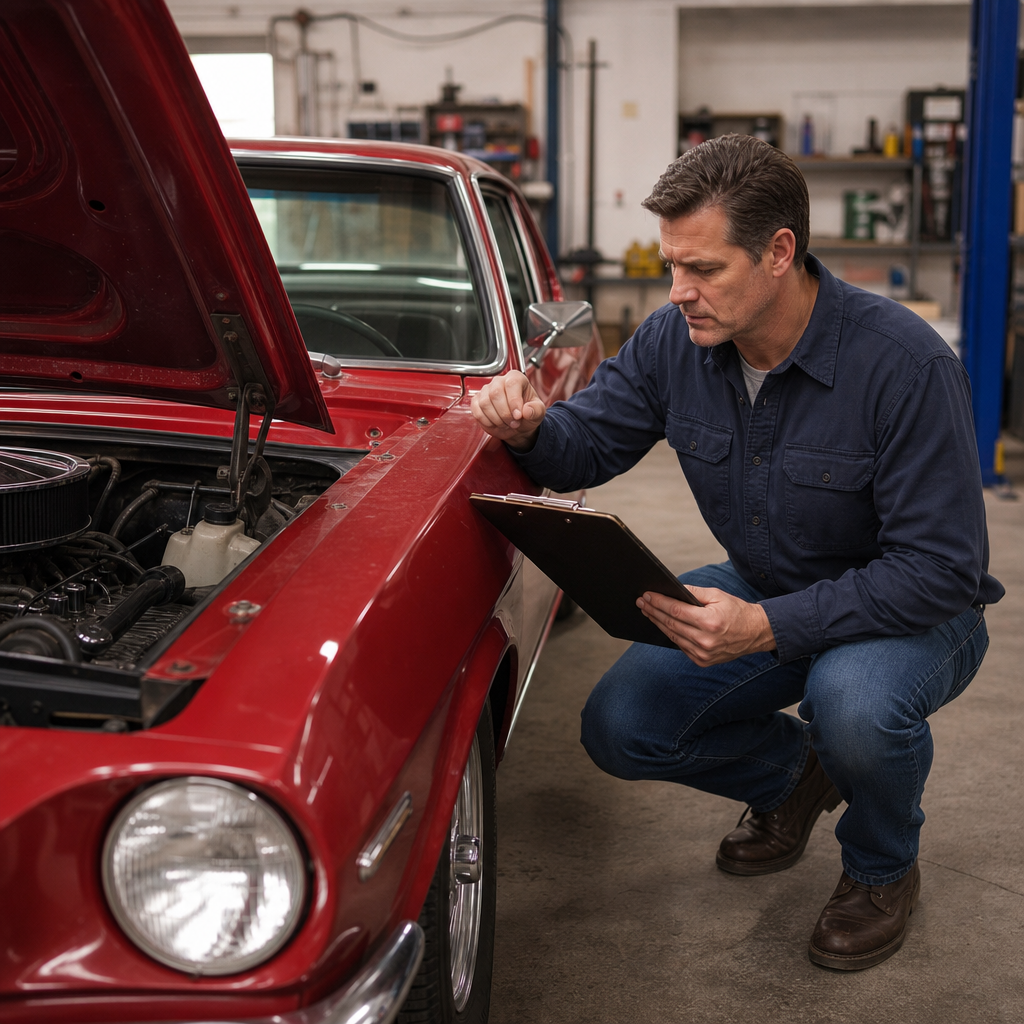
When evaluating condition, start with the body and structure, not the engine bay. Mechanical problems are usually easier and more predictable to fix than severe rust, poor collision repair, or a twisted shell. Rust is the defining issue in many classic car inspections because it destroys value, safety, and originality at the same time. Look beyond glossy paint. Bring a flashlight, magnet, paint thickness gauge if available, and clean clothes so you can get underneath the car.
Check rockers, floor pans, trunk floor, wheel arches, lower fenders, cowl, windshield channels, frame rails, suspension mounting points, battery trays, and spare wheel wells. On body-on-frame vehicles, inspect the frame for scaling, perforation, crushed jacking points, and amateur welding. Panel gaps should be consistent, doors should shut cleanly, and the car should sit level. Bubbling paint, overspray on trim, uneven seams, fresh undercoating, or misaligned brightwork often point to hidden bodywork.
| Inspection Area | What to Check | Why It Matters |
|---|---|---|
| VIN and tags | Matching numbers, original rivets, legible stamps | Confirms identity and reduces fraud risk |
| Floor pans and rails | Rust holes, patch panels, weak metal | Structural repairs are expensive |
| Paint and panels | Overspray, filler, waviness, uneven gaps | Reveals prior damage or poor restoration |
| Engine and gearbox | Leaks, smoke, noises, shifting quality | Indicates rebuild needs and drivability |
| Suspension and brakes | Bushings, shocks, lines, pedal feel | Directly affects safety and road manners |
| Interior and trim | Seat wear, dash cracks, missing parts | Trim can be difficult and costly to source |
If you suspect filler, use the magnet carefully on steel-bodied cars, comparing suspect sections to known solid areas. Pay attention to signs of accident repair, especially in front aprons, trunk seams, and inner wings. A car with honest patina and minor cosmetic flaws is often a better buy than one wearing a shiny, undocumented repaint over compromised metal. Structure first, cosmetics second.
Evaluate the Engine, Drivetrain, Suspension, and Electrical System
After the body passes scrutiny, assess how the car actually functions. Start the engine from cold if possible. A seller who warms the car before you arrive may be masking hard starting, smoke, noisy lifters, or carburetor issues. Observe oil pressure, charging behavior, idle quality, exhaust smoke, coolant temperature, and whether the engine pulls cleanly through the rev range. Blue smoke suggests oil consumption, white smoke may indicate coolant issues, and black smoke points to an overly rich mixture.
Look for fluid leaks around the rear main seal, valve covers, differential, transmission tailshaft, brake hydraulics, and power steering system. Some seepage is common on older cars, but active dripping should be priced in. During the test drive, check clutch take-up, manual gearbox synchros, automatic shift quality, steering play, brake pull, wheel bearing noise, driveline vibration, and suspension clunks. A classic should not need to be perfect to be enjoyable, but its faults should be known, understandable, and manageable.
Electrical systems deserve special attention because old wiring degrades invisibly. Test every light, gauge, horn, wiper, heater fan, and accessory. Poor grounds, brittle insulation, and improvised wiring repairs are common. On British and Italian classics especially, electrical reliability often depends on the quality of previous repairs. If the car has been modified with electronic ignition, alternator conversions, aftermarket fans, or modern stereo equipment, verify that the work was done cleanly. Good modifications can improve usability; sloppy ones usually create future diagnostic headaches.
Assess Originality, Restoration Quality, and Modifications
Not every buyer needs a fully original car, but every buyer should know exactly what is original, restored, replaced, or modified. The market values these differences sharply. A numbers-matching Corvette with factory-correct finishes, date-coded components, and documented provenance appeals to one type of buyer. A restomod with fuel injection, upgraded brakes, air conditioning, and a five-speed transmission appeals to another. Problems arise when a seller presents one as if it were the other.
Examine restoration quality closely. Good restorations show consistency: correct fasteners where appropriate, even panel fit, proper weatherstrips, neat wiring, and finishes that match the car’s intended level. Poor restorations often reveal themselves in details such as painted-over rubber seals, incorrect interior materials, cheap chrome, mismatched hardware, and missing clips. Ask who performed the work, when it was completed, and whether photo documentation exists. A ten-year-old restoration that still presents well can be more trustworthy than a fresh cosmetic job completed just before sale.
Modifications should support your intended use. Front disc brakes, radial tires, electronic ignition, and upgraded cooling can make a driver-quality classic easier to live with. By contrast, hacked dashboards, cut fenders, and poorly engineered engine swaps can reduce value and complicate registration or insurance. The key is coherence. Buy the best version of the car for your goals, not the one that seems most exciting in a listing headline.
Use a Pre-Purchase Inspection and Negotiate With Evidence
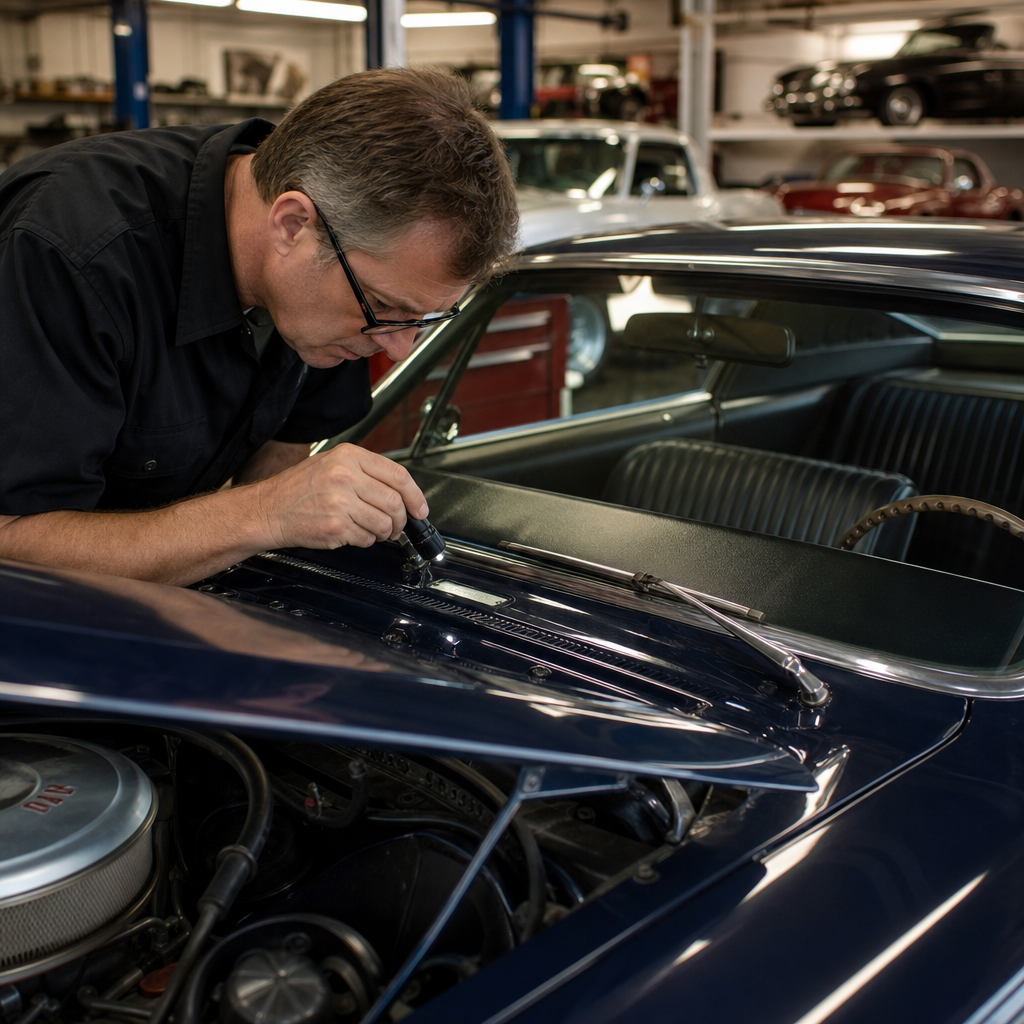
If there is one rule I would never skip, it is arranging an independent pre-purchase inspection before buying a classic car. A specialist familiar with the specific marque or model will see details that general mechanics and excited buyers miss. For a few hundred dollars, a qualified inspector can save you thousands by identifying hidden rust, poor repairs, compression issues, incorrect identification tags, or incomplete restoration work. On higher-value cars, adding a compression test, leak-down test, and borescope inspection is money well spent.
Choose an inspector who has no relationship with the seller. Ask for a written report with photos, not just a verbal opinion. If the seller resists an independent inspection, treat that as a major warning. The inspection report becomes your negotiation tool. Instead of making vague low offers, you can discuss actual costs: brake overhaul, tire age, cracked suspension bushings, rust bubbling, weak synchros, or missing trim. Sellers respond better to evidence than to generic bargaining.
When negotiating, be respectful and realistic. A documented, correctly priced, well-preserved classic will not be sold at a project-car discount. At the same time, do not pay premium money for stories, fresh wax, or undocumented claims. Confirm what is included in the sale, such as spare parts, hardtops, tool kits, books, and original components removed during modification. Before funds are sent, agree on payment method, bill of sale wording, title transfer procedure, and transport timing. Then arrange insurance immediately and schedule a baseline service after delivery. The best classic car purchase is not just the one you win; it is the one you can own confidently, maintain sensibly, and enjoy often. Use this checklist, compare every candidate carefully, and let evidence lead the purchase. When you are ready, move from browsing to inspecting with a clear plan.
Frequently Asked Questions
What should be on my checklist before buying a classic car?
A smart classic car checklist should cover far more than paint color, nostalgia, or the seller’s story. Start with the car’s identity and authenticity: confirm the VIN, chassis number, engine number, trim tag, and any factory stampings to make sure they match the title, registration, and claimed specification. If the car is advertised as numbers-matching, documented original, survivor, or concours-quality, ask for proof rather than relying on verbal assurances. Original manuals, service records, restoration photos, ownership history, build sheets, and marque-specific documentation can have a major effect on both value and confidence in the purchase.
Next, inspect condition in a disciplined way. Rust should be near the top of the list because corrosion repair is often the most expensive and least visible problem in older vehicles. Check floors, frame rails, rocker panels, trunk pans, wheel arches, lower fenders, suspension mounting points, window channels, and any area where water could collect. Then move to bodywork and paint: look for filler, waviness, inconsistent panel gaps, overspray, bubbling, mismatched finishes, and signs of accident repair. Mechanical evaluation should include engine compression, cold-start behavior, oil pressure, smoke, leaks, transmission shift quality, clutch engagement, braking feel, steering play, suspension noise, electrical function, and cooling-system performance. A test drive should reveal whether the car tracks straight, stops confidently, idles properly, and behaves as expected when fully warmed up.
Finally, evaluate ownership reality, not just purchase price. Confirm whether parts are available, whether local specialists understand the model, and what insurance, storage, transport, and maintenance will cost. Some cars are cheap to buy but expensive to sort properly. Others are more expensive upfront but much cheaper in the long run because they have strong documentation, fewer hidden needs, and better parts support. The best checklist balances authenticity, condition, market value, and your intended use, whether that means weekend driving, showing, touring, or long-term collecting.
How do I verify a classic car’s authenticity and determine whether it is truly numbers-matching?
Authenticity is one of the biggest value drivers in the classic car market, so it deserves careful verification. A numbers-matching car generally means the major components, especially the engine and sometimes the transmission, are original to the vehicle or correct to the car as documented by factory records. The exact definition varies by make, model, country of origin, and even by the expectations of different collectors, so you should research the standards for that specific car before making assumptions. On some models, a correct-date replacement engine may be acceptable to parts of the market, while in others it can materially reduce value.
Start by comparing all identification numbers on the car to the title and seller’s paperwork. This can include the VIN plate, chassis stamping, engine block numbers, transmission numbers, body tags, and axle codes. Then compare those findings with production records, factory references, club registries, and marque experts. Check whether the paint color, interior trim, body style, and equipment correspond with the claimed build. If the seller says the car has rare options, a special engine, or limited-production significance, request original documentation, restoration invoices, and any third-party certification that supports the claim. Be cautious with newly attached tags, missing rivets, inconsistent fonts, altered stampings, or areas that appear freshly refinished around identification points.
Because forgery and incorrect representation are not unheard of, it is wise to involve a marque specialist or independent appraiser familiar with that exact model. They can often spot incorrect castings, wrong carburetors, later replacement components, reproduction trim, or details that a general inspector might miss. Even if a car is not fully numbers-matching, it can still be a wonderful purchase if the price reflects reality. The key is to know exactly what you are buying so you can pay appropriately and avoid overpaying for a car whose history or originality does not support the asking price.
How important is rust inspection when buying a classic car?
Rust inspection is absolutely critical, and for many buyers it should be the first serious filter. Mechanical components can usually be repaired or replaced with relative predictability, but structural corrosion can become a costly, time-consuming, and value-altering problem. A classic car with shiny paint can still hide severe rust underneath filler, undercoating, carpeting, weatherstripping, or recent cosmetic work. What looks like a bargain can quickly become a restoration project that exceeds the car’s market value, especially if the corrosion affects the frame, floor structure, suspension pick-up points, cowl, trunk, or roof pillars.
When inspecting for rust, look beyond the obvious spots. Check the underside carefully, ideally on a lift, and inspect frame rails, crossmembers, rockers, wheel housings, trunk floors, battery trays, spare tire wells, windshield surrounds, rear window channels, door bottoms, lower fenders, and any seams where moisture can sit. Use a magnet cautiously on body panels to detect filler, and look for uneven surfaces, bubbling paint, blistering, cracked seam sealer, or signs of fresh undercoating that may be concealing repairs. Water leaks inside the cabin can point to cowl or seal issues that may have allowed corrosion to spread unseen for years. If possible, inspect the car in natural light and bring someone experienced with that particular body style, because rust patterns are often model-specific.
The presence of rust does not automatically make a car a bad purchase, but the type, location, and quality of previous repairs matter enormously. Surface rust on replaceable components is very different from perforation in structural areas. Likewise, professionally documented metal repair is far preferable to patch panels, excessive filler, or poor welds. The important question is not simply “Does it have rust?” but “How much, where, how was it repaired, and what will it cost to make right?” A thorough rust inspection can save you from the most expensive mistake in classic car buying.
Should I always get a pre-purchase inspection on a classic car, even if it looks restored and well documented?
Yes, in most cases a pre-purchase inspection is one of the smartest investments you can make. A polished restoration, a detailed listing, and a thick folder of receipts are all helpful, but none of them replace an independent, qualified inspection. Classic cars can hide problems that even experienced enthusiasts miss during a casual walkaround. Fresh paint can cover accident damage or corrosion, newly cleaned engine bays can disguise leaks, and “restored” can mean anything from a cosmetic refresh to a true nut-and-bolt rebuild. Documentation is valuable, but it needs to be matched against the car’s current condition and quality of workmanship.
The best pre-purchase inspection is performed by a specialist who knows the make and model you are considering, not just an ordinary mechanic. They should evaluate structural integrity, signs of previous collision repair, driveline health, suspension, brakes, cooling system, charging system, electrical operation, trim completeness, glass, weather seals, and the correctness of major components. Compression and leak-down testing can be useful when appropriate, and a road test should reveal heat-related issues, gearbox behavior, steering feel, vibration, braking confidence, and whether the car performs as advertised. If the vehicle is rare or expensive, consider pairing the mechanical inspection with a documentation review by a marque expert or appraiser.
A seller’s willingness to allow an independent inspection also tells you something. Reputable sellers typically understand the process and welcome serious buyers doing proper due diligence. If a seller refuses, rushes you, or insists that another buyer is ready to pay immediately, treat that as a warning sign. The cost of an inspection is usually tiny compared with the cost of correcting hidden faults after purchase. In classic car buying, an inspection is not a sign of distrust; it is simply part of buying intelligently.
How do I know if a classic car is fairly priced, and what hidden costs should I budget for?
Fair pricing in the classic car market comes from combining comparable sales, authenticity, condition, rarity, and current demand. Asking prices alone are not enough, because many listed cars sit unsold at unrealistic numbers. Look at recent private-party sales, dealer transactions, auction results, and price guide ranges, then adjust for originality, color combination, documentation, restoration quality, and mechanical needs. A numbers-matching, well-documented, rust-free example with desirable options may justify a premium, while a car with incorrect driveline components, weak records, or older cosmetic work should not be valued the same way just because it presents well in photos.
Condition tiers matter a great deal. A show-quality restored car, an honest survivor, a usable driver, and a project can each occupy very different pricing territory even when they are the same make and model. Be realistic about what you want. Many first-time buyers overpay for a “good enough” car because they underestimate the cost of bringing it to the standard they actually expect. If you want a dependable, sorted driver, it is often cheaper to buy the best car you can afford rather than a cheaper example that needs paint, upholstery, chrome, suspension work, and engine sorting. Deferred maintenance accumulates quickly on older cars, and cosmetic flaws are often cheaper to tolerate than structural or mechanical issues.
Beyond the purchase price, build a budget for transportation, inspection fees