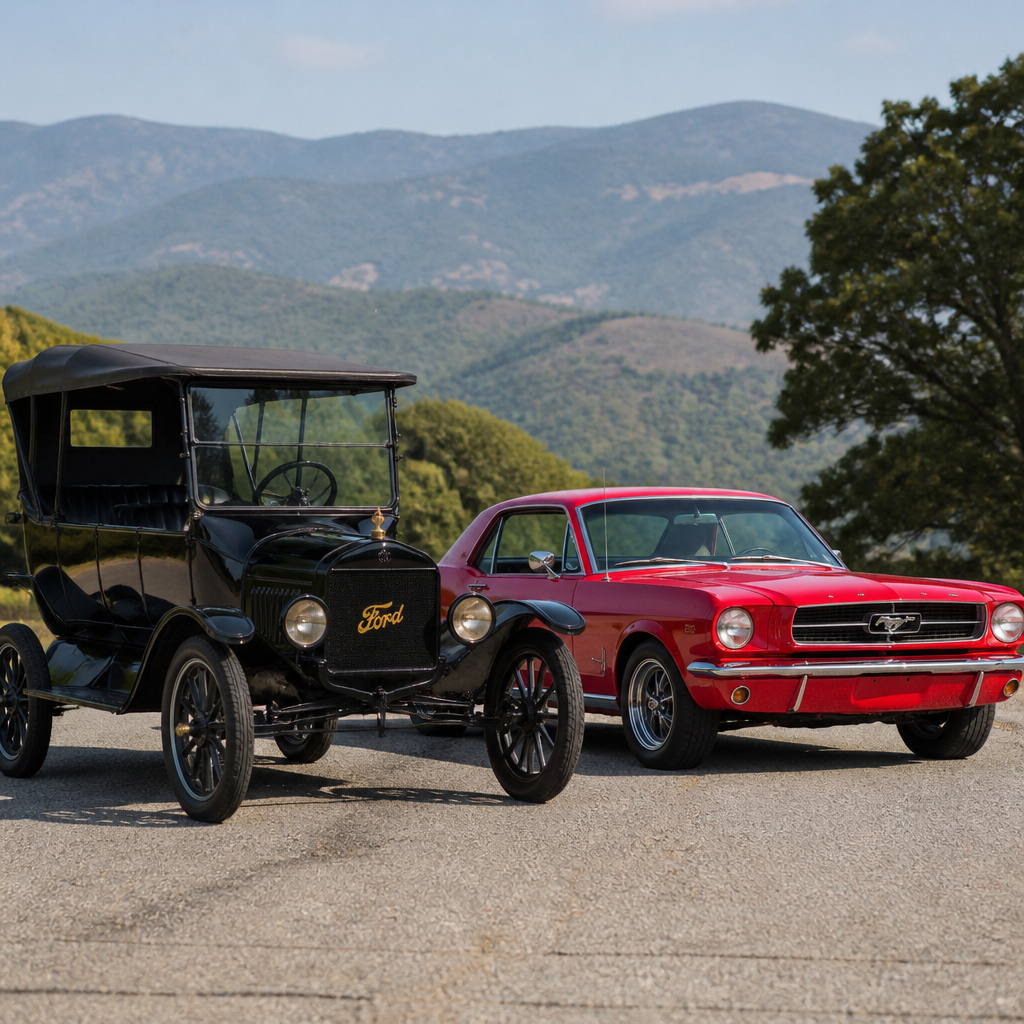
The Ford Mustang stands as America’s most iconic muscle car because it fused performance, style, affordability, and cultural timing in a way no rival matched. Introduced in April 1964, the Mustang created a new market category, inspired dozens of competitors, and became one of the few automobiles recognized instantly across generations. To understand why the Mustang still anchors conversations about classic car models and brands, it helps to define two closely related terms. A pony car is a compact, affordable, sporty coupe or convertible with a long hood and short rear deck. A muscle car traditionally emphasizes a midsize body with a large-displacement V8 focused on straight-line speed. The Mustang began as the original pony car, yet many of its most celebrated versions delivered muscle car performance, which is why enthusiasts and collectors often place it confidently in both camps.
This distinction matters because the Mustang’s legacy is larger than a single specification sheet. It is a product line that evolved with shifting fuel prices, emissions rules, safety standards, racing technology, and buyer tastes without losing its identity. I have worked around classic car buyers, restorers, and auction listings long enough to see one pattern repeat: when someone says they want an iconic American performance car, the Mustang usually enters the discussion first, whether they mean a 1965 fastback, a Boss 429, a Fox-body 5.0, or a modern Shelby GT500. Few vehicles can bridge that much history while remaining attainable enough for first-time collectors and significant enough for seasoned investors.
As a hub within iconic models, this article covers the full Mustang story: how it started, which generations defined the name, why certain trims matter, how racing built credibility, what collectors should know, and where the Mustang fits in American culture today. If you are comparing classic car models, researching Ford Mustang history, or deciding which iconic muscle car deserves your attention, this guide gives direct answers and practical context.
How the Ford Mustang Changed the American Car Market
The Mustang succeeded immediately because Ford identified an opening between practical compact cars and expensive sports cars. Lee Iacocca and Ford’s product planners wanted a car that looked youthful, accepted extensive options, and started at a reachable price. Built on Falcon underpinnings, the first Mustang kept costs under control while presenting itself as something entirely new. On launch day at the 1964 New York World’s Fair, it became a sensation. Ford sold more than 400,000 Mustangs in its first full year, a result that competitors noticed instantly.
The formula was simple but powerful: buyers could choose a coupe, convertible, or fastback, then personalize engines, transmissions, interiors, colors, stripes, and appearance packages. That menu-driven approach made the car feel premium without forcing a premium base price. It also established a template that Chevrolet, Pontiac, Mercury, AMC, and Dodge would follow with the Camaro, Firebird, Cougar, Javelin, and Challenger. In practical terms, the Mustang did not just become successful; it reset expectations for how Detroit sold performance style to young buyers and growing families.
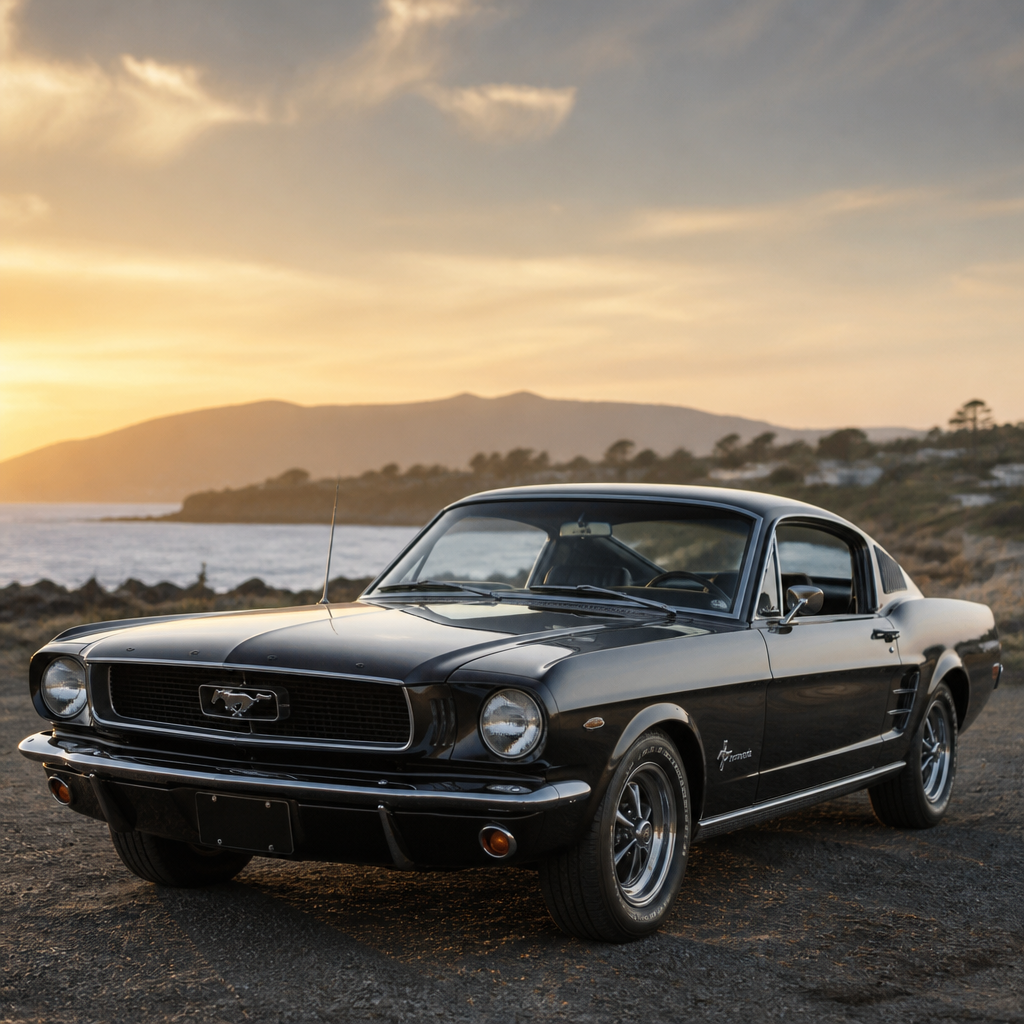
The early car’s design also deserves attention. Long hood, short deck proportions created visual excitement before the engine even started. The galloping horse emblem, tri-bar taillights, and side sculpting gave the Mustang a brand identity stronger than many entire divisions. That is one reason the car became a durable nameplate while rivals came and went.
Generations and Milestone Models That Built the Legend
Every major Mustang era added something essential to the legend. The 1964½ through 1966 first-generation cars established the look and the market. The 1967 through 1968 redesign gave the platform more room for bigger engines and tougher styling, producing some of the most recognizable classic Mustangs ever built. The 1969 and 1970 models pushed the design further with aggressive proportions and introduced halo variants that now dominate blue-chip collecting. Even people who know little about classic Fords can often identify a 1967 fastback or 1969 Mach 1 on sight.
The 1971 through 1973 cars grew larger and heavier, reflecting broader Detroit trends, then the Mustang II arrived in 1974. Purists often criticize the Mustang II for modest performance, yet historically it kept the name alive during the fuel crisis and emissions era. That matters. A model line survives by adapting, and Ford sold the Mustang II in strong numbers because the market demanded efficiency and manageable size.
The Fox-body generation, produced from 1979 to 1993, restored the Mustang’s performance credibility with lower weight, abundant aftermarket support, and the revered 5.0-liter V8. In my experience, this is the generation that turns casual interest into ownership because parts are plentiful, maintenance is straightforward, and the tuning community is immense. The SN95 cars refined the formula in the 1990s, while the retro-inspired 2005 redesign reconnected the Mustang to its classic visual roots. Since 2015, independent rear suspension, advanced electronics, and global engineering have made the modern Mustang a world-class performance car without severing ties to the original concept.
Mustang Variants Every Enthusiast Should Know
Not all Mustangs carry equal historical weight. Some trims matter because they changed performance standards, others because they symbolize a moment in American car culture. The GT package signaled factory performance from the beginning, while the Mach 1 blended visual drama with genuine V8 substance. The Boss 302 was developed with road racing in mind, especially Trans-Am competition, and the Boss 429 exists because Ford wanted to homologate its massive semi-hemispherical NASCAR engine for street use. Shelby Mustangs, particularly the GT350 and GT500, elevated the car from stylish coupe to serious performance icon under Carroll Shelby’s guidance.
| Model | Years | Why It Matters | Collector Appeal |
|---|---|---|---|
| Mustang GT | 1965 onward | Core factory performance badge with broad availability | Strong entry point for enthusiasts |
| Shelby GT350 | 1965–1970, later revivals | Track-focused small-block performance and racing pedigree | High historical significance |
| Shelby GT500 | 1967–1970, later revivals | Big-block power and flagship status | Premium values and broad recognition |
| Boss 302 | 1969–1970, 2012–2013 revival | Built to support Trans-Am competition | Respected by drivers and collectors |
| Boss 429 | 1969–1970 | NASCAR homologation special with rare engineering | Top-tier blue-chip classic |
| Mach 1 | 1969–1978, later revivals | Performance image leader with wide engine range | Popular and usable collectible |
| 5.0 Fox-body | 1987–1993 | Revived affordable V8 performance for a new generation | Rapidly rising interest |
For buyers, significance depends on goals. If you want pure historical prestige, a documented Shelby or Boss model leads the list. If you want an iconic Mustang you can drive often, a 1965 to 1968 small-block coupe, a Mach 1, or a Fox-body 5.0 often makes more financial sense. Originality, matching numbers, Marti Report documentation, body integrity, and correct driveline components all matter more than paint shine alone.
Why Racing Made the Mustang Credible
Performance branding is strongest when it is proven under pressure, and the Mustang earned that proof on road courses, drag strips, and oval tracks. Carroll Shelby’s GT350 transformed the early Mustang into a legitimate competition machine, stripping unnecessary weight, revising suspension tuning, and sharpening response. In SCCA B-Production racing, the GT350 gave Ford immediate credibility against established sports cars. That was not marketing theater; it was competitive success that influenced public perception.
The Boss 302 extended that reputation in the Trans-Am series, where Ford battled Chevrolet’s Camaro Z/28 in one of the era’s defining rivalries. Parnelli Jones won the 1970 Trans-Am championship in a Boss 302, a result that still shapes how enthusiasts view the badge. In drag racing, Cobra Jet Mustangs became legends thanks to strong quarter-mile performance and broad tunability. Even in NASCAR, the homologation logic behind the Boss 429 linked street Mustangs to Ford’s larger motorsport ambitions.
Modern Mustangs continue this pattern. The GT350’s flat-plane-crank V8, the GT500’s supercharged output, and factory-backed GT4 and GT3 racing programs show that Ford still uses competition to validate engineering decisions. That continuity matters because it proves the Mustang is not surviving on nostalgia alone. It remains relevant because it keeps earning relevance.
Design, Engines, and the Driving Experience
The Mustang’s appeal is not limited to raw horsepower. The best versions balance sound, stance, and driver engagement. Early small-block cars feel light, mechanical, and communicative. Big-block late-1960s cars trade some agility for torque and theater. Fox-body 5.0 Mustangs feel compact, simple, and eager, which explains why they remain favorites for street performance builds. Newer cars add braking, chassis control, and high-speed stability that older generations cannot match without substantial modification.
Engine development tells the broader story of American performance. The original lineup ranged from practical six-cylinders to V8s like the 289. By the late 1960s, buyers could order serious hardware including the 302, 351 Windsor, 390 FE, 428 Cobra Jet, and the rare Boss 429. After the emissions and fuel economy constraints of the 1970s, the 5.0-liter V8 revived performance culture in a manageable, affordable package. Today’s Coyote 5.0 is one of Ford’s strongest achievements: dual overhead cams, strong breathing, broad aftermarket support, and durability under hard use.
When people ask what a Mustang feels like to drive, the honest answer depends on era. A 1966 coupe is charming and analog. A 1970 Mach 1 is dramatic and torque-rich. A 1991 LX 5.0 feels lean and playful. A 2020s Mustang GT is fast enough to embarrass older exotics while still being practical to own. That breadth is unusual, and it helps explain the nameplate’s staying power.
Collectibility, Restoration, and Buying Advice
Ford Mustang collectibility works on two levels: top-tier rarity and broad-access enthusiasm. At the top end, documented early Shelby cars, Boss 429s, Boss 302s, K-code Hi-Po cars, and certain Cobra Jet examples command serious money. Their values depend heavily on provenance, factory options, restoration quality, and production numbers. At the broader end, standard coupes, convertibles, and later V8 cars remain popular because they are recognizable, usable, and easier to insure and maintain than many comparably famous classics.
Condition matters more than many first-time buyers realize. Rust is the most expensive problem on vintage Mustangs, especially in torque boxes, floor pans, cowl areas, frame rails, trunk drop-offs, and quarter panels. Poor prior restorations can hide structural issues under fresh paint. I always advise buyers to spend money on a pre-purchase inspection and documentation review before negotiating over cosmetic details. A Marti Report for many classic Mustangs helps verify original equipment and build data, while body buck tags, date codes, VIN stampings, and engine casting numbers support authenticity assessments.
The aftermarket is one of the Mustang’s biggest advantages. Reproduction parts are widely available, and nearly every generation benefits from strong club support, detailed service literature, and active forums. That lowers the barrier to entry. Still, modifications affect value differently depending on the car. Restomods can be excellent drivers, but highly original examples usually perform better in concours judging and investment-focused sales.
The Mustang in American Culture and Why It Still Leads
The Mustang became more than transportation almost immediately. It appeared in film, television, music, advertising, and personal memory at a scale few cars have matched. The 1968 fastback from the film Bullitt remains one of cinema’s defining car images. Song lyrics, bedroom posters, high school parking lots, and weekend cruise nights all reinforced the same message: the Mustang represented freedom with a V8 soundtrack. Even people who never owned one often have a Mustang story tied to a parent, neighbor, or first dream car.
Its cultural durability also comes from accessibility. A Ferrari may be more exotic, but most Americans encountered Mustangs in real life, not just in magazines. That everyday visibility made the car aspirational without making it unreachable. Ford also kept renewing the formula instead of freezing it. Special editions, anniversary models, Shelby collaborations, and track-ready packages ensured every generation had a hero car to admire.
The main reason the Mustang still leads iconic model discussions is balance. It has history without becoming trapped by history, performance without complete impracticality, and prestige without universal exclusivity. For readers exploring classic car models and brands, the Mustang is not just another famous badge. It is the reference point that helps explain the evolution of American performance itself.
The Ford Mustang earned its place as America’s most iconic muscle car by doing several hard things at once: creating a new market, winning in competition, evolving through difficult industry shifts, and staying emotionally resonant for more than half a century. Few cars can claim that combination. The early models defined the sporty American coupe, the great high-performance variants established collector mythology, and later generations proved the name could remain relevant through changing regulations, technologies, and customer expectations.
For enthusiasts, the Mustang’s biggest benefit is choice. You can pursue concours originality, vintage V8 character, Fox-body tuning potential, or modern track capability under one historic nameplate. For collectors, that means a broad ladder of entry points and long-term interest. For historians, it means one model line can tell the wider story of American automotive design, engineering, marketing, and culture.
If you are building your knowledge of iconic models, start with the Mustang and follow its branches: Shelby, Boss, Mach 1, Cobra Jet, and 5.0. Study production data, compare generations, and look closely at how each era answered the demands of its time. The more you examine the Ford Mustang, the clearer its significance becomes. Explore the related classic car model guides in this hub, and use the Mustang as your benchmark for judging every other American performance legend.
Frequently Asked Questions
Why is the Ford Mustang considered America’s most iconic muscle car?
The Ford Mustang earned that reputation because it brought together the right mix of performance, style, affordability, and timing in a way no other American car had done before. When it debuted in April 1964, it was not just another sporty coupe. It introduced buyers to a fresh idea: a car that looked exciting, felt youthful, offered personalization, and remained attainable for ordinary drivers. That formula allowed the Mustang to reach far beyond traditional performance-car enthusiasts and into mainstream American culture.
Its impact was immediate. The Mustang created a new market segment, inspired rival automakers to launch competing models, and quickly became a symbol of freedom, individuality, and accessible performance. Few cars have influenced the industry so directly. Even fewer have maintained relevance for decades while evolving with changing tastes, regulations, and technology. The Mustang’s design language, motorsports heritage, and constant presence in film, television, and popular culture helped make it instantly recognizable across generations. That broad cultural recognition is a major reason it is so often described not just as a great car, but as America’s most iconic one.
What is the difference between a pony car and a muscle car, and where does the Mustang fit?
The terms “pony car” and “muscle car” are closely related, but they are not identical. A pony car is generally defined as a compact or midsize American car with a long hood, short rear deck, sporty styling, and a relatively affordable price. The category was born with the Mustang, which established the basic template in the mid-1960s. Pony cars were designed to be youthful, stylish, and customizable, with a range of engines that could suit everything from everyday commuting to spirited driving.
A muscle car, by contrast, is traditionally associated with a larger emphasis on straight-line performance, especially with big V8 power in an intermediate-size body. Muscle cars were built around the idea of maximum horsepower for the money. While some classic Mustangs clearly fit the muscle car description, especially V8-equipped high-performance versions, the Mustang’s historical identity starts with being the original pony car. In practice, the Mustang sits at the intersection of both categories. It launched the pony car segment, yet many of its most famous variants also embody the spirit of the muscle car. That overlap is one reason the Mustang holds such a unique place in American automotive history.
How did the original 1964 Mustang change the American car market?
The original Mustang changed the American car market by proving that there was enormous demand for a sporty, stylish, personal car that did not require luxury-car money. Before the Mustang arrived, buyers often had to choose between practical economy cars and more expensive performance or specialty models. Ford recognized an opening and delivered a car that combined sharp looks, a wide option list, multiple powertrain choices, and broad appeal. It was marketed brilliantly, launched at exactly the right moment, and immediately connected with a generation looking for something expressive and modern.
The result was a sales phenomenon. Demand far exceeded expectations, and other automakers rushed to create direct competitors. Cars such as the Chevrolet Camaro, Pontiac Firebird, Dodge Challenger, and Plymouth Barracuda emerged in response to the Mustang’s success. In that sense, the Mustang did more than become popular; it reshaped product planning across Detroit. It showed that emotional appeal, image, and personalization could be just as important as raw specifications. That influence extended well beyond the 1960s and helped define how American performance cars would be designed, marketed, and remembered.
What makes the Ford Mustang so recognizable across generations?
The Mustang’s cross-generational recognition comes from a rare combination of consistent identity and constant evolution. Over the decades, the car has changed in size, shape, engineering, and technology, but it has almost always preserved core visual and emotional cues that people associate with the name. Features such as the long-hood proportions, sporty stance, aggressive front-end design, and the unmistakable galloping horse badge have helped maintain continuity even as each era introduced a different interpretation.
Beyond design, the Mustang stayed visible in public life in ways many competitors did not. It appeared in movies, television, advertising, racing, and enthusiast culture for decades without disappearing from the market. That matters because icons are not created by sales numbers alone; they become iconic by remaining part of the public imagination. The Mustang has been a first car, a weekend toy, a race car, a collector vehicle, and a nostalgia piece all at once. Because it has served different roles for different generations, people recognize it not only as a car model, but as a recurring symbol in American culture.
Why does the Mustang still matter in conversations about classic car models and brands?
The Mustang still matters because it represents more than a successful nameplate; it represents a turning point in automotive history. It helped define what an aspirational American car could be for the average buyer. It also built one of the strongest brand identities in the industry, with a reputation that stretches from early six-cylinder coupes to high-performance V8 fastbacks and modern performance editions. That range gives the Mustang unusual depth. It can be discussed as a design icon, a performance machine, a cultural artifact, or a case study in brand longevity.
For classic car enthusiasts, the Mustang remains central because it connects accessibility with heritage. Many classic performance cars are admired, but the Mustang became woven into everyday American life in a way that few others managed. It inspired loyalty, aftermarket support, restorations, club culture, and a huge collector following. At the same time, Ford kept the Mustang alive through changing decades, which means the model never became a distant historical footnote. Instead, it continued to evolve while carrying its legacy forward. That enduring presence is exactly why the Mustang still anchors discussions about classic car models, automotive brands, and the broader story of American performance culture.