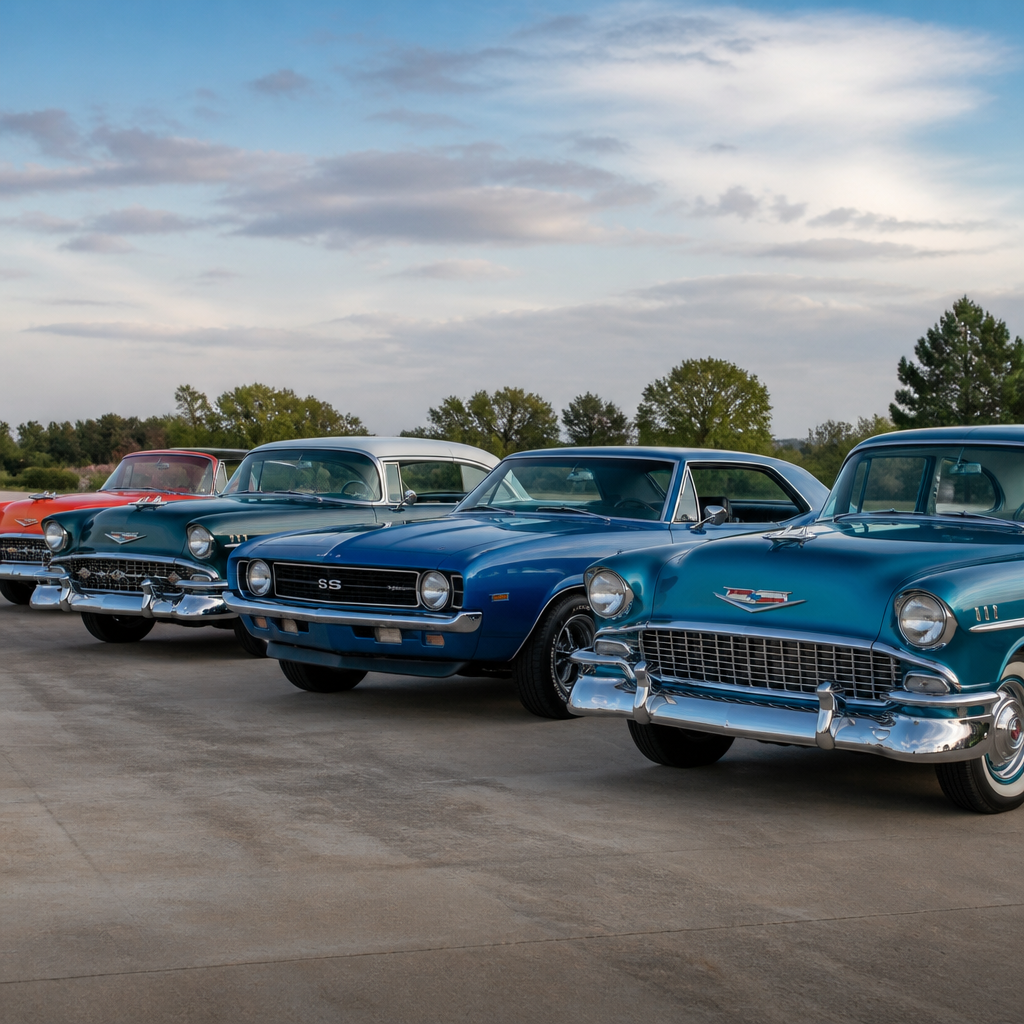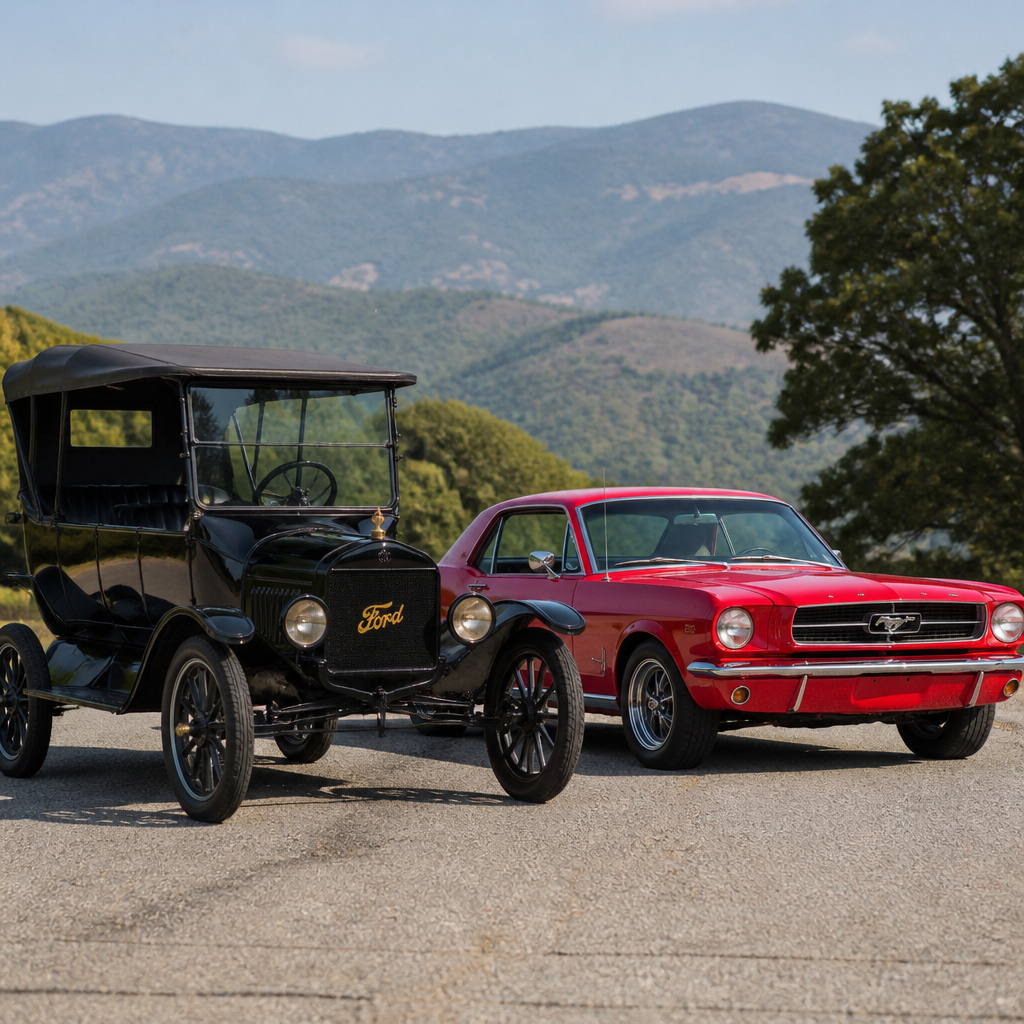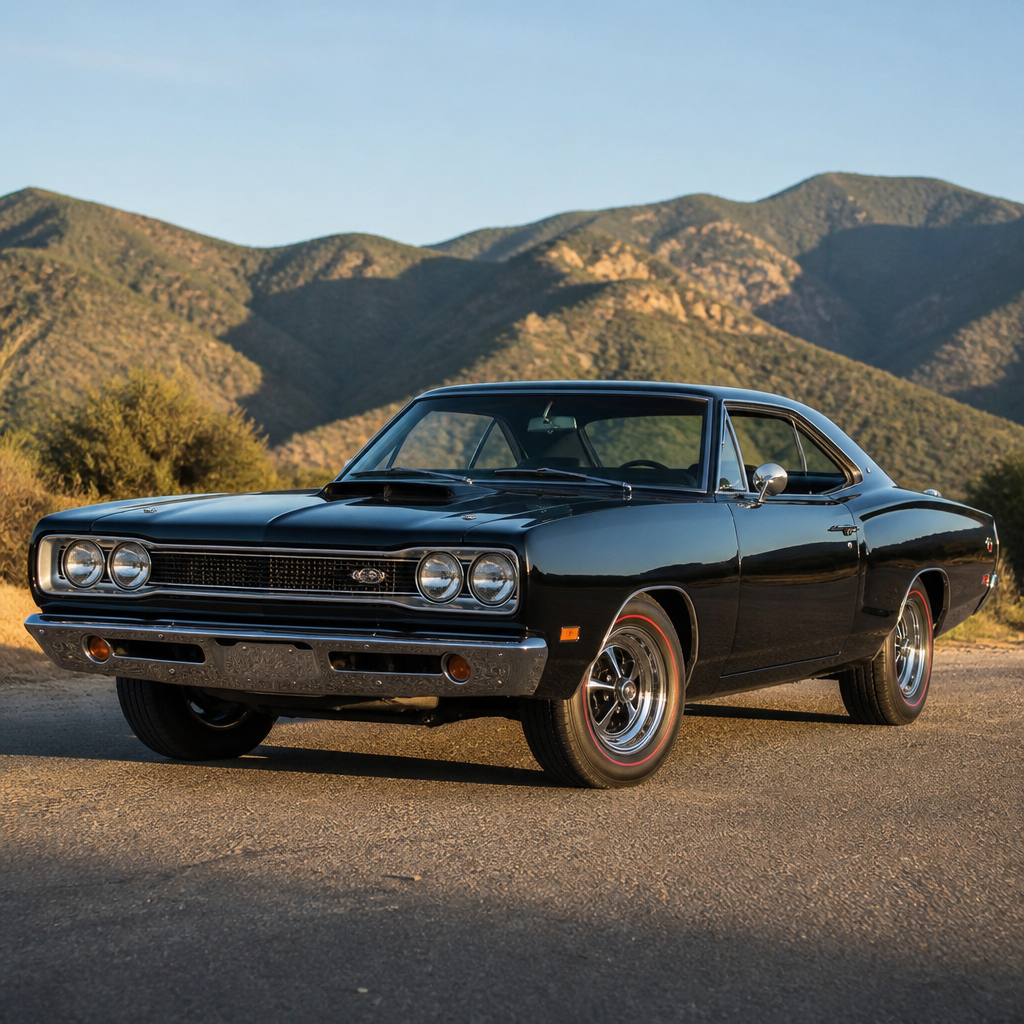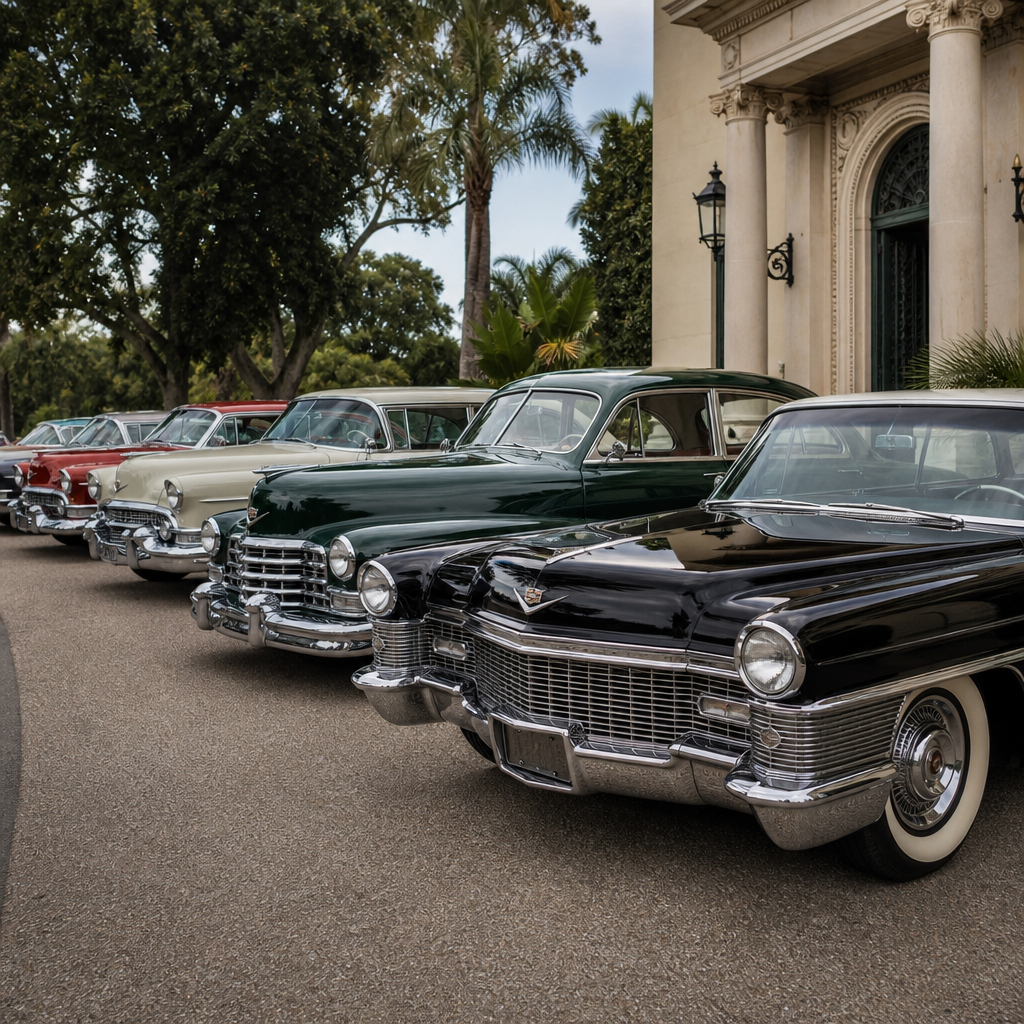
Ford classic cars occupy a central place in American automotive history because the company did more than build transportation; it shaped how millions of people understood speed, style, utility, and freedom. When enthusiasts talk about the best Ford classic cars ever made, they usually mean vehicles from the brass era through the 1970s that combined cultural impact, mechanical significance, and lasting desirability. In practical terms, a classic Ford is not just old. It is a model that influenced design trends, introduced important engineering ideas, dominated racetracks, or became a fixture of daily life across the United States. That range is why Ford matters so much within the wider American classics category.
I have spent years around restored and unrestored Fords at auctions, marque clubs, and private garages, and one pattern always stands out: no other American brand covers as much ground. Ford built early democratized cars, elegant luxury coupes, postwar icons, muscle cars, pickups, hot rods, and homologation specials. The company’s catalog lets one hub page connect nearly every major thread in the American classics story. If you are researching collectible classics, planning a first purchase, or trying to understand why certain Ford models keep appearing in market reports and enthusiast conversations, this guide gives you the essential context.
Several terms are worth defining at the start. “Classic car” is used loosely by the public, but insurers, clubs, and registries often apply age thresholds and condition standards. “Blue chip” refers to models with broad recognition, stable collector demand, and strong parts support. “Numbers matching” means the engine, transmission, and sometimes rear axle correspond to factory records, which can materially affect value. “Restomod” describes a vehicle updated with modern brakes, fuel injection, suspension, or comfort features. Those distinctions matter because the best Ford classic cars are not only historically important; they are also judged by authenticity, drivability, rarity, and long-term support.
This article serves as a hub for American classics by examining the Ford models that define key eras: the Model T and Model A, the 1932 Ford hot rod platform, the first-generation Thunderbird, the Mustang, GT40-derived performance halo cars, big-block intermediates, Broncos, and F-Series trucks. Together, these models explain how Ford moved from mass production pioneer to performance leader and lifestyle brand. They also show why classic Ford ownership remains unusually accessible. Compared with many exotic classics, parts are plentiful, documentation is strong, and expert communities are deep. That combination makes Ford one of the best starting points for anyone exploring American classic car models and brands seriously.
Model T, Model A, and the foundation of the Ford legend
No list of the best Ford classic cars can start anywhere but the Model T. Introduced for 1908, the Model T was not the first car, nor even the first affordable car, but it became the defining car of industrial America. Ford’s moving assembly line, implemented in 1913, radically increased output and lowered costs. By the 1920s, the Model T had put car ownership within reach of ordinary families, farmers, tradesmen, and small businesses. Its 2.9-liter inline-four was simple, durable, and easy to repair in remote areas. Owners valued the car because it worked on bad roads and because almost any mechanic could keep it running.
The Model A, launched for 1927, deserves equal respect because it corrected the Model T’s growing obsolescence without abandoning Ford’s mass-market philosophy. It added more modern styling, a three-speed sliding-gear transmission, four-wheel mechanical brakes, and a stronger 3.3-liter four-cylinder engine. In collector terms, the Model A is often the more usable entry point into prewar Ford ownership because it is easier for beginners to drive and source parts for. It also exists in a huge range of body styles, from roadsters and coupes to sedans and pickups. For any overview of American classic cars, these two models establish Ford’s essential contribution: scale, accessibility, and broad cultural reach.
The 1932 Ford and why hot rodders made it immortal
The 1932 Ford, commonly called the Deuce, is one of the most important classic cars ever built by any American manufacturer. Its significance comes from engineering and from what enthusiasts later did with it. Ford introduced its flathead V8 in 1932, giving mainstream buyers affordable eight-cylinder power at a time when many rivals still relied on sixes and fours. The 221-cubic-inch flathead was modest by modern standards, yet it delivered the kind of torque and tuning potential that made the 1932 Ford chassis a natural platform for early speed culture. Lightweight body styles, simple construction, and a vast interchangeability of parts made modification straightforward.
In real garages, not just in magazines, the Deuce became the backbone of the American hot rod movement after World War II. Builders stripped fenders, lowered suspensions, swapped cams, and chased speed on dry lakes and drag strips. That grassroots afterlife matters as much as the original factory specification. A stock 1932 Ford is historically important; a period-correct hot rod is culturally transformative. The car’s visual identity, especially the grille shell and three-window coupe profile, remains instantly recognizable. Values reflect that status. Genuine steel-bodied 1932 coupes and roadsters command serious money because they represent more than a model year. They symbolize the birth of a distinctly American performance tradition.
Thunderbird, Mustang, and Ford’s mastery of aspirational style
The 1955 Ford Thunderbird proved Ford could build desire as effectively as utility. Although often grouped with the Chevrolet Corvette, the first-generation Thunderbird was conceived less as a pure sports car and more as a personal luxury car. It offered V8 power, crisp proportions, roll-up windows, a weatherproof cabin, and a sense of glamour that appealed to buyers who wanted style without compromise. In use, the Thunderbird succeeded because it was easy to live with. It looked exotic enough for the driveway but behaved like a civilized American car. That formula influenced an entire market segment and gave Ford a prestige icon that still anchors the classic brand conversation.
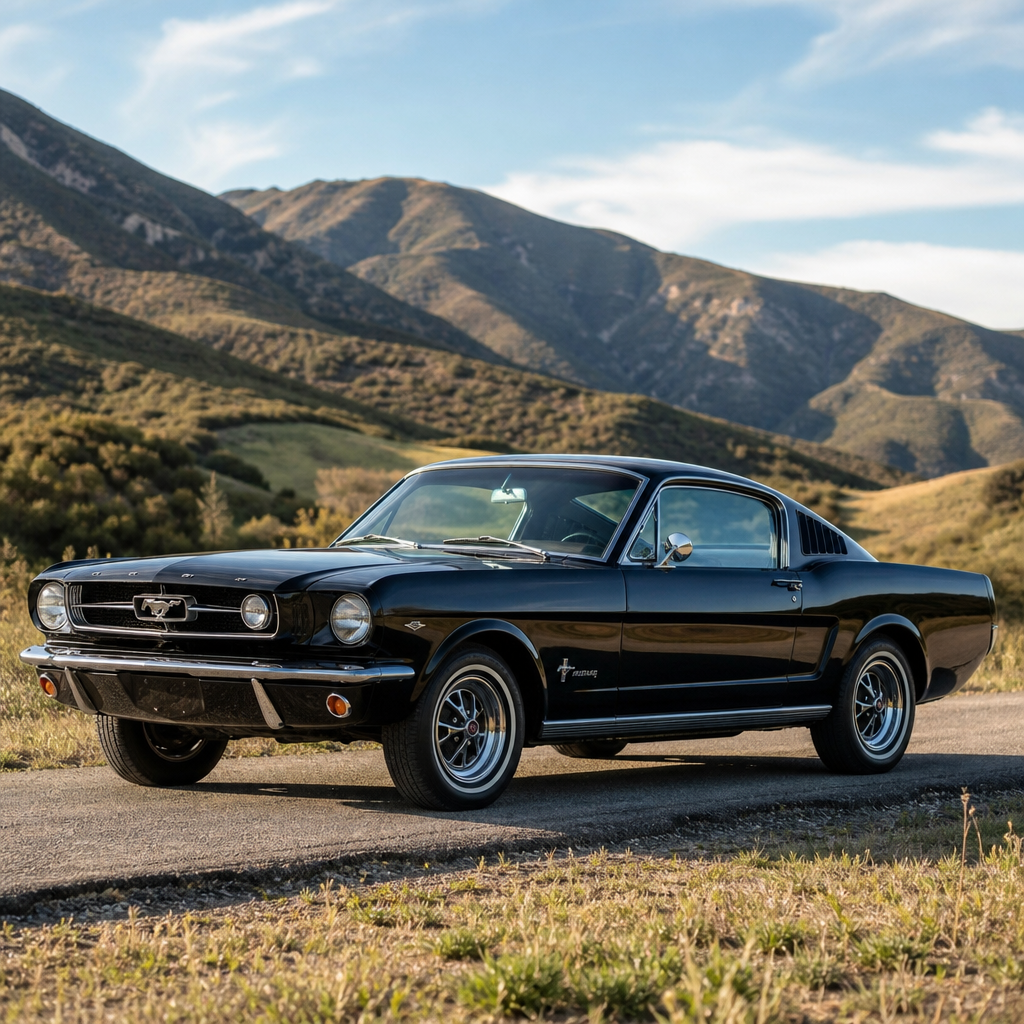
If the Thunderbird created one kind of aspiration, the 1964½ Ford Mustang created another: affordable youth-oriented performance. The Mustang’s release reshaped the market almost overnight. Built on compact Falcon underpinnings but wrapped in a long-hood, short-deck body, it offered personalization, sporty image, and a broad engine range that extended from sensible six-cylinders to V8s. Ford sold hundreds of thousands in the first year because the car was priced accessibly and marketed brilliantly. More important for collectors today, the first-generation Mustang supports almost every kind of enthusiast, from concours restorers chasing date-coded fasteners to weekend drivers who want a reliable small-block coupe.
Within the Mustang family, a few variants stand above the rest. The Shelby GT350 transformed the standard fastback into a focused high-performance machine through suspension tuning, reduced weight, and race-bred credibility. The Boss 302 was engineered to homologate Ford’s Trans-Am racing program and paired high-revving small-block power with serious handling. The Boss 429 exists because Ford wanted a semi-hemispherical big-block available for NASCAR compliance, making it one of the most charismatic homologation cars of the era. The Mach 1, meanwhile, delivered image and performance in a package many buyers could actually afford. Together these versions explain why the Mustang remains Ford’s most versatile classic nameplate.
Big-block heroes, racing influence, and the performance years
Ford’s best classic cars are not limited to one model line, and the late 1960s through early 1970s produced some of the company’s most memorable performance machines. The Torino Cobra and Torino Talladega showed how intermediate platforms could become fearsome street and competition cars. The Talladega in particular was shaped by NASCAR aerodynamics, using a streamlined front end and flush grille treatment to reduce drag at speed. On the street, these cars combined roomy bodies with serious V8 options, including 428 Cobra Jet power. Ford also built the Fairlane and later Torino GT in configurations that balanced family-car practicality with genuine straight-line pace, which was central to the muscle car era’s appeal.
The Mercury side of Ford Motor Company contributed heavily too, but within the Ford badge itself, the 427-powered Galaxie and lightweight drag packages deserve recognition. Full-size Fords with 406 and 427 engines were brutally effective in early 1960s stock car and drag racing, and they demonstrated Ford’s deep commitment to competition before the Mustang stole the spotlight. Then there is the GT40 story. Although the GT40 was developed for international endurance racing and produced in limited numbers, its Le Mans victories over Ferrari from 1966 through 1969 became a defining Ford achievement. For classic Ford enthusiasts, that victory halo elevated every performance model in the showroom, from Cobras and Mustangs to later roadgoing specials.
| Model | Era | Why It Matters | Best Fit for Collectors |
|---|---|---|---|
| Model T | 1908–1927 | Democratized car ownership and assembly-line production | Early history enthusiasts and parade drivers |
| Model A | 1927–1931 | More usable prewar Ford with broad body-style variety | Beginners entering prewar ownership |
| 1932 Ford | 1932 | Introduced affordable flathead V8 and launched hot rod culture | Traditional hot rodders and blue-chip buyers |
| Thunderbird | 1955–1957 | Defined the personal luxury car formula | Stylish drivers wanting comfort and prestige |
| Mustang | 1964½–1970 standout years | Created the pony car segment and offered huge variety | Most first-time classic Ford owners |
| Bronco | 1966–1977 | Compact 4×4 icon with lasting lifestyle appeal | Collectors wanting utility and open-air driving |
| F-100/F-Series | 1953–1979 key classics | Made the classic truck market mainstream | Owners prioritizing usability and parts access |
Bronco and F-Series trucks: utility classics that became collectibles
For years, many buyers overlooked classic Ford trucks and SUVs in favor of coupes and muscle cars. That changed dramatically as the market recognized utility vehicles as authentic American classics with real use value. The first-generation Ford Bronco, introduced in 1966, is now one of the most desirable vintage 4x4s in the country. Its boxy shape, short wheelbase, removable top, and simple mechanical layout make it attractive both as a restored original and as a carefully updated restomod. Early Broncos are also genuinely fun to drive at modest speeds, and that matters. Collectibility increases when owners can enjoy a vehicle beyond static display.
The F-Series deserves equal space in any hub article about American classic Ford models because it reflects the brand’s deepest commercial roots. The 1953–1956 F-100, the 1967–1972 “bumpside,” and the 1973–1979 “dentside” trucks each have dedicated followings. These pickups offer strong parts support, straightforward body-on-frame construction, and wide aftermarket compatibility. In the real market, they also attract a broader buyer base than some niche performance cars because they can serve as hobby vehicles, weekend haulers, or business-image pieces. A well-sorted classic F-100 or F-250 often delivers one of the best ownership experiences in the segment: affordable entry, easy maintenance, and unmistakable American character.
How to choose the best classic Ford for your goals
The best Ford classic car for one buyer may be the wrong choice for another, so selection should begin with intended use. If you want entry-level access, broad parts availability, and manageable maintenance, a small-block first-generation Mustang or 1960s F-100 is usually the smartest start. If your priority is prestige and event recognition, a 1955–1957 Thunderbird or authentic 1932 Ford carries stronger instant cachet. If you want investment-grade rarity, cars like the Shelby GT350, Boss 429, or certain Cobra Jet drag-pack models sit higher in the market but require much stricter documentation checks. Marti Reports, factory build sheets, date codes, and body tags are essential when values climb.
Condition matters more than headline model names. I have seen buyers overpay for glamorous but poorly restored cars that needed extensive rust repair, wiring work, and drivetrain sorting. On classic Fords, inspect cowl areas, torque boxes, frame sections, floor pans, and VIN stampings carefully, because corrosion and identity issues can destroy value fast. Verify whether a car is restored to factory specification, modified sympathetically, or heavily altered. None of those approaches is automatically wrong, but the price should reflect the build philosophy. The best ownership outcomes usually come from buying the most complete, best-documented example you can afford, then joining a strong marque club and using specialist suppliers such as Dennis Carpenter, National Parts Depot, or West Coast Classic Cougar when appropriate.
Why these Ford classics still define American car culture
The best Ford classic cars ever made still matter because each one captures a different but essential piece of American life. The Model T and Model A tell the story of mobility becoming ordinary. The 1932 Ford shows how factory engineering can spark an entire enthusiast movement. The Thunderbird explains style-led aspiration, while the Mustang proves that performance can be democratized without losing emotional pull. The Torino, Galaxie, and GT40-linked performance era reveal Ford at its most competitive. The Bronco and F-Series demonstrate that utility, when paired with honest design, can become collectible in its own right.
For readers exploring classic car models and brands, Ford is the most useful hub within American classics because it connects nearly every major category: pioneer car, hot rod, personal luxury, pony car, muscle car, off-roader, and pickup. Few marques offer that breadth with such deep parts support and such a large community knowledge base. If you want a classic you can understand, maintain, and enjoy with confidence, start by narrowing your budget, your intended use, and your tolerance for originality versus modification. Then study the specific Ford models that fit those goals, inspect carefully, and buy with documentation. Done right, a classic Ford is not just a collectible. It is an entry point into the full American automotive story.
Frequently Asked Questions
What makes a Ford qualify as a true classic car?
A true Ford classic is more than an older vehicle wearing a blue oval badge. Enthusiasts generally use the term to describe a model that left a lasting mark on automotive history through design, engineering, performance, utility, or cultural influence. Age matters, but significance matters more. A Ford becomes a classic when it helped define an era, introduced technology that changed expectations, or became deeply woven into American driving culture. Cars such as the Model T, the 1932 Ford hot rod platforms, the first-generation Thunderbird, the Mustang, and the Bronco are remembered not simply because they survived for decades, but because they shaped how people thought about freedom, speed, style, and personal identity on the road.
In practical terms, the best Ford classic cars are usually models from the brass era through the 1970s that still attract collectors, restorers, and historians today. They tend to have strong enthusiast support, recognizable styling, and a reputation that extends beyond Ford itself. Some were groundbreaking mass-market vehicles, while others became icons because of motorsports success or their influence on custom culture. The phrase “classic Ford” often implies a car with both historical importance and lasting desirability, not just an old Ford that happens to exist. That is why certain models continue to dominate conversations, auctions, and restoration shops decade after decade.
Why is the Ford Model T considered one of the most important classic Fords ever made?
The Ford Model T is considered essential because it transformed the automobile from a luxury object into something ordinary families could realistically own. Before the Model T, cars were expensive, complicated, and out of reach for much of the public. Ford changed that through standardization, durable engineering, and assembly-line production methods that dramatically lowered costs. The Model T did not just sell in huge numbers; it changed the scale of personal transportation and helped create modern car ownership in America. That alone makes it one of the most influential Fords ever built.
Its importance also extends beyond manufacturing. The Model T changed patterns of work, travel, and daily life. It gave farmers, workers, and small-town residents mobility that had previously been difficult or impossible to achieve. It also established Ford as a defining force in American industry. While later classics may be faster, more stylish, or more collectible, very few can match the Model T’s historical weight. When people rank the best Ford classic cars ever made, the Model T almost always appears because it represents the point where the automobile became a mainstream part of life rather than a rare machine for the wealthy.
Which Ford classic cars are usually considered the most collectible?
The most collectible Ford classics typically combine rarity, performance, strong design identity, and broad cultural recognition. The 1964½ to 1970 Ford Mustang is an obvious example, especially high-performance variants such as the Shelby GT350, Boss 302, Boss 429, and Mach 1. These cars helped define the pony car era and remain highly desirable because they blend approachable styling with serious enthusiast credibility. Early Thunderbirds, particularly the 1955 to 1957 two-seat models, are also among Ford’s most collectible classics because they introduced a more refined form of American sporty motoring and have timeless styling that continues to appeal to collectors.
Other highly collectible Fords include the 1932 Ford, which became legendary as a foundation for hot rods; the first-generation Bronco, prized for its compact proportions and off-road heritage; and select full-size performance cars such as the Galaxie 500, Fairlane GT, and Torino Cobra. Collectibility often rises when a model played a major role in motorsports, youth culture, or design history. Condition, originality, engine options, production numbers, and documentation can all affect value, but the most sought-after classic Fords usually have a story that reaches beyond the spec sheet. Collectors are often buying historical meaning as much as sheet metal.
Why does the Ford Mustang stand out so much in discussions of the best Ford classic cars?
The Ford Mustang stands out because it was one of the rare cars that succeeded as both a commercial phenomenon and a cultural symbol. Introduced in 1964, it created a new kind of affordable sporty car that felt personal, youthful, and stylish without being financially unattainable. Ford offered buyers a wide range of engines, trims, body styles, and options, which made the Mustang appealing to a huge audience. A buyer could choose an economical cruiser, a sharp-looking daily driver, or a serious performance machine. That flexibility helped the Mustang become more than a model; it became a movement.
Its legacy grew even stronger through racing, film, and performance development. Shelby-tuned Mustangs gave the platform credibility on the street and track, while special editions like the Boss 302 and Mach 1 built the Mustang’s reputation as a genuine muscle-era contender. At the same time, the car’s shape became instantly recognizable around the world. Few classic Fords are as universally known or as easy to connect with emotionally. The Mustang represents freedom, individuality, and attainable performance, which is why it remains central to almost every serious conversation about Ford’s greatest classics.
Are classic Ford cars a good choice for first-time collectors?
Yes, classic Fords are often an excellent choice for first-time collectors, largely because Ford produced many of its most important models in substantial numbers and inspired an enormous aftermarket and enthusiast network. That means parts availability is generally better than it is for many other classic brands, and knowledge is easier to find through clubs, forums, restoration shops, and specialist suppliers. Cars like the Mustang, Falcon, Fairlane, early F-Series trucks, and some Galaxie models can offer an appealing balance of historical significance, driving enjoyment, and serviceability. For a first-time buyer, that support infrastructure can make ownership far less intimidating.
That said, the right choice depends on budget, mechanical ability, storage, and intended use. A concours-level Shelby or rare big-block muscle Ford may be too expensive and stressful for a beginner, while a solid driver-grade Mustang coupe or vintage Ford pickup can be far more manageable. First-time collectors should pay close attention to rust, originality, title status, and the quality of past restoration work, since those factors can matter as much as the badge on the hood. In general, classic Fords offer one of the most approachable entry points into the hobby because they combine iconic American history with relatively broad ownership support and strong long-term enthusiasm.