
Transferring ownership of a classic car is more than signing a title and handing over keys, because vintage vehicles often carry registration quirks, documentation gaps, collector value, and state-specific legal requirements that do not apply to ordinary used cars. In the context of selling a classic car, ownership transfer means creating a clear legal chain from seller to buyer through title assignment, bill of sale, odometer disclosure when required, lien release, tax paperwork, and delivery records. A classic car usually refers to an older collectible vehicle, often at least twenty to twenty-five years old, though insurers, DMVs, auction houses, and enthusiast clubs may use slightly different thresholds. I have worked through these transactions with unrestored drivers, fully documented concours cars, and barn finds with missing paperwork, and the same lesson applies every time: a clean transfer protects value, prevents disputes, and keeps the buyer from coming back after the trailer leaves.
This matters because title mistakes can delay registration for weeks, trigger tax penalties, or even derail a sale after money has changed hands. Buyers of collector cars care deeply about provenance, matching VIN plates, original engine documentation, maintenance history, and whether a car can be registered without a bonded title process. Sellers need a repeatable process that satisfies the DMV, reassures the buyer, and preserves evidence if a problem arises later. As a hub for selling a classic car, this guide covers the complete transfer process from preparation to post-sale follow-up, while pointing to the broader decisions that shape a successful sale: pricing, listing quality, buyer screening, transport, payment security, and record retention. If you understand these steps before you advertise the car, you will close faster, avoid preventable legal issues, and present the vehicle like a serious collector asset rather than just an old automobile.
Prepare the car and documents before you list it
The easiest ownership transfer begins long before a buyer appears. Start by verifying that the name on the title matches your legal name and current address records closely enough for your state to accept the transfer. If the title is missing, damaged, unsigned, or still shows a previous owner, fix that first through your DMV. On older vehicles, title branding, duplicate title history, and state reissues are common, so request a current status check. Gather supporting records into a sale file: registration, title, lien release if ever financed, service invoices, restoration photos, appraisals, manuals, warranty cards, emissions exemptions, and any authenticity documents from marque specialists such as Porsche Certificate of Authenticity services, NCRS judging sheets for Corvettes, or Marti Reports for certain Fords. These do not replace legal ownership documents, but they strengthen buyer confidence and reduce negotiation friction.
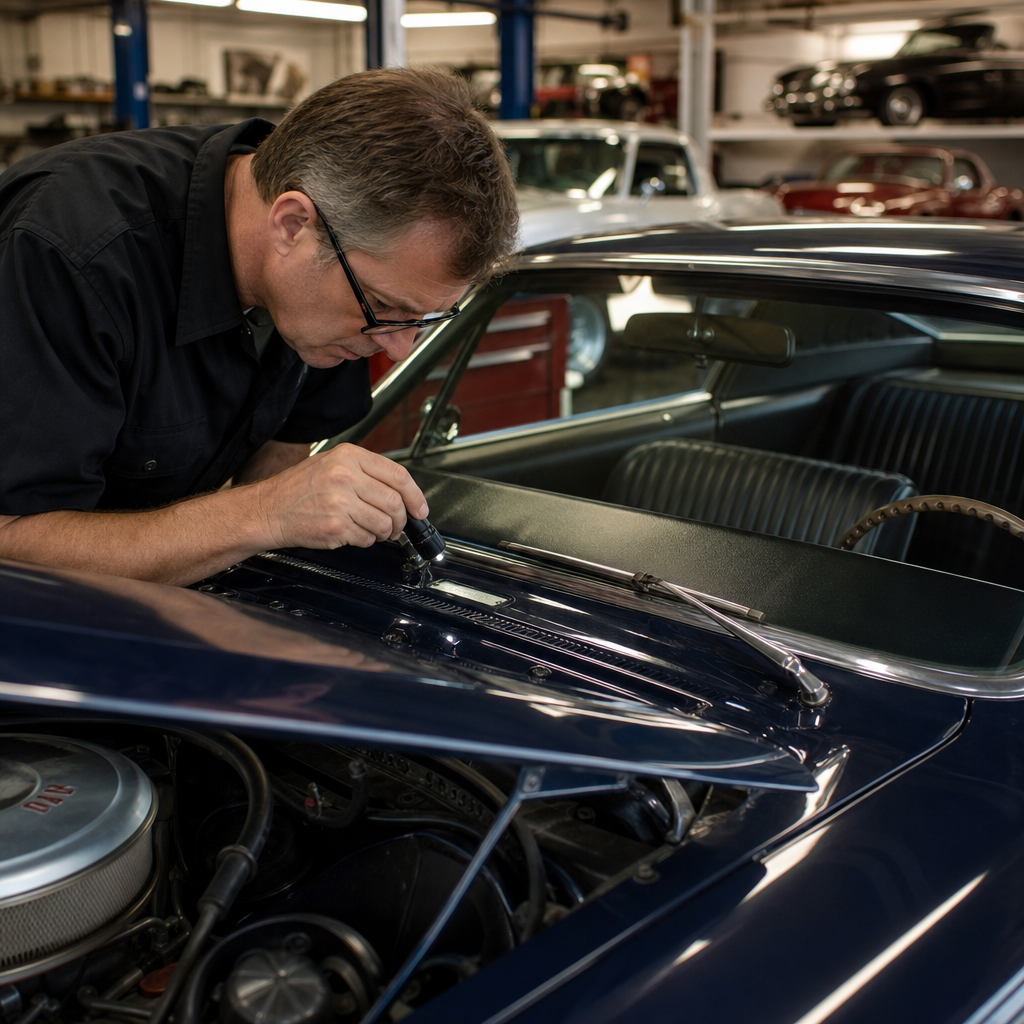
Next, confirm the vehicle identification number everywhere it appears. Compare the VIN on the title to the dashboard tag, door jamb sticker or plate, frame stamp, and engine or body numbers where relevant. Collector buyers regularly check these details, especially on muscle cars and limited-production European cars where value changes dramatically if components are non-matching. If your car predates standardized 17-character VINs, document the serial format so the buyer understands why the number looks shorter. I also recommend ordering a vehicle history report where available, even though older records can be incomplete. Carfax and AutoCheck are less comprehensive on very old vehicles, but providing what exists signals transparency. Finally, decide whether the sale includes spare parts, extra wheels, original trim, tool rolls, hardtops, or historical documents. List these separately so there is no confusion during pickup.
Set expectations with a sale package and clear disclosures
When selling a classic car, transfer problems often come from misunderstanding rather than fraud. Build a sale package that states exactly what the buyer is getting and what condition the car is in. Your listing should identify year, make, model, body style, engine, transmission, mileage shown, known restoration work, major flaws, and whether the car is numbers-matching, partially restored, modified, or non-running. Be specific. “Runs great” means little; “starts hot or cold, maintains 40 psi oil pressure at cruise, and last received brake hydraulics service in March 2024” means something. If the paint has lacquer checking, the convertible top leaks at the rear bow, or the fuel gauge is intermittent, disclose it. In my experience, thorough disclosure does not kill serious deals; surprises do.
The best classic car transactions include a written bill of sale drafted before the buyer arrives. It should identify buyer and seller, full vehicle description, VIN, sale price, deposit terms, included parts, date, time, and an explicit as-is clause unless your state limits that language. If the vehicle is exempt from odometer disclosure due to age, say so directly. If it is not exempt, use the correct federal or state form and record the mileage exactly as shown, noting whether it is actual, exceeds mechanical limits, or is not actual. Some states also require release-of-liability filing, smog certificates, damage disclosures, or notarized signatures. Check the DMV website for both seller and buyer states if the car is crossing state lines. Interstate sales are routine in the collector market, but they expose paperwork assumptions quickly.
How title transfer works for most classic cars
The title is the core legal document in a classic car ownership transfer. In most states, the seller signs the assignment section on the back of the title, enters the buyer information, records the sale price, and provides the date of transfer. Sounds simple, but errors are common. Use blue or black ink, avoid cross-outs, and never sign before the sale is final, because an open or pre-signed title can create legal trouble and make the document unusable. If your state requires notarization, do not sign until you are in front of the notary. If there are two owners listed with “and,” both usually must sign; with “or,” one may be enough, depending on state law. If a lien is shown, provide an official lien release even if the loan was paid years ago.
For classic cars, title situations vary widely. Some states did not issue titles for older vehicles, relying instead on registration certificates. Some imported classics arrive with foreign registration papers, customs forms, and EPA or DOT exemptions rather than a domestic title. Barn finds may require probate paperwork if the owner is deceased, or bonded title procedures if records are incomplete. In these cases, do not guess. Contact the DMV or use a reputable title service only where legal in your state. Services that promise instant titles without proper review can create future registration headaches. If you are selling through a dealer, broker, or auction company such as Mecum, Barrett-Jackson, or Bring a Trailer, read the consignment agreement carefully to see who handles title processing, when funds are released, and what happens if the buyer defaults.
Required paperwork by scenario
Because selling a classic car can involve private-party buyers, interstate shipping, estates, and unfinished restorations, it helps to organize the transaction by scenario. The table below covers the documents I most often prepare or request, and why each matters.
| Scenario | Core documents | Why it matters |
|---|---|---|
| Standard private sale with clear title | Signed title, bill of sale, release of liability, odometer form if required | Establishes legal transfer and limits post-sale responsibility |
| Vehicle with prior lien | Signed title, lien release letter, bill of sale | Buyer needs proof the lender no longer has a claim |
| Older no-title state vehicle | Registration card, bill of sale, VIN verification, state-specific transfer forms | Allows buyer to register a car that may never have had a modern title |
| Estate sale | Letters testamentary or probate order, death certificate, transfer documents | Shows the seller has authority to convey ownership |
| Imported classic | Foreign registration, customs entry, HS-7, EPA exemption, bill of sale | Confirms lawful import and supports new title issuance |
| Non-running project car | Signed title, bill of sale, parts inventory, disclosure statement | Prevents disputes over condition, completeness, and included components |
If you are unsure which scenario applies, call your DMV before money changes hands. Ask specifically what the buyer will need to register the car in-state and whether photocopies are acceptable. A ten-minute call can save a failed transfer later. Also keep digital scans of every signed document. For six-figure collector cars, I routinely create a transaction folder with PDFs, wire confirmation, carrier bill of lading, and photo documentation taken on pickup day.
Payment, pickup, and fraud prevention during the handoff
Safe payment is inseparable from safe ownership transfer. Cash can work for lower-value local sales, but for most classic cars, bank wire transfer is the cleanest method. Verify incoming wire funds with your bank before releasing the title, keys, or vehicle. Cashier’s checks can be legitimate, yet they are also commonly faked, and “available” funds are not always fully collected funds. Escrow services can be useful for remote sales, though both parties must understand fees and release conditions. Bring a Trailer, for example, offers managed payment support for many transactions, while some collectors prefer dedicated escrow platforms for private deals. Never accept overpayment requests, third-party pickup changes without written confirmation, or pressure to rush documents. Fraudsters often target classic car sellers because nostalgia and rarity can lower defenses.
At pickup, document the condition of the vehicle and what changes hands. Photograph the odometer, VIN plate, exterior, interior, trunk contents, spare parts, and the buyer or carrier loading the vehicle. Use a carrier bill of lading if the car is shipped, and note pre-existing damage. Hand over copies of the signed title and bill of sale, not your only records. Remove your plate if your state requires it, cancel toll tags, and disable any connected services or trackers unless they are part of the sale. If the buyer is driving the car home, confirm insurance coverage before they leave. I also advise writing down the exact time possession transfers. That timestamp can matter if a ticket, accident, or impound issue occurs the same day.
Special issues with project cars, modified classics, and high-value collector vehicles
Not every classic car transfer follows a standard script. Project cars create disputes because buyers may assume completeness where none exists. If the engine is disassembled, the interior is boxed, or rust repair has only begun, inventory what is included and what is missing. State whether the car is sold as a restoration candidate, parts car, or roadworthy vehicle. Modified classics require another layer of clarity. A restomod with a replacement chassis, fuel injection conversion, or engine swap may title under the original VIN, but emissions, insurance valuation, and registration classification can change by state. Be truthful about modifications and provide receipts from reputable builders where possible. Buyers of modified cars care about workmanship quality as much as horsepower figures.
High-value vehicles need tighter controls. If the car is worth enough to attract brokers, overseas interest, or museum-level buyers, use secure storage during showings, verify identity before test drives, and consider a written inspection policy. For cars with documented provenance, include copies of judging awards, ownership history, and expert reports, but keep irreplaceable originals until funds clear. It is wise to use a purchase agreement that covers governing law, inspection contingencies, and dispute resolution. Insurance also matters. Agreed-value policies from firms such as Hagerty or Grundy protect collector vehicles differently from standard auto policies, and coverage during test drives or transport should be confirmed. In several sales I have managed, the transfer itself was easy; the complexity came from proving authenticity and ensuring the right documents followed the car without exposing the seller to unnecessary risk.
After the sale: notify agencies, keep records, and support the buyer appropriately
Once the classic car is gone, your responsibilities are not automatically over. File your state’s notice of transfer or release of liability immediately if available. This step helps protect you from parking tickets, toll charges, and accident claims connected to the buyer’s use after the sale. Cancel or update insurance only after possession has transferred, and keep proof of cancellation. If you sold the car through an online marketplace, save the listing, messages, and payment confirmation. Retain transaction records for several years, including scanned signatures, title copies, shipping receipts, and any inspection reports. For valuable collector cars, I keep a permanent digital archive because provenance questions can arise long after a vehicle changes hands again.
Good sellers also provide reasonable post-sale support without creating open-ended obligations. If the buyer asks where a hidden battery cutoff switch is or how to operate a choke-equipped carbureted engine, answer helpfully. If they discover an undisclosed problem that you genuinely did not know about, stay professional and review the documents before reacting. Most issues can be resolved with calm communication and a clear paper trail. The goal is not only to complete a legal ownership transfer, but to complete a credible sale that reflects well on the car and on you as the seller. Selling a classic car successfully means preparing documents early, disclosing condition honestly, handling title work precisely, securing payment, and preserving records after delivery. Follow that process each time, and you will reduce risk, protect value, and make the next buyer far more comfortable saying yes. Before listing your car, build your paperwork file and verify your title status today.
Frequently Asked Questions
1. What documents do you need to transfer ownership of a classic car?
At minimum, most classic car ownership transfers require the original title properly assigned by the seller to the buyer, a bill of sale, and any state-required transfer or registration forms. However, classic cars often involve more paperwork than ordinary used vehicles because records may be older, titles may have been reissued, and some vehicles may have gaps in documentation from prior owners. In a clean transaction, the seller should provide the current title, a signed bill of sale showing the purchase price, date of sale, vehicle identification number (VIN), year, make, model, and both parties’ names and addresses. If there is a lien on the vehicle, a lien release should also be included.
Depending on the state and the age of the vehicle, additional documents may be required, such as an odometer disclosure, emissions exemption paperwork, tax forms, antique or historic vehicle registration forms, or a death certificate and probate paperwork if the car came from an estate. If the vehicle has been off the road for years, the buyer may also want prior registrations, old title copies, restoration receipts, and import documents if the car was brought into the country. These records are not always legally required for transfer, but they can help establish a clean ownership chain and support the vehicle’s value. Before the sale is finalized, both parties should check the exact requirements with the state motor vehicle agency, because rules for older vehicles vary widely and can affect whether the transfer is accepted.
2. Can you sell or buy a classic car if the title is missing or incorrect?
Yes, but it becomes more complicated, and the issue should be resolved before money changes hands whenever possible. A missing title, an unsigned title, a title in the name of a deceased owner, or a title with errors can delay or even prevent a legal ownership transfer. Unlike modern cars, classic cars sometimes have histories that include long-term storage, inherited ownership, older registration systems, or paperwork that predates current title standards. That means buyers should not assume missing paperwork can be easily fixed later. In many cases, the person selling the vehicle must first apply for a duplicate title, correct title errors, or complete a bonded title or court-ordered title process before the buyer can register the car.
If the vehicle comes from a no-title state or from a period when titles were not issued for older cars, other documentation may be acceptable, such as a transferable registration, prior registration card, notarized bill of sale, or state certification that no title exists. Even then, the buyer should confirm with their own state’s DMV or motor vehicle department that those documents will be accepted for retitling. This is especially important in interstate sales, where one state’s acceptable proof of ownership may not satisfy another state. The safest approach is to pause the sale until the seller can prove legal ownership clearly and completely. That protects the buyer from title disputes and helps preserve the car’s marketability and collector value.
3. Is an odometer disclosure required when transferring a classic car?
Sometimes, but not always. Odometer disclosure rules depend on federal requirements, state law, and the age or classification of the vehicle. Many classic cars are exempt from odometer disclosure because they exceed the age threshold set by law, but that exemption does not mean mileage is irrelevant. A buyer still wants accurate information about whether the mileage shown is actual, whether the odometer has rolled over, whether it has been replaced during restoration, or whether the reading is simply unknown. For collector cars, mileage can have a significant effect on value, so it should be documented honestly even when a formal odometer statement is not legally required.
Sellers should never guess or make unsupported claims about mileage. If the title or transfer form asks for mileage status, it should be completed exactly as required, using designations such as actual mileage, not actual mileage, exceeds mechanical limits, or exempt, depending on the applicable rules. Supporting records like maintenance logs, inspection reports, restoration invoices, and prior registrations can help explain the car’s history. Buyers should compare the odometer reading against the title, service records, and overall condition of the vehicle. In a classic car transaction, legal compliance matters, but so does transparency. A careful mileage disclosure reduces the risk of later disputes and helps establish trust between buyer and seller.
4. How do liens, taxes, and state-specific rules affect a classic car title transfer?
They can affect nearly every stage of the transaction. If there is an outstanding lien on the classic car, the ownership transfer cannot be completed properly until that lien is satisfied and released according to state rules. In some cases, the lender holds the physical title; in others, the lien is recorded electronically. Either way, the seller should obtain a formal lien release and make sure the title is clear before delivering the vehicle. Buyers should verify that the VIN on the title, lien paperwork, and car itself all match exactly. Even a small discrepancy can trigger delays or require corrective filings.
Taxes and registration requirements also vary widely by state. Buyers may owe sales tax based on the purchase price, fair market value, or a state valuation method for collector vehicles. Some states offer antique, historic, or collector registrations with special restrictions on use, while others require standard registration regardless of age. There may also be deadlines for filing title applications, paying tax, and transferring plates. For out-of-state sales, the buyer may need a temporary transit permit, VIN verification, or inspection before the new title can be issued. Because classic cars often cross state lines and may have unusual registration histories, both parties should confirm the exact transfer steps with the appropriate agencies before the sale closes. Doing this early helps avoid penalties, rejected paperwork, and expensive corrections later.
5. What should buyers and sellers do on delivery day to complete a classic car ownership transfer correctly?
Delivery day is when the paperwork and the vehicle itself need to line up perfectly. The seller should present the signed title, bill of sale, lien release if applicable, keys, and any promised records such as restoration files, manuals, spare parts inventories, and prior registrations. The buyer should confirm that the VIN on the car matches the VIN on every document exactly, including any dashes, letters, and sequence numbers. Both parties should review the title assignment carefully before signing, because cross-outs, missing signatures, incorrect dates, or writing in the wrong section can invalidate the transfer in some states. If notarization is required, it should be completed at the time of signing, not afterward.
It is also wise to document the condition of the car at handoff. A written delivery acknowledgment, dated photographs, and a copy of the signed bill of sale can help if questions arise about damage, missing parts, or the timing of possession. The seller should remove personal plates if state law requires it and submit any notice of sale or release of liability form promptly. The buyer should arrange insurance coverage before transport or pickup and should not drive the car until registration and permit requirements are satisfied. For high-value collector vehicles, many parties also use wire confirmation records, enclosed transport receipts, and inventory checklists for parts and accessories included in the sale. Taking these steps creates a clear record of when ownership changed hands and helps protect both buyer and seller long after the transaction is complete.