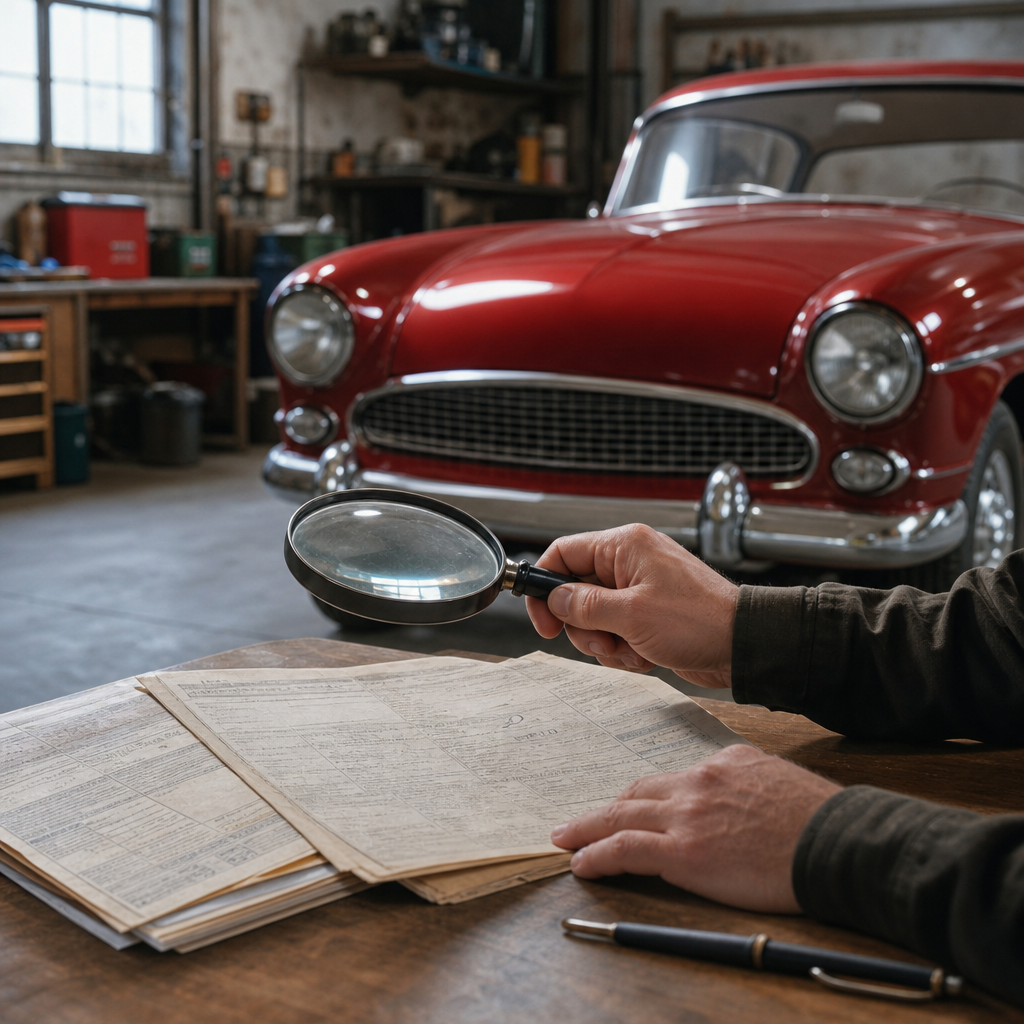

Valuing a classic car looks simple on the surface, but the price attached to an older vehicle is rarely the same as its real market value. In the classic car pricing and valuation world, “value” means the amount a knowledgeable buyer will actually pay a knowledgeable seller in current conditions, not the owner’s emotional estimate, a guidebook number, or the cost of restoration. I have appraised collector vehicles for private sellers, insurance files, estate settlements, and dealer acquisitions, and the same errors appear again and again. They distort asking prices, stall sales, create bad purchases, and lead to insurance gaps that only become obvious after a claim.
A classic car valuation blends objective data and informed judgment. Objective inputs include recent comparable sales, production totals, originality, documentation, body condition, drivetrain correctness, provenance, and regional demand. Judgment enters when the market is thin, options are unusual, or two cars that look similar on paper present very differently in person. A numbers-matching muscle car with weak paint may be worth more than a beautifully restored example with a replacement engine. A survivor with factory markings, original trim, and complete paperwork can outprice a fresher restoration because authenticity matters. Understanding these distinctions is essential if you are buying, selling, financing, insuring, or planning an estate around a collector vehicle.
This hub article explains the most common mistakes when valuing a classic car and shows how to avoid them. It also serves as the foundation for deeper work on classic car pricing and valuation, including condition grading, comparable sales analysis, auction results, insurance agreed value, restoration economics, and documentation review. If you want a reliable classic car appraisal, a sensible asking price, or confidence that you are not overpaying, the goal is the same: separate sentiment from market evidence and adjust for the facts that truly move value.
Confusing Price Guides With the Real Market
One of the biggest mistakes in classic car valuation is treating a printed or online price guide as a final answer. Guides from Hagerty, NADA, and other recognized sources are useful benchmarks, but they are starting points, not binding market facts. They aggregate trends across a broad population of cars, often smoothing out regional differences, seasonal shifts, and option-specific premiums. In practice, I use guide values to frame a range, then test that range against recent sales on Bring a Trailer, Mecum, Barrett-Jackson, Hemmings, marque forums, and dealer transaction history where available.
The problem is timing and specificity. A guide may update quarterly, while enthusiast demand can change in weeks. A 1970 Chevrolet Chevelle SS 454 with documentation, desirable colors, and a fresh inspection file may trade above a generic excellent-condition guide figure. The same model with poor panel fit, non-original carburetion, and an undocumented engine swap may fall well below it. Buyers and sellers who quote one number without discussing trim, engine code, factory options, restoration quality, and market timing almost always misprice the car.
Ignoring Condition Standards and Overgrading the Car
Classic car condition grading is where many valuations go wrong. Owners often describe a car as “show quality” or “excellent” when it is actually a solid driver with cosmetic flaws and deferred mechanical work. Industry standards matter here. The commonly used one-to-six condition framework distinguishes concours examples from excellent drivers, fair project cars, and parts vehicles. The gap between condition levels is substantial, especially for high-demand American muscle, air-cooled Porsche models, and prewar luxury marques.
Overgrading usually happens because people focus on paint shine and interior presentation while overlooking underbody corrosion, filler, panel alignment, trim pitting, cracked weatherstripping, wiring quality, cold-start behavior, compression consistency, and leaks. I have seen attractive cars photographed for listings that looked excellent online, then appraised as average drivers after inspection because the chrome was tired, the underside was heavily coated to hide rust, and the transmission shifted poorly when warm. A proper classic car appraisal always ties value to a defensible condition grade supported by photos, notes, and ideally a specialist inspection.
Missing the Importance of Originality, Authenticity, and Documentation
Originality has a direct effect on classic car pricing, yet sellers frequently underestimate how much documentation changes buyer confidence. “Numbers matching” is one of the most misunderstood terms in the hobby. It generally means the car retains its original engine and, depending on the marque, transmission and major driveline components as identified by stampings, VIN derivatives, date codes, and factory records. For Corvette, Mopar, Shelby, and big-block muscle cars, this can move value dramatically. For some European classics, body, gearbox, and engine correspondence can matter just as much.
Documentation is the proof behind the claim. Build sheets, window stickers, Protect-O-Plate records, Kardex or Certificate of Authenticity paperwork, ownership history, restoration invoices, judging sheets, and photo records reduce uncertainty. A buyer paying six figures for a 1967 Corvette 427 or a Porsche 356 will not rely on verbal assurance. Without records, the market prices in risk. That discount can be large even when the car appears correct, because hidden substitutions are common. Provenance is not decoration; it is part of the asset.
Overvaluing Modifications and Restoration Spend
Owners regularly assume that every dollar spent on restoration or upgrades adds directly to market value. It does not. Restoration economics are brutally uneven. A $40,000 paint and body invoice on a mid-level classic may simply bring the car up to expected market standard rather than create a premium. Mechanical sorting, brake work, fuel system cleaning, and correct interior trim often preserve value, but buyers rarely reimburse owners dollar for dollar. This is especially true for restomods, engine swaps, custom paint, aftermarket wheels, and non-period interiors.
Some modifications add appeal to a narrower audience. A five-speed conversion in a Jaguar E-Type or upgraded disc brakes on a vintage pickup can improve usability, but purity-minded buyers may discount the car if originality is compromised. The right way to value modified classics is to identify the target buyer pool, compare with similar modified sales, and separate functional improvements from personalization. Cost does not equal value. Market acceptance equals value.
| Valuation factor | Common mistake | Better approach |
|---|---|---|
| Price guides | Using one published figure as final value | Cross-check with recent comparable sales and local demand |
| Condition | Calling a driver “excellent” based on photos | Inspect paint, body, underside, trim, interior, and mechanical systems |
| Originality | Assuming “numbers matching” without proof | Verify stampings, date codes, and factory documentation |
| Restoration spend | Adding invoices directly to value | Measure what the market pays for similar finished cars |
| Auction results | Using headline sales without context | Adjust for fees, venue, reserves, and exceptional presentation |
Using the Wrong Comparable Sales
Comparable sales analysis is the backbone of accurate classic car pricing, but poor comps create false confidence. A valid comparable should match year, body style, engine, transmission, trim level, factory options, condition, originality, and sale date as closely as possible. Too many valuations compare a base coupe with a high-spec convertible, an automatic with a four-speed, or a standard engine car with a top-tier performance variant. Those are not true comps.
Venue also matters. An auction sale under television lights, a private treaty transaction between marque specialists, and an online sale on Bring a Trailer can produce different numbers for the same model. Buyer premiums can add 10 percent or more at major auctions, while transport costs and taxes further affect the all-in figure. A smart valuation strips those effects out and asks a practical question: what would this exact car command if exposed properly to the current market? If the comp set does not answer that, it is the wrong comp set.
Forgetting Regional Demand, Seasonality, and Buyer Demographics
The classic car market is not uniform. Regional demand changes value. British roadsters may attract stronger interest in some coastal markets with established clubs and specialist shops. Vintage trucks can perform better in parts of the American West and South. Left-hand-drive versus right-hand-drive configuration can limit a car’s buyer pool depending on country. Emissions laws, registration rules, and import restrictions also influence what buyers are willing to pay.
Seasonality matters as well. Convertibles often sell better in spring, while projects can move in winter when hobbyists plan restorations. Demographics are changing demand patterns too. Certain prewar and brass-era cars have softened because younger buyers are less engaged, while analog sports cars from the 1980s and 1990s have gained traction. Ignoring these shifts leads to stale asking prices. Market value is never static; it reflects who is shopping, where they are shopping, and what they can legally and practically own.
Failing to Account for Hidden Mechanical and Structural Issues
A visually appealing classic can still be a poor-value car if it hides major mechanical or structural problems. Rust repair is the clearest example. Surface corrosion on suspension components is one thing; rust in frame rails, floors, rockers, torque boxes, cowl sections, or unibody pick-up points is another. Structural corrosion can erase the value advantage of a shiny repaint in a single inspection. The same is true of engine smoke, weak oil pressure, overheating, poor compression, transmission flare, differential noise, and unsafe brake behavior.
Pre-purchase inspections are not optional on meaningful transactions. A proper inspection by a marque specialist, not just a general mechanic, can identify incorrect stampings, hidden accident repair, fiberglass issues, lead loading, poor welds, and non-factory assembly shortcuts. In valuation terms, hidden faults are not minor deductions. They can change the condition grade, reduce buyer confidence, increase time to sale, and force a car into a completely different price bracket.
Letting Emotion, Rarity Claims, and Seller Narratives Drive the Number
Sentiment is the quietest valuation error and often the most expensive. Sellers anchor to family history, restoration effort, or the memory of owning a similar car in youth. Buyers get pulled in by color combinations, auction atmosphere, or the claim that a car is “one of one.” Emotional attachment is understandable, but it does not define market value. Actual rarity only matters when it is documented and when buyers care about the specific rare feature.
I often see owners advertise ordinary equipment combinations as exceptionally rare because a decoder report shows a low production count for paint, trim, and options. That may be interesting, but it is not always valuable. Rarity without desirability does not produce a premium. A rare unpopular color or uncommon low-demand option can even hurt the car. The disciplined approach is simple: verify the rarity claim, determine whether the market rewards it, and price accordingly.
How to Value a Classic Car More Accurately
The most reliable process combines five steps. First, identify the car precisely: year, make, model, body style, engine, transmission, options, and factory-correct configuration. Second, establish condition using a recognized grading framework and an honest inspection that includes underside, mechanicals, glass, trim, and documentation. Third, gather recent comparable sales from multiple channels and adjust them for condition, originality, venue, and fees. Fourth, account for local market realities, season, and buyer demand. Fifth, document everything in a clear file that supports your conclusion.
This approach helps whether you need an asking price, purchase target, lending support, tax file, or insurance agreed value. It also creates better outcomes across the wider buying and selling process. Accurate valuation reduces negotiation friction, speeds up serious transactions, and prevents expensive mistakes caused by optimism or incomplete information. If you are building out your understanding of classic car pricing and valuation, use this page as your hub: move next into condition grading, comparable sales methods, auction analysis, restoration ROI, and documentation checks. The market rewards evidence. Start with facts, verify the details, and value the car that exists, not the story attached to it.
Frequently Asked Questions
What is the most common mistake people make when valuing a classic car?
The most common mistake is confusing personal investment or emotional attachment with actual market value. Owners often look at what they paid for the vehicle, what they spent restoring it, how long they searched to find it, or what the car means to them personally, and then assume those factors automatically translate into a higher price. In the collector car market, they usually do not. A classic car is worth what a well-informed buyer is willing to pay a well-informed seller in the current market, not what the owner hopes to recover or feels the vehicle deserves.
Another version of this mistake is relying on a single number from an online valuation tool, auction headline, or price guide without understanding the details behind that number. Condition level, originality, documentation, trim level, engine and transmission combinations, provenance, restoration quality, and current demand all affect value. Two cars that appear identical at a glance can differ substantially in price once those factors are examined. Serious valuation requires comparing the subject vehicle to real-world market evidence and adjusting for its specific strengths and weaknesses.
In practice, the best approach is to separate sentiment from evidence. Treat the car as an asset in a specialized market. Review recent verified sales, understand the vehicle’s condition honestly, and consider whether the current audience for that make and model is strong, stable, or shrinking. That mindset avoids one of the biggest and most expensive pricing errors classic car owners make.
Why is the cost of restoration not the same as the car’s value?
This is one of the hardest truths for owners to accept: restoration cost and market value are not the same thing. It is very common for someone to spend far more restoring a classic car than the finished vehicle will bring on the open market. Restoration invoices reflect labor rates, parts availability, machine work, paint and body preparation, upholstery, chrome plating, transport, and countless unforeseen costs. The market, however, does not reimburse every dollar spent simply because the work was expensive.
Value depends on what buyers are currently paying for that specific type of vehicle in that specific condition. If a model has modest demand, a six-figure restoration bill does not magically create a six-figure car. In some segments of the hobby, over-restoration can even limit buyer interest if the result is less authentic than a well-preserved original example. Buyers also evaluate the quality of the work, not just the amount spent. Poor panel fit, incorrect finishes, non-original components, weak documentation, or a cosmetic restoration that ignored mechanical needs can all reduce what the market is willing to pay.
Restoration history still matters, but mainly as supporting evidence. Well-documented work by respected shops can increase confidence, improve marketability, and strengthen value when the finished product aligns with buyer expectations. The key is understanding that money spent is an input, not a guarantee of return. The market sets value, and the market can be indifferent to an owner’s restoration budget.
How much does condition really affect classic car value?
Condition affects value enormously, and it is often where pricing mistakes begin. Owners frequently describe a vehicle in more favorable terms than an informed buyer would. A car presented as “excellent” may in fact be a solid driver with older paint, imperfect chrome, undercarriage corrosion, non-original interior materials, or deferred mechanical issues. In the classic car world, relatively small differences in condition can create large differences in value because buyers are not just paying for appearance, but also for integrity, authenticity, and the cost avoidance of future repairs.
Condition should be evaluated systematically. Exterior finish, bodywork quality, rust presence, panel alignment, glass, trim, weatherstripping, interior wear, gauges, electrical function, engine compartment presentation, drivetrain operation, suspension behavior, braking performance, and underbody condition all matter. So does how the car starts, idles, shifts, tracks on the road, and behaves when warm. A shiny repaint can distract from structural issues, filler, poor metalwork, or hidden corrosion. Conversely, an older but honest car with original panels and strong documentation may command more respect than a freshly restored example with questionable workmanship.
Accurate grading is essential because the market is highly condition-sensitive. Insurance values, estate settlements, dealer offers, and private party pricing can all swing widely depending on whether a vehicle is concours-quality, excellent, very good, good, fair, or in need of major work. An honest condition assessment, ideally backed by a knowledgeable inspection, is one of the most important parts of arriving at a defensible value.
Is it a mistake to use auction results or online listings to price a classic car?
They can be helpful, but using them carelessly is a major mistake. Auction results and online listings are often treated as if they represent exact market value, when in reality they are only pieces of the puzzle. Asking prices are not sale prices, and even reported auction sales need context. A highly publicized result may reflect exceptional provenance, celebrity ownership, rare factory options, ideal presentation, or an unusually motivated bidder. Without understanding those details, it is easy to overprice or underprice a vehicle based on a headline number.
Listings are especially unreliable when viewed in isolation because many overpriced cars simply sit unsold. Owners often compare their car to the highest visible asking prices and ignore how long those vehicles have been on the market or whether they ever sold near that number. Auction sales can also be distorted by venue, season, marketing quality, bidder demographics, and whether the event attracts serious marque-specific buyers or more general interest. A car sold at a premium national auction under bright lights is not directly equivalent to a local private sale in an average market.
The right way to use market data is to compare multiple recent and relevant transactions involving similar vehicles, then adjust for condition, originality, documentation, options, restoration quality, and sale setting. Verified sold prices usually carry more weight than active listings. The closer the comparable sales are in specification and timing, the more useful they become. Market evidence is essential, but it must be interpreted, not copied blindly.
How do originality, documentation, and matching numbers affect valuation?
They can affect value significantly, sometimes dramatically, depending on the make, model, and buyer audience. In the collector market, originality often carries a premium because it gives buyers confidence about what the car truly is and how faithfully it has survived. Features such as original drivetrain components, factory colors, original interior materials, correct trim, and unmodified body structure help support authenticity. For some vehicles, especially rare or high-demand models, “matching numbers” can be a major factor in separating a top-tier example from an otherwise similar car.
Documentation matters because it verifies claims. Build sheets, window stickers, factory records, ownership history, restoration photos, service receipts, judging sheets, and marque expert reports can all strengthen value by reducing uncertainty. Buyers are generally willing to pay more when the story of the car is supported by evidence rather than seller memory. On the other hand, missing records, unclear vehicle identity, replacement drivetrains, altered specifications, or undocumented restorations can create doubt and push value downward.
That said, the impact is not uniform across all classic cars. Some driver-level collector vehicles are bought more for enjoyment than strict authenticity, and tasteful upgrades may not hurt value much in those segments. But for serious collectors, rare models, muscle cars, sports cars, and investment-grade vehicles, originality and documentation are often central to valuation. One of the most common mistakes is assuming those details are minor when, in reality, they may be the reason one car is worth substantially more than another that appears similar at first glance.