
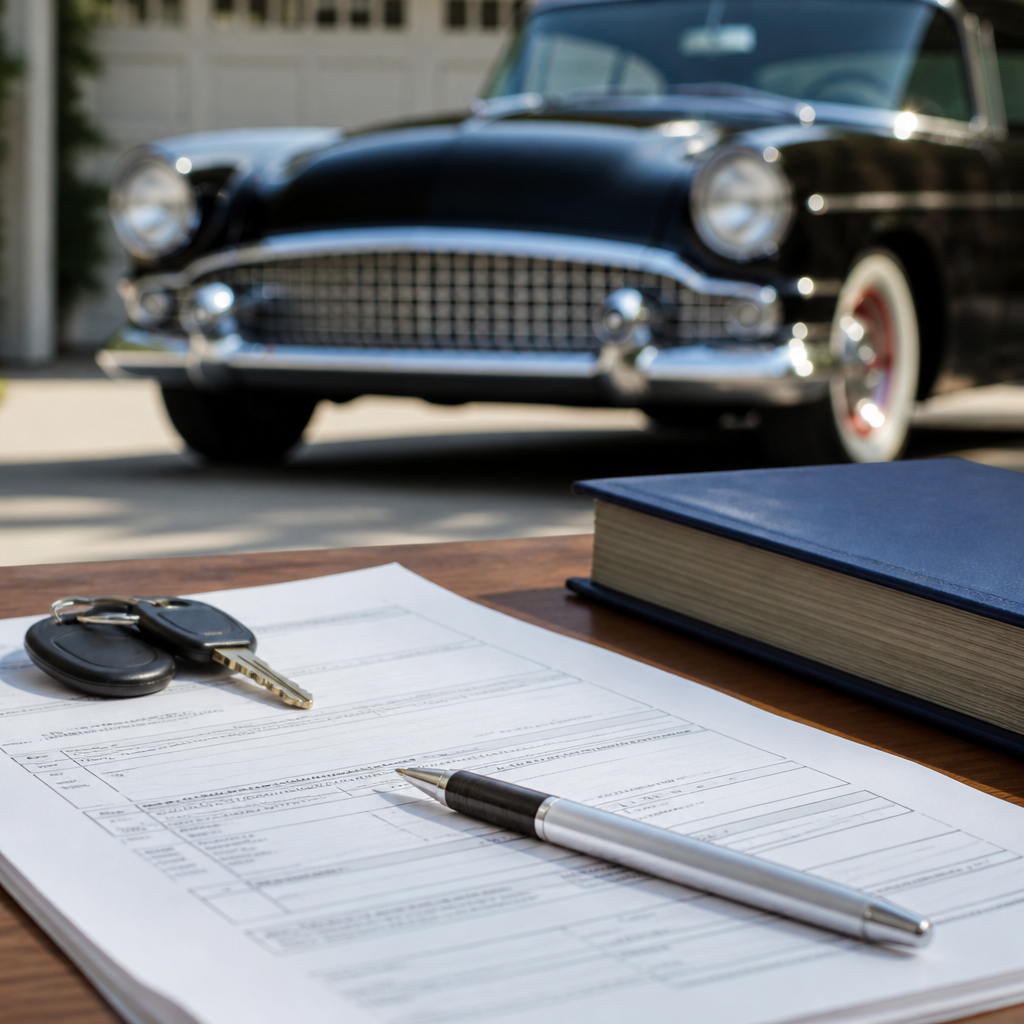
Classic car title requirements determine whether a vintage vehicle can be legally owned, registered, insured, sold, and driven, and they often create more confusion than the mechanical restoration itself. In practical terms, a title is the state-issued document proving ownership, while registration is the permission to operate the car on public roads. For older vehicles, those two records do not always move together. I have worked through title files for unrestored barn finds, inherited family cars, out-of-state purchases, and partially documented project vehicles, and the same lesson applies every time: paperwork decides whether the car is usable and marketable.
That matters because classic cars sit at the intersection of modern motor vehicle law and older recordkeeping systems. Many vehicles built decades ago changed hands repeatedly before states digitized records. Some were stored for years, some were sold on handwritten bills of sale, and some came from states that did not issue titles for older vehicles at all. As a result, owners regularly ask basic but critical questions: Does my classic car need a title? What if the title is lost? Can I register a car with only a bill of sale? How do VIN inspections, bonded titles, estate transfers, and antique registrations work? The answers vary by state, but the legal principles are consistent enough to map clearly.
This hub explains the registration and legal requirements that shape classic car ownership. It covers title status, VIN verification, bill of sale standards, liens, bonded titles, inherited vehicles, interstate transfers, antique and historic plates, insurance-related paperwork, and common compliance mistakes. Use it as the central guide for understanding what documents you need, what problems to spot before purchase, and which issues deserve deeper research with your state motor vehicle agency.
What Counts as a Valid Classic Car Title
A valid classic car title is the ownership document recognized by the state where the vehicle is currently titled or being transferred. For most states, the key data points are the owner name, vehicle identification number, make, model year, title number, and any recorded lien. Older vehicles may have shorter serial numbers instead of the modern 17-character VIN introduced for most vehicles in 1981, so matching the number format to the car’s production era is essential. A 1967 Mustang will not have a 17-digit VIN, and a clerk who expects one may need a manual verification process.
The title must also be properly assigned. That means the seller signs in the designated transfer area, the buyer information is completed according to state rules, and no unauthorized alterations appear. In the files I review, title rejections usually happen for simple reasons: scratched-out mileage boxes, unsigned releases of lien, mismatched names, or a seller who signed as “John” when the title says “John A. Smith Jr.” States treat those discrepancies seriously because title fraud remains a persistent problem in the collector market.
Classic car buyers should confirm whether the title is clean, salvage, rebuilt, junk, or bonded. A clean title indicates no branding affecting ownership history. A salvage title generally means an insurer or owner declared the vehicle a total loss. A rebuilt title may allow later road use after inspection. A junk or parts-only title often means the vehicle cannot legally return to road service. Those brands affect value, financing, insurability, and registration options, so they must be verified before money changes hands.
When a Title Is Not Available
Not every classic car comes with a conventional title. Some states did not issue titles for older vehicles once they reached a certain age, relying instead on registration certificates. Vermont historically registered some older vehicles without issuing titles, and other states have had similar age-based exemptions. In those cases, a prior registration plus a bill of sale may be legally sufficient to establish the ownership chain. The critical point is that “no title” is acceptable only when the issuing state’s rules genuinely allow it. “I lost it years ago” is not the same thing as “the state never issued one.”
If a title is unavailable, the buyer should identify the last titling state, contact that motor vehicle agency, and verify what replacement or transfer records exist. Sometimes the fix is straightforward: the titled owner requests a duplicate title, then completes the sale properly. Sometimes the vehicle has fallen out of the system, requiring a bonded title, court order, or special assigned VIN inspection. Buying first and sorting it out later is risky, especially if the seller is not the named owner on the available paperwork.
A bill of sale alone rarely solves an ownership problem unless state law clearly says it does for that vehicle age and record type. Even then, the bill of sale should include the full legal names and addresses of buyer and seller, sale date, purchase price, year, make, model, VIN or serial number, odometer statement if required, and signatures. Notarization is not always mandatory, but when a state allows optional notarization, I recommend it because it reduces later disputes over authenticity.
Registration Requirements for Classic Cars
Registration rules govern whether the classic car can be legally operated, and they often differ from ownership rules. A person can hold title to a vehicle that is not registered, but driving it on public roads generally requires current registration, plates, taxes or fees, and minimum liability insurance where applicable. For a newly purchased classic, registration typically requires an endorsed title or equivalent ownership document, application forms, proof of identity, proof of insurance, tax payment, and sometimes a VIN inspection.
Many states offer antique, historic, classic, or collector plates. These categories are not interchangeable. Some states define antique status by age, often 20, 25, or 30 years old. Others require that the vehicle be substantially maintained to original specifications. Registration under these categories usually comes with usage limits. Common restrictions include parade use, exhibitions, club activities, maintenance drives, and occasional pleasure driving. Daily commuting may be prohibited. Owners who ignore those limits can face citation issues and insurance claim complications if the policy assumes limited use.
Because this page is a hub for registration and legal requirements, it helps to separate the main pathways owners encounter:
| Situation | Typical Documents Needed | Main Legal Risk |
|---|---|---|
| In-state titled purchase | Signed title, bill of sale, ID, insurance, tax forms | Improper assignment or open title |
| Out-of-state classic purchase | Foreign title or registration, bill of sale, VIN inspection, tax payment | State-to-state rule mismatch |
| No-title older vehicle | Prior registration, bill of sale, ownership affidavit, inspection | Inability to prove chain of ownership |
| Inherited classic car | Death certificate, probate papers, title, transfer forms | Estate authority not documented |
| Salvage or rebuilt project | Branded title, repair receipts, inspection approvals | Registration denial or diminished value |
| Bonded title application | Ownership evidence, surety bond, forms, inspection | Prior owner or lienholder challenge |
VIN Verification, Inspections, and Fraud Prevention
VIN verification is one of the most important protections in classic car registration. For older vehicles, the identifier may appear on a dashboard plate, driver door tag, firewall stamp, frame stamp, engine pad, or manufacturer plate depending on the make and year. States may require a law enforcement officer, DMV inspector, or licensed verifier to confirm that the number on the paperwork matches the number on the vehicle. This is especially common for out-of-state transfers, bonded titles, revived salvage vehicles, and vehicles that have been off the road for years.
Classic cars require extra care because VIN practices were not standardized decades ago. Chevrolet, Ford, Mopar, and European manufacturers each used different locations and numbering logic. On some muscle cars, hidden or derivative VIN stamps are key anti-theft markers. If a visible tag looks disturbed, uses incorrect rivets, or conflicts with factory data plates, that is a serious warning sign. Title washing, tag swapping, and rebody fraud still occur because rare trim levels can be worth dramatically more than ordinary versions. A cloned performance model may look convincing but still fail a legal ownership review.
Before purchase, compare the title VIN to every available vehicle identifier, check whether the body style and engine family fit the year, and run history reports where records exist. Services such as NMVTIS-based providers, CARFAX, and AutoCheck may have limited data on very old cars, but they can still reveal brands, theft records, or later registration events. For high-value vehicles, marque experts, restoration shops, and factory documentation services such as Marti Auto Works or the GM Heritage archive can help confirm identity.
Liens, Bonds, and Ownership Disputes
A lien means a lender or other legal claimant has a recorded financial interest in the vehicle. On a classic car title, an unreleased lien can block transfer even if the loan was paid years ago. I have seen transactions delayed because a defunct bank merger left no obvious contact for the release. Buyers should insist on a title showing lien satisfaction or separate lien release paperwork acceptable to their state. Without that release, the DMV may refuse to issue a new title.
When ordinary proof of ownership is missing, states often offer a bonded title process. A bonded title lets an applicant establish provisional ownership by posting a surety bond for a value set by the state, often one and a half to two times the vehicle’s appraised value. If a prior owner or lienholder later proves a better claim, the bond protects that party financially. After a statutory period, commonly three to five years, the bond requirement may expire and a standard title may be issued if no valid challenge appears.
Bonded titles are useful, but they are not shortcuts. States usually require evidence showing how the applicant acquired the car, why standard title transfer is unavailable, and that the vehicle is not stolen. That may include bills of sale, notarized statements, certified letters to prior owners, inspection reports, and appraisals. If the seller refuses to help cure title defects before sale, assume the burden will fall on you.
Special Cases: Inheritance, Barn Finds, and Interstate Transfers
Inherited classic cars often involve probate law as much as DMV procedure. If the deceased owner left a will, the executor may need letters testamentary or similar court authority to transfer the title. If there was no will, an heirship affidavit or small-estate procedure may apply depending on state law and asset value. The title cannot always be signed by a family member simply because the car was “Dad’s.” The state wants proof that the signer has legal authority over the estate.
Barn finds create a different problem: possession without documentation. Finding a car on purchased property does not automatically create title rights. The vehicle may still belong to the prior landowner, an estate, or a recorded owner. Some states allow abandoned vehicle procedures, but those rules usually require notice to owners and lienholders, waiting periods, and specific storage or towing conditions. Informal assumptions can turn a dream project into a seized asset.
Interstate transfers are common in the collector market because cars move through auctions, online platforms, dealers, and private sales nationwide. The challenge is that one state’s acceptable proof may not satisfy another state’s title office. A transferable registration from one jurisdiction may be valid there but unfamiliar elsewhere. Before purchase, confirm with your home state exactly what it will accept from the seller’s state. This one call prevents many expensive surprises.
Insurance, Taxes, and Ongoing Compliance
Classic car title and registration requirements do not end once the document arrives in the mail. Insurance carriers that specialize in collector vehicles, including Hagerty, Grundy, and American Collectors, often require proof of ownership, secure storage, another daily-use vehicle, and photos documenting condition. If the title brand, registration class, or stated usage does not match the policy application, coverage disputes can follow after a claim. Owners should align the legal file and insurance file from the start.
Taxes also matter. Most states assess sales or use tax at registration based on purchase price, book value, or declared value subject to review. Understating the sale price on a bill of sale may seem tempting, but it can trigger penalties and fraud concerns. For imported classics, federal customs entry documents, EPA and DOT exemptions based on vehicle age, and state tax rules add another layer. Vehicles 25 years old or older are generally exempt from Federal Motor Vehicle Safety Standards import compliance, but state titling still applies after entry.
Good recordkeeping protects long-term value. Keep copies of the title, registration cards, bills of sale, inspection forms, restoration receipts, lien releases, and correspondence with state agencies. When selling later, a clean document trail shortens due diligence and supports price. If you own a classic car now, review your paperwork before the next registration cycle and fix weak spots while the solution is still easy.
Frequently Asked Questions
What is the difference between a classic car title and registration, and why does it matter?
A classic car title and a registration serve two very different legal purposes, and understanding that distinction is essential when buying, restoring, insuring, or selling an older vehicle. The title is the state-issued ownership document. It identifies the legal owner and usually includes key information such as the vehicle identification number, make, model, year, and any recorded liens. Registration, by contrast, is the state’s authorization to operate that vehicle on public roads. A car can have a valid title but no current registration, which is common with vehicles that have been stored for years, pulled from fields, inherited, or purchased as unfinished projects.
This difference matters because many classic car transactions involve vehicles that have not been driven in a long time. A seller may say, “It was last on the road in 1989,” which often means the registration expired decades ago. That alone is not necessarily a problem. The more important issue is whether the ownership trail is legally clear. If the title is missing, signed incorrectly, still in a deceased owner’s name, or shows an unreleased lien, the buyer may face significant delays trying to put the car into their own name.
It also matters for insurance and resale. Most insurers want proof that you legally own the vehicle before issuing certain types of coverage, especially agreed-value policies for collector cars. Future buyers will also want assurance that the paperwork is clean. In short, registration affects whether you can drive the car now, while title affects whether you truly own it and can legally transfer it later. With classic cars, the title is usually the more important document to verify first.
Do all classic cars need a title, or are there exceptions for older vehicles?
Not every classic car is treated the same way in every state, and that is where much of the confusion begins. Title laws are state-specific, and many states make exceptions for older vehicles based on age. For example, some states do not issue titles for vehicles older than a certain model year or once a vehicle reaches a certain age threshold, such as 20, 25, or 35 years old. In those states, ownership may instead be transferred using a registration certificate, a bill of sale, or another state-approved ownership document.
That does not mean paperwork becomes less important. In fact, it often becomes more important because the buyer must prove ownership through alternative records. If your state does not title older vehicles, the department of motor vehicles may require a prior registration, a notarized bill of sale, a VIN verification, an affidavit of ownership, or tax documentation before allowing the vehicle to be registered. If you are buying a classic car from another state, the rules become even more complicated because the receiving state may require different proof than the selling state normally issues.
The safest approach is to check the exact title policy in both the seller’s state and your own state before money changes hands. A seller might honestly say, “This state doesn’t title cars this old,” and that may be true. But you still need to know what your state will accept when you apply for ownership and registration. For interstate purchases, confirm whether your motor vehicle agency will accept an out-of-state registration, whether a bill of sale must include specific language, and whether a VIN inspection will be required. Age-based exceptions exist, but they are not a free pass around ownership documentation. They simply change what acceptable proof looks like.
What should I do if a classic car has no title or the title is lost?
A missing title is one of the most common issues in the classic car world, especially with barn finds, abandoned projects, estate vehicles, and family cars that have been sitting for decades. The right solution depends on why the title is missing and who legally owns the vehicle. If the titled owner is available, the easiest path is usually to have that person apply for a duplicate title through their state motor vehicle agency and then properly sign it over. If the seller claims the title was lost but is still the legal owner of record, ask them to resolve that before the sale whenever possible.
If the titled owner has died, ownership may need to pass through probate, a small-estate process, or a state-specific inheritance procedure before the vehicle can be transferred legally. In inherited classic car situations, buyers and heirs often assume a family relationship alone is enough to establish ownership, but motor vehicle agencies typically require legal documentation such as letters testamentary, an executor appointment, a transfer affidavit, or a death certificate along with estate paperwork.
When no title exists and the last titled owner cannot be reached, states may offer alternative procedures such as bonded titles, court-ordered titles, abandoned vehicle processes, or ownership affidavits. A bonded title generally involves purchasing a surety bond for a set amount based on the vehicle’s value, then applying through the state to establish a provisional ownership record. Other states may require a law enforcement inspection, certified mail notices to prior owners and lienholders, or a waiting period. Some states are stricter than others, and some routes that worked years ago are no longer accepted.
The key is not to rely on verbal assurances. “I can write you a bill of sale” does not automatically solve a title problem. A bill of sale may support a transfer, but it does not override state ownership law. Before buying a no-title classic car, contact your DMV or title agency and ask exactly what documents are needed for that vehicle’s year, situation, and prior state history. If the process sounds uncertain, expensive, or heavily dependent on unavailable past owners, treat that as a real risk and price the vehicle accordingly.
What paperwork should I check before buying a classic car?
Before buying a classic car, review the ownership documents as carefully as you inspect the body, frame, and drivetrain. Start with the title, if one exists. Confirm that the seller’s name matches the name on the title, that the VIN on the title matches the VIN on the vehicle, and that the title is properly assignable. Look for signs of alteration, erasures, unsigned sections, or corrections that could cause rejection when you submit it. If there is a lien listed, make sure there is an official lien release if the lien has been paid off.
Next, confirm how the vehicle is identified. Older vehicles sometimes have VINs or serial numbers located in different places than modern cars, and early classics may use manufacturer serial plates, frame stampings, door tags, or firewall plates. These numbers need to be consistent with the ownership paperwork. If the car has had major component swaps, body changes, or reconstruction work, ask whether the state classifies it as an original antique, a reconstructed vehicle, or a specially constructed vehicle, because that can change titling requirements.
You should also ask for supporting records, especially if the car does not come with a conventional title. Useful documents include prior registrations, old insurance cards, historical bills of sale, probate paperwork, restoration receipts, tax receipts, and any correspondence with the DMV. These records can help establish an ownership chain and may become important if the state requests additional proof. If the seller says the vehicle came from an estate, a storage unit, or a decades-old private collection, ask specifically how they obtained legal ownership and whether that transfer was completed through the state.
Finally, do not overlook practical transfer details. Make sure the bill of sale includes the purchase price, date, vehicle year, make, model, VIN, and the full names and signatures of both parties. Some states require notarization. If you are buying from out of state, verify emissions exemptions, tax obligations, VIN inspection rules, and whether your state requires the title to be submitted within a certain number of days. A beautiful classic can quickly become a paperwork nightmare if the legal side is ignored at the time of purchase.
Can I register, insure, and drive a classic car right away after getting the title?
Not always. Receiving a valid title is a major step, but it does not automatically mean the car is ready for the road. Once ownership is established, registration depends on your state’s operating requirements. Some states require a VIN inspection, proof of insurance, payment of taxes and fees, and a safety inspection before issuing plates. Others may offer special antique, historic, or collector registration categories with reduced fees and different use restrictions. Those specialty plates can be beneficial, but they may limit how often or for what purpose the vehicle can be driven, such as parades, exhibitions, club events, or occasional pleasure use.
Insurance is another separate layer. Standard auto insurers do not always handle vintage vehicles the same way collector car insurers do. If the vehicle is restored or has rising market value, many owners prefer agreed-value or stated-value collector coverage rather than basic actual cash value coverage. To qualify, the insurer may ask for photos, storage details, another daily-use vehicle in the household, and confirmation that the car is legally titled in your name. Some policies also expect limited annual mileage or secure indoor storage.
Roadworthiness matters too. A titled classic car that has sat for years may still need brake work, fuel system cleaning, tires, wiring repairs, lights, glass, or other safety corrections before it can pass inspection or be safely driven. In some cases, a car may be titled and insured while still off-road during restoration, but not yet registered for active highway use. That is common and often