Daily driving a vintage vehicle can be deeply rewarding, but it only works when reliability becomes the first priority rather than originality, nostalgia, or weekend-show perfection. In the classic car world, “daily driving” means using an older vehicle for regular commuting, errands, school runs, and highway trips in modern traffic, weather, and parking conditions. “Reliability” does not mean the car never needs attention; it means the car starts consistently, runs at proper temperature, stops safely, charges correctly, and can complete ordinary trips without avoidable drama. After helping owners sort out recurring failures in carbureted V8 sedans, air-cooled imports, and seventies trucks, I have learned that dependable classics are rarely accidents. They are the result of systematic inspection, sensible upgrades, disciplined maintenance, and an honest understanding of how old parts behave under daily use.
This matters because a classic car used occasionally can hide weaknesses that a daily driver immediately exposes. A weak charging system may survive Sunday cruises but fail in stop-and-go traffic with headlights, wipers, blower motor, and brake lights operating together. A cooling system that looks acceptable at idle can overheat during long climbs or summer congestion. Hardened fuel hoses, brittle wiring insulation, worn steering components, and decades-old rubber bushings are not minor inconveniences when the car is expected to perform every morning. Daily driving a classic also affects ownership costs, insurance choices, storage needs, parts sourcing, and backup transportation plans. Get the foundation right, however, and an older car can be practical, enjoyable, and mechanically transparent in ways many newer vehicles are not.
Start with a baseline inspection before trusting any classic
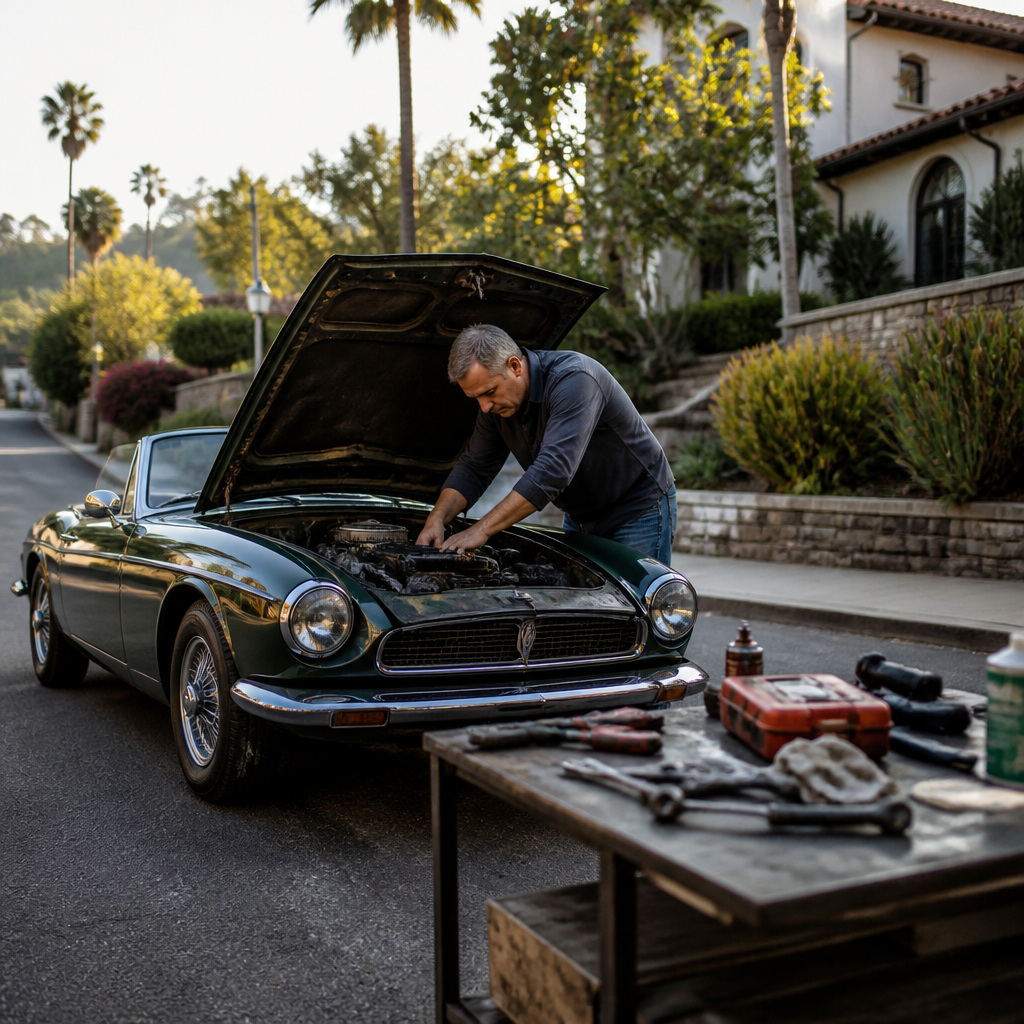
The first reliability rule is simple: never assume a running classic is a road-ready classic. Before any serious commuting, establish a complete mechanical baseline. I treat every newly acquired older vehicle as overdue for service unless detailed records prove otherwise. That means compression testing the engine, checking hot oil pressure where applicable, verifying charging voltage with a multimeter, inspecting all belts and hoses, examining brake line condition, measuring rotor or drum wear, and looking for leaks at the rear main seal, transmission pan, differential cover, wheel cylinders, and power steering system. On older cars, visual inspection alone is not enough; age degrades materials internally long before failure becomes obvious from the outside.
Rubber is usually the first major reliability enemy. Replace fuel hoses, vacuum lines, coolant hoses, accessory belts, and often engine mounts if their age is unknown. Modern fuel blends containing ethanol are especially hard on older rubber compounds and can accelerate cracking, swelling, and seepage. Brake systems deserve the same skepticism. Master cylinders, wheel cylinders, flex hoses, and caliper seals may function during a short test drive yet fail under repeated heat cycles. Steering and suspension parts must also be assessed as systems, not single components. Tie-rod ends, idler arms, center links, ball joints, control arm bushings, leaf spring eye bushings, and shocks all influence how predictable the car feels at highway speed. A daily-driven classic should track straight, stop evenly, and remain stable in emergency maneuvers, because modern traffic leaves little room for vintage looseness.
Cooling, lubrication, and fuel delivery determine whether the car gets home
Most stranded classics fail in three areas: overheating, poor lubrication management, or fuel delivery problems. Cooling system reliability starts with radiator condition, correct cap pressure, a tested thermostat, sound fan clutch or electric fan control, and clean water passages. Many owners chase heat issues with oversized radiators before confirming ignition timing, air-fuel mixture, and lower-hose collapse under load. I have fixed more chronic overheating complaints with timing correction, proper shrouding, and fresh hoses than with expensive aluminum radiators alone. If the engine runs hotter than designed, find the cause instead of masking it.
Lubrication matters just as much. Older flat-tappet cam engines may require oils with suitable zinc and phosphorus levels, particularly during break-in or when spring pressures are elevated. The correct oil is application-specific, not brand-myth specific. Watch for pressure drops at idle when fully warmed, inspect PCV function, and fix external leaks before they contaminate belts, mounts, or clutch surfaces. Transmission and differential fluids should also be serviced, especially if the car sat for years. Manual gearboxes often improve dramatically with fresh fluid of the correct viscosity and friction characteristics, while neglected automatics reveal delayed shifts, slipping, or debris in the pan.
Fuel delivery is where many daily-driver classics lose trust. Carburetors are not inherently unreliable, but they are unforgiving of dirty fuel, incorrect float level, vacuum leaks, weak ignition, or heat soak. Mechanical fuel pumps can weaken gradually, making diagnosis tricky. Fuel tanks may contain rust or varnish even after a car appears to run well. For a dependable commuter, clean or replace the tank if contamination exists, install proper filtration, route fuel lines away from heat, verify pump output, and rebuild the carburetor if idle quality, cold start behavior, or transition circuits are inconsistent. On fuel-injected classics, aging injectors, cracked intake boots, coolant temp sensors, and failing relays become the usual culprits.
Electrical reliability comes from diagnosis, grounds, and sensible upgrades
Electrical faults create the most frustrating kind of unreliability because they often seem random. In practice, most older-car electrical problems trace to voltage drop, poor grounds, corroded connectors, worn switches, undersized charging capacity, or amateur modifications. Start by testing battery condition, cranking voltage, alternator output, and parasitic draw. Then inspect the grounds between battery and engine, engine and body, and body and frame. I routinely add supplemental grounds on older cars because paint, corrosion, and loose fasteners raise resistance over time. Stable grounding improves starting, lighting brightness, gauge behavior, and charging consistency immediately.
Fuse panels and bulkhead connectors deserve special attention, particularly on sixties through eighties vehicles. Heat buildup, oxidation, and previous repairs can create intermittent no-start conditions or charging failures. If the harness insulation is brittle or hacked by old stereo installs and alarm systems, a partial or full rewire may be the most reliable long-term decision. For owners who want to drive in all weather, modern blade-fuse conversion kits and higher-output alternators are worthwhile when installed correctly. The key is to upgrade load capacity without introducing messy wiring or bypassing circuit protection.
| System | Common daily-driver failure | Best preventive action |
|---|---|---|
| Charging | Dim lights, dead battery, weak cranking | Test alternator output, replace aged cables, improve grounds |
| Ignition | Hard starts, misfire, stalling when hot | Install quality cap, rotor, wires, and verify coil health |
| Fuel | Vapor lock, clogged jets, inconsistent idle | Refresh hoses, filter fuel properly, rebuild carb or service injectors |
| Cooling | Overheating in traffic | Pressure-test system, confirm fan operation, correct timing and mixture |
| Brakes | Pulling, fade, fluid leaks | Replace hoses, inspect cylinders and calipers, flush fluid regularly |
Ignition upgrades are often the highest-value improvement for a daily-driven classic. Replacing worn breaker points with a reputable electronic conversion can improve starting, dwell stability, and maintenance intervals, although a properly set points system can still be dependable. Similarly, headlight relays reduce switch load and provide brighter lighting without resorting to unsafe wiring tricks. If your car originally used a generator, a properly engineered alternator conversion can materially improve real-world reliability when the vehicle is expected to idle in traffic with accessories running. The best electrical upgrades solve known weaknesses while preserving serviceability.
Brakes, tires, steering, and weather sealing make daily use realistic
An engine that starts every day is only half of reliability. Daily driving a classic also means trusting it in rain, freeway traffic, panic stops, and rough pavement. Brake reliability starts with fresh fluid. Brake fluid absorbs moisture over time, lowering boiling point and promoting corrosion inside hard-to-see components. A complete flush is cheap insurance. If the car has four-wheel drums, proper adjustment is essential; many owners mistake poorly adjusted drums for inherently weak brakes. Front disc conversions can be valuable on some platforms, but stock systems in correct condition often perform better than expected. The real question is whether the braking system matches the vehicle’s use, tire grip, and traffic conditions.
Tires are one of the most overlooked reliability and safety items on classics. Tread depth matters less than age, construction quality, and load rating. A tire that looks usable may be a decade old and prone to failure. Check the DOT date code and replace aged tires regardless of appearance. Bias-ply tires may suit authenticity, but radial tires usually improve tracking, braking, and wet-weather confidence dramatically for cars driven regularly. Alignment should follow the suspension design, and in some cars a subtle increase in caster improves straight-line stability with modern radials.
Weather sealing and visibility also determine whether a classic is practical every day. Wiper motors, washer pumps, defroster controls, heater cores, door seals, trunk seals, and windshield gaskets all matter. Water leaks cause far more than damp carpets. They corrode floorpans, fuse blocks, connectors, and seat mounts. Replace hardened seals, clear cowl drains, and make sure the heater and defroster work as intended. If you plan to use the car year-round, reliable cabin ventilation is not a luxury; it is part of safe operation.
Maintenance routines, parts strategy, and driving habits keep classics dependable
The owners who successfully daily drive classics treat maintenance as a schedule, not a reaction. Build a service plan around mileage, season, and component age. Check fluids weekly at first, then monthly once the car proves stable. Retorque wheels after brake or suspension work, grease chassis fittings where applicable, inspect belts and hoses at every oil change, and track fuel economy because sudden changes often reveal carburetion, ignition, or dragging-brake issues early. Keep a logbook with dates, part numbers, fluid types, and test results. That record prevents guesswork and makes future diagnosis much faster.
Parts strategy is just as important. For a true daily driver, carry a small spares kit matched to the car’s known weak points: belts, upper and lower radiator hoses if compact enough, ignition module or points and condenser, spare coil wire, fuses, bulbs, fuel filter, and basic hand tools. Join owner forums and marque-specific clubs to identify the suppliers that consistently deliver correct parts. Cheap reproduction components often create more downtime than the worn original parts they replace. I would rather install a rebuilt original starter from a respected specialist than an unknown bargain unit with inconsistent tolerances.
Driving habits influence reliability more than many owners admit. Warm the engine briefly, but do not idle endlessly. Watch gauges, listen for changes, and address small noises before they become failures. Avoid lugging older engines, especially with tall gearing, and remember that many classics have different heat-management needs than modern cars. If the vehicle uses a carburetor, learn proper hot-start and cold-start technique instead of pumping the pedal blindly. Mechanical sympathy is not superstition; it is practical preservation.
Finally, be realistic. The best daily-driven classic is not necessarily the rarest or most original one. It is the car with strong parts support, a sound body, sorted wiring, and systems you understand well enough to diagnose confidently. If you want to go deeper, build out your classic car ownership plan with focused guides on winter storage, insurance for vintage vehicles, carburetor tuning, classic car safety upgrades, and finding reliable reproduction parts. Daily driving a classic is absolutely possible when reliability is engineered into the experience. Start with a full inspection, modernize only where it solves real weaknesses, maintain the car on a schedule, and drive it attentively. Do that, and your classic can become transportation you trust instead of a hobby that leaves you stranded.
Frequently Asked Questions
What makes a classic car reliable enough to use as a daily driver?
A reliable daily-driver classic is not necessarily the most original or the most expensive example. It is the one that has been prepared to handle repeated, real-world use in modern traffic and changing weather. That starts with mechanical condition, not cosmetic appearance. A vintage car can have beautiful paint and a perfect interior, but if the cooling system is marginal, the ignition is inconsistent, the fuel delivery is dirty, or the brakes are outdated and poorly maintained, it will quickly become stressful to live with every day.
For daily use, reliability means the car starts consistently hot or cold, idles predictably, accelerates without hesitation, maintains proper temperature in traffic, stops straight, charges the battery correctly, and can tolerate longer drives without overheating or developing drivability issues. The most dependable classics are usually the ones that have had the basics sorted thoroughly: fresh hoses and belts, a clean fuel system, a solid charging system, properly adjusted ignition timing, leak-free vacuum lines, healthy compression, and safe steering and suspension components. These areas matter far more than show-quality details.
It also helps to think in terms of systems rather than individual parts. If the radiator is new but the fan clutch is weak, the thermostat is questionable, and the water pump is old, the cooling system still is not truly dependable. The same logic applies to brakes, ignition, charging, and fuel delivery. Daily-driver reliability comes from making the car predictable across all of those systems at once. In most cases, the best approach is to prioritize function, replace age-sensitive components before they fail, and accept smart upgrades that improve safety and consistency without changing the character of the car.
Which maintenance tasks should be prioritized before driving a vintage car every day?
Before trusting a classic car with commuting, errands, and highway use, start with the maintenance items that affect safety, heat management, starting, and fuel delivery. The brake system should be at the top of the list. That means inspecting pads or shoes, rotors or drums, rubber brake hoses, steel lines, wheel cylinders or calipers, the master cylinder, and the condition of the brake fluid. Many older cars still have original-style components that may function during occasional hobby use but become unreliable when exposed to daily stop-and-go driving. If there is any doubt, rebuild or replace the system properly.
Next, focus on the cooling system. Overheating is one of the most common reasons a classic daily driver becomes unusable. Inspect the radiator, water pump, thermostat, fan, shroud, hoses, heater core condition, and coolant quality. Make sure the car can idle in traffic without temperature creep and maintain stable temperature at highway speeds. Then move to the ignition and charging systems. Old plugs, wires, points, condensers, weak coils, poor grounds, or a tired alternator can create intermittent problems that are frustrating to diagnose and even harder to live with when the car is transportation rather than a weekend toy.
Fuel system service is equally important, especially with modern ethanol-blended gasoline. Old rubber fuel lines, varnished carburetors, rusty tanks, clogged filters, and failing mechanical fuel pumps can all lead to hard starts, stalling, or poor hot-weather performance. Beyond that, inspect the tires for age as well as tread, check wheel bearings, evaluate the suspension and steering for excessive play, and make sure every light, wiper, and weather seal is functioning properly. Daily driving exposes a car to rain, darkness, traffic, and emergency situations. The classics that hold up best are the ones whose owners address the unglamorous maintenance first and do it comprehensively.
Should I keep a classic car completely original, or are reliability upgrades worth it for daily driving?
If the goal is true daily-driver dependability, thoughtful reliability upgrades are usually worth it. Absolute originality is often ideal for shows, judging, or collector value, but daily use places different demands on an older vehicle. In modern conditions, improved ignition, better cooling, upgraded lighting, safer tires, and stronger charging capacity can make a classic substantially easier and safer to live with. The key is to choose upgrades that solve known weak points rather than modifying the car randomly.
For many owners, electronic ignition is one of the most practical upgrades because it reduces the maintenance and inconsistency associated with points-based systems. A high-quality aluminum radiator, properly matched fan setup, or upgraded fan clutch can dramatically improve summer drivability. Modern radial tires can transform braking feel, road holding, and wet-weather behavior compared with old bias-ply designs. Improved headlamps, relays for lighting circuits, and a higher-output alternator can also make a big difference when driving at night or in poor weather. If the car has a single-circuit brake system, converting to a dual-circuit master cylinder is often a wise safety improvement.
That said, upgrades only help when they are well chosen and correctly installed. Poor aftermarket parts can create more trouble than they solve. It is generally better to use proven components, avoid unnecessary complexity, and keep changes reversible when possible. The best daily-driver builds respect the car’s original character while quietly improving the systems that most affect reliability and safety. In other words, preserve the spirit of the car, but do not let nostalgia prevent you from making it dependable enough to use with confidence.
How can I prevent breakdowns and make a classic car more dependable in modern traffic and weather?
The best way to prevent breakdowns is to be proactive instead of reactive. Classic cars usually give warning signs before they fail completely, but those signs are easy to ignore when the car is only used occasionally. In a daily driver, small issues become major problems quickly. Watch for hard starts, temperature changes, fluid seepage, charging fluctuations, new noises, fuel smells, uneven braking, dim lights, or changes in idle quality. Addressing these symptoms early is often the difference between a minor repair in your garage and a roadside breakdown during a commute.
Regular inspection routines are extremely effective. Check fluid levels often, monitor tire pressure, look underneath the car for fresh leaks, and pay attention to belt condition, hose softness, battery terminal corrosion, and wiring issues. Keep the engine bay clean enough that new problems are visible. If the car is carbureted, seasonal tuning may be necessary to keep cold starts and hot-weather drivability under control. If it uses an older charging or cooling system design, verify that it can handle idling with lights, wipers, and accessories running. Modern traffic places much heavier low-speed demands on older vehicles than they were often designed for.
It is also smart to carry a few backup items in the car. A small tool kit, spare belts, basic hand tools, fuses, bulbs, fuel hose, clamps, fluids, and a charged phone can turn a potential tow into a quick fix. Membership in a roadside assistance program is wise as well. Just as important, do not let the car sit neglected between drives. Classics tend to be more dependable when they are exercised regularly and maintained on schedule. A daily-driven vintage car thrives on attention, routine, and preventive care, not on the hope that yesterday’s good behavior guarantees tomorrow’s reliability.
What are the most common mistakes people make when trying to daily drive a classic car?
One of the biggest mistakes is assuming that if the car runs, it is ready for everyday use. Many classics can feel fine on short weekend drives but reveal major weaknesses once they are exposed to commuting, long idling periods, bad weather, and repeated heat cycles. Owners often underestimate how much more demanding daily driving is than occasional hobby use. A car that starts on sunny Saturdays may still have marginal brakes, an aging fuel system, weak charging output, poor cooling reserve, or unsafe old tires.
Another common mistake is prioritizing originality or appearance over mechanical dependability. It is easy to spend money on paint, trim, upholstery, or period-correct details while postponing less visible work like replacing brake hoses, servicing wheel bearings, rebuilding the carburetor, renewing suspension bushings, or upgrading wiring connections. Those hidden systems are what determine whether the car can be trusted on a Monday morning. People also get into trouble by replacing isolated parts without diagnosing the whole system. For example, swapping the thermostat will not solve chronic overheating if the radiator is clogged and ignition timing is off.
A final major mistake is neglecting consistency. Classic cars do not respond well to deferred maintenance, low-quality replacement parts, or sporadic use. If you want one to function as transportation, you need a routine for inspections, fluid changes, adjustments, and follow-up repairs. It also helps to be realistic about the car’s limits. Not every vintage vehicle is a great candidate for daily use in every climate or traffic environment. Choosing the right car, sorting it thoroughly, and accepting sensible upgrades will always produce better results than forcing a fragile, neglected, or overly original example into a job it is not prepared to do.