Starting a classic car project without the right tools is the fastest way to turn enthusiasm into delays, damaged parts, and avoidable expense. A beginner tool kit for classic car projects is not just a pile of wrenches; it is a carefully chosen set of hand tools, lifting gear, measuring equipment, safety supplies, and shop essentials that let you inspect, disassemble, repair, and reassemble an older vehicle correctly. In restoration and maintenance work, the tool matters because classic cars use aging hardware, brittle trim, obsolete fastener sizes, and materials that punish rushed handling. I have learned this firsthand on everything from small block Chevrolet coupes to British roadsters: the right puller, the right socket depth, or the right torque wrench often determines whether a weekend job stays enjoyable or turns into a search for replacement parts.
Classic car tools and equipment also differ from what many people need for late model vehicles. Older cars regularly mix SAE and metric fasteners because of prior repairs, use carburetors instead of electronic throttle bodies, rely on breaker point ignition or early HEI systems, and hide rust in every seam, floor pan, and brake line clip. That means beginners need a toolkit that supports diagnosis as much as disassembly. You need to measure voltage accurately, identify worn threads, free seized hardware without snapping studs, and lift a vehicle safely enough to inspect underbody corrosion. This hub article covers the essential tools & equipment for entry level restoration and maintenance, explains what each category does, and shows how to build a kit in a sensible order so you can tackle common jobs with confidence.
Core hand tools every beginner needs
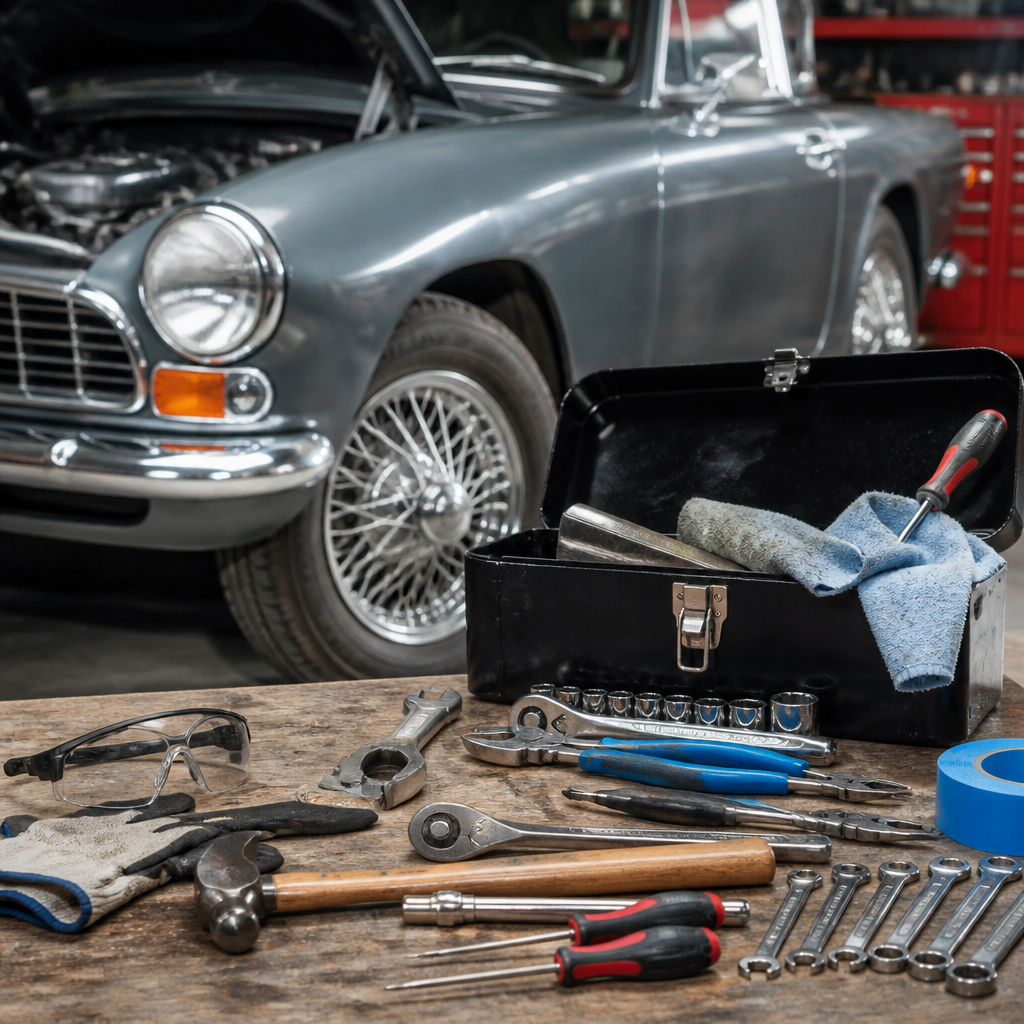
The foundation of any beginner tool kit for classic car projects is a complete, durable hand tool set. Start with combination wrenches in both SAE and metric sizes, preferably from 1/4 inch through 1 inch and 6 mm through 19 mm. Pair those with 1/4 inch, 3/8 inch, and 1/2 inch drive ratchets, shallow and deep sockets, universal joints, and extensions. Six point sockets are especially valuable on classic cars because they grip older fasteners more securely than twelve point sockets and reduce rounding on rusty bolt heads. Add flat blade and Phillips screwdrivers in multiple lengths, nut drivers, locking pliers, needle nose pliers, slip joint pliers, diagonal cutters, channel lock pliers, a dead blow hammer, a ball peen hammer, pry bars, punches, and chisels.
Quality matters more than brand prestige, but poor fit and weak metallurgy cost time. On restoration jobs, I reach for flank drive style sockets, a flex head ratchet, and a set of impact rated adapters constantly because space is tight around steering boxes, exhaust manifolds, and suspension mounts. Stubby wrenches help under dashboards. Long box end wrenches help on fuel pump bolts and transmission cooler fittings. A magnetic pickup tool and telescoping inspection mirror save enormous frustration when washers disappear behind subframes or inside engine bays. Labeling and organizing all of this in drawer trays or portable cases matters too. When beginners lose small tools, they work slower and improvise more, which usually leads to scratched paint, stripped hardware, or incomplete reassembly.
Lifting, support, and shop safety equipment
If you buy only one category carefully, make it lifting and safety equipment. Classic cars are heavy, often rust weakened, and frequently supported at nonobvious jacking points. A hydraulic floor jack rated for at least 3 tons gives enough capacity for most domestic classics and many trucks. Use low profile designs for lowered cars and long reach designs for vehicles with deep front overhangs. Never rely on the jack alone. Use at least four high quality jack stands with wide bases and positive locking mechanisms. Wheel chocks, a creeper, and a thick kneeling pad make undercar access safer and less tiring. Good lighting is another safety tool; a rechargeable LED underhood light and handheld inspection lamp reveal fuel leaks, cracked bushings, and missing cotter pins that overhead shop bulbs often miss.
Personal protective equipment belongs in the same starter kit. Safety glasses, face shields for grinding, cut resistant gloves, nitrile gloves, hearing protection, and a proper respirator are essential around brake dust, paint, solvents, and rust scale. Keep a Class B:C or ABC fire extinguisher within reach, especially if you are working around carburetors, fuel tanks, or battery cables. Ventilation matters in home garages, because older undercoating, fuel residue, and cleaners release fumes quickly. I also recommend a dedicated spill kit with absorbent pads, oil dry, and drain pans. Beginners often underestimate how often a simple valve cover change becomes an oil management problem. Safe work habits preserve the project and the person working on it, and they are part of restoration and maintenance, not an optional extra.
Measuring, diagnostic, and tuning tools
Restoration is easier when you can verify condition instead of guessing. A digital multimeter is the first diagnostic tool to buy because classic car electrical issues are common and usually trace back to poor grounds, weak charging output, corroded connectors, or voltage drop across old switches. Choose a meter with continuity, resistance, and DC voltage functions at minimum. Add a 12 volt test light for quick circuit checks, a battery load tester or modern smart charger, and a timing light if you plan to work on distributor based ignition systems. For engines, a compression tester and vacuum gauge provide valuable baseline health data. A vacuum reading can reveal late ignition timing, intake leaks, or valve train issues in a way that is simple, fast, and surprisingly accurate.
Mechanical measuring tools matter just as much. Buy a 3/8 inch torque wrench for lower torque fasteners and a 1/2 inch torque wrench for lug nuts, suspension hardware, and cylinder head work within their rated ranges. Add feeler gauges for spark plugs, points, and valve lash, a dial caliper for brake and hardware measurements, thread pitch gauges, and a straightedge. On brake work, a micrometer can confirm rotor and drum thickness against service limits. On engine assembly, plastigage helps beginners verify bearing clearance before final torque. Carburetor synchronization gauges, dwell meters, and remote starter switches become useful for specific platforms. The point is not to own every specialty instrument on day one. The point is to build a diagnostic tool kit that answers common questions clearly before you remove parts that were not actually causing the problem.
Cleaning, rust removal, and fluid service essentials
Every classic car project creates dirt, corrosion, and old fluids, so cleaning tools belong in a serious beginner setup. Start with drain pans, funnels, measuring containers, oil filter pliers, grease guns, and fluid transfer pumps. Add wire brushes in handheld and drill mounted forms, nylon brushes for trim, gasket scrapers, plastic razor blades, and picks for old seals and O rings. Penetrating oil is indispensable on rusty cars; products like Kroil or PB Blaster can save captive nuts and manifold studs if applied patiently over several heat cycles. A bench vise transforms many awkward tasks, from holding brake backing plates during cleaning to stabilizing stubborn fasteners while you chase threads with taps and dies.
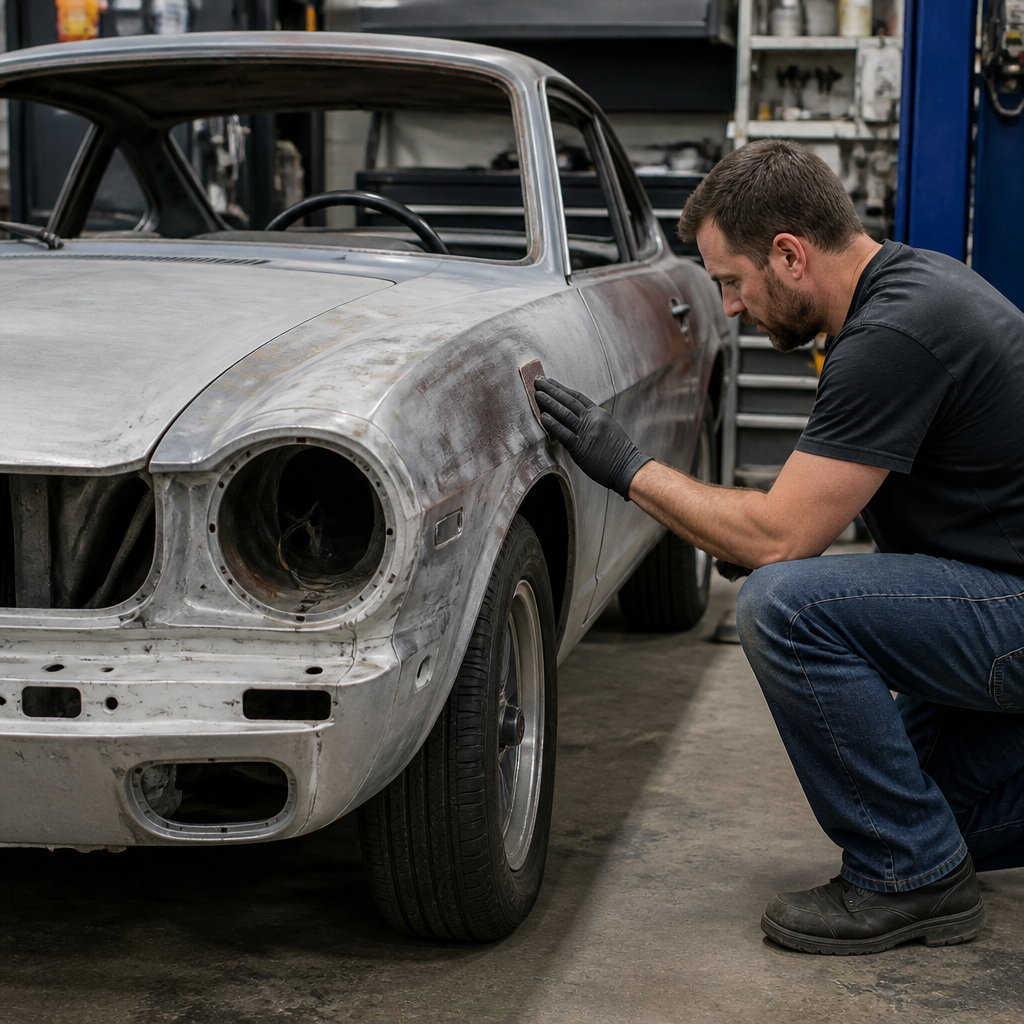
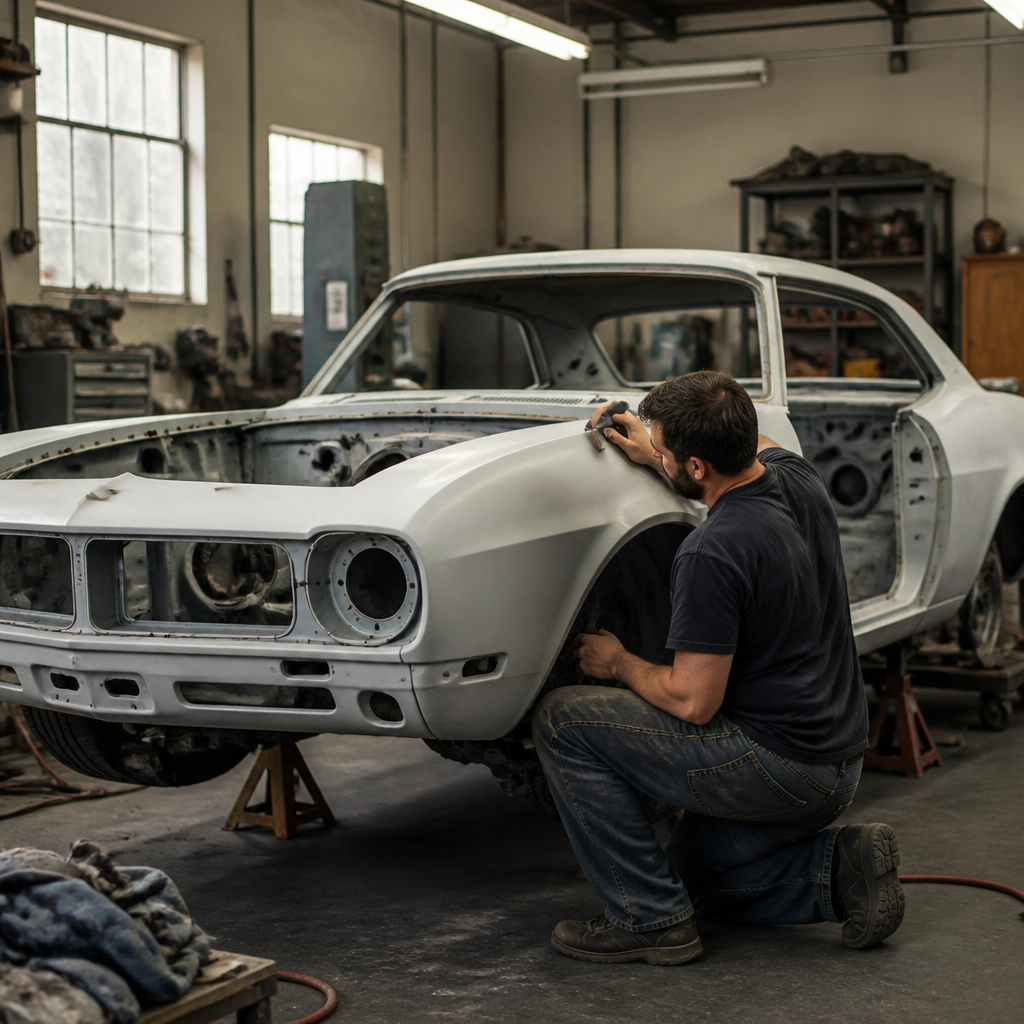
Rust removal deserves special mention because it shapes nearly every restoration and maintenance decision. Surface rust on brackets and hardware can often be handled with abrasive pads, phosphoric acid converters, and media blasting, but structural rust in frames, rocker panels, floor braces, or spring perches demands inspection and often welding. Beginners should own a wire wheel setup, scrapers, seam cleaning brushes, and a bright inspection light before they buy cosmetic products. If you cannot expose clean metal, you cannot judge the true condition of the car. For fluid service, include brake bleeder bottles, a vacuum bleeder or pressure bleeder, coolant hydrometers for older systems, and a dedicated fuel safe container. Clean work reduces contamination, exposes defects earlier, and makes reassembly dramatically more accurate.
Specialty tools worth adding as projects grow
Once the core toolkit is covered, the next purchases should follow the jobs you actually plan to perform. Suspension and brake work usually justify a ball joint separator, tie rod end puller, brake spring tools, flare nut wrenches, line bending pliers, and a double flaring kit for steel brake lines. Engine service often calls for harmonic balancer pullers, pulley pullers, seal drivers, an oil filter strap wrench, and an engine hoist if you are doing major work. Trim and interior restoration benefit from panel clip pliers, upholstery tools, windshield lock strip tools, and plastic trim levers that avoid marring rare parts. Electrical restoration gets easier with a quality ratcheting crimper, heat shrink assortment, soldering station, and wire labeling system.
The smartest way to buy specialty tools is to match them to a repeatable task and a known risk. If your project car needs complete brake lines, buy the flaring tool before buying a cheap random dent puller you may never use. If your weatherstrips are hardened and your stainless trim is irreplaceable, invest in trim tools before grabbing generic screwdrivers. I have seen beginners crack instrument bezels and gouge painted pinch welds because they skipped a twenty dollar removal tool. Specialty tools also improve quality control. A stud extractor can save a cylinder head. A torque angle gauge can prevent head gasket failure on later classic engines with torque to yield procedures. Buy slowly, but buy deliberately, and let the car’s needs set the order.
| Tool category | Best first purchases | Typical beginner jobs |
|---|---|---|
| Hand tools | SAE and metric sockets, combination wrenches, screwdrivers, pliers | Battery service, trim removal, accessory replacement |
| Lifting and safety | 3 ton floor jack, four jack stands, wheel chocks, safety glasses | Tire rotation, brake inspection, exhaust checks |
| Diagnostics | Digital multimeter, test light, timing light, compression tester | No start diagnosis, charging checks, tune ups |
| Cleaning and fluids | Drain pans, wire brushes, grease gun, penetrating oil | Oil changes, chassis lubrication, rust cleanup |
| Specialty tools | Brake line flaring kit, pullers, trim tools, ratcheting crimper | Brake restoration, pulley removal, wiring repairs |
How to build the kit on a realistic budget
Most beginners do not need a fully equipped restoration shop immediately, and trying to buy one wastes money that should go toward parts, manuals, and machine work. The practical approach is three phases. First, buy safety gear, lifting equipment, and core hand tools. That gives you the ability to inspect the vehicle properly, remove components carefully, and perform routine maintenance. Second, add diagnostic and measuring tools so you can test systems before spending on replacement parts. Third, buy specialty tools to match your active repair plan. This sequencing prevents a common mistake in classic car restoration: owning expensive tools for advanced fabrication while still lacking a dependable multimeter, torque wrench, or jack stand set.
Used tools can stretch the budget if you inspect them carefully. Estate sales, swap meets, and reputable local listings often produce excellent American made sockets, vintage pullers, vises, and storage cabinets at substantial savings. Avoid used safety gear with uncertain history, especially jack stands, torque wrenches that may have been abused, and respirators with degraded seals. For power tools, corded angle grinders and drills remain strong values for garage work, though modern 18 volt systems from Milwaukee, DeWalt, and Makita are convenient if you expect frequent use. Storage also deserves budgeting. A modest rolling chest, small parts bins, zip bags, and label makers keep hardware traceable. Organization is not cosmetic. On a classic car, losing original clips, shims, or bracket bolts can delay progress longer than the repair itself.
Common beginner mistakes when choosing restoration tools
The biggest mistake is buying tools based on marketing instead of the car’s actual needs. A project focused on maintenance and light restoration may never require a weld cart or English wheel, but it will absolutely require safe lifting, accurate torque, and reliable electrical testing. Another mistake is choosing oversized socket sets that skip the awkward in-between tools you truly use, like flare nut wrenches, stubby ratchets, or picks. Beginners also underestimate fastener condition. Rusted, previously overtightened, or mismatched hardware destroys cheap sockets and screwdrivers quickly. Good fit is cheaper than extracting broken bolts. Likewise, using adjustable wrenches where box ends are available usually rounds fittings, especially on fuel and brake lines.
A second major error is neglecting reference material. The best tool in the garage may be the factory service manual, assembly manual, or parts catalog for your exact model year. Those documents identify torque values, jacking points, wiring colors, lubrication intervals, and adjustment procedures that generic tool sets cannot solve. Beginners also fail when they treat every task as removal first and diagnosis later. If the car cranks slowly, test grounds and voltage drop before replacing starters. If braking pulls, inspect hoses and wheel cylinders before ordering calipers that your drum brake car does not even use. Tools and equipment create capability, but process creates results. Build the habit of inspection, measurement, and documentation from the beginning, and your restoration and maintenance work will improve immediately.
A beginner tool kit for classic car projects should help you work safely, diagnose accurately, preserve original parts, and expand your skills without wasting money. Start with complete hand tools, stable lifting gear, proper safety equipment, and a small set of trustworthy diagnostic instruments. Add cleaning and fluid service supplies early, because every old vehicle needs them. Then buy specialty tools only when your project plan makes their value obvious. That approach supports everything from tune ups and brake jobs to wiring repairs and suspension refreshes, while keeping the garage organized and the learning curve manageable.
As the tools & equipment hub within restoration and maintenance, this page gives you the framework for every deeper topic that follows, including brake tools, electrical testing gear, rust removal equipment, jacks and stands, engine measuring tools, and shop storage. The main benefit is simple: better tools and better tool choices reduce mistakes, protect hard to replace components, and make classic car ownership far more rewarding. Review your project list, build the kit in phases, and choose the next tool based on the next real job your car needs.
Frequently Asked Questions
What tools should be in a beginner tool kit for classic car projects?
A solid beginner tool kit for classic car projects should cover the basics of inspection, disassembly, repair, and reassembly without forcing you to buy every specialty tool at once. Start with quality hand tools: a full socket set in both SAE and metric sizes, combination wrenches, screwdrivers, pliers, locking pliers, adjustable wrenches, a breaker bar, and a torque wrench. Classic cars often use older hardware standards, and many vehicles have been repaired over the years with mixed fasteners, so having both SAE and metric tools is essential. You should also include a rubber mallet, pry bars, picks, hex keys, and a good set of punches for stubborn clips, seals, and pins.
Beyond hand tools, lifting and support equipment is critical. A hydraulic floor jack and sturdy jack stands are non-negotiable because safe access underneath the car is part of almost every project. Wheel chocks should be part of the kit as well. Add inspection and measuring tools such as a good LED work light, magnetic parts tray, tape measure, feeler gauges, and a multimeter. These help you diagnose wear, electrical issues, and fitment problems before you start replacing parts unnecessarily.
Safety gear should be treated as part of the tool kit, not an optional extra. Safety glasses, mechanic’s gloves, hearing protection, a fire extinguisher, and a basic first-aid kit belong in every workspace. Finally, include shop essentials like penetrating oil, shop rags, funnels, drain pans, zip-top bags, masking tape, and a marker for labeling hardware. On a classic car, organization matters almost as much as wrenching ability, because many parts are old, fragile, or difficult to replace. A beginner does not need a commercial-grade workshop on day one, but having the right foundation makes every repair more accurate, safer, and less frustrating.
Why do classic car projects require different tools than modern car repairs?
Classic car projects often demand a different approach because older vehicles were built with different materials, hardware, tolerances, and service expectations than modern cars. Many classic cars use carburetors instead of fuel injection, mechanical distributors instead of electronic ignition systems, drum brakes instead of all-disc setups, and simpler but more hands-on suspension and drivetrain components. That means a beginner working on a classic often needs tools suited to adjustment, tuning, and careful disassembly rather than just module replacement. Items like feeler gauges, timing lights, dwell meters in some cases, vacuum gauges, and specialty pullers can become much more relevant than they would be on a newer daily driver.
Another major difference is the condition of the vehicle itself. Fasteners on a classic car may be rusted, seized, rounded off, mismatched, or extremely delicate after decades of use and previous repairs. This makes penetrating oil, breaker bars, six-point sockets, extractors, wire brushes, and thread chasers especially valuable. You are not just loosening bolts; you are often trying to remove original components without damaging them, because replacements may be expensive or hard to find. The right tool reduces the risk of breaking trim pieces, stripping threads, cracking old castings, or damaging irreplaceable parts.
Classic cars also reward precision and patience. Many systems are more mechanical and less self-correcting than modern systems, so proper adjustment matters. A torque wrench, straight edge, test light, compression tester, and multimeter can tell you far more than guesswork ever will. In short, the tool kit for classic car work is different because the work itself is different: more restoration, more diagnosis, more preservation, and often more care for original components.
Should I buy cheap tools or invest in higher-quality tools for a first classic car restoration?
For a first classic car restoration, the smartest approach is to invest selectively in quality where it matters most. You do not need to buy the most expensive version of every tool, but extremely cheap tools often become a false economy. Low-grade sockets can crack, screwdrivers can deform, ratchets can fail under load, and poor pliers can slip and damage hardware or injure your hands. On a classic car, where fasteners may already be fragile or corroded, tool fit and strength make a real difference. A well-made six-point socket or properly machined wrench is much less likely to round off an old bolt than a bargain-bin version.
Prioritize better quality for the tools you will use constantly and the tools that directly affect safety. That includes ratchets, socket sets, combination wrenches, screwdrivers, torque wrenches, floor jacks, and jack stands. These are foundational tools, and buying dependable versions saves frustration over the long term. You should also be cautious with precision tools. A cheap torque wrench or multimeter may give inaccurate readings, which can lead to stripped threads, uneven wheel installation, or electrical misdiagnosis.
That said, not everything has to be premium. Some specialty tools you may only use once or twice can be bought at a more modest price, especially if you are testing whether you will need them regularly. As your skills grow and your projects become more demanding, you can upgrade the tools that prove most useful. The goal is not to overspend; it is to avoid buying tools that make the job harder, less safe, or more likely to damage a part. In classic car work, dependable tools are part of protecting the vehicle as much as they are part of equipping the mechanic.
What safety equipment does a beginner need before working on a classic car?
Before turning a single bolt, a beginner should have basic safety equipment in place because classic car work involves heavy parts, sharp edges, old fluids, fuel systems, electrical circuits, and unstable lifting situations. At a minimum, you need safety glasses, mechanic’s gloves, and sturdy closed-toe shoes or work boots. Eye protection is especially important when dealing with rust, dirt, old clips, springs, and chemicals. Gloves help protect against cuts and abrasions, though there are times when thinner gloves or bare hands may be better for fine work, as long as the risk is understood.
Proper lifting safety is essential. A hydraulic floor jack alone is not enough; you also need appropriately rated jack stands placed on solid, level ground. Wheel chocks should be used anytime the vehicle is lifted. Never rely on a jack by itself to support a car while you work underneath it. This is one of the most important safety rules in any home garage, especially with older vehicles that may have questionable frame points, weakened floors, or unknown structural condition.
You should also keep a fire extinguisher rated for automotive and general workshop use within easy reach. Classic cars can involve carburetors, old fuel lines, oil leaks, and aging wiring, all of which increase fire risk. Add hearing protection if you are using impact tools, grinders, or cutting equipment. A respirator or suitable dust mask is wise when dealing with brake dust, old insulation, rust scale, paint particles, or interior materials of unknown age. Finally, stock a basic first-aid kit and make sure your workspace is clean, well lit, and ventilated. Good safety equipment does more than prevent accidents; it gives you the confidence to work carefully and methodically, which is exactly how classic cars should be handled.
How can I build a beginner classic car tool kit on a budget without missing anything important?
Building a beginner classic car tool kit on a budget works best when you focus on stages rather than trying to buy everything at once. Start with the tools required for the most common jobs: inspection, basic maintenance, light disassembly, and safe lifting. That means buying a dependable socket set, wrench set, screwdrivers, pliers, a breaker bar, torque wrench, floor jack, jack stands, work light, and safety gear first. With this group alone, you can perform a surprising amount of useful work, including checking brakes, changing fluids, removing trim and accessories, inspecting suspension components, and handling many small repairs.
Next, add tools based on the actual needs of your project rather than buying for hypothetical jobs. If your classic has electrical issues, move a multimeter and test light higher on the list. If you are working on ignition timing and carburetor tuning, add a timing light and vacuum gauge. If rusted hardware is everywhere, invest in better penetrating oil, extractors, wire wheels, and thread-cleaning tools. This project-based approach keeps your spending practical and prevents the common mistake of filling your garage with tools that never get used.
You can also save money by buying good used tools from estate sales, swap meets, local classifieds, and automotive enthusiast groups. Older name-brand hand tools are often excellent values and can outlast many new budget tools. Just inspect used tools carefully for cracks, excessive wear, or abuse. Another smart strategy is to borrow or rent rarely used specialty tools from parts stores or local tool libraries. Labeling supplies, storage bins, and magnetic trays are inexpensive but incredibly valuable because they prevent lost hardware and duplicate purchases.
The key is to think in terms of capability, not quantity. A beginner tool kit for classic car projects should help you work safely, avoid damaging aging components, and complete jobs correctly the first time. If each purchase expands what you can confidently diagnose, remove, repair, or reinstall, you