Aston Martin classic cars represent one of the clearest expressions of European grand touring: hand-built luxury, motorsport-bred engineering, and styling that still looks modern decades later. Within the broader world of classic car models and brands, Aston Martin sits at a useful crossroads. It belongs to the European classics tradition, yet it also bridges several buyer interests at once: British craftsmanship, collectible scarcity, usable road manners, and racing pedigree. When enthusiasts search for European classics, they often compare Aston Martin with Ferrari, Jaguar, Mercedes-Benz, Porsche, and Maserati because these marques define different versions of prestige performance. Aston Martin matters because it combines these qualities without leaning too far into either race-car harshness or limousine softness.
In practical terms, a classic Aston Martin usually refers to models built before the modern Ford and post-Ford eras fully industrialized production methods, though collectors often extend that definition through the V8 cars of the 1970s and 1980s. Key terms help frame the market. Grand tourer means a high-speed car designed for long-distance comfort. Matching numbers refers to a car retaining its original engine and major components. Provenance covers ownership history, restoration records, competition use, and factory documentation. Coachbuilt describes bodies shaped with a higher degree of hand-finishing than mass-produced cars. These terms are not sales jargon; they materially affect value, originality, maintenance decisions, and insurability.
I have worked with buyers evaluating European classics, and Aston Martin repeatedly stands out because the ownership equation is unusually balanced. The cars are aspirational, but they are also decipherable. Chassis histories are often well documented through factory records and marque specialists. Parts support, while expensive, is better than many assume. The design language is coherent across eras, making it easier for newcomers to understand how a DB2 differs from a DB5, or why a V8 Vantage occupies a separate branch of the family tree. As a sub-pillar hub within European classics, this guide explains the major Aston Martin eras, identifies landmark models, clarifies what drives values, and shows how the brand fits into the wider classic landscape.
That broader context is important because European classic cars are not one market. Italian exotics often emphasize drama and competition lineage. German classics frequently reward engineering discipline and durability. British classics, especially Aston Martin, place unusual weight on proportion, craftsmanship, and the grand touring experience. A buyer choosing a classic DB6 is not making the same decision as someone buying an air-cooled 911 or a Mercedes-Benz 280SL, even if budgets overlap. Understanding these distinctions helps collectors buy with purpose rather than impulse, and it makes Aston Martin easier to appreciate on its own terms.
The Aston Martin Story Within European Classics
Aston Martin’s place in European classics starts with its identity as a low-volume British manufacturer shaped by reinvention. Founded in 1913 by Lionel Martin and Robert Bamford, the company survived repeated financial instability, changes in ownership, wartime disruption, and evolving performance expectations. That fragile corporate history actually strengthens the classic appeal today. Unlike larger makers, Aston Martin built cars in small numbers, often by hand, and often with meaningful differences between production batches. Scarcity is therefore structural, not manufactured for marketing. In the collector market, that distinction matters.
The decisive turning point came in 1947 when industrialist David Brown acquired the company. His initials created the DB line, the sequence most buyers associate with Aston Martin prestige. Under Brown, the brand aligned elegant road cars with serious competition ambition. The DB2 established postwar credibility; the DB4 introduced a modern six-cylinder platform and Italian-influenced Superleggera construction from Carrozzeria Touring; the DB5 became an icon through design excellence and cinematic exposure; and the DB6 refined usability with added cabin and luggage space. These were not merely pretty coupes. They were thoroughly engineered GT cars intended to cover continental distances at high speed.
Racing was equally important. Aston Martin won the 24 Hours of Le Mans outright in 1959 with the DBR1, driven by Carroll Shelby and Roy Salvadori. That victory, along with the World Sportscar Championship the same year, gave the road cars genuine motorsport credibility. In valuation terms, racing success is not just historical decoration. It underpins the brand narrative, supports demand across eras, and explains why even road-focused models are discussed with such reverence. European classics buyers consistently pay premiums where beauty and competition history reinforce each other, and Aston Martin is a prime example.
From the late 1960s onward, the company shifted toward muscular V8 power. Models such as the DBS V8, AM V8, and V8 Vantage offered effortless speed, stronger road presence, and a more assertive character than the earlier DB cars. These later classics are crucial for anyone studying European brands comprehensively because they show Aston Martin adapting to emissions rules, luxury expectations, and the rise of high-speed autobahn culture without abandoning hand-built exclusivity. They also expanded the definition of what an Aston Martin could be: less delicate, more brutal, but still unmistakably refined.
Defining Models Every European Classics Buyer Should Know
If one model family anchors the category, it is the DB4, DB5, and DB6 sequence. The DB4, produced from 1958 to 1963, marked Aston Martin’s technical modernization with a Tadek Marek-designed 3.7-liter inline-six, disc brakes all around, and a platform suited to both touring and performance derivatives. The DB4 GT shortened the wheelbase, reduced weight, and increased power, becoming one of the most coveted British competition-derived road cars ever made. Lightweight GTs command exceptional prices because they combine rarity, racing utility, and visual purity.
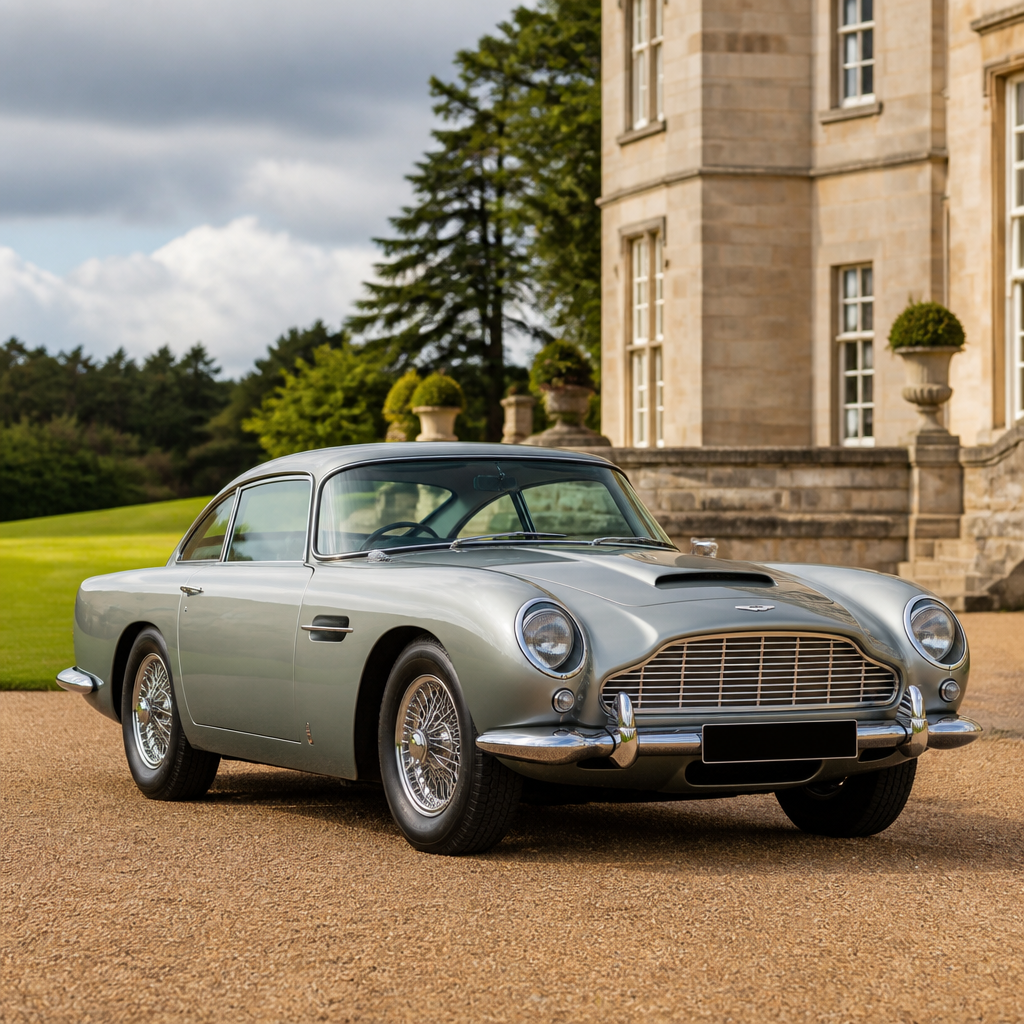
The DB5, built from 1963 to 1965, is the most recognized Aston Martin classic, but its reputation is not based solely on movie fame. It improved the formula with a 4.0-liter version of the Marek six, a ZF five-speed gearbox on many cars, and a more luxurious interior specification. Standard features such as reclining seats, electric windows, and wool carpets reinforced the grand touring mission. Well-sorted DB5s are valued because they are genuinely satisfying to drive: torque-rich, stable at speed, and special without feeling fragile. In collector circles, that usability keeps demand broad.
The DB6 followed from 1965 to 1970 and remains one of the smartest entry points into upper-tier Aston Martin ownership. It introduced a longer wheelbase and a distinctive Kamm-style tail that improved aerodynamics and rear-seat practicality. Purists often gravitate to the DB5, but the DB6 can be the better car on real roads, particularly for owners who intend to travel. The high-performance DB6 Mk1 Vantage and Mk2 variants deserve close attention because specification differences materially affect price, drivability, and rarity.
Pre-DB road cars also deserve respect. The DB2, DB2/4, and DB MkIII are essential to the Aston Martin story and to any complete survey of European classics. Their proportions are tighter, their cabins more intimate, and their driving style more period-specific than the later DB cars. Buyers drawn to early postwar design often find these models more charming and historically rich than the better-known DB5. Condition, however, is critical because restoration complexity can outpace headline purchase savings.
The 1967 DBS introduced a broader, more modern body and paved the way for the V8 era. Early six-cylinder DBS cars offer visual drama with relative value compared with DB5 and DB6 models. Once the V8 arrived, Aston Martin entered a different performance bracket. The 1977 V8 Vantage, often described as Britain’s first supercar, delivered serious straight-line speed with hand-built presence that no contemporary rival quite matched. Later fuel-injected V8s improved drivability and serviceability. For collectors who want classic Aston Martin character with stronger long-distance comfort and less fragility, these cars are increasingly important.
How Aston Martin Compares With Other European Classics
European classics buyers usually shop across brands, so comparison is practical rather than theoretical. Aston Martin often sits between Ferrari and Mercedes-Benz in temperament. A period Ferrari 250 or 330 offers sharper Italian theater and often a higher market ceiling, but with greater sensitivity around maintenance, parts sourcing, and originality scrutiny. A Mercedes-Benz 280SE 3.5 Coupe may deliver superior build consistency and easier ownership, but it lacks the same motorsport aura and hand-built mystique. Jaguar E-Types rival Aston Martin on beauty and British character, yet Aston generally offers more exclusivity and a richer interior environment.
Porsche is another common cross-shop. Air-cooled 911s provide stronger parts logistics, more robust mechanical familiarity, and a wider specialist network. Aston Martin counters with rarity, coachbuilt ambiance, and a more ceremonious driving experience. Maserati brings a similar GT mission, especially in cars like the Ghibli or Mistral, but Aston Martin typically benefits from steadier brand perception and deeper blue-chip recognition among mainstream collectors. That makes resale less speculative, especially for documented DB-series cars.
| Brand | Typical Strength | Main Tradeoff | Best Fit Buyer |
|---|---|---|---|
| Aston Martin | Luxury GT balance, rarity, design prestige | High restoration and trim costs | Collector wanting elegance and performance together |
| Ferrari | Racing cachet, market prestige, emotional engine character | Higher acquisition and scrutiny costs | Buyer prioritizing competition lineage |
| Jaguar | Styling value, broad community support | Less exclusivity at comparable budgets | Enthusiast seeking beauty and accessibility |
| Mercedes-Benz | Engineering solidity, touring comfort | Lower sense of rarity and drama | Owner focused on reliability and refinement |
| Porsche | Usability, parts support, driver engagement | Different luxury character | Collector who drives often and hard |
What this means for a hub page on European classics is simple: Aston Martin is rarely the cheapest route, rarely the easiest route, and very often the most balanced route. It captures much of what enthusiasts seek across the continent’s great marques without becoming one-dimensional. That is why it belongs near the center of any serious classic brand discussion.
Buying, Restoring, and Owning a Classic Aston Martin
The first rule in this market is to buy history before buying paint. A file with factory build sheets, ownership chronology, restoration invoices, and photographs can save enormous money later. Aston Martin Heritage Trust records, marque registries, and respected specialists help verify original colors, drivetrain numbers, and delivery specification. Because many cars have been repaired, upgraded, or rebuilt over decades, documentation is the only reliable way to separate acceptable maintenance evolution from value-damaging uncertainty.
Corrosion is the most expensive hidden risk on steel-bodied cars, especially around sills, wheel arches, door bottoms, outriggers, and Superleggera-related structural areas on DB4, DB5, and DB6 models. Aluminum panels can also suffer electrolytic corrosion where they meet steel structures. A magnet test is not enough. I advise a specialist inspection with borescope access, lift time, and measurements of panel fit and chassis integrity. Engine rebuilds are costly but predictable; structural metalwork is where budgets become unstable.
Mechanical assessment should focus on compression, oil pressure, cooling efficiency, gearbox behavior, differential noise, steering play, and brake consistency. Tadek Marek six-cylinder engines are durable when maintained correctly, but neglect shows up through overheating, smoky running, timing-chain wear, and poor carburetion balance. On V8 cars, fuel system condition, ignition updates, and emissions-era modifications deserve scrutiny. Non-original upgrades are not automatically negative. Electronic ignition, improved cooling fans, and discreet modern fuel pumps can make a car safer and more usable, provided the changes are reversible and documented.
Ownership costs are substantial, but they reward planning. Insurance through agreed-value classic policies is usually straightforward if the car is stored properly and appraised accurately. Parts availability is better than newcomers expect thanks to specialist firms in the United Kingdom and Europe, though interior trim, brightwork, and body fittings remain expensive. Routine exercise is not optional. Cars that sit develop fuel varnish, brake issues, seal shrinkage, and electrical faults. The healthiest classics are driven, serviced annually, and stored in dry, stable conditions.
Market Trends, Investment Logic, and Why the Brand Endures
Classic Aston Martin values move according to rarity, provenance, specification, and restoration quality more than broad hype cycles alone. DB4 GT, DB5, and highly original Vantage-spec cars remain benchmark assets because global demand consistently outstrips supply. At the same time, the market has matured. Buyers now reward authenticity, color correctness, tool-roll completeness, and known ownership more carefully than superficial presentation. A glossy restoration with weak documentation can trail an honest, thoroughly recorded car.
The brand endures because it offers more than nostalgia. These cars still deliver a distinct experience: long-hood visibility, mechanical tactility, richly trimmed cabins, and performance that feels authoritative rather than digital. They also connect strongly with the wider European classics story, linking British design, Italian coachbuilding influence, international motorsport, and postwar luxury culture. For collectors building a balanced portfolio of European classics, Aston Martin can function as both centerpiece and bridge. It complements German precision, Italian passion, and British heritage without duplicating any of them.
If you are exploring classic car models and brands through the European lens, Aston Martin deserves close study first, not last. Learn the DB lineage, compare six-cylinder and V8 eras, verify provenance obsessively, and buy the best documented car you can afford. Done well, ownership delivers something rare in the collector world: prestige you can actually use. Start with the model history, speak with marque specialists, and let condition and records guide the decision.
Frequently Asked Questions
What makes Aston Martin classic cars so distinctive compared with other European classics?
Aston Martin classic cars stand out because they combine several qualities that are often separated in other collector vehicles. Many European classics are known primarily for either performance, design, luxury, or racing heritage, but Aston Martin has historically blended all four. The brand’s classic grand tourers were engineered to cover long distances at speed while surrounding the driver and passengers with handcrafted materials, elegant interiors, and a sense of understated prestige. That balance is a major reason Aston Martin occupies such a respected place in the classic car world.
Another defining trait is the company’s unmistakably British interpretation of performance. Where some Italian classics lean toward drama and razor-edged aggression, and some German cars emphasize technical precision above all else, Aston Martin often delivers power in a more refined, mature package. Models such as the DB series became icons not just because they were fast for their era, but because they expressed speed through graceful proportions, rich cabin appointments, and composed road manners. That grand touring identity still resonates strongly with collectors today.
Scarcity also plays an important role. Aston Martin has never been a high-volume manufacturer, and many classic models were built in relatively limited numbers. That hand-built rarity gives these cars a strong sense of individuality and exclusivity. Buyers are not simply acquiring an old luxury car; they are often buying a machine with coachbuilt character, low production totals, and a strong connection to a specific period of British automotive craftsmanship.
Finally, Aston Martin’s motorsport and cultural associations deepen its appeal. The brand has genuine racing pedigree, yet it is equally famous for creating road cars with cinematic glamour and enduring visual sophistication. As a result, classic Aston Martins appeal to enthusiasts who want a car that can be appreciated from multiple angles: as a collector’s asset, as a design object, as a driver’s car, and as an expression of old-world luxury.
Which classic Aston Martin models are most sought after by collectors?
Several classic Aston Martin models consistently attract strong collector attention, though demand varies depending on budget, intended use, and the buyer’s interest in originality, rarity, or historical significance. At the top of many wish lists are the DB4, DB5, and DB6, which represent the heart of the brand’s postwar grand touring legacy. These cars are admired for their beautiful proportions, strong straight-six engines, handcrafted construction, and direct link to the era that defined Aston Martin’s worldwide reputation. Among them, the DB5 is especially famous and often commands the strongest emotional response due to its styling, scarcity, and cultural profile.
The earlier DB2, DB2/4, and DB Mark III models are also highly respected, particularly among collectors who appreciate lighter, more compact Aston Martins with strong ties to the company’s formative postwar years. These cars can offer a more traditional and sometimes more intimate driving experience, while still carrying the elegance and engineering depth that define the marque. For buyers who value heritage and want a model that feels especially authentic to Aston Martin’s early grand touring character, these cars remain very desirable.
Performance-oriented collectors often focus on the DBS V8 and V8 models from the late 1960s and 1970s. These cars introduced a more muscular and imposing Aston Martin character, combining hand-built craftsmanship with serious long-distance performance. They may not always receive the same universal spotlight as the DB5, but they have built a loyal following thanks to their strong drivetrains, distinctive styling, and usability in modern traffic. In some cases, they can represent an attractive entry point into significant classic Aston Martin ownership compared with the most famous DB-era cars.
There is also strong interest in rare competition variants, limited-production coachbuilt examples, and cars with exceptional provenance. A documented ownership history, matching numbers, factory-correct specification, or a notable motorsport connection can dramatically increase a specific car’s desirability. In practical terms, the most sought-after Aston Martin classic is not always just the most famous model; it is often the car that combines rarity, originality, excellent restoration or preservation, and a story that collectors can verify.
Are classic Aston Martins good cars to drive, or are they mainly for display and collecting?
Well-sorted classic Aston Martins are widely appreciated as genuinely rewarding driver’s cars, not merely static collectibles. In fact, one of the strongest arguments in their favor is that many were designed from the beginning as usable grand tourers rather than fragile exotics. They were built to travel quickly and comfortably over real roads, carrying occupants in luxury while still delivering a sense of performance and mechanical engagement. That underlying purpose gives many classic Aston Martins a more versatile personality than people expect.
On the road, the best examples tend to offer a blend of torque, composure, and tactile character rather than raw, high-strung intensity. Steering feel, engine note, visibility, and cabin atmosphere all contribute to the experience. Even when judged by modern standards, many classic Aston Martins remain satisfying because they communicate clearly and feel substantial without being sterile. Their appeal comes less from chasing ultimate limits and more from delivering elegant, confident progress. For enthusiasts who enjoy classic motoring with genuine sophistication, that can be far more rewarding than outright speed alone.
That said, the driving quality of any individual car depends heavily on condition, maintenance, and restoration quality. A neglected or poorly restored Aston Martin can feel heavy, temperamental, or expensive to sort out. By contrast, a properly maintained example can be remarkably usable for weekend drives, classic touring events, and even longer road trips. Buyers should remember that age affects cooling systems, electricals, suspension components, fuel delivery, and braking performance. The badge alone does not guarantee a great experience; preparation and ongoing care do.
For many owners, this is exactly why classic Aston Martins are so compelling. They can be shown, collected, and admired, but they also reward active use. When maintained by specialists and driven regularly, these cars often prove that luxury and performance were never mutually exclusive in Aston Martin’s classic era. They are among the classics that can still feel alive and relevant from behind the wheel, which is a major part of their enduring value.
What should buyers check before purchasing a classic Aston Martin?
Before buying a classic Aston Martin, the single most important step is a thorough pre-purchase inspection by a specialist who understands the marque. These cars are complex, valuable, and often hand-built, which means condition can vary dramatically even among cars that look similar in photos or at first glance. A specialist inspection should cover structural integrity, corrosion, engine health, transmission condition, suspension, brakes, electrical systems, cooling performance, and signs of accident damage or poor restoration work. Skipping this step can turn a dream purchase into a very expensive project.
Rust and body condition are especially critical. On many classic cars, cosmetic presentation can hide substantial structural issues, and Aston Martin is no exception. Buyers should evaluate panel fit, door alignment, underbody condition, previous metalwork, and whether body repairs were done to a high standard. Because these cars often used handcrafted construction methods and specialized materials, body restoration can be significantly more involved and expensive than it would be on more mass-produced classics. A shiny exterior should never be accepted as proof of structural health.
Documentation is equally important. Buyers should look for chassis and engine number verification, service history, restoration records, ownership chain, and any factory build information available. Matching-numbers status can matter greatly to collectors, and strong records help confirm authenticity as well as long-term care. If a car claims rare factory options, competition history, or celebrity ownership, those details should be supported with documentation rather than sales language. In the upper end of the market, provenance can strongly influence both price and future resale appeal.
It is also wise to think beyond the purchase itself. Prospective owners should understand parts availability, specialist support, maintenance costs, and the difference between a car that is concours-focused and one that has been sensibly prepared for regular driving. In many cases, the best buy is not the cheapest car, but the example with the best overall condition, specialist history, and honest presentation. Paying more up front for the right classic Aston Martin can be far less expensive than trying to rescue a compromised example later.
Why do classic Aston Martins remain valuable and desirable in the collector market?
Classic Aston Martins remain desirable because they occupy a rare space in the market where emotional appeal and collector logic strongly reinforce each other. Emotionally, they offer timeless styling, a prestigious British identity, handcrafted luxury, and a deep connection to grand touring culture. From a market perspective, they also benefit from limited production, broad international recognition, and an enthusiast base that values originality, provenance, and historical significance. Few marques manage to balance romance and investment-grade credibility as effectively as Aston Martin.
Design longevity is a major factor. Many classic Aston Martin models still look modern, elegant, and proportionally right decades after they were built. That visual endurance helps preserve demand across generations of collectors. Unlike trends that fade, a well-designed Aston Martin often continues to attract both seasoned buyers and newer enthusiasts entering the classic market. The cars do not rely on nostalgia alone; they continue to hold aesthetic authority in the present.
The brand’s reputation for blending performance and luxury also broadens its appeal. Some collectors want motorsport links, some want craftsmanship, and others want a road car that feels