Seasonal classic car events are the heartbeat of classic car culture, bringing together owners, restorers, collectors, auction bidders, parts vendors, clubs, and curious newcomers in one place. When people search for the best classic car events to attend, they usually want more than a calendar. They want to know which shows are worth the trip, what makes each season unique, how concours events differ from swap meets, where to see rare vehicles, and how to plan a full year around car shows and events. After years of attending these gatherings, walking fairgrounds at sunrise, judging display quality, and talking with owners beside open hoods, I can say the right event does more than entertain. It teaches history, sharpens buying instincts, expands your network, and deepens appreciation for preservation.
In practical terms, seasonal classic car events include spring season openers, summer concours and cruise-ins, fall auctions and harvest festivals, and winter indoor shows anchored by major sales. Each format serves a different purpose. A concours emphasizes originality, documentation, and presentation. A local cruise night prioritizes accessibility and community. A swap meet is where owners hunt trim pieces, glass, badges, service literature, and impossible-to-find mechanical parts. An auction combines theater with market intelligence, often revealing which segments are rising, stable, or softening. Together, these events form the public face of classic car culture and lifestyle.
This hub article covers the major types of classic car events by season, explains what attendees should expect, and highlights the flagship gatherings that set the standard. If you are building an annual event list, researching the best car shows and events for a first trip, or planning future articles around concours shows, cruise nights, auctions, and swap meets, this page gives you the framework.
Spring classic car events: the season of debut restorations and driving returns
Spring is the reset button for the collector car world. In colder regions, cars come out of storage, fresh restorations make their public debut, and clubs restart regular driving calendars. The best spring classic car events blend optimism with practical energy. Owners use them to test reliability after winter storage, shops unveil completed builds, and buyers get an early read on market momentum before summer travel peaks. If you want to understand the year ahead in classic car culture, start with spring.
One of the most important spring events in the United States is the Charlotte AutoFair at Charlotte Motor Speedway. It matters because it combines a large car corral, extensive vendor presence, and broad vehicle diversity, from brass-era survivors to muscle cars and trucks. For someone entering the hobby, AutoFair is valuable because you can compare restoration styles, price ranges, and parts availability in a single day. In my experience, walking the vendor rows reveals as much as the display field. You learn which marques have strong supply chains and which projects may become expensive due to scarce trim or model-specific hardware.
Spring also favors regional season openers hosted by marque clubs and local museums. These may not have the prestige of Pebble Beach, but they are often better for conversation. Owners are less rushed, judging is lighter, and first-time attendees can ask practical questions about paint codes, reproduction panels, carburetor tuning, radial versus bias-ply tire choices, and registration history. For readers building a year-round events strategy, spring is the best season for joining club-based gatherings that lead to summer invitations and fall road tours.
Summer events: concours lawns, road rallies, and the broadest public access
Summer is peak season for classic car shows and events because weather, travel schedules, and tourism all align. This is when the hobby becomes most visible to the public. Large concours events, destination festivals, waterfront displays, road tours, and weekend cruise-ins all reach full scale. If you only attend one season, summer offers the broadest range of experiences, from highly curated judging fields to casual downtown main street gatherings.
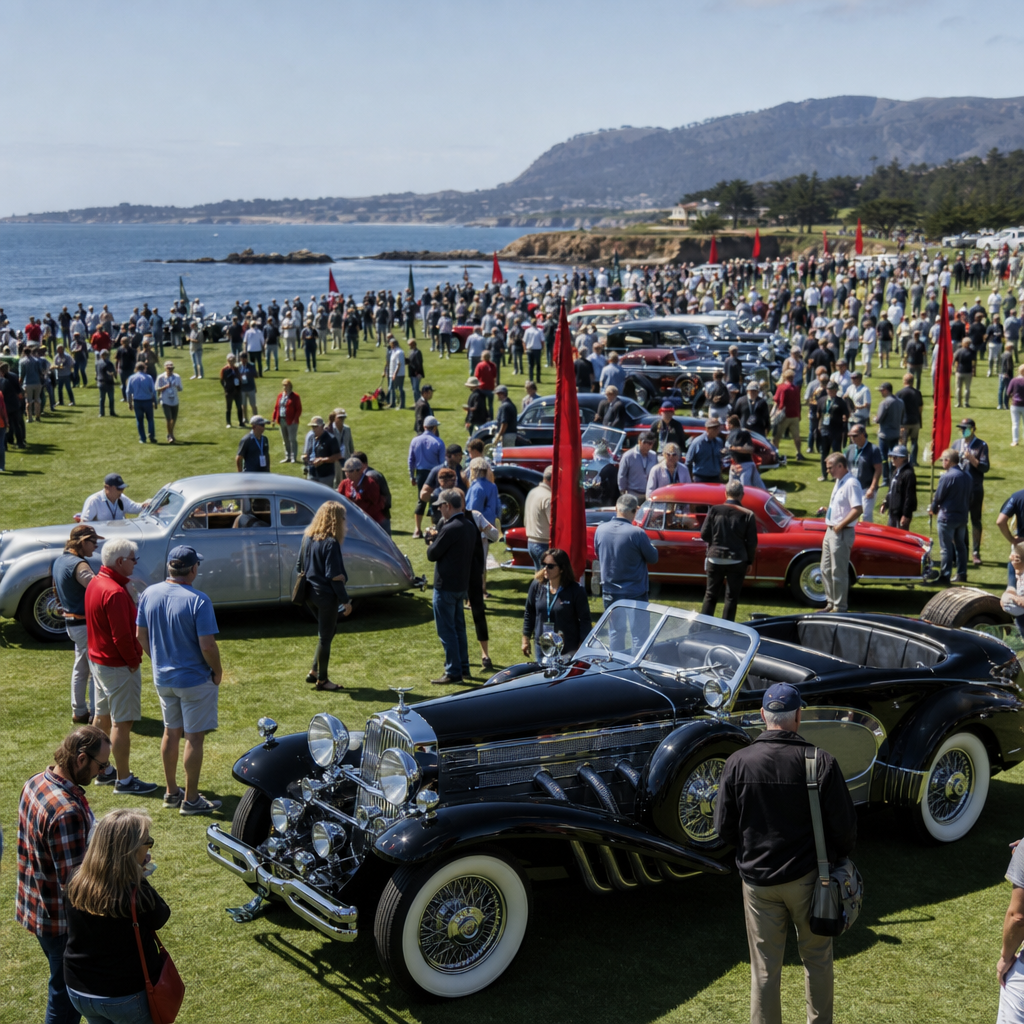
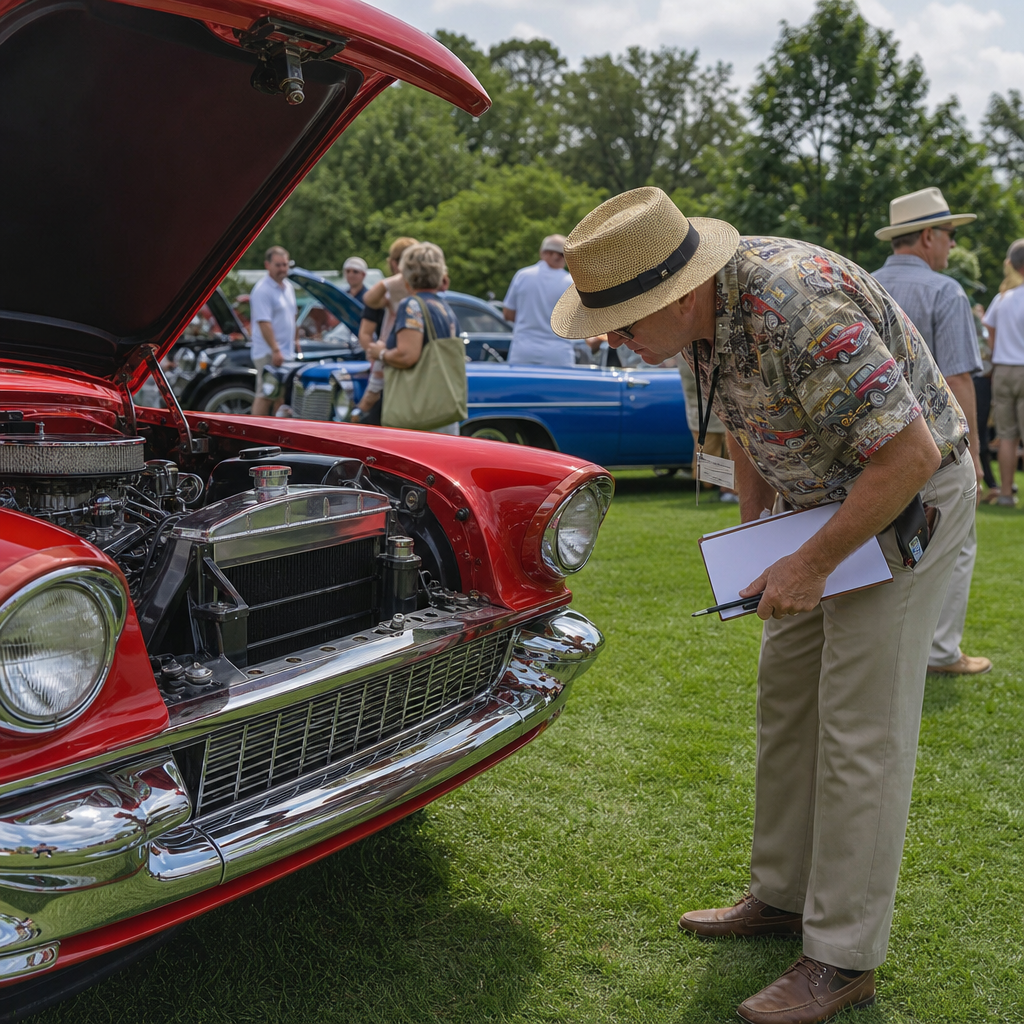
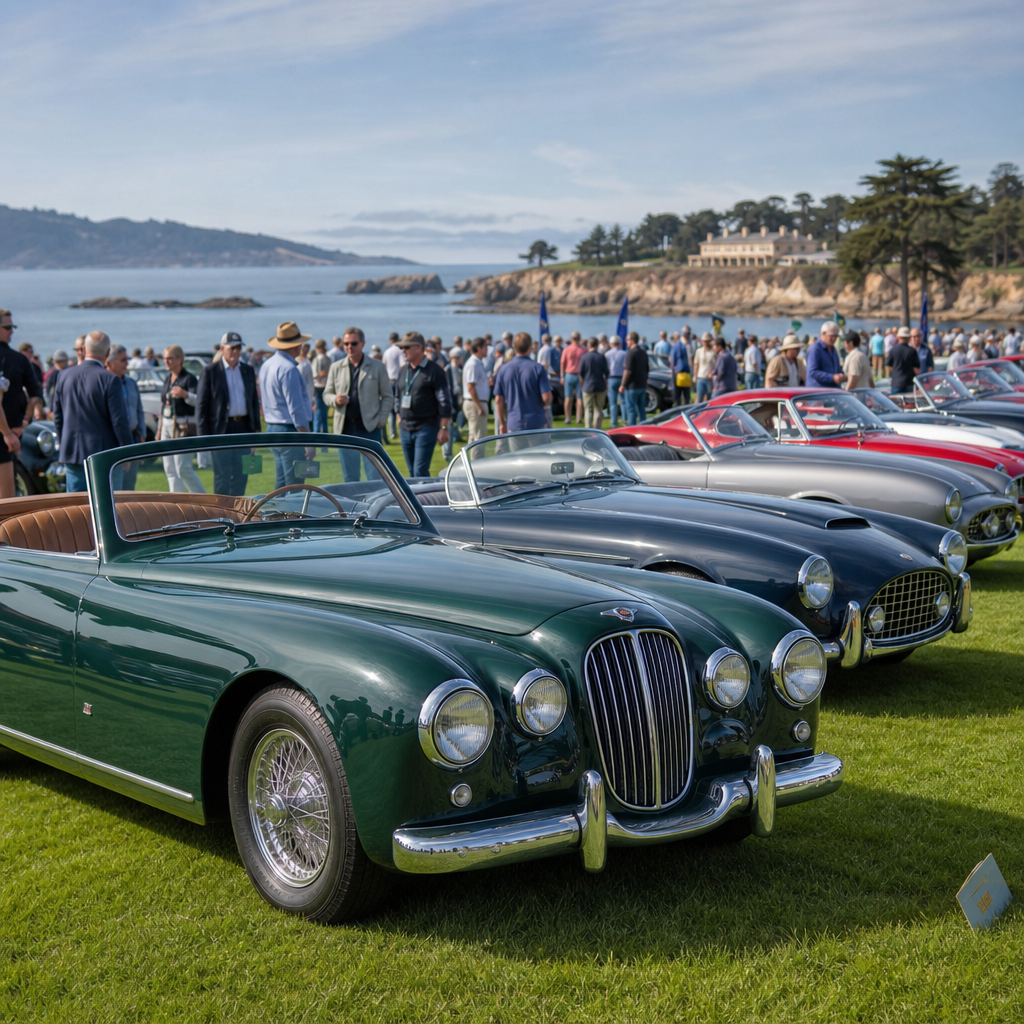
The definitive example is Monterey Car Week in California, culminating in the Pebble Beach Concours d’Elegance. This is not just a car show. It is a concentrated week of concours judging, manufacturer reveals, auctions, rallies, seminars, and private collection activity. Pebble Beach matters because it sets restoration benchmarks globally. Cars shown there are judged on authenticity, provenance, finish quality, and historical significance. Seeing those standards in person changes how you evaluate every other event. It also teaches an essential lesson: condition alone is not everything. Documentation, ownership history, coachbuilder pedigree, and period-correct configuration matter deeply at the highest levels.
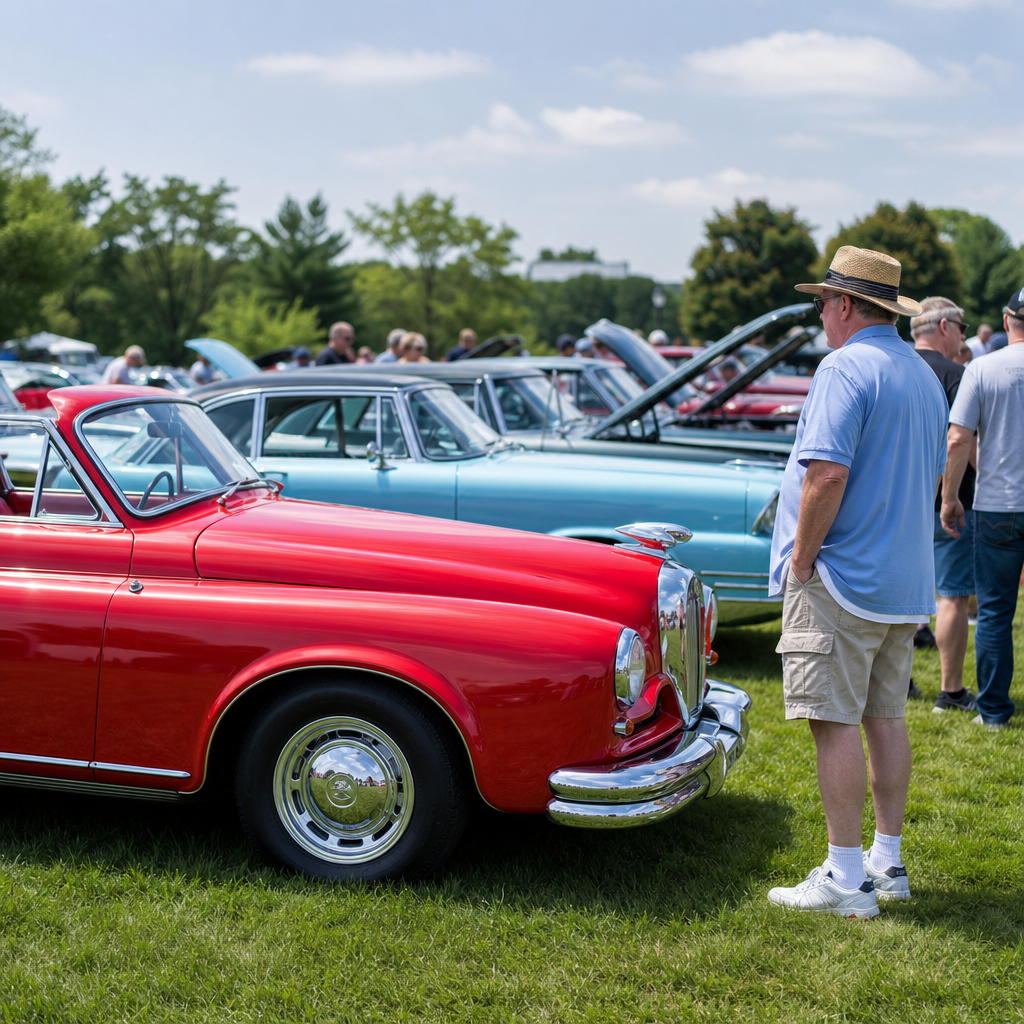
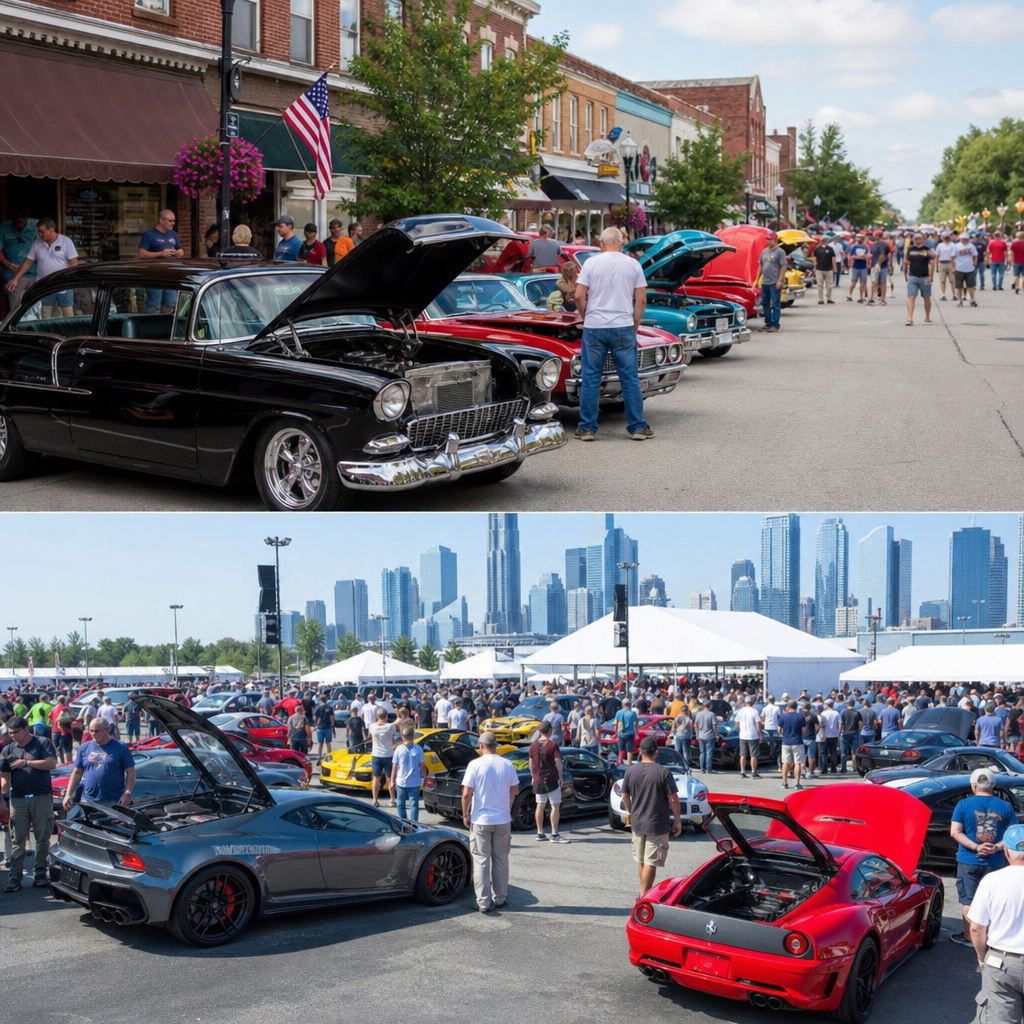
Not every great summer event is elite. Goodguys shows, local all-marque festivals, and weekly cruise-ins create the social backbone of the hobby. These events are where families participate, younger enthusiasts discover analog engineering, and owners actually discuss how they maintain and drive old cars. A Saturday evening cruise night can be more useful than a formal concours if your goal is to learn what it takes to own a drivable 1967 Mustang, C10 pickup, Tri-Five Chevrolet, or Mercedes-Benz SL. Summer is also prime time for road rallies and scenic tours, where reliability, cooling performance, fuel delivery, and comfort become visible in real-world conditions.
Fall events: auctions, heritage festivals, and market-defining weekends
Fall classic car events attract serious buyers and seasoned owners because the season often combines comfortable weather with high-value activity. By autumn, restoration shops have completed summer deadlines, consignors are ready to sell before winter, and enthusiasts have enough market information to make disciplined decisions. For anyone tracking collector car values, fall events are essential.
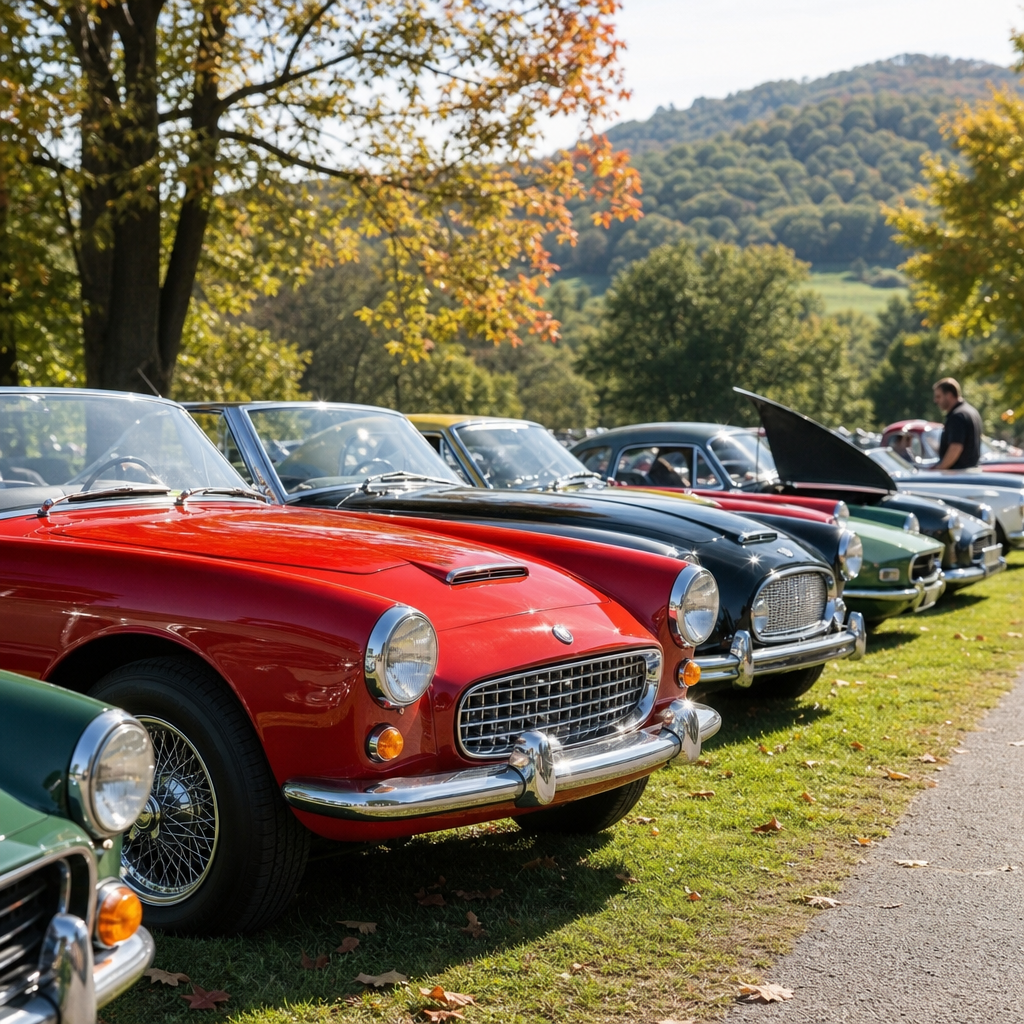
Hershey, officially the AACA Eastern Fall Meet, is arguably the most important fall gathering in the American classic car calendar. It is part car show, part swap meet, part flea market, and part social reunion for the restoration world. If you need a specific hood ornament, period tool roll, NOS lens, service manual, or hard-to-source fastener, Hershey is where hope feels realistic. The scale is the story. You can spend a full day on parts alone and still miss rows. For restorers, Hershey provides direct evidence of supply conditions. If original trim for a 1940 Ford appears repeatedly, your project planning looks different than it would for a low-production European coupe with almost no parts support.
Fall is also strong for auctions and destination festivals. Events run by Mecum and Barrett-Jackson draw bidders, sellers, spectators, and media because they reveal sentiment in real time. You can watch whether first-generation Broncos, air-cooled 911s, Hemi Mopars, or 1980s Japanese classics command competition or stall at reserve. That is useful even if you never bid. Public sales teach buyers how presentation, documentation, originality, and venue influence price. I always advise newcomers to attend at least one major auction as observers before participating. The education is worth the ticket.
Winter events: indoor showcases, major auctions, and planning season
Winter may seem quiet, but for committed enthusiasts it is one of the most productive times in classic car culture and lifestyle. Indoor shows protect significant vehicles from harsh weather, auction houses capture attention with headline sales, and owners use the season to plan purchases, restoration work, and spring travel. In northern climates especially, winter events become a bridge between garage work and the next driving season.
The prime example is Arizona Auction Week in January, including marquee sales from RM Sotheby’s, Gooding Christie’s, Bonhams, Barrett-Jackson, and others depending on the year. This cluster matters because it compresses market attention. Analysts, dealers, insurers, restorers, and collectors all watch the results. If a rare Ferrari, Duesenberg, muscle car, or modern collectible performs strongly there, the result shapes conversations for months. Just as important, the week exposes attendees to cataloging standards, condition reports, title and provenance discussions, and the mechanics of reserve and no-reserve selling.
Winter indoor exhibitions also work well for museum partnerships and educational programming. Because cars are displayed in controlled spaces, lighting and signage often improve interpretation. That makes winter a surprisingly good season for learning design history, coachbuilding techniques, or engineering evolution. If your interest extends beyond ownership into history, curation, and preservation standards, indoor events can offer more substance than a packed outdoor festival.
How to choose the right classic car event for your goals
The best classic car event depends on what you want from the experience. People often ask, should I attend a concours, a swap meet, an auction, or a cruise-in first? The answer is simple. Attend the format that matches your immediate goal, then branch out. If you are shopping for a car, go to auctions and car corrals. If you are restoring a car, prioritize swap meets and marque gatherings. If you care about top-tier originality and automotive history, start with a concours. If you want community and low-pressure conversation, choose local cruise nights and regional festivals.
| Event type | Best for | What you will learn | Typical example |
|---|---|---|---|
| Concours | History, authenticity, elite restorations | Judging standards, provenance, presentation quality | Pebble Beach Concours d’Elegance |
| Swap meet | Restoration sourcing | Parts availability, pricing, model support | AACA Eastern Fall Meet at Hershey |
| Auction | Buying, selling, market tracking | Value trends, reserve strategy, documentation importance | Arizona Auction Week |
| Cruise-in or local show | Networking, family access, first-time attendance | Ownership realities, maintenance habits, club culture | Regional weekly cruise nights |
Budget matters too. A local event may deliver better owner access than a prestigious destination weekend with hotel premiums, parking congestion, and limited conversation time. Travel distance, climate, event size, and your tolerance for crowds should shape your calendar. I have found that the most rewarding annual mix includes one major national event, one serious swap meet, one auction, and several local shows where relationships actually form.
What to expect at major car shows and events
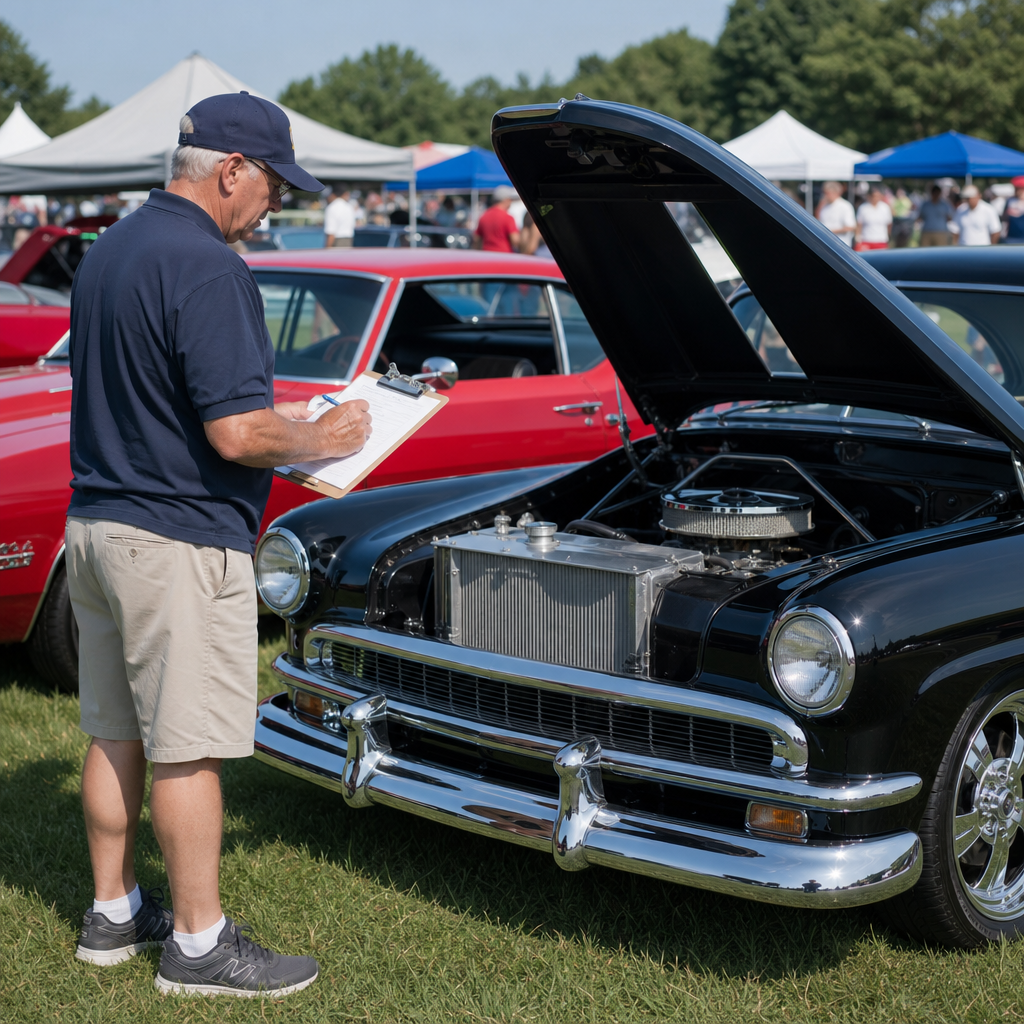
Attendees often underestimate how varied the schedule and etiquette can be. At concours events, arrive early. Morning light is better, crowds are lighter, and owners are often still near their cars. At swap meets, wear durable shoes, bring measurements and part numbers, and carry cash even if digital payments are increasingly common. At auctions, read the catalog in advance and understand buyer premiums, title status, transport costs, and reserve terms. At cruise-ins, be respectful when photographing interiors, and do not touch paintwork or engine components without permission.
Documentation is a recurring theme across all event types. The owners who provide restoration photos, build sheets, service records, judging sheets, and ownership history almost always inspire stronger trust. That applies whether the car is a prewar Packard or a 1994 Supra. Events reward preparation, not just polish. A shiny car with inconsistent details will attract attention, but an accurately presented car with records earns credibility from knowledgeable attendees.
These gatherings also create internal pathways across the broader classic car culture and lifestyle topic. One event can lead you to restoration resources, club memberships, insurance specialists, appraisers, transport companies, paint suppliers, and future buying opportunities. That is why this hub matters. Car shows and events are not isolated entertainment. They connect nearly every part of the collector car ecosystem.
How this hub connects the car shows and events category
As a sub-pillar page, this article is the starting point for deeper coverage of classic car events by format and season. From here, readers typically branch into focused guides on concours judging, best swap meets for parts hunting, how to attend collector car auctions, regional cruise night culture, road rally etiquette, event photography, and trip planning for multi-day festivals. Structuring the topic this way mirrors how enthusiasts actually navigate the hobby: first by broad event type, then by purpose, location, and experience level.
The key takeaway is straightforward. Seasonal classic car events are not interchangeable. Spring reveals fresh starts, summer delivers visibility and variety, fall concentrates parts and market action, and winter sharpens planning around indoor showcases and major auctions. Attend with a goal, learn the format, and use each event to deepen your understanding of authenticity, maintenance, value, and community. If you want to get more from classic car culture and lifestyle, start building your annual event calendar now, then use this hub as your launch point into every major car show and event experience that follows.
Frequently Asked Questions
What are the best types of seasonal classic car events to attend throughout the year?
The best classic car events to attend depend on what you want from the experience, but the strongest approach is to treat the year as a full calendar of different event styles rather than looking for a single “best” show. Spring is often ideal for season-opening car shows, regional swap meets, and restoration-focused gatherings where enthusiasts bring freshly finished projects out after winter. These events usually feel energetic and optimistic, and they are great for networking with clubs, shops, and parts vendors before the busiest travel months begin.
Summer is typically the peak season for major concours events, large outdoor festivals, cruise nights, and destination-worthy car weekends. If your goal is to see historically significant cars, museum-quality restorations, and rare pre-war, European, muscle, or coachbuilt vehicles, summer often offers the deepest field of top-tier entries. These events also tend to include auctions, rallies, driving tours, panel discussions, and brand or model-specific club displays, making them especially rewarding for travelers who want more than a parking-lot show.
Fall is a favorite season for many longtime enthusiasts because it combines comfortable weather with some of the most serious buying, selling, and collecting activity of the year. Auction events, end-of-season festivals, and well-established regional gatherings often take place in autumn, and these can be excellent for seeing a wide cross-section of the hobby in one place. Winter, while quieter in many regions, still matters. Indoor shows, collector auctions, restoration expos, and planning events give enthusiasts a chance to study trends, inspect vehicles up close, and prepare for the next driving season. If you want a complete classic car experience, the most rewarding strategy is to attend a mix of concours, swap meets, cruise-ins, auctions, and club events across all four seasons.
How do concours events differ from swap meets, auctions, and local car shows?
Concours events, swap meets, auctions, and local car shows all belong to classic car culture, but they serve very different purposes and attract different audiences. A concours event is generally the most formal and curated format. Vehicles are often judged according to strict standards involving authenticity, historical accuracy, presentation, provenance, and restoration quality. At a high-level concours, the cars may be rare, historically important, or exceptionally preserved, and the event experience often emphasizes elegance, education, and craftsmanship. These are the places where you may see Pebble Beach-level restorations, coachbuilt classics, milestone sports cars, and award-winning examples that are rarely visible anywhere else.
Swap meets are almost the opposite in tone, though equally valuable. They are practical, hands-on, and often essential for owners and restorers. At a swap meet, people come to buy and sell hard-to-find parts, literature, tools, trim pieces, badges, wheels, and project components. You may not find the polished atmosphere of a concours lawn, but you will find the real infrastructure of the hobby: the people who keep cars running, the specialists who know obscure part numbers, and the vendors who can help solve restoration problems that internet marketplaces cannot.
Auctions center on buying and selling complete vehicles, and they can be useful even if you are not bidding. They give you a live view of market trends, condition levels, buyer interest, and the kinds of cars currently commanding attention. Local car shows are usually the most accessible and community-driven option. They tend to welcome a broader range of vehicles and owners, from first-time entrants to longtime collectors, and they are ideal for casual conversations, family visits, and discovering regional car culture. If concours shows the hobby at its most refined, swap meets show it at work, auctions show it in motion, and local car shows show it at its most welcoming.
Which season is best for seeing rare classic cars and high-profile collections?
Summer is generally the best season for seeing rare classic cars, historically significant restorations, and vehicles from major private collections, largely because many of the highest-profile concours and destination events take place during the warmer months. This is when collectors are most likely to transport important cars, museums participate in special exhibitions, and organizers can build multi-day programs around judging, tours, seminars, and social events. If your main objective is to see unusual coachbuilt cars, limited-production exotics, pre-war luxury automobiles, concours-winning muscle cars, or historically documented race cars, summer gives you the strongest odds.
That said, fall can be just as rewarding, especially if you enjoy auctions and large end-of-season gatherings. Rare cars often appear at fall sales, and these events may bring together everything from unrestored originals to blue-chip collector vehicles. You also get the advantage of seeing which cars collectors are actively buying, which can reveal trends that a static show field does not. Spring is excellent for model-specific meets and early-season events where enthusiasts debut newly restored vehicles. Winter should not be overlooked either, particularly for indoor auctions and specialty exhibitions where weather is less of a concern and high-value inventory can be viewed in a controlled setting.
In practical terms, the best season depends on the kind of rarity you want to see. For formal elegance and award-caliber presentation, aim for summer concours season. For variety, sales activity, and broad collector interest, fall is exceptionally strong. For restoration reveals and enthusiast-driven gatherings, spring is very appealing. The smartest plan is to identify one marquee event in summer, one major auction or festival in fall, and one strong regional show in spring so you can experience rare cars in different settings rather than through only one lens.
How can I plan a full year around seasonal classic car events without missing the best ones?
Planning a full year around classic car events starts with understanding your priorities. Some enthusiasts care most about rare vehicle sightings, others want to shop for parts, and some are more interested in socializing, road trips, and club participation. Once you know your goal, build your calendar by category instead of by date alone. Include at least one major concours, one swap meet, one auction event, one marque-specific or club show, and several local or regional gatherings. This gives you a balanced year and prevents every event from feeling repetitive.
It also helps to plan by season. In spring, focus on season openers, restoration expos, and regional meets. In summer, reserve travel time for one or two flagship events that justify hotel stays and advance ticket purchases. In fall, look for major auctions, harvest-season festivals, and long-running regional shows with strong vendor participation. In winter, use indoor shows and auction broadcasts to research trends, decide where to travel next, and connect with clubs that publish annual calendars early. Many of the best-known events have fixed seasonal windows, so once you identify them, you can build recurring travel habits around them year after year.
From a practical standpoint, book accommodations early for destination events, especially concours weekends and large auctions, because nearby hotels often fill quickly. Follow event websites, club newsletters, and venue social media pages for schedule updates, featured classes, special displays, and registration deadlines. If you are bringing your own car, confirm entry rules, staging times, and whether the event favors stock, modified, or judged vehicles. A well-planned year is not just about attending more shows; it is about attending a meaningful mix of events that lets you see the full spectrum of classic car culture.
What should first-time attendees know before going to a seasonal classic car event?
First-time attendees should know that classic car events vary widely, and the best experience comes from matching your expectations to the type of event you are visiting. A relaxed local cruise-in will feel very different from a formal concours, and a massive swap meet requires a different strategy than a ticketed auction preview. Before you go, check the event format, hours, parking situation, ticket policies, and whether there are special days for judging, vendor access, or auction preview sessions. That small amount of preparation can make the difference between an average visit and a genuinely memorable one.
Dress for the season and the setting. Many classic car events involve far more walking than newcomers expect, especially outdoor festivals, fairground shows, and swap meets. Comfortable shoes, weather-appropriate clothing, water, sunscreen, and a phone charger are simple but important. If you are interested in photography, arrive early for cleaner light and fewer crowds. If you are shopping for parts or memorabilia, bring measurements, part numbers, and a way to transport purchases. If you are attending an auction, review the catalog in advance so you understand what is crossing the block and what kinds of cars are drawing the most attention.
Most importantly, talk to people. Owners, restorers, judges, and vendors are often eager to share what makes a car special, what challenges a restoration involved, or why a certain event matters in the broader hobby. That human side is what makes seasonal classic car events so valuable. They are not just places to see old cars; they are where the culture stays alive, where expertise gets passed down, and where newcomers often become long-term participants. If you arrive curious, respectful, and willing to learn, even your first event can feel like the start of a much bigger journey through the classic car world.