Negotiation scripts for classic car buyers turn an emotional purchase into a disciplined transaction. In the collector market, price is influenced by rarity, provenance, originality, condition, documented restoration work, and timing, so two seemingly similar cars can differ in value by tens of thousands of dollars. A negotiation script is not a gimmick or a hard-sell tactic. It is a prepared sequence of questions, responses, and price anchors that helps a buyer gather facts, control pace, and make offers based on evidence instead of adrenaline. I have used these scripts at dealer showrooms, estate sales, online auctions, and private garages, and the difference is measurable: better inspections, fewer surprises, and materially lower purchase prices.
For classic car buyers, negotiation matters because mistakes are expensive and often irreversible. Overpaying is only one risk. The bigger danger is agreeing to a number before understanding hidden rust, incorrect stampings, title defects, non-matching drivetrains, poor panel alignment, or cosmetic restorations masking structural issues. Unlike buying a late-model daily driver, you are often assessing a machine that may be forty, fifty, or seventy years old, with repairs completed by multiple owners over decades. The buyer who asks the right questions, frames concerns clearly, and knows when to pause has an advantage. This guide explains negotiation strategies, gives plain-language scripts, and shows how to handle private sellers, dealers, auction environments, and post-inspection price discussions.
Build Your Negotiation Position Before You Discuss Price
The strongest negotiation starts before you ever say, “What is your best number?” First, establish market value using multiple benchmarks. For mainstream classics, I compare recent Bring a Trailer and Cars & Bids results, Hagerty Price Guide condition bands, NADA values, Hemmings listings, marque-specific forums, and local comps. Auction results tell you what sold; classified ads tell you what sellers hope to get. Those are not the same thing. A 1968 Chevrolet Camaro driver-quality small-block coupe listed at $42,000 may only clear $34,000 to $36,000 in a real transaction once rust repair quality, trim completeness, and documentation are reviewed.
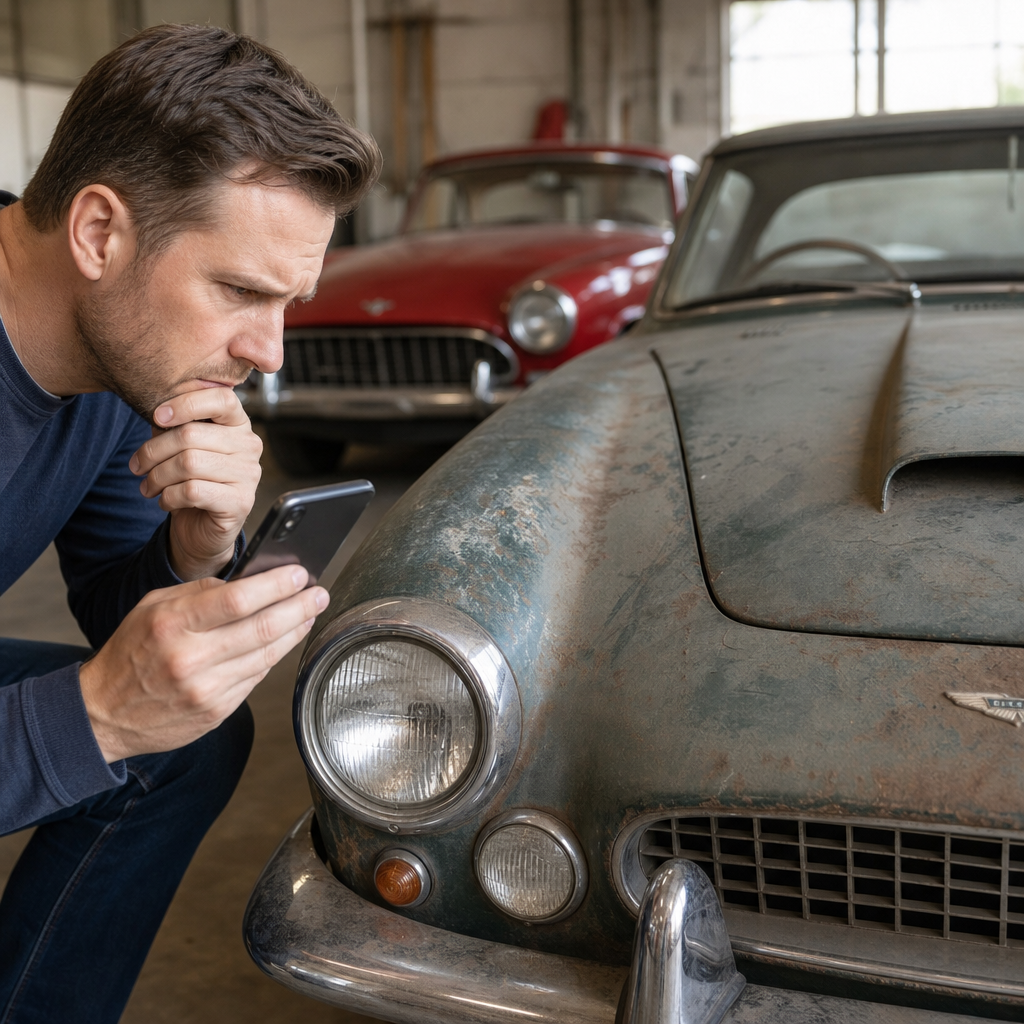
Second, identify value drivers before the visit. Confirm whether the car has matching numbers, original color, factory options, restoration receipts, ownership history, and an accessible VIN, trim tag, body number, and engine stamping. Study known problem areas by model. On a Jaguar E-Type, look carefully at bonnet fit, monocoque corrosion, and cooling-system work. On an air-cooled 911, inspect for head stud issues, rust around the battery area, and evidence of accident repairs. On 1960s Mopars, verify fender tag details and inspect trunk drops, rear frame rails, and cowl integrity. When you know the model-specific weak points, you negotiate from substance, not suspicion.
Third, define your walk-away number and your first offer before arrival. Buyers often think flexibility wins deals, but undefined flexibility usually becomes overpayment. If your analysis says the car is worth $28,000 as presented and likely needs $4,500 in mechanical sorting, set a ceiling that reflects both market value and your risk tolerance. Then prepare exact language. For example: “I like the car, but I have to budget for tires, brake hydraulics, and a transmission reseal. Based on comparable sales and the work ahead, I’d be comfortable at $23,500.” That sentence is calm, evidence-based, and easy to defend.
Use Discovery Questions to Expose Risk and Create Leverage
Good negotiators do not start with objections. They start with discovery. Your goal is to get the seller talking long enough to reveal motivations, inconsistencies, and deferred maintenance. Ask open, factual questions first: “How long have you owned it?” “Why are you selling now?” “What work has been done in the last two years?” “Do you have photos from before the repaint?” “Who rebuilt the engine?” “What does not work as it should?” Serious sellers usually answer directly. Evasive sellers often tell you where the risk is by what they avoid.
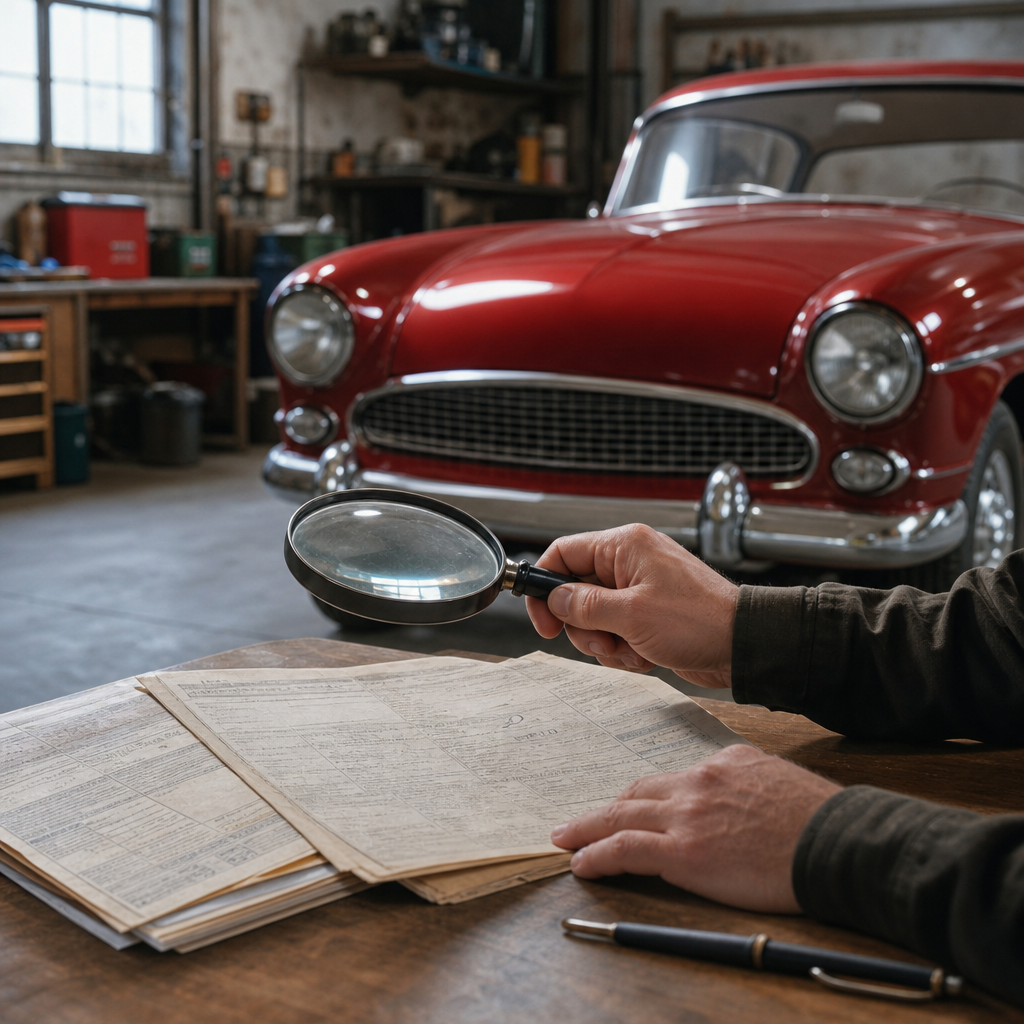
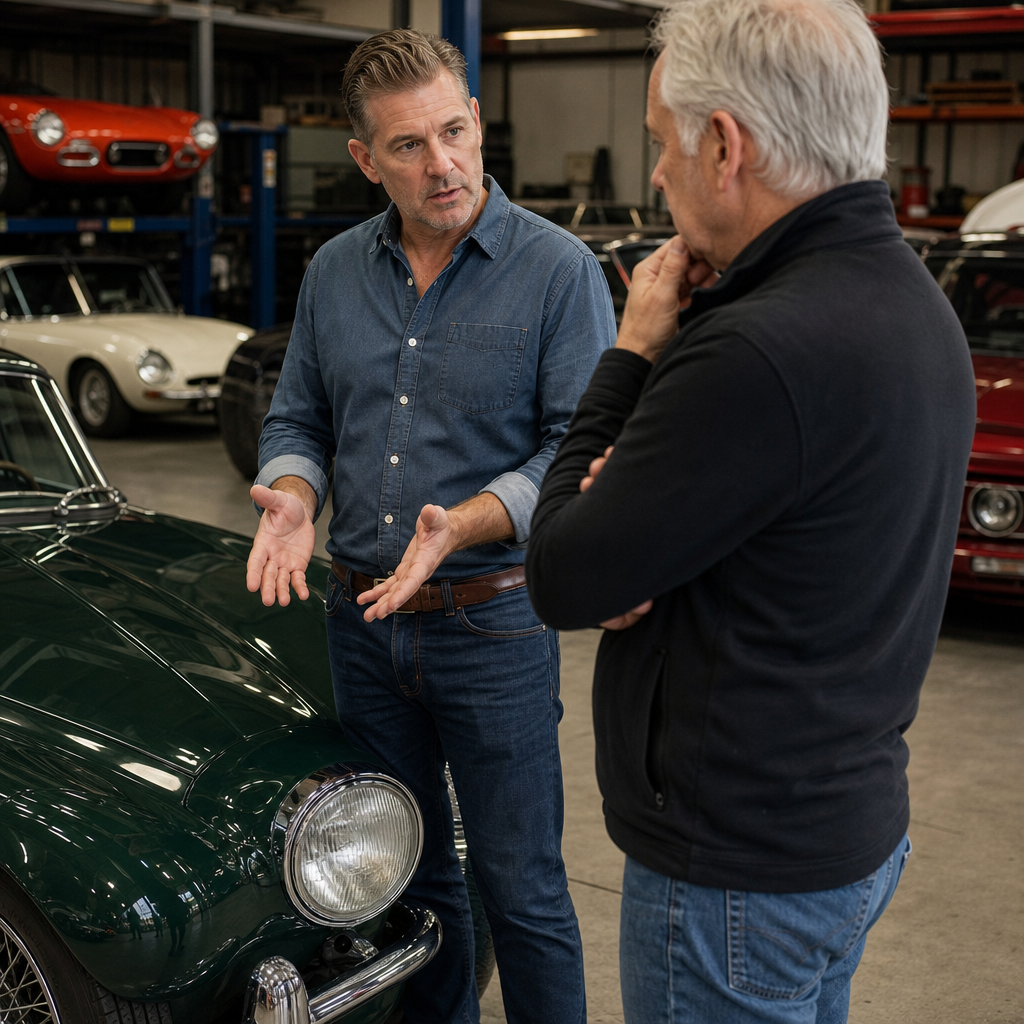
One script I use in person is simple: “I’m interested, but I buy on documentation and condition, not just appearance. Can we go panel by panel and then review paperwork?” This lowers defensiveness because you are not accusing anyone of hiding flaws. You are establishing a process. As you inspect, ask narrow follow-ups. If the seller says the engine was rebuilt, ask for the invoice, machine shop name, mileage since completion, and whether the break-in procedure is documented. If they mention a “show-quality” repaint, ask what metal was replaced, whether epoxy primer was used, and if there are photos before filler and paint. Precision matters because vague claims collapse under specific questions.
You should also surface the seller’s timeline. A highly motivated seller negotiates differently from a casual one. Use neutral phrasing: “Are you trying to move the car quickly, or are you willing to wait for the right buyer?” If the answer is “I need the garage space,” “I already bought another car,” or “the estate wants it sold,” you have useful context. Do not pounce. Just note it and continue. Later, when you make your offer, you can tie certainty and convenience to your price: “I can complete payment this week, arrange enclosed transport, and close without delay if we can agree on a number today.” Convenience is often worth real money to a seller.
Script the First Offer, the Counter, and the Silence
Buyers often fail because they improvise the most important moment. A strong first offer is specific, justified, and lower than your target without being unserious. If a seller is asking $55,000 for a 1970 Plymouth ’Cuda and your research supports $46,000 to $48,000 given a non-original engine and older paint, do not ask, “Would you take forty?” Instead say, “I’ve reviewed recent sales, and this car sits below top-driver level because of the non-matching drivetrain, older restoration, and interior wear. If the paperwork checks out, I’m prepared to offer $44,500.” This statement does three things: it anchors the discussion, shows that your number is evidence-based, and signals that you are prepared to transact.
After the first offer, be quiet. Silence is a negotiation tool because it forces the seller to respond to your reasoning instead of your emotions. Many buyers rush to fill the pause with concessions. Do not. If the seller counters, ask them to justify their number with facts, not feelings. A practical script is: “Help me understand how you got there given the paint age, missing documentation, and the gearbox issue we discussed.” If the seller cannot defend the counter beyond “that’s what these bring,” your market evidence becomes stronger.
When a counter is close, trade movement for terms. Instead of simply raising your price, ask for something. “If you can include the spare parts, original wheels, and service records, I can move to $46,000.” Or: “If compression and leak-down numbers come back healthy and the title is clean, I can do $47,000.” This approach protects value and keeps the discussion conditional on verifiable facts. If the gap remains wide, use a soft stop: “I may not be your buyer at that number. If your position changes after you think it over, call me.” Many of my best purchases were made after leaving politely and letting the seller revisit reality.
| Situation | Buyer Script | Why It Works |
|---|---|---|
| High asking price | “I’m seeing stronger cars trade near this number. With the rust repair uncertainty and missing records, I’m at $31,500.” | Anchors on market data and defects, not opinion. |
| Seller says price is firm | “Understood. If anything changes, I can move quickly with funds and transport.” | Preserves leverage without arguing. |
| Dealer uses urgency | “If another buyer commits first, that’s fine. I don’t skip inspection steps on collector cars.” | Rejects pressure while signaling discipline. |
| Post-inspection defect found | “The PPI identified $3,200 in immediate work. I’m still interested at $2,800 less.” | Converts findings into a concrete adjustment. |
| Auction temptation | “My ceiling is set before bidding. Once fees and transport are added, I stop.” | Prevents emotional overbidding. |
Adjust Your Strategy for Private Sellers, Dealers, and Auctions
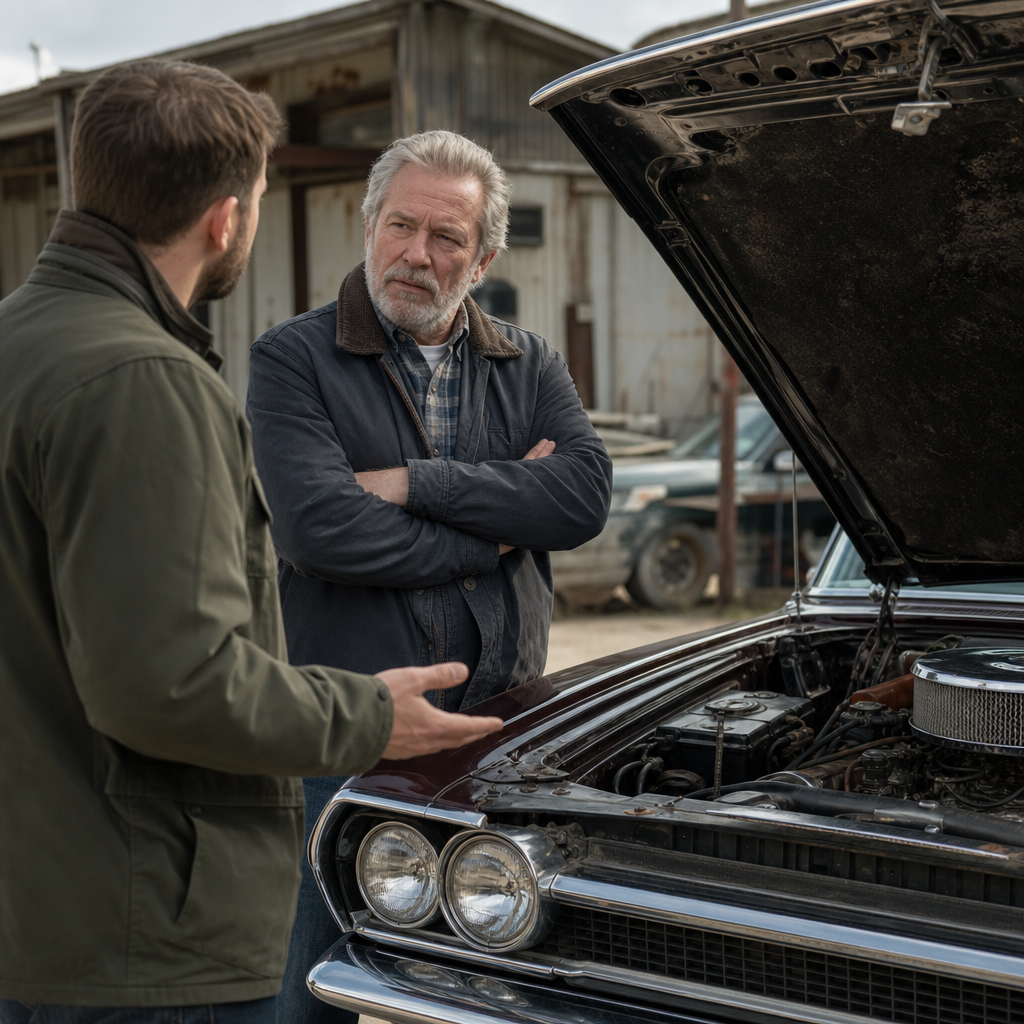
Private sellers usually know the car’s story better than anyone else, but they may also attach sentimental value to it. With them, respect and patience matter. Do not insult the car to lower the price; that usually hardens the seller. Instead, separate appreciation from valuation: “It’s clear this car has been cared for, and I respect that. My hesitation is the cost of sorting the electrical system and correcting the prior bodywork.” This keeps the conversation factual. Private-party deals also require tighter attention to title names, lien releases, chassis numbers, and spare-parts inventory because there may be no dealership process to catch errors.
Dealers are different. They are used to negotiation, and many build room into the asking price. Here, process is your leverage. Ask for the out-the-door number, all documentation, and a full disclosure of known issues. Clarify whether the car is on consignment, because consignment inventory often limits dealer flexibility. I also ask how long the car has been in stock. If a classic has sat for ninety days, flooring costs, storage, and stale inventory pressure can work in your favor. A direct script is effective: “If this is a retail-ready car, show me the reconditioning file. If it still needs sorting, price it accordingly.” Dealers respect buyers who speak in specifics.
Auctions require the most self-control because the format is engineered for urgency. Buyer’s premiums, transport, taxes, and limited inspection windows raise the true cost. Before bidding, calculate your all-in ceiling, including premium and immediate repairs. If your maximum hammer price is $60,000 and the premium is 10 percent, your real purchase price is $66,000 before shipping or corrections. Many buyers forget this and chase the car past their budget. On-site, inspect preview notes, decode the catalog language, and look for phrases like “believed to be,” “restored as needed,” or “odometer reads” because they signal uncertainty. Your script at auction is not spoken to a seller; it is spoken to yourself: “I bid only to my prewritten limit, and no car is so rare that I should ignore my process.”
Negotiate From Inspection Findings, Documentation Gaps, and Total Cost
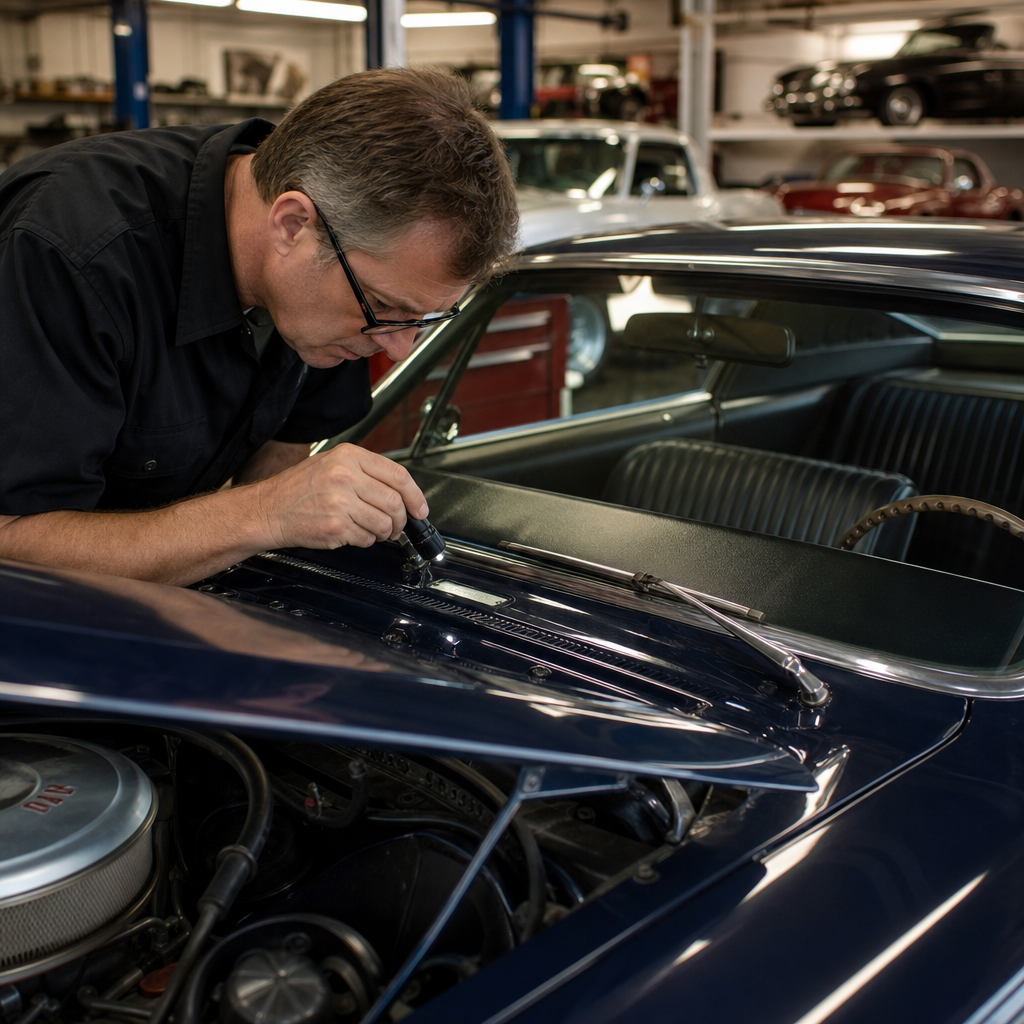
The pre-purchase inspection is where many negotiations are won. A proper PPI should cover compression or leak-down where appropriate, fluid leaks, charging system output, brake condition, suspension wear, tire age, rust-prone structures, evidence of prior collision repair, and verification of identifying numbers. On expensive cars, paint-meter readings and bore-scoping hidden areas can save five figures. When defects emerge, renegotiate with a written list and realistic repair costs. Do not exaggerate. If the inspector says the car needs $1,800 in front-end work and $1,200 in fuel-system sorting, present that clearly: “The report shows roughly $3,000 in immediate needs. I’m still interested, but my number needs to reflect that.”
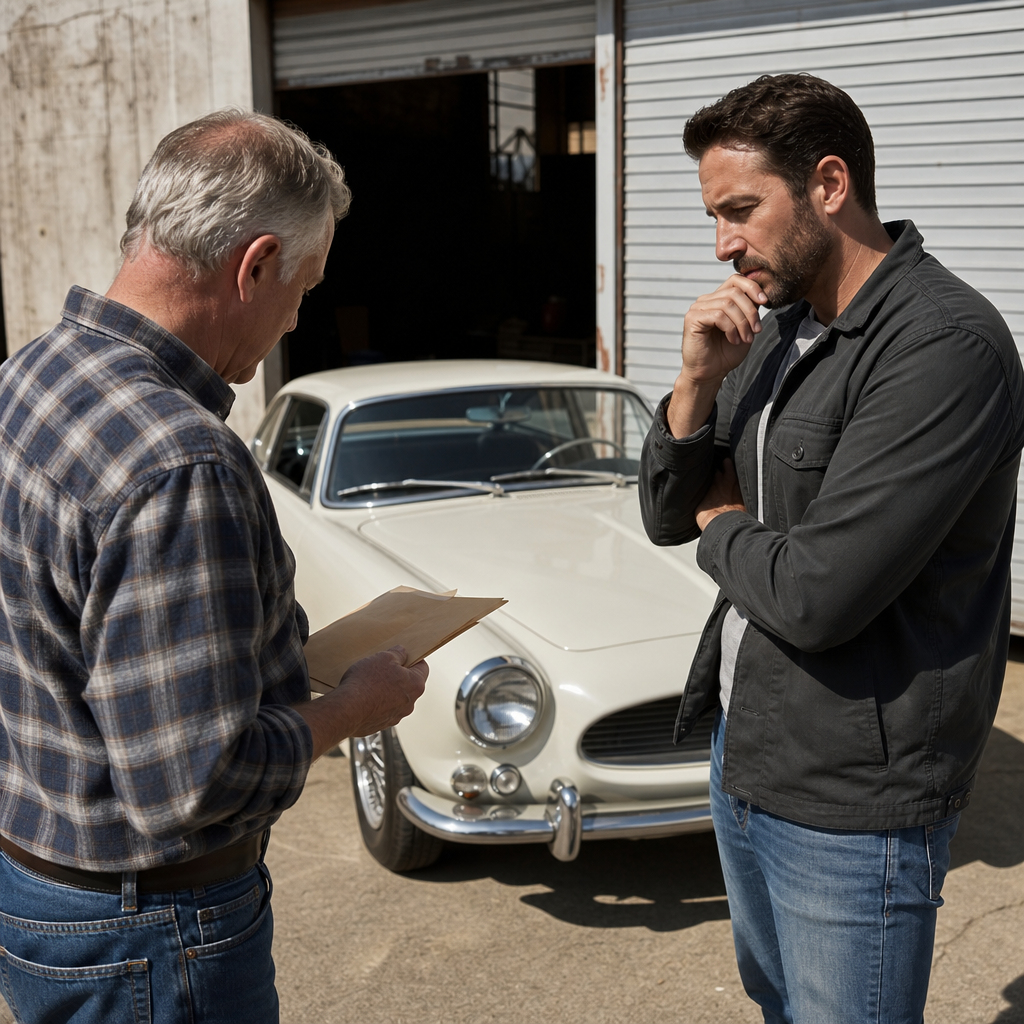
Documentation gaps are equally important. Missing restoration receipts, absent ownership history, undocumented engine swaps, or unverifiable matching-numbers claims all affect value. In the classic market, proof carries a premium. A 1963 Corvette split-window with documented fuel-injection provenance and known ownership history will command more than a visually similar car with unanswered questions. The correct script is not accusatory. Say: “I’m not saying the claim is wrong, only that I can’t pay full documented-car money without documentation.” That is firm, fair, and hard to dispute.
Always negotiate on total cost, not purchase price alone. Shipping, immediate maintenance, registration hurdles, import paperwork, storage, and parts sourcing can materially change what the car really costs you. If a seemingly cheap European classic needs $2,500 in transport, $1,000 in customs brokerage support, and hard-to-find trim, the bargain may disappear. I keep a simple worksheet and discuss only numbers I can defend. Sellers may resist line items, but they understand final budgets. Buyers who know their all-in cost make cleaner decisions and avoid regret.
Know When to Walk Away and How to Keep the Door Open
The most powerful classic car negotiation strategy is the willingness to walk away. If the seller refuses inspection, cannot produce a clear title, changes the story, blocks VIN verification, or pressures you to skip due diligence, leave. There will be another car. Scarcity is real in some segments, but bad deals are more common than truly irreplaceable opportunities. Walking away is not failure; it is capital preservation. I have passed on attractive cars that later reappeared with disclosed rust, title complications, or major mechanical issues that would have turned a “deal” into a drain.
How you walk away matters. Be courteous, concise, and final without burning the relationship. A useful script is: “I appreciate your time, but I can’t get comfortable at this price and risk level. If anything changes, I’d be glad to revisit it.” That sentence protects your position and leaves room for a call back. Often, after a few weeks without serious buyers, a seller becomes more realistic. If they return, do not punish them with a lower offer just because you can. Reassess the market, confirm the condition, and negotiate in good faith.
The core benefit of negotiation scripts is consistency. They help you ask better questions, evaluate evidence, avoid pressure, and connect price to facts. For classic car buyers, that discipline protects both enjoyment and resale value. Use market comps, model-specific knowledge, inspection data, and calm language to guide every conversation. Prepare your first offer, your counter, and your exit before you see the car. If you want better outcomes in buying and selling classic cars, build your own scripts from these examples and use them on the next deal.
Frequently Asked Questions
What is a negotiation script for classic car buyers, and why does it matter?
A negotiation script for classic car buyers is a prepared framework for handling the entire buying conversation, from the first inquiry to the final offer. It gives you a repeatable sequence of questions, follow-ups, inspection talking points, and price anchors so you are not improvising in a high-emotion situation. That matters because classic cars are not commodity purchases. Value can swing dramatically based on originality, matching numbers, restoration quality, service records, ownership history, rarity, options, and market timing. Two cars that look nearly identical in photos may differ in value by tens of thousands of dollars once documentation and condition are examined closely.
The real purpose of a script is discipline. It keeps you focused on facts instead of excitement, especially when you have found a car you have been chasing for years. Rather than reacting to a seller’s asking price or sales pitch, you move through a structured process: confirm the vehicle identity, verify provenance, review documentation, ask about paintwork and mechanical work, clarify what is original and what has been replaced, and then connect those answers to market value. A strong script also slows the transaction down in a helpful way. It gives you language to pause, verify, and compare before committing, which is one of the most important advantages a buyer can have in the collector market.
Just as important, a script helps you negotiate without sounding confrontational. You are not trying to “win” with pressure tactics. You are trying to uncover facts, identify risk, and make a serious offer based on evidence. Sellers often respond better to a buyer who sounds organized and informed than to someone who immediately starts haggling. In practice, a negotiation script helps you protect your budget, avoid preventable mistakes, and increase the odds of buying the right car at a justifiable price.
What should a good classic car negotiation script include?
A good script should cover the full sequence of the buying process, not just the final price discussion. It should begin with qualification questions that establish the basics: VIN, body style, engine and transmission details, mileage claims, current ownership duration, title status, location of the car, and whether there is supporting documentation. From there, it should move into originality and provenance. Ask whether the engine, transmission, color, trim, and major components are original or date-correct replacements. Ask what records are available, whether there is a build sheet, window sticker, ownership history, restoration receipts, judging sheets, photographs of work performed, and any documentation that supports the seller’s claims.
The next section should address condition in a very specific way. Instead of asking, “Is the car in good shape?” the script should prompt targeted questions: Has the car had rust repair, and if so, where? Are there paint meter readings? When was the repaint done? Was the car stripped to bare metal? Are there signs of accident damage or panel replacement? What mechanical systems have been rebuilt, and who performed the work? Are there any current leaks, drivability issues, electrical faults, cooling concerns, or brake and suspension needs? This level of precision matters because the quality and transparency of the answers often tell you as much as the content of the answers themselves.
Finally, the script should include negotiation language. That means phrasing for setting expectations, introducing comparables, and making conditional offers. For example, you might say that your valuation changes depending on whether the car is numbers-matching, whether the restoration is documented, and whether a pre-purchase inspection confirms the seller’s description. Your script should also include exit lines that let you walk away professionally if the facts do not support the asking price. In short, a complete script includes discovery questions, verification points, objection-handling language, inspection triggers, and a structured path to a reasoned offer.
How can I use a negotiation script without sounding aggressive or scripted?
The key is to use the script as a guide, not a speech. You are not trying to recite lines mechanically. You are using prepared language to keep the conversation organized, calm, and fact-based. In the collector car world, many sellers are emotionally attached to their cars. Some have owned them for decades, restored them personally, or believe they know exactly what the market should pay. If you come in sounding combative or overly rehearsed, the seller may shut down or become defensive. A better approach is to sound respectful, informed, and genuinely interested while still staying disciplined.
One effective way to do this is to frame your questions around due diligence rather than skepticism. For example, instead of saying, “I doubt this is original,” you can say, “Help me understand what documentation supports originality.” Instead of saying, “Your price is too high,” you can say, “I’m trying to reconcile the asking price with the car’s condition, records, and the recent sales I’ve reviewed.” That wording keeps the discussion professional and gives the seller room to provide more information. It also makes it clear that your valuation is tied to evidence, not emotion.
Tone and pacing matter as much as wording. Ask one topic at a time, listen carefully, and avoid interrupting. If the seller gives a vague answer, follow up politely and specifically. If the conversation starts to drift into hype or broad claims, return to the facts. A good buyer sounds steady, not eager. You can be friendly while still being methodical. In fact, that combination often produces better results. Sellers are more likely to negotiate seriously with someone who appears prepared, credible, and easy to deal with. The script simply helps you maintain that posture from start to finish.
How do negotiation scripts help determine a fair price for a classic car?
A negotiation script helps you connect the seller’s claims to actual market value. In classic cars, “fair price” is not just about a model name and a model year. It is about the exact car in front of you. A script guides you through the value drivers that matter most: rarity, production numbers, factory options, matching numbers, originality, color combination, restoration quality, provenance, known ownership, show history, and current mechanical condition. It also helps identify value deductions such as rust repair, incorrect driveline components, undocumented restoration work, accident history, poor panel fit, non-original interiors, or incomplete records.
Once you gather those facts, your script should help you organize them into a pricing narrative. For example, if the seller is pricing the car at the level of a highly documented, numbers-matching example, but the car has a replacement engine, older paint, and limited paperwork, your offer can reflect that gap. You are not offering less because you want a bargain; you are offering less because the car does not support the top-tier valuation. This is where comparable sales become useful. Auction results, private sale data when available, marque-specific forums, and specialist dealer listings can help establish a realistic range, but your script should remind you to adjust for condition and credibility of documentation, not just headline numbers.
A good script also keeps you from negotiating against yourself. Instead of reacting immediately to the asking price, you use a sequence: confirm facts, identify uncertainty, estimate correction costs, compare against the market, and then present an offer with reasons. That approach makes your number more persuasive. It also gives the seller a clear path to understanding how you arrived at it. If the seller disagrees, the conversation stays grounded in specifics rather than opinion. In that sense, a negotiation script is one of the best tools for turning a subjective asking price into a defensible purchase decision.
When should I walk away from a classic car deal, even if I love the car?
You should walk away when the facts, risks, or seller behavior make the deal unreasonable. This is one of the most important functions of a negotiation script because enthusiasm can easily override judgment in the classic car market. If the seller cannot provide basic documentation, avoids direct answers, changes the story about ownership or originality, refuses a pre-purchase inspection, or pressures you to move immediately without verification, those are serious warning signs. A desirable model does not excuse a weak paper trail or evasive communication. In many cases, the problem is not just the car itself, but the uncertainty surrounding it.
You should also be prepared to walk if the numbers no longer make sense. A car that appears attractive at first can become a poor buy once missing documents, hidden rust, poor restoration workmanship, driveline issues, or authenticity doubts come to light. If the cost to correct those issues pushes your total investment beyond realistic market value, discipline matters more than desire. The best buyers understand that buying the wrong car at the wrong price can be far more expensive than missing an opportunity. There will almost always be another car, even if it takes time.
Finally, walk away when the negotiation process itself shows that the transaction is unlikely to end well. If a seller becomes hostile when you ask normal questions, dismisses inspection findings without explanation, or insists on a premium price while offering below-average documentation and transparency, that is often a signal to move on. A good deal is not just about price. It is about confidence in what you are buying. A well-built negotiation script gives you the language to exit cleanly and professionally: thank the seller, explain that the car does not align with your criteria or valuation, and leave the door open only if terms or information change. In classic car buying, the