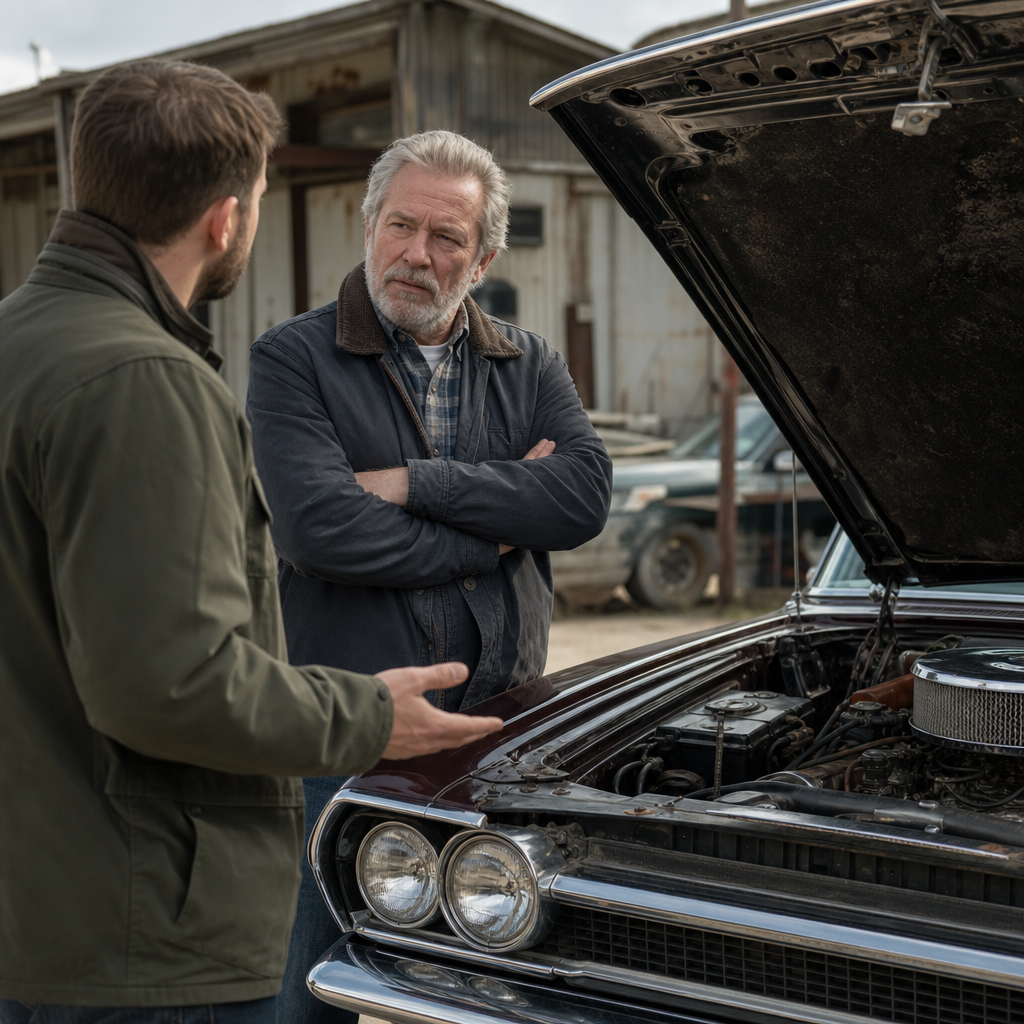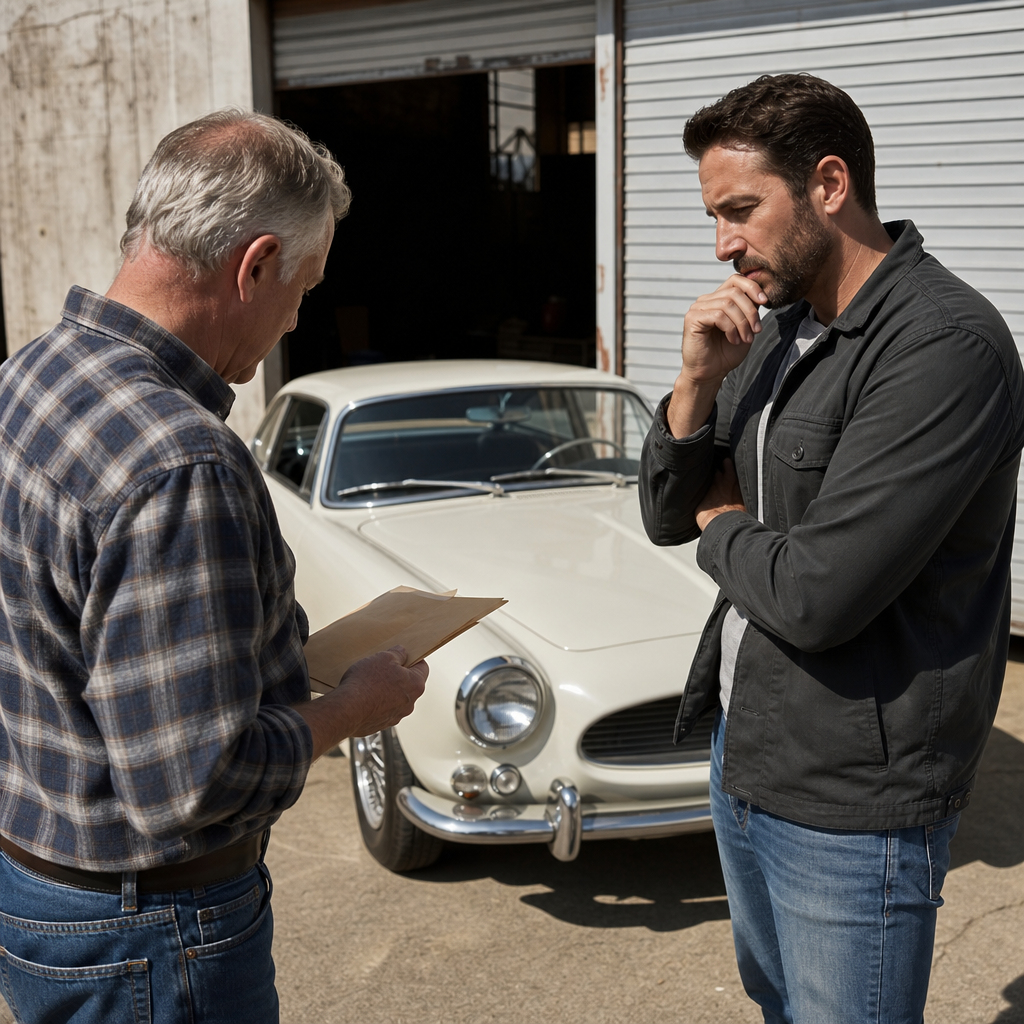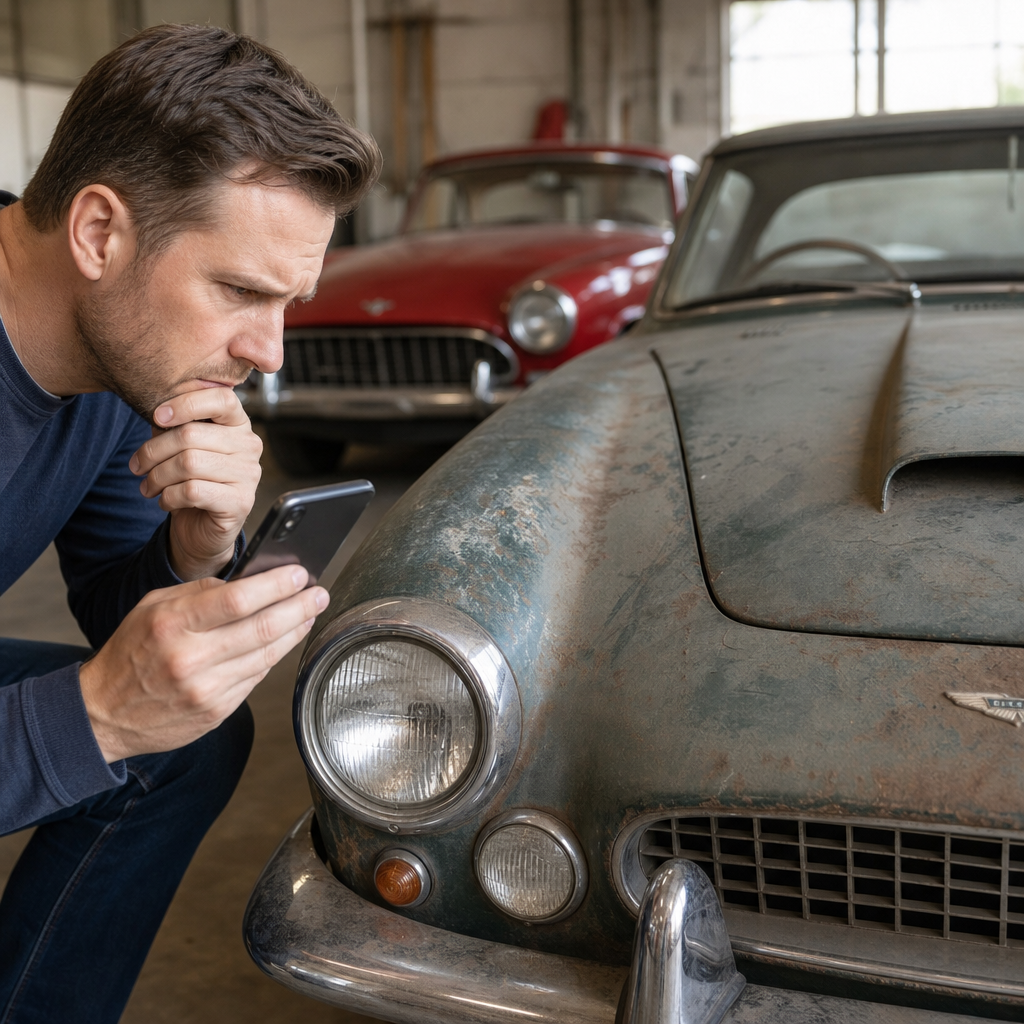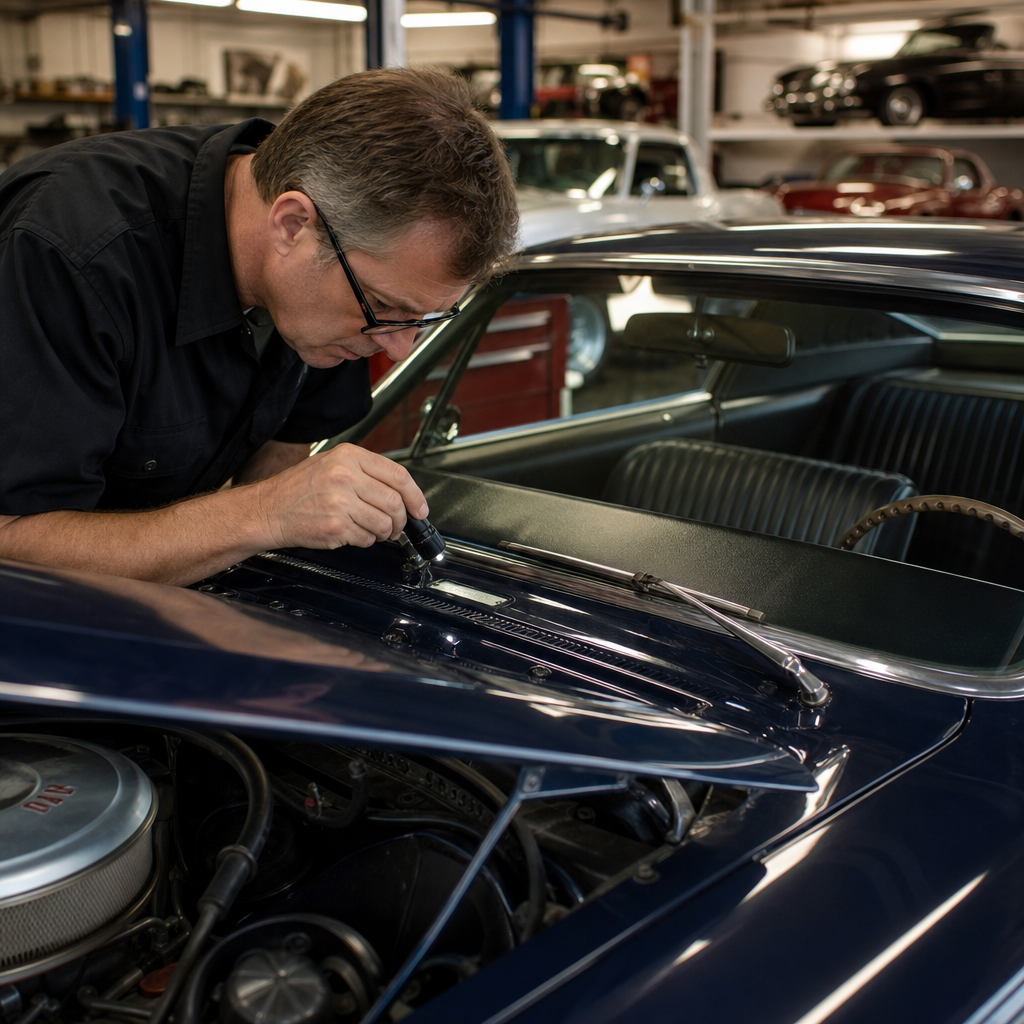
Buying a classic car can be one of the most rewarding purchases an enthusiast makes, but it is also one of the easiest ways to lose money fast if you skip the right checks. A classic car is generally an older vehicle valued for rarity, design, engineering, motorsport heritage, or cultural significance rather than simple transportation. In practice, buyers use the term broadly, covering everything from 1960s muscle cars and British roadsters to analog performance cars from the 1980s and 1990s. Knowing how to buy a classic car means understanding condition, originality, documentation, market value, and the hidden costs of ownership before money changes hands.
I have helped evaluate private-sale cars, auction listings, and dealer inventory, and the pattern is always the same: the buyers who get burned focus on paint, chrome, and emotion, while the buyers who do well focus on rust, paperwork, driveline health, and provenance. A shiny respray can hide poor bodywork. Fresh upholstery can distract from a mismatched engine. A low asking price can conceal missing trim, deferred maintenance, or title problems that are expensive to fix. The goal is not simply to buy a desirable model. The goal is to buy the right example at the right price for the way you plan to use it.
This guide serves as a hub for how to buy a classic car from first shortlist to final transfer. It covers defining your budget, choosing the right model, researching market values, inspecting the body and mechanicals, verifying originality, reviewing records, and handling negotiation, transport, insurance, and registration. If you want one principle to remember, make it this: condition and documentation matter more than fantasy potential. You can restore almost anything with enough time and money, but most buyers are better served by paying more upfront for a complete, honest car than trying to rescue a cheap project with unknown history.
Start With Purpose, Budget, and the Right Car for You
The first step in buying a classic car is deciding what you actually want the car to do. Weekend cruising, local shows, vintage rallies, and long-distance touring require different qualities. A carbureted 1965 Mustang coupe with a small-block V8 is easy to understand, easy to source parts for, and supported by a huge aftermarket. A fuel-injected 1989 Porsche 911 Carrera offers better road manners and stronger long-term desirability, but repair costs are dramatically higher. A Jaguar E-Type may look like the dream, yet ownership can be frustrating if you are not prepared for specialist maintenance and electrical gremlins.
Set two numbers before you shop: purchase budget and first-year budget. The first-year number should include taxes, transport, insurance, registration, inspection, fluids, tires, battery, hoses, belts, brake service, and unexpected repairs. On many classics, that immediate catch-up work lands between 10 and 20 percent of purchase price, and sometimes more if the car has been sitting. I tell buyers to reserve cash even for well-presented cars because deferred maintenance is common. Sellers often fix cosmetics before sale because they photograph well, while suspension bushings, wheel bearings, brake lines, and cooling-system components remain untouched.
Choose a model with strong parts support, active owner communities, and documented production details. Cars from brands with excellent club support, such as Chevrolet Corvette, Ford Mustang, Mercedes-Benz SL, Porsche 911, and classic Mini, are easier to research and easier to own. Owner forums, marque clubs, factory build guides, and registry sites are invaluable because they reveal common rust areas, correct finishes, chassis-number ranges, and year-specific components. This is where hub-level research pays off: before calling a seller, you should know what rust usually appears, what engine codes are correct, what trim is often missing, and which “upgrades” hurt value rather than help it.
Research Values, Originality, and Seller Claims Before You View the Car
Before seeing any car in person, establish a market range using multiple sources. Auction results from Bring a Trailer, Barrett-Jackson, Mecum, and Cars & Bids show what buyers recently paid, but adjust for fees, venue effects, and presentation quality. Price guides from Hagerty and Classic.com help identify broader market bands. Dealer asking prices matter less because they often include margin and reconditioning overhead, but they still show what retail shoppers are being asked to consider. The key is comparing cars with similar condition, specification, originality, mileage, and documentation rather than relying on a single number.
Seller descriptions need verification. “Numbers matching” should mean the car retains the factory-correct engine and, depending on marque and era, sometimes transmission, rear axle, body tags, and date-coded components. “Fully restored” should prompt questions about when the restoration occurred, who performed it, whether the body was taken to bare metal, and whether there are photo records and invoices. “Rust free” should be treated as unproven until you inspect floor pans, rocker panels, frame rails, trunk drops, wheel arches, cowl areas, battery trays, and suspension pickup points. “Original mileage” is meaningful only if records, title history, and wear patterns support it.
Use this pre-visit framework to compare listings efficiently:
| Check | What to Verify | Why It Matters |
|---|---|---|
| VIN and chassis number | Matches title, tags, and factory format | Prevents identity and registration problems |
| Engine and transmission codes | Correct type, dates, and stampings | Affects value and originality |
| Ownership records | Title, registrations, invoices, restoration photos | Supports mileage, maintenance, and provenance |
| Condition photos | Underside, trunk, floors, gaps, interior, engine bay | Reveals rust, accident repair, and missing parts |
| Market comps | Recent sales of comparable examples | Defines fair price before negotiating |
When possible, ask for cold-start video, walkaround video, underside photos, and close-ups of body seams and stampings before traveling. Serious sellers usually comply. Evasive answers are a signal in themselves. The best purchases often come from owners who can calmly explain what has been repaired, what still needs attention, and why the car is priced where it is.
Inspect the Body First Because Rust and Poor Metal Work Are the Biggest Financial Risks
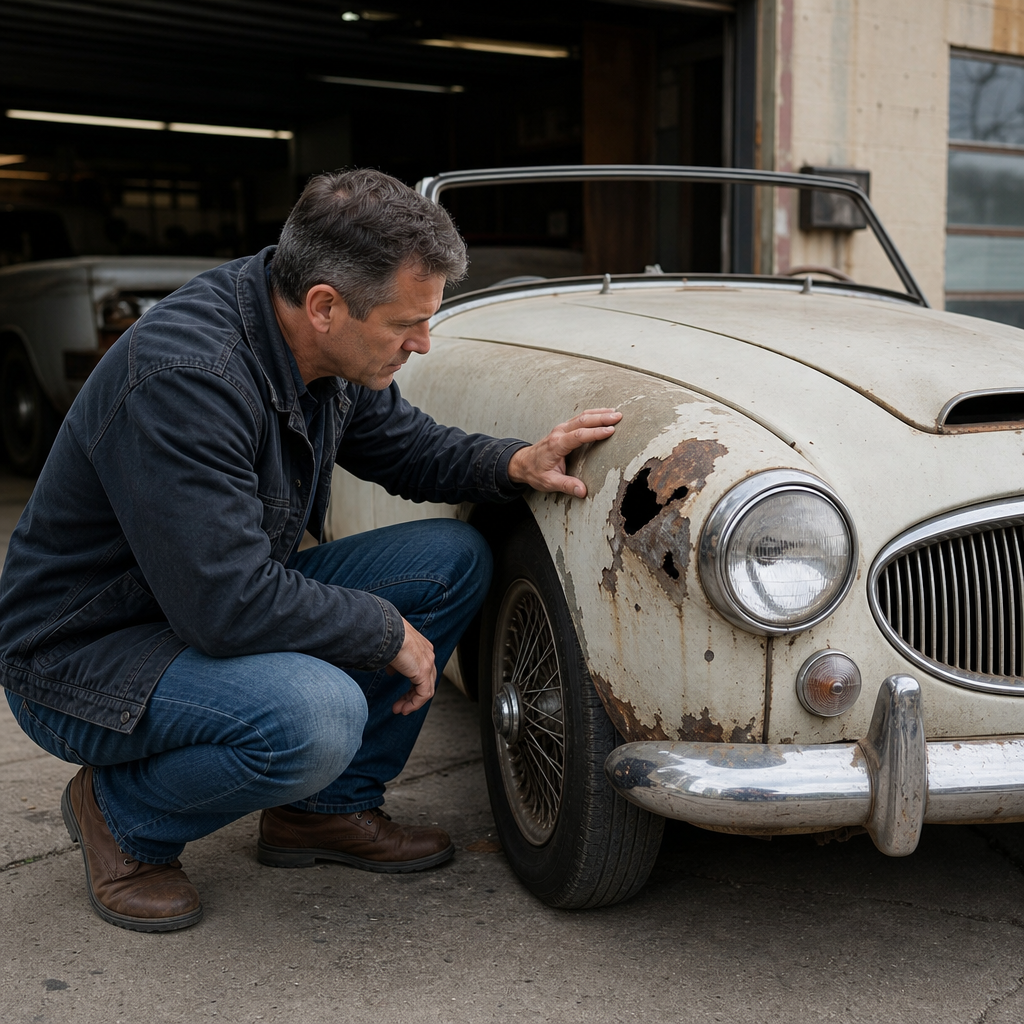
If you remember only one inspection rule, make it this: buy body condition before paint quality. Mechanical work is usually predictable. Rust repair and bad structural metal work can consume budgets at shocking speed. On a unibody car, corrosion around floors, sills, torque boxes, shock towers, or suspension mounts affects both safety and value. On a body-on-frame vehicle, inspect frame rails, crossmembers, body mounts, spring hangers, and the inside of boxed sections. Bring a flashlight, magnet, inspection mirror, paint-thickness gauge if you have one, and clothes that let you crawl under the car.
Look for uneven panel gaps, overspray on weatherstripping, bubbling at lower body edges, poorly aligned trim, and undercoating applied too neatly over suspicious areas. Tap gently where appropriate and use a magnet cautiously to detect heavy filler, understanding that aluminum panels and some fiberglass cars require different methods. Examine known trouble spots for the specific model. On first-generation Camaros, check cowl and trunk areas. On Pagoda SLs, inspect floor structure and hidden cavities. On MGBs, scrutinize sills and castle rails. On air-cooled 911s, look at front pan sections, parcel shelf, and windshield surrounds. Model-specific rust knowledge separates smart buyers from impulsive ones.
Accident damage is another major concern. Mismatched paint textures, welds that do not resemble factory spot welds, wrinkled inner fenders, or replacement aprons can indicate prior collision repair. That does not always make the car a bad buy, but it must be reflected in price and documented honestly. I would rather buy a car with an older, clearly disclosed repair performed to a competent standard than a freshly painted car with hidden filler and no explanation. Authenticity in condition is worth money because it allows you to plan.
Evaluate Mechanical Health, Test Drive Behavior, and the Cost of Deferred Maintenance
Once the body passes scrutiny, move to the engine, transmission, brakes, steering, suspension, and electrical system. A classic car does not need to feel new, but it should behave consistently with its design. Cold starting matters because many weak engines and carburetion problems are disguised by a warmed-up demonstration. Watch for excessive crank time, smoke color, unstable idle, low oil pressure, charging issues, fuel leaks, and coolant contamination. During the drive, pay attention to clutch take-up, gearbox synchros, brake pull, steering play, vibration under load, differential noise, and temperature stability in traffic.
Service records are crucial because maintenance quality matters as much as mileage. A 90,000-mile Mercedes-Benz W113 SL with regular fluid changes, proper fuel-system work, and cooling-system service may be a better car than a 40,000-mile example parked for decades. Cars that sit tend to need seals, hoses, tires, brake hydraulics, tank cleaning, carburetor rebuilding, and ignition sorting. Bias your search toward cars exercised regularly and serviced by specialists familiar with the marque. Specialist invoices tell you whether the owner understood the car or simply polished it.
If the car is expensive, rare, or highly original, arrange a pre-purchase inspection by an independent expert. This is not optional on significant purchases. A proper inspection can include compression or leak-down testing, lift inspection, brake and suspension assessment, rust evaluation, code verification, and estimates for imminent work. Shops that know the model can also identify incorrect components that general mechanics miss. The fee is small compared with the cost of discovering a weak engine, unsafe structure, or fake documentation after purchase.
Verify Paperwork, Negotiate From Evidence, and Close the Deal Safely
The paperwork phase is where many otherwise careful buyers make avoidable mistakes. Confirm the seller has clear title in the correct name and that the VIN or chassis number on the document matches the vehicle exactly. Older cars may use engine numbers or shorter serial formats depending on state and country, so confirm what is legally acceptable before paying. Imported vehicles require extra scrutiny, including customs paperwork, DOT or EPA exemptions where applicable, and state registration rules. A beautiful car with registration issues can become an expensive garage ornament.
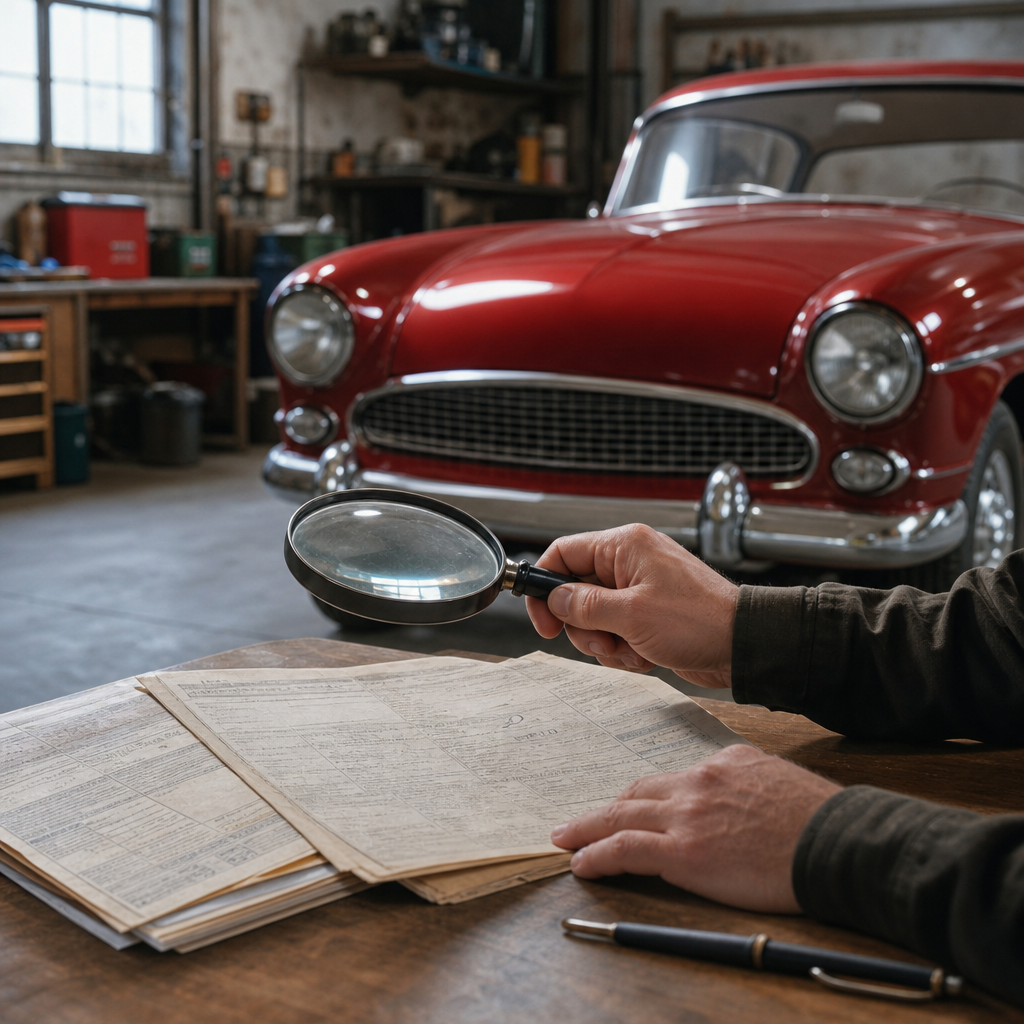
Documentation adds value because it reduces uncertainty. Build sheets, window stickers, service books, ownership history, restoration binders, concours judging sheets, and certificates from recognized registries all help establish what the car is. They do not replace inspection, but they sharpen the picture. Be cautious with reproduction tags, replacement stampings, and overly convenient stories about lost paperwork. Provenance should be corroborated by documents, expert review, and component consistency. If a seller claims a special edition, verify the claim with marque literature or factory records.
Negotiate using facts, not theatrics. Make a list of needed repairs, originality deviations, incomplete records, tire age, fluid leaks, cosmetic defects, and market comps. Present those points calmly and translate them into real costs. This approach works far better than broad statements that the car is overpriced. If the seller resists every reasonable point, be willing to walk away. There will always be another car. Use secure payment methods, complete a bill of sale, verify any deposits in writing, and document included parts, manuals, spare wheels, hardtops, or trim pieces. After purchase, arrange insured transport if the car is not road-ready, then sort insurance and registration before regular use. Agreed-value insurance from specialists such as Hagerty, Grundy, or American Collectors is usually the right choice because standard policies often do not reflect collector value.
How to buy a classic car without getting burned comes down to disciplined process. Define your purpose, set a realistic purchase and first-year budget, research the model deeply, verify the market, inspect the body before admiring the paint, test mechanical health under real conditions, and never ignore paperwork. The best classic car to buy is rarely the cheapest one on the screen and rarely the one with the flashiest photos. It is the example with honest condition, traceable history, strong parts support, and a price that reflects reality.
For buyers building a long-term collection or simply wanting a reliable weekend car, this approach protects both enjoyment and value. You reduce the odds of surprise rust repair, title problems, incorrect drivetrains, and immediate mechanical bills. You also put yourself in position to buy with confidence, negotiate from evidence, and own a car you can actually use. Start with a shortlist, gather comps, and line up a model-specific inspector before you make the first serious offer. That preparation is what keeps a dream purchase from turning into an expensive lesson.
Frequently Asked Questions
What should I inspect first when buying a classic car to avoid an expensive mistake?
The first thing to inspect is the car’s structure, because cosmetic flaws are usually fixable, but major rust and accident damage can turn a dream purchase into a financial disaster. Start with the frame, floor pans, rocker panels, trunk floor, wheel arches, suspension mounting points, and any known rust-prone areas for that specific make and model. Surface rust is one thing; perforation, patchwork repairs, bubbling paint, and poorly done undercoating can signal much bigger problems underneath. Bring a flashlight, magnet, and if possible a paint meter, because fresh paint can hide filler and previous bodywork. Check panel gaps, door fitment, and signs that the car has been hit or pulled straight.
After the body and chassis, move to the drivetrain, electrical system, brakes, and cooling system. Listen for cold-start noises, smoke, fluid leaks, overheating, charging issues, and transmission problems. On a classic car, deferred maintenance is common, so the question is not whether it needs work, but how much work and how soon. A car with honest wear, solid structure, and complete documentation is usually a safer buy than a shiny example with questionable repairs and no records. If you are not experienced, always get a pre-purchase inspection from a marque specialist. That inspection fee is small compared with the cost of discovering hidden corrosion, a weak engine, or a car built from mismatched parts after you have already paid.
How important are documentation, matching numbers, and service records when buying a classic car?
Documentation matters enormously because it helps verify what the car actually is, how it has been maintained, and whether the asking price is justified. At minimum, you want a clear title, current registration status, VIN or chassis number verification, and paperwork that matches the vehicle in front of you. Beyond that, service records, restoration receipts, ownership history, factory build information, and old inspection reports can tell you whether the car has been cared for properly or simply made presentable for sale. A thick file of records often reflects a careful owner, while missing paperwork does not automatically make a car bad, but it should lower your confidence and often your offer.
Matching-numbers status is especially important on higher-value classics, because originality can significantly affect collectibility and resale value. Depending on the vehicle, buyers may want the original engine, transmission, rear axle, color combination, and factory options confirmed through stampings, tags, and build sheets. That said, matching numbers should not blind you to condition. A fully original car with severe rust and tired mechanicals may be a worse purchase than a well-restored, non-matching example bought at the right price. The key is to know what matters for that specific market. Some cars are prized for originality above all else, while others are accepted with period-correct upgrades. Documentation allows you to buy with clarity instead of relying on seller claims.
Is it better to buy a fully restored classic car or a cheaper project car?
For most buyers, a finished or well-sorted driver-quality car is the safer and cheaper choice, even if the purchase price is higher. Project cars look tempting because they seem like a lower-cost way into the hobby, but restoration expenses add up very quickly. Bodywork, paint, chrome, upholstery, engine rebuilding, trim pieces, glass, wiring, and labor can easily exceed the value of the finished car. On top of that, many project cars are incomplete, and sourcing rare parts can take months or years. If you are paying shops to do the work, the economics often become brutal very fast.
A restored car is not automatically a good buy, though. You need to evaluate the quality and age of the restoration, who performed it, and whether it was done for appearance or done correctly from the metal up. A glossy paint job can hide poor preparation, filler, and shortcuts. Review restoration photos and receipts if they exist, and pay close attention to details like panel fit, wiring quality, weather seals, trim alignment, and underside condition. If you want to drive and enjoy the car soon, buying the best example you can afford is usually smarter than buying the cheapest one available. The right answer depends on your budget, skill level, patience, and whether you want a hobby project or a usable classic.
How can I tell if a classic car is overpriced or being misrepresented by the seller?
Start by researching comparable sales, not just optimistic asking prices. Look at recent auction results, private-sale data, enthusiast forums, marque clubs, and classifieds for similar cars with comparable condition, originality, options, and provenance. Condition matters enormously in the classic market, so make sure you understand the difference between concours, excellent, very good, driver-quality, and project-grade examples. A seller may price a car like a top-tier showpiece when it is really an older driver with cosmetic freshness and mechanical needs. If the car has desirable factory options, rare colors, important ownership history, or documented competition pedigree, the premium may be real, but it needs proof.
Misrepresentation often shows up in small inconsistencies. Watch for vague language such as “believed to be original,” “restored,” or “rust free” without evidence. Compare the seller’s claims to the VIN, engine numbers, trim tags, build data, and known production details. Check whether the odometer reading makes sense relative to the wear on the pedals, seats, steering wheel, and switches. Look for signs of fresh detailing meant to distract from leaks, smoke, corrosion, or electrical faults. If the seller resists a pre-purchase inspection, avoids specific questions, or cannot explain missing records, treat that as a warning. A good seller should be willing to discuss flaws honestly. In the classic car world, transparency is one of the strongest signs that a deal is legitimate.
What ownership costs should I budget for after buying a classic car?
The purchase price is only the beginning. Even a solid classic car usually needs immediate baseline servicing unless the seller can prove it was just done properly. Budget for fluids, belts, hoses, tires, brake service, battery, ignition components, fuel system cleanup, and inspection of the cooling system. Cars that sit for long periods often develop issues that do not appear during a short test drive, including carburetor problems, dried seals, weak wheel cylinders, fuel contamination, and electrical gremlins. If the car is newly acquired, many experienced owners replace age-sensitive items early for peace of mind.
You should also plan for insurance, storage, transport, tools, specialist labor, parts availability, and the possibility of surprise repairs. Some classic cars have excellent aftermarket support and affordable parts, while others require rare components, model-specific knowledge, and long waits. If originality matters, correct replacement parts can be expensive. If the car needs cosmetic work, understand that upholstery, trim restoration, brightwork, and paint can quickly become some of the largest expenses. It is wise to keep a reserve fund beyond the purchase price, especially in the first year of ownership. A classic car can be deeply rewarding, but the buyers who avoid getting burned are the ones who budget realistically, buy on condition and documentation, and leave room for the unexpected.