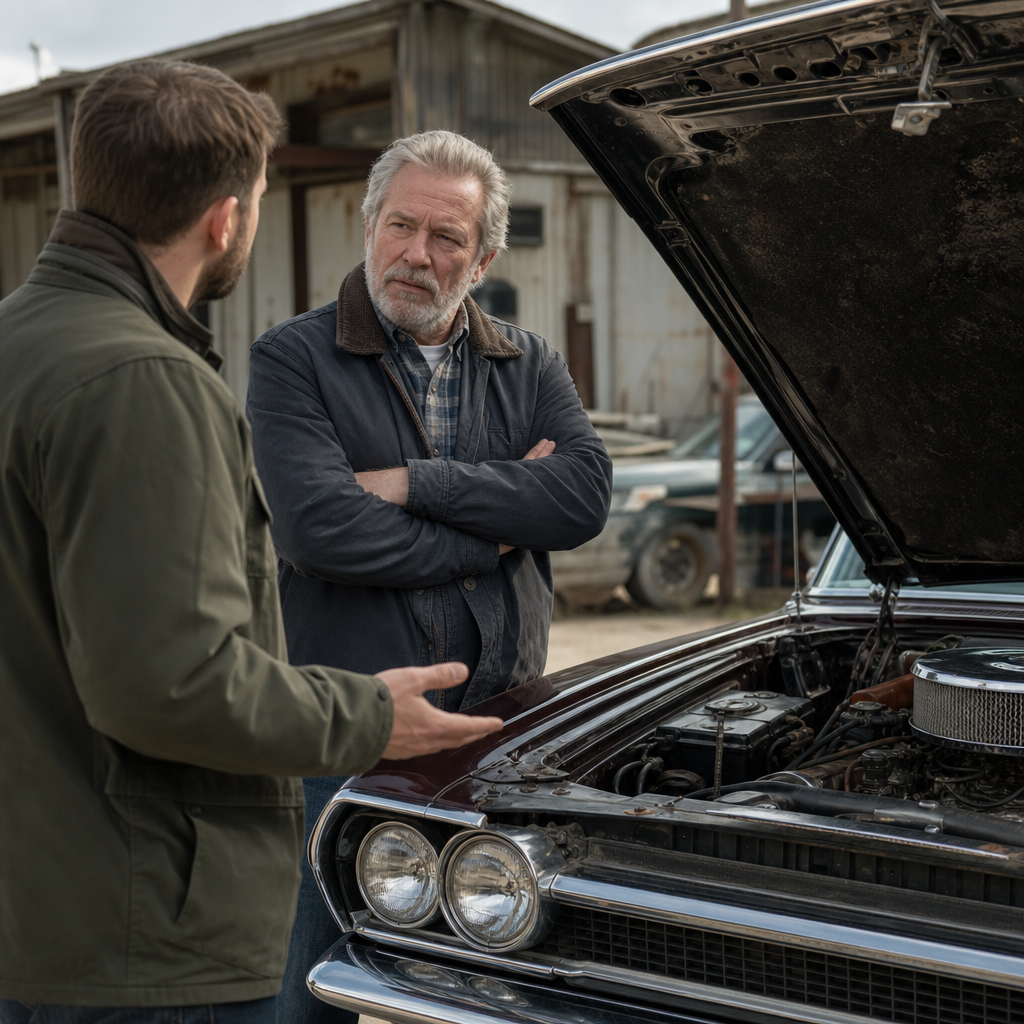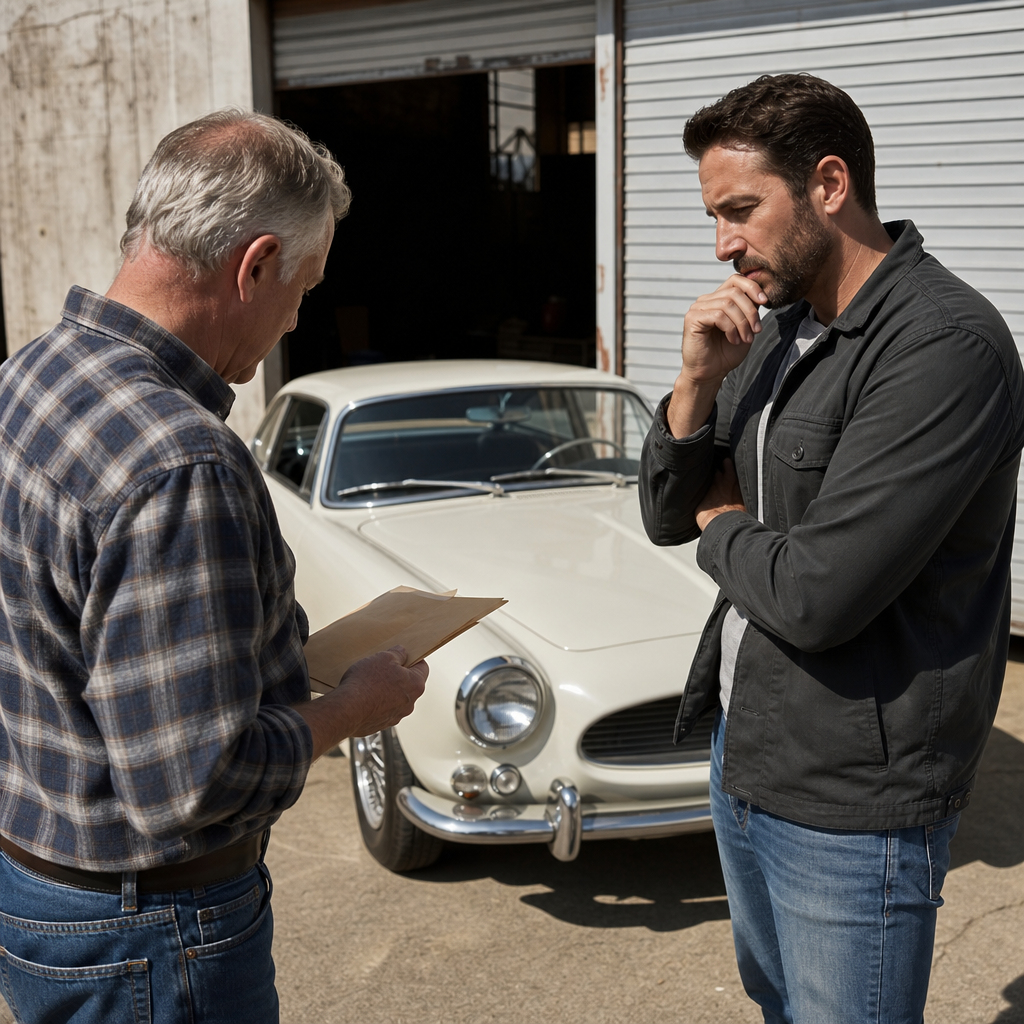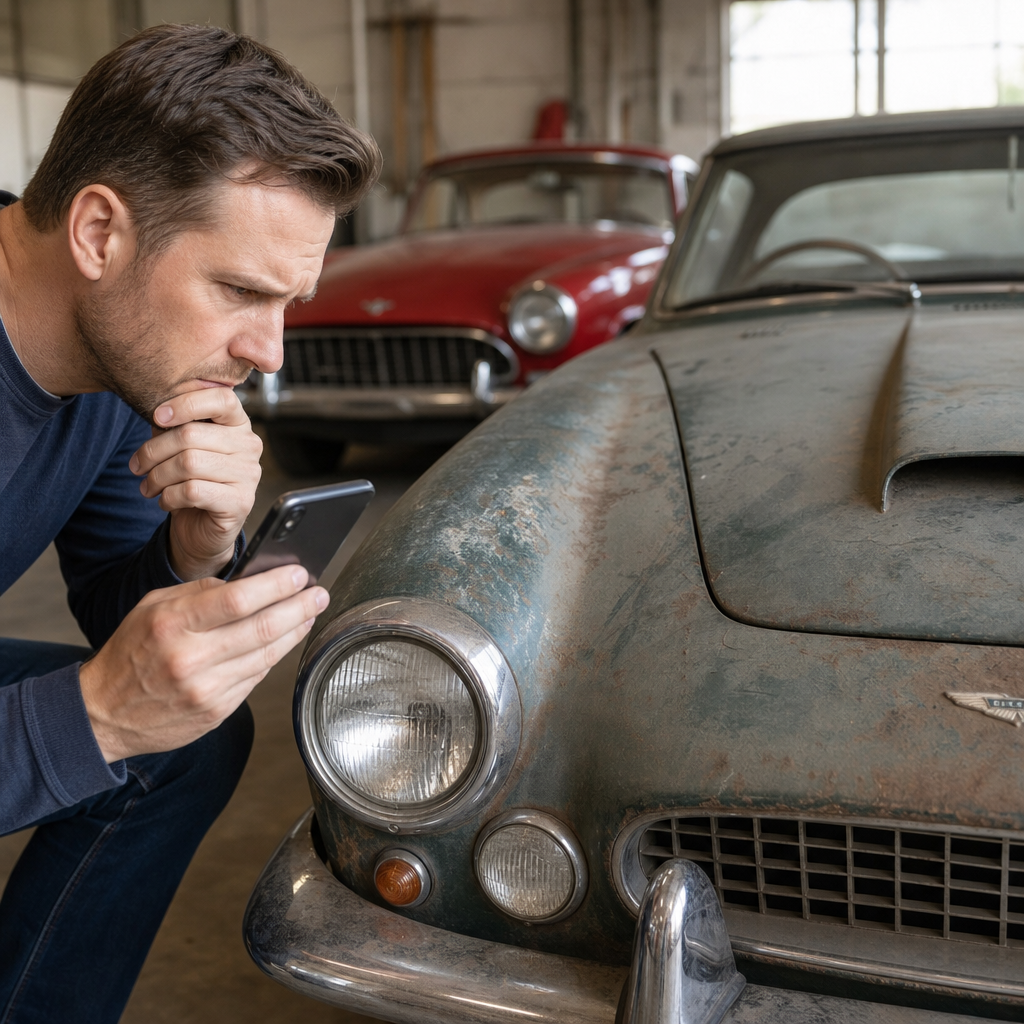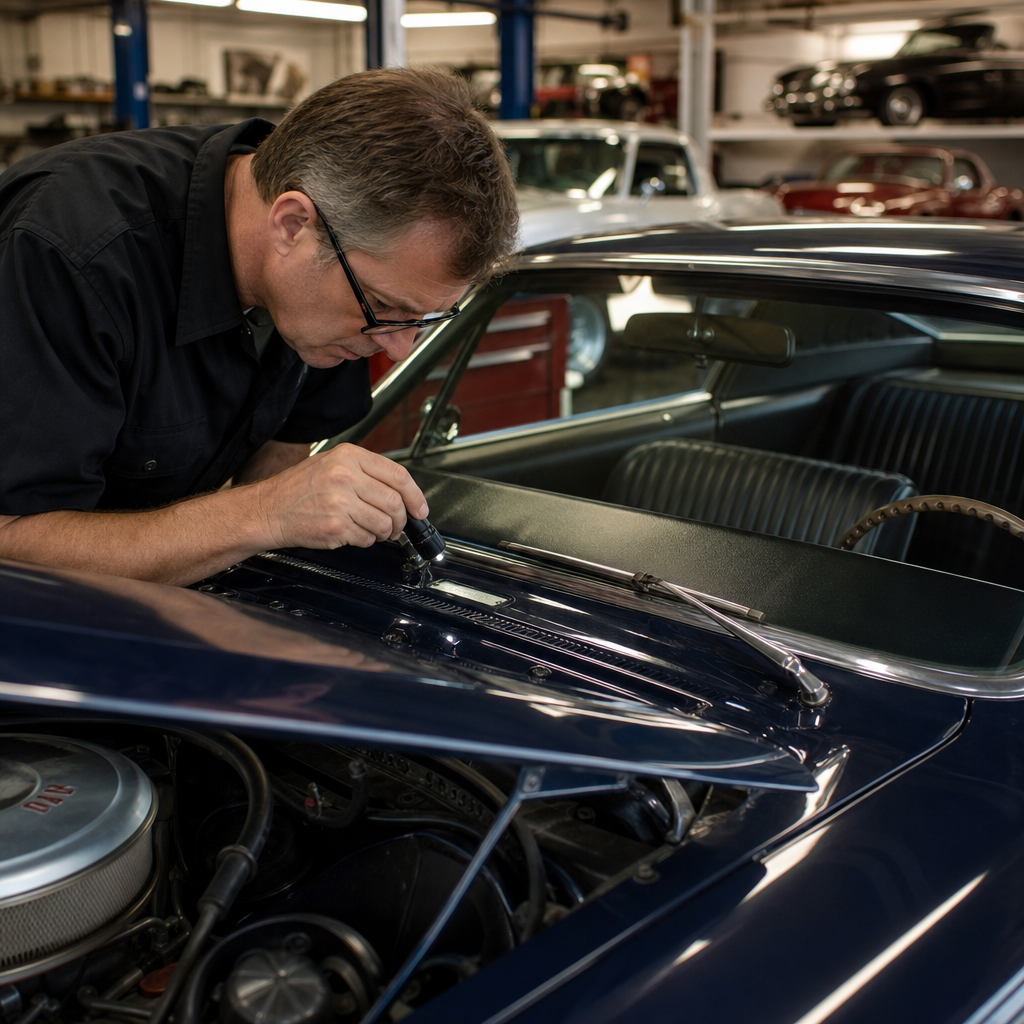
Buying a classic car is not the same as buying ordinary used transportation. You are evaluating history, craftsmanship, scarcity, parts support, legal paperwork, and future maintenance at the same time. The right questions protect your budget and help you avoid cars that look appealing in photos but become expensive problems in the garage. I have inspected enough classics at auctions, private sales, and dealer showrooms to know that the questions you ask before money changes hands matter more than the polish on the paint.
In practical terms, a classic car is typically an older vehicle valued for age, design, cultural significance, rarity, or enthusiast demand rather than simple daily utility. The exact age threshold varies by insurer, registration authority, and market segment. Some organizations use twenty years, others twenty-five, and many collectors reserve the term for vehicles from distinct eras such as prewar, postwar, muscle car, chrome bumper, malaise era, or analog performance. Condition also has its own language. A numbers-matching car retains its original engine and often transmission identified by date codes and stampings. A driver-quality car is usable and presentable but not concours. A restomod combines classic styling with modernized mechanical systems.
Why do these distinctions matter? Because buying a classic car is a decision about intended use as much as ownership. The questions a buyer asks should change depending on whether the goal is weekend cruising, local shows, long-distance touring, preservation, vintage racing, or long-term appreciation. A rust-free driver with upgraded disc brakes may suit a person who wants dependable enjoyment. The same car could disappoint a buyer seeking originality and judged-event credibility. Before shopping seriously, define your purpose, budget ceiling, storage plan, and tolerance for ongoing repairs. Those basics shape every other question in the purchase process and help you compare opportunities intelligently.
This guide is the central hub for how to buy a classic car well. It covers the essential questions on authenticity, condition, paperwork, price, inspection, and ownership costs, while giving enough context to evaluate listings, speak confidently with sellers, and know when to walk away. If you understand the answers you need before buying, you dramatically improve your odds of purchasing a classic you can enjoy rather than regret.
What kind of classic car should you buy, and why?
The first question is not “Which car is available?” but “Which car fits the way I will use it?” Narrowing your target prevents emotional overspending and helps you focus your research. Start with body style, era, drivetrain, and intended use. A sixties British roadster delivers charm and light steering but may require frequent tinkering. A seventies Mercedes sedan offers robust engineering and parts networks, though deferred maintenance can be costly. An American muscle car may have strong market visibility and reproduction parts support, but originality questions are critical because clones and tribute builds are common.
When I help buyers set criteria, I tell them to rank four priorities: originality, drivability, parts availability, and total ownership cost. You usually cannot maximize all four. Air-cooled Porsches, early Broncos, C10 pickups, E30 BMWs, and first-generation Mustangs each attract buyers for different reasons, but the best choice depends on your skills and expectations. If you cannot weld, bodywork risk should move to the top of your concern list. If you want to drive long distances, cooling performance, overdrive gearing, and highway stability matter more than concours details.
Also ask whether the model has reliable specialist support. Enthusiast forums, club registries, marque experts, and restoration shops are part of the buying equation. A desirable car with weak parts support can become immobile over a small missing trim piece or an unobtainable injection component. Good classics are not only desirable; they are serviceable.
Is the car authentic, correctly identified, and represented honestly?
Authenticity is one of the most important classic car buying questions because value often depends on it. Start with the VIN, chassis number, body tag, engine stamping, transmission code, axle tag, and date-coded components where applicable. Confirm that those identifiers match the title and align with the model year, trim level, engine option, and assembly plant. On some cars, a claimed high-performance version is worth multiples of a standard model, which creates strong incentives for misrepresentation. Big-block conversions, SS tributes, Hemi clones, and badge upgrades are common in several segments.
Ask the seller directly: Is this a numbers-matching car? Has the engine, transmission, rear axle, color, or interior specification changed from factory build? What documentation supports those claims? Strong answers include factory records, build sheets, protect-o-plates, heritage certificates, BMIHT certificates, Marti Reports, Porsche COAs where relevant, restoration photos, and long-term ownership files. Weak answers sound like assumptions, auction-listing language, or “that’s what I was told.” If the seller cannot verify a premium claim, do not pay a premium price.
Look closely at trim and details. Incorrect badging, modern hardware in visible areas, inconsistent welds, replaced cowl tags, and fresh stampings on overly clean surfaces can indicate a story that does not hold up. Honest modifications are not automatically bad. Many buyers prefer upgraded ignition, brakes, cooling, or fuel delivery. The key is disclosure. A well-documented modified car is usually safer to buy than an “original” example with unexplained inconsistencies.
What is the true condition, especially rust, structure, and mechanical health?
Condition determines both enjoyment and total cost, and no issue is more important than rust. Mechanical work is usually straightforward compared with structural metal repair. Ask where the car is known to rust and inspect those exact areas using model-specific guides. Typical danger zones include frame rails, floor pans, trunk floors, rockers, lower fenders, shock towers, cowl drains, windshield channels, battery trays, rear window corners, and pickup cab mounts. Magnet tests, paint meter readings, underbody photos, lift inspections, and borescope views inside boxed sections can reveal filler, patch panels, and corrosion hidden by fresh undercoating.
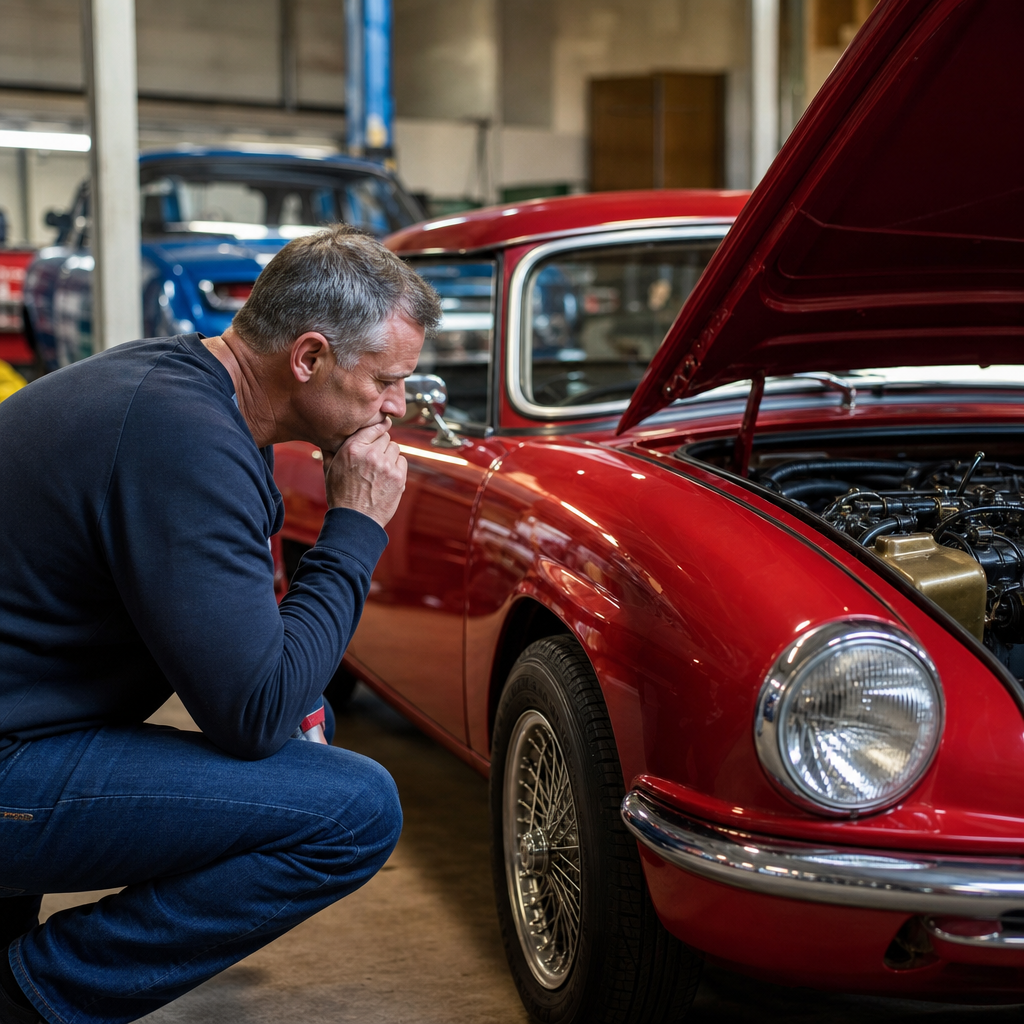
Mechanical condition should be verified system by system. Ask when the engine was rebuilt, by whom, and with what invoices. Check compression or leak-down results if available. Listen for cold-start smoke, valvetrain noise, bearing rumble, detonation, hot-idle oil pressure problems, and hard-start behavior. During a test drive, evaluate clutch engagement, automatic shift quality, steering play, brake pull, cooling performance in traffic, charging voltage, suspension noises, and differential whine. Cars that drive “fine for their age” often still need significant work.
| Question | Why it matters | Good sign | Warning sign |
|---|---|---|---|
| Where is the rust? | Rust repair is expensive and often hides prior damage | Photos, receipts, dry storage history | Fresh undercoat, vague answers, bubbling seams |
| Has the engine been rebuilt? | Rebuild quality affects reliability and value | Invoices, machine shop details, compression data | No paperwork, smoke, low oil pressure |
| Has it been in an accident? | Poor repairs compromise alignment and safety | Measured repairs, photo documentation | Uneven gaps, overspray, bent support panels |
| Do all systems work? | Electrical and trim faults add up fast | Lights, gauges, heater, wipers functioning | Nonworking accessories blamed on “simple fixes” |
Body and paint quality also deserve disciplined questions. Ask how old the paint is, whether the car was stripped to metal, whether rust was cut out or skimmed over, and whether panel gaps were adjusted during restoration. A shiny repaint can hide severe defects. Check for sanding scratches under clearcoat, tape lines under weatherstrips, paint on rubber seals, mismatched orange peel, and overspray inside wheel housings. Good cosmetics add value only when the underlying metalwork is sound.
What paperwork, history, and legal checks should you demand?
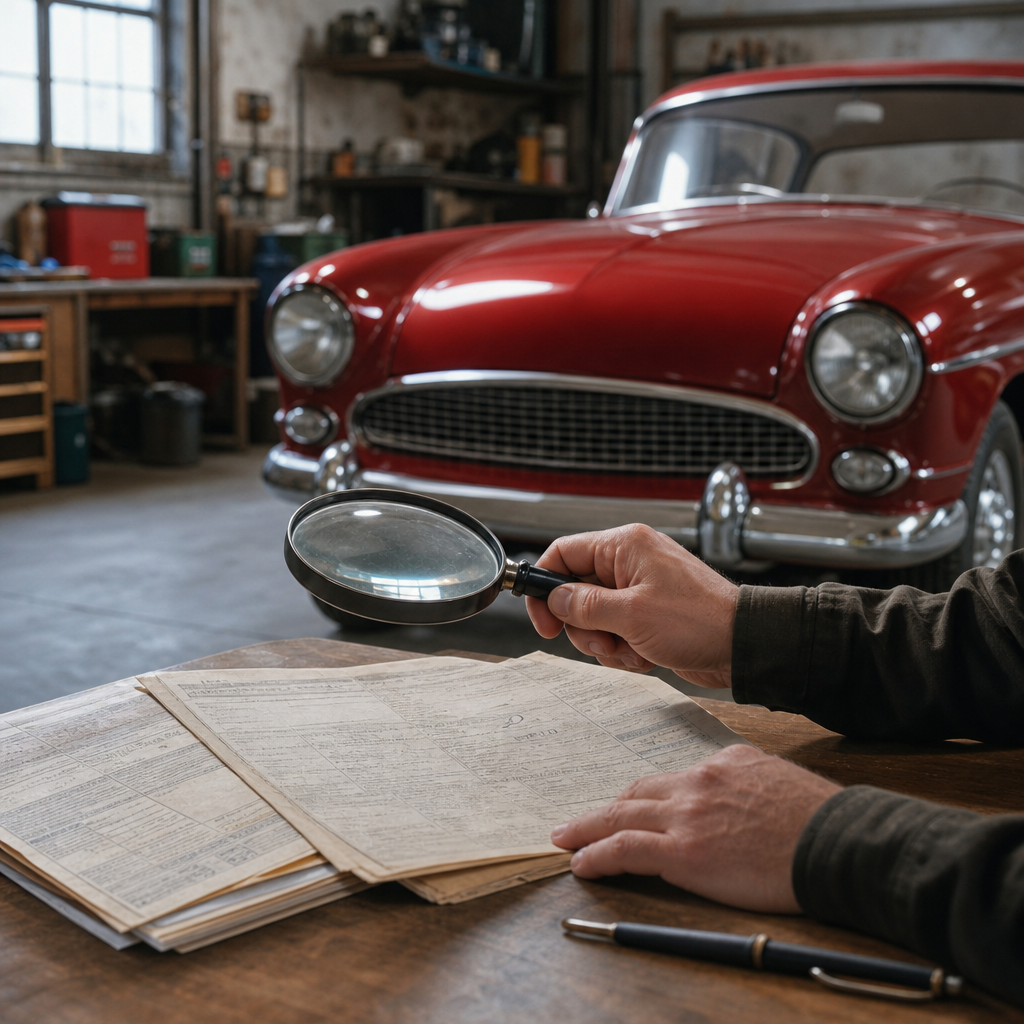
A classic car should come with a story you can verify. Start with the title. Confirm that the seller’s name matches the title, the VIN on the title matches the car, and there are no branding issues, liens, or registration irregularities. Older vehicles sometimes have state-issued VIN plates, engine-number titles, bonded titles, or imported documentation that requires closer scrutiny. Rules vary by jurisdiction, so check your local motor vehicle authority before you buy, not after. If you are considering an imported car, ask for customs entry forms, duty paperwork, foreign registration records, and evidence the car legally entered the country.
Service history matters almost as much as legal paperwork. A thick file of receipts can justify price because it reduces uncertainty. Look for evidence of brake hydraulics, cooling system renewal, suspension bushings, fuel tank cleaning, carburetor or injection service, ignition updates, tires, and age-sensitive rubber components. Ask how often the car was driven. Cars that sit for years can develop stale-fuel damage, seized wheel cylinders, dried seals, and electrical corrosion even if the odometer hardly moves.
Ownership history provides context. Fewer owners is not always better, but long-term ownership with documented care is a strong positive signal. Ask why the seller is selling now, how long they have owned the car, and where it was stored. Consistent answers, old photos, club records, and maintenance logs build confidence. Evasive answers usually mean more digging is necessary.
How do you price a classic car and negotiate intelligently?
Classic car values are not set by age alone. They reflect condition, originality, provenance, color combination, options, documentation, restoration quality, and current demand. Before making an offer, compare multiple sources: recent Bring a Trailer results, Hagerty Price Guide, Hemmings listings, marque-specific forums, Mecum or Barrett-Jackson results for comparable cars, and private-sale discussions within owner groups. The goal is not to find the highest advertised price; it is to understand what similar cars actually transact for in similar condition.
Use a condition framework. A number-one concours car is rare and expensive. Most first-time buyers should focus on strong number-three or honest number-two driver examples because they can be enjoyed without the cost pressure of perfection. It is usually cheaper to buy the best car you can afford than to restore a rough example. I have seen buyers overpay for “project bargains” only to spend two or three times the purchase price on metalwork, trim restoration, glass, chrome, and labor.
Negotiation works best when anchored in evidence. Instead of saying the price feels high, point to specific deductions: old tires despite good tread, nonworking gauges, incorrect engine, rust in known trap areas, weak compression, missing trim, or incomplete paperwork. Be respectful and factual. If the seller has real documentation and the car is honestly represented, paying a fair premium can be smarter than chasing the cheapest listing online.
Should you get a pre-purchase inspection, and what should it include?
Yes. A pre-purchase inspection is one of the smartest steps in how to buy a classic car, especially if the vehicle is remote or high value. Use a marque specialist whenever possible, not a generic mobile mechanic unfamiliar with older vehicles. The right inspector knows where a specific Alfa, Corvette, 911, Jaguar, Mustang, or Land Cruiser typically rusts, which stampings should appear where, and what common shortcuts restorers use to save money.
A proper inspection should include identity verification, rust assessment, body and paint evaluation, undercarriage review, driveline checks, road test observations, electrical function review, and photo documentation. Compression and leak-down testing can be worthwhile on valuable cars, as can paint meter readings and lift photos. Ask for a written report that separates safety issues, immediate repairs, medium-term needs, and authenticity concerns. That structure helps you decide whether to proceed, renegotiate, or walk away.
Remote buying demands even more discipline. Request cold-start video, walkaround video in natural light, underside photos, trunk and spare-wheel-well photos, closeups of VINs and tags, and a driving video showing gauges. If a seller resists reasonable requests, treat that resistance as useful information.
What will ownership really cost after the purchase?
The purchase price is only the entry cost. Insurance, transport, taxes, registration, storage, tools, maintenance, and inevitable catch-up repairs all affect affordability. Ask your insurer whether the car qualifies for agreed-value coverage and mileage restrictions. Get shipping quotes if the car is out of state. Budget immediately for fluids, belts, hoses, battery, tires older than six years, fuel system cleaning, and brake inspection unless records prove recent work. On many classics, recommissioning alone costs several thousand dollars.
Parts availability should influence your buying decision as strongly as styling. Reproduction support is excellent for some American models and certain European icons, but trim, glass, interior hardware, emissions-era components, and market-specific pieces can still be difficult or expensive to source. Join owner communities before you buy and ask what parts are hard to find, which suppliers are trusted, and what common jobs actually cost. Owning a classic is deeply rewarding, but the best experience comes from buying a car whose needs match your budget, your patience, and your plans. Make a checklist, ask hard questions, verify every important claim, and buy with your head as well as your heart.
Frequently Asked Questions
What vehicle history questions should I ask before buying a classic car?
Start by asking who has owned the car, how long the current seller has had it, where the car has spent most of its life, and whether there is documentation to support that story. Ownership history matters because a classic car with a traceable chain of caretakers is usually easier to evaluate than one with large gaps in its past. You should also ask whether the mileage is believed to be original, whether the title matches the VIN and body tags, and whether the car has ever been declared salvaged, rebuilt, or stolen. A seller does not always have every record, but they should be able to explain the car’s background clearly and consistently.
Beyond the basic title and registration, ask for service records, restoration invoices, old inspection reports, photos of past work, factory documentation, and any ownership paperwork that helps verify the car’s identity and care. On a valuable classic, history is part of the asset. It can support authenticity, justify asking price, and reveal whether the car has been maintained thoughtfully or simply polished for sale. If the seller avoids direct answers, cannot explain missing paperwork, or provides a story that changes over time, treat that as a warning sign. With classic cars, uncertainty usually becomes your expense later.
How can I tell if a classic car has rust, accident damage, or poor restoration work?
You should ask the seller directly where the car has rust, what metal has been replaced, whether it has been in any accidents, and who performed paint or bodywork. Then verify those answers with a careful inspection. Rust is one of the most important issues in the classic market because cosmetic shine can hide structural problems. Ask specifically about common corrosion areas for that model, including floor pans, rocker panels, frame rails, trunk floors, wheel arches, lower fenders, cowl sections, and windshield or rear glass channels. If the seller says the car is rust-free, that claim should be backed by photos, repair receipts, or a very convincing in-person inspection.
Look for uneven panel gaps, overspray on trim or weatherstripping, bubbling under paint, mismatched finishes, fresh undercoating, or welds that appear crude or inconsistent. Those signs may indicate collision repairs, filler, or shortcuts taken during restoration. It is also wise to ask whether the car was restored for long-term ownership or simply prepared for resale. A restoration done to sell can look impressive in photos while hiding weak metal work, poor parts fitment, and low-quality materials. If you are serious about the purchase, hire an independent inspector or marque specialist. A knowledgeable set of eyes can often spot poor repairs in minutes and save you from a five-figure mistake.
What mechanical and maintenance questions matter most when evaluating a classic car?
Ask when the engine, transmission, brakes, suspension, cooling system, and fuel system were last serviced or rebuilt, and ask for receipts whenever possible. A classic car may start easily and still need major mechanical work. Sitting for long periods can damage seals, clog carburetors, corrode fuel tanks, harden brake components, and create cooling issues that do not show up during a short test drive. You should also ask whether the car leaks fluids, overheats in traffic, charges properly, starts reliably when cold, and has any known noises, smoke, vibration, or drivability issues. These are basic questions, but the quality of the answers tells you a lot about how honestly the car is being represented.
Also ask whether the car remains stock or has been modified. Engine swaps, aftermarket ignition systems, suspension changes, disc brake conversions, and electrical alterations can improve a car, but only if they were done correctly. Poor modifications often create reliability and parts-matching problems. Ask what parts were used, who installed them, and whether the original parts are included. Finally, find out what maintenance the car currently needs, not just what has been done. A candid seller should be able to tell you what they would address next if they were keeping it. That answer often reveals whether you are buying a sorted driver or inheriting deferred maintenance.
How important are originality, matching numbers, and authenticity when buying a classic car?
They are extremely important, but their importance depends on your goal. If you are buying for investment potential, show judging, or long-term collectibility, you should ask whether the engine, transmission, rear axle, body tags, trim, colors, and major components are original to the car. “Matching numbers” is often used loosely, so ask exactly what matches and how it was verified. Some cars retain their factory drivetrain, while others only have a correct-date replacement engine or period-correct components. That difference can affect value significantly, especially in higher-end segments of the market.
If you are buying mainly to enjoy driving, perfect originality may matter less than condition, safety, and mechanical soundness. Even so, authenticity still influences resale value and helps you avoid overpaying. Ask whether the car has been changed from its factory specification, whether reproduction parts were used in restoration, and whether rare features are documented by build sheets, window stickers, or factory records. A seller should be able to explain what is original, what has been restored, and what has been replaced. The key is to make sure the price reflects the truth. An honest, well-restored driver can be a great buy, but it should not be priced like an untouched, fully documented survivor.
What ownership cost and parts availability questions should I ask before committing to a classic car?
Ask what parts are difficult to find, which systems are expensive to rebuild, what routine maintenance costs look like, and whether there are known weaknesses specific to that model. Too many buyers focus only on purchase price and ignore the cost of keeping a classic car healthy. Some models have excellent reproduction support and strong club communities, which makes ownership far easier. Others require hunting for rare trim, model-specific glass, hard-to-find interior pieces, or specialized engine components that can turn a simple repair into a long and expensive project. Before buying, find out whether parts are available off the shelf, rebuilt on exchange, or only found used through collectors and forums.
You should also ask about insurance, storage, transport, registration requirements, emissions exemptions, and whether the car needs premium fuel, frequent tuning, or specialty labor. A cheap classic can become expensive very quickly if every small problem requires rare parts and specialist help. Research ownership forums, talk to parts suppliers, and ask a knowledgeable mechanic what typically fails on the model you are considering. A smart classic purchase is not just about whether you can afford to buy the car today. It is about whether you can support the car properly over the next several years without turning the experience into a financial drain.