Japanese limited-edition classic cars occupy a special corner of automotive history because they combine the engineering discipline of major manufacturers with the scarcity, storytelling, and collector appeal usually associated with boutique European marques. In this context, a classic car generally means a vehicle old enough to have historical significance and sustained enthusiast demand, while a limited edition refers to a model, trim, homologation special, coachbuilt variant, or market-specific release produced in intentionally small numbers. Rare cars overlap with that definition but also include prototypes, concept-derived road cars, dealer specials, and low-volume performance packages that were not always advertised as limited editions at launch.
This category matters because Japan produced some of the most technically interesting and culturally influential specialty cars of the late twentieth century, yet many remain misunderstood outside dedicated circles. I have spent years tracing production codes, reading old brochures, checking auction sheets, and comparing chassis details at shows and in importer yards, and one lesson is consistent: rarity alone never explains value. What matters is the combination of historical context, specification, preservation, and documented provenance. A Nissan Skyline GT-R Nür, a Mazda RX-7 Spirit R, a Toyota 2000GT, and a Tommykaira-tuned performance sedan are all rare in different ways, and buyers who treat them as interchangeable “JDM collectibles” usually overpay or miss the real significance.
As a hub for concept and rare cars within the broader classic car models and brands landscape, this guide explains what qualifies a Japanese limited-edition classic car, why manufacturers created these models, which examples define the segment, and how collectors should evaluate authenticity and ownership risk. It also serves a practical purpose: if you are researching homologation specials, coachbuilt collaborations, one-year trims, or halo cars that led to later icons, the sections below give you a framework for comparing them. That framework is essential because production totals are often quoted inaccurately, trim names vary by market, and many cars have been modified beyond recognition. Understanding the category first will help every later model-specific search produce better decisions.
What makes a Japanese limited-edition classic car truly significant
A Japanese limited-edition classic car becomes significant when scarcity is paired with a clear reason for existing. The strongest reasons are homologation, technology demonstration, anniversary branding, motorsport halo value, and market experimentation. Homologation cars were built so manufacturers could qualify parts or configurations for racing under rules used by Group A, Group B, Super Touring, or domestic championships. These cars often carried meaningful mechanical upgrades rather than cosmetic packages. The Nissan Skyline GT-R NISMO of 1990 is the textbook example: it was produced in small numbers so Nissan could use specific aerodynamic and competition-related changes in racing, and today its significance comes from that purpose, not simply from production rarity.
Technology demonstrators matter for a different reason. Cars such as the Honda NSX-R, Mazda RX-7 Spirit R, and Mitsubishi Lancer Evolution Tommi Mäkinen Edition showcased what Japanese engineering teams could achieve when cost constraints loosened and brand image was the priority. These models often featured weight reduction, revised gearing, specialized dampers, brake upgrades, or hand-finished details that never reached standard trims. When I inspect these cars, the key question is always whether the special equipment is original and complete, because replacements are often unobtainable or subtly incorrect. A missing lightweight seat, nonfactory ECU, or swapped wheel design can materially change collectability.
Another factor is how directly a rare model influenced mainstream enthusiast culture. The Autozam AZ-1, Toyota Sports 800, Subaru Impreza 22B STI, and Nissan Pulsar GTI-R each inspired later waves of engineering and fandom disproportionate to their sales numbers. Some shaped tuner culture; others proved Japan could create serious sports cars on its own terms. Concept-derived road cars are especially important in this regard because they show how automakers tested public appetite for design or technology. Even when a concept never entered volume production, the limited-run road car related to it can become historically important if it previews a new platform, drivetrain idea, or styling language. Significance, then, comes from impact, purpose, and integrity together.
Why Japanese manufacturers built rare and special models
Japanese automakers did not create low-volume special cars purely for collectors. Most were built to solve immediate business or brand problems. In the 1960s and 1970s, halo cars helped establish technical credibility against Europe and the United States. The Toyota 2000GT did exactly that by presenting Japan as capable of producing a world-class grand tourer with sophisticated engineering and elegant design. In the 1980s and 1990s, special editions often supported motorsport programs, boosted showroom attention during economic peaks, or gave domestic buyers fresh reasons to revisit an aging platform. Limited production was sometimes a strategic response to high development costs: it allowed a manufacturer to test premium pricing without fully retooling an entire model range.
The domestic market also encouraged fragmentation. Japanese buyers historically responded well to trim differentiation, dealer network exclusives, and anniversary versions. Toyota, Nissan, Mitsubishi, Subaru, and Mazda all used special trims to energize demand, and some of those trims later became blue-chip collector targets because the mechanical package was genuinely distinct. The Subaru Impreza 22B STI was built to celebrate Subaru’s World Rally Championship success and the brand’s fortieth anniversary. Its widened body, driver-focused setup, and tiny production total transformed it from commemorative special to benchmark collectible. The same pattern appears with the Lancer Evolution VI Tommi Mäkinen Edition, which linked road car identity directly to rally achievement.
Economic context matters too. During Japan’s asset bubble and its aftermath, manufacturers alternated between ambition and efficiency. Bubble-era confidence produced advanced projects and niche experimentation. Later, as budgets tightened, brands leaned on special editions to extract new excitement from existing architectures. This is one reason the late 1990s and early 2000s generated so many memorable final editions. The Mazda RX-7 Spirit R, launched as the FD generation neared the end of production, is a perfect example. Rather than merely clearing inventory, Mazda created a carefully specified send-off with upgraded brakes, suspension tuning, and interior differentiation. Final editions often become the most collectible versions because they consolidate lessons learned over a model’s life.
Defining the key categories: halo cars, homologation specials, coachbuilt rarities, and final editions
Collectors should sort Japanese rare cars into categories because each category drives value differently. Halo cars are image leaders intended to elevate an entire brand. The Toyota 2000GT and Honda NSX fit here, though specific sub-variants such as the NSX-R are the real limited-edition collector targets. Homologation specials exist to legalize racing components or bodywork; examples include the Skyline GT-R NISMO, Pulsar GTI-R, and 22B STI. Coachbuilt rarities include collaborations where outside specialists or affiliated firms created low-volume variants, sometimes under semi-official approval. Tommykaira models, Mitsuoka creations, and select Autech or NISMO projects deserve attention in this category because production records can be murky and authenticity verification is more complex.
Final editions and commemorative models represent another major category. These are often the easiest entry point for enthusiasts because they are clearly branded, well documented, and tied to the end of a lineage. The RX-7 Spirit R and some Type R or Nür variants fall into this group. They tend to attract buyers who want the most complete factory expression of a model rather than the earliest or most race-focused version. Market-specific specials form a final category. Some cars were offered only through certain dealer channels, only in Japan, or only in restricted color and option combinations. Those details matter because rarity on paper does not always match rarity in surviving condition.
| Category | Main purpose | Representative examples | What collectors verify first |
|---|---|---|---|
| Halo car | Brand prestige and technical leadership | Toyota 2000GT, Honda NSX-R | Original specification, provenance, restoration quality |
| Homologation special | Racing eligibility and component approval | Skyline GT-R NISMO, Subaru 22B STI | Matching body and mechanical details tied to homologation parts |
| Coachbuilt rarity | Niche performance or design differentiation | Tommykaira M30, Autech versions, Mitsuoka specials | Build records, plaques, tuner documentation, period parts |
| Final edition | Celebrate a model’s end and package best components | Mazda RX-7 Spirit R, GT-R Nür | Edition-specific trim, low-mile condition, service history |
Landmark Japanese limited-edition classic cars every enthusiast should know
Any serious overview must begin with the Toyota 2000GT. Built in very small numbers between 1967 and 1970, it remains the foundational Japanese halo classic because it changed international perceptions of Japanese design and engineering. Values reflect more than rarity; they reflect status as a national milestone. The Honda NSX-R, especially early NA1 and later NA2 iterations, deserves equal attention for demonstrating how meticulous weight reduction, chassis tuning, and driver feedback could create a purist benchmark. These cars are not simply “rare NSXs.” They are separate engineering statements, and condition-sensitive details such as factory lightweight components and original finish matter enormously.
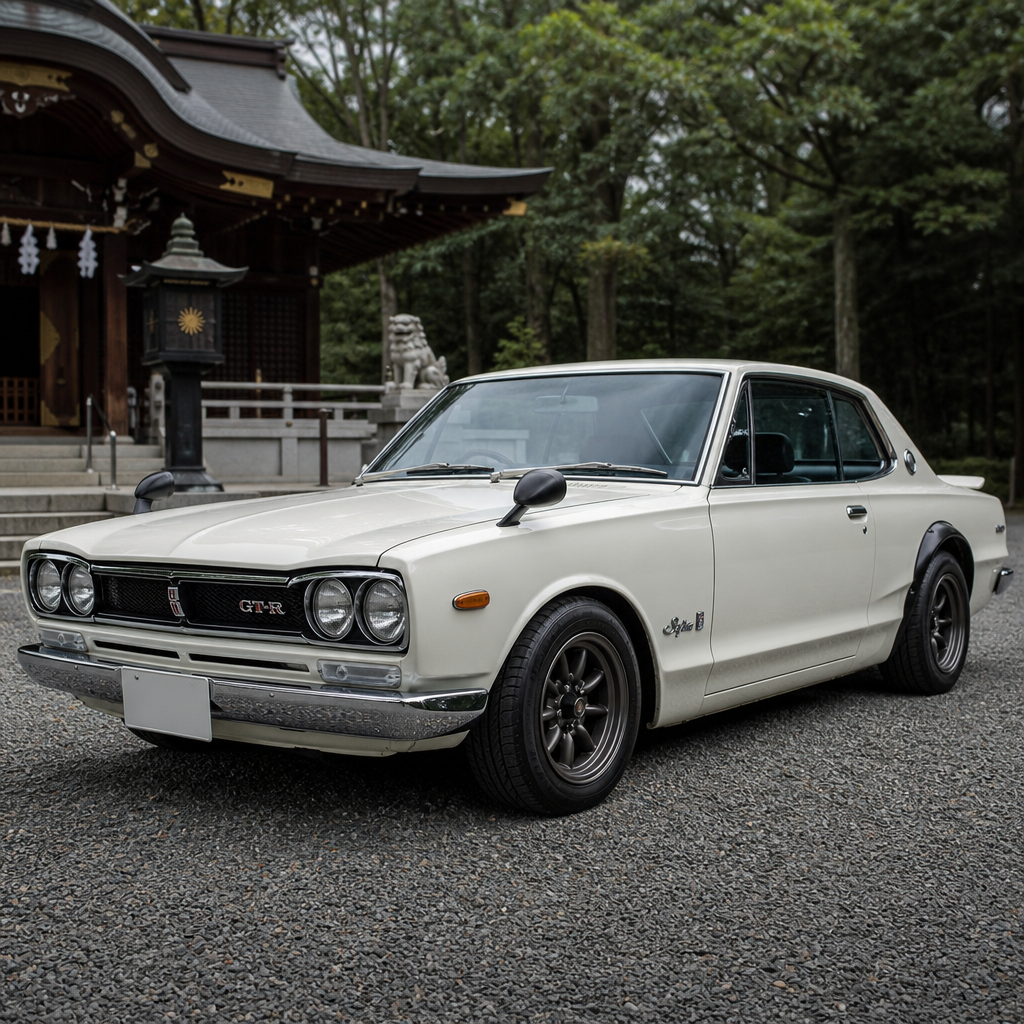
The 1990s added the cars most enthusiasts now associate with the limited-edition Japanese market. The Subaru Impreza 22B STI is one of the clearest examples of a modern collectible with deep cultural resonance. Its broad arches, EJ-series power, and rally connection made it iconic almost immediately. The Nissan Skyline GT-R family produced several key rarities, from the R32 GT-R NISMO to later V-Spec, M-Spec, and Nür variants. Within the Skyline market, buyers must distinguish between genuinely scarce factory editions and common cars retrofitted with badges and body panels. Chassis codes, option plates, auction history, and period literature are essential.
Mazda’s RX-7 Spirit R is another cornerstone because it represents a final, highly refined expression of the FD3S platform. Type A cars with lightweight seats and the right factory equipment command premiums because they align most closely with enthusiast demand. Mitsubishi’s Lancer Evolution VI Tommi Mäkinen Edition combines rally legacy with specific steering and suspension character that owners still describe as meaningfully different from standard Evo VI cars. Outside the obvious stars, lesser-discussed models such as the Nissan Be-1, Figaro, and Pao matter because they show another side of Japanese rarity: design-led limited production with enormous cultural influence. They are not homologation machines, but they are legitimate rare classics whose values are supported by identity and survivorship.
How to evaluate authenticity, condition, and market value
Authenticity is the dividing line between a collectible and an expensive imitation. Start with the chassis code, production plate, trim codes, and period documentation. Japanese manufacturers were precise, but decades of exports, conversions, rust repair, repainting, and tuning have blurred many cars’ identities. On Skylines, Evos, and Imprezas, edition-specific parts are often bolted on to lesser trims. On rotary Mazdas and coachbuilt specials, the challenge is usually incomplete provenance rather than outright cloning. I always compare the seller’s claims against factory brochures, EPC data, marque registries, and recent auction results from houses such as BH Auction, Broad Arrow, RM Sotheby’s, or Bonhams, depending on the segment.
Condition must be judged beyond mileage. Japanese classics frequently hide corrosion in predictable areas: strut towers, rear arches, sills, floor seams, hatch surrounds, and underbody jacking points. Performance models may have suffered track use, boost increases, or poorly reversed modifications. A low-odometer car with replacement aero, nonfactory welds, and missing VIN stickers is often worth less than a higher-mileage example with transparent service history. Mechanical originality matters, but sympathetic maintenance is not a negative. Timing-belt service on an NSX, proper sequential turbo upkeep on an RX-7, and documented driveline work on an AWD turbo car protect value when completed to factory standard.
Market value is driven by production numbers, survivorship, cultural status, and usability. The rarest car is not always the most valuable; obscure dealer specials can trail better-known homologation models because demand is thinner. Left-hand-drive conversions, color changes, and imported title complications can also suppress value. Study transaction data over asking prices, and separate global collector demand from online hype. A sound buying process includes a pre-purchase inspection by a marque specialist, paint-meter readings, compression or leak-down testing where relevant, underbody photography, and document review that follows the car back through export and registration history. In this niche, disciplined verification creates both confidence and long-term upside.
Why this hub matters for deeper research into concept and rare Japanese classics
The Japanese limited-edition classic car market rewards specialization. Once you understand how rarity is created, how significance is measured, and how authenticity is verified, individual model research becomes more productive and less risky. This hub gives you that structure across concept cars, homologation specials, final editions, coachbuilt collaborations, and market-specific anomalies. It should guide your next steps whether you are comparing the Toyota 2000GT with later halo cars, tracing the evolution of Skyline GT-R special editions, or learning why a niche Autech or Tommykaira build can deserve serious attention despite modest mainstream awareness.
The main takeaway is simple: buy the story only when the hardware, documentation, and historical context support it. Japanese rare cars are compelling because they embody moments when manufacturers pushed beyond normal commercial logic to prove something about performance, design, or identity. That is why the best examples continue to appreciate in both value and respect. Use this page as your starting point, then move deeper into model-specific guides, production histories, and buyer checklists before committing to any car. Careful research is the difference between owning a celebrated classic and inheriting an expensive question mark.
Frequently Asked Questions
What qualifies a Japanese limited-edition classic car?
A Japanese limited-edition classic car typically sits at the intersection of age, rarity, historical importance, and enthusiast demand. In practical terms, it is usually a vehicle old enough to be recognized as part of automotive history, but it also must have a special production story that separates it from the standard model line. That special status may come from a short production run, a homologation purpose for motorsport, a market-specific version, a commemorative trim, a coachbuilt body style, or a factory-backed performance variant built in notably smaller numbers than the mainstream car it was based on.
What makes these cars especially compelling is that Japanese manufacturers often approached limited editions with the same engineering rigor they applied to mass-production models. That means many of these cars are not merely cosmetic specials. They may feature revised suspension tuning, lighter body panels, unique engines, upgraded gearboxes, aerodynamic changes, close-ratio transmissions, or exclusive interiors. In some cases, the differences were subtle on paper but deeply meaningful to collectors because they marked the peak evolution of a platform or represented a direct connection to rallying, touring car racing, or domestic-market performance culture.
Examples often discussed in this category include homologation specials like the Nissan Skyline GT-R variants, Mazda RX-7 special editions, Toyota Supra anniversary or performance trims, and rare Japanese-market configurations of sports coupes and sedans that were never widely exported. The “limited-edition” label matters most when the car has documented scarcity and a clear narrative. Collectors tend to look for original production records, chassis codes, option sheets, factory brochures, and market-specific identifiers to confirm whether a car is genuinely rare or simply uncommon.
Why are Japanese limited-edition classic cars so collectible?
These cars are collectible because they combine several powerful factors at once: rarity, mechanical credibility, cultural relevance, and a growing global appreciation for Japanese automotive history. Unlike some collectibles that depend mainly on styling or nostalgia, many limited-edition Japanese classics also have serious engineering substance behind them. They were often created to celebrate motorsport success, meet homologation rules, showcase new technology, or give loyal domestic buyers something more focused and exclusive than the standard version.
Another major reason is that the collector market has matured. For years, classic car collecting centered heavily on European exotics and American muscle, while Japanese classics were undervalued relative to their impact. That changed as enthusiasts who grew up admiring 1970s, 1980s, and 1990s Japanese performance cars entered the market with purchasing power. As a result, historically important and genuinely rare models began receiving the recognition they had long deserved. Limited-edition versions rose fastest because they offered both nostalgia and scarcity.
There is also a storytelling element that strongly influences value. A standard production sports coupe may be admired, but a homologation version built in small numbers to qualify a race car immediately feels more significant. A market-specific trim sold only in Japan or only for one anniversary year adds another layer of interest. Buyers are often drawn not just to the machine itself, but to what it represents within the brand’s history. That combination of provenance, usability, and enthusiast mythology is exactly what creates lasting collector appeal.
How can you verify that a Japanese classic car is truly a limited-edition model?
Verification starts with documentation. The most reliable evidence usually includes factory production records, chassis or VIN decoding information, original sales literature, manufacturer-issued option lists, registration paperwork, auction catalog research, and expert marque references. Because Japanese limited editions sometimes differed by subtle trim, engine code, badging, or market designation, careful decoding of the exact model code is essential. In many cases, the distinction between a standard car and a rare special version comes down to details that are easy to miss without brand-specific knowledge.
It is also important to compare the car against known factory specifications. That means checking whether the engine, transmission, wheels, interior materials, exterior colors, aero parts, and suspension components match what the limited-edition model originally carried. Some cars have been modified over the years to resemble more valuable variants, so originality matters. A genuine special edition should show consistency across identification plates, trim details, build dates, and equipment. If a car is represented as one of a very small run, the seller should be able to explain exactly how that claim is supported.
For higher-value purchases, buyers often turn to marque specialists, owners’ clubs, historic registries, and import experts familiar with Japanese domestic market cars. This is especially helpful for limited editions that were never officially sold outside Japan, where translation issues and incomplete export paperwork can complicate research. The best approach is to treat verification as part historical investigation and part mechanical inspection. When a car’s identity, provenance, and originality all line up, confidence in its collector value rises dramatically.
Which features matter most when buying a Japanese limited-edition classic car?
The biggest priorities are authenticity, condition, originality, and significance. Authenticity means the car is what it claims to be, supported by model codes, production details, and documentation. Condition covers body integrity, rust, paint quality, driveline health, interior preservation, and overall mechanical soundness. Originality is particularly important in this segment because factory-correct components often separate a truly collectible example from a car that is merely desirable. Significance refers to how important that exact edition is within the broader history of the model and manufacturer.
Rust is one of the most important practical concerns, especially for older Japanese cars from eras when corrosion protection was not as advanced as it is today. Buyers should inspect common trouble areas such as wheel arches, floor pans, strut towers, sills, hatch surrounds, trunk floors, and suspension mounting points. Mechanical health matters too, especially on turbocharged, rotary-powered, or high-revving engines that may have been driven hard or modified. A rare factory version can lose much of its premium if it needs extensive structural or mechanical restoration.
Factory-specific parts deserve special attention because they can be difficult or expensive to replace. Unique wheels, seats, decals, badging, steering wheels, body kits, instrumentation, and limited-run engine components may be central to the car’s value. A complete car with its original features intact is usually worth more than a restored example assembled from mixed parts. Service history, ownership records, and evidence of sympathetic maintenance also help. The strongest purchases are often cars that balance collector-grade originality with enough mechanical care to remain enjoyable on the road.
Are Japanese limited-edition classic cars a good investment?
They can be, but they should be approached first as passion assets and only second as financial assets. The strongest-performing examples tend to be cars with proven rarity, clear historical relevance, strong enthusiast following, and documented originality. Models tied to motorsport success, iconic performance eras, or pivotal moments in Japanese automotive engineering often have the best long-term appeal. That said, not every special badge or short-run trim will appreciate equally. The market tends to reward the editions with the best stories, the most complete documentation, and the fewest surviving unmodified examples.
One reason these cars attract serious buyers is that they still offer a compelling mix of usability and identity. Many can be driven, serviced, and enjoyed more regularly than highly temperamental exotic classics, yet they still carry exclusivity. As international demand for Japanese classics has expanded, especially for formerly domestic-market models, prices for top-tier limited editions have moved upward. However, collector markets are never linear. Condition gaps, authenticity concerns, changing import laws, parts availability, and shifting generational tastes can all affect values.
The smartest way to think about investment potential is to buy the best example you can verify and afford, in a model that has enduring enthusiast respect rather than temporary hype. Cars with original paint, matching driveline components, complete books and records, and well-understood production numbers usually hold the strongest position. If the car also delivers a rewarding ownership experience, that is even better. In this category, the real advantage is that a well-chosen Japanese limited-edition classic can offer historical importance, driving enjoyment, and collector credibility all at once.