French classic cars occupy a special place in automotive history because they combine engineering audacity, elegant styling, and everyday usability in ways few nations matched. When people think about European classics, they often jump first to Italy, Germany, or Britain, yet France produced some of the most influential and recognizable vehicles ever built. From avant-garde executive saloons to tiny city cars and endurance-winning sports machines, French manufacturers repeatedly challenged conventional design. As someone who has spent years around restoration shops, auctions, and road rallies, I have seen how often these cars surprise newcomers: they are not curiosities on the fringe of the hobby, but foundational machines that shaped modern motoring.
To understand why French classic cars matter, it helps to define the term broadly. A classic car is usually a vehicle old enough to have historical, cultural, or engineering significance, not merely age. In the French context, that includes prewar icons, postwar economy cars that mobilized rural families, luxury grand routiers, and homologation specials built for competition. The category also spans multiple brands, including Citroen, Peugeot, Renault, Alpine, Delahaye, Facel Vega, Bugatti’s French era, and Panhard. Together, they form a critical part of the European classics landscape, linking innovation in suspension, aerodynamics, front-wheel drive, lightweight construction, and practical packaging.
This hub article covers the French classic cars you should know and explains how they fit within European classics more broadly. It focuses on landmark models, what makes them significant, how they drive, and what collectors should watch for. If you are researching classic car models and brands, this page gives you the framework needed to explore more specialized articles on individual makes and models. It also answers a practical question many enthusiasts ask: which French classics are historically important, enjoyable to own, and still relevant in today’s market? The answer is broader and more interesting than most buyers expect.
France’s influence on classic motoring is easiest to appreciate through the qualities its best cars share. French engineers often prioritized ride comfort, cabin space, and mechanical originality over brute power figures. Designers embraced shapes that looked futuristic when new and remain instantly identifiable decades later. Manufacturers also built cars for real roads, not only smooth test tracks, so many French classics feel unusually usable today. That balance of innovation and purpose is why a Citroen DS can still seem modern, why a Peugeot 205 GTI remains a benchmark hot hatch, and why an Alpine A110 can embarrass larger sports cars on a twisting route. In the wider European classics conversation, French cars are essential because they consistently proved that intelligence in design can matter as much as prestige.
Why French Classic Cars Matter in European Motoring History
French automakers were early leaders in the industry, and their importance reaches back to the dawn of motoring. Panhard et Levassor helped standardize the front-engine, rear-drive layout in the 1890s. Bugatti, headquartered in Molsheim during its formative years, created masterpieces such as the Type 35, one of the most successful racing cars of all time. Citroen industrialized car production in France and embraced bold technical leaps. Renault became a mass-market giant with deep roots in motorsport and utility vehicles. Peugeot earned a reputation for durable engineering and understated sophistication. These brands were not following trends set elsewhere; they were often creating them.
French classic cars also matter because they reflect social history especially clearly. The Citroen 2CV was conceived to put rural France on wheels, with a famously practical brief that included carrying farm produce across rough fields. The Renault 4 became a versatile people’s car for urban and country life alike. The Peugeot 403 and 404 showed how middle-class family motoring could be dependable and stylish without extravagance. At the upper end, the Citroen SM and Facel Vega HK500 demonstrated that France could produce high-speed grand touring cars with strong identities rather than imitations of German or Italian rivals. In short, French classics tell the story of how Europe moved, worked, traveled, and imagined the future.
Citroen: The Brand That Redefined Innovation
If one manufacturer best represents French automotive daring, it is Citroen. The Traction Avant, launched in 1934, brought front-wheel drive, unitary construction, and low-slung styling to a mass-produced family car at a time when many competitors still used separate chassis and conservative layouts. On the road, the Traction Avant offered secure handling and excellent packaging, making it a landmark in automotive engineering. Today, it remains one of the most important prewar and postwar French classics because it influenced vehicle architecture far beyond France.
The Citroen 2CV is just as significant, though for opposite reasons. It was not glamorous, fast, or luxurious. What made it brilliant was ruthless functional design: air-cooled twin-cylinder simplicity, long-travel suspension, low running costs, and an interior that could be adapted for real life. I have watched owners load them with picnic gear, camping supplies, and spare parts with an ease that many larger classics cannot match. The 2CV became a cultural icon precisely because it solved transportation problems honestly. For anyone exploring European classics, it is one of the clearest examples of utility elevated into design legend.
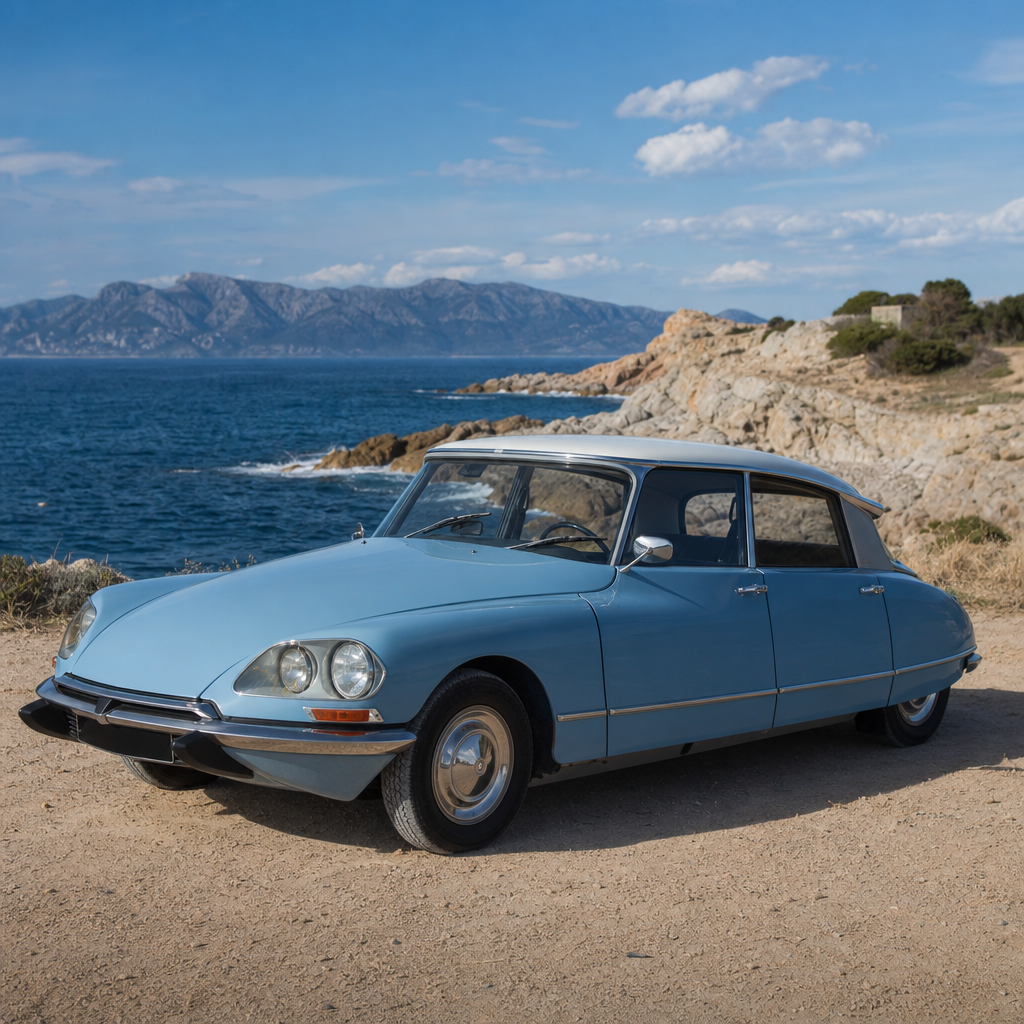
Then came the Citroen DS in 1955, a car that still stops people in their tracks. Its hydropneumatic suspension delivered an extraordinary ride, self-leveling behavior, and adjustable height. Disc brakes, aerodynamic styling, power-assisted systems, and a futuristic cabin made it look and feel decades ahead of many contemporaries. The DS was not perfect; hydraulic maintenance can intimidate inexperienced owners, and neglected examples quickly become expensive. Yet its historical significance is unquestionable. Few classic cars changed public expectations of comfort and design as decisively.
The Citroen SM deserves equal attention as a hub-page essential. Introduced in 1970, it blended DS-based hydraulic sophistication with Maserati V6 power, variable-assist DIRAVI steering, and a body optimized for high-speed stability. It was complex and arrived during difficult economic conditions, but at its best the SM remains one of the great European grand tourers. If your broader interest includes luxury European classics, the Citroen story is mandatory reading.
Peugeot: Durable Engineering and Everyday Excellence
Peugeot built some of the most usable classic cars in Europe, and that usability explains much of the brand’s enduring respect. The Peugeot 203 helped restart French family motoring after World War II, while the 403 introduced a clean Pininfarina shape and a reputation for durability that suited taxi duty and long-distance touring. The later 404 expanded that formula and became famous for surviving difficult road conditions in Africa, Europe, and South America. In practical collector terms, these cars matter because they show how robust engineering can become a form of elegance.
The Peugeot 504 is one of the most important French classics for global reasons. Released in 1968, it offered independent suspension, strong build quality, and a ride tuned for imperfect roads. Sedans, coupes, convertibles, estates, and pickups broadened its appeal, while diesel versions became legendary for longevity. In several markets, the 504 remained in production for decades. That kind of life cycle does not happen by accident; it reflects a fundamentally right design. Among European classics, few family cars matched its combination of toughness and refinement.
Peugeot’s enthusiast credentials reached a different level with the 205 GTI. First sold in the 1980s, it is now unquestionably a classic and a central reference point in any discussion of hot hatches. Light weight, sharp steering, responsive engines, and an adjustable chassis made it vivid on real roads. The 1.6-liter version delivered delicacy, while the 1.9-liter added torque and broader pace. Clean, unmodified cars are increasingly hard to find, which is why serious buyers inspect originality, rust, and evidence of accident repair carefully. For readers building a map of European classics, the 205 GTI is the French performance benchmark that links practicality with genuine driver engagement.
Renault: Mass-Market Genius and Rally Heritage
Renault’s classic catalog is deeper than many casual enthusiasts realize. The Renault 4, launched in 1961, was a front-wheel-drive hatchback before the body style became standard family transport. Its flat loading floor, practical tailgate, and rugged simplicity anticipated the modern small utility car. The Renault 5 later translated that intelligence into supermini form and eventually into performance legends such as the Renault 5 Alpine and turbocharged Renault 5 Turbo. These models matter because they show how Renault repeatedly turned compact packaging into something culturally influential.
The Renault Dauphine and Renault 8 also deserve space in any French classics hub. Both spread affordable motoring widely, and the Renault 8 Gordini in particular created an accessible performance icon. Light, rear-engined, and competition-friendly, the Gordini introduced many drivers to club racing and rallying. That pathway from road car to motorsport hero is a recurring theme in French classics and helps explain their strong enthusiast followings.
At the top of Renault’s historic performance tree sits the Alpine A110, built by Alpine but inseparable from Renault power and support. The original A110 combined a lightweight backbone chassis, compact dimensions, and rear-engine traction to devastating effect in rallying, including the 1973 World Rally Championship for manufacturers. On a narrow road, an A110 feels alive in a way heavier sports cars rarely match. Values reflect that reputation, but the model’s importance goes beyond market trends. It is one of the definitive European classics for anyone who values agility over outright horsepower.
French Classic Cars at a Glance
| Model | Years | Why It Matters | Ownership Watchpoint |
|---|---|---|---|
| Citroen Traction Avant | 1934–1957 | Mass-market front-wheel-drive pioneer | Structural corrosion and braking condition |
| Citroen 2CV | 1948–1990 | Minimalist utility icon with ingenious suspension | Chassis rust and tired engines |
| Citroen DS | 1955–1975 | Hydropneumatic engineering milestone | Hydraulic leaks and deferred specialist maintenance |
| Peugeot 504 | 1968–2006 | Globally respected for toughness and comfort | Rust, trim scarcity, diesel wear |
| Peugeot 205 GTI | 1984–1994 | Hot hatch benchmark | Modifications, corrosion, accident history |
| Renault 4 | 1961–1994 | Early practical hatchback concept | Rust around floorpans and suspension mounts |
| Alpine A110 | 1963–1977 | Lightweight rally legend | Authenticity, fiberglass repairs, parts cost |
| Facel Vega HK500 | 1958–1961 | French luxury GT with American V8 power | Body restoration expense and trim availability |
Luxury, Coachbuilding, and the French High End
French classic cars are not limited to practical family transport and eccentric innovation. France also produced some of Europe’s most impressive luxury and coachbuilt automobiles. Delahaye, Delage, Talbot-Lago, and Hotchkiss created elegant prewar and immediate postwar cars that now appear regularly at concours events. Their significance lies in craftsmanship, custom bodywork, and strong competition pedigrees. Many surviving examples wear bodies from Figoni et Falaschi, Saoutchik, Chapron, or Letourneur et Marchand, names that matter deeply in the history of automotive design.
Facel Vega offers a later expression of French luxury. Models like the HK500 paired refined interiors and dramatic styling with powerful Chrysler V8 engines, creating a uniquely Franco-American grand touring formula. These were cars for high-speed travel, not just boulevard display. They remain rarer than equivalent Mercedes-Benz or Jaguar classics, which can make them both alluring and challenging to own. Parts support is more specialized, and restoration costs can be significant, but their presence and historical distinctiveness are exceptional.
No survey of French classic prestige would be complete without Bugatti’s French-built heritage. The Type 35 dominated Grand Prix racing in the 1920s, and the Type 57 family combined technical excellence with beauty. While these cars occupy the highest tier of collectibility, they still matter to a broad enthusiast audience because they established France as a center of automotive artistry and engineering ambition.
What to Look for When Buying a French Classic
Buying a French classic car requires the same fundamentals as any old-car purchase, with extra attention to model-specific engineering. Rust is the universal concern, especially on cars designed for everyday use in wet climates. Structural areas, suspension mounts, floorpans, sills, and chassis sections deserve careful inspection. On Citroens with hydraulic systems, service records and the quality of previous repairs matter as much as visual condition. On lightweight sports cars such as the Alpine A110, authenticity and accident history can affect value dramatically. On hot hatches like the 205 GTI, originality often separates a merely usable car from a genuinely collectible one.
Parts supply varies by model. The 2CV, Renault 4, and Peugeot 504 benefit from strong enthusiast networks and reproduction support. By contrast, low-volume cars such as the SM, Facel Vega, or certain coachbuilt models may require specialist sourcing and patient budgeting. Before buying, I always recommend joining model clubs, studying factory specifications, and comparing the cost of a sorted car against the total price of restoring a cheaper example. With French classics, the smartest purchase is usually the most complete, best-documented car you can afford.
Why This Hub Matters for Exploring European Classics
French classic cars deserve hub-level coverage because they connect nearly every major theme in European motoring: innovation, motorsport, practical design, luxury craftsmanship, and mass mobility. They also challenge a narrow definition of what makes a car collectible. Some are valuable because they were fast or rare. Others matter because they changed daily life for millions. A Citroen DS, Peugeot 504, Renault 4, and Alpine A110 are radically different machines, yet each represents a decisive answer to a real transportation problem. That variety is the strength of French automotive history.
If you are building knowledge around classic car models and brands, use this page as your starting point for the European classics subtopic. Explore the major French manufacturers, learn the landmark models, and pay attention to how engineering choices shaped ownership experience. The reward is a richer understanding of the entire classic car world. Start with the cars on this list, then dive deeper into the individual brand and model guides that expand on specifications, market trends, and restoration realities.
Frequently Asked Questions
What makes French classic cars different from other European classics?
French classic cars stand out because they were often designed around bold ideas rather than strict convention. While many European manufacturers focused heavily on outright performance, luxury tradition, or conservative engineering, French brands regularly pursued comfort, packaging efficiency, aerodynamic thinking, and technical originality. That is why the French classic landscape includes cars as different as the Citroën DS, with its hydropneumatic suspension and futuristic styling, the Renault 4 and Citroën 2CV, which redefined practical everyday motoring, and sports cars from Alpine and Facel Vega that proved France could also compete on excitement and prestige. This variety is a major part of their appeal.
Another key difference is how usable many French classics remain. Even some of the most unusual models were conceived as real transport for real roads, not just statement pieces. They often delivered excellent ride quality, good visibility, clever interiors, and efficient engines, making them surprisingly approachable today. French manufacturers also had a distinctive design language that favored elegance, lightness, and innovation over brute force. For collectors and enthusiasts, that combination of engineering audacity, graceful styling, and everyday charm is exactly what makes French classic cars so memorable.
Which French classic cars are considered the most important or influential?
Several French classics are essential to understanding automotive history. The Citroën DS is one of the most influential cars ever made, not just in France but globally. Introduced in 1955, it shocked the public with advanced aerodynamics, front-wheel drive, self-leveling hydropneumatic suspension, and a design that looked years ahead of its time. It demonstrated that a family or executive car could be technologically revolutionary. The Citroën Traction Avant also deserves a place near the top of the list, as it helped popularize monocoque construction and front-wheel drive long before those ideas became mainstream.
The Citroën 2CV and Renault 4 are equally important, though in a different way. They showed how simple engineering and clever packaging could mobilize entire populations. These were not glamorous machines in the conventional sense, but they transformed daily life and became cultural icons. Renault’s Dauphine and Peugeot’s 403 and 404 further illustrate how France exported practical and stylish motoring to the world. On the sporting side, the Alpine A110 is one of the great lightweight rally cars, famous for agility and competition success, while the Bugatti Type 35, though built in an earlier era, remains one of the most dominant and celebrated racing cars in history. If the question is influence, the French contribution spans luxury, mass mobility, engineering innovation, and motorsport excellence.
Are French classic cars reliable enough to own and drive today?
They can be, but the answer depends heavily on the specific model, its condition, and the owner’s expectations. Simpler French classics such as the Renault 4, Peugeot 404, Peugeot 504, and Citroën 2CV are generally viewed as approachable and relatively durable when maintained properly. Their mechanical layouts are straightforward, parts support is often decent through specialist suppliers, and large enthusiast communities make ownership easier. These are often among the best entry points for people who want a French classic they can actually use on a regular basis.
More technically ambitious cars, especially certain Citroën models like the DS, SM, or CX, can require more specialized knowledge. That does not automatically make them unreliable, but it does mean they reward informed maintenance rather than neglect. Systems such as hydropneumatic suspension, unusual braking arrangements, or complex engine setups need owners and technicians who understand how they work. In many cases, these cars gained an unfair reputation because they were serviced improperly outside of specialist networks. A well-sorted example can be wonderfully dependable and enjoyable, but buying the best-maintained car you can find is usually far wiser than chasing a bargain. As with any classic, regular preventive care matters more than brand stereotypes.
What are the best French classic cars for new collectors or first-time buyers?
For first-time buyers, the best French classic is usually one that balances character, parts availability, reasonable running costs, and a forgiving ownership experience. The Citroën 2CV is a common recommendation because it is mechanically simple, instantly recognizable, and supported by a huge enthusiast network. It offers a charming driving experience at modest speeds and teaches owners a lot about classic car mechanics without being intimidating. The Renault 4 is another excellent choice, prized for practicality, toughness, and cheerful design. Both cars capture the essence of French motoring in an accessible way.
Buyers who want something more substantial should consider the Peugeot 404 or 504, both of which have strong reputations for durability and understated style. They are roomy, comfortable, and often easier to live with than more exotic alternatives. If someone is drawn to advanced engineering and is willing to learn, a Citroën DS can be deeply rewarding, but it is usually better as a second or third classic rather than a first. The most important advice is to buy based on condition, documentation, and specialist support rather than simply model reputation. A well-restored or carefully maintained example of a modest car is almost always a better first purchase than a prestigious but neglected one.
Why do French classic cars matter so much in automotive history?
French classic cars matter because they repeatedly changed the direction of car design and engineering. France was not merely producing attractive vehicles; it was often redefining what cars could be. The nation gave the automotive world breakthroughs in front-wheel drive adoption, monocoque construction, aerodynamic body design, advanced suspension systems, and practical mass-market packaging. French manufacturers proved that innovation did not need to be limited to high-end sports cars or low-volume experiments. In France, radical ideas often appeared in vehicles intended for ordinary people, which gave them a broader historical impact.
They also matter because they expanded the emotional and cultural idea of what a classic car can be. A classic does not have to be loud, fast, or opulent to be significant. A 2CV can be just as historically meaningful as an exotic grand tourer because it reshaped mobility for millions. A DS can be admired not just as transportation but as industrial art. An Alpine can symbolize lightweight performance done brilliantly rather than power done extravagantly. Taken together, French classic cars represent a different but essential branch of automotive history, one built on creativity, intelligence, and the confidence to challenge accepted norms.